Fast Resin 3D Printer: How Much Speed Can You Expect?
Understanding print rate is important for planning production and figuring out return on investment (ROI) when looking at industrial additive manufacturing equipment. A fast resin 3D printer can achieve vertical build speeds of approximately 100mm to 170mm per hour under optimized conditions, while conventional resin systems typically operate in the 30mm to 50mm per hour range depending on print settings, material type, and layer thickness. This is a 200–300% increase in output, made possible by high-transmittance monochrome LCD screens, improved optical systems, and better release mechanisms. These machines use specialized low-viscosity resins with improved photo-initiator sensitivity. This allows layers to cure rapidly without significantly affecting dimensional accuracy or surface consistency. The result reduces production cycles from days to hours and helps manufacturers accelerate small-batch production and prototype iteration in the automotive, consumer goods, and dental industries.

Understanding Fast Resin 3D Printer Technology
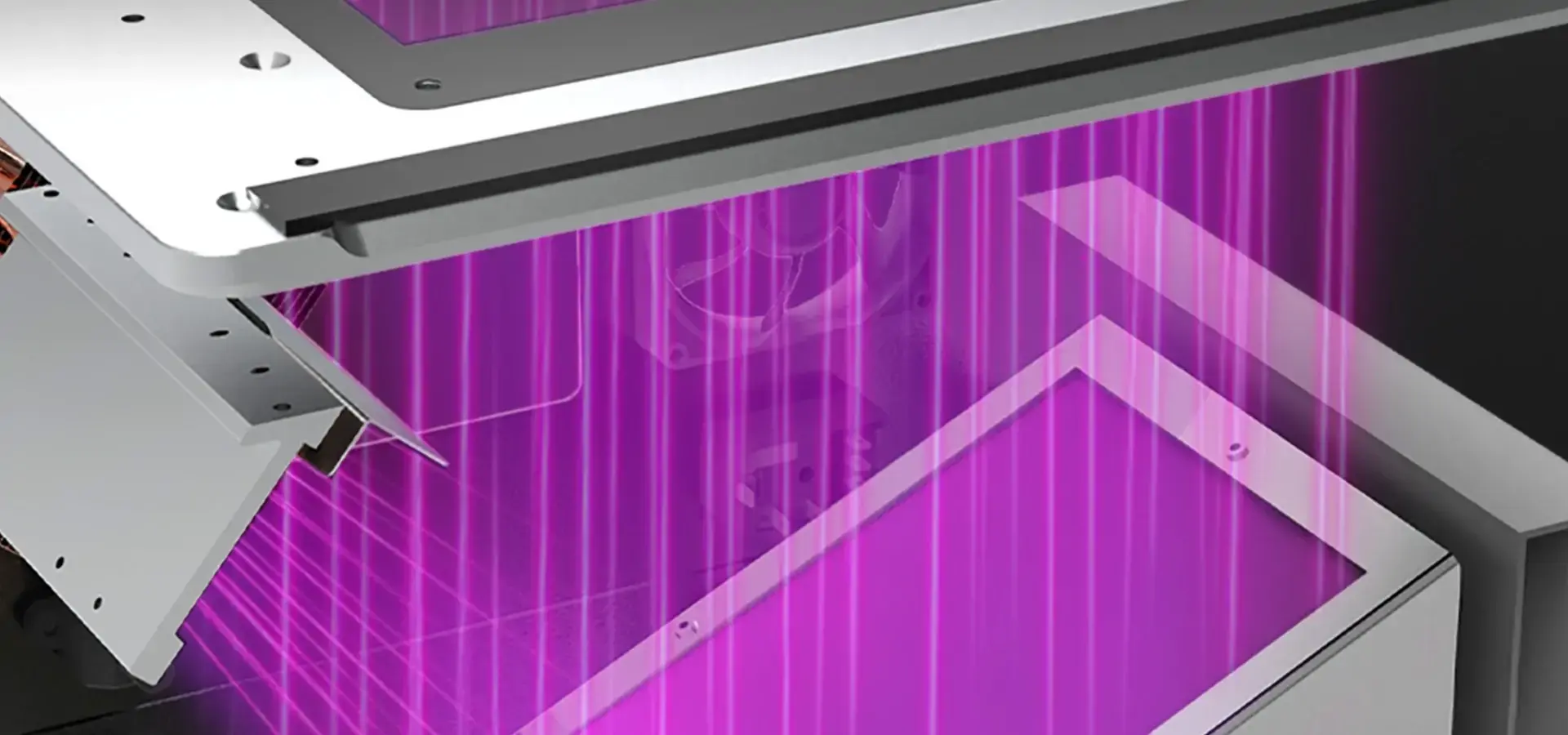
Rapid vat photopolymerization equipment uses a number of new technologies to accelerate production processes while maintaining part accuracy, surface quality, and dimensional consistency. These systems employ LCD/MSLA, DLP (Digital Light Processing), or laser-based SLA technologies. Each one has its own way of turning liquid photopolymer resins into solid shapes. Because these methods are built differently, they have different performance qualities that work best in different industrial situations. A modern, fast resin 3D printer relies on several key mechanical and chemical advancements to achieve these results.
Core Mechanical Innovations Enabling Speed
High-speed resin printing mainly depends on reducing the time required for each stage of the build cycle. Usually, it takes a lot of time to control the peel force, which is the binding force between the cured layer and the release film at the bottom of the vat. More advanced machines use tension-tuned ACF (Advanced Composite Film) or nFEP release films with lower separation resistance and improved durability. This change lowers the peel force by about 50%. This lets the build platform move and lift between layers more quickly without increasing the risk of part detachment or dimensional distortion.
The Z-axis motion system also undergoes significant improvement. When high-performance linear rail systems are paired with ball screw assemblies, they can support high-speed and highly repeatable Z-axis motion while maintaining positioning accuracy within ±0.01 mm. This level of positioning accuracy helps maintain precise layer registration throughout the build process, even when they move up and down quickly. This helps prevent cumulative positioning errors that can lead to dimensional drift in finished parts.
Optical systems provide a further important efficiency factor. COB (Chip on Board) LED arrays or collimated light sources deliver high-intensity and highly uniform UV light across the build platform, and the light is spread out over 95% of the build area evenly. This steady, strong lighting makes it possible for layer exposure times of less than two seconds, even for engineering-grade resins that typically require longer curing exposure times. The shorter exposure time directly leads to faster finishing of the build as a whole, without negatively affecting the part's cross-linking density or mechanical properties.
Chemical Formulation Contributions
Material science is also very important for getting high output. Specialized "fast resins" have viscosity profiles below 200 milliPascal-seconds at room temperature, which lets the resin quickly flow back across the build area after each layer separates. This low viscosity makes sure that the liquid photopolymer spreads out evenly again before the next exposure cycle starts. This helps prevent surface defects and incomplete layer formation.
In these formulas, improved photo-initiator packages react better to UV wavelengths, so less total energy is needed to finish polymerization. The chemical formulation balances curing reactivity with long-term storage stability. Formulations need to harden quickly under focused light but stay stable while they are being stored and handled. To reach this balance, you need to carefully manage the amounts of inhibitors and initiators, which requires a lot of knowledge in materials engineering.
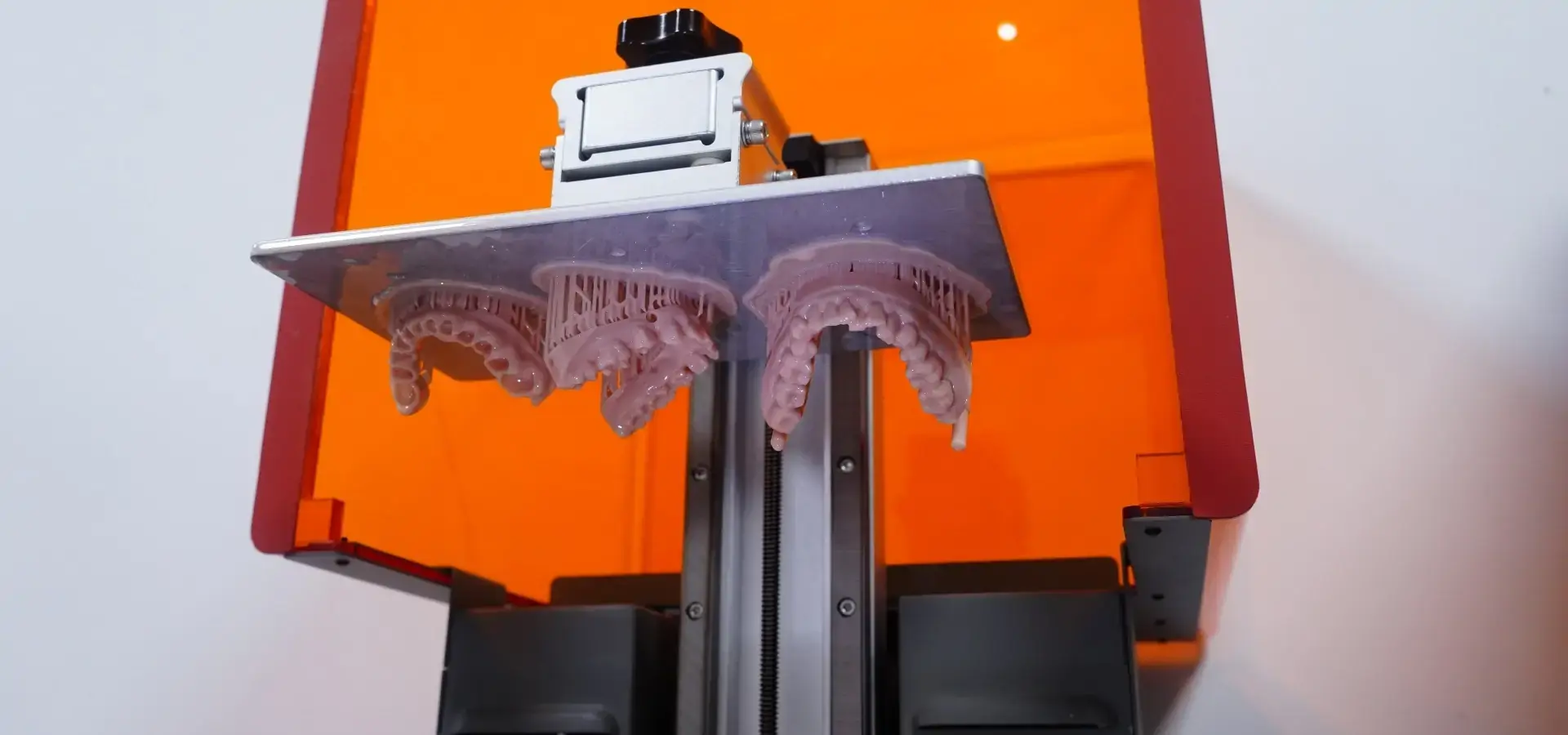
These improvements in chemistry and hardware have made it possible for systems to make dental arch models in less than 40 minutes or print batches of jewelry casting patterns overnight. These time frames completely change how makers and service bureaus do business and the services they offer.
Resin 3D Printer Speed Benchmarks and Comparison
To judge how well a piece of equipment works, you need to know both the exact speed numbers and the environmental factors that affect real-world output. While raw specifications can be used as a starting point for comparison, operating factors like the complexity of the part geometry, the surface finish that needs to be achieved, and the choice of material have a big impact on real production timelines. High-performance fast resin 3D printer systems set the current benchmarks for the industry.
Current Industry Performance Standards
Modern high-speed LCD resin systems can achieve vertical build speeds of approximately 80 to 170 mm per hour under optimized production settings. Standard operating conditions usually get 50 to 80 mm per hour. In precision modes, which prioritize finer feature detail and surface quality over speed, build speeds may decrease to approximately 30 to 40 mm per hour. These values represent vertical build speed along the Z-axis. The real time it takes to finish a certain part relies on its height and the layer thickness that was chosen.
Layer thickness settings provide another important balance between print speed and surface finish. For many uses, 50-micron layers are the best mix between speed and surface finish. They allow builds to be finished faster than with 25-micron settings and without the obvious layering that can happen with 100-micron settings. The best choice relies on the function. For example, appearance-focused prototypes and display models typically require finer layers, but internal mechanical parts may be able to handle coarser resolution to speed up production.
XY resolution is primarily determined by LCD pixel density or DLP projection resolution rather than vertical print speed settings. It is based on the LCD screen pixel density or the DLP projection resolution. Modern LCD resin systems can maintain XY resolution in the 20 to 50 micron range even during relatively high-speed printing operations. This makes sure that faster printing doesn't lose accuracy in the layer plane dimensions. This is one of the key differences between vat photopolymerization systems and material extrusion technologies such as FDM, where faster print speeds often make it harder to define features.
Comparative Analysis of Leading Platforms
Several companies have built strong market positions by making products that always work and are reliable. Formlabs equipment focuses on integrating workflows and using a variety of materials. For example, their Form line strikes a balance between speed and resolution for professional dentists and medical device prototyping. With proprietary resins optimized for their laser-based SLA systems, they can build 60 to 80 mm per hour.
Anycubic and Elegoo make machines that reach 50–70 mm per hour vertical speeds at reasonable prices to appeal to people who care about price without losing performance. These platforms are especially appealing to design companies and new service providers that are setting up their first production facilities. Material compatibility goes toward open-system methods, which give you more options for where to get consumables, but need careful parameter validation to keep quality high.
Phrozen focuses on making bigger-format tools that can work faster and are good for batch production. Their industrial products can produce 100 to 150 mm per hour and are made with strong mechanical parts that are meant to work continuously. Peopoly also caters to the business market with equipment that focuses on reliability during long print runs, which is an important factor for makers who are working on multiple jobs at once.
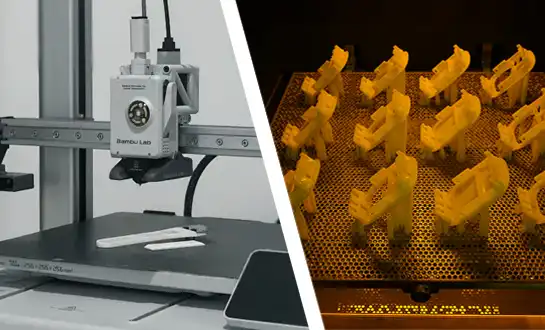
There are big changes in the architecture of resin systems and filament-based options when you look at them side by side. FDM printers may support high toolhead travel speeds, but actual print throughput is still limited by extrusion flow rate, acceleration, and toolpath complexity. Complex shapes with a lot of surface area need a lot of toolpath execution, which usually results in longer total print times than LCD/MSLA systems that expose each entire layer simultaneously. Vat photopolymerization is better at dealing with problems like overhangs and support structures that come up with material extrusion, which cuts down on post-processing time.
How to Optimize and Maintain Resin 3D Printer Speed?
Getting high-performance tools is only the first step toward making output more efficient. For sustained throughput, operational factors must be carefully optimized, and strict upkeep procedures must be followed to keep the mechanical and optical systems working well for thousands of hours. A well-maintained fast resin 3D printer is essential for consistent professional results.
Parameter Tuning for Maximum Throughput
Layer thickness selection has the most direct effect on total build time. Going from 25-micron layers to 50-micron layers cuts in half the number of layers needed for any given part height, which also cuts down on print time. This change works well for working prototypes and parts where speed of development is more important than surface finish. Even though it takes longer, finer layers may still be needed for appearance-focused parts or precision pieces with very tight standards.
To optimize exposure time, operators need to understand the curing behavior of the selected resin material. Excessive exposure increases print time without significantly improving mechanical performance or dimensional stability. Running calibration prints with graduated exposure settings finds the shortest time needed for full polymerization, which for fast resin formulas is usually between 1 and 3 seconds per layer. This validation process should be done every time you change groups of materials or after a long break between print jobs.
The lift distance and lift speed factors decide how the build base separates from the release film between layers. Aggressive settings speed up the process, but they also increase the peel forces, which can damage delicate parts or cause them to come off. Setting things to be conservative increases dependability at the cost of speed. Modern machines with better release films can handle optimized lift speeds depending on part geometry, resin viscosity, and release film performance. However, slower speeds that spread out the separation forces more evenly are better for small details or big cross-sectional areas.
Resin temperature directly affects viscosity and flow behavior, which in turn changes the speed of reflow. Keeping the photopolymer between 25°C and 30°C improves its flow properties while keeping its chemical stability. Some systems have vat heating elements that cut down on the time it takes for the material to spread out again across the build area after the layers separate. This seemingly small improvement accumulates over hundreds or thousands of layers and can significantly reduce total print time.
Troubleshooting Common Velocity Challenges
When prints fail at high speeds, it's usually because the release film isn't in good enough shape or the printer isn't level. Release surfaces wear down over time, getting cloudy or micro-scratched, which makes the peeling force stronger. If you replace these consumables as recommended by the maker, which is usually every 20 to 40 liters of resin handled, you can stop the slowdown that happens as operators lower lift speeds to make up for worsening film performance.
The accuracy of the build platform's setting affects how well the parts stick together during the first layer formation. Even small changes in the angle can make one side of the build area not get enough light while the other side gets too much compression. After moving or making any mechanical changes, re-leveling the equipment makes sure that the first layer sticks well and supports stable high-speed printing for subsequent layers.
Inconsistent curing during high-speed printing can appear as partially formed features or interlayer delamination. This problem usually means that the optical system is dirty, like when there is resin residue or dust on the LCD screen or DLP window. Regular cleaning with the right chemicals helps maintain consistent UV light transmission and exposure uniformity. Some systems have automatic cleaning processes, but it's still best to check them by hand as part of regular maintenance.
Preventive Maintenance for Sustained Performance

In production settings, calibration testing should happen once a month to make sure that the Z-axis is still positioned correctly and that the exposure time stays within the parameters. Over time, mechanical systems wear out, which can introduce backlash or reduce motion precision. Finding these trends early on through regular measurement stops quality loss that leads to bigger fixes being needed in the end.
Maintenance on linear rails and ball screws is done at intervals set by the maker, usually every 500 to 1000 working hours. Lubrication cuts down on friction, which would slow down axis movement and make the motor work harder if it weren't done right. This regular maintenance makes mechanical parts last longer while keeping the fast processes of speeding up and slowing down that make high-speed printing possible.
As part of inspecting optical components, the output strength of LED arrays is checked, and LCD masked screens are checked for any pixel failures. When lighting systems lose performance, longer exposure times are needed, which has a direct effect on output. Replacing old light sources before they completely break down keeps production from stopping without warning and ensures part quality remains stable throughout the equipment's useful life.
When dealing with complicated problems that go beyond basic fixing, professional expert support is very helpful. Manufacturers that offer full-service agreements give customers access to engineering experts who can quickly fix problems and avoid downtime that takes away from the efficiency benefits that high-speed equipment should provide. Response time promises and advance repair plans for key components are important things to think about when you're first talking about buying something, especially for businesses that can't afford to have equipment out for long periods of time.
Choosing the Right Fast Resin 3D Printer for Your Business
When choosing equipment, you have to look at a lot of technical details as well as business factors like total cost of ownership, seller support infrastructure, and how well the equipment fits with your production needs. Choosing the correct fast resin 3D printer involves evaluating performance against long-term operational costs. Different types of operations, like OEM manufacturing, service bureau batch production, and research and development prototyping, create different priority orders that affect the best tool choices.
Critical Evaluation Metrics Beyond Raw Speed
The highest part size and the number of parts that can be made at once are determined by the build volume capacity. Larger platforms let you print more than one part at the same time, which increases speed when making replacement parts. Even if both systems have the same vertical speed, a 192 x 120 x 200 mm build area can hold a lot more dental models or jewelry patterns per job than a 120 x 68 x 150 mm volume. Capacity limits shouldn't cancel out speed benefits. This can be avoided by comparing normal part sizes, and expected batch production requirements should be considered when evaluating build volume.
Metrics for device dependability, like mean time between failures (MTBF) and guarantee coverage, show how long operations should go without interruption. Back-to-back production runs put more stress on machines and equipment, but industrial-grade systems built for constant operation are better able to handle the temperature changes and mechanical stress. When manufacturers post thorough dependability data and offer multi-year warranties, it shows that they have faith in their engineering and lowers the risk of investing in capital equipment.
Material compatibility affects how flexible operations can be and how much they cost to run. Closed systems that only use unique resins make you dependent on one seller, while open platforms that accept materials from other companies let you save money and get access to custom formulas. The trade-off is the amount of work needed to validate the system. Open systems need to try every new material to set reliable parameters, while closed environments offer settings that are already optimized, which cuts down on setup time. Some makers find a middle ground by approving certain third-party resins to give customers more choices while still guaranteeing performance.
The resolution standards must match the needs of the part. An 8K LCD system can achieve XY pixel resolutions near 30 microns depending on screen size and build area dimensions, which is good enough for most commercial uses. For making jewelry and oral restorations, 12K screens (11,520 x 5,120 pixels) with 20-micron resolution may be needed. Higher precision makes tools more expensive without adding much value for tasks where an accuracy of 40 to 50 microns is enough. By matching capability to real needs, you can avoid spending too much on accuracy that you won't use.
Financial Considerations and Procurement Strategies
Different market groups have very different initial buying costs. Entry-level industrial tools that are good for design companies and new service providers cost between $3,000 and $8,000. They work well enough to start making things. The $10,000–$25,000 range is for mid-range professional equipment that is aimed at established service centers and manufacturer R&D teams. This type of equipment is more reliable and can handle bigger build volumes. Premium systems made for constant production cost between $30,000 and $80,000 and offer the throughput, durability, and duty-cycle performance required for high-volume production environments.
Operating costs include more than just the buy price. They also include things like supplies, repairs, and the upkeep of the building. The amount of resin used varies on the size of the part and how much support structure is needed. Usually, it costs between $80 and $200 per liter. Release films need to be replaced every so often and cost $50 to $150 each. Taking these ongoing costs into account when figuring out the total cost of ownership (ROI) over three years of operation gives accurate budget estimates that help people make smart purchasing choices.
Bulk purchasing for multi-machine deployments can often save you a lot of money and come with better service agreements. When a business opens more than one production location or grows its current operations, it should discuss a volume price that takes into account the total value of the relationship. Vendor financing choices can help with managing cash flow when buying capital equipment, but it's important to look at the total cost of financing to make sure these deals meet financial goals.
Vendor Reputation and Support Infrastructure
Brand reliability is built on consistent field performance, responsive technical support, and long-term product stability across different customer environments. Formlabs and Phrozen keep their good names by having busy user communities, lots of documentation tools, and customer service teams that are quick to respond. These qualities mean that operating risk is lower and problems are fixed faster than with vendors who don't have a support system in place.
Geographic service access is important, especially in work settings where time is of the essence. By responding quickly to problems on-site, vendors with regional service centers or approved repair networks can keep technology from being down for long periods of time. International operations should make sure that expert help is available at all sites, speaks the local language, and has parts that meet local needs.
Case studies that are specific to an application can teach you a lot about how things work in the real world. Dental labs say they can make full sets of aligner models in 35 to 45 minutes when processes are improved. This lets patients get treatment the same day, which costs more. Automotive design teams report cutting the time between prototype iterations from five days to one day, which speeds up development and makes it easier for new car projects to get to market faster. These recorded results help support the purchase of equipment by showing how it increases output, rather than just making vague claims about its abilities.
Conclusion
The speed of production in vat photopolymerization systems depends on how well the mechanical accuracy, optical performance, and chemical composition are all combined. Today's high-speed LCD resin 3D printers can achieve vertical build speeds of approximately 100 to 170 mm per hour under optimized operating conditions. These performance capabilities directly translate into business benefits, such as shorter iteration processes for prototypes, more services with same-day turnaround choices, and better asset utilization through higher productivity. To choose the best tools, you need to look at speed specs along with resolution, build volume, reliability measures, and total ownership costs based on the needs of the application. Proper parameter optimization and strict maintenance routines keep performance high for long periods of time, protecting capital investment and making sure that production output stays steady. Companies that regularly match their technology skills with their manufacturing goals are in a good position to take advantage of the economic benefits that rapid additive manufacturing offers.
FAQ
How much faster are modern resin systems compared to standard models?
Modern high-speed vat photopolymerization equipment can deliver throughput improvements of approximately 200–300% compared to older resin systems under optimized conditions. This improvement comes from more efficient LCD exposure systems, improved release films, and optimized resin chemistry. A modern, fast resin 3D printer allows dental labs to make full arch models in less than 40 minutes and jewelry makers to make batches of casting patterns overnight that used to take several days to print. The real speed benefit for each part relies on how complicated the geometry is, how high a resolution is needed, and the material that is used. However, for most uses, there are big throughput gains.
What maintenance practices preserve high-speed printing performance?
To keep up the high output, you need to pay regular attention to a number of upkeep areas. Changing the release film every 20 to 40 liters of processed resin stops degradation, which makes peel forces higher and lift speeds slower. Every month, the Z-axis positioning precision and exposure time are checked to make sure they stay within the parameters. Linear rail lubrication, at times specified by the maker, keeps movement low-friction, which allows for quick acceleration cycles. Cleaning optical parts gets rid of resin dust that makes light transfer less effective and increases the time needed for exposure. Professional service agreements give you access to engineering experts for tough problems, and they keep downtime to a minimum by fixing problems quickly and setting up plans to repair parts before they break. These protective measures protect the investment in equipment and make sure that it can keep producing at the same level throughout its useful life.
Does higher speed justify the equipment investment for most operations?
The financial case relies on the amount of goods being made, how the services are priced, and how the company wants to place itself in the market. Operations that handle a lot of work directly benefit from shorter production times for each part, which lets them use their current equipment more efficiently or eliminates the need for extra units. Service bureaus that can turn jobs around quickly charge more, which means they make more money per job. By speeding up prototype iteration, R&D teams can shorten the time it takes to create new goods and get them on the market faster. Small businesses that don't do a lot of business may find that mid-range equipment gives them enough power at a lower cost. To figure out payback periods, you have to compare increases in throughput to specific production situations and service rate structures. However, many professional businesses report ROI periods of less than 18 months when they carefully use speed benefits.
Elevate Your Production with Magforms Fast Resin 3D Printer Solutions
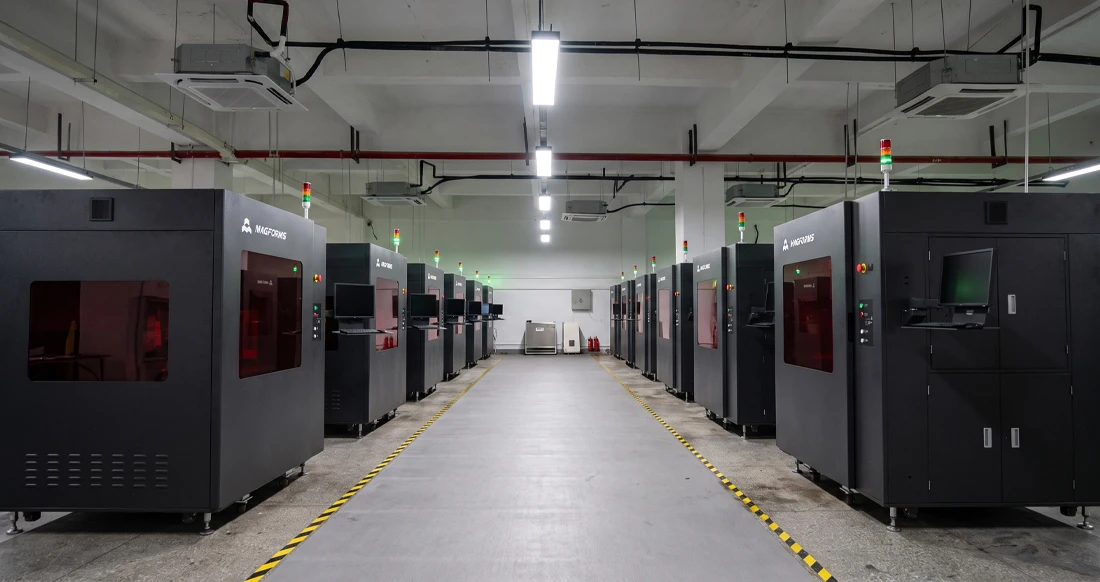
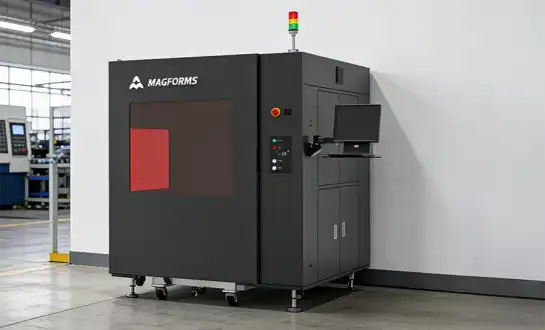
Magforms solves the most important production problems that modern makers face by combining materials and tools in ways that are specifically designed for high-throughput, precision-demanding tasks. Our fast resin 3D printer solutions are built on high-performance LCD architectures with optimized optical systems, intelligent exposure control, and industrial-grade motion platforms. This performance advantage comes from the co-optimization of our photopolymer materials, optical systems, and motion architectures, helping improve process stability and reduce parameter inconsistency between materials and hardware. We provide the technical basis and support infrastructure that turns additive manufacturing from a testing tool into a process that can be used in production. Our work is backed by 22 patents, and we work with over 300 businesses around the world. Get in touch with our engineering team at info@magforms.com to talk about your unique needs and find out how Magforms' technology can help you make things faster.
References
1. Gibson, I., Rosen, D., & Stucker, B. (2021). Additive Manufacturing Technologies: 3D Printing, Rapid Prototyping, and Direct Digital Manufacturing (3rd ed.). Springer International Publishing.
2. Jacobs, P. F. (2020). Fundamentals of Stereolithography: Materials, Processes, and Applications. Society of Manufacturing Engineers.
3. Ligon, S. C., Liska, R., Stampfl, J., Gurr, M., & Mülhaupt, R. (2017). Polymers for 3D Printing and Customized Additive Manufacturing. Chemical Reviews, 117(15), 10212-10290.
4. Stansbury, J. W., & Idacavage, M. J. (2016). 3D printing with polymers: Challenges among expanding options and opportunities. Dental Materials, 32(1), 54-64.
5. Dizon, J. R. C., Espera, A. H., Chen, Q., & Advincula, R. C. (2018). Mechanical characterization of 3D-printed polymers. Additive Manufacturing, 20, 44-67.
6. Awad, A., Trenfield, S. J., Gaisford, S., & Basit, A. W. (2018). 3D printed medicines: A new branch of digital healthcare. International Journal of Pharmaceutics, 548(1), 586-596.

Magforms makes design and manufacture easier.
Popular Blogs
-
 Industry InsightsManufacturing Industry
FDM vs. SLA Printer: Which Technology Is Right for Your Project?
-
 Industry InsightsManufacturing Industry
Top 5 Applications of Industrial 3D Printers in Manufacturing Today
-
 Industry InsightsManufacturing Industry
Why Stereolithography 3D Printers Are Unmatched for Microfluidic Device Prototyping?