FDM vs. SLA Printer: Which Technology Is Right for Your Project?
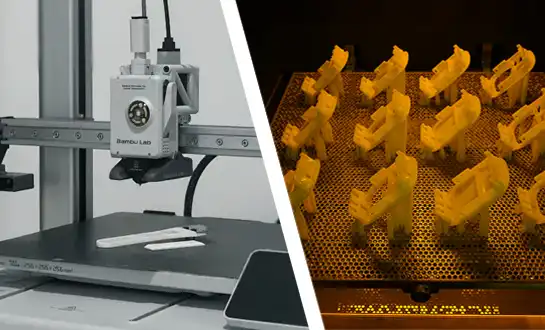
The choice between FDM and SLA printing technologies depends primarily on your project needs and precision requirements. For applications demanding superior surface finish, fine detail, and micron-level precision, SLA printers excel in medical devices, jewelry, and precision prototyping. FDM technology, on the other hand, is well-suited for functional prototyping, large-scale models, and applications where material strength is more important than surface quality. Understanding these fundamental differences helps businesses select the optimal additive manufacturing solution based on their specific production goals.
Understanding the Core Technologies Behind 3D Printing
Modern additive manufacturing revolves around two technologies serving distinctly different market sectors. Fused Deposition Modeling (FDM) builds objects by heating and depositing thermoplastic filaments layer by layer. This method offers excellent mechanical properties and a wide range of material choices, suitable for various functional applications.
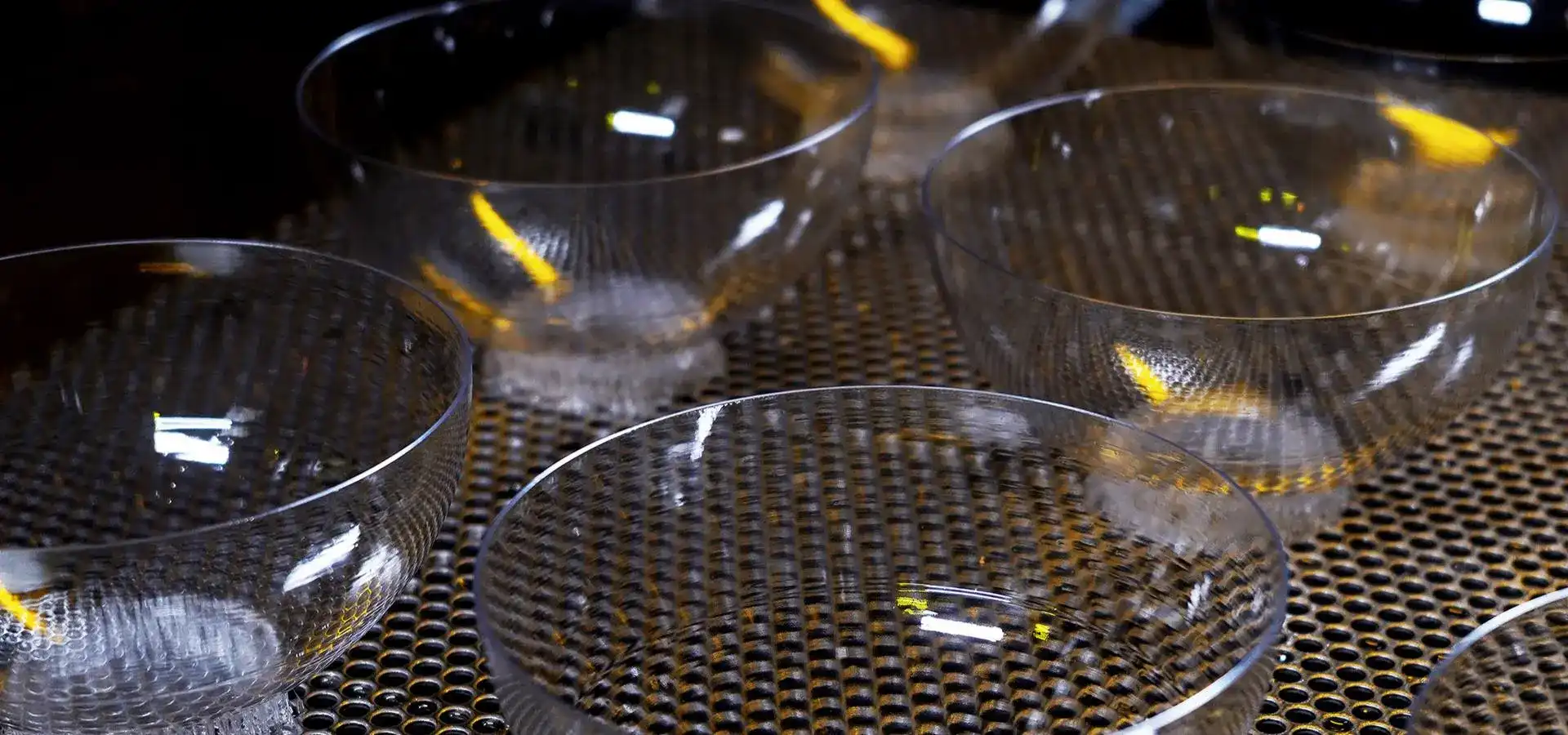
Stereolithography represents a radically different approach from traditional 3D modeling and manufacturing. SLA printers utilize ultraviolet laser technology to cure liquid photosensitive resin with extremely high precision. The laser scanning system selectively cures resin layers, producing parts with exceptional surface finish and dimensional accuracy—achievable with traditional manufacturing processes.
The layer-curing process of stereolithography allows for printing resolutions of 25-50 micrometers, significantly exceeding the typical 100-300 micrometer layer height of FDM. This precision advantage makes SLA an indispensable choice for industries with stringent tolerance and high surface finish requirements.
Key technological differences include:
- Material state during printing—FDM uses solid filaments, while SLA uses liquid resin.
- Layer Formation Methods – Thermal Extrusion and Photopolymerization
- Achievable Resolution – FDM typically achieves resolutions above 100 micrometers, while SLA can reach as low as 25 micrometers.
- Construction Platform Mechanisms – Mobile Extruders and Fixed Laser Systems
If you need to quickly create functional prototypes and pursue excellent mechanical properties, FDM technology is more suitable. Conversely, for projects requiring fine detail reproduction and smooth surfaces, SLA technology is more advantageous.
Precision and Quality: The Advantages of Each Technology?
In professional manufacturing environments, print resolution capability fundamentally differentiates these technologies. SLA printers achieve fine layer thicknesses of 10-25 micrometers, enabling the replication of complex geometries impossible with traditional methods. This precision stems from a controlled photopolymerization process where UV exposure precisely defines the boundaries of each layer.
Surface finish is another key differentiating factor. SLA parts have smooth surfaces, similar to injection molding, requiring virtually no post-processing. Its layer-by-layer curing mechanism eliminates visible layer lines common in FDM printing, crucial for consumer-facing applications and precision molds.
Dimensional accuracy testing reveals significant performance gaps. Independent studies show that SLA systems can control tolerances within ±0.05mm on complex geometries, while FDM systems typically achieve ±0.15-0.3mm accuracy, depending on the complexity of the part and printer calibration.
Accuracy Comparison Data:
- Layer Resolution - SLA: 10-50 microns, FDM: 50-400 microns
- Surface Roughness - SLA: Ra 0.5-2 microns, FDM: Ra 5-15 microns
- Dimensional Accuracy - SLA: ±0.05-0.1mm, FDM: ±0.15-0.3mm
- Feature Detail Reproduction—SLA excels in fine textures and small features.
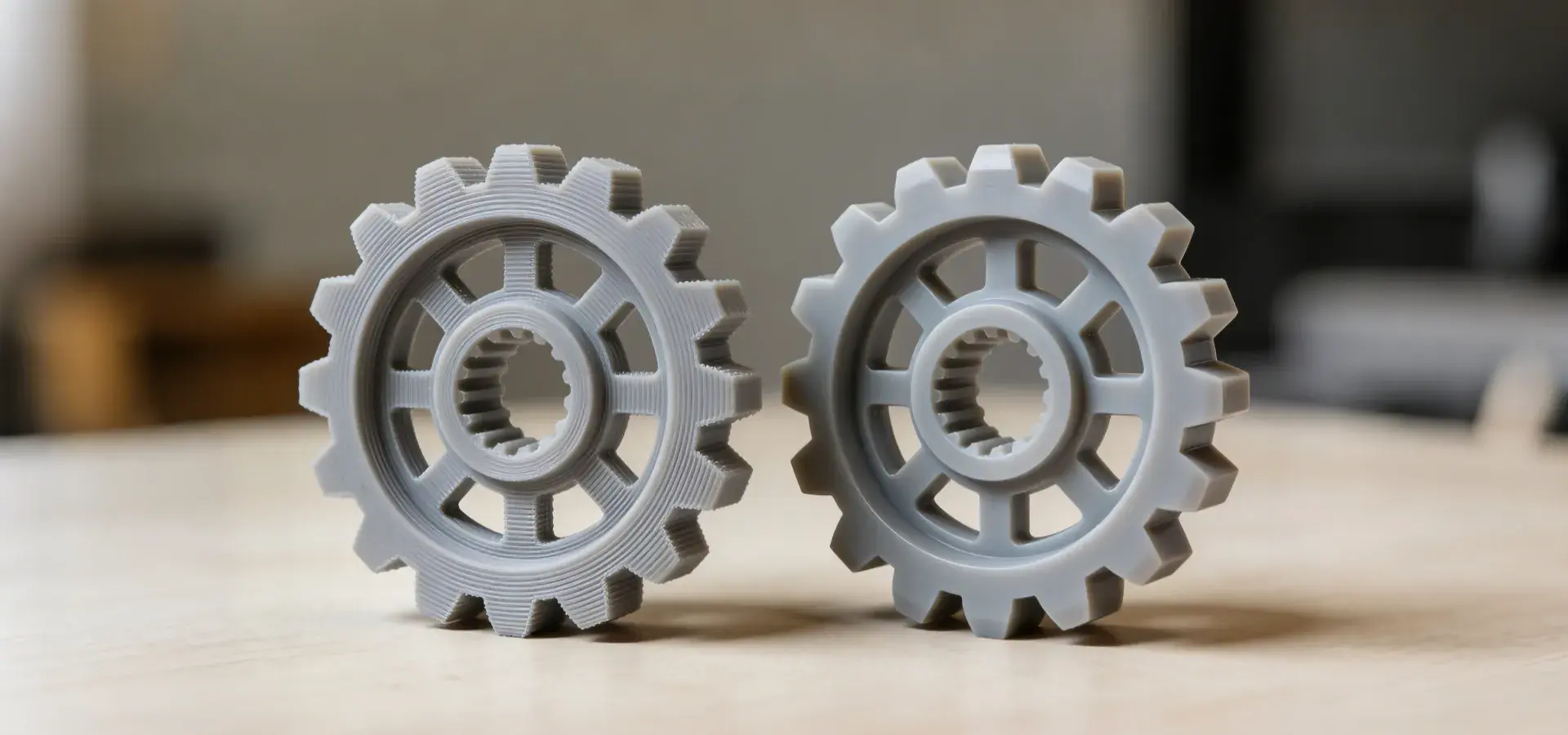
The viscosity of the resin system allows it to completely fill complex cavities and sharp corners. This characteristic makes SLA technology outstanding in dental applications, jewelry making, and the manufacture of precision mechanical parts, where the accuracy of detail directly affects functionality.
If you require parts with high surface finish and tight tolerances, SLA technology offers superior performance. For applications that prioritize speed and material strength over surface quality, FDM technology may be more suitable.
Speed and Efficiency: Production Considerations
Print speed analysis reveals subtle differences in performance characteristics that vary significantly with part geometry and quality requirements. FDM systems excel at printing large, simple geometries because layer deposition rate is directly related to completion time. However, complex parts with numerous support structures typically experience significantly longer FDM printing times.
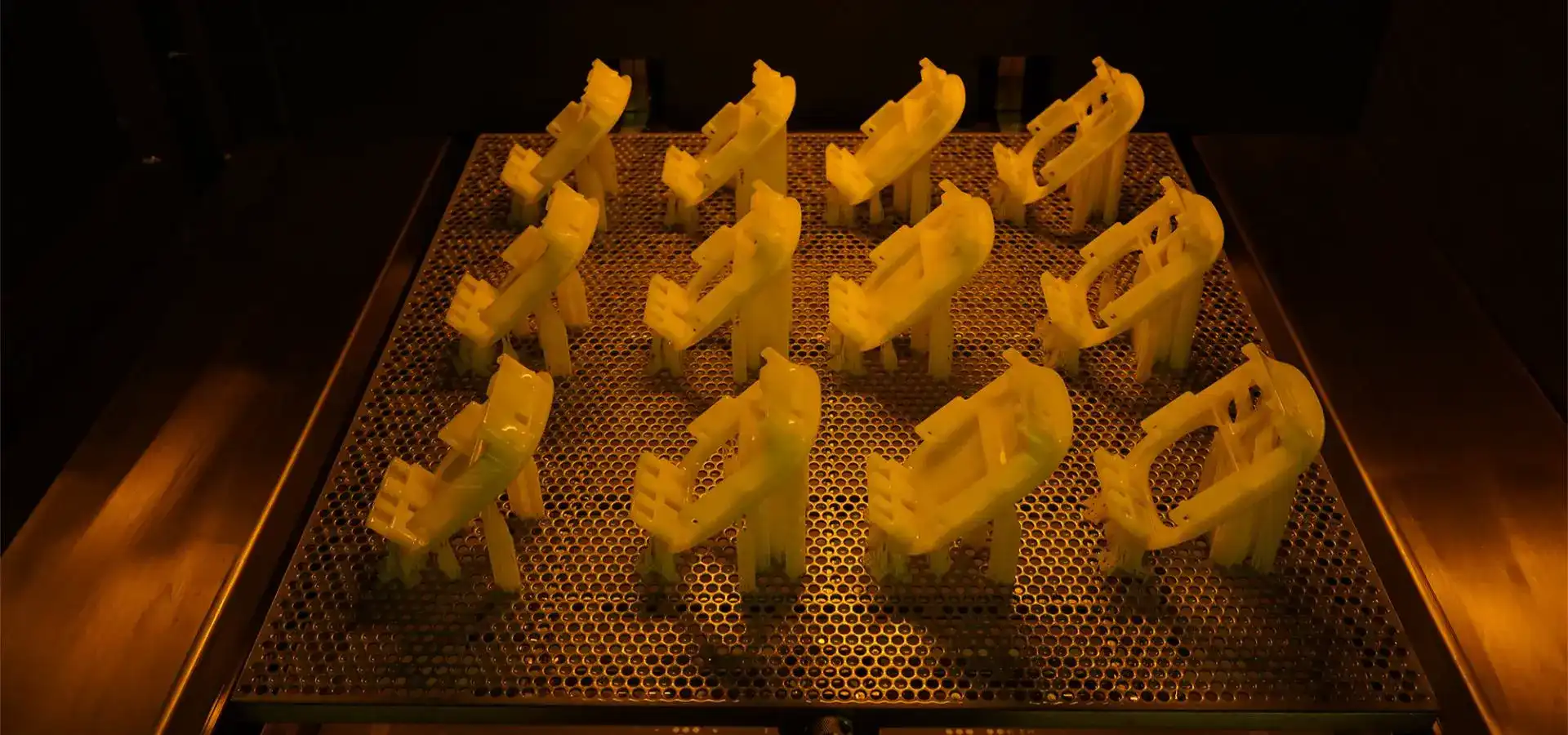
SLA printer efficiency depends primarily on the number of layers, not the complexity of the part or the number of parts printed at once. Printing multiple components simultaneously takes the same time as printing a single part of the same height. This characteristic provides a significant advantage for high-volume production scenarios common in professional service environments.
Advanced SLA printers employing variable spot size technology significantly improve efficiency. Larger spot sizes accelerate infill, while smaller spot sizes ensure precise contour definition. Tests show speeds increased by 30-50% compared to traditional single-spot systems, without sacrificing accuracy.
Production Efficiency Factors:
- Batch Printing Capability—SLA technology excels at printing multiple parts at once.
- Complexity Impact – SLA speed is unaffected by geometric complexity.
- Post-processing Time – FDM requires more support removal and finishing.
- Material Waste – SLA reduces material waste through precise resin dosage.
Resin printing using digital light processing technology further improves printing speed by simultaneously curing the entire layer instead of scanning individual points. This advancement is particularly beneficial for high-volume production.
CAD integration efficiency also benefits SLA workflows for complex geometries. Software optimization enables automated generation of support structures and build orientation analysis, simplifying the previously time-consuming preparation phase.
If you need to rapidly iterate on complex prototypes, SLA technology offers superior production efficiency. For larger, simpler parts requiring only minimal post-processing, FDM's streamlined workflow is more suitable.
Material Selection and Application Diversity
Material diversity is a key selection criterion impacting long-term operational flexibility and cost control. FDM technology offers a rich selection of thermoplastic materials, including engineering-grade materials such as PEEK, PEI, and carbon fiber composites. These materials possess superior mechanical properties suitable for functional end components.
The material performance of SLA printers has been significantly enhanced with the advent of application-specific photopolymer formulations. Biocompatible resins are used for medical device prototyping, while high-temperature formulations can withstand the environment under a car hood. Flexible resins offer rubber-like properties unattainable with traditional stereolithography materials.
Open-source material compatibility solves major challenges in supplier lock-in and cost control during the procurement process. Leading SLA printer manufacturers are increasingly adopting open resin systems, enabling customers to source materials from multiple suppliers and optimize costs based on application requirements.
Material Category Comparison:
- Engineering Thermoplastics – Advantages of FDM in PEEK, ULTEM, and Carbon Fiber
- Precision Casting Resins – SLA is specifically designed for investment casting models
- Biocompatible Materials – Both technologies offer certification options
- Transparent Materials – SLA technology can produce optically transparent parts
- Flexible Materials – SLA flexible resins are generally superior to TPU filaments.
The viscosity characteristics of the resin system allow it to fully wet fine structures and eliminate air trapping issues common in filament printing. This characteristic is crucial for applications requiring void-free internal structures or complex internal channels.
The support structure requirements differ significantly between technologies. SLA support structures can be designed with minimal contact points, reducing post-processing time and surface marks. Advanced water-soluble support resins eliminate the need for manual removal steps, further simplifying the workflow.
If you need engineering-grade thermoplastics for functional applications, FDM offers superior material choices. However, for projects requiring optical transparency, fine surface texture, or special chemical properties, the performance of SLA materials is often preferred.
Cost Analysis: Initial Investment and Operating Costs
Initial equipment investment varies depending on the technology and functional requirements. Entry-level FDM systems start at less than $500, while industrial-grade SLA printers with large print sizes can cost anywhere from $50,000 to over $200,000. However, when comparing products with matched functionalities, the cost relationships become more complex.
Professional-grade SLA printers typically exhibit a better total cost of ownership when considering production efficiency, material utilization, and labor costs. Reduced post-processing requirements mean lower labor costs per finished component, which is particularly important in high-wage markets.
Material costs involve complex trade-offs and require careful application analysis. High-quality photosensitive resins typically cost $100 to $300 per liter, while engineered filaments cost $50 to $150 per kilogram. However, SLA technology generates very little waste and produces higher part density, advantages that offset the higher unit material costs.
Cost Considerations Framework:
- Equipment Acquisition – FDM equipment has a lower entry barrier, but SLA has a higher capability cost.
- Materials Costs – Varies depending on the application and usage.
- Labor Requirements – SLA typically requires less post-processing labor.
- Facility Requirements – SLA requires ventilation, while FDM requires minimal infrastructure.
- Maintenance Costs – Both technologies require regular filament replacement.
Operating cost analysis should include facility requirements and safety considerations. SLA printers require sophisticated ventilation systems and resin handling procedures, adding infrastructure costs that FDM printers lack. However, modern enclosed systems minimize environmental impact while ensuring operator safety.
Filament replacement cycles differ between technologies. FDM systems require regular nozzle and forming surface replacements, while SLA systems require maintenance of the resin tank and optical window. Understanding these patterns helps in developing accurate long-term budget plans.
If you need a cost-effective entry-level 3D printing solution with minimal equipment requirements, FDM technology is undoubtedly the ideal choice. For applications requiring higher equipment investment, SLA systems can typically deliver greater long-term value by improving production efficiency and part quality.
Industry Applications: Real-World Success Stories
Automotive prototyping is a highly demanding application, and both technologies offer unique advantages. FDM printers excel at creating dashboard models, ventilation duct prototypes, and tooling fixtures requiring mechanical durability. SLA printers, on the other hand, can produce precision interior samples, lighting component prototypes, and complex cooling system models requiring smooth surfaces and tight tolerances.
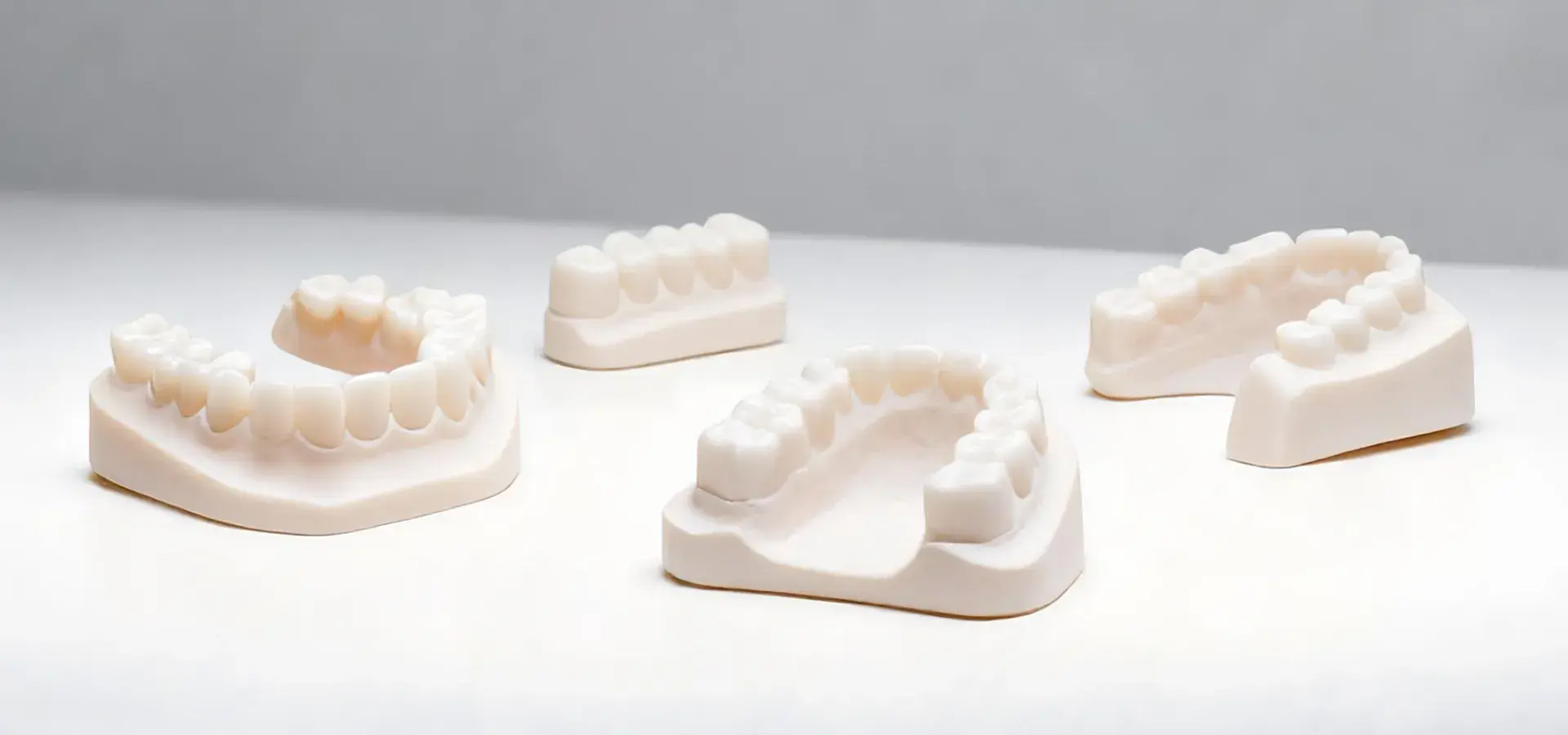
The medical device R&D field widely utilizes SLA technology for surgical guide production, dental model fabrication, and implant prototyping. Biocompatible photosensitive polymer materials, combined with superior surface finish, not only meet stringent regulatory requirements but also enable patient-specific customization that is impossible with traditional manufacturing processes.
Aerospace applications have extremely high requirements for precision and material properties. SLA printers can rapidly produce complex internal cooling channels, precision connectors, and aerodynamic test models. Integrating multiple components into a single printed assembly reduces the number of parts and assembly complexity.
Industry Application Segments:
- Dental/Medical – SLA technology dominates due to its biocompatible resins and high precision.
- Automotive – Widely used depending on component requirements.
- Aerospace – SLA is primarily used for precision parts, while FDM is mainly used for mold making.
Consumer Electronics – SLA is ideal for housings requiring smooth surfaces.
Tooling/Manufacturing Aids – Technology selection depends on durability requirements.
Consumer electronics prototyping increasingly relies on SLA printers for components requiring precise assembly and surface finishing, such as housing development, button mechanisms, and internal supports. The rapid iteration capabilities of SLA printers allow design teams to quickly test multiple designs while maintaining professional aesthetic standards.
Educational institutions consider both technologies valuable for different teaching objectives. FDM systems are easy to operate and use, facilitate material handling, and can teach basic additive manufacturing concepts. SLA technology introduces advanced manufacturing principles and precision engineering concepts, which are crucial for technical courses.
If you need functional prototypes that can withstand mechanical stress testing, FDM often offers sufficient performance at a lower cost. For applications requiring high-quality surfaces or precision assembly interfaces, SLA technology is generally more advantageous.
Conclusion
Choosing between FDM and SLA technologies requires careful evaluation of accuracy requirements, production scale, and application limitations. SLA printers excel in applications demanding extremely high surface quality, tolerances, and complex geometries, making them ideal for medical devices, precision prototyping, and high-end consumer products. FDM technology, on the other hand, is suitable for functional applications prioritizing mechanical strength, material versatility, and cost-effectiveness. Understanding these fundamental differences helps in making informed decisions, ensuring long-term production success and return on investment.
Boost Your Production Capabilities with Magforms SLA Solutions
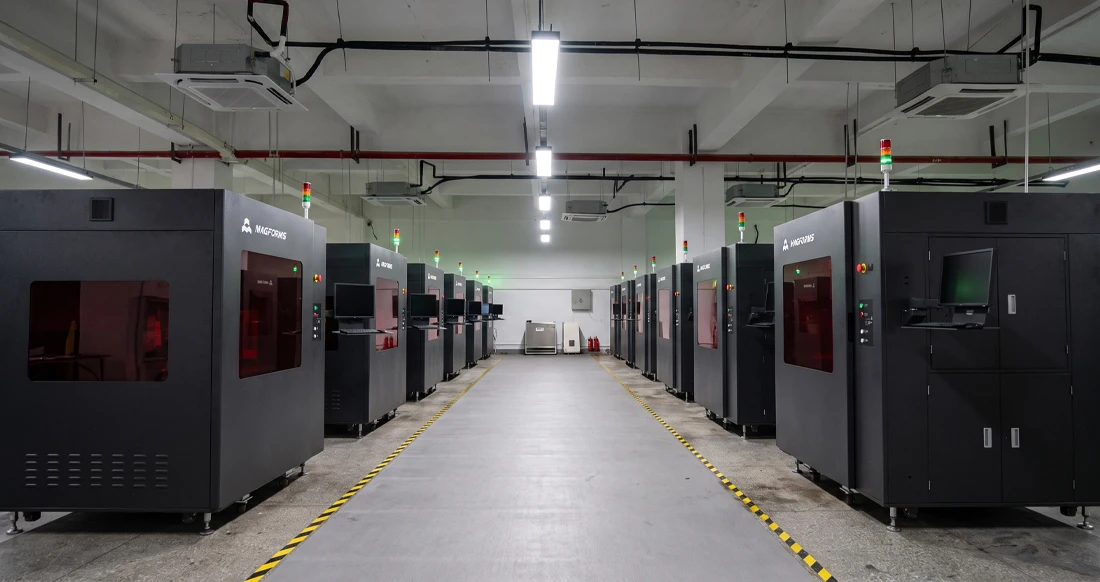
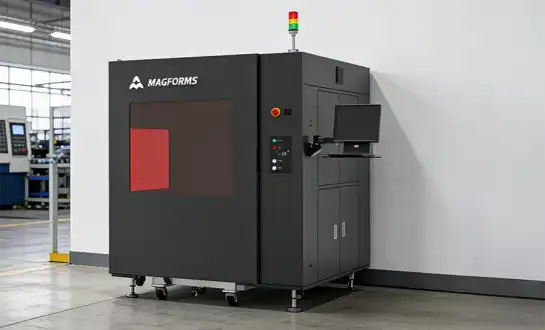
Leading SLA printer manufacturer Magforms offers industrial-grade systems that integrate German Scanlab galvanometers, AOC lasers, and Panasonic servo motors, achieving unparalleled reliability and accuracy. Its variable spot size laser technology enables 30-50% faster printing speeds while maintaining ±0.1mm accuracy in large-format printing. With open-source resin compatibility and comprehensive technical support, Magforms addresses common procurement challenges such as supplier lock-in and delayed service response. Please contact info@magforms.com to learn how their integrated materials and equipment solutions can optimize your production processes.
References
1. Gibson, Ian, et al. “Additive Manufacturing Technologies: 3D Printing, Rapid Prototyping, and Direct Digital Manufacturing.” Springer International Publishing, 2021.
2. Chua, Chee Kai, and Kah Fai Leong. “3D Printing and Additive Manufacturing: Principles and Applications.” World Science Press, 2020.
3. Ngo, Tuan D., et al. “Additive Manufacturing for Industry 4.0: Materials, Technologies, and Applications.” Materials Research Foundation, 2019.
4. Lipson, Hod, and Melba Kurman. “The New World of 3D Printing: Hopes and Pitfalls of Revolutionary Manufacturing.” ExLibris Corporation, 2020.
5. Redwood, Ben, et al. “3D Printing Handbook: Techniques, Design Rules, and Post-Processing.” 3D Hubs Knowledge Base Publication, 2021.
6. Zhang Jinhui, et al. "3D Printing Based on Stereolithography: Processes, Materials, and Manufacturing Applications." Advanced Manufacturing Processes, 2022.

Magforms makes design and manufacture easier.
Popular Blogs
-
 Industry InsightsManufacturing Industry
FDM vs. SLA Printer: Which Technology Is Right for Your Project?
-
 Industry InsightsManufacturing Industry
Top 5 Applications of Industrial 3D Printers in Manufacturing Today
-
 Industry InsightsManufacturing Industry
Why Stereolithography 3D Printers Are Unmatched for Microfluidic Device Prototyping?