How Do You Choose the Right Stereolithography 3D Printer for Projects?
Your project will either get accurate, reliable results or waste time and materials if you don't choose the right stereolithography 3D printer. The best SLA machine is one that works well with your application, whether it's dental development, aircraft components, or car parts. It should also have the right print accuracy, material compatibility, build volume, and long-term stability. To be successful, you need to make sure that the printer works well with your process and that its technical specs, like laser sharpness and Z-axis accuracy, match your production needs. We've been helping makers, service bureaus, and research labs make this choice for years, so we know what machines offer uniform quality and which ones cause production delays.
Understanding Stereolithography 3D Printing Technology
How SLA Printing Creates High-Precision Parts

A focused UV laser, usually with a wavelength of 355nm, is used in stereolithography to cure liquid photopolymer resin layer by layer. With the help of very accurate galvanometer mirrors, the laser transfers each part of your CAD model to the resin surface. Once a layer hardens through photopolymerization, the build platform moves down by a set Z-increment, which is usually between 25 and 100 microns. Before the next layer starts, new resin is spread over the surface. This process goes on for hundreds or even thousands of times until the whole part comes out. The optical scanning system, galvanometer module, laser source, and resin tank form the core architecture of an SLA system. The shape of the tank affects how the resin flows and how well the layers stick together. The size of the laser spot determines how much detail can be achieved; smaller laser spot sizes improve feature detail and edge definition, although extremely fine spot configurations may reduce scanning efficiency depending on layer geometry. Some high-end industrial SLA systems optimize scanning strategies and exposure parameters to balance detail accuracy and build efficiency.
SLA Versus FDM and DLP: Performance Comparisons
SLA generally provides smoother surface finishes and more uniform mechanical properties than typical filament-based FDM systems. Because they are made with filament deposition, FDM parts typically show more visible layer lines and directional mechanical properties, making them less suitable for applications requiring smooth optical surfaces or highly sealed geometries without additional post-processing. Digital Light Processing (DLP) and LCD-based resin printing also use photopolymer resin materials, but they expose each layer through a projected image or masked LCD screen. Laser-scanning SLA systems provide highly continuous contour generation and smoother curved surfaces compared with pixel-based DLP or LCD systems. Material variety is also a very important benefit. Biocompatible dental resins can be used for orthodontic models, high-temperature engineering resins can be used for functional tests, and clear formulas can be used to see how fluids move. This adaptability helps many fields, from medical device development to consumer electronics cases, where the qualities of the material need to meet certain technical or legal standards.
Key Criteria for Selecting the Right SLA 3D Printer
Matching Printer Capabilities to Project Requirements
Which parameters are most important depends on your application. When it comes to crown and bridge work, dental labs prefer small build volumes with micron-level accuracy. For panel prototypes, however, car teams need bigger platforms (200mm+ XY dimensions). Multi-material flexibility and fast resin switching systems are helpful for service bureaus that handle a wide range of client orders. In production settings, you need to see measures that are reliable. Production-oriented SLA systems should demonstrate stable repeatability and low failure rates across extended operation cycles. Knowing the average batch size affects the machine you choose. If accuracy gets better, prototyping shops that make one-of-a-kind idea models can handle longer print times. But contract makers that make hundreds of jigs every month need the fastest speeds possible without losing consistency in dimensions. To avoid buying equipment that is too small for the job, figure out your output needs by looking at the average part volume, layer thickness settings, and realistic production plans.
Critical Performance Metrics: Speed, Accuracy, Reliability
The laser power, scanning speed, and layer fix time all affect how fast you can print with a stereolithography 3D printer. Industrial SLA build speed depends heavily on layer thickness, scan strategy, resin type, and cross-sectional geometry. Actual productivity should be evaluated using representative production parts rather than theoretical vertical speed alone. XY resolution (laser spot size) and Z-axis precision are usually listed separately in accuracy standards. Industrial SLA systems are commonly evaluated using dimensional tolerances across different feature sizes. The Lab300 delivers accuracy of ±0.1mm for parts up to 100mm and ±0.1% × L for larger geometries. Mechanical steadiness and controlling temperature are what make something reliable. Temperature control systems help maintain stable resin viscosity and curing consistency during long print cycles, which stops differences in the fix that lead to failed layer bonding. Optimized support strategies, resin flow control, and stable recoating systems help reduce separation forces and improve print reliability. This reduces print failure risk and improves long-term process stability during continuous operation.
Software Integration and User Interface Quality
Modern SLA printers need complex slicing software that creates the best support structures, figures out the exposure settings for each layer, and shows where failures might happen. It takes less time to train operators and make setup mistakes when the interface is easy to use. The Lab300 operates with Magforms iBuild 2.0 software under Windows 10, supporting industrial slicing workflows and professional data preparation. Industrial SLA workflows commonly support engineering conversion pipelines, while the Lab300 software environment supports professional SLA production formats such as SLC and CLI. Some more advanced systems let you access their API to make your own automation scripts, which lets high-volume factories make things without turning on the lights. Connecting to the cloud lets you keep an eye on jobs from afar and keep track of your materials across multiple sites.
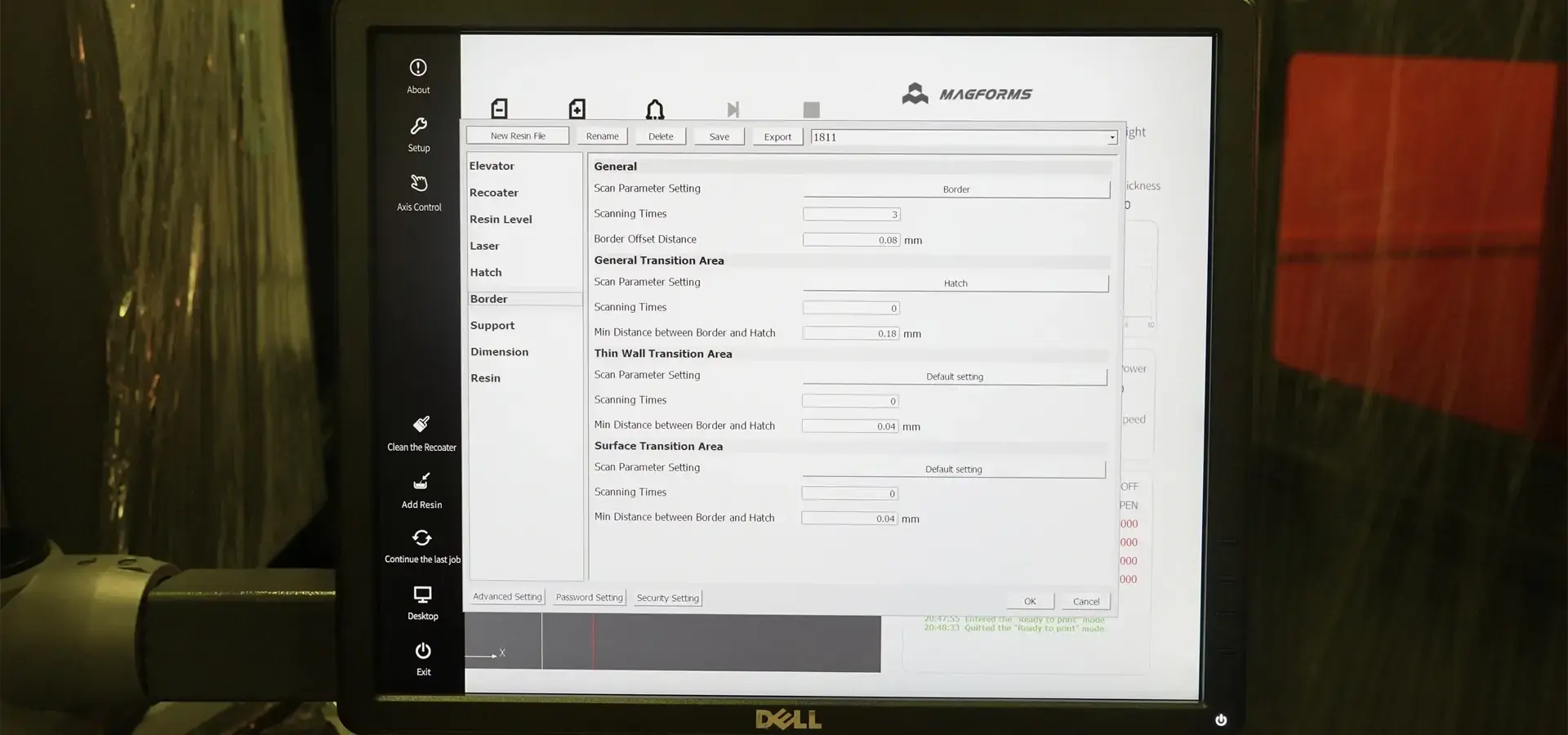
Maintenance Requirements and Operational Safety
Handling resin poses a risk of chemical exposure that needs to be managed with proper air and filtering. During printing, toxic organic compounds are removed by high-efficiency air filter devices. This protects the health of the user and meets safety standards in the workplace. When you do long-term cost planning, you should include the costs of consumables that go beyond the initial purchase price. Depending on the shape of the part, FEP films usually last between 50 and 200 prints. Build platforms, on the other hand, may need to be resurfaced after a lot of use. The ongoing costs of running machines that use standard, non-proprietary films and materials that work with a lot of different machines are lower.
Comparing Leading SLA 3D Printers on the Market
Industrial Versus Desktop Models: Feature Trade-Offs
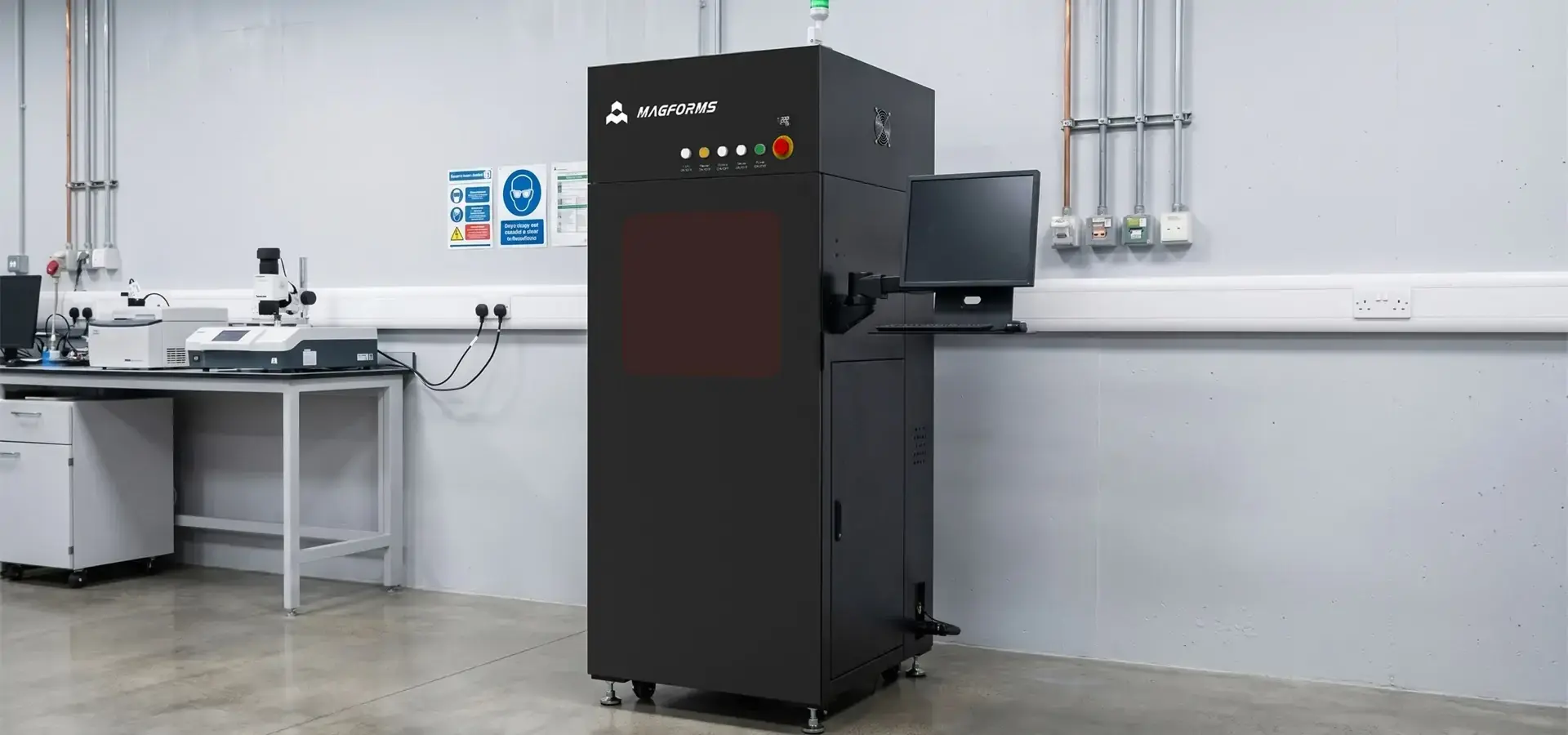
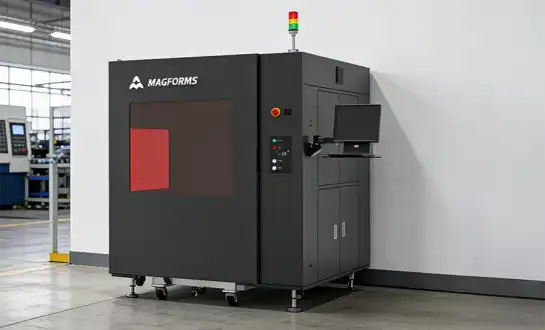
Desktop SLA printers that cost less than $5,000 are useful for design companies and schools that need to make prototypes from time to time. Most of the time, these machines have 100-150mm XY build areas that are accurate enough for idea models but not hard enough for production settings. Industrial SLA systems typically use rigid mechanical structures, precision motion assemblies, and calibrated optical systems for long-term dimensional stability. The Magforms Lab300 bridges the gap between compact laboratory SLA systems and larger industrial platforms by combining production-grade stability with a laboratory-friendly footprint. Its 300×300×300mm build volume supports larger engineering prototypes, dental production batches, and functional assemblies within a single build cycle. The Lab300 uses an industrial-grade galvanometer scanning architecture and precision mechanical structure to maintain dimensional consistency throughout the entire build height. This level of accuracy meets the needs of the aircraft industry for complicated joints and parts with odd shapes, where even small differences can lead to assembly problems. The Lab300 is specifically optimized for laboratory and professional office environments. With a machine length of only 774mm, it can fit into most commercial elevators and standard laboratory spaces while still providing a full 300mm-class build volume. Its granite-based recoating structure improves long-term mechanical stability during continuous operation.
Specialized Applications: Dental and Medical Configurations
Dental-focused SLA printers work best with safe resins that are approved for use inside the mouth. For Class I and Class IIa medical device rules, these systems have wavelengths and exposure profiles that are just right. The print parameters have been tested and proven to work with dental aligner models, surgery guide templates, and implant planning models. Material approvals from regulatory bodies make sure that printing devices meet the safety standards for patients, which cuts down on costly delays in validation. Machines that can handle more than one type of resin are useful in medical fields other than dentistry. For surgical tool samples, high-temperature resins that can be put in an autoclave may be needed. Anatomical models used for planning surgery before it happens use flexible materials that behave like soft flesh. Magforms' flexible platforms can handle this wide range of resins because they have exactly matched resin parameter files that get rid of the need for trial-and-error exposure calibration. This improves process stability and reduces calibration variability when switching between validated resin profiles.
Build Volume Considerations Across Industries
Consumer electronics teams that are developing housings for wearable tech need small build volumes but need very detailed surfaces for LED light pipes and snap-fit features. Larger platforms that let you make full-size copies of sculptures or building models are good for the artistic and cultural sectors. For footwear makers to print shoe models that fit all adult sizes, the X and Y measurements must be greater than 200 mm. Scaling problems are unique in the automotive and aircraft industries. Individual precision components can fit into small build spaces, but making more than one part in a batch saves money. The Lab300's 300×300mm platform allows multiple medium-sized engineering components or dental production batches to be nested within a single build cycle. This lowers the cost of each part and speeds up the time it takes to do validation testing. This feature is especially helpful for service bureaus that handle a wide range of client orders with different shapes.

Procurement and After-Sales Considerations for SLA 3D Printers
Total Cost of Ownership Beyond Purchase Price
The cost of acquisition is only one part of long-term spending. The highest ongoing cost is the material used. Photopolymer resins can cost anywhere from $50 to $400 per liter, based on their mechanical qualities and standards. Machines that can only use private materials make these costs go up a lot, but open-platform systems that can use resins from other companies give you more options for where to buy them. Figure out how much the materials cost each year based on how they are really used, taking into account things like glue that gets stuck in support systems and tank leftovers. Schedules for replacing consumables have an effect on operations budgets. The Lab300 features a removable resin tank design that simplifies material switching and reduces downtime between production runs. Build bases may need to be sanded or coated again every so often to keep them sticking. Include these repair rounds in cost estimates for more than one year.
Evaluating Supplier Reputation and Support Infrastructure
When problems happen, having reliable expert help keeps costs low. Check how quickly the seller responds to questions about fixing and the availability of extra parts. Manufacturers with established service centers in North America or Europe can guarantee requests are faster than those that need to ship new parts across international borders. Training materials, such as video lessons, application classes, and sample print profiles, help operators get better faster and waste less paper on failed prints while they are learning. A stereolithography 3D printer benefits from this same principle. Magforms shows its dedication by offering full technical support backed by 30 registered trademarks and 22 patents in the fields of mechanical engineering and materials science. We have a lot of application knowledge because we've worked with over 300 companies around the world in the aerospace, automobile, medical, and service office industries. We make sure we stay up to date on changing customer needs by attending big industry shows in Europe and Asia. The information we gain from these shows helps us improve our products and offer more materials.
Scalability and Upgrade Pathways
As a business grows, it may need more powers than it originally needed. Modular printer designs let you make small changes over time, like adding automatic systems for handling resin, adding sensors to watch the environment, or updating the software to work with new materials, without having to buy whole new machines. This method keeps production flexible while protecting capital investments. Controlled environmental conditions and stable resin temperature management help maintain resin viscosity consistency and dimensional repeatability during long print cycles. This flexibility makes sure that your SLA platform stays competitive as the complexity of the project rises, escaping the forced retirement that happens with closed-architecture systems.
Making the Final Decision: Matching SLA 3D Printers to Your Business Needs
Segmenting Requirements by Industry Use Case
The consistency of material properties and resistance to temperature are the most important things for engineering teams that do functional tests. For these uses, you need resins that look like the end products, like ABS-like, polypropylene-like, or glass-filled composites, and tools that can keep precise measurements even when the temperature changes. Some industrial printers have built-in batch-tracking software that can provide traceability documents and material certifications for aerospace parts. When there is a lot of output, the attention shifts to improving efficiency and leaving the machine to run by itself. Automation of tracking resin levels, remote job queue, and built-in post-processing equipment all cut down on the need for labor. To make decisions about capacity planning, you need to figure out the points at which the costs of SLA printing and standard manufacturing methods equalize. When production costs are taken out, parts with complicated internal channels or undercuts often reach cost parity at surprisingly low numbers.
Structured Evaluation Framework
Make weighted score factors that show what's most important to you. Factors like precision of measurements, build volume, suitability of materials, buy price, and quality of seller support are important values. Standardized test prints should be used to compare the chosen machines to these standards. Lattice structures should show XY accuracy, thin walls should show Z-resolution, and functional units should show that big parts are all the same size. Before you decide to buy, ask for model parts that have been made of the materials you want. Visual inspection shows how good the surface is, but mechanical testing gives you important information about how well it works. Measurements of tensile strength, elongation at break, and heat deflection temperature show whether printed parts meet the needs of the application. If a vendor is ready to give you samples before you buy, it shows that they have faith in their tools and care about customer service.
Future-Proofing Your Investment
In additive production, technological progress keeps speeding up. New technologies like variable spot-size lasers, AI-optimized scanning tracks, and closed-loop process tracking are making things more reliable and productive. Machines that use these technologies have a competitive edge because they can make things faster and fail less often. This commitment to continuous engineering optimization is reflected in improvements to scanning stability, motion control precision, and workflow efficiency. Think about how ecology and changes in the law are affecting your business. More and more, rules about medical devices need processes to be validated and tracked in writing. High-performance building materials are in high demand because of efforts to make cars lighter. You can avoid printers going out of date too soon by choosing ones with clear upgrade paths and company roadmaps that are in line with industry trends. Magforms is committed to ongoing research and development (R&D) and has a global market footprint, serving customers in over 100 countries. This means that our systems can change with customer needs instead of needing to be replaced when those needs change.
Conclusion
Finding the best stereolithography 3D printer means weighing the technical specs, running costs, and quality of seller support against the needs of your particular application. When evaluating, don't just look at the purchase price; also look at how accurate the measurements are, how well the materials work together, how reliable the machine is, and the total cost of ownership. Finding the right printer for the job relies on how much is being made, what kind of finish is needed, and the qualities of the material. It's also important to make sure that the seller is quick to avoid long periods of downtime. Long-term ROI is based on a mix of tried-and-true technology, large material stores, and helpful expert support.
FAQ
What determines print quality in SLA printing?
Print quality is affected by many things that are linked to each other. The smallest repeatable features are controlled by the size of the laser spot. Smaller spots can record complex shapes, but may slow down the process. Surface smoothness is affected by the width of the Z-axis layers. Layers 25 to 50 microns thick produce a finish that is similar to injection molding. During long prints, the measurement shift is stopped by precision guide tracks that keep the machine stable. The resin chemistry and exposure measurements must be exactly the same. If the settings aren't tuned right, the parts will either not cure enough (become weak) or cure too much (become dimensionally inaccurate). All of the parts must work together for the picture to be successful.
How does SLA compare to DLP for detailed prototyping?
Both methods use ultraviolet light to harden liquid resin, but they are very different in important ways. SLA uses a scanning laser system capable of producing highly continuous contours and smooth curved geometries and is set by optics instead of fixed pixels. This makes the edges smoother and the letters smaller on slanted surfaces. DLP uses LCD screens or projectors to show whole layers at once. It lets you print faster, but the pixel density is usually only 50 to 100 microns. The continuous vector-scanning nature of SLA often delivers smoother surface transitions and finer edge detail for tasks that need visual sharpness or tiny features like microfluidic channels.
What safety protocols are essential for SLA operations?
Uncured photopolymer resins contain chemicals that respond when handled incorrectly. Nitrile gloves keep hands from touching the skin, and safety glasses shield eyes from UV rays while maintenance is being done. Ventilation in the workspace gets rid of dangerous organic compounds that are released during drying. High-efficiency filter systems built into good printers are enough to protect you. When cleaning with isopropyl alcohol after processing, it's important to get rid of the fumes properly. How resin is thrown away must follow city rules for dangerous trash. Full training for operators that includes how to handle chemicals and what to do in an emergency is still very important, no matter how advanced the printer is.
Partner with Magforms for Your Stereolithography 3D Printer Needs
It takes years of real-world application knowledge to be able to find your way around the crowded SLA printer market. Magforms develops SLA equipment and photopolymer material solutions for industrial and laboratory applications, supporting customers in aerospace, dental, medical, automotive, and prototyping sectors with integrated hardware and process expertise. It comes with full expert support and a large customer base around the world. Get in touch with our team at info@magforms.com to talk about how our tried-and-true SLA solutions can help you with your unique production issues and get suggestions that are tailored to your process needs.
References
1. Hull, C.W. "Apparatus for Production of Three-Dimensional Objects by Stereolithography." U.S. Patent 4,575,330, filed August 8, 1984.
2. Gibson, I., Rosen, D., and Stucker, B. "Additive Manufacturing Technologies: 3D Printing, Rapid Prototyping, and Direct Digital Manufacturing, Second Edition." Springer, 2015.
3. Jacobs, P.F. "Fundamentals of Stereolithography." Society of Manufacturing Engineers, 1992.
4. ASTM International. "ASTM F2792-12a: Standard Terminology for Additive Manufacturing Technologies." West Conshohocken, PA, 2012.
5. Chartier, T., Badev, A., Abouliatim, Y., Lebaudy, P., and Lecamp, L. "Stereolithography Process: Influence of the Rheology of Silica Suspensions and of the Medium on Polymerization Kinetics." Journal of the European Ceramic Society, 2012.
6. Melchels, F.P.W., Feijen, J., and Grijpma, D.W. "A Review on Stereolithography and Its Applications in Biomedical Engineering." Biomaterials, 2010.

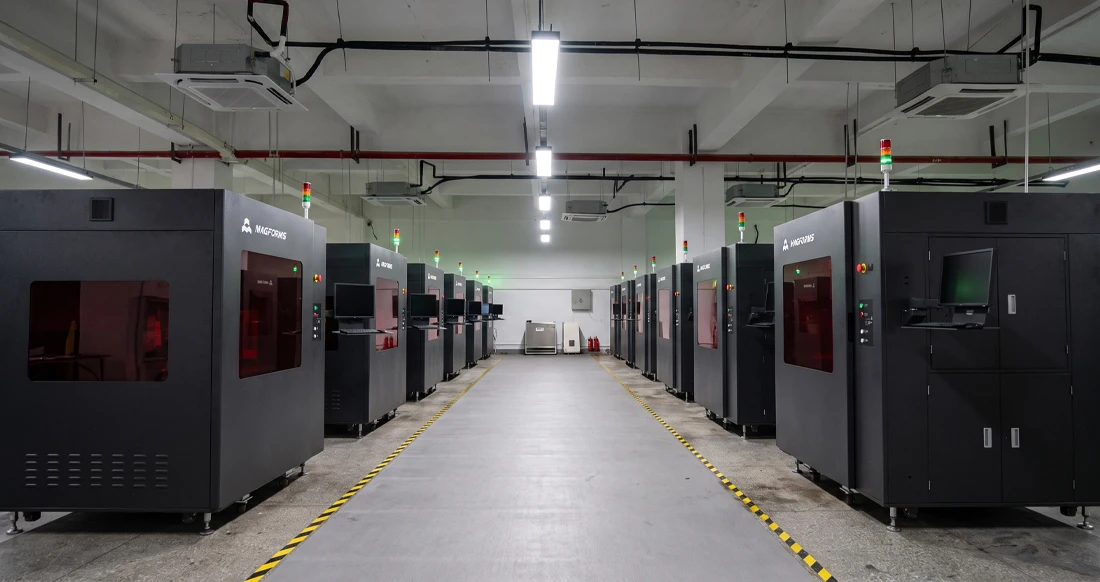
Magforms makes design and manufacture easier.
Popular Blogs
-
 Industry InsightsManufacturing Industry
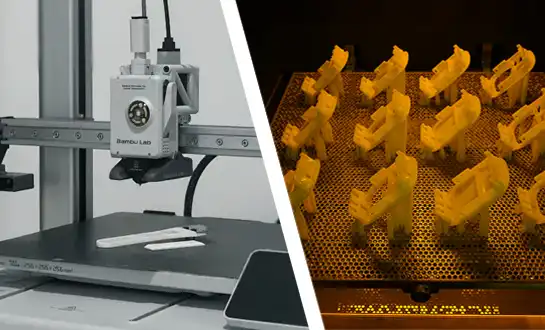
FDM vs. SLA Printer: Which Technology Is Right for Your Project?
-
 Industry InsightsManufacturing Industry
Top 5 Applications of Industrial 3D Printers in Manufacturing Today
-
 Industry InsightsManufacturing Industry
Why Stereolithography 3D Printers Are Unmatched for Microfluidic Device Prototyping?