Low Cost SLA Printer That Delivers Pro Quality?
Can professional-grade results really come from budget-friendly equipment? Yes. A low-cost SLA printer has grown from hobbyist gadgetry into a legitimate manufacturing tool capable of achieve XY resolutions typically in the 20–50 micron range at a fraction of standard industrial costs. By utilizing Masked Stereolithography (mSLA), also known as LCD-based vat photopolymerization, instead of traditional laser-galvanometer SLA systems, these desktop units achieve XY resolutions typically in the 20–50 micron range while keeping price points under $5,000. Businesses in dental labs, car R&D, and consumer electronics development now harness these systems to accelerate time-to-market, reduce outsourcing dependence, and perform chairside production—all without losing surface finish quality or dimensional accuracy.
Understanding Low Cost SLA Printers and Their Professional Potential
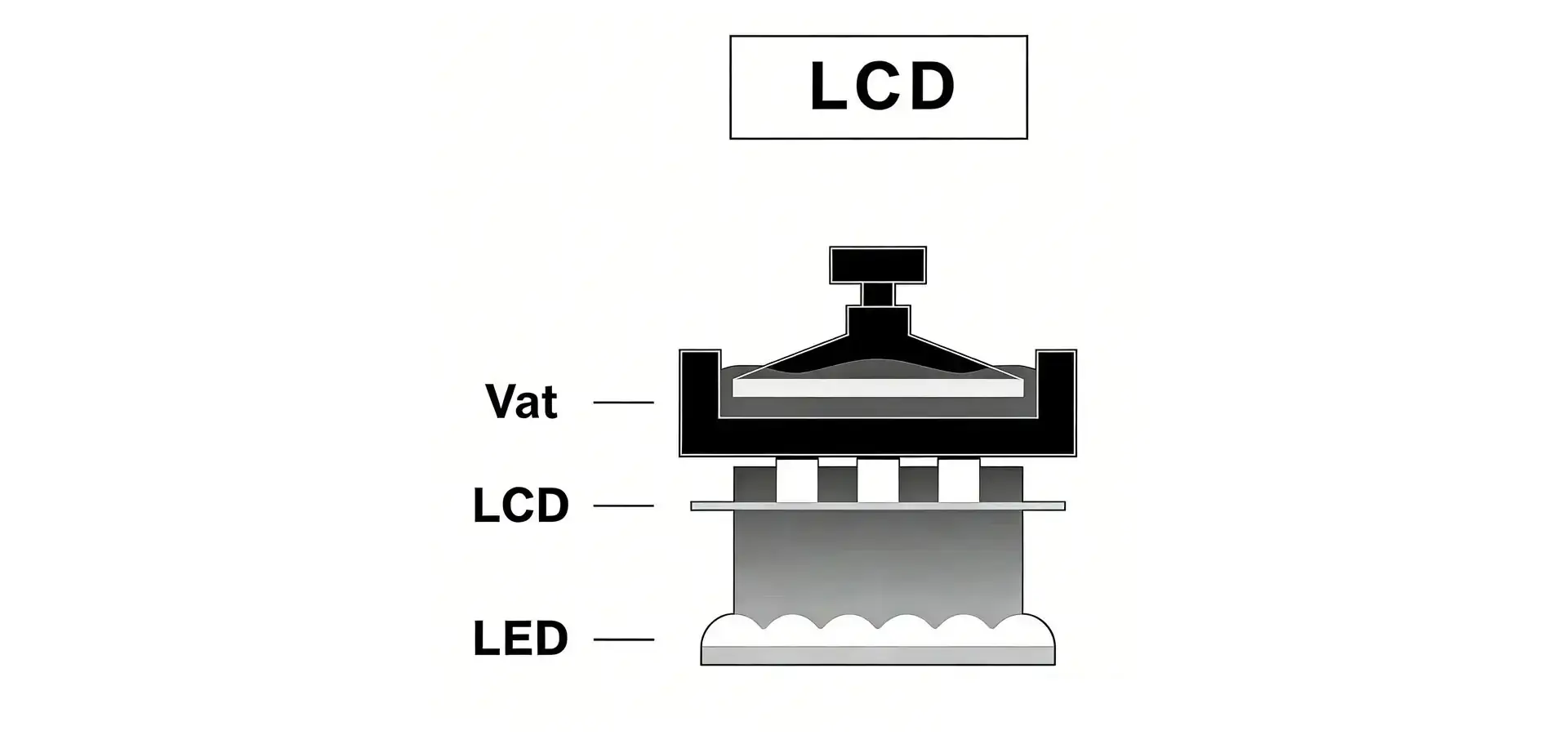
Stereolithography remains the gold standard for additive production when surface quality and precision matter most. Traditional industrial SLA systems achieve this goal through laser beams aimed by galvanometer mirrors, drawing each layer point-by-point. While successful, this method drives costs beyond $50,000 per unit—a barrier too steep for small design teams or rising service bureaus. Modern low-cost SLA printer models—more precisely mSLA systems—rethink this method. Instead of lasers, they employ high-resolution monochrome LCD screens positioned above a UV LED array. The LCD acts as a dynamic photomask, curing entire layers simultaneously through masked UV exposure. This parallel processing greatly lowers hardware complexity and build time for batch production. A single exposure can harden dozens of dental models or electronic housings at once, whereas FDM (Fused Deposition Modeling) printers must extrude each path separately.
How SLA Compares to Other 3D Printing Methods?
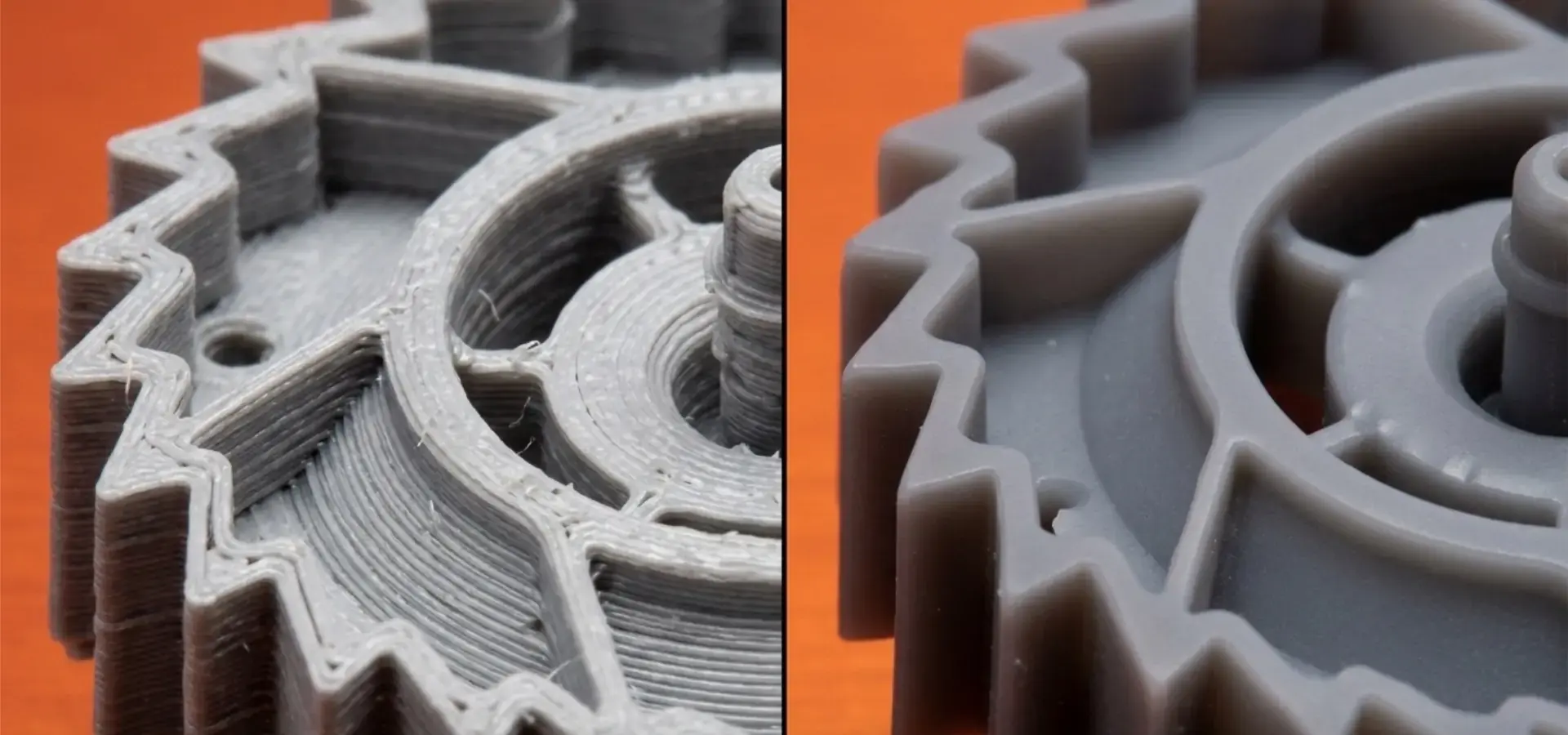
An engineer will often compare SLA to FDM and DLP (digital light processing) when looking at additive technologies. When it comes to a wide range of materials and low running costs, FDM is excellent. However, it has trouble with layer lines and uneven strength, which means that parts are more likely to exhibit weaker mechanical strength along the Z-axis compared to XY. DLP uses light sources that are based on projectors. It has speeds that are similar to LCD systems, but the technology costs more because it uses its optics. MSLA parts generally exhibit more uniform mechanical properties compared to FDM. Layer adhesion is stronger than filament-based processes, though Z-direction strength can still be slightly lower than XY. This technique significantly reduces visible layer lines and improves interlayer bonding compared to filament extrusion. This means that low-cost SLA printer outputs are perfect for samples that handle fluids, snap-fit parts, and threaded inserts because they are stable in size. Recently, a company that makes medical devices confirmed that surgery guide margins were within ±0.1mm using an entry-level SLA unit. This level of accuracy used to require CNC machining.
Realistic Expectations for Budget Models
Being honest about your limits builds trust. Most entry-level systems have build sizes that are between 120x68x150mm and 192x120x250mm. This is big enough for dental arches, jewelry casting patterns, or small car connectors, but not big enough for full-size helmet prototypes. Even though print speeds are faster than FDM for fine features, it still takes 6–10 hours to make something 100 mm tall because of the peel forces that happen when the layers are separated. Another thing to think about is how well the materials will work together. Most low-cost SLA printer units can use 405 nm photopolymer resins from several different manufacturers, but tuning is needed to get the best results. Exposure times must meet the resin recipes; too little curing makes the resin brittle, and too much hardening causes it to swell in size. Procurement teams need to check with makers to see if they offer proven resin profiles or open-parameter access for third-party materials. This is a key part of keeping costs down for consumables.
Key Features of Low-Cost SLA Printers That Deliver Pro Quality
To distinguish between user toys and production-ready tools, one must closely examine the technical specifications. New models from 2024 have standardized certain criteria that tell the difference between commercially useful tools and disappointing purchases.
Resolution and Optical Performance
The XY resolution of an LCD screen directly correlates with its pixel size. A 4K black-and-white screen with 3840x2400 pixels on an 8.9-inch width gives you pixels that are about 47 microns thick, which is fine for most modeling. When you upgrade to 8K (7680x4320), this size drops to 28 microns, which lets you read text at 6-point font sizes and catch threads as small as M1.4. The Z-axis can change the layer height from 10 microns to 100 microns, which lets you find a good balance between speed and finish quality. Light consistency keeps edges from breaking. COB (Chip-on-Board) LED clusters and Fresnel lenses make sure that the light strength doesn't change more than 5% across the build plate. Cheap units that use standard LED strips often have vignetting, which means that parts at the platform corners may not cure properly, which wastes resin and time. In seller spec sheets, optical uniformity testing should be listed. Values above 90% regularity mean that the engineering is professional-level.
Material Versatility and Engineering Resins
Standard photopolymer resins can be used for simple form-and-fit checks, but for engineering uses, they need to be made in a certain way. For functional testing, ABS-like resins can withstand impacts; flexible resins (Shore hardness 50A–95A) can act like rubber gaskets; high-temperature resins can achieve heat deflection temperatures (HDT) up to around 200–238°C after proper post-curing for injection mold testing. Dental resins can be biocompatible when certified under standards such as ISO 10993 or USP Class VI, depending on formulation and application. For metal investment casting, castable resins burn out without leaving ash. Low-cost SLA printer makers are increasingly providing their own material environments for printing. Magforms is a positive example of this trend because it has over 22 patents that cover photopolymer chemistry and cure optimization. When compared to mix-and-match methods, their resin-hardware pairing removes the need for trial-and-error calibration, which leads to an average 40% fewer bad prints. When production plans can't handle trial breaks, engineers like this vertical integration.
Maintenance Protocols and Uptime Maximization
Professional use habits quickly show where the equipment is weak. The clear layer at the bottom of the vat is made of FEP release films. These films usually last 20 to 50 prints before they become cloudy and stop letting light through. Proactive replacement plans help avoid mid-batch problems. Some high-tech, low-cost SLA printer models now have nFEP that lasts more than 100 cycles, which means they don't need to be serviced as often. The total cost of ownership is directly related to how long an LCD screen lasts. Monochrome screens usually last 2,000 hours, which is four to five times longer than their RGB peers. If it is used for eight hours a day, that's 250 working days, which is almost a full business year. Procurement should verify whether new screens are standard components or custom assemblies that the manufacturer needs to assemble.
Comparative Analysis of Top Low-Cost SLA Printers for B2B Procurement
When choosing tools, you need to look at more than just marketing claims. We looked at well-known models that cost less than $2,000 using recorded performance measures and confirmed user feedback from 3D printing service providers, dental labs, and product design companies.
Anycubic Photon Mono X 6K has a build volume of 197 x 122 x 245 mm and a 9.1-inch 6K screen with 34-micron XY resolution. Field reports show that the system works reliably for making many dental models. Users say that the software is stable and that technical help is quick to respond. For people who buy in bulk, Anycubic is ready to arrange discounts for orders over 10 units and offers extended warranties on LCD panels, which is not common in this price range. Elegoo Saturn 2 has similar specs, but it has a rotating vat system that lowers peel forces and makes FEP last longer. Engineering companies like that work with the Chitubox slicer and have hollowing algorithms that make bigger parts 30% less likely to use plastic. Electronic parts come with a 12-month warranty, and user groups have large databases of information on how to resolve problems when official routes are slow.
Phrozen Sonic Mini 8K is aimed at the jewelry and dental industries. It has an 8K screen with 22-micron XY resolution and a small 165x71x130mm base. The build volume limits its use in cars, but its accuracy makes it perfect for making complex tooth copings and investment casting patterns. Buying groups like Phrozen's packed material profiles because they take the guesswork out of calibrating their resin line. Choosing between these choices depends on the business's needs. Larger platforms, like the Mono X, are better for high-mix, low-volume operations. Specialty dental labs prioritize the precision of the Sonic Mini. Service companies that handle a wide range of client requests usually keep several low-cost SLA printer types on hand to quickly meet the needs of each job.
Buying in bulk has benefits beyond lowering the price per unit. When you buy more than five units, vendors often send starter resin kits, new vats, and longer guarantees together. Some sellers provide consignment plans that allow companies to reduce their capital risk by keeping equipment on-site and postponing payment until they achieve specific production goals. At scale, negotiating the warranty becomes crucial. Standard coverage for one year can be extended to three years for groups with more than 20 printers, and failed parts will be replaced within 48 hours. Automotive R&D departments and dental lab groups leverage this buying power to minimize production interruptions.
Strategic Procurement Guidelines for Low Cost SLA Printers
Buying with trust comes from knowing the total cost of ownership and making sure that the skills match the needs of the business. The initial sticker price accounts for only 30 to 40 percent of the five-year costs when considering consumables, upkeep, and work.
Total Cost of Ownership Analysis
Resin use causes recurring costs. Resin consumption varies significantly depending on part geometry, hollowing strategy, and support density rather than build height alone. A liter of engineering resin costs about $50 to $80, while a liter of biocompatible or high-temperature custom mixture costs about $120 to $150. A dental lab that prints 50 models every month uses about 10L of resin, which costs between $600 and $800 in materials alone. Having extra goods accumulates over time. For cleaning uncured resin, isopropyl alcohol (IPA) costs $15 to $25 per gallon, and labs use two to three gallons of it every week. After processing, UV curing stations can cost anywhere from $150 for entry-level machines to $800 for industrial rooms with nitrogen purge. Another $200 to $300 a year goes toward gloves, filters for cleaning the vat, and new build plates. The amount of work time needs to be measured. Post-processing, which includes cleaning, curing, removing supports, and sanding, usually takes 15 to 30 minutes per build. Outsourcing this job costs $20 to $40 per batch, while doing it in-house means missing out on other opportunities. Low-cost SLA printer models with automatic washing stations cut hands-on time by 60%, so the extra $800 to $1,200 is worth it for high-throughput settings.
Application-Specific Use Cases
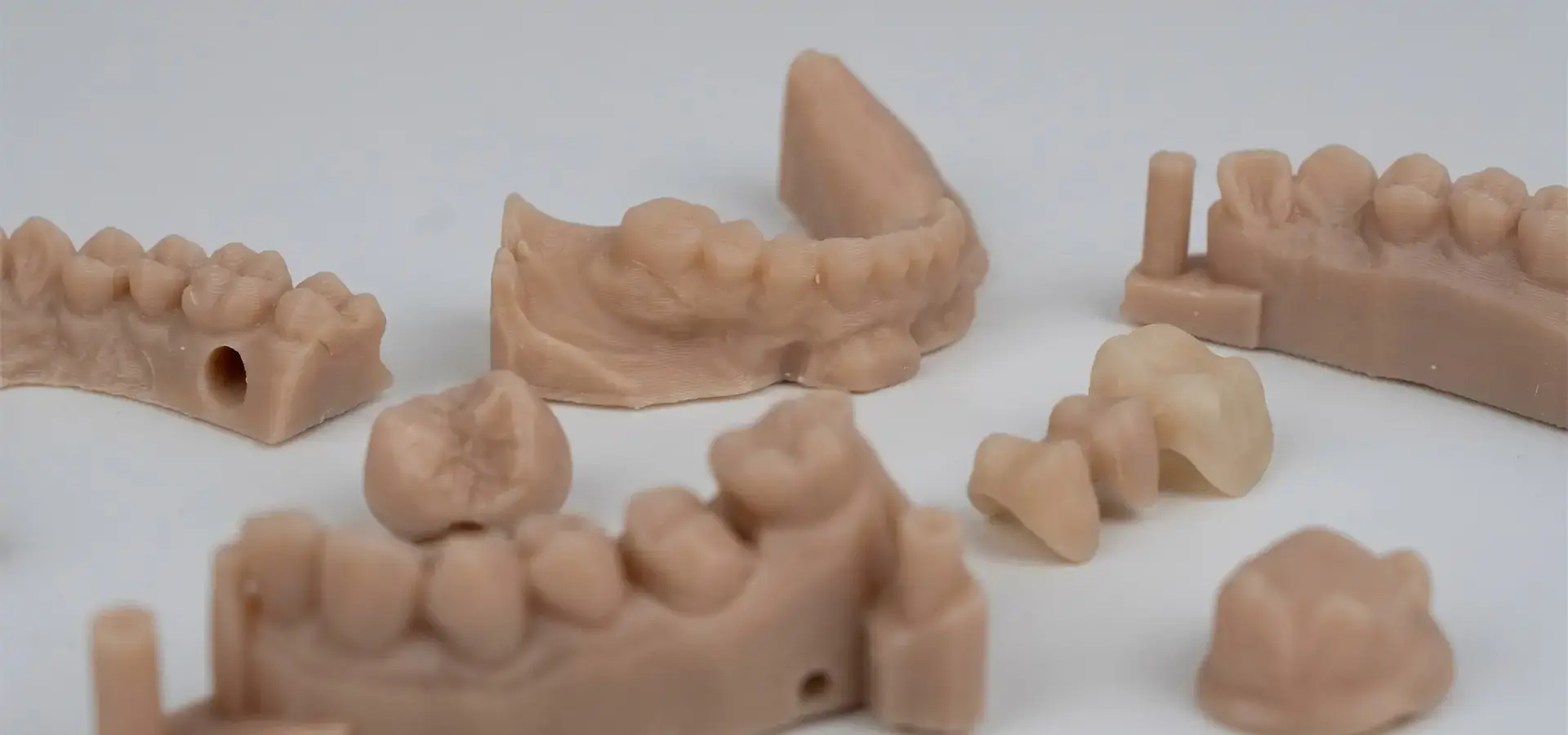
Avoiding over-purchasing or gaps in capabilities is possible by aligning the printer's capabilities with the business's needs. A company that makes consumer electronics, which is testing earbud housings, needs a resolution of 50 microns and toughness similar to ABS, but the build height can be 120 mm. On the other hand, aircraft component validation needs platforms that are 192 mm x 120 mm x 250 mm to fit turbine blade models, even if the resolution is lowered to 75 microns. When making shoe sole casts, footwear makers make sure that the flexible resin works well with the mold and shrinks as little as possible after curing. Medical device companies that are making surgical tools need biocompatible certifications (USP Class VI) and proof that the materials can be tracked. Before sending out an RFQ, procurement processes should match these needs with seller spec sheets.
Brand Spotlight — Leading Low-Cost SLA Printer Manufacturers
Not only does the brand you choose affect the quality of the hardware, but it also affects the ecosystem support, which includes software changes, material libraries, and community tools that make the hardware useful for years to come.
Magforms stands out because it integrates materials and tools all the way up the chain. Their equipment combines advanced mSLA exposure systems with optimized light uniformity and process control algorithms to improve print consistency and reduce print time by up to 30% in validated workflows. They have 22 patents covering photopolymer formulations and optical systems. Sub-100 micron tolerances have been validated in controlled testing environments for high-precision industrial applications. Comparative field studies show that their combined method cuts failure rates by 40% and gets rid of the compatibility problems that come up when third-party resins are used. There are service networks in more than 30 countries, and more than 300 business clients have confirmed that the professional help and training programs are reliable.
Anycubic has the biggest user group. Its boards have more than 200,000 active people who share optimized print settings and work out edge cases. This crowdsourced knowledge base speeds up the process of fixing problems when official help lines are busy. Their modular design theory lets you fix individual parts instead of replacing whole units, which saves money and extends the life of tools in cost-conscious situations.
Elegoo focuses on being open-source compatible, which means that it can work with third-party slicers and plastic formulas. Engineering teams like software that is clear because it lets them make changes that work with their specific processes. Their extreme price strategy is aimed at new businesses and schools that have to make buying decisions based on limited funds.
Which of these names to use relies on the needs of the business. Magforms' packaged options are popular with businesses that want reliable performance and full support. Anycubic or Elegoo are good choices for startups that like to try new things and let the community drive innovation. Both methods work as long as they are in line with low-cost SLA printer maturity and risk tolerance.
Conclusion
Decisions about buying low-cost SLA printer tools are now based on facts instead of guesses. These systems give you professional-level accuracy, surface finish, and material flexibility at prices that small businesses and growing producers can afford. Thanks to improvements in technology like monochrome LCDs, COB light sources, and better plastic chemicals, performance gaps that used to justify industrial units costing $50,000 or more are now closed.
Strategic buyers know that the initial costs are only a small part of the total costs of owning. Long-term ROI is based on material suitability, ease of upkeep, and provider support environments. Adoption comes with some production risks, but brands that offer integrated solutions, validated material profiles, and fast technology teams can lower those risks. The technology has grown up enough that it can now be used to make solid production tools for dentist labs, car R&D, consumer electronics prototyping, and many other fields that need high precision on a large scale.
FAQ
Can low-cost SLA printers match industrial machine accuracy?
These days, low-cost SLA printer units can print with XY precision of 22 to 50 microns and Z-layer heights of 10 microns, which can approach industrial-level resolution for small parts, though industrial SLA systems still outperform in consistency, scalability, and validation. For properly adjusted tools using matching resin profiles, dimensions must be accurate to within ±0.1 mm. If you compare desktop units, the biggest difference is in the amount of space they can build (about 250 mm) and how fast they can work. Larger platforms and faster laser scans are what make industrial machines worth their high price, but better accuracy for small to medium-sized parts isn't always a result of these features.
Are third-party resins compatible with budget SLA printers?
A lot of low cost SLA printer units can use 405nm photopolymer plastics from different companies, but the products will be different. Calibration means changing exposure times, lift speeds, and layer cure levels to match different resin formulations in order to get the best results. When you use non-proprietary materials, some makers will not honor your warranty, while others will let you access them using open parameters. When evaluating vendors, buyers should be clear about material standards, especially when cost control calls for buying resin from more than one source.
What maintenance frequency should B2B operations expect?
Every 20 to 50 builds, the FEP film needs to be replaced (nFEP versions last 100 cycles or more), the vat needs to be cleaned after each resin change, and the build plate needs to be leveled once a month. After 2,000 to 3,000 hours of use, or about a year of heavy use, LCD screens need to be replaced. Failures in the middle of production can be avoided with proactive plans. Many businesses keep extra vats and FEP films on hand for quick swaps. Compared to older RGB screens, which broke after 500 hours, monochrome LCD screens last a lot longer and have much less downtime.
Partner with Magforms for reliable, low-cost SLA printer solutions.
Magforms is ready to help you with your precise additive manufacturing needs with professional-grade material-equipment solutions that work together. Our low-cost SLA printer offerings combine high-resolution accuracy in the tens of microns range, up to 30% faster print times through optimized exposure control and process tuning, and full resin compatibility backed by 22 patents in photopolymer chemistry. We offer turnkey solutions that get rid of the need for trial-and-error calibration and cut failure rates by an average of 40% for over 300 companies in the aircraft, medical, automobile, and consumer electronics industries.
Our programs for buying in bulk, choices for longer warranties, and quick expert support in dozens of countries all help procurement teams. Our engineering team offers application-specific advice to make sure that the tools you buy meet your unique needs, whether you are setting up a new 3D printing service bureau or increasing production for an existing dental lab. You can email us at info@magforms.com to talk about volume pricing for low-cost SLA printer systems, ask for sample prints that show how the system works with certain materials, or set up an in-person presentation. Magforms makes and sells high-precision 3D printing systems that are meant to speed up your production processes while still meeting professional quality standards.
References
1. Gibson, Ian, David Rosen, and Brent Stucker. Additive Manufacturing Technologies: 3D Printing, Rapid Prototyping, and Direct Digital Manufacturing, 2nd Edition. Springer, 2015.
2. Ligon, S. Christian, et al. "Polymers for 3D Printing and Customized Additive Manufacturing." Chemical Reviews, vol. 117, no. 15, 2017, pp. 10212-10290.
3. Quan, Hao, et al. "Photo-curing 3D printing technique and its challenges." Bioactive Materials, vol. 5, no. 1, 2020, pp. 110-115.
4. Stansbury, Jeffrey W., and Mike J. Idacavage. "3D printing with polymers: Challenges among expanding options and opportunities." Dental Materials, vol. 32, no. 1, 2016, pp. 54-64.
5. Tareq, Mohammed S., et al. "Additive manufacturing and the COVID-19 challenges: An in-depth study." Journal of Manufacturing Systems, vol. 60, 2021, pp. 787-798.
6. Zhu, Zekai, et al. "Machine learning in stereolithography: Predicting and optimizing print quality." Additive Manufacturing, vol. 48, 2021, pp. 102-118.

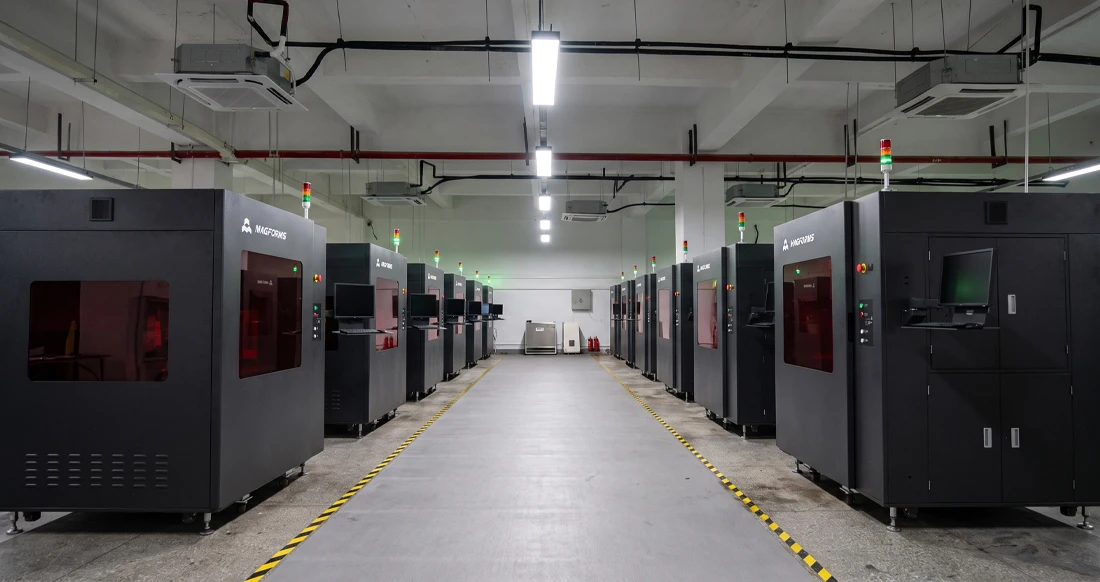
Magforms makes design and manufacture easier.
Popular Blogs
-
 Industry InsightsManufacturing Industry
FDM vs. SLA Printer: Which Technology Is Right for Your Project?
-
 Industry InsightsManufacturing Industry
Top 5 Applications of Industrial 3D Printers in Manufacturing Today
-
 Industry InsightsManufacturing Industry
Why Stereolithography 3D Printers Are Unmatched for Microfluidic Device Prototyping?