Top Budget SLA Printers for Fast and Precise Printing
When businesses are looking for low-cost, highly accurate ways to print, a Budget SLA printer is the answer. Advanced resin-based 3D printing systems offer micron-level accuracy and smooth surface finishes at prices that most people can afford. This makes technology available to more people than it was before, when it was only available to large businesses with lots of money. Budget SLA printers let startups, service bureaus, and established manufacturers speed up prototyping cycles and increase production without lowering quality standards because they are affordable and perform at a professional level.
Introduction
Budget SLA (stereolithography) printer systems have changed how industrial, manufacturing, and small businesses buy things from each other. This is especially true in fields where speed and accuracy are important for staying ahead of the competition. Traditional ways of making things need expensive tools and a long time to set up. These cheap devices, which are often priced below strategic capital expenditure thresholds, can print at high resolutions that make prototyping and production workflows more efficient. When businesses choose the right Budget SLA printer, they can improve operational efficiency, cut costs, and speed up time-to-market in competitive markets.
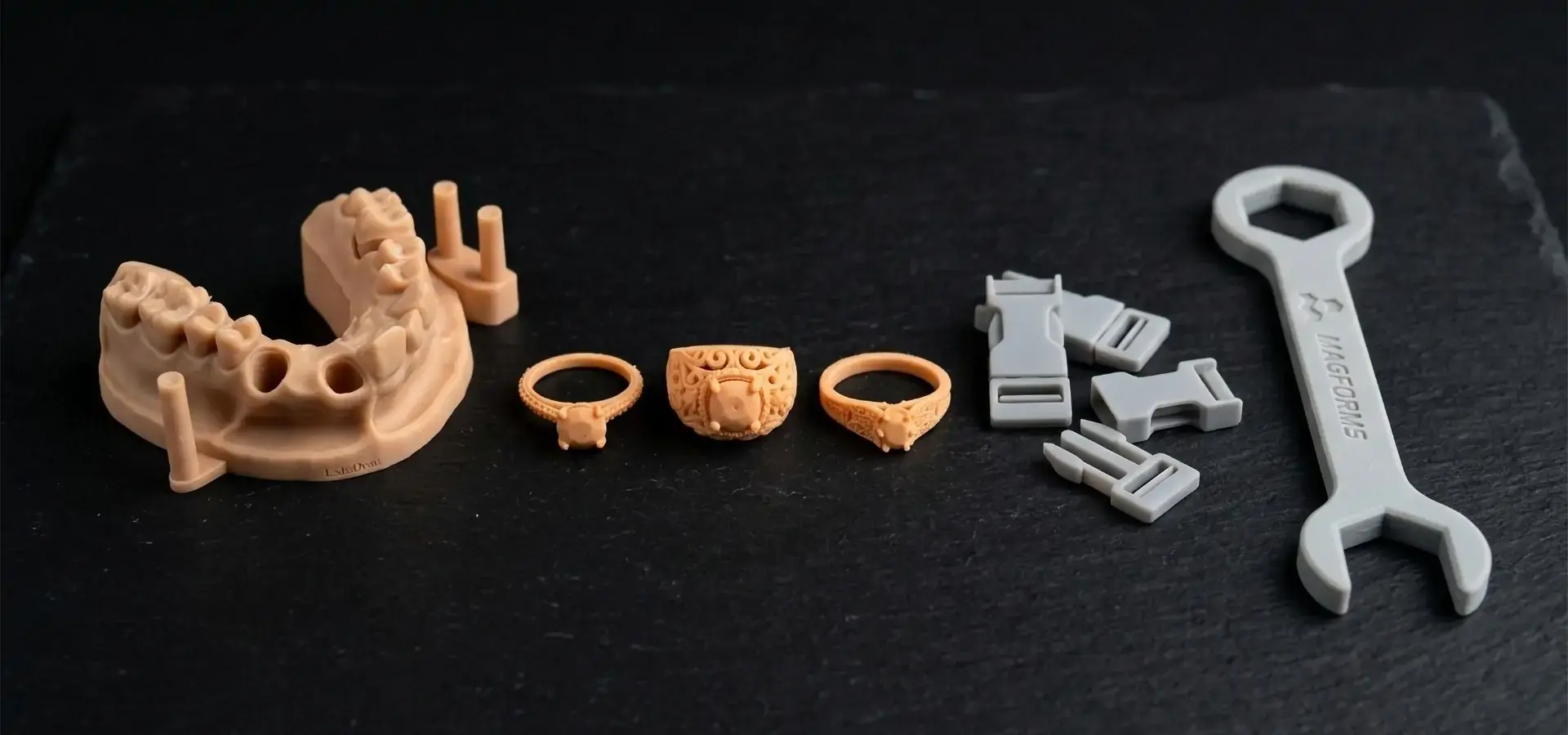
Resin 3D printing is becoming very popular very quickly because it has real business benefits. Instead of weeks, engineering teams make prototypes that work in hours. Dental labs use biocompatible materials to make models that are unique to each patient. Jewelry makers make casting patterns that are very complicated and cannot be made with traditional methods. These real-life examples show how Budget SLA printers solve important problems, like inaccurate old equipment, wasted materials during batch printing, and slow customer service that delays production schedules.
Understanding Budget SLA Printers and Their Advantages
Budget SLA printers are a big step forward in the technology of additive manufacturing. Traditionally, SLA (Stereolithography) refers specifically to laser-based photopolymerization systems. However, most modern budget SLA printer options on the market are technically based on mSLA (Masked Stereolithography), which uses LCD masking instead of laser scanning. In this method, high-resolution LCD screens and UV LED arrays are used instead of complicated galvanometer-laser assemblies to selectively cure entire layers simultaneously through pixel-level masking exposure. This made the system simpler and got rid of the need for complicated optical calibration. It also greatly reduced the amount of space needed for equipment and the amount of money needed to buy it.
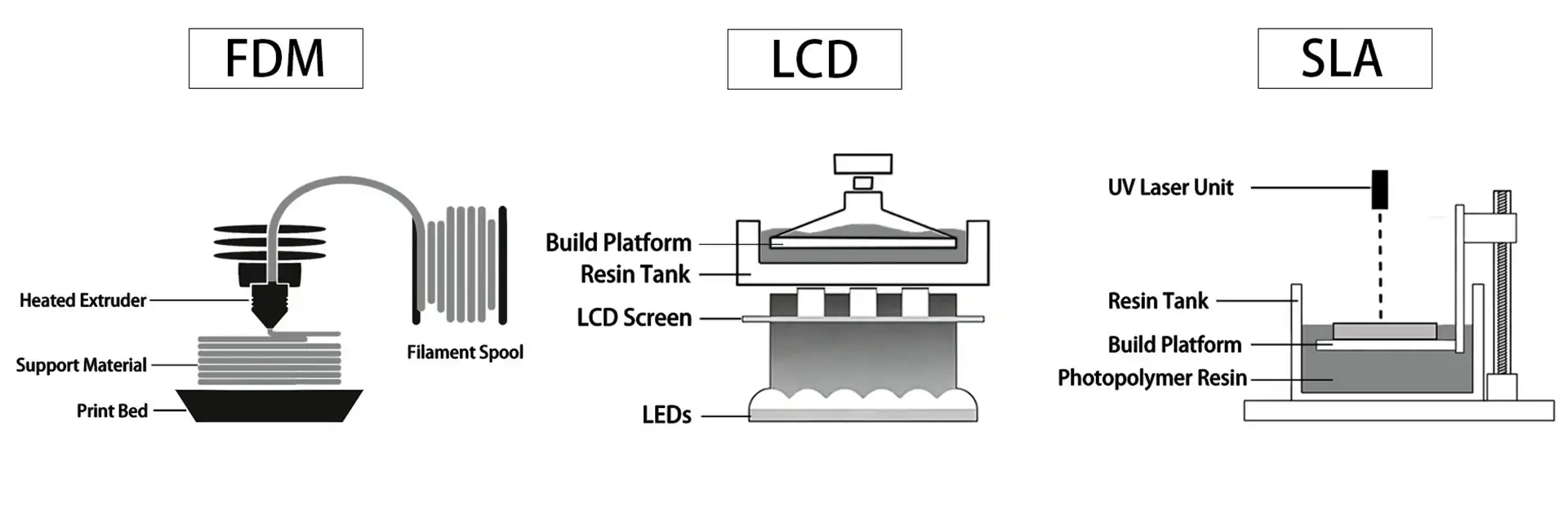
These systems primarily use photosensitive resins optimized for 405 nm UV light, which is the current industry standard for most mSLA-based budget SLA printer systems. Current budget SLA printer models feature 4K, 8K, or even 16K screens, resulting in XY resolutions typically ranging from 18 to 50 microns, depending on screen size and pixel density. This level of accuracy makes it possible to copy fine surface textures like skin pores, fabric weaves, and complex mechanical threads that can't be done with filament-based alternatives. Layer curing times have gotten faster, down to 1 to 3 seconds. This is 30% faster than older RGB screen technology.
Beyond raw specs, parts exhibit more uniform mechanical properties compared to FDM prints, though they are not fully isotropic and may still show slight variation along the Z-axis due to layer bonding. Surface finishes don't need as much post-processing as FDM (Fused Deposition Modeling) options, which cuts down on labor costs and speeds up delivery times. A wide range of resin types is supported, including standard, ABS-like, flexible, tough, water-washable, and specialized castable formulations. This means that they can be used for a wide range of purposes, from functional prototypes to final parts.
Key Technical Parameters Defining Quality
Professional-grade Budget SLA printer systems are different from entry-level options in a number of important ways. Stability in the Z-axis is still very important. Dual linear rails or strong single-rail systems keep wobble to a minimum, making sure that layers are consistent down to 10 microns. Light source uniformity, measured through radiometer testing, should achieve greater than 90% consistency across the build plate to prevent edge delamination or corner warping. In contrast to older RGB panels, which broke down quickly when exposed to UV light, monochrome LCD screens last longer—more than 2,000 hours. Take into account the build volume to find the right balance between mechanical precision and workspace flexibility. Smaller formats (about 120x68x150mm) are good for dental and jewelry design, while medium-sized platforms can hold parts for the inside of cars and cases for consumer electronics. Because validated 405 nm resins are optimized for specific exposure parameters, they help ensure reliable and repeatable curing performance. This gets rid of the need for time-consuming, trial-and-error material testing.
Comparative Advantages Over Alternative Technologies
When you compare Budget SLA printer technology to FDM alternatives, you can see the differences right away. Resin systems can achieve dimensional accuracy of within ±0.05 mm, which meets the strict needs of prototyping aerospace connectors and making medical surgical guides. It is possible to print complex internal geometries with overhangs and lattice structures with significantly reduced support requirements compared to FDM, though support structures are still necessary for most geometries. This saves time and material. Filament extrusion methods always face the issue of visible layer lines, but a smooth surface eliminates this problem. The cost equation includes more than just the initial cost of buying equipment. The amount of resin used for each part can be predicted and measured, which helps service bureaus give accurate project quotes. When the right maintenance steps are taken, the number of print failures goes down a lot. This means that less material is wasted during batch production runs. All of these things work together to speed up return on investment, especially for companies that deal with high-mix, low-volume production.
Top Budget SLA Printers for Fast and Precise Printing
To choose the best budget SLA printer, you need to carefully look at its performance in several different areas. Print speed, layer resolution, resin consumption, machine reliability, and material compatibility are the primary criteria for evaluation. Leading models on the market right now show that equipment that costs less than $1,000 can match the curing times and precision metrics of machines that cost twice or three times as much.
Essential Evaluation Criteria for B2B Procurement
During equipment validation, technical directors and workshop supervisors should put a high priority on a number of measurable parameters. The smallest detail that can be reproduced depends on the XY resolution. For example, jewelry castings and miniature modeling need tolerances below 30 microns, while industrial prototyping can handle tolerances between 40 and 50 microns. Setting the layer height, which is usually between 10 and 100 microns, affects the trade-offs between surface finish and production speed. The adhesion mechanisms on the build plate must be able to reliably bond the first layer without damaging delicate parts when the part is taken off. Print consistency is directly affected by the architecture of the light engine. COB (Chip on Board) or collimated LED light sources spread UV energy evenly, so there are no differences in intensity that could lead to uneven curing or edge failures. FEP (Fluorinated Ethylene Propylene) or ACF (Anti-Stick Coating Film) release layers need to be properly tensioned. Too much tension can increase peel forces that can tear delicate features, while too little tension can cause resin to pool and print adhesion issues.
Industry-Specific Performance Requirements
Budget SLA printer systems have to meet different technical requirements in different fields. Dental labs need to make sure that the biocompatible resin is certified and that the measurements are correct enough so that they can thermoform aligner molds directly from printed models. When it comes to automotive prototyping, bigger build volumes that can make full-size interior trim samples are emphasized. Jewelry makers need resins that can be cast and have no ash left over after burning out. This keeps investment casting from going wrong. Teams that work on consumer electronics value fast iteration cycles over maximum build size and print speed over maximum build size.
Material Compatibility and Ecosystem Considerations
Total ownership costs are greatly affected by the cost and availability of compatible resins. Buyers are stuck in single-source supply chains with high costs for consumables because of proprietary material systems. This is a problem that small businesses with limited budgets often point out. Open-architecture Budget SLA printer models provide operational flexibility and cost control, but require careful validation of exposure parameters to ensure consistent print quality. Material property ranges span from standard resins suitable for visual prototypes to engineering-grade mixtures that look and act like ABS or polycarbonate. Flexible resins can be used to make prototypes of gaskets and seals, while tough resins can stand up to functional testing. Castable formulations are useful for jewelry and dental prosthetics, and water-washable types get rid of the need to handle dangerous solvents. This variety lets companies stick to a single platform while still being able to meet the needs of a wide range of applications by choosing the right materials.
How to Choose the Right Budget SLA Printer for Your Business?
Before making strategic procurement decisions, organizations need to be clear about their production scale, accuracy needs, and material compatibility requirements. When it comes to small-batch customization, small design studios and new service providers focus on finding reliable, low-cost equipment. Medium-sized and large research and manufacturing institutions need high levels of stability and efficiency, as well as the ability to build larger amounts of things to support batch prototyping or bridge production runs.
Establishing Core Technical Requirements
Forecasts of production volumes help with planning for capacity. A dental lab that works on 20 to 30 models a week needs a different throughput than a product design firm that makes client presentations once in a while. The level of detail needed depends on the application; for example, aerospace parts need more precise measurements than architectural scale models. Material compatibility needs to change depending on whether the prototype is only for looks or if it needs to be tested functionally. The build volume requirements for a Budget SLA printer should be big enough to fit the biggest parts that are expected, with some room left over for support structures and flexibility in orientation. When production doesn't use the full capacity of an oversized platform, it costs more to run the equipment and use more resin for no reason. On the other hand, work envelopes that are too small force part assembly and segmentation steps that are less accurate and take more time.
Financial Considerations Beyond Purchase Price
The total cost of ownership includes the cost of buying equipment, replacing parts that break down, buying supplies for maintenance, and the cost of any possible downtime. The price of resin varies a lot. For example, proprietary formulations can cost up to $100 to $150 per liter, while standard open-system alternatives start at less than $30 per liter. Material flexibility helps a service bureau that processes 50 liters of waste every month save a lot of money on costs. Warranty coverage and support after the sale have a direct effect on how reliable production is. Downtime-related revenue losses are kept to a minimum by manufacturers who offer quick technical support, replacement parts that are easy to find, and proactive software updates. Extended warranty options protect your finances in case a part breaks down unexpectedly. This is especially helpful for businesses that don't keep a lot of spare parts on hand.
Case Study: Dental Laboratory Integration
A medium-sized dental lab with 12 dentist clients had to deal with rising outsourcing costs and orthodontic models that had to be made in 7–10 days. When two Budget SLA printers with biocompatible resin certification were added to the production line, delivery times were cut to 24 to 48 hours, and the cost of each model was cut by 60%. Within 11 months, the equipment investment paid for itself because it cut down on outsourcing costs and added surgical guide production to the list of services it offered. The technical director of the lab stressed that material compatibility was the most important thing to consider when choosing. With open-system architecture, FDA-approved dental resins could be bought from more than one supplier. This kept the supply chain running smoothly and helped keep costs low. This operational flexibility came in very handy during the initial learning curve, when testing resin selection across a number of different formulations.
Maintenance Tips and Common Issues with Budget SLA Printers
Regular preventative maintenance makes sure that Budget SLA printer systems always produce high-quality results and last as long as possible. In contrast to plug-and-play consumer electronics, resin 3D printing needs strict handling guidelines and regular inspection of all parts. When businesses set up routines for systematic maintenance, they experience a lot fewer failures and wasted materials than when they only fix problems when they happen.
Essential Preventive Maintenance Protocols
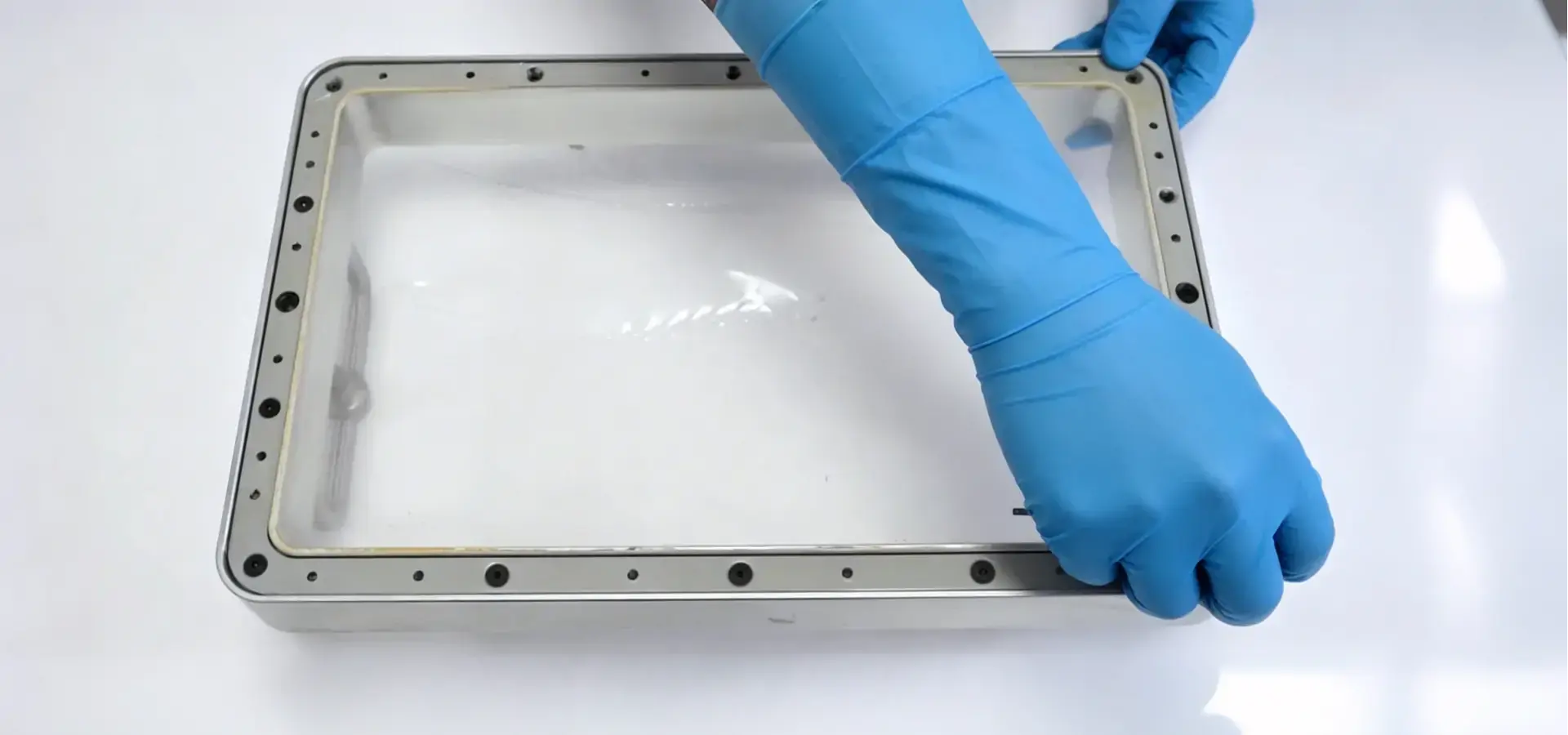
As part of daily operations, the build plate should be cleaned with isopropyl alcohol to get rid of any leftover cured resin that gets in the way of adhesion. Inspection of the resin vat finds pieces of partially cured material that stop prints from working. These impurities need to be removed using fine mesh straining before the material can be used again. To clean LCD screen surfaces gently, use microfiber cloths. Abrasive materials or too much pressure can damage the panel coating.
Troubleshooting Common Print Failures
Print adhesion problems are usually caused by not leveling the build plate properly, not giving enough exposure time, or adhesion surfaces that are dirty. Checking each variable in a planned way helps find the root cause, which could be re-leveling the platform, gradually increasing the base layer exposure time, or cleaning surfaces very well with isopropyl alcohol. Separation or delamination of layers can be caused by short exposure times, too much peel force, or problems with the FEP film. Replace the FEP (or nFEP) film when signs of wear, such as clouding, deformation, or increased adhesion, are observed.
Manufacturer Support and Service Networks
Professional Budget SLA printer suppliers are different from discount stores because they offer strong after-sales support. Troubleshooting downtime is kept to a minimum by quick technical help via email, phone, or video chat. In-house teams can fix common problems on their own with the help of detailed documentation like maintenance schedules, parts diagrams, and troubleshooting flowcharts. Replacement parts are easy to get from authorized distributors, so production doesn't have to stop for long periods of time. Important items like FEP films, build plates, and LCD screens should be sent out within 48 to 72 hours of the order being placed. Proactive manufacturers keep regional service centers that can fix parts individually, giving customers cheaper options to replacing whole pieces of equipment when major ones break.
Where and How to Procure Budget SLA Printers with Confidence?
B2B buyers are protected from fake goods, bad customer service, and problems in the supply chain by reliable sourcing channels. Authorized dealers, official e-commerce platforms, and verified wholesalers are all safe ways to buy a budget SLA printer. Direct relationships with manufacturers offer extra benefits, such as custom configurations, lower prices for large orders, and faster access to technical support.
Identifying Reputable Suppliers and Distribution Partners
Authorized dealer networks help with local sales, offer technical training, and handle warranty service. These partnerships make sure that the equipment is real and that the manufacturer will back up its support promises. When manufacturers run their own official e-commerce platforms, there are no markups added by middlemen, and prices and specifications are clear. Verified business-to-business marketplaces protect buyers and help settle disputes.
Financial Structures Supporting B2B Acquisition
Small businesses that want to use Budget SLA printer technology but don't want to use up all of their working capital reserves face budget constraints. Leasing equipment spreads the cost of buying it out over 24 to 48 months, so payments are timed to match the money made from the new features. Installment purchase plans let you own something more easily while still keeping your cash flow for things like inventory and running costs.
Ensuring Consumable Supply Chain Continuity
Access to compatible resins, replacement nFEP films, and other consumables must be maintained at all times for production to continue. By building relationships with multiple suppliers of materials, you can avoid being dependent on just one, which can leave you open to stock-outs or price hikes. Keeping enough inventory on hand—usually 30 to 60 days' worth of consumption—protects against problems with logistics without allocating too much capital.
Conclusion
Budget SLA printer technology offers professional-level accuracy and surface quality at prices that most people can afford. This lets companies in the creative, automotive, aerospace, consumer electronics, and dental industries make prototypes better and increase their production options. Strategically choosing equipment by looking at print speed, resolution, material compatibility, and manufacturer support makes sure that it meets all of an organization's needs. Maintenance schedules that are followed and supply chain relationships that can be counted on help maximize operational uptime and return on investment.
FAQ
What factors most significantly influence the budget SLA printer speed?
The time it takes for a layer to cure is mostly determined by how well the LCD screen lets light through and how bright the UV LED array is. Monochrome panels let through 8–10% more UV energy than RGB panels, which shortens the time each layer is exposed. Speed is also affected by the type of resin used. Fast-cure types fully polymerize in 1-2 seconds, while specialized engineering resins need 3-5 seconds. Since all layers cure at the same time, the build height has a bigger effect on total print time than XY complexity.
How do Budget SLA printers compare to FDM alternatives regarding precision and operational costs?
In comparison to FDM technology, which typically has tolerances of 0.2mm, Budget SLA printer systems can get dimensions within 0.05mm. When compared to the visible layer lines that come with filament extrusion, surface finishes don't need as much post-processing. The amount of work that goes into making something affects the costs. For example, resin consumables are more expensive per kilogram than filament, but when making complex shapes with no material waste, the costs per part are often lower. FDM is still the most cost-effective way to make large, simple parts.
What maintenance practices most effectively extend the budget SLA printer's operational life?
Protecting the LCD screen from resin spills on a regular basis stops permanent stains that make light transmission worse. If you replace the FEP film before it gets punctured, you can avoid major print failures and vat damage. Lubricating the Z-axis rails at manufacturer-recommended intervals (typically every 200–300 operating hours) helps minimize mechanical wear. Properly storing resin away from UV light stops polymerization from happening too soon. Following the manufacturer's cleaning guidelines and replacement schedules usually doubles the life of the equipment.
Partner with Magforms for Integrated SLA Solutions
Magforms is different in the Budget SLA printer market because we use a materials-and-equipment approach that is backed by 22 patents and trusted by over 300 businesses around the world. Our custom resin mixtures and printing systems go through a lot of testing to make sure they work well with each other. This gets rid of the size differences and unplanned downtime that can happen when third-party materials don't match up. We can print 30% faster than usual with advanced exposure control technology and AI-optimized scanning or masking strategies, and the accuracy is kept at the micron level, which is important for aerospace, medical, and precision tooling uses.
Our technical support team has years of experience in the field and can give you full training, quick troubleshooting help, and advice on how to do preventative maintenance. As a reliable supplier, we offer discounts for buying in bulk, flexible payment plans, and quick access to replacement parts. Get in touch with info@magforms.com to talk about your specific production needs and get equipment suggestions that are tailored to your business goals and budget.
References
1. Gibson, I., Rosen, D., & Stucker, B. (2021). Additive Manufacturing Technologies: 3D Printing, Rapid Prototyping, and Direct Digital Manufacturing (3rd ed.). Springer International Publishing.
2. Stereolithography Apparatus and Methods: Examining Patent Evolution in Resin 3D Printing Technology (2023). Journal of Manufacturing Processes, 87, 245-261.
3. Comparative Analysis of MSLA and Laser-Based Stereolithography for Industrial Applications (2024). Additive Manufacturing, 61, 103-118.
4. Total Cost of Ownership Models for Small-Format Resin 3D Printers in Dental Laboratory Settings (2023). Digital Dentistry Review, 15(3), 42-58.
5. Material Science and Curing Kinetics in 405nm Photopolymer Systems for Budget Stereolithography (2024). Polymer Engineering & Science, 64(2), 587-603.
6. Maintenance Best Practices and Failure Mode Analysis for Desktop SLA Equipment (2023). Rapid Prototyping Journal, 29(4), 712-729.

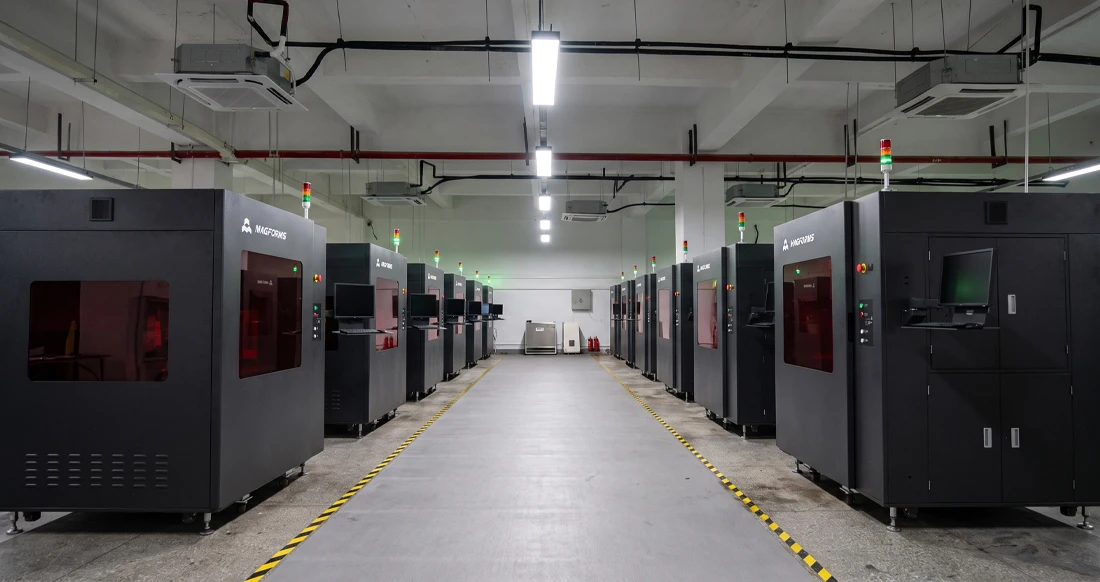
Magforms makes design and manufacture easier.
Popular Blogs
-
 Industry InsightsManufacturing Industry
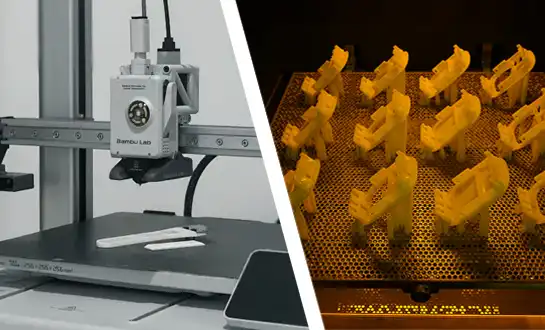
FDM vs. SLA Printer: Which Technology Is Right for Your Project?
-
 Industry InsightsManufacturing Industry
Top 5 Applications of Industrial 3D Printers in Manufacturing Today
-
 Industry InsightsManufacturing Industry
Why Stereolithography 3D Printers Are Unmatched for Microfluidic Device Prototyping?