10 Innovative Things You Can 3D Print at Home or Work
The world of additive manufacturing offers endless possibilities for creating functional, creative, and practical objects that solve real-world challenges. Whether you're running a small design studio or managing production for a large enterprise, modern 3D print technology enables rapid prototyping, customization, and cost-effective manufacturing solutions. From automotive components to medical devices, the versatility of three-dimensional printing continues to transform how businesses approach product development and manufacturing processes.

Understanding 3D Printing Technology: A Foundation for Innovation
Modern additive manufacturing encompasses several key technologies that serve different industrial applications. Understanding these processes helps businesses make informed decisions about integrating printing solutions into their workflows.
Fused Deposition Modeling (FDM) for Versatile Applications
Fused Statement Modeling speaks to the most open 3D print into added substance fabricating. This preparation softens thermoplastic fibers and stores them layer by layer to make three-dimensional objects. The innovation is especially profitable for quick prototyping, useful testing, and making strong end-use parts across different industries.
The fabric compatibility of FDM frameworks amplifies from essential PLA and ABS plastics to advanced building materials like Look, carbon fiber composites, and metal-filled fibers. This flexibility makes FDM perfect for car prototyping, aviation components, and buyer gadgets where diverse mechanical properties are required.
Stereolithography (SLA) for Precision Manufacturing
Stereolithography innovation utilizes laser-cured photopolymer tars to accomplish extraordinary surface wrap-up and dimensional precision. The handle exceeds expectations in applications requiring fine, subtle elements, smooth surfaces, and tight resistances that conventional fabricating strategies battle to accomplish cost-effectively.
SLA frameworks support different tar chemistries counting standard, intense, adaptable, straightforward, and biocompatible materials. This fabric extend empowers applications traversing dental models, adornment models, optical components, and precision mechanical parts. The innovation especially benefits businesses where surface quality and precision specifically affect item performance.
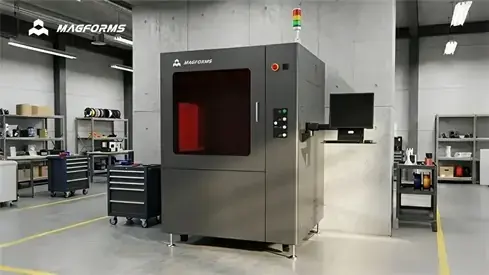 |
INDUSTRIAL SOLUTIONS High-Precision SLA 3D Printers for Professional Manufacturing Discover industrial-grade stereolithography systems designed for unmatched accuracy, smooth surface finish, and scalable production. Perfect for prototyping and end-use parts.
|
Selective Laser Sintering (SLS) for Complex Geometries
Selective Laser Sintering utilizes effective lasers to meld powder particles into strong structures without requiring additional materials. This capability empowers the creation of complex inside geometries, interlocking congregations, and natural shapes that would be incomprehensible or prohibitively costly utilizing ordinary manufacturing.
SLS innovation bolsters materials extending from nylon and TPU to metal powders and ceramic composites. The self-supporting nature of powder-bed combination makes it perfect for creating useful models, end-use parts, and complex congregations in single builds, altogether decreasing gathering time and costs.
Top 10 Innovative Items You Can 3D Print at Home or Work
The practical applications of additive manufacturing extend far beyond simple prototypes. These innovative examples demonstrate how businesses leverage 3D print technology to solve specific challenges while improving efficiency and reducing costs.
Custom Automotive Interior Components
Automotive producers progressively depend on advanced manufacturing for making custom dashboard components, discuss vent frameworks, and ergonomic control interfaces. These components regularly require complex geometries and personalized fitments that conventional infusion molding cannot oblige financially for low-volume generation runs.
The capacity to emphasize plans quickly permits car groups to test different setups amid advancement stages. Custom surfaces, coordinate mounting frameworks, and optimized weight conveyance have become achievable without costly tooling speculations. This approach essentially diminishes improvement timelines while empowering more noteworthy plan freedom.
Precision Medical and Dental Models
Healthcare experts utilize three-dimensional printing to make patient-specific anatomical models, surgical guides, and dental apparatuses. These applications require biocompatible materials and remarkable dimensional exactness to guarantee a legitimate fit and work in therapeutic procedures.
Dental research facilities especially benefit from printed orthodontic models, embedded guides, and custom prosthetics. The innovation empowers same-day turnaround for numerous applications, while diminishing fabric waste compared to conventional casting strategies. Quicker results move forward through better pre-surgical planning and more precise treatment delivery.

Aerospace Prototypes and Tooling
The aviation industry requests components with complex inner structures, lightweight designs, and uncommon unwavering quality. Added substance fabricating empowers the creation of fuel framework components, discusses channel models, and specialized tooling that meets exacting industry requirements.
Advanced materials like Look and metal powders permit aviation groups to create utilitarian models that precisely speak to last generation characteristics. The capacity to make empty structures, coordinate cooling channels, and topology-optimized plans gives noteworthy points of interest over ordinary fabricating approaches.
Electronic Device Housings and Enclosures
Consumer hardware companies use 3D printing for making custom housings, defensive cases, and inner mounting structures. The innovation obliges the fast plan cycles and differing frame components that characterize advanced electronic products.
Conductive fibers and specialized tars empower the integration of electromagnetic protection, warm administration features, and secure mounting frameworks within single printed components. This union diminishes the complexity while making strides in unwavering quality and fabricating efficiency.
Architectural Scale Models and Building Components
Architecture and development experts utilize added substance fabricating to make nitty gritty scale models, custom building components, and specialized development instruments. These applications grandstand plan concepts, whereas empowering commonsense testing of auxiliary components and building systems.
The innovation underpins materials extending from straightforward tars for windows and veneers to adaptable materials for gaskets and fixing components. Large-format printers empower the creation of considerable engineering components that give practical representations of proposed structures.
Ergonomic Office Accessories and Tools
Workplace efficiency benefits from custom-printed ergonomic extras, organizational frameworks, and specialized devices custom-fitted to particular work capacities. These things progress representative consolation and effectiveness while tending to interesting work environment challenges.
Examples incorporate movable screen stands, custom console bolsters, cable administration frameworks, and task-specific instrument holders. The capacity to repeat plans based on client criticism guarantees ideal ergonomic execution, while keeping up cost-effectiveness for small-quantity production.
Industrial Jigs and Manufacturing Fixtures
Production situations require specialized dances, installations, and tooling that secure workpieces amid manufacturing operations. Conventional machined tooling frequently requires weeks of lead time and critical taken a toll ventures, especially for low-volume generation runs.
Additive fabricating empowers quick generation of custom tooling with coordinate clamping frameworks, arrangement highlights, and part-specific geometries. The innovation decreases tooling costs by up to 90% whereas empowering same-week conveyance of complex installations that would require broad machining operations.
Educational Models and Training Aids
Educational educate and preparation programs utilize 3D printing to make intuitive learning materials, anatomical models, and specialized presentations. These apparatuses upgrade understanding through hands-on interaction with complex concepts and systems.
Transparent materials permit visualization of inner components, whereas multi-material printing empowers the creation of assemblies with diverse mechanical properties. The capacity to create models on-demand underpins different educational program whereas decreasing the capacity requirements for instructional materials.
Fashion Accessories and Jewelry Prototypes
The mold and adornments businesses grasp advanced substance fabrication for making complex plans, custom embellishments, and quick prototyping of modern collections. The innovation empowers complex geometries and personalized components that conventional fabricating strategies cannot accomplish economically.
Flexible materials bolster the creation of wearable embellishments with coordinated moving parts, whereas metal printing empowers coordinate generation of gem pieces with extraordinary detail and wrap-up quality. Plan cycles diminish from weeks to days, empowering quicker market reaction and more noteworthy plan innovation.

Replacement Parts and Repair Components
Maintenance and repair operations benefit from on-demand generation of substitution parts, particularly for obsolete items or specialized gear. This capability diminishes stock necessities whereas guaranteeing accessibility of basic components when needed.
The innovation empowers invert building of worn components, the advancement of unique plans, and the union of multi-part assemblies into single printed components. This approach decreases downtime, brings down stock costs, and amplifies gear benefit life over different industries.
Choosing the Right 3D Printing Technology and Materials for Your Needs
Selecting appropriate additive manufacturing technology requires careful evaluation of application requirements, production volumes, and material specifications. Understanding these factors ensures optimal return on investment and successful integration into existing workflows.
Evaluating Speed, Accuracy, and Cost Factors
Production requirements vary significantly across different applications and industries. High-volume prototyping may prioritize speed and cost-effectiveness, while precision manufacturing demands exceptional accuracy and surface quality regardless of production time.
3D print considerations affect both equipment selection and part orientation strategies. Large components may require industrial-scale systems, while small precision parts can utilize desktop platforms with appropriate accuracy specifications. Material costs, post-processing requirements, and labor considerations all impact total production economics.
Material Compatibility and Application Requirements
Different applications demand specific material properties ranging from mechanical strength and chemical resistance to biocompatibility and electrical conductivity. Understanding material limitations and processing requirements ensures successful part performance in intended applications.
Engineering plastics, metal alloys, ceramic composites, and specialized resins each offer distinct advantages for specific use cases. Material availability, shelf life, and storage requirements also influence technology selection, particularly for production environments requiring consistent material properties and reliable supply chains.
Supplier Support and Service Considerations
Technical support, training resources, and maintenance services significantly impact long-term success with additive manufacturing systems. Rapid response to technical issues, comprehensive training programs, and readily available spare parts ensure consistent production capability and minimize operational disruptions.
Warranty coverage, software updates, and application support help organizations maximize their technology investments while staying current with evolving industry standards and best practices. These factors become increasingly important as organizations scale their additive manufacturing operations and integrate the technology into critical production workflows.
Addressing Common Challenges in 3D Printing for B2B Clients
While additive manufacturing offers significant advantages, organizations must address various technical and operational challenges to achieve consistent results and maximize return on investment.
Quality Control and Consistency Issues
Maintaining consistent part quality across production runs requires careful attention to process parameters, material handling, and environmental conditions. Temperature fluctuations, humidity changes, and material degradation can significantly impact print quality and dimensional accuracy.
Implementing comprehensive quality control procedures, regular equipment calibration, and standardized operating protocols helps organizations achieve reliable results. Statistical process control methods enable early detection of quality trends while preventive maintenance schedules ensure consistent equipment performance over time.
Material Handling and Storage Requirements
Proper material storage, handling, and preparation directly impact print success rates and part quality. Moisture absorption, contamination, and material degradation can cause print failures, dimensional inaccuracies, and poor surface finish that waste time and materials.
Establishing controlled storage environments, implementing material rotation procedures, and maintaining proper handling protocols ensures consistent material properties and print performance. These practices become increasingly important as organizations scale their operations and maintain larger material inventories.
Process Optimization and Workflow Integration
Successful additive manufacturing implementation requires integration with existing design, production, and quality systems. Workflow optimization, design rule establishment, and post-processing procedures must align with organizational capabilities and production requirements.
Training programs, standard operating procedures, and continuous improvement initiatives help organizations develop internal expertise while maintaining consistent production quality. Regular process reviews and performance analysis enable ongoing optimization and adaptation to changing production requirements.
Company Overview and Our 3D Printing Solutions for B2B Procurement
Magforms stands as a trusted leader in industrial additive manufacturing, bringing years of specialized experience and comprehensive solutions to businesses across multiple industries. Our commitment to technological innovation and customer success positions us as an ideal partner for organizations seeking to integrate advanced 3D print capabilities into their operations.
Advanced Technology and Superior Performance
Our industrial-grade systems incorporate cutting-edge components from internationally renowned brands, ensuring exceptional reliability and performance. The SLA equipment features German Scanlab galvanometers, AOC lasers, and Panasonic AC servo motors that deliver consistent, high-quality results across diverse applications and production environments.
The Lab300 model exemplifies our commitment to precision manufacturing with its stable marble base construction and ±0.1 mm printing accuracy for components up to 100mm in length. This near industrial-grade stability ensures reliable production of critical components while maintaining the dimensional tolerances required by demanding applications.
Our proprietary variable spot-size laser technology represents a significant advancement in printing efficiency, delivering 30-50% speed improvements compared to conventional systems. The integration of deep learning algorithms further enhances performance with an additional 20% speed increase, enabling faster turnaround times without compromising quality.

Flexible Solutions and Material Compatibility
Understanding the diverse needs of modern manufacturing, our systems feature open-source designs that provide complete freedom in material selection. This approach eliminates the costly restrictions of proprietary material systems while enabling organizations to optimize their material costs and performance characteristics.
Our product portfolio spans from desktop-level systems ideal for small studios to industrial-grade platforms capable of supporting large-scale prototyping and production operations. This range ensures appropriate solutions for organizations of all sizes while providing scalable growth paths as production requirements evolve.
The combination of high-precision laser spot control and intelligent scanning algorithms enables our systems to balance exceptional detail quality with production efficiency. Large laser spots accelerate internal filling operations, while fine spots ensure precise surface details and dimensional accuracy where required.
Comprehensive Support and Global Presence
Our technical excellence is backed by 22 patents and 30 registered trademarks, providing a solid foundation for continued innovation and product development. This intellectual property portfolio ensures access to the latest technological advances while maintaining competitive advantages in rapidly evolving markets.
With products exported to dozens of countries and serving over 300 enterprises worldwide, our global experience provides deep insights into diverse application requirements and regional market needs. Active participation in industry exhibitions across Europe, Asia, and other regions keeps us connected with emerging trends and customer requirements.
Our professional technical support team delivers rapid response capabilities with 24/7 remote consultation availability. Technical issues receive responses within one hour and solutions within four hours, while complex problems can trigger on-site engineering support to minimize production disruptions and ensure operational continuity.
FAQ
Understanding common concerns and questions about additive manufacturing helps organizations make informed decisions about technology adoption and implementation strategies.
What factors should I consider when purchasing 3D printers for business use?
Key considerations include production volume requirements, part accuracy specifications, material compatibility needs, and available technical support resources. Build volume requirements, printing speed, and total cost of ownership, including materials and maintenance, also significantly impact technology selection decisions.
Evaluating supplier stability, warranty coverage, and local support availability ensures long-term operational success. Training requirements, software compatibility, and integration with existing workflows also influence implementation success and user adoption rates within organizations.
How can 3D printing reduce production costs and lead times?
Additive manufacturing eliminates tooling requirements for prototyping and low-volume production, reducing upfront investment costs and enabling rapid design iterations. On-demand production capabilities minimize inventory requirements while enabling customization without additional tooling expenses.
The technology enables the consolidation of multi-component assemblies into single printed parts, reducing assembly time and potential failure points. Design optimization for additive manufacturing often results in weight reduction and material savings compared to traditional manufacturing approaches.
What environmental considerations apply to industrial 3D printing?
Modern additive manufacturing materials increasingly emphasize sustainability with biodegradable options, recycled content materials, and energy-efficient production processes. Waste reduction through precise material usage and elimination of machining waste contributes to environmental benefits.
Local production capabilities enabled by additive manufacturing can reduce transportation requirements and associated emissions. The ability to produce parts on-demand also reduces inventory waste and obsolescence costs while enabling more sustainable supply chain practices.
Ready to Transform Your Manufacturing with Advanced 3D Print Technology?
Magforms delivers comprehensive 3D print solutions designed to meet the demanding requirements of modern industrial applications. Our integrated approach, combining high-performance equipment with optimized materials, ensures reliable, efficient production capabilities that drive competitive advantages across diverse industries.
Discover how our variable spot-size laser technology, precision engineering, and comprehensive support services can enhance your production capabilities while reducing costs and lead times. Contact our technical team at info@magforms.com to discuss your specific requirements and explore customized solutions from a trusted 3D print supplier with proven global experience and industry expertise.
References
1. Wohlers, Terry. "Additive Manufacturing and 3D Printing State of the Industry: Annual Worldwide Progress Report." Wohlers Associates, 2023.
2. Gibson, Ian, David Rosen, and Brent Stucker. "Additive Manufacturing Technologies: 3D Printing, Rapid Prototyping, and Direct Digital Manufacturing." Springer Science & Business Media, 2021.
3. Sculpteo. "The State of 3D Printing Report: Industry Insights and Market Analysis." Annual Industry Survey, 2023.
4. Materialise. "3D Printing in Manufacturing: Applications, Benefits, and Implementation Strategies." Industrial Manufacturing White Paper, 2022.
5. ASTM International. "Standard Terminology for Additive Manufacturing Technologies: Classification and Guidelines." ASTM F2792-12a Standards Publication, 2023.
6. Formlabs. "Professional 3D Printing Applications: Case Studies in Industrial Implementation." Application Engineering Report, 2023

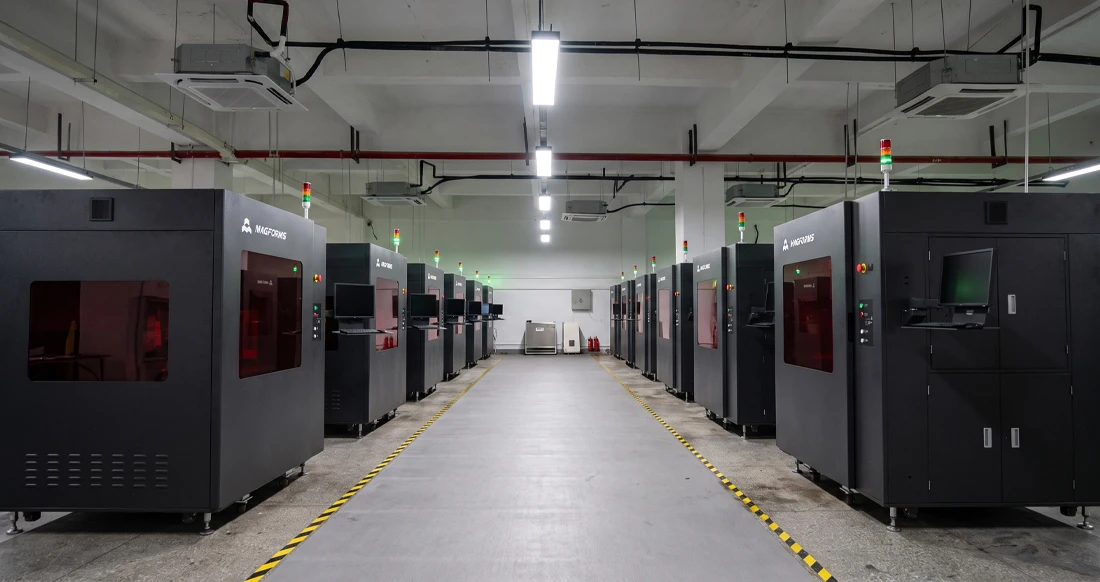
Magforms makes design and manufacture easier.
Popular Blogs
-
 Industry InsightsManufacturing Industry
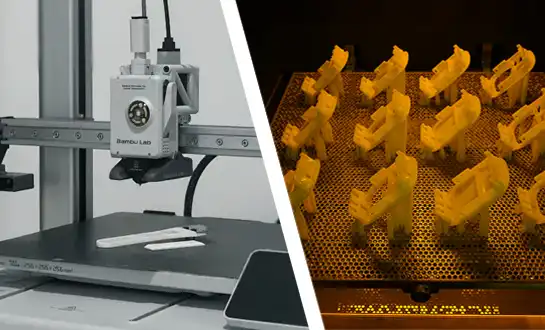
FDM vs. SLA Printer: Which Technology Is Right for Your Project?
-
 Industry InsightsManufacturing Industry
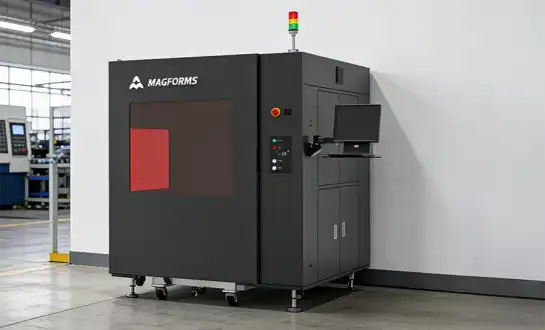
Top 5 Applications of Industrial 3D Printers in Manufacturing Today
-
 Industry InsightsManufacturing Industry
Why Stereolithography 3D Printers Are Unmatched for Microfluidic Device Prototyping?