3D Printing vs. Traditional Manufacturing: When to Choose Each?
Choosing between 3D print technology and traditional manufacturing depends on your specific production requirements, timeline, and budget constraints. While additive manufacturing excels in rapid prototyping and complex geometries, conventional methods remain superior for high-volume production and certain material properties. The optimal choice varies based on factors including part complexity, production volume, material requirements, and cost considerations. Understanding when each approach delivers maximum value helps manufacturers make informed decisions that optimize both efficiency and profitability.

Understanding the Core Manufacturing Approaches
Traditional fabricating envelops set up forms like infusion molding, CNC machining, and casting. These strategies have overwhelmed mechanical generation for decades, advertising demonstrated unwavering quality and scalability.
Additive fabricating builds parts layer by layer from computerized records. This approach revolutionizes how we think about generation limitations and plan possibilities.
Three crucial contrasts characterize these approaches:
- Production strategy: Conventional strategies evacuate fabric or shape it through molds, whereas 3D printing includes fabric accurately where needed
- Set up prerequisites: Routine fabricating frequently requires tooling and installations, though added substance forms work specifically from CAD plan files
- Economic scaling: Conventional strategies favor huge volumes, whereas 3D printing keeps up reliable per-unit costs regardless of quantity
Manufacturing information suggests that conventional infusion molding becomes cost-effective around 1,000 units for straightforward parts, whereas fabric expulsion maintains steady financial matters from single models to hundreds of pieces.
If you require complex inner channels or grid structures incomprehensible with customary strategies, then 3D printing becomes the clear choice. For high-volume generation surpassing 10,000 indistinguishable parts, conventional manufacturing regularly offers superior unit economics.
Speed and Time-to-Market Analysis
Rapid prototyping speaks to one of the added substance manufacturing's most grounded focal points. Parts that require weeks through conventional tooling can be produced in hours with tar printing frameworks within hours.
Timeline comparison for car dashboard prototype:
- Traditional approach: 3-4 weeks (tooling plan, manufacture, testing)
- SLA printing: 6-8 hours (printing and post-processing)
Variable spot-size laser innovation presently accomplishes 30-50% speedier printing speeds compared to standard frameworks. Profound learning calculations give an extra 20% speed advancements through optimized filtering paths.
Traditional fabricating compensates with predominant generation rates once tooling exists. Infusion molding cycles of 30-60 seconds empower thousands of parts day by day, whereas indeed progressed 3D print require hours for proportionate output.
Build volume contemplations influence speed calculations. Expansive SLA gear can bunch numerous components at the same time, progressing throughput for small-batch generation scenarios.
If you require model approval within 24 hours, at that point, added substance fabricating conveys unmatched speed. For generation runs surpassing 500 indistinguishable parts week after week, conventional strategies regularly give speedier overall throughput.

Cost Structure Comparison
Understanding genuine fabrication costs requires analyzing setup costs, fabric costs, labor necessities, and gear depreciation over diverse production volumes.
Cost breakdown analysis:
Traditional fabricating involves:
- High starting tooling costs ($5,000-$50,000+ depending on complexity)
- Low per-unit fabric costs
- Minimal labor per piece once generation begins
- Equipment amortization over tall volumes
3D printing characteristics include:
- Minimal setup costs (cutting program preparation)
- Higher fabric costs per unit
- Consistent preparation time in any case of volume
- Equipment costs are dispersed over assorted applications
Break-even examination appears conventional strategies are becoming invaluable between 500-2,000 units for most applications. Complex geometries requiring numerous conventional operations can move this limit altogether higher.
Material compatibility influences the calculations considerably. Open-source gear plans permit photopolymer tar choice from numerous providers, lessening fabric costs compared to exclusive systems.
If you require fewer than 100 parts yearly with complex highlights, then added substance manufacturing ordinarily offers superior financial matters. For standardized parts surpassing 1,000 units annually, conventional fabricating as a rule gives lower unit costs.
Quality and Precision Capabilities
Surface finishing and dimensional accuracy requirements heavily influence manufacturing method selection. Both approaches achieve excellent results within their optimal application ranges.
Traditional manufacturing delivers:
- Superior surface finishes directly from production
- Excellent dimensional repeatability (±0.01mm typical)
- Proven material properties match bulk characteristics
- Consistent quality across millions of parts
Modern SLA systems achieve remarkable precision:
- ±0.1mm accuracy for parts ≤100mm (verified through marble base stabilization)
- Layer heights down to 0.025mm, enabling fine detail reproduction
- Advanced galvanometer systems (German Scanlab components) ensure precise laser positioning
- Micron-level resolution for critical applications
Print resolution depends heavily on technology selection. Fused deposition modeling suits functional prototypes, while resin printing excels in detailed miniatures and precision components.
Post-processing requirements vary significantly. Traditional parts often need minimal finishing, while 3D print components may require support structure removal and surface treatment.
If you need mirror-finish surfaces or tight tolerances across thousands of parts, then traditional manufacturing typically excels. For complex internal geometries requiring precision assembly interfaces, advanced SLA printing delivers comparable accuracy.
Material Selection and Properties
Material compatibility shapes manufacturing decisions across industries from aerospace to medical applications. Each approach offers distinct material advantages and limitations.
Traditional manufacturing materials:
- Wide range of metals, ceramics, and engineering plastics
- Proven long-term performance data
- Consistent mechanical properties
- Cost-effective high-performance options
Additive manufacturing materials:
- Engineering resins with specialized properties
- Flexible materials difficult to machine traditionally
- High-temperature resistant photopolymers
- Transparent and biocompatible formulations
Material extrusion supports thermoplastics, including ABS, PETG, and engineering grades like PEEK. Resin printing accommodates specialized formulations for dental, jewelry, and industrial applications.
Integrated material and equipment development ensures optimal compatibility. Proprietary material limitations often restrict cost control and operational flexibility in some systems.
Testing data shows modern 3D printing materials achieving 80-95% of injection-molded part strength for most applications. Critical structural components may still require traditional manufacturing for maximum reliability.
If you need FDA-approved biocompatible materials for medical devices, then both approaches offer validated options with proper certification. For extreme temperature or chemical resistance requirements, traditional manufacturing typically provides more proven material choices.
Industry-Specific Applications
 Different sectors leverage manufacturing approaches based on unique requirements, including regulatory compliance, production volumes, and performance specifications.
Automotive industry applications:
- Rapid prototyping: 3D printing excels for interior components and custom tooling
- Production parts: Traditional methods dominate high-volume components
- Customization: Additive manufacturing enables personalized accessories
Aerospace sector requirements:
- Complex geometries: 3D printing allows internal cooling channels, impossible with conventional methods
- Material certification: Traditional processes offer more certified material options
- Small-batch production: Both approaches serve low-volume, specialized components
Medical and dental fields:
- Customization: Patient-specific implants and surgical guides favor additive manufacturing
- Biocompatibility: Both technologies support FDA-approved materials
- Production volume: Orthodontic aligners benefit from 3D printing's mass customization capabilities
Consumer electronics considerations:
- Design iteration: Rapid prototyping accelerates development cycles
- Production scaling: Traditional methods serve high-volume consumer products
- Complex assemblies: Additive manufacturing enables integrated designs, reducing part counts
If you operate in aerospace requiring complex internal channels, then advanced SLA systems with high-temperature materials provide optimal solutions. For automotive suppliers producing thousands of identical brackets, traditional stamping or molding typically offers better economics.
Making the Strategic Decision
A successful manufacturing strategy combines multiple factors, including current production requirements, future growth projections, and available resources.
Decision framework considerations:
- Volume analysis: Calculate break-even points considering setup costs, material expenses, and labor requirements
- Design complexity: Evaluate geometric requirements and assembly considerations
- Timeline constraints: Balance development speed against production capacity needs
- Quality specifications: Match precision requirements with manufacturing capabilities
- Material performance: Ensure selected materials meet application demands
- Regulatory compliance: Verify manufacturing processes meet industry standards
Hybrid approaches increasingly provide optimal solutions. Many manufacturers use additive manufacturing for prototyping and tooling while employing traditional methods for production parts.
Technology advancement continues to reshape manufacturing economics. Variable spot-size laser printing and AI-optimized scanning paths improve 3D printing efficiency, while automation enhances traditional manufacturing productivity.
Supply chain resilience considerations favor additive manufacturing for critical low-volume components. Distributed production capabilities reduce dependency on centralized manufacturing facilities.
If you need flexibility to modify designs frequently while maintaining consistent quality, then investment in advanced SLA equipment with open material compatibility provides maximum adaptability.
Conclusion
Both 3D printing and traditional manufacturing serve essential roles in modern production environments. Additive manufacturing excels in rapid prototyping, complex geometries, and low-volume customization, while traditional methods remain superior for high-volume production and established material requirements. Success depends on matching the manufacturing approach to specific application needs, considering factors including volume, complexity, timeline, and cost constraints. Smart manufacturers increasingly adopt hybrid strategies, leveraging each technology's strengths to optimize overall production efficiency and capability.
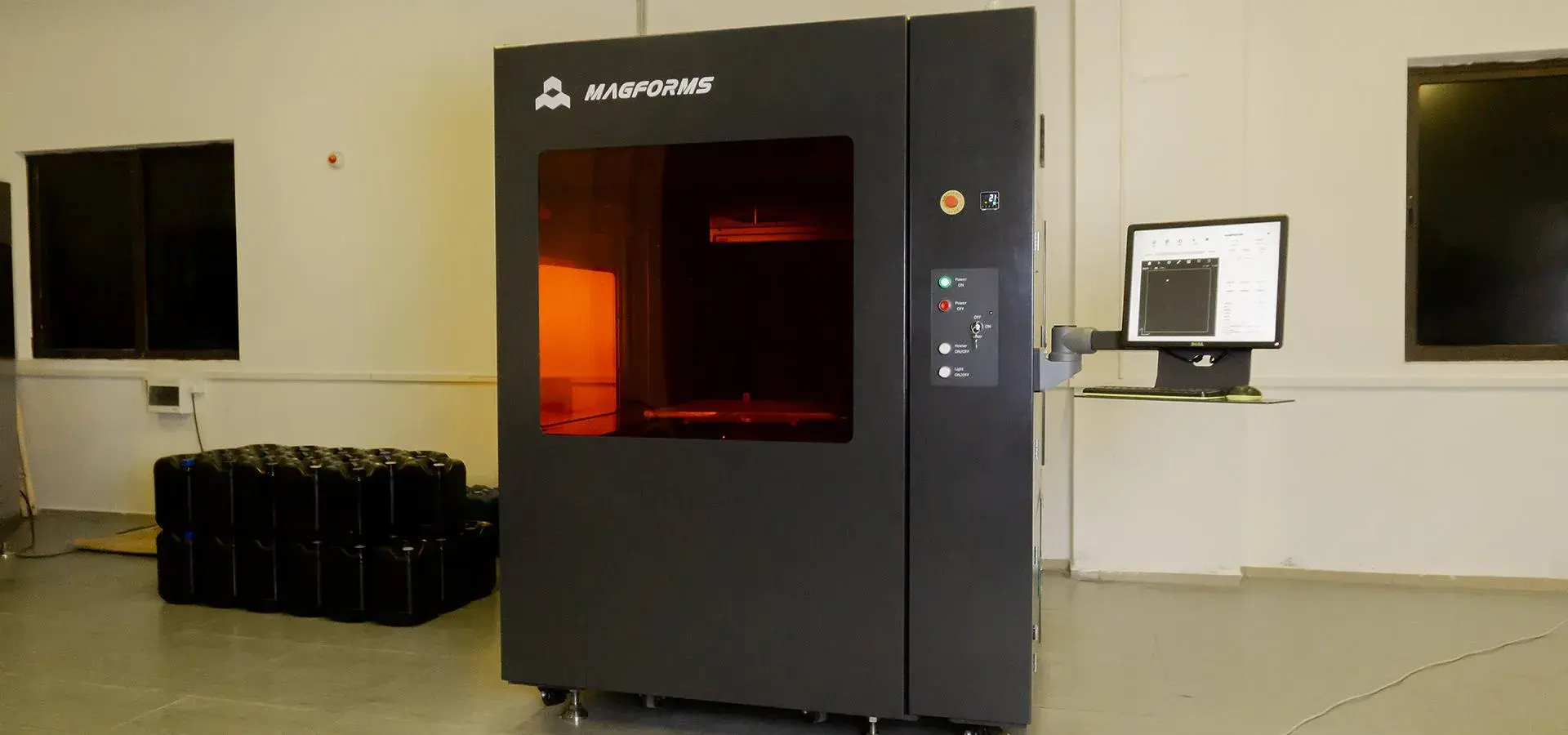
Partner with Magforms for Advanced 3D Print Solutions
Magforms delivers comprehensive additive manufacturing solutions combining cutting-edge equipment with expert support services. Our industrial SLA systems feature German Scanlab galvanometers, AOC lasers, and Panasonic AC servo motors, ensuring exceptional reliability and precision. As a leading 3D print manufacturer, we provide open-source equipment designs supporting multiple photopolymer resin brands, eliminating proprietary material restrictions while reducing operational costs. Contact our technical team at info@magforms.com to discuss your specific manufacturing requirements and explore how our proven technology can optimize your production capabilities.
References
1. Gibson, Ian, et al. "Additive Manufacturing Technologies: 3D Printing, Rapid Prototyping, and Direct Digital Manufacturing." Springer, 2021.
2. Kalpakjian, Serope, and Steven R. Schmid. "Manufacturing Engineering and Technology." Pearson Education, 2020.
3. Campbell, Thomas, et al. "Could 3D Printing Change the World? Technologies, Potential, and Implications of Additive Manufacturing." Atlantic Council Strategic Foresight Report, 2019.
4. Wohlers, Terry, et al. "Wohlers Report 2022: 3D Printing and Additive Manufacturing Global State of the Industry." Wohlers Associates, 2022.
5. Diegel, Olaf, et al. "A Practical Guide to Design for Additive Manufacturing." Springer Series in Advanced Manufacturing, 2020.
6. Ford, Simon, and Tim Minshall. "Invited Review Article: Where and How 3D Printing Is Used in Teaching and Education." Manufacturing Review, 2019.

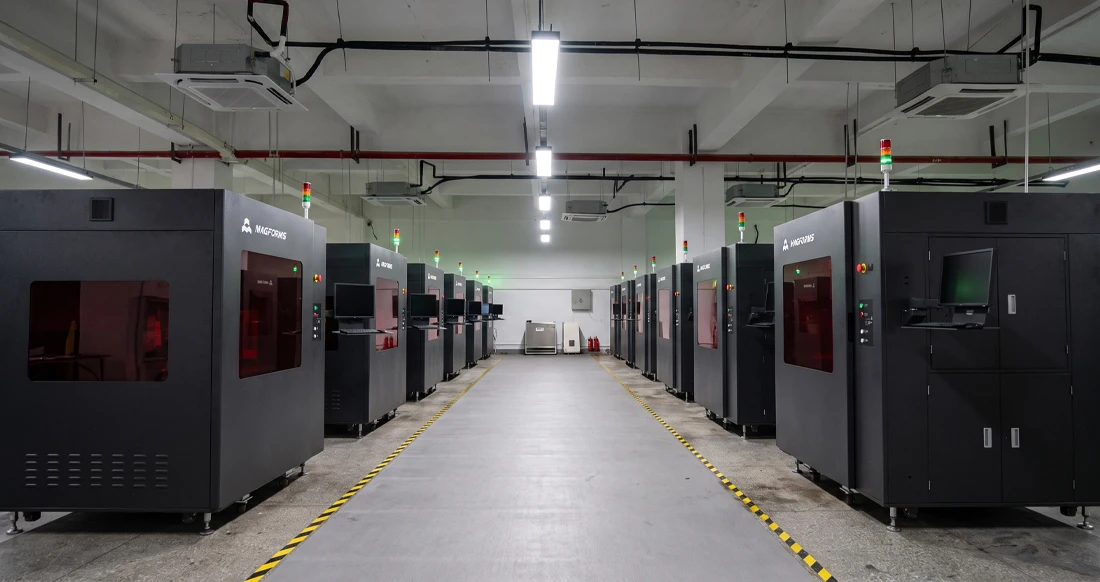
Magforms makes design and manufacture easier.
Popular Blogs
-
 Industry InsightsManufacturing Industry
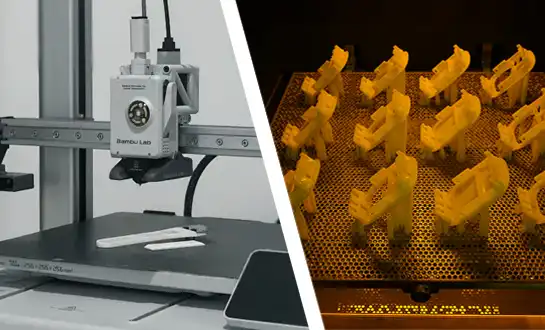
FDM vs. SLA Printer: Which Technology Is Right for Your Project?
-
 Industry InsightsManufacturing Industry
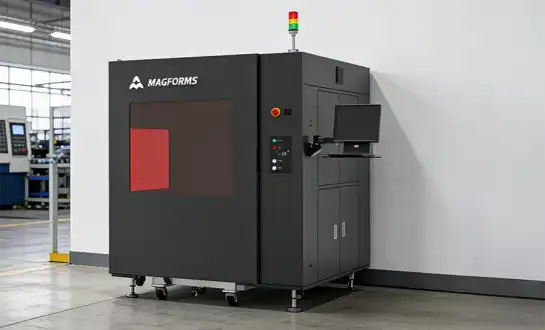
Top 5 Applications of Industrial 3D Printers in Manufacturing Today
-
 Industry InsightsManufacturing Industry
Why Stereolithography 3D Printers Are Unmatched for Microfluidic Device Prototyping?