2026 Best 3D Printing Machine for Home and Business Use?
In 2026, picking the right 3D printer for a small business means finding a balance between accuracy, dependability, and cost-effectiveness. Whether you need rapid prototyping for car parts, small-batch production for medical devices, or custom production for consumer electronics, the best solution will rely on your specific production needs. Modern business-grade additive manufacturing systems offer professional features such as 24/7 job cycles, material versatility, and accuracy down to the micron level. They sit between desktop hobbyist units and industrial floor machines. In this detailed guide, the best choices are compared so that purchasing managers and expert leaders can find equipment that speeds up product development and gives a clear return on investment.
Understanding 3D Printing for Small Business Applications
Additive manufacturing has fundamentally transformed how small and medium-sized enterprises approach product development and production. Unlike traditional subtractive methods that remove material through cutting or milling, 3D printing builds objects layer by layer from digital CAD files, unlocking geometric freedom and eliminating expensive tooling costs.
Core Technologies and Material Compatibility

Fused Deposition Modelling (FDM) and Stereolithography (SLA) are the two main methods used by small businesses. FDM printers use heated nozzles to push thermoplastic filaments out, which makes them perfect for making durable, useful mechanical parts. You can use everyday materials like PLA and ABS, or you can use engineering-grade materials like Nylon (PA), Polycarbonate (PC), and carbon fibre composites. High temperatures and mechanical stress don't affect these advanced polymers, so they can be used to make car jigs, aerospace connectors, and manufacturing fixtures. SLA technology uses UV lasers to cure liquid photopolymer resins that have a very smooth surface and accurate measurements. Dental labs use SLA printers to make bases for orthodontic aligners and surgical guides, and consumer electronics companies use them to make complicated samples for the housings of wearable tech. The range of materials includes clear resins, high-temperature mixes, and flexible choices, all of which are best for their own uses.
Solving Real Manufacturing Challenges
There are specific problems that small businesses have that additive manufacturing helps them with. Traditional injection moulding costs $5,000 to $50,000 up front for the tools, which means that low-volume production is not possible. This problem is solved by a 3D printer for small businesses, which lets them make runs of 1 to 1,000 units without having to commit to fixed assets. Digital storage is another strategic benefit. Companies keep libraries of STL files and print parts as needed instead of keeping an actual stock of replacement parts or seasonal goods. This method lowers the costs of running a business and lets you quickly fill customer orders. A company that makes specialised drones might use ASA material to print 500 structural brackets while they wait for permanent injection moulds. This would allow them to start making money months before normal processes would allow. As global logistics become more unstable, supply chain agility becomes more important. Lead times are cut from weeks to days when manufacturing is done on demand, close to where it will be used. Cultural and creative companies make exact copies of intricate handicraft models, and shoe designers use digital sketches to make shoe moulds and accessory prototypes right away, turning ideas into real designs in just hours.
Key Criteria for Choosing the Best 3D Printer for Small Business in 2026
Procurement decisions require systematic evaluation of technical specifications against operational requirements. Understanding which parameters directly impact your production goals prevents costly mismatches between equipment capabilities and business needs.
Print Quality and Precision Standards
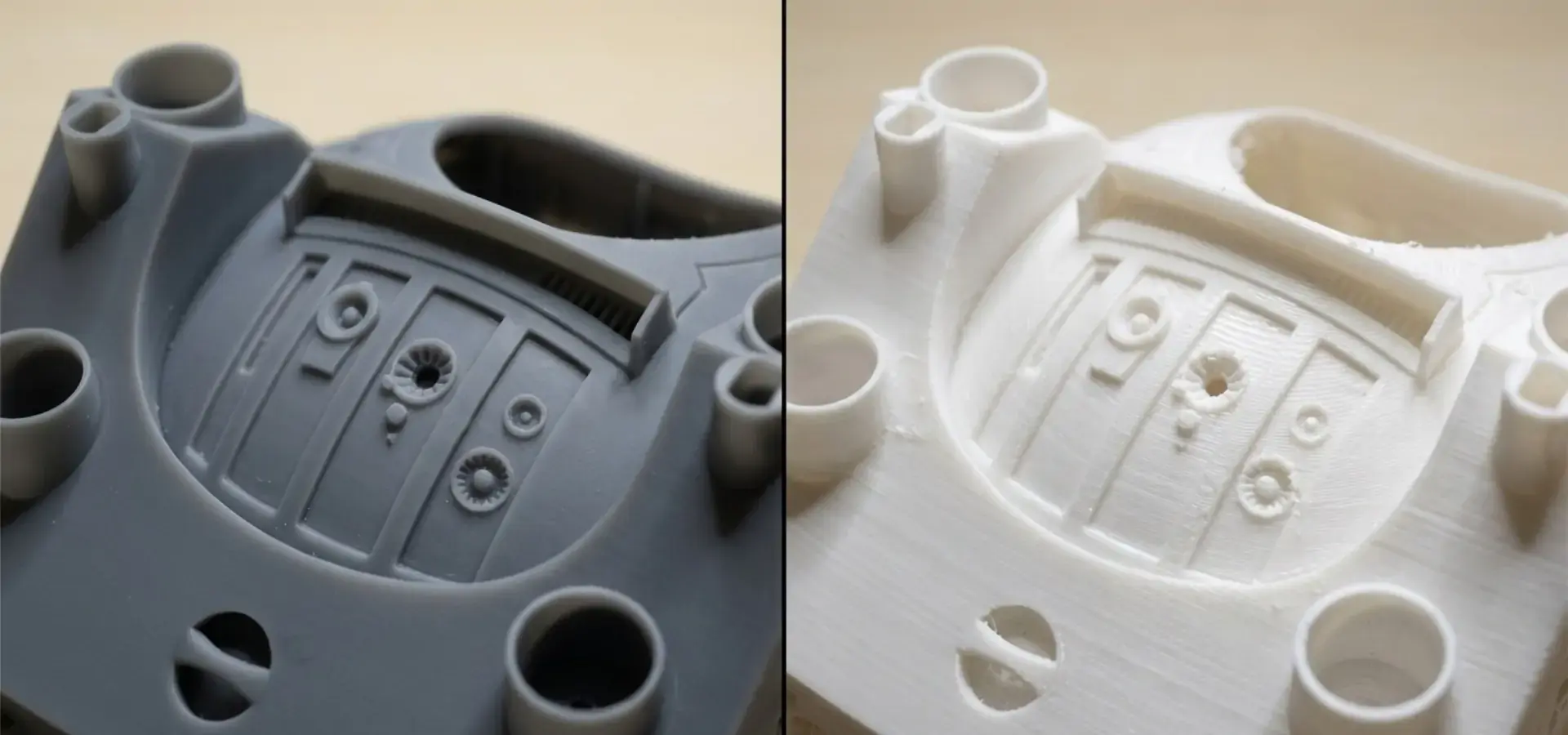
If printed parts meet useful tolerances, they are said to be dimensionally accurate. Precision within ±0.1mm or ±0.2% of part dimensions is possible with business-grade systems. This is important for medical implants, precision connections, and mechanical assemblies. The surface finish is affected by layer resolution. FDM printers usually work between 50 and 300 microns, while SLA systems can go as low as 25 microns for reproducing fine details. Consistency across multiple prints is just as important. When batch manufacturing, changes in the quality of the result cause waste of materials and delays in production. Closed-loop temperature control, automated bed levelling, and environmental tracking are all parts of professional systems that 3D printers for a small business keep things repeatable. These features are especially helpful for small businesses that need to leave prints overnight or handle several jobs at once.
Build Volume and Production Capacity
What you can make is directly limited by the size of your desk. Basic business printers can print up to 250x250x300mm, which is good for prototyping and making small parts. Larger systems that are 330mm by 330mm by 600mm can handle car interior panels, consolidated assemblies that cut down on the number of parts, or batch production of many smaller parts. Figuring out throughput needs keeps things from getting stuck. A 3D printing service that takes on a wide range of orders from clients needs tools that can quickly switch between jobs. Independent Dual Extrusion (IDEX) systems let you make two identical parts or assemblies made of more than one material at the same time, which doubles your output. CoreXY kinematics lets you print at speeds faster than 600mm/s without quality loss from vibrations, which speeds up the process for making samples that need to be made quickly.
 |
Industrial-Grade Precision Find the Right High-Precision 3D Printer for Your Business Compare professional 3D printing systems engineered for exceptional accuracy, repeatability, and production-ready performance. |
Material Ecosystem and Operating Costs
Long-term running costs are greatly affected by whether the material system is open or closed. Third-party filaments can be used on open platforms, which brings down the cost of materials from $80/kg for private cartridges to $25/kg for bulk spools. This freedom is important for companies that need to keep their profit margins low or for research projects that need to try out materials. Closed environments make sure that print profiles are validated and that results are consistent. This cuts down on the time and money needed to fix parameters and fix prints that don't work. Thermal management features check whether materials are compatible. To keep engineering polymers like ABS, ASA, and Nylon from warping and delaminating, the build rooms must be actively heated to a temperature between 60°C and 110°C. Polycarbonate and other special plastics can be worked with using nozzles that can handle temperatures of 300°C or higher. Make sure that the printers you're considering can handle the materials you need for your application. This is especially important for aerospace parts or medical devices that need specific material licenses.
Reliability and Support Infrastructure
When equipment breaks down, it affects work schedules and customer obligations in a direct way. Professional 3D printers are tested continuously for over a thousand hours, which shows that they have much lower failure rates than consumer models. Stable operation is helped by strong mechanical parts, industrial-grade electronics, and tried-and-true software. The total cost of ownership is affected by how easy it is to do maintenance. Having extra hotends, nozzles, and extruder gears on hand lets you fix things quickly without having to wait for help from the vendor. Wear parts can be replaced in minutes instead of hours with modular designs. Businesses that need to keep producing things can lower their risks even more by getting warranty coverage and Service Level Agreements (SLAs) that say they will respond within 24 to 48 hours. The maturity of the software environment affects how well the workflow works. Professional slicing software has advanced features like the ability to change the height of each layer, make your own support structures, and optimise print time. Cloud-based fleet management lets you watch and queue jobs for multiple printers from afar, which is helpful for teams that work in different places or businesses that have more than one location. Integration into current design workflows is made easier by the fact that it works with industry-standard CAD formats.
Top 7 Best 3D Printers for Small Business and Home Use in 2026
Selecting from the market's extensive offerings requires understanding which systems deliver optimal value for specific business contexts. These seven models represent diverse approaches to balancing performance, reliability, and investment cost.
Professional Desktop Systems
Ultimaker S7 Series keeps up its name for being able to handle a wide range of materials and printing reliably. With automated material recognition and parameter optimisation, the dual extrusion system works with engineering materials. The open filament method lowers operating costs, and the build volume of 330x240x300mm can fit medium-sized assemblies. Universities and research labs like this platform because it has a large library of materials and an active user community with troubleshooting guides. Prusa XL Multi-Tool takes a new approach by having five separate tool heads, which lets you make complex prints with multiple materials without having to purge tower waste. Businesses that value customisation and community-driven growth will be interested in the open-source foundation. At a price point in the middle, this system offers industrial features for startups on a budget and design teams that want to try out new materials.
High-Resolution Resin Systems
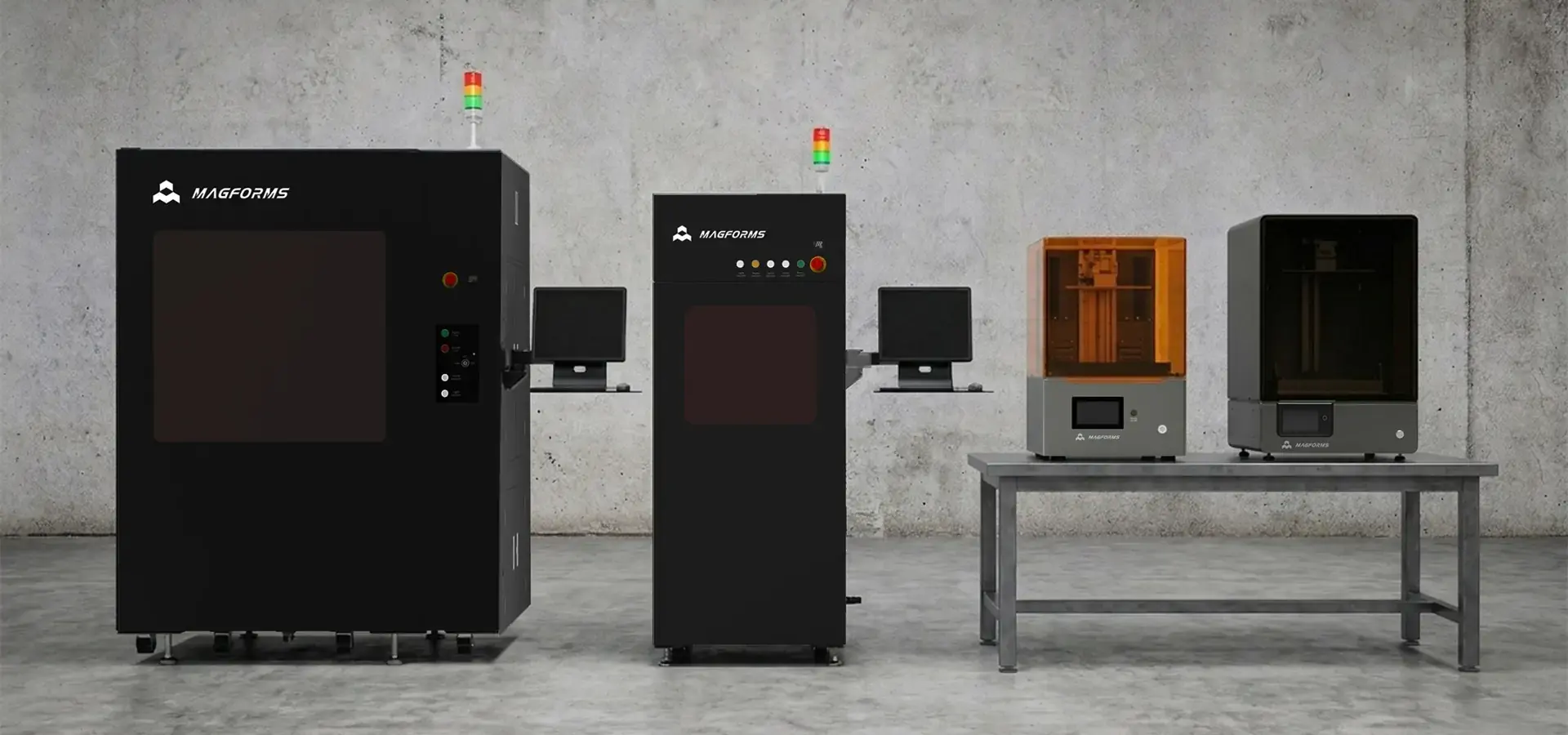
Formlabs Form 4 is the market leader in dental and jewellery with its constant accuracy down to the micron level and a wide range of material certifications. The unique resin environment makes sure that the parameters for biocompatible and castable materials are checked and approved, which is very important for prototyping medical devices. Automated resin handling and post-processing processes cut down on the amount of work that needs to be done, which increases throughput for small-batch production. The Magforms P10 Series is a breakthrough in combining accuracy with stability in operation. Print speeds are over 30% faster with variable spot-size laser technology and AI-optimised scanning paths than with regular SLA systems. This directly meets the needs of testing that needs to be done quickly. The combined material and equipment solution gets rid of the compatibility problems that come up with sets that use more than one vendor. These problems are a common cause of deviations in measurements and unplanned downtime.
Industrial-Grade FDM Solutions
The Stratasys F370 brings reliable industrial technology to small businesses by supporting aerospace-grade materials like ULTEM and Nylon 12CF. The heated build chamber keeps the room at a constant 70°C, which ensures consistent results with high-performance plastics. Although the closed material system makes operations more expensive, certified material traceability meets regulatory standards for medical devices and aerospace applications. The Raise3D Pro3 Plus has a large build volume of 300x300x605mm and is priced competitively. Two extruders that can control their own temperatures make it possible to make complex support structures and parts from more than one material. The HEPA filtration system with activated carbon removes VOCs from building materials, so it can be used in offices that don't have their own ventilation systems.
Versatile Production Platforms
BCN3D Epsilon W50 combines a large-format capability 3D printer for a small business with IDEX technology for production-oriented workflows. The 420×300×400mm heated chamber processes advanced composites and high-temperature materials. Independent extruders enable simultaneous printing of two identical parts, effectively doubling output for small-batch manufacturing. Open connectivity and fleet management software scale efficiently as production demands grow. These systems represent different strategic approaches. Businesses prioritising rapid prototyping with diverse materials gravitate toward open platforms like Prusa and Raise3D. Companies requiring certified materials and process validation for regulated industries select Stratasys or Formlabs despite higher operating costs. Integrated solutions like Magforms appeal to operations demanding maximum reliability and minimal troubleshooting, where material-equipment synergy delivers consistent quality from the first print.
Maintenance and Optimisation Tips for Small Business 3D Printers
Maximising equipment uptime and print quality requires proactive maintenance routines and strategic workflow optimisation. Neglecting these practices leads to costly production interruptions and inconsistent output that damages customer relationships.
Preventive Maintenance Protocols
Mechanical systems demand regular attention to maintain precision. Weekly inspections should verify belt tension, lubricate linear rails with appropriate grease, and clean debris from cooling fans. Print bed adhesion degrades over time; refreshing build surfaces with appropriate treatments or replacing worn PEI sheets prevents mid-print failures. Hotend assemblies require monthly inspection for carbonised material buildup that restricts flow and causes under-extrusion. Environmental factors significantly impact print success rates. Filament moisture absorption causes bubbling and weak layer adhesion, particularly with Nylon and flexible materials. Storing materials in sealed containers with desiccant preserves quality. Temperature fluctuations in workshops without climate control introduce warping and dimensional inaccuracies. Enclosures or dedicated printing rooms with stable conditions improve consistency.
Print Parameter Optimisation
Strategic slicer settings reduce production time without sacrificing quality. Variable layer heights apply fine resolution only where surface finish matters, using thicker layers for internal structures. Adaptive slicing algorithms automatically optimise this balance. Custom support structures positioned based on part geometry minimise material waste and post-processing time compared to auto-generated supports. Print scheduling during off-peak hours leverages time-of-use electricity rates, reducing energy costs. Batching similar jobs minimises machine reconfiguration time and material changeovers. For businesses running multiple printers, load balancing across equipment based on material requirements and print duration maximises utilisation rates.
Quality Control and Documentation
Implementing systematic quality checks prevents defective parts from reaching customers. Dimensional verification using callipers on representative samples catches calibration drift early. Photographic documentation of complex assemblies aids troubleshooting when issues arise. Maintaining print logs correlating settings with outcomes builds institutional knowledge, particularly valuable as team members change or projects resume after delays.
Where and How to Procure 3D Printers and Related Solutions for Small Businesses
Navigating procurement channels effectively secures equipment that aligns with technical requirements and budget constraints while minimising implementation risks.
Evaluating Supplier Partnerships
Established manufacturers with dedicated small business programs offer advantages beyond product specifications. Technical support quality varies dramatically across vendors; access to application engineers who understand your industry's specific challenges accelerates problem-solving when issues arise. Pre-sales support, including sample part printing and material testing, validates equipment capabilities before financial commitment. Warranty structures directly impact the total cost of ownership. Standard one-year coverage proves insufficient for equipment operating continuously; extended warranties covering two to three years provide financial protection against component failures. Service Level Agreements specifying maximum response times for critical issues reduce production disruption risks. Availability of loaner equipment during repairs prevents complete workflow paralysis.
Flexible Acquisition Models
Capital equipment purchases strain cash flow for growing businesses. Leasing arrangements spread costs over 24 to 48 months while preserving working capital for materials and labour. Lease-to-own structures provide upgrade paths as production demands evolve. Bundled packages combining printer, materials, training, and maintenance simplify 3D printing for a small business budgeting and vendor management. Volume purchasing cooperatives and industry associations sometimes negotiate preferred pricing for members. Regional economic development agencies offer grants or subsidised financing for manufacturing equipment that creates local employment. Exploring these alternatives can reduce effective acquisition costs by 15% to 30%.
Conducting Effective Vendor Evaluations
Request detailed specifications covering all parameters relevant to your applications. Marketing materials often emphasise best-case scenarios; technical datasheets reveal capabilities under realistic conditions. Arrange on-site demonstrations or facility tours to observe equipment operating in production environments similar to yours. Reference checks with existing customers in comparable industries provide insights into long-term reliability and support quality. Inquire specifically about response times for technical issues, material availability, and software update frequency. These operational realities matter more than specification sheets once equipment enters production service. Magforms exemplifies a comprehensive supplier partnership model. Beyond manufacturing equipment, the company provides integrated material solutions precisely matched to printer capabilities, eliminating compatibility issues that waste time and resources. With 22 patents and 30 registered trademarks, the technological foundation supports continuous innovation aligned with evolving industry needs. Serving over 300 enterprises globally, Magforms brings extensive application experience across automotive, aerospace, medical, and consumer electronics sectors. Technical training programs and dedicated support infrastructure ensure smooth technology adoption and sustained operational excellence.
Conclusion
Selecting the optimal 3D printer for small business applications in 2026 requires a systematic evaluation of technical capabilities against specific production requirements and budget realities. Whether prioritising rapid prototyping, small-batch manufacturing, or on-demand replacement parts, modern additive manufacturing systems offer capabilities previously accessible only to large enterprises. Understanding the distinctions between open and closed material ecosystems, FDM versus SLA technologies, and desktop versus industrial-grade systems empowers informed investment decisions. Strategic maintenance practices and workflow optimisation maximise return on investment while minimising operational disruptions. Partnering with established suppliers providing integrated solutions and comprehensive support accelerates successful technology adoption, transforming design concepts into a manufactured reality with unprecedented speed and flexibility.
FAQ
1. What Budget Should Small Businesses Allocate for Professional 3D Printing Equipment?
Entry-level business-grade systems range from $3,000 to $8,000, suitable for startups focused on prototyping and low-volume production. Mid-range platforms with enhanced material compatibility and larger build volumes cost $10,000 to $25,000, appropriate for established businesses with consistent production demands. Industrial systems exceeding $30,000 deliver maximum throughput and material certifications for regulated industries. Total cost of ownership includes materials, maintenance, and potential facility modifications for ventilation, typically adding 25% to 40% annually to initial equipment investment. Most businesses achieve return on investment within 3 to 6 months by eliminating outsourcing costs and reducing product development cycles.
2. How Do Businesses Transition from Desktop to Industrial-Grade Systems?
Growth trajectories typically begin with desktop systems proving the technology's value through limited applications. As production volume increases or material requirements expand beyond basic thermoplastics, businesses upgrade to professional platforms offering enhanced reliability and throughput. Maintaining existing desktop equipment for rapid concept validation while deploying industrial systems for production runs provides workflow flexibility. Phased acquisition spreads capital investment while building operational expertise. Partnering with suppliers offering trade-in programs or equipment buyback reduces upgrade costs.
3. What Safety and Regulatory Considerations Apply to Small Business 3D Printing Operations?
Engineering materials produce volatile organic compounds requiring proper ventilation or filtration. Printers with integrated HEPA and activated carbon filters meet basic safety requirements for office environments. Higher-volume operations or unventilated spaces need supplementary air handling following OSHA guidelines. Material safety data sheets provide specific handling requirements for each polymer. Medical device and aerospace applications face additional regulatory documentation demonstrating process validation and material traceability, often necessitating closed ecosystem printers with certified materials.
Partner with Magforms for Your Manufacturing Transformation
Additive manufacturing success depends equally on the equipment quality of a 3D printer for a small business and supplier partnership. Magforms combines deep industry expertise accumulated over years of 3D printing innovation with an integrated approach that eliminates common compatibility issues. Our synchronised material and printer development delivers reliability that businesses depend on for critical production workflows. Variable spot-size laser technology and AI-optimised scanning increase throughput by over 30%, directly impacting your time-to-market advantages. Whether you're a startup launching initial product lines or an established manufacturer expanding prototyping capabilities, our technical team provides application-specific guidance, ensuring optimal equipment selection. As a trusted 3D printer for small business manufacturers serving diverse industries from automotive to medical devices, we understand your challenges and opportunities. Contact our team at info@magforms.com to discuss customised solutions, arrange equipment demonstrations, or explore flexible acquisition options tailored to your operational requirements and growth trajectory.
References
1. Gibson, I., Rosen, D., & Stucker, B. (2021). Additive Manufacturing Technologies: 3D Printing, Rapid Prototyping, and Direct Digital Manufacturing (Third Edition). Springer International Publishing.
2. Wohlers, T. & Campbell, I. (2025). Wohlers Report 2025: 3D Printing and Additive Manufacturing Global State of the Industry. Wohlers Associates.
3. American Society for Testing and Materials (ASTM). (2024). ASTM F2792-12a: Standard Terminology for Additive Manufacturing Technologies. ASTM International Committee F42 on Additive Manufacturing Technologies.
4. Sculpteo. (2025). The State of 3D Printing 2025: Business and Industry Adoption Trends. Sculpteo Industry Reports.
5. 3D Printing Industry. (2026). Small Business Manufacturing Survey: Additive Technology Adoption and ROI Analysis. 3D Printing Industry Annual Research Series.
6. International Organisation for Standardisation. (2024). ISO/ASTM 52900:2024 Additive Manufacturing — General Principles — Fundamentals and Vocabulary. ISO Technical Committee 261.

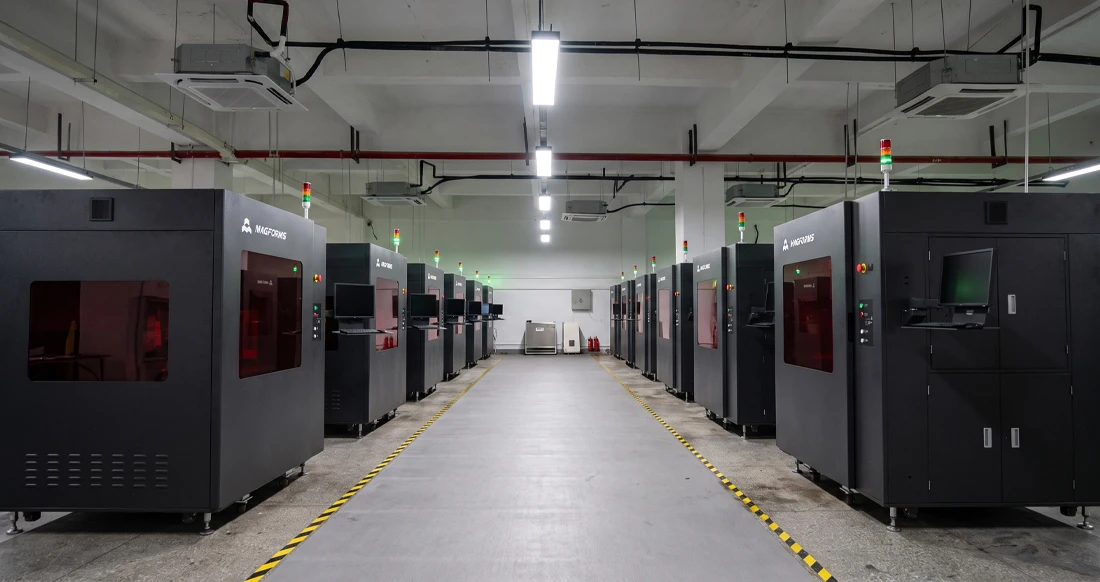
Magforms makes design and manufacture easier.
Popular Blogs
-
 Industry InsightsManufacturing Industry
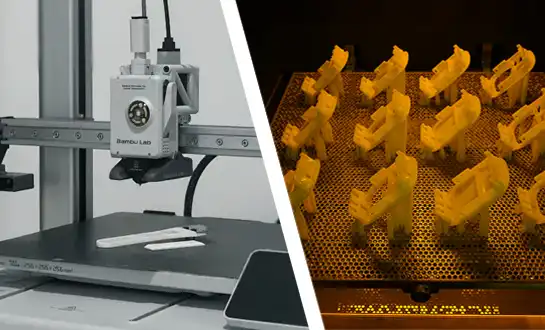
FDM vs. SLA Printer: Which Technology Is Right for Your Project?
-
 Industry InsightsManufacturing Industry
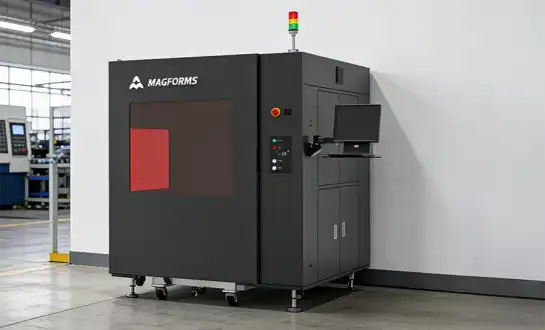
Top 5 Applications of Industrial 3D Printers in Manufacturing Today
-
 Industry InsightsManufacturing Industry
Why Stereolithography 3D Printers Are Unmatched for Microfluidic Device Prototyping?