Large Format 3D Printer Guide: Best Options for Professionals & Manufacturers
When manufacturers and research institutions need to produce large, complex prototypes or batch-process precision components, they turn to advanced vat photopolymerization systems. A large-scale resin 3D printer uses UV-curable liquid resins and expansive build volumes—often exceeding 300mm in all dimensions—to deliver injection-mold surface quality without the structural weaknesses of assembled multi-part prints. These industrial machines solve critical pain points: eliminating seam lines in oversized components and enabling high-throughput production of intricate geometries with isotropic strength across all axes.
Understanding Large-Scale Resin 3D Printing Technology
Core Principles and Operational Mechanisms
Vat photopolymerization is what industrial resin printing depends on. This is when a strong UV light source fixes photosensitive liquid resin one layer at a time. Different technologies, like Stereolithography (SLA), Digital Light Processing (DLP), and Masked Stereolithography (mSLA), each have their own benefits. SLA systems use scanning lasers to precisely trace the shape of each layer, making them perfect for parts that need to be accurate down to the micron level. Different types of DLP and mSLA project whole layers at once using digital light sources or high-resolution LCD screens. This speeds up the process without losing any detail. The most important factors affecting performance are collimated light sources designed to maintain high light uniformity across large build areas, which is critical for dimensional consistency in wide parts. This keeps the edges of wide flat surfaces from bending. Reinforced Z-axis systems are used in industrial machines to manage peel forces generated during layer separation. Heated resin chambers keep the viscosity at the right level, which makes sure that even high-performance industrial resins stick to layers consistently.
Technology Comparison with Filament-Based Systems
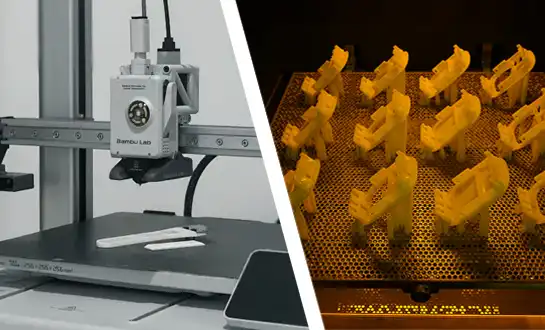
Fused Deposition Modelling (FDM) uses thermoplastic filament that is extruded and leaves layer lines that can be seen. Resin methods, on the other hand, make layers that are 25 to 100 microns thick. With this level of detail, surfaces can be made that look like they were CNC-machined or injected right from the build plate. The parts exhibit more uniform mechanical properties across X, Y, and Z compared to FDM, which means they can be used for watertight assemblies and stress-bearing tasks. Large overhangs and fine details are hard for FDM printers to print, but large-format resin printers excel at creating detailed lattice structures, thin walls, and complex internal channels.

Performance Metrics and Industrial Workflow Impact
Laser technology with variable spot sizes, large-scale resin 3D printers, and AI-optimized scanning routes have made printing faster. When compared to older models, leading systems cut print times by more than 30%, which cuts rapid prototyping processes from days to hours. Part tolerance is closely related to resolution and dimensional accuracy. The best machines can keep deviations to within ±0.05% of total length, or ±0.1mm. This level of accuracy meets ISO/ASTM 52900 standards, which are very important for aerospace connectors, medical implants, and automobile jigs that need to make sure they fit and work perfectly before investing in tools.
Safety Guidelines and Environmental Responsibility
Uncured resin requires careful handling due to potential skin sensitization and inhalation risks. Facilities must implement adequate ventilation, provide personal protective equipment, and establish protocols for spill containment and waste disposal. Many jurisdictions classify spent resin as hazardous waste, necessitating compliance with EPA regulations or equivalent local standards. Post-processing workflows—washing in isopropyl alcohol or specialized cleaning solutions, followed by UV curing—demand dedicated stations with proper extraction systems to protect operator health and meet environmental stewardship commitments.
Benefits and Applications of Large-Scale Resin 3D Printers
Superior Surface Quality and Geometric Complexity
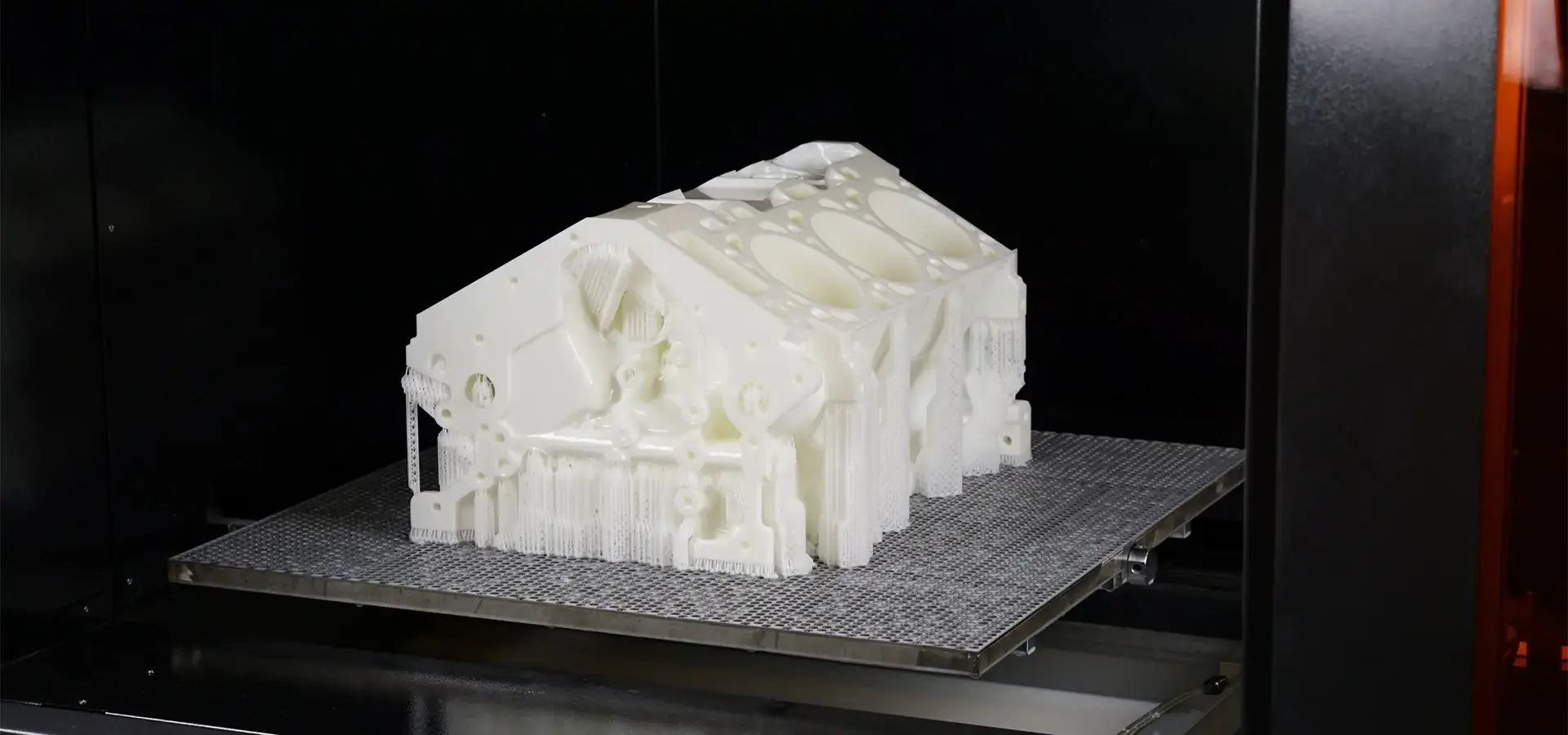
The photopolymerization process delivers surface finishes that minimize sanding and painting labor, a game-changer for cultural creative studios replicating delicate handicraft textures or consumer electronics firms prototyping sleek wearable device shells. Complex geometries—such as undercut snap-fits, hollow cooling channels, and micro-textured grips—emerge fully formed without secondary operations. This capability accelerates design iteration and reduces reliance on costly silicone molding or machined master patterns.
Industrial Use Cases Across Diverse Sectors
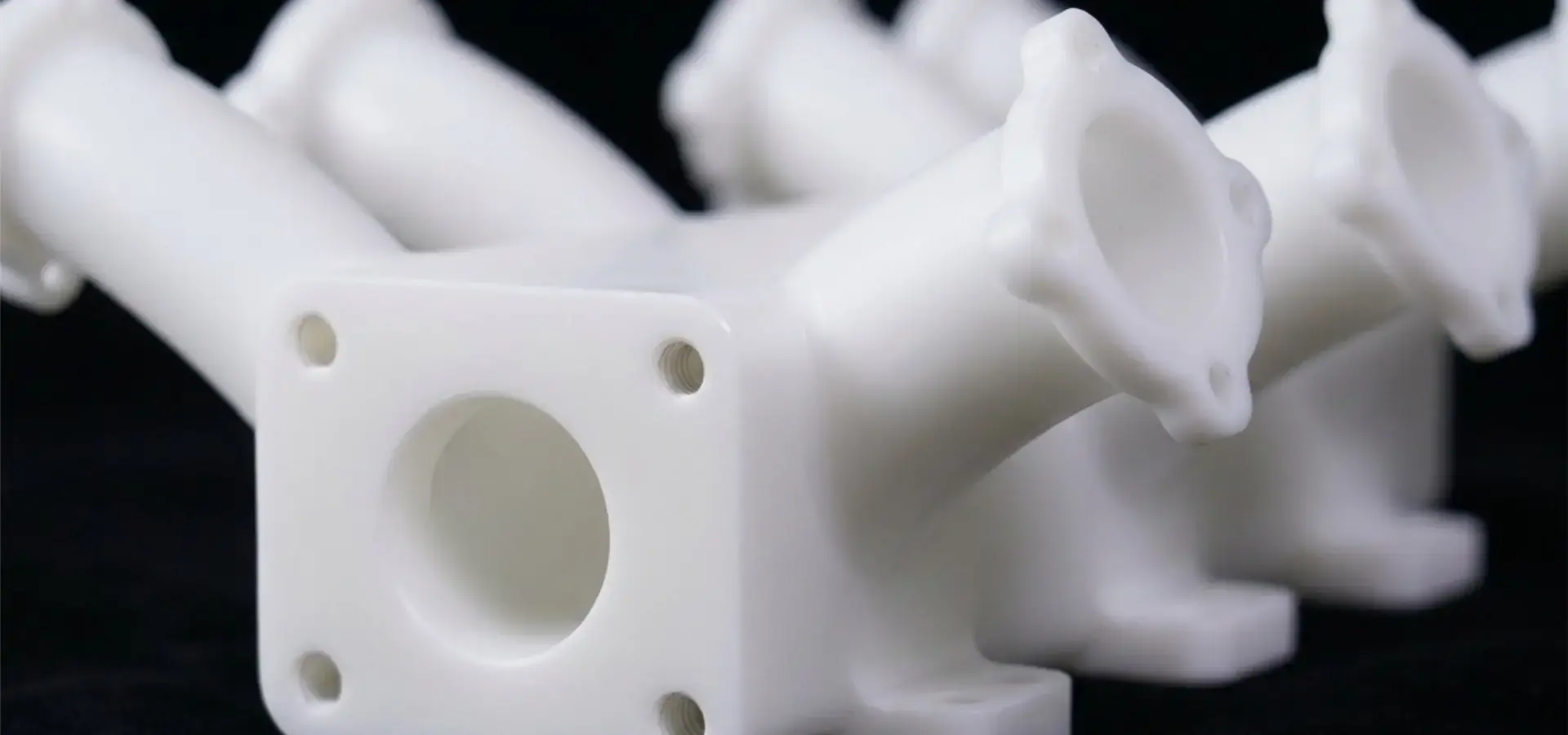
Automotive Rapid Prototyping: Engineers fabricate full-scale unitary interior panels, custom dashboard inserts, and air intake manifolds in tough, ABS-like resins. These prototypes undergo thermal stress testing and fit verification within vehicle assemblies, revealing interference issues before committing to injection mold tooling. The absence of bonding seams ensures accurate thermal expansion behavior and structural integrity under crash simulation loads. Aerospace Component Validation: Precision connectors, irregularly shaped brackets, and lightweight lattice structures for satellite housings emerge as single-piece parts with micron-level tolerances. Heat-resistant resins withstand temperatures up to 230°C, enabling functional testing in engine bay environments. Small-batch production runs become economically viable, supporting niche aircraft customization and rapid response to design modifications.
Medical and Dental Customization: Dental labs print dozens of patient-specific aligner bases or surgical guide models simultaneously on large build plates, maximizing throughput. Orthopedic surgeons utilize life-size skeletal replicas in clear biocompatible resins for pre-operative planning, rehearsing complex vascular reconstructions with spatial accuracy impossible to achieve through imaging alone. Each model's 1:1 scale representation reduces surgical time and improves patient outcomes. Consumer Electronics and Footwear Design: Shoe manufacturers produce lattice midsoles in elastomeric TPU-like resins, validating shock absorption characteristics directly on test rigs. Headphone prototypes integrate thin-wall acoustic chambers and snap-fit battery covers, accelerating the path from CAD to market launch. The fast product update cycles characteristic of consumer electronics demand printing equipment that matches agile development timelines.
Material Selection and Properties
Engineering-grade resins span tough, flexible, transparent, high-temperature, and castable formulations. Tough resins mimic polypropylene's impact resistance, suitable for functional jigs and assembly fixtures. Flexible materials replicate rubber gaskets and soft-touch grips. Transparent variants enable optical component prototyping and fluid flow visualization. High-temperature resins serve under-hood automotive testing, while castable types burn out cleanly for jewelry and dental investment casting. Matching resin properties to application stresses and environmental exposures determines part performance and service life.
How to Choose the Best Large-Scale Resin 3D Printer for Your Business
Defining Decision Criteria Based on Production Needs
Procurement professionals balance production volume, application requirements, large-scale resin 3D printer, and capital investment. Small design studios prioritize cost-effective entry-level industrial machines offering respectable build volumes around 300×300×300mm and open-source material compatibility to control consumable expenses. Medium and large manufacturers demand cubic meter capacities, redundant subsystems for 24/7 uptime, and validated material libraries covering aerospace-grade engineering resins. Technical directors focus on resolution, Z-axis rigidity, and peel force management, while CFOs evaluate total cost of ownership, including resin consumption rates, maintenance intervals, and projected ROI periods.
Comparative Analysis of Leading Models
Market-leading brands demonstrate distinct positioning. Formlabs emphasizes user-friendly software ecosystems and comprehensive material validation, appealing to medical device firms requiring FDA-compatible documentation. Anycubic targets cost-conscious service bureaus with high-resolution monochrome LCD screens and competitive pricing on bulk material purchases. Creality leverages open-architecture platforms, attracting technical users who prefer custom resin formulation and third-party integration flexibility. Each brand's reputation hinges on reliability metrics—mean time between failures (MTBF), warranty claim rates, and customer-reported uptime statistics published in independent user forums and trade association benchmarks.
Essential Technical and Service Factors
Resolution requirements must match the size of the part features: 8K LCD screens are best for jewellery masters with micron-level details, while 4K versions are fine for bigger car jigs. Print speed has a direct effect on the cost of a project. Laser systems with changeable spot sizes speed up the filling in of areas without affecting the accuracy of the edges. Dual-redundant UV light sources, automatic resin level sensors, and film replacement schedules are all examples of reliability signs. Quality of after-sales support, which can be judged by how quickly technical questions are answered, how readily available spare parts are, and how thorough the training materials are, often determines long-term satisfaction more than the price of the original purchase.
B2B Purchasing Options and Financing Solutions
Buyers who buy a lot of things arrange bulk pricing, service agreements for multiple units, and contracts for exclusive material supply. Leasing agreements and payment plans that aren't due right away make it easier to handle cash flow problems during capacity growth phases. Custom configurations, like custom resin vat sizes, built-in post-processing modules, or Industry 4.0 IoT connections, meet specific needs for workflow integration. Distributors who work with international traders offer technical support in the local language, spare parts, and paperwork that meets regulatory requirements that are in line with the standards of the target market.
Maintaining and Troubleshooting Your Large-Scale Resin 3D Printer
Routine Maintenance Practices for Longevity
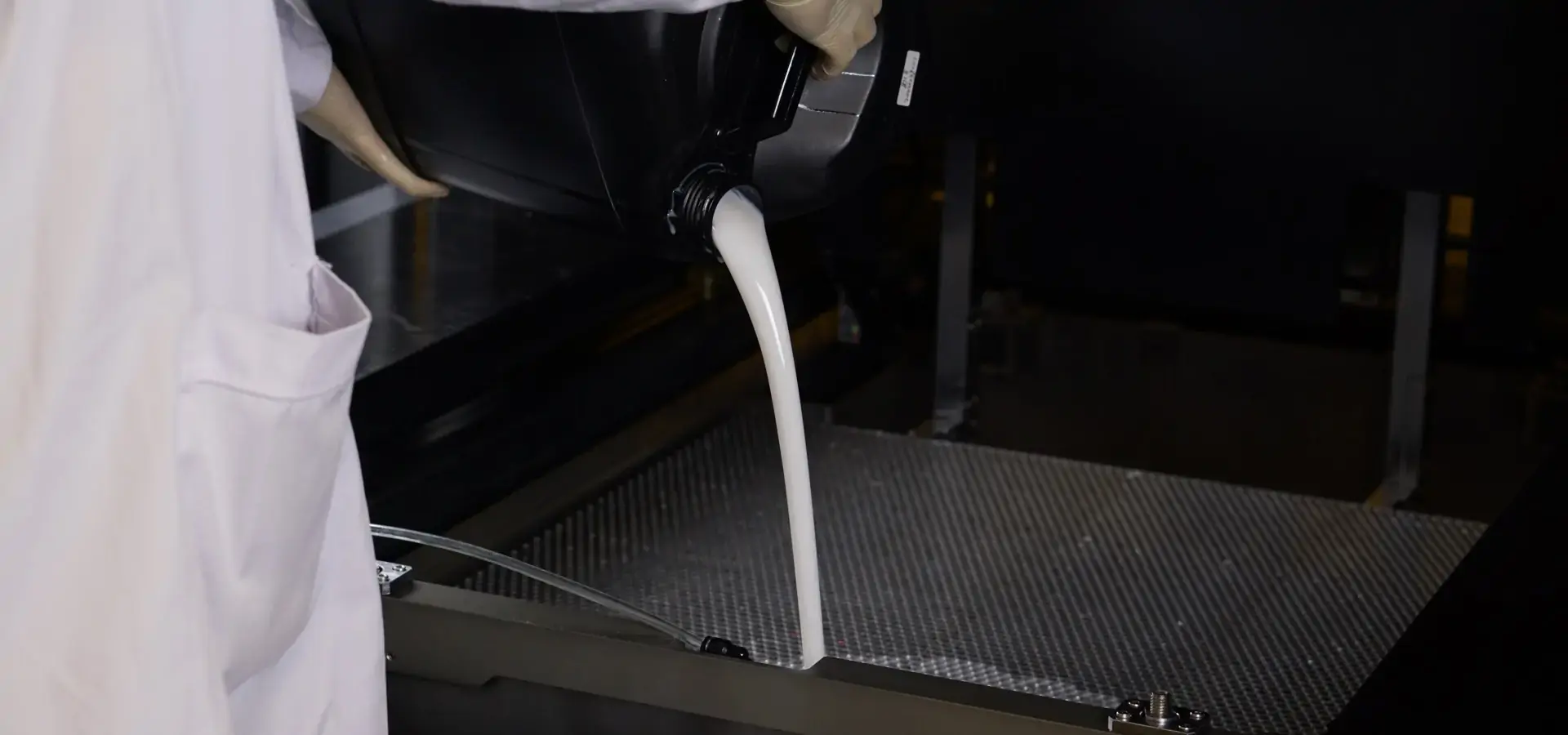
Following daily cleaning instructions keeps resin from getting dirty and extends the life of consumables. Build plates are typically cleaned using isopropyl alcohol (IPA) to remove uncured resin without damaging surface coatings, and vat films need to be checked for holes or cloudiness that makes light transfer worse. Filtration of resin through 100-micron mesh screens gets rid of cured bits that cause problems with prints. Linear rails need to be oiled, Z-axis slop needs to be checked with dial indicators, and laser galvanometer alignment needs to be calibrated every week. To do a deep cleaning once a month, the resin vats must be taken out and soaked in isopropyl alcohol. The FEP films must also be replaced according to the manufacturer's plan, and the firmware must be updated to get access to performance improvements and new material profiles. The way resin is kept affects how long it will last. For example, keeping it in dark, opaque containers below 25°C stops the polymerisation process from starting too soon. Resins that are old or not kept properly have higher viscosity and don't cure all the way, which makes the layers weak and the measurements wrong. Using barcode tracking tools and first-in, first-out inventory rotation cuts down on material waste.
Common Troubleshooting Scenarios and Solutions
Layer delamination is usually caused by not enough contact time, a low temperature, or resin that is contaminated. Most problems can be fixed by changing the settings for the UV strength, turning on the heaters in the chamber, and filtering the resin through a fine mesh. Uneven peel forces cause big flat sections to warp. To redistribute stresses, switch to oxygen-permeable membrane vat systems or use raft supports with gradual transition zones. Dimensional errors are a sign of calibration drift. Accuracy is restored by running the automated bed levelling routines again and checking the alignment of the galvanometer mirror. When a print job stops in the middle, it's usually because the power went out or the network connection dropped. Uninterruptible power supplies (UPS) and USB-based file storage get rid of the need for links that could go down. When problems keep happening despite standard fixes, taking pictures and keeping logs of failure modes speeds up the remote technical help diagnosis.
Professional Support and Warranty Considerations
Partnerships with responsive suppliers minimize downtime costs. Service level agreements (SLAs) guarantee on-site technician visits within 24 hours for critical failures, protecting production schedules. Comprehensive warranties covering UV light sources—typically rated for 2,000 hours—and structural components provide budget predictability. Suppliers offering annual preventive maintenance contracts perform deep calibrations, replace wear components proactively, and provide large-scale resin 3D printer priority access to software upgrades and advanced material releases.
Market Trends and Future Outlook for Large-Scale Resin 3D Printing
Emerging Innovations in Resin Chemistry and Automation
Next-generation photopolymers have bio-based monomers that are better for the environment, ceramic nanoparticles that make them stiffer, and self-healing chemicals that fix tiny cracks when they are heated. With continuous liquid interface production (CLIP) technology, there are no more layer-by-layer peel cycles. CLIP can significantly increase printing speed compared to traditional layer-by-layer SLA, with performance gains varying by application. Robotic systems that mix and dispense resin cut down on the number of times an operator has to touch the system. This makes lights-out production possible in high-volume facilities.
Transformation of Manufacturing Paradigms
As companies set up regional 3D printing hubs instead of central injection moulding plants, distributed manufacturing models are becoming more popular. This change lowers the cost of keeping inventory, shortens supply lines, and makes mass customisation possible on a large scale. Automakers print jigs and parts as needed at assembly plants, so there are no risks of storing them or losing them as soon as they become outdated. Aerospace suppliers react to urgent requests for aftermarket parts within hours instead of weeks, making money from maintenance contracts for older aircraft.
Strategic Integration Recommendations
Manufacturers getting ready to adopt should check their current CAD systems to see if they work with additive design principles. Strategies like topology optimisation, generative design, and lattice filling can save weight and material in ways that subtractive methods can't. Putting money into training programs helps employees become more knowledgeable, which lowers reliance on outside service centers and safeguards intellectual property. To protect multi-year capital investments, procurement officers must look at seller roadmaps and make sure that suppliers are committed to releasing materials that work with older systems and keeping spare parts available for a long time.
Conclusion
To choose the best big-format resin 3D printing system, you need to carefully match technical requirements with business goals. The better surface quality, geometric complexity, and isotropic strength that these machines provide are useful in many fields, such as car prototyping, aerospace validation, medical customisation, and consumer electronics. When it comes to resolution, speed, dependability, and quality of after-sales support, procurement teams have to find a balance between budget limits and production volume goals. Regular uptime and consistent output quality are made possible by proactive troubleshooting, routine maintenance, and relationships with suppliers who can respond quickly. As resin chemistry improves and automation speeds up, companies that use these technologies are better prepared to take advantage of trends in distributed production and the chance to make a lot of custom items.
FAQ
1. What build volume should our facility prioritize?
Small studios handling jewelry or dental work function effectively with 300×300×300mm systems, while automotive and aerospace applications benefit from 600mm+ capacities that accommodate full-scale assemblies without segmentation.
2. How do material costs compare with traditional manufacturing?
Engineering resins range from $150 to $800 per liter, depending on formulation. Batch production of small parts achieves per-unit costs competitive with injection molding at quantities below 1,000 units, avoiding tooling expenses.
3. What distinguishes reliable suppliers?
Verified track records include published MTBF statistics, ISO 9001 certification, and documented warranty claim resolution rates. Access to technical support via email, phone, and on-site service within contractual timeframes protects production schedules.
4. Can these printers support proprietary resin formulations?
Open-architecture systems allow custom material profiles, enabling companies to develop specialized resins for unique thermal, mechanical, or chemical resistance requirements unavailable in off-the-shelf formulations.
Partner with Magforms for Advanced Large-Scale Resin 3D Printer Solutions
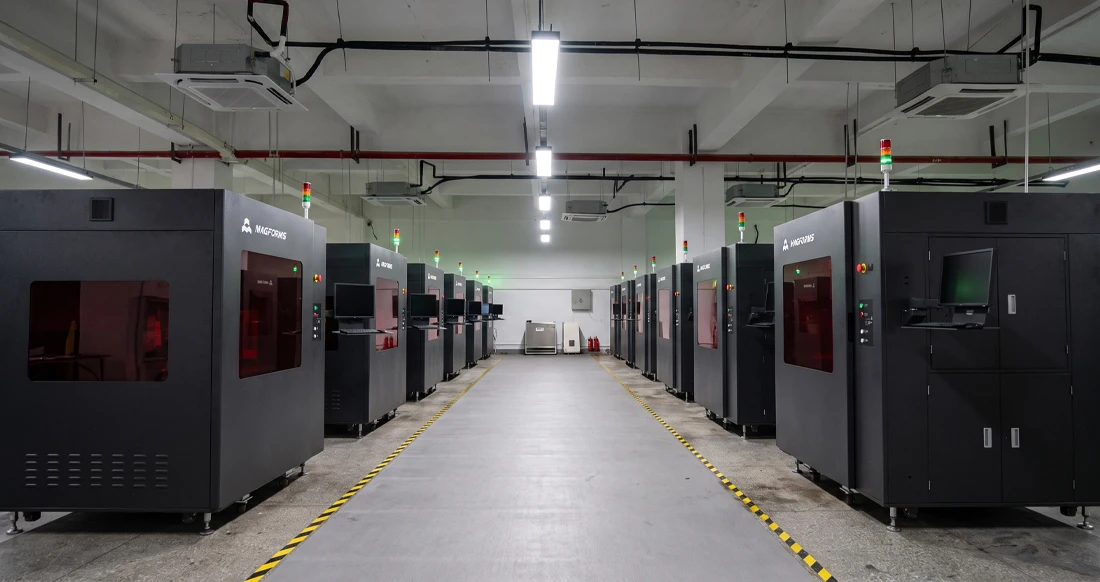
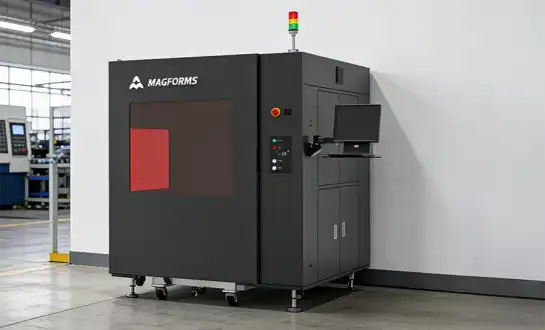
Magforms combines decades of industry expertise with cutting-edge technology to deliver integrated additive manufacturing solutions tailored for demanding industrial applications. Our large-scale resin 3D printer systems feature proprietary variable spot-size laser technology and AI-optimized scanning paths, boosting print speeds by over 30% while maintaining micron-level accuracy. Deep material-equipment integration eliminates compatibility issues that plague mixed-vendor workflows, ensuring dimensional consistency and minimizing unplanned downtime.
Backed by 22 patents and 30 registered trademarks, Magforms has served over 300 enterprises across automotive, aerospace, medical, and consumer electronics sectors worldwide. Our responsive technical support team provides comprehensive training, rapid spare parts fulfillment, and proactive maintenance programs that keep production lines running. Whether you require cost-effective entry-level systems or high-throughput industrial platforms, we offer flexible B2B purchasing options including volume discounts, financing plans, and custom configurations.
Contact our specialists today at info@magforms.com to discuss your specific application requirements, request sample part validation, or explore bulk ordering opportunities. As a trusted large-scale resin 3D printer manufacturer with proven global reach, Magforms stands ready to accelerate your transition to advanced additive manufacturing.
References
1. Gibson, I., Rosen, D., & Stucker, B. (2021). Additive Manufacturing Technologies: 3D Printing, Rapid Prototyping, and Direct Digital Manufacturing (3rd ed.). Springer.
2. Ligon, S. C., Liska, R., Stampfl, J., Gurr, M., & Mülhaupt, R. (2017). Polymers for 3D Printing and Customized Additive Manufacturing. Chemical Reviews, 117(15), 10212-10290.
3. Wohlers, T., & Campbell, I. (2022). Wohlers Report 2022: 3D Printing and Additive Manufacturing Global State of the Industry. Wohlers Associates.
4. ASTM International. (2021). ASTM F2792-12a: Standard Terminology for Additive Manufacturing Technologies. ASTM Committee F42 on Additive Manufacturing Technologies.
5. Quan, Z., Wu, A., Keefe, M., Qin, X., Yu, J., Suhr, J., & Chou, T. W. (2015). Additive Manufacturing of Multi-Directional Preforms for Composites: Opportunities and Challenges. Materials Today, 18(9), 503-512.
6. Stansbury, J. W., & Idacavage, M. J. (2016). 3D Printing with Polymers: Challenges Among Expanding Options and Opportunities. Dental Materials, 32(1), 54-64.

Magforms makes design and manufacture easier.
Popular Blogs
-
 Industry InsightsManufacturing Industry
FDM vs. SLA Printer: Which Technology Is Right for Your Project?
-
 Industry InsightsManufacturing Industry
Top 5 Applications of Industrial 3D Printers in Manufacturing Today
-
 Industry InsightsManufacturing Industry
Why Stereolithography 3D Printers Are Unmatched for Microfluidic Device Prototyping?