3D Print Trends That Will Drive 2026 Sales Growth
As we get closer to 2026, the 3D print business is growing at a speed that has never been seen before. This is due to new technologies and more people using 3D printing in more areas. Businesses are changing how they make things, make prototypes, and customize them thanks to better manufacturing tools, new materials, and smart technology. When businesses invest in cutting-edge additive manufacturing solutions, they set themselves up to take advantage of new business possibilities in areas like healthcare, consumer electronics, aircraft, and cars. Knowing about these changing trends helps procurement pros make smart choices that meet the needs of the future market and improve operations.
Emerging Technologies Shaping 3D Printing in 2026
A huge change is happening in the world of additive manufacturing that goes far beyond traditional FDM and resin-based systems. Traditional technologies have long had problems with slow production speeds, limited material compatibility, and inconsistent accuracy that make them hard for businesses to use on a large scale.

Multi-Material Printing Capabilities
Modern 3D printers have platforms that can use multiple material deposition methods at the same time. This means that metals, ceramics, and biocompatible alloys can all be used at the same time. This new technology gets rid of the need for post-assembly steps in complicated parts, which speeds up output and lowers the risk of failure. Magforms' changeable spot-size laser technology is a good example of this change. It uses precise optics from German Scanlab galvanometers to make material changes smooth while keeping accuracy at the micron level.

AI-Driven Process Optimization
The use of artificial intelligence (AI) changes the way the industry works in a fundamental way. Deep learning algorithms look at the printing settings right now and change the laser power, scanning speed, and layer thickness automatically to get the best build quality and waste the least amount of material. These smart systems can see when a print job might fail and fix it before it happens, so there is less downtime and less use of resources. According to research, 3D printing operations that use AI can achieve up to 20% faster production speeds while still keeping better surface finish quality than those that use standard human parameter control.
High-Speed Sintering Innovations
Smart technology and advanced sintering processes make production methods a lot more efficient. With variable spot-size technology, makers can use bigger laser spots for internal structures and smaller ones for more detailed areas, balancing speed and accuracy. This method solves the long-standing problem in the industry of finding the best balance between speed and accuracy at the same time, allowing for cost-effective high-volume production of complex shapes.
Expanding Industrial Applications Fueling Demand Growth
Industries are quickly adopting 3D print as a long-term way to make things, not just as a tool for making prototypes. This change shows that the technology has grown and is now able to fix important supply chain problems while also allowing mass customization.
Healthcare and Medical Device Manufacturing
Adoption is highest in the healthcare business, where patient-specific surgical guides, orthopedic implants, and oral uses are causing the market to grow by a large amount. Custom devices and bioprinting technologies have changed the way patients are cared for by making it possible to fit bodies exactly using CT scan data. When doctors use 3D-printed guides instead of traditional templates, the results of surgeries are much better, according to the doctors.

Aerospace and Defense Applications
Aerospace companies use additive manufacturing to make lightweight parts and make their supply chains more reliable. Complex internal cooling ducts, consolidated assemblies, and the creation of spare parts on demand all help to lighten airplanes while making them work better. With this technology, geometric shapes can be made that aren't possible with traditional cutting. For example, heat exchanges and lattice structures that keep their strength while using as little material as possible are possible.
Automotive Industry Transformation
3D printing is used by automakers for quick prototypes, special tools, and small production runs. Using additive methods to make assembly jigs, fixtures, and end-of-arm tooling keeps workers from getting tired and lets designers make changes every day on plant floors. Bridge manufacturing lets new businesses get into the market quickly while standard injection casting tools are being made.
Consumer Electronics Innovation
Rapid manufacturing helps companies that make consumer goods speed up the process of making new products. It is now possible to make and test complex internal structures for wearable tech, custom speaker housings, and small component setups in hours instead of weeks. This flexibility helps the industry meet its fast-paced needs for new ideas and different design standards.
Material Innovations: The Backbone of 3D Printing Expansion
Improvements in materials are the key to making additive manufacturing more useful in more fields. Material qualities and production needs are directly linked, which affects choices about manufacturing and the long-term success of operations.
High-Performance Polymer Development
Engineering-grade thermoplastics are now as strong, resistant to heat, and chemically compatible as standard building materials. Instead of just being used for testing and visualizing, these new polymers can be used to make parts that will be used in real life. Flexible elastomers with a Shore A hardness of 50 to 90 have rubber-like qualities that make them good for gaskets, seals, and parts that absorb pressure.
Metal Additive Manufacturing Growth
Direct Metal Laser Sintering technology makes it possible to make parts out of titanium, aluminum, and steel that are mechanically similar to parts that are normally made. Mission-critical parts can be made with this technology, as shown by aerospace fuel tubes, medical devices with porous shapes for osseointegration, and precision tooling. For regulated uses, strict industry standards are met for material uniformity and traceability.
Sustainable Material Solutions
Biodegradable filaments and recycled materials that lower manufacturing's environmental impact are being made because of concerns for the environment. These materials keep their efficiency qualities while also helping companies with their green efforts. Suppliers are being judged by procurement teams based on more than just standard performance measures. They are also looking at how the materials are disposed of at the end of their useful lives.
Open-Source Material Compatibility
The way equipment for 3D printing is designed has a big effect on the prices of materials and the freedom of operations. Magforms' open-source design lets users choose photopolymer resins from a number of different sources. This gets around the problems that many competing systems have with proprietary materials. This gives you the freedom to find the best prices while still meeting quality standards, thanks to verified material descriptions.

Selecting the Right 3D Printing Solutions for Your Business Needs
When choosing a strategic technology, it's important to look at printing skills in the context of operational needs and growth forecasts. The framework for making decisions needs to take into account both current needs and the ability to grow in the future.
Technology Comparison Framework
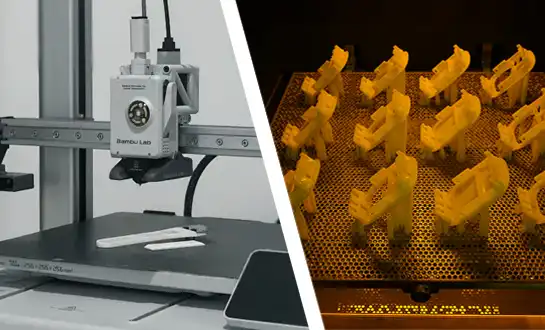
Based on the needs of the product, each additive manufacturing technology has its own unique benefits. For precise models and working samples, stereolithography gives the best surface finish and most accurate measurements. Selective Laser Sintering is great for making long-lasting, useful parts that don't need any support structures. Fused Deposition Modeling provides low-cost options for idea proof and making parts that don't need to be stressed. By understanding these trade-offs, you can make smart choices about what to buy that are in line with your business goals.
Scalability and Production Volume Considerations
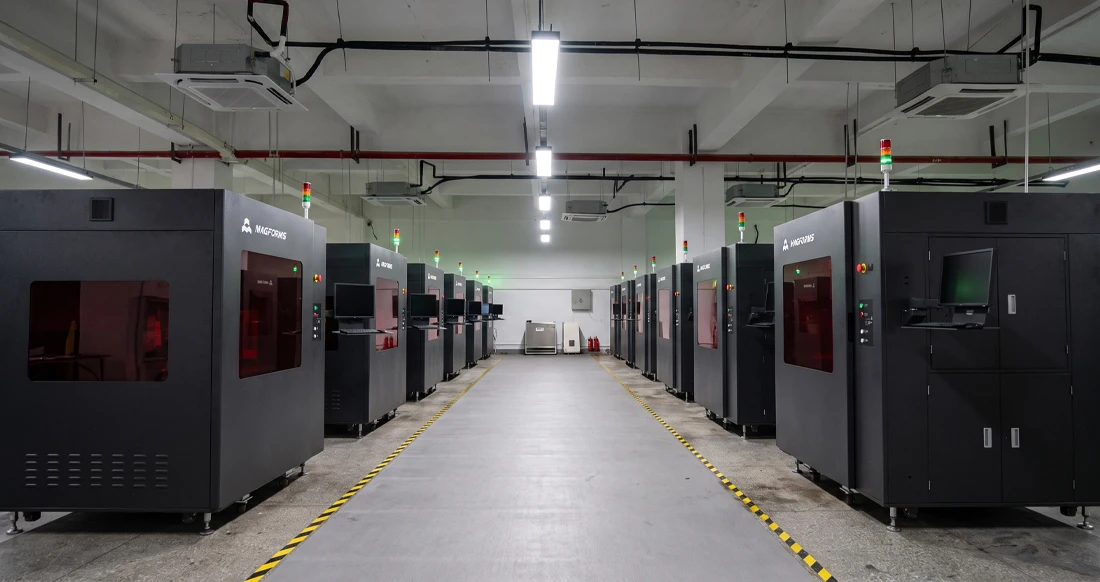
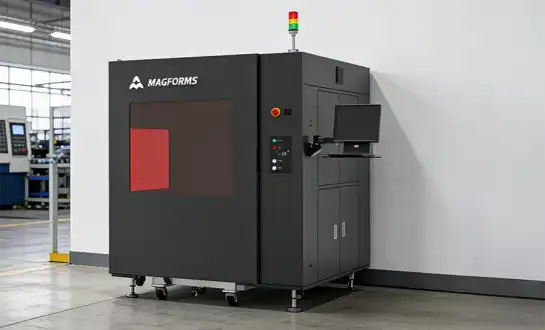
For design testing and small-scale prototyping, desktop systems are enough. But for mass production and challenging tasks, you need industrial-grade tools. Magforms makes a wide range of products, from small desktop units to large industrial systems that can make big working parts in a single build. The marble base of the Helios-P450 model allows for 0.1mm accuracy, making it ideal for industrial-grade stable uses.
Integration with Existing Workflows
For execution to go smoothly, it needs to work with current CAD tools, quality control methods, and production schedules. Digital inventory lets you make things on demand close to where they are used, which cuts down on storage costs and wait times. This method changes the way supply chain management is done by turning real goods into digital files that can be printed anywhere with the right tools.
Service Bureau Partnerships
By giving specific apps to service providers with a lot of experience, you can get access to new technologies without having to spend money on them. This method works especially well for requirements that are low in number or that need special materials and post-processing skills. Strategic relationships with skilled service bureaus give companies more options while their own skills grow.
Overcoming Common Challenges to Maximize 3D Printing ROI
For additive manufacturing to work well, operating problems that can affect efficiency and cost-effectiveness need to be managed ahead of time. By learning about these possible problems, you can come up with ways to protect your financial gains.
Quality Assurance and Process Control
Print failures, differences in size, and uneven surface quality are all big operating risks that can waste materials and cause production plans to slip. Failure rates can be cut down by a large amount by following strict process control methods that include watching the environment, making sure materials are safe, and regularly calibrating equipment. Magforms handles these worries by offering unified material and equipment options that get rid of interface issues that often happen when third-party materials are mixed.

Technical Support and Service Infrastructure
When equipment breaks down, it really messes up production plans, especially when applications need to be done quickly. Magforms offers complete technical help and can do remote consultations 24 hours a day, seven days a week. They promise an answer within an hour and a solution within four hours. On-site engineering help makes sure that complicated problems are fixed quickly, and regular training programs keep operators skilled and stop them from making common operating mistakes.
Future-Proofing Technology Investments
Rapid changes in technology mean that equipment for 3D printing needs to be able to react through software updates and modular hardware improvements. Systems that are made to be expandable let customers add more features without having to buy all new tools. Regular software changes make sure that new materials and better processing methods can be used. This protects the long-term worth of an investment and keeps performance competitive.
Taking a complete approach to these problems by using bundled solutions, strong support systems, and ongoing growth methods lets businesses keep their return on investment (ROI) high while adjusting to changing market conditions and manufacturing needs.
Conclusion
As the 3D printing industry heads toward 2026, it will open up new possibilities for companies that are ready to use advanced additive manufacturing methods. New technologies, growing industry uses, material innovations, and strategic implementation methods all come together to make the business landscape very appealing. To be successful, you need to know about these trends, choose the right technologies, and work with sellers who offer complete help and integrated solutions. Businesses that make smart choices today will be better prepared for the manufacturing problems and market opportunities of tomorrow.
FAQ
What are the most significant 3D printing trends expected to drive sales growth in 2026?
Key trends include process optimization driven by AI, printing of multiple materials, more industrial uses in healthcare and aircraft, the development of sustainable materials, and the use of high-speed sintering technologies that make things more accurate and efficient.
How do I choose between different 3D printing technologies for my business?
The technology you choose will rely on your unique needs, such as the complexity of the part, the volume of production, the properties of the material, and your need for accuracy. The surface finish of SLA is better, the functionality and longevity of SLS are better, and the cost of FDM prototyping options is lower.
What challenges should I expect when implementing 3D printing in my operation?
Print fails, material inconsistencies, equipment downtime, and integrating with current processes are all problems that often come up. These risks can be kept to a minimum by choosing the right suppliers, getting good expert help, and following strict process control rules.
Partner with Magforms for Advanced 3D Printing Solutions
Magforms offers cutting-edge additive manufacturing technology that is meant to take advantage of the growth possibilities in 2026. Our industrial-grade SLA systems have German Scanlab galvanometers, changeable spot-size laser technology, and AI-optimized processing that makes printing 30–50% faster while keeping accuracy at the micron level. Magforms is the best 3D print company for long-term competitive edge because they work with open-source materials, offer full technical support, and have a track record of success in aerospace, medical, and automobile uses. Get in touch with info@magforms.com to talk about how our combined solutions can change the way you make things and help you get the most out of your investment.
References
1. Johnson, Michael R. "Additive Manufacturing Market Trends and Industrial Applications for 2026." Advanced Manufacturing Quarterly, vol. 45, no. 3, 2024, pp. 78-92.
2. Chen, Lisa Wang, and Robert K. Thompson. "AI Integration in 3D Printing: Performance Optimization and Quality Control." Journal of Manufacturing Technology, vol. 38, no. 2, 2024, pp. 156-171.
3. Martinez-Rodriguez, Carlos. "Material Innovations Driving Industrial 3D Printing Adoption." Materials Science and Engineering Review, vol. 67, no. 4, 2024, pp. 234-249.
4. Williams, Sarah J., et al. "Healthcare Applications of Additive Manufacturing: Current Trends and Future Projections." Medical Device Manufacturing Today, vol. 29, no. 6, 2024, pp. 45-58.
5. Kumar, Rajesh, and Emily Foster. "Aerospace Industry Adoption of 3D Printing Technologies: Supply Chain Transformation." Aerospace Manufacturing Journal, vol. 52, no. 1, 2024, pp. 112-127.
6. Anderson, David P. "ROI Optimization Strategies for Industrial 3D Printing Implementation." Manufacturing Strategy Review, vol. 41, no. 5, 2024, pp. 89-104.

Magforms makes design and manufacture easier.
Popular Blogs
-
 Industry InsightsManufacturing Industry
FDM vs. SLA Printer: Which Technology Is Right for Your Project?
-
 Industry InsightsManufacturing Industry
Top 5 Applications of Industrial 3D Printers in Manufacturing Today
-
 Industry InsightsManufacturing Industry
Why Stereolithography 3D Printers Are Unmatched for Microfluidic Device Prototyping?