How to Choose Your First 3D Printer: A Beginner's Guide
Selecting your first 3D printer requires careful consideration of multiple factors, including printing technology, material compatibility, build volume, and overall reliability. The right choice depends on your specific applications, budget constraints, and technical requirements. Modern additive manufacturing offers various technologies like fused deposition modeling and resin printing, each with distinct advantages for different use cases. Understanding these fundamentals helps ensure your investment delivers consistent results for rapid prototyping, functional parts production, or specialized applications across industries.
Understanding Different 3D Printing Technologies
Additive fabricating, or 3D printing, includes a few unmistakable innovative families, each with one-of-a-kind standards, suited materials, and ideal applications. A crucial understanding of these contrasts is vital for selecting the most suitable plan for particular useful, tasteful, and financial prerequisites. Intertwined Testimony Modeling (FDM), also known as Combined Fiber Creation (FFF), speaks to the most common and open approach. This fabric expulsion procedure nourishes a thermoplastic fiber through a heated spout, which stores fabric layer by layer to construct a portion. It exceeds expectations in creating utilitarian models, concept models, and low-volume end-use parts where mechanical quality is prioritized over surface wrap-up. Its focal points incorporate wide fabric compatibility (from standard PLA and ABS to engineering-grade nylons and composites), generally low-cost framework cost, and ease of use, making it a flexible beginning point for numerous projects.

In contrast, Stereolithography (SLA) innovation utilizes a bright laser to accurately cure fluid photopolymer gum inside a vat, cementing it layer by layer. This vat photopolymerization process accomplishes remarkable detail determination, sharp edges, and astoundingly smooth surface wraps up straight off the construct stage. Thus, SLA exceeds expectations in applications requesting high exactness and fine details, such as point-by-point dental models, complicated adornments experts for casting, microfluidic gadgets, and models requiring fabulous visual constancy. Its commonplace layer determination, measured in microns, regularly outperforms that of standard FDM machines, making it the favored choice for exactness work where dimensional exactness and surface quality are fundamental, in spite of the fact that fabric properties are by and large more fragile than thermoplastics.
For creating vigorous, end-use utilitarian parts, Specific Laser Sintering (SLS) is an exceedingly competent powder bed combination innovation. It employs a high-powered laser to specifically intertwine modest particles of nylon-based or other thermoplastic powder. A key advantage is that unsintered powder underpins the portion during printing, eliminating the need for devoted bolster structures and permitting for the creation of complex, interlocked geometries. The coming about parts show fabulous, isotropic mechanical properties, making them appropriate for demanding applications like useful models, custom ductwork, and low-volume generation components. Be that as it may, SLS frameworks regularly represent a noteworthy capital speculation and require specialized facilities for powder dealing with and post-processing, impacting their selection based on production volume and accessible framework. Exploring these center characteristics—resolution, fabric properties, taken a toll, and geometric freedom—provides a clear system to direct your choice toward the ideal added substance innovation for your planning application and generation scale.
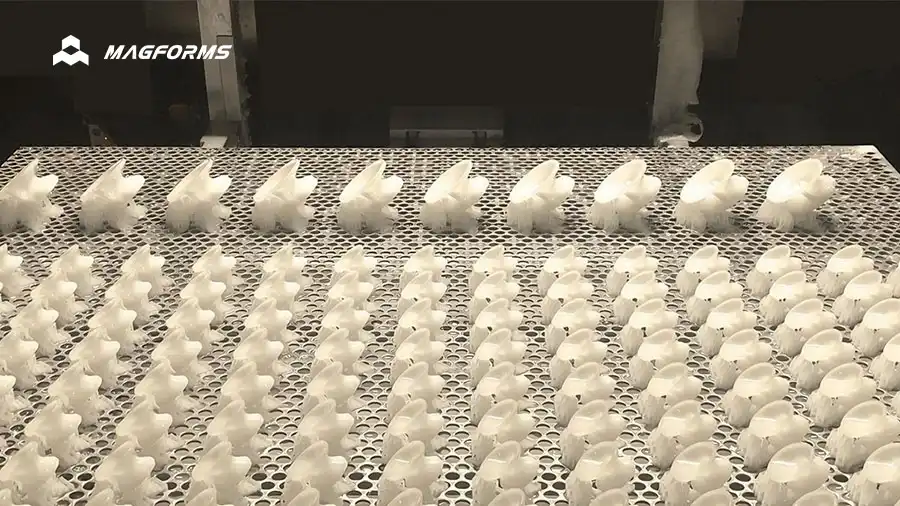 |
Technology Focus See How Industrial SLA Delivers Micron-Level Precision Discover how advanced SLA systems achieve ultra-smooth surfaces, fine التفاصيل, and consistent accuracy for demanding applications.
|
Evaluating Build Volume and Print Specifications
Build a volume 3D printer, the number of parts you can deliver at the same time. Little desktop units regularly offer 200x200x200mm capacity, appropriate for models and small components. Mechanical frameworks give essentially bigger construct envelopes, empowering the generation of car boards or structural models.
Layer determination influences surface quality and fine detail generation. Standard FDM frameworks accomplish 0.1-0.3mm layer statures, whereas high-end SLA gear comes to 0.025mm exactness. Consider your quality necessities against generation speed, as better layers increase print time substantially.
Print speed changes impressively between advances and producers. Variable spot-size laser innovation can increase throughput by 30-50% compared to routine frameworks. Assess speed details, nearby quality prerequisites to optimize generation efficiency.
Dimensional exactness gets to be basic for useful parts requiring exact fits. Industrial-grade frameworks accomplish ±0.1mm resiliencies, fundamental for mechanical assemblies or tooling applications.
Material Compatibility and Selection Considerations
Material adaptability essentially impacts your operational costs and application scope. Open-source plans permit determination from numerous fiber providers, giving direct control and specialized fabric get to. Exclusive frameworks regularly constrain choices to manufacturer-specific materials, possibly expanding long-term expenses.
Engineering-grade thermoplastics offer improved mechanical properties for utilitarian testing. Carbon fiber fortified fibers give remarkable strength-to-weight proportions for aviation applications. Adaptable materials empower gasket generation or wearable gadget prototyping.
Photopolymer gums span from standard definitions to specialized high-temperature or biocompatible grades. Straightforward gums suit optical component improvement, whereas intense details handle mechanical push testing.
Consider fabric capacity necessities, as a few definitions require controlled stickiness situations. Calculate taking care of security conventions for gum frameworks, which frequently require legitimate ventilation and individual defensive equipment.
Software Integration and Workflow Efficiency
Slicing program changes over CAD models into machine instructions through the G-code era. User-friendly interfacing streamlines the move from plan to physical parts. Progressed program bundles offer broad parameter control for optimizing back structures and print quality.
CAD computer program compatibility influences your plan workflow proficiency. Prevalent stages incorporate coordinate toolchains supporting coordinate printing. Consider learning bends and existing group skills when assessing computer program ecosystems.
Deep learning calculations progressively optimize printing parameters, consequently, diminishing setup time and moving forward victory rates. These frameworks adjust to diverse geometries and materials, minimizing manual intervention.
Cloud-based stages empower further checking and line administration for production environments. Versatile applications permit status checking and fundamental control capacities from anywhere in your facility.
Industrial Applications Across Multiple Sectors

Automotive producers use 3D printers for interior components and specialized tooling. Customized dashboard components and specialty vehicle parts benefit from the added substance manufacturing plan opportunity. Brief generation runs have become financially reasonable compared to conventional infusion molding.
Aerospace applications require uncommon accuracy for complex geometries and lightweight structures. Little accuracy connectors and specialized brackets grandstand added substance manufacturing's capacity to deliver parts incomprehensible through customary methods.
Medical and dental businesses depend intensely on customized arrangements. Orthodontic aligner bases, surgical guides, and embed models illustrate the technology's personalization capabilities. Biocompatible materials extend treatment alternatives significantly.
Consumer gadgets benefit from quick cycles and complex inner structures. Wearable gadget models and specialized lodgings can be created rapidly, supporting fast-paced product development timelines.
Cost Analysis and Return on Investment
Initial gear costs change significantly between desktop and mechanical frameworks. Entry-level units begin around a few thousand dollars, whereas large-format SLA frameworks speak to considerable speculations. Assess your generation volume necessities against hardware capabilities.
Material costs altogether affect operational costs. High-end outside frameworks regularly require costly, restrictive materials, possibly multiplying working costs. Open-source options give way better control for progressing operations.
Maintenance necessities and component substitution costs influence add up to proprietorship costs. Quality galvanometers, lasers, and servo engines guarantee unwavering quality but require intermittent calibration and possible substitution. Calculate these costs into your budget planning.
Labor reserve funds through computerized generation frequently legitimize hardware ventures quickly. Diminished tooling necessities and speedier emphasis cycles give quantifiable benefits for product development organizations.
Quality Control and Reliability Factors
Hardware component quality directly influences output consistency and the 3D printer. German Scanlab galvanometers, AOC lasers, and Panasonic servo motors represent premium components ensuring reliable operation. Marble bases provide thermal stability for precision applications.
Failure rates impact production schedules significantly. Equipment with extensive testing and market validation demonstrates lower downtime risks. Systems with thousands of operational hours prove reliability for scaled manufacturing environments.
Print success rates depend heavily on material-equipment compatibility. Matched systems eliminate dimensional deviations and defects common with mixed-vendor solutions. Integrated material and hardware development ensures optimal performance.
Quality assurance protocols should include regular calibration procedures and preventive maintenance schedules. Document successful parameter sets for different materials and applications.
Technical Support and Training Resources

Responsive technical support becomes crucial for production environments where downtime costs escalate quickly. Twenty-four-hour consultation availability and rapid response guarantees minimize disruption risks. One-hour response times and four-hour solution commitments demonstrate serious support commitment.
On-site engineering support for complex issues ensures rapid resolution when remote assistance proves insufficient. Local technical expertise reduces travel costs and response delays.
Comprehensive training programs help teams maximize equipment capabilities. Regular workshops on new materials, techniques, and software updates maintain competitive advantages. Technical certification programs validate operator competencies.
Documentation quality and availability affect daily operations significantly. Detailed troubleshooting guides, parameter databases, and application examples accelerate learning curves and reduce support requirements.
Conclusion
Selecting the 3D printer manufacturing solution requires balancing technical specifications, cost considerations, and long-term support requirements. Evaluate printing technology compatibility with your applications, material flexibility for operational cost control, and supplier reliability for consistent production capability. Quality components, responsive technical support, and comprehensive training resources ensure successful implementation and optimal return on investment for your digital fabrication initiatives.
Partner with Magforms for Industrial-Grade 3D Printer Solutions
Magforms stands as a leading 3D printer manufacturer, delivering integrated material and equipment solutions optimized for industrial applications. Our variable spot-size laser technology achieves 30-50% faster printing speeds while maintaining micron-level precision. Contact our expert team at info@magforms.com to discuss your specific requirements and explore our comprehensive product portfolio for your next additive manufacturing investment.
References
1. Gibson, I., Rosen, D., & Stucker, B. (2021). Additive Manufacturing Technologies: 3D Printing, Rapid Prototyping, and Direct Digital Manufacturing. Springer International Publishing.
2. Redwood, B., Schöffer, F., & Garret, B. (2020). The 3D Printing Handbook: Technologies, Design and Applications. 3D Hubs Knowledge Base Publications.
3. Ngo, T. D., Kashani, A., Imbalzano, G., Nguyen, K. T., & Hui, D. (2018). Additive Manufacturing Technologies for Industrial Applications: A Comprehensive Review. Composites Part B Engineering Journal.
4. Turner, B. N., Strong, R., & Gold, S. A. (2019). A Review of Melt Extrusion Additive Manufacturing Processes: Process Design and Material Selection Considerations. Current Opinion in Solid State and Materials Science.
5. Chen, Z., Li, Z., Li, J., Liu, C., Lao, C., Fu, Y., & Liu, Y. (2020). 3D Printing Technologies for Industrial Applications: Manufacturing Processes, Materials, and Applications. Materials and Design Journal.
6. Singh, R., Kumar, R., Farina, I., Colangelo, F., Feo, L., & Fraternali, F. (2021). Multi-Material Additive Manufacturing Technologies: A Critical Review of Current Trends and Future Prospects. Journal of Manufacturing Processes.

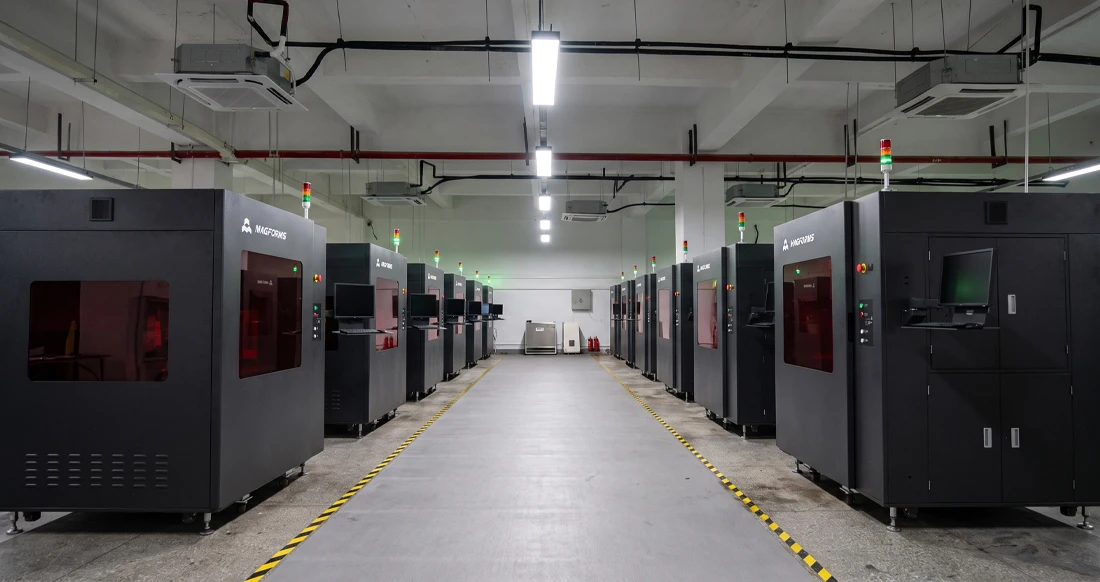
Magforms makes design and manufacture easier.
Popular Blogs
-
 Industry InsightsManufacturing Industry
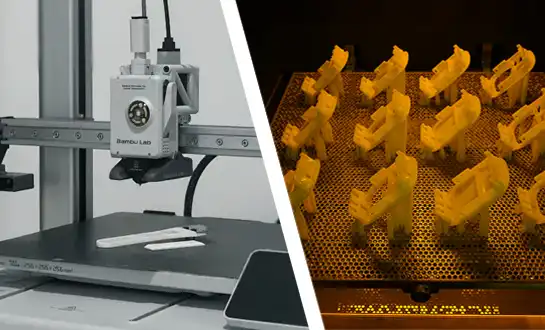
FDM vs. SLA Printer: Which Technology Is Right for Your Project?
-
 Industry InsightsManufacturing Industry
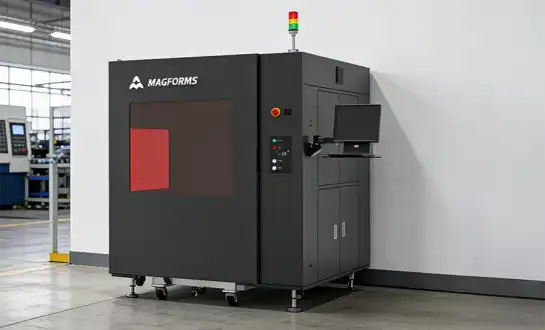
Top 5 Applications of Industrial 3D Printers in Manufacturing Today
-
 Industry InsightsManufacturing Industry
Why Stereolithography 3D Printers Are Unmatched for Microfluidic Device Prototyping?