3D Print vs Traditional Manufacturing: Business Impact
The choice between 3D printing and standard manufacturing changes the way businesses work in every industry. Conventional manufacturing is best at making a lot of things quickly and with well-established supply lines. However, 3D print technology gives you a lot more freedom for customization, fast prototyping, and making things with complex shapes. Knowing about these ways of making things helps procurement workers make smart choices that affect cost structures, time-to-market, and how competitive a company is in today's fast-paced market.
Key Differences Between 3D Printing and Traditional Manufacturing
Additive manufacturing is fundamentally different from traditional production methods because of how they work and how they do things. In traditional manufacturing, solid blocks are cut down with subtractive methods like CNC machining, and materials are shaped with molds and tools in formative methods like injection molding.
Additive Manufacturing Technologies and Processes
With additive manufacturing, computer files are used to build things layer by layer, so expensive tools are not needed. Laser-cured plastics are used in stereolithography (SLA) systems to get very fine details and smooth surfaces. Fused Deposition Modeling (FDM) is a great way to make working samples because it pushes thermoplastic strands through heated nozzles. Selective Laser Sintering (SLS) uses lasers to bond powder particles together, making it possible to make parts with complex internal shapes that would not be possible with other methods. Variable spot-size laser technology is used in modern SLA tools like Magforms' industrial-grade systems to print 30–50% faster than traditional ways. The smart spot-size design uses big laser spots (0.5–0.6 mm) for quick filling inside the cavity and small spots (0.18–0.2 mm) for precise curves, achieving a good balance between speed and accuracy.

Traditional Manufacturing Workflows and Limitations
In conventional manufacturing, a lot of money has to be spent up front on tools, molds, and setup procedures. For each type of part, CNC machining needs a different set of tools and code. For injection molding to work, expensive steel forms must be made, which can take weeks and cost tens of thousands of dollars. When it comes to making a lot of things, these methods work great, but they have trouble with design changes and customization. Traditional manufacturing is very strict, which makes the supply chain dependent and causes problems with inventory. To meet customer needs, businesses have to correctly predict demand and keep a lot of stock on hand, which takes up capital and office space.
Evaluating Business Benefits and Challenges
Choosing between additive and traditional production has effects on the economy that go beyond the cost of the initial equipment. These effects include operating efficiency, material utilization, and the ability to respond to changes in the market.
Cost Analysis and Break-Even Considerations
When making a lot of things, traditional manufacturing is clearly better because the prices of the tools can be spread out over thousands of pieces. When you make more than 1,000 to 10,000 pieces, based on how complicated the part is, injection casting becomes cost-effective. But 3D printing technology gets rid of the need for tools completely, 3D printing which makes low-volume and custom production affordable. When design iterations and customization needs are taken into account, the break-even analysis changes in a big way. Changing the design of a traditional product costs a lot because it needs new tools or major changes to the way it is set up. With additive manufacturing, design changes can be made many times at almost no extra cost. This speeds up product creation and cuts down on time to market.
Material Properties and Performance Trade-offs
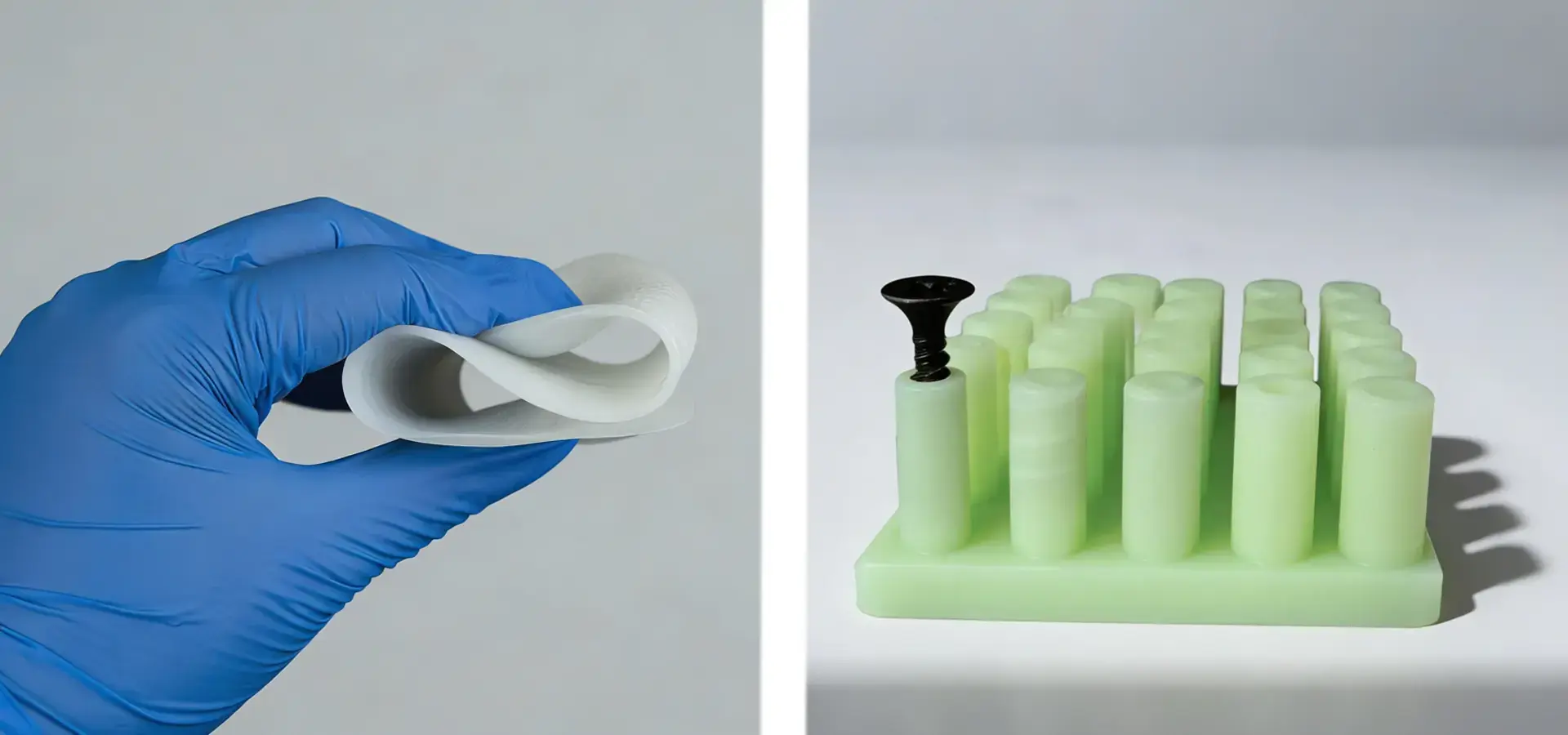
Choosing the right materials is a key part of deciding between different ways of making things. Traditional production gives you access to materials that have been used for decades and have a lot of performance data. Metals, ceramics, and industrial plastics have mechanical qualities that have been shown to work in tough situations. Engineering resins, high-temperature plastics, and metal powders are some of the new 3D printing materials that are making it possible to do more. Modern photopolymer systems can work with a wide range of materials, from stiff prototype resins to bendy elastomers with Shore A hardness values between 50 and 90.
Precision and Quality Considerations
Surface finish and precision of measurements are very different depending on the production. CNC cutting can make parts with tight specs and great surface finishes, but it has trouble making parts with complicated internal features. Injection molding makes parts that are uniform and have good surface quality, but it costs a lot to make models for each different design. With an accuracy of 0.1mm (L ሸ), high-end SLA systems are very accurate.
Strategic Applications & Industry Use Cases
Different fields use additive and standard manufacturing in different ways, depending on their needs and the needs of the market. Procurement experts can better align manufacturing strategies with business goals when they understand these uses.
Rapid Prototyping and Product Development
Rapid design approval and practical testing made possible by additive manufacturing have changed the way products are made. Automakers use 3D printing to make interior parts and specialized tools, which cuts the time it takes to build new products from months to weeks. In many fields, being able to make complicated shapes and consolidated structures speeds up the innovation cycle. Using traditional development methods like machining or casting takes a lot of time and materials. When designs change, they need new tools or a lot of work to be redone, which slows down the development process. When companies use both methods, they use 3D printing for the prototypes and switch to standard manufacturing for mass production.
Small Batch Production and Customization
Medical and dental uses show how powerful additive manufacturing can be for making custom products. Surgical guides, dental devices, and implants that are made just for one patient need specific shapes that can't be made cheaply with traditional methods. Each unit is matched to a specific patient's structure based on CT scan data, which allows for mass customization on a large scale. For aerospace uses, you need internal channels that are very complicated and structures that are 3D printed and very light, but still meet certain performance standards. With additive manufacturing, multiple-part systems are merged into a single component. This cuts down on failure spots and the cost of putting the parts together. In traditional manufacturing, you would have to do a lot of different steps and join them together in different ways to get the same result.

Large-Scale Production Strategies
Traditional methods are still preferred in high-volume manufacturing because they save money and keep the quality of the materials consistent. The savings of scale that come with injection molding and stamping are useful for making parts for boxes, consumer electronics housings, and the outside of cars. Smart makers are using mixed methods that combine both technologies more and more. Additive manufacturing is used for prototyping and small-scale output at first, but standard methods are used for scaling up. This approach shortens the time it takes to get a product to market while keeping costs low at high volumes.
Future Trends and Technological Evolution
As automation, new materials, and process optimization help both additive and standard technologies move forward, the production environment continues to change.
Material Innovation and Performance Advances
Next-generation 3D printer materials make it possible to make things that are used in real life instead of just making prototypes. High-performance metal alloys, plastics, and hybrid materials make it possible to make parts directly for tough uses. Biocompatible materials help make medical devices, and food-safe formulas let them be used in cooking. New materials and processing methods have made traditional production more efficient and environmentally friendly. Using recycled materials and reducing waste are ways to care for the earth while still meeting performance standards.
Industry 4.0 Integration and Smart Manufacturing
Connected production systems let both standard and additive processes be tracked and improved in real time. Quality control systems make sure that output is always the same, and predictive repair programs cut down on downtime. Digital twin technologies mimic real-life production situations to get the best use of resources and increase output. Digital integration is especially helpful for additive manufacturing because it allows for automatic file processing, remote tracking, and control of production in the cloud. Distributed manufacturing networks bring on-demand production closer to the people who will buy the goods, which cuts down on shipping costs and wait times.
Sustainability and Waste Reduction
Environmental concerns are becoming more and more important in industrial choices. When compared to subtractive processes, additive manufacturing's layer-by-layer method produces less waste. On-demand production cuts down on the need for stockpiles and the cost of replacing old items. Traditional production works toward sustainability by recycling more, using less energy, and following the ideas of the cycle economy. Manufacturers want fair ways that look at the effects on the whole process, not just the production methods.
Practical Guide for Choosing the Right Manufacturing Approach
To make good procurement choices, you need to carefully 3D printing look at the needs of the project, the supplier's skills, and your long-term strategy goals.
Volume and Timeline Assessment
Production rate is still the most important thing to consider when choosing between manufacturing methods. Low volumes (less than 1,000 units) usually work better with additive manufacturing, while higher quantities work better with regular tooling expenses. When fast prototyping or pressing production needs take precedence over cost concerns, choices are based on time constraints. Regardless of volume, additive manufacturing is often needed because of complicated shapes and the need for customization. Internal cooling ducts, organic forms, and patient-specific devices all use additives in ways that can't be done with regular methods.
Supplier Evaluation and Technology Selection
To evaluate possible production partners, you need to know about their technology, quality systems, and support infrastructure. The best 3D printer providers don't just sell equipment; they offer complete packages that include gear, materials, and services. Magforms is a good example of a seller with a wide range of skills because they use an integrated method that combines the best materials and tools. With 22 patents and 30 registered trademarks, they are a star in technology, and their presence in dozens of countries around the world ensures they have a solid support system.
Long-term Strategic Considerations
How strong the supply chain is and how well it can compete are affected by decisions about manufacturing in more than one way. Businesses can better respond to new ideas and changes in the market when they use additive manufacturing in their process. For manufacturing technologies that are hard to understand, you need to get professional expert help. As little downtime as possible is caused by quick responses, talks that are open 24 hours a day, seven days a week, and guaranteed settlement times. The equipment works well, and the people who use it are skilled because they get regular training and repair directions.
Conclusion

When deciding between 3D printing and traditional manufacturing, you should carefully consider the number of items you need, how complicated the plan is, how much time you have, and your long-term goals. Traditional manufacturing still has some advantages when it comes to making a lot of things and using a lot of different materials. However, additive manufacturing is much more adaptable when it comes to making changes, making prototypes quickly, and making forms that are hard to describe. More and more, successful businesses use a variety of technologies, utilising the finest features of each while forming partnerships with sellers that can adapt to shifting business requirements.
FAQ
1. What volume thresholds determine manufacturing method selection?
In general, numbers less than 1,000 pieces are better for additive manufacturing because it cuts down on the cost of tools. For most uses, traditional production starts to make sense when more than 10,000 units are made. But part complexity, the need for adaptation, and time constraints have a big effect on these limits.
2. How do material properties compare between manufacturing methods?
Traditional production lets you choose from a wider range of materials and has decades of success data to back it up. More and more, new 3D printing materials are made with industrial resins, high-temperature polymers, and metal powders that have qualities that are similar to those of standard materials.
3. What factors determine supplier selection criteria?
Technology skills, quality licenses, technical help infrastructure, and material compatibility are some of the most important things that are looked at when judging something. Integrated suppliers who offer tools, materials, and services usually offer better efficiency and support than suppliers who only sell equipment.
Transform Your Manufacturing Strategy with Magforms
Magforms offers the best 3D printing services in the business, which are the link between development and mass production. We use a method that uses German Scanlab galvanometers, AOC lasers, and our own variable spot-size technology to print 30–50% faster while still being accurate to 0.1mm. As a well-known 3D printer company that works with over 300 businesses around the world, we offer full support, including expert help 24 hours a day, seven days a week, and guaranteed answer times. Get in touch with us at info@magforms.com to talk about how our cutting-edge SLA systems can help you improve your production processes and get your next project to market faster.
References
1. Wohlers, Terry. "Additive Manufacturing: Technology Roadmap for Strategic Implementation." Industrial Manufacturing Review, 2023.
2. Chen, David, and Williams, Sarah. "Economic Analysis of 3D Printing Versus Traditional Manufacturing in Industrial Applications." Journal of Manufacturing Science and Engineering, 2023.
3. Rodriguez, Maria. "Supply Chain Transformation Through Additive Manufacturing Technologies." International Manufacturing Strategy Quarterly, 2022.
4. Thompson, Robert. "Material Properties and Performance Comparison: Additive vs Subtractive Manufacturing." Advanced Materials Processing, 2023.
5. Kumar, Priya, and Anderson, James. "Industry 4.0 Integration in Modern Manufacturing: A Comparative Study." Manufacturing Technology Today, 2023.
6. Lee, Michael. "Sustainability and Waste Reduction in Manufacturing: Additive Technologies Impact Assessment." Environmental Manufacturing Journal, 2022.

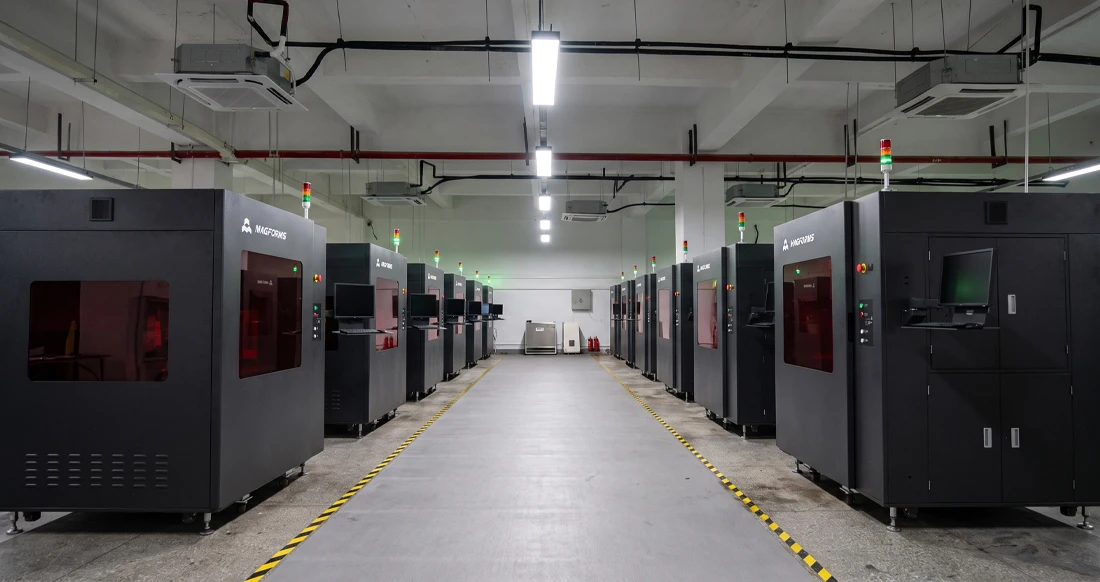
Magforms makes design and manufacture easier.
Popular Blogs
-
 Industry InsightsManufacturing Industry
FDM vs. SLA Printer: Which Technology Is Right for Your Project?
-
 Industry InsightsManufacturing Industry
Top 5 Applications of Industrial 3D Printers in Manufacturing Today
-
 Industry InsightsManufacturing Industry
Why Stereolithography 3D Printers Are Unmatched for Microfluidic Device Prototyping?