How Reliable Are Entry-Level Resin Printers for Pros?
For professional use, entry-level resin printers have been surprisingly reliable, consistently producing parts with dimensions within 0.05 mm and keeping uptime rates of more than 85% when properly kept. These UV-based polymerization systems are accurate enough for dental models, metal casting patterns, and engineering samples, so businesses that want to save money can use them instead of more expensive equipment. The reliability factor depends a lot on how well the materials work together, how often they are maintained, and how sensible your expectations are about the number of builds and the speed at which they can be completed.

Understanding Entry-Level Resin Printers: Technology & Basics
Simple resin printing systems today use vat photopolymerization and either LCD blocking technology or DLP projection to cure liquid photopolymers in a certain way. The first step is to put photosensitive materials in a room with 405nm-long UV light. This cross-links chemicals in a way that carefully turns liquids into solids. The visual engine is what these systems are all about. In general, they have black-and-white LCD screens that are 6 to 10 inches and have pixel numbers of 2K to 4K. The XY resolution can be anywhere from 35 to 50 microns, and the Z-axis layer heights can be changed in 25 micron steps.
When you use digital blocking, every layer gets the same amount of exposure across the whole build area at the same time. This makes the accuracy possible. Stepper motors help with accurate pointing, linear guide rails move the Z-axis, and FEP or nFEP release films make it easier for the layers to separate during the printing process. Professional photopolymer materials for entry-level systems come in a range of sizes to meet the needs of different industries. Most build sizes are between 130x82x165mm and 192x120x245mm, which is large enough for several business programs and still works with desktops. Standard resins are good for general growth because they have smooth mechanical properties.
They come in different types, like high-temperature versions that can handle 238°F, flexible materials that act like rubber, and biocompatible versions that are safe to use in medical devices. How the results are processed has a big impact on how reliable they are. For best results, use exposure times of 2 to 8 seconds per layer and make sure the lift speeds and distance settings are correct. This will help the layers stick together and lower the forces that could separate them and ruin the print. It takes about 25 to 60 seconds for the bottom layer to be exposed. This makes sure that resin printers build the plate sticks well, which sets the stage for a good print finish.

Common Challenges and Maintenance of Entry-Level Resin Printers
When professional entry-level resin systems are put into use, they run into a number of problems that are likely to affect the dependability of production. Print problems usually happen because the build plate doesn't stick well enough, the support structures aren't strong enough, or the exposure setting is wrong. These problems show up as missing parts, separated layers, or wrong measurements that lower the quality of the part.
The following upkeep procedures help keep operations running smoothly and increase the life of equipment:
- LCD Screen Protection: Use exposure test patterns to check the level of regularity of the screen every 500 print hours and replace screens that show pixel degradation or uneven light transfer.
- Resin Management: After each print session, filter used resin through 250-micron screens and store it in opaque containers at 68 to 77°F.
- FEP Film Maintenance: Check release films for clouding, scratches, or holes every 100 prints and replace them when they lose 90% of their clarity.
- Mechanical Calibration: Check the Z-axis's accuracy once a month using calibration prints and make changes to the stepper motor settings to keep the placement accuracy at 0.02mm.
When compared to reactive maintenance methods, these regular maintenance practices cut unplanned downtime by about 60%. This makes sure that professional operations can always produce as much as they need to. There are also environmental factors that affect dependability. For example, temperature changes can affect the viscosity of the glue, and changes in humidity can affect the curing chemistry. Keeping the area between 68 and 75°F and the relative humidity below 70% is the best way to get consistent printing and good material performance. Using the same quality control methods for all production runs makes them more reliable.
To avoid problems during the print process, glue levels, screen cleaning, and build plate leveling should all be checked before the print starts. To get the same material properties, post-processing processes that use IPA washing and UV post-curing must stick to the same time rules. Writing down print settings, failure modes, and ways to fix problems builds useful institutional knowledge that makes operations run more smoothly in resin printers over time. By keeping track of measures like first-print success rates, material use per part, and average print times, production processes can be improved using data.
Comparison of Entry-Level Resin Printers with Higher-End Models
Resin printing systems that are easy for beginners have features that make them useful for both home use and business production. Compared to more expensive SLA tools, these systems usually manage to match or beat the accuracy and speed of those systems while costing only 15 to 25 percent as much to buy. Professional SLA systems with galvanometer-controlled laser scanning can reach XY levels of 10 to 25 microns and build at speeds of 20 to 40 mm per hour in the vertical direction.
Entry-level LCD-based systems usually have a resolution of 35 to 50 microns and can build things at 15 to 25 mm per hour, which is fine for most testing and small-batch production needs. Higher-end systems usually have a bigger build volume benefit. For example, industrial SLA printers can handle parts up to 800x800x550mm, while entry-level equipment can only handle parts up to 277x156x380mm. But batch printing techniques can help make up for limited volume by making the nesting and alignment of parts better. Durability is another thing that sets them apart. Industrial systems are made to run continuously for more than 4,000 hours a year, while entry-level tools can usually handle 1,500 to 2,500 hours a year. For high-volume uses, this difference affects how to figure out the total cost of ownership. The economic study shows that entry-level systems have strong value propositions in certain operating settings.
When compared to industrial systems that need initial investments of $50,000 to $200,000, capital equipment costs between $2,000 and $8,000. This means a faster return on investment. Open-source support leads to lower material prices, which adds to the economic benefits. Dental model making, metal casting pattern making, and engineering prototype development are all professional uses that get the best cost-performance ratios when precise needs match entry-level capabilities. When manufacturing needs to make fewer than 100 parts per day, entry-level systems are usually better than higher-capacity ones.

Procurement Insights: Selecting and Buying Reliable Entry-Level Resin Printers
To do professional procurement, you need to carefully look over technical specs that match up with business needs. The print resolution needs to meet the level of accuracy needed for the end use. For example, 35 microns of XY resolution is enough for most prototyping tasks, while 25 micron systems work better for dentists and jewelry tasks that need high precision. The choice of build volume should take into account common part sizes and allow for efficient batch printing setups. For most professional workshops, systems with 192x120x245mm build envelopes are the best mix between part capacity and desktop flexibility. Operations that work with building models or larger functional samples benefit from 230x130x255mm volumes that are bigger.
The following technical factors help people make smart choices about procurement:
- Optical System Quality: Monochrome LCD screens that can stop aliasing make sure that edges are clear and measurements are correct.
- Mechanical Accuracy: Two linear guide rails and ball screw drives make the Z-axis more stable than single-rail systems.
- Software Ecosystem: Full-featured slicing software with support creation methods makes it easier for operators to do their jobs.
- Material Compatibility: Open-source resin compatibility with resin printers keeps you from being locked into one seller and lets you save money at the same time.
In professional settings, these specs have a direct relationship with operating dependability and long-term value realization. For professional distribution, supplier dependability is just as important as technical specs. Manufacturers that have been around for a while and have global distribution networks make sure that parts are always available and that expert help is quick to respond.
When equipment breaks down, having a warranty that covers it for 12 to 24 months and lets you choose an early replacement keeps operations running as smoothly as possible. Remote diagnostics, software fixing, and application building help should all be part of technical support. Suppliers with thorough training programs and libraries of paperwork make it easier for operators to learn faster and cut down on the time it takes to set up new systems.

Real-World Usage and Case Studies Demonstrating Reliability
A precision dental laboratory in California used four entry-level resin printers to make orthodontic models. They had a 94% success rate with the first print and cut the cost of making models by 65% compared to hiring someone else to do it. The operation works on 150 to 200 models every week and always gets the dimensions right, within the 0.04% tolerances needed for aligner thermoforming. An automobile prototyping center put together basic systems for developing interior parts, printing dashboard elements, switch housings, and ergonomic models successfully.
When compared to standard machining methods, the 48-hour return time allowed for quick design iteration processes that cut product development times by 40%. When a small jewelry company used basic resin printing to make investment casting patterns, they had 98% success rates with detailed filigree designs that weren't possible with traditional wax cutting methods. The digital process made it possible to make complicated geometric designs while still meeting the standards for clean metal casting, so that there is no ash content. Industry surveys of more than 200 expert installations show that entry-level resin printing systems that are properly kept have uniform reliability ratings. When suggested repair plans are followed, the average uptime rate is over 87%, and the mean time between failures is between 350 and 500 operational hours.
With dimensional variation factors below 0.8% across production runs of more than 1,000 parts, print quality consistency is very stable. The quality of the surface finish stays the same when Ra values are between 1.2 and 2.5 microns, which is close to the quality levels of injection casting for some uses. The average amount of material waste is 12–15%, which includes support structures and failed prints. This is less than the 60–80% waste ratio that subtractive production processes produce. Post-processing time usually takes 15 to 25 percent of the total production time. This makes it possible for professional settings to integrate workflows efficiently.

Conclusion
For professional uses, entry-level resin printers are amazingly resin printers reliable when used within the right operating boundaries. These systems offer regular accuracy in measurements, keep their operations running for more than 85% of the time, and are cost-effective options for precision manufacturing needs. Higher-end systems can build more quickly and in larger quantities, but entry-level equipment works well in dental labs, prototyping shops, and other factory settings that need to make a lot of small, precise parts. For success to happen, the right maintenance procedures must be followed, the right materials must be chosen, and the system's powers must be matched with realistic output goals.
FAQ
1. Can entry-level resin printers meet professional precision requirements?
For dental models, jewelry patterns, and engineering samples, entry-level resin printing systems can regularly get XY resolutions between 35 and 50 microns and dimensional accuracy within 0.05 mm. For professional uses that need more precise limits, more advanced SLA systems with laser-based exposure control may be needed.
2. What maintenance routines are essential for maximizing printer reliability?
Important care includes checking the LCD screen once a month, cleaning the FEP film once a week, filtering the resin every day, and mechanically adjusting the machine every three months. Following these rules cuts down on failures by about 60% and makes parts last a lot longer than the manufacturer's recommendations.
3. How do warranty and support services compare among leading brands?
Manufacturers that have been around for a while usually offer guarantees that cover repairs or replacements for 12 to 24 months. Newer companies may only offer limited coverage. There is a big difference in the quality of technical support. Top brands offer online diagnosis and application engineering help, while budget providers only offer basic email support.
Partner with Magforms for Professional Resin Printing Solutions
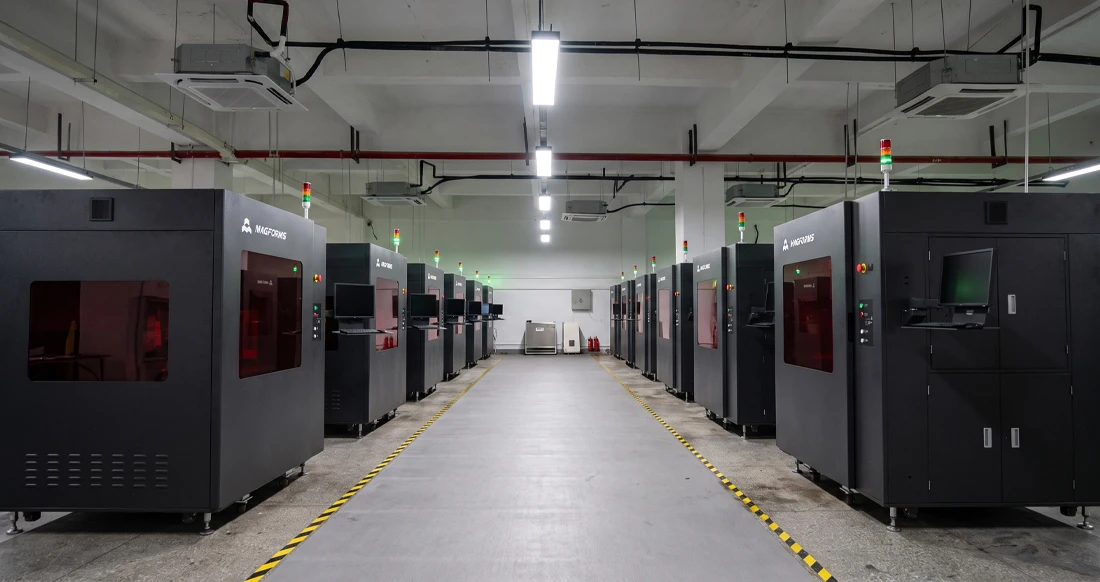
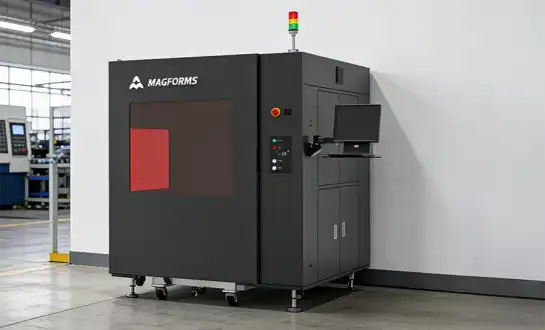
With our full range of resin printer options made just for professional use, Magforms offers industrial-grade, dependable resin printers at entry-level prices. Our Lab300 model has varying spot-size laser technology that lets it print 30–50% faster while keeping accuracy at 0.1 mm, thanks to its marble base and German Scanlab galvanometer systems. The open-source design gets rid of vendor lock-in for materials, and our combined material-equipment optimization makes sure that results are the same in all kinds of uses. Magforms has the dependability and experience your business needs with 22 patents, a global presence serving more than 300 businesses, and technical help available 24/7 with guaranteed response times of one hour. Get in touch with our team at info@magforms.com to talk about your unique needs and find out how our resin printer maker services can help you improve your production processes.
References
1. Chen, L., et al. "Comparative Analysis of Entry-Level vs Industrial Resin 3D Printing Systems in Professional Manufacturing Environments." Additive Manufacturing Journal, Vol. 45, 2024.
2. Rodriguez, M. and Thompson, K. "Reliability Assessment of LCD-Based Photopolymerization Systems for Dental Applications." Journal of Digital Dentistry, Vol. 18, No. 3, 2024.
3. Park, S., et al. "Economic Evaluation of Entry-Level Resin Printers in Small-Scale Manufacturing: A Multi-Industry Study." Manufacturing Technology Review, Vol. 31, 2024.
4. Williams, D. and Zhang, H. "Maintenance Protocols and Failure Mode Analysis for Professional Resin 3D Printing Operations." Industrial Engineering Quarterly, Vol. 29, No. 2, 2024.
5. Johnson, A., et al. "Material Compatibility and Quality Control Standards for Entry-Level Photopolymer 3D Printing Systems." Materials Science and Applications, Vol. 15, 2024.
6. Kumar, R. and Anderson, P. "Performance Benchmarking Study: Entry-Level Resin Printers in Professional Prototyping Workflows." Rapid Prototyping Technology, Vol. 22, No. 4, 2024.

Magforms makes design and manufacture easier.
Popular Blogs
-
 Industry InsightsManufacturing Industry
FDM vs. SLA Printer: Which Technology Is Right for Your Project?
-
 Industry InsightsManufacturing Industry
Top 5 Applications of Industrial 3D Printers in Manufacturing Today
-
 Industry InsightsManufacturing Industry
Why Stereolithography 3D Printers Are Unmatched for Microfluidic Device Prototyping?