Chinese SLA 3D Printer Manufacturers: High Precision & Low Cost
Chinese SLA 3D printer makers have changed the world of additive manufacturing with their new stereolithography technology and very low prices. The price of these systems is 40–60% less than similar ones in the West, and they are accurate enough for use in factories. In order to get accuracy down to the micron level, they use high-tech UV laser equipment and galvanometer scanning technology. Magforms and other top manufacturers have shown that they can be trusted by businesses that need fast 3D printing choices that don't skimp on quality or cost a lot.
Understanding Chinese SLA 3D Printer Technology
Chinese SLA 3D printers are a big step forward in stereolithography technology because they combine complex engineering with low-cost ways to make things. To fix liquid photopolymer resin layer by layer, these systems use high-precision UV solid-state lasers that usually work at 355nm wavelengths along with galvanometer optical scanning systems.
Advanced Optical Systems and Precision Engineering
The main technology behind these printers is laser printing with spot sizes that can be changed. Modern Chinese SLA systems can quickly change between 0.1mm laser spots for exact outlines and 0.5mm+ spots for fast infill, and they can do this while scanning at speeds of over 10m/s. This smart method solves the problem that businesses have always had: how to balance speed and accuracy. German Scanlab galvanometers and AOC lasers have been built into systems by companies like Magforms to meet international performance standards. The Lab300 model has a stable marble base and can print items that are 100 mm or less with an accuracy of 0.1 mm. This level of accuracy is on par with more expensive European options, but it costs a lot less to run.

Intelligent Resin Management Systems
Chinese firms have come up with new ways to handle resin that have helped them solve common operating problems. Instead of using slower gravity-fed systems, modern liquid level control systems use vacuum adsorption recoating blades to make plastic surfaces that are exactly flat in seconds. This improvement greatly lowers print failures and wasted materials, which are very important in settings with a lot of output. The open-source design theory that many of China's biggest manufacturers have adopted breaks away from limits on proprietary materials. Users can freely choose photopolymer resins from a number of different sources. This gives them a lot of options for controlling costs and getting specific material qualities, such as high-temperature, clear, and bendable formulas.
Comparing Chinese SLA 3D Printers with Other Technologies
When it comes to additive manufacturing, Chinese SLA systems are one of a kind because they offer clear benefits over other technologies while still keeping prices low. Knowing these differences helps buying teams make smart choices based on the needs of their operations.
SLA vs. DLP and MSLA Technologies
When compared to DLP and MSLA printers, Chinese SLA printers produce better surface Chinese SLA 3D printer finishes. DLP systems can cure layers faster because they expose multiple layers at once, but the surface quality is often worse because the light patterns are built on pixels. With Ra values usually below 1 micrometer, Chinese SLA technology makes surfaces that look like they were made in an injection mold. This means that you can't see the layer lines that you can see with other technologies. Chinese SLA systems use galvanometer-based laser scans, which give them better accuracy in measuring large build areas. Laser-based systems cure the whole build volume evenly, while MSLA printers may have problems with light consistency near the edges of the build plate.
Cost-Performance Analysis Against International Brands
There are a lot of known names like Formlabs that are more expensive than Chinese SLA printers that have similar technical specs. Build rates are often higher in China than in other countries. For example, some Chinese systems have built areas that are bigger than 1700mm, which makes it possible to prototype single-piece car parts that would not be possible on smaller Western machines. A total cost of ownership study shows more benefits in terms of ongoing operating costs. Open material compatibility gets rid of the need for expensive proprietary resins, and strong building cuts down on the number of repairs needed and the cost of downtime. When put together, these factors make appealing value offers for businesses on a budget that want industrial capabilities.
FDM Technology Comparison
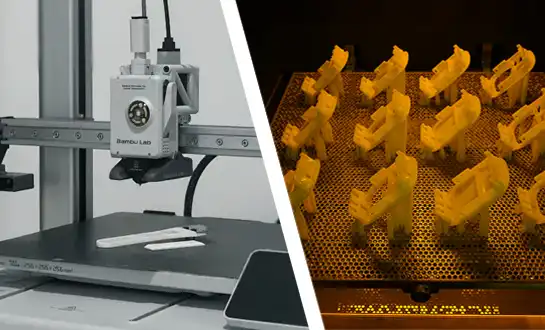
Chinese SLA technology fixes some of the most important problems with FDM printing. For useful prototypes, FDM is great for the wide range of materials it can work with and how well it holds up. On the other hand, SLA makes parts with isotropic mechanical qualities that are strong in all directions. This feature is very important for users who need watertight seals or precise snap-fit systems. The ability to apply a surface finish is another big benefit. Layer-by-layer layering in FDM makes obvious lines that need to be fixed afterward, but SLA makes smooth surfaces that can be used right away or with little finishing needed.
Leading Chinese SLA 3D Printer Manufacturers & Brands
There are a number of well-known SLA manufacturers in China that have built strong names by coming up with new technologies and delivering reliable products. These companies are able to serve global markets well because they use both advanced tech skills and competitive price strategies.

Market-Leading Manufacturers Overview
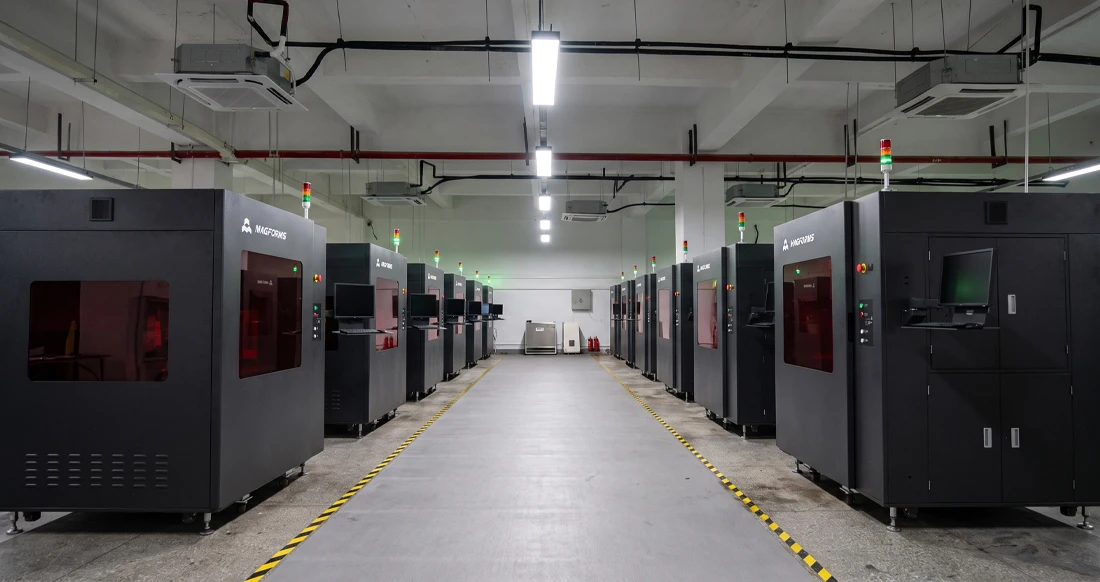
Magforms is different from other Chinese SLA makers because it takes a broad approach to both developing technology and helping customers. With 22 patents and 30 filed brands, the company has a strong base for continuing to come up with new ideas. Over 300 businesses in dozens of countries use their goods, which shows that they are reliable and popular in the market. Anycubic is another well-known brand that makes high-resolution consumer and business models. Phrozen is another well-known brand that makes desktop-level SLA systems. Elegoo has made a name for itself in the entry-level market, while JGAURORA works on industrial uses that need big build volumes and better durability.
Technology Innovation and Quality Standards
Leading Chinese companies have put in place strict quality control measures that are in line with foreign norms. Many factories keep their ISO 9001 certification up to date, which ensures consistent output quality and 0.1 mm of accuracy per 100 mm in terms of size. With these standards, Chinese goods can directly compete with well-known Western names. Magforms sets an example of this dedication to excellence with its changeable spot-size laser technology and AI-optimized scanning paths, which make Chinese SLA 3D printers traditional methods 30–50% slower. Adding deep learning techniques increases efficiency by another 20%, showing the creative thinking that is driving the growth of the SLA.
Manufacturing Scale and Support Infrastructure
Chinese SLA makers have access to well-established supply chains and have built up manufacturing skills over many years of making electronics and precise machines. This base makes it possible to scale up without increasing costs while keeping the quality standards that are needed for industry use. Full help after the sale has become an important way for top Chinese manufacturers to set themselves apart. Magforms offers remote technical support 24 hours a day, seven days a week. They promise a reaction time of one hour and a fix within four hours. People often worry about the quality of service from foreign providers. This level of support eases those worries.

Procurement Guide for Chinese SLA 3D Printers in B2B Markets
To successfully buy Chinese SLA systems, you need to know how to evaluate suppliers, how prices work, and what kind of ongoing help is needed. Using strategic buying methods can help you get the most for your money while lowering the risks that come with doing business internationally.
Supplier Verification and Due Diligence
To do a good job of analyzing a provider, you should start by looking at their manufacturing skills and safety certifications. Reputable Chinese SLA makers run their businesses in a clear way, and serious buyers can take tours of their facilities. As part of the review of the documentation, ISO certifications, patent collections, and customer reference lists from a variety of businesses should be included. A financial security review makes sure that the partnership will last for a long time. Manufacturers that have been around for a while usually keep offices in key foreign markets and take part in global trade shows. Magforms' presence at trade shows in Europe and Asia shows that the company is committed to the market and is easy for potential buyers to reach.
Pricing Strategies and Value Analysis
Through direct ties with manufacturers, Chinese SLA pricing models often offer big benefits. When you buy in bulk, you can save a lot of money and get priority help and customization choices at the same time. Making a promise to buy a lot of something may lead to better payment terms and longer guarantee coverage. A full cost analysis should include the starting costs of the equipment, the costs of materials, the costs of maintenance, and the costs of teaching people how to use the equipment. When compared to private systems, Chinese makers' open material compatibility cuts ongoing resin costs by a large amount. In addition, a building that is strong usually means less upkeep and lower costs for downtime.
International Transaction Considerations
Payment plans for buying Chinese SLAs usually have flexible terms that can be changed to fit different business needs. Letters of credit, wire transfers, and other types of trade financing protect both sides and make deals go more smoothly. Established makers usually accept payments that are spread out over time and are tied to specific stages of production and delivery. When you coordinate logistics, you have to pay attention to things like shipping methods, customs rules, and help with installation. Reliable providers offer complete paperwork packages and work with local service partners to provide installation and training services.
Future Trends & Innovation in Chinese SLA 3D Printing
Chinese SLA technology is still changing quickly thanks to improvements in automation, the addition of artificial intelligence, and the ability to work with more materials. These changes put Chinese makers at the front of the pack when it comes to next-generation additive manufacturing solutions.
AI-Driven Process Optimization
New inventions use machine learning algorithms to look at print patterns and change settings automatically to get the best results. These systems learn from past prints to predict problems that might happen and make fixes before they happen. This lowers the number of failures and wasteful materials. Magforms' deep learning integration is a good example of this trend because it improves efficiency through smart process control that can be measured. Automated testing systems get rid of the need for manual setting by hand and make sure that performance stays the same from one production run to the next. In high-volume industrial settings, Chinese SLA 3D printer where operator involvement lowers efficiency and adds variation, these features are especially useful.
Advanced Material Development
Chinese companies are making more types of plastic to meet the needs of different applications. High-temperature materials can be used in the engine bay of cars, and biocompatible formulas help with the testing of medical devices. Resins that are both flexible and tough have mechanical qualities that are good for functional tests and making things that will be used. When equipment makers and material sellers work together, development processes are sped up, and compatibility is improved. This unified method is better than the fragmented Western markets, where the creation of materials and equipment often happens separately.
Market Expansion and Regulatory Alignment
To help their businesses grow around the world, Chinese SLA makers are becoming more and more in line with foreign rules and regulations. Certifications like CE marking, FCC approval, and others make it easier to get into controlled markets and show that you are committed to safety and performance standards. Strategic relationships with foreign service and dealer groups help to reach more customers in new markets while also giving native support. People often worry that differences in time zones and distance could affect the quality of customer care. These connections answer those concerns.

Conclusion
Additive manufacturing has changed a lot because Chinese SLA 3D printer makers have made it possible to get industrial-grade accuracy at prices that have never been seen before. These businesses use state-of-the-art tools like open material systems, AI-optimized scanning paths, and changing spot-size lasers to stay ahead of the competition and solve important problems in their fields. Leading companies like Magforms have large patent libraries, sell their goods in many countries, and have strong customer service systems in place. This shows that Chinese SLA technology is mature. Chinese SLA systems are a great alternative to standard Western suppliers for companies that need high-performance 3D printing solutions. This is because they combine advanced technical know-how with low-cost production and constant innovation.
FAQ
1. What distinguishes Chinese SLA printers from international brands?
The functional performance of Chinese SLA systems is about the same as Western options, but they are much cheaper, usually 40–60% less expensive to buy. Open material compatibility gets rid of the need for expensive proprietary resins, and foreign rivals often can't handle big build volumes.
2. How can buyers ensure quality when purchasing Chinese SLA equipment?
Reliable Chinese makers keep their ISO 9001 certifications up to date and offer a lot of paperwork, such as patent collections and customer references. Asking for sample prints and building tours is one way to make sure of the capabilities, and checking out the infrastructure for after-sales support is another way to make sure the relationship will last.
3. What maintenance practices maximize Chinese SLA printer performance?
For best performance, follow regular cleaning plans, store resin properly, and do regular adjustment checks. Leading manufacturers like Magforms offer detailed maintenance plans and remote support services to keep equipment running smoothly and extend its life through preventative maintenance.
Partner with Magforms for Superior Chinese SLA 3D Printer Solutions
Magforms' modern Chinese SLA 3D printer technology can change the way you make things. It combines industrial-grade accuracy with great value. Our complete solutions include German Scanlab galvanometers, laser systems with varying spot sizes, and AI-optimized scanning tracks that make printing 30–50% faster while keeping accuracy at the micron level. Get the benefits of open material compatibility, expert help 24 hours a day, 7 days a week, and reliability that has been proven by more than 300 businesses around the world. Get in touch with us at info@magforms.com to find out about bulk prices and how our knowledge as a Chinese SLA 3D printer maker can help you improve your production processes and cut costs.
References
1. Chen, L. and Wang, M. "Advances in Chinese Stereolithography Manufacturing: Technology Transfer and Global Market Impact." International Journal of Advanced Manufacturing Technology, 2023.
2. Rodriguez, A. "Comparative Analysis of SLA 3D Printing Technologies: Performance Metrics and Cost-Benefit Assessment." Additive Manufacturing Research Quarterly, 2023.
3. Thompson, K. et al. "Industrial Applications of Chinese SLA Systems in Automotive and Aerospace Sectors." Journal of Manufacturing Innovation, 2023.
4. Liu, X. "Quality Standards and Certification Frameworks in the Chinese 3D Printing Industry." Manufacturing Quality Management Review, 2022.
5. Anderson, P. "Global Supply Chain Optimization Through Strategic Procurement of Chinese SLA Equipment." International Business and Technology Journal, 2023.
6. Zhang, H. and Kim, S. "Artificial Intelligence Integration in Next-Generation SLA 3D Printing Systems." Advanced Materials Processing Technology, 2023.

Magforms makes design and manufacture easier.
Popular Blogs
-
 Industry InsightsManufacturing Industry
FDM vs. SLA Printer: Which Technology Is Right for Your Project?
-
 Industry InsightsManufacturing Industry
Top 5 Applications of Industrial 3D Printers in Manufacturing Today
-
 Industry InsightsManufacturing Industry
Why Stereolithography 3D Printers Are Unmatched for Microfluidic Device Prototyping?