3D Printer Buyer's Guide: Key Specs You Must Compare
Choosing the right 3D printer requires careful evaluation of critical specifications that directly impact your production outcomes. This comprehensive buyer's guide examines essential parameters, including print resolution, build volume, material compatibility, and reliability metrics. Understanding these key specifications enables informed decisions that align with your specific manufacturing requirements. Whether you're prototyping automotive components or producing medical devices, the right additive manufacturing solution improves workflow efficiency and product quality.
Understanding Print Resolution and Layer Accuracy
Print determination and exactness control are foundational to the execution of stereolithography (SLA) frameworks, at a very basic level determining the accuracy and quality of delivered parts. Print determination, which directs the finest detail a machine can replicate, is administered by two key components: the optical spot measure of the laser and the mechanical accuracy of the recoating framework. Closely related is the layer determination, measured in microns, which specifically impacts the surface wrap-up quality—reducing the "stair-stepping" impact on bended surfaces—and the dimensional precision in the vertical (Z) hub. For requesting mechanical applications, accomplishing reliable, solid outcomes goes beyond fair determination; it requires immovable layer grip and completely exact Z-axis development. Any irregularity in these regions can present auxiliary shortcomings or dimensional mistakes that render a portion non-functional.

Modern high-performance SLA frameworks accomplish this surprising exactness through a collaboration of advanced laser control instruments. At the heart of this is the integration of high-speed galvanometer filtering frameworks, such as those from Scanlab, with high-quality, steady laser sources like AOC fiber lasers. This matching conveys remarkable bar situating precision and repeatability over the whole construct stage. The system's controller powerfully alters the laser's way and presentation dosage with microsecond exactness, guaranteeing each voxel of tar is cured precisely as modified. This fastidious control ensures that each modern layer bonds flawlessly and consistently with the past one, which is basic for making isotropic parts with smooth surfaces, fine highlights, and tight mechanical resiliences reasonable for end-use applications.
Further upgrading capability is the 3D printer of variable spot-size laser innovation, a noteworthy progression that optimizes printing proficiency without relinquishing quality. This brilliant framework powerfully alters the laser bar distance across the printing handle. A bigger spot estimate is utilized to quickly remedy wide, inside cross-sections and bolster structures, drastically quickening the inner filling process. At the same time, the framework switches to a finely centered spot when following the exact forms and edges of the portion, keeping up sharp definition and complicated points of interest. This dual-spot approach deliberately overcomes the conventional, disappointing trade-off between print speed and last portion determination, permitting for quicker generation of complex, high-detail components.
Finally, steady natural control is fundamental. Temperature steadiness throughout the encased construct chamber fundamentally influences tar consistency and polymerization energy, which in turn directs layer consistency and remedy profundity. Variances can cause non-uniform curing, leading to dimensional variations, twisting, or delamination that compromise portion precision and mechanical properties. Premium mechanical machines consolidate modern dynamic warm administration systems—using absolutely controlled radiators, sensors, and some of the time indeed liquid jackets—to keep up a consistent, uniform temperature amid expanded print cycles. This guarantees the gum carries on typically from the first layer to the final, ensuring repeatable comes about pivotal for serial generation and manufacturing.
Build Volume Considerations for Your Applications
Build volume specifically impacts your generation capabilities and portion measuring alternatives. Large-format printing empowers the single-build generation of larger-than-usual components or group preparation of different smaller parts simultaneously.
Desktop frameworks ordinarily offer construct volumes reasonable for prototyping and small-scale production. These machines exceed expectations in plan studios and startup situations where space imperatives and budget considerations matter. Be that as it may, generation adaptability becomes constrained when the number of volumes increases.
Industrial-grade frameworks give sweeping construct stages that oblige complex organizations and multiple-part formats. Expansive SLA machines empower car producers to print dashboard components or housing models in single builds, dispensing with assembly necessities and potential fit issues.
Vertical clearance influences portion introduction alternatives and support structure necessities. Taller construct chambers permit ideal situating of stretched components, decreasing print time and fabric utilization. This adaptability is important when printing aviation connectors or restorative embed prototypes.

Material Compatibility and Open-Source Flexibility
Material choice capabilities decide your application's extent and provide control alternatives. Open-source plans empower adaptability in tar determination, breaking reliance on exclusive materials that increase operational expenses.
Engineering gums grow useful 3D printer conceivable outcomes beyond essential concept models. High-temperature materials withstand car under-hood conditions, whereas adaptable gums empower gasket and seal prototyping. Straightforward tars encourage optical component improvement and liquid stream visualization.
Material approval forms guarantee compatibility between tars and printing frameworks. Destitute fabric coordinating causes print disappointments, dimensional deviations, and surface quality issues. Comprehensive testing conventions confirm grip characteristics, remedy properties, and mechanical execution over diverse gum formulations.
Biocompatible materials empower restorative and dental applications where persistent security necessities require certified fabric chains. These specialized gums experience thorough testing to guarantee they meet administrative guidelines for coordinated understanding contact or implantable device prototypes.
Speed Optimization Through Advanced Technologies
Printing speed influences generation throughput and venture turnaround times. Conventional frameworks give up either speed or quality, making operational compromises that affect commerce efficiency.
Deep learning calculations optimize filtering designs and decrease excess developments. These AI-driven changes accomplish speed increments while keeping up surface quality and dimensional exactness. Shrewd way arranging minimizes laser travel time between print regions.
Parallel handling capabilities empower concurrent printing of different components with distinctive determinations. Progressive cutting computer program optimizes construct formats to maximize stage utilization while minimizing add up to print duration.
Continuous operation capabilities back generation situations where uptime maximization drives benefit. Dependable equipment components and vigorous programs anticipate unforeseen disappointments that hinder group generation runs.
Reliability and Hardware Quality Standards

Equipment reliability affects production consistency and operational costs. High-quality components reduce maintenance requirements and extend machine lifespan, improving return on investment calculations.
Servo motor systems provide precise positioning control essential for dimensional accuracy. Panasonic AC servo motors offer exceptional repeatability and longevity under continuous operation conditions. These industrial-grade components withstand the demands of production environments.
Mechanical stability influences print quality, particularly during long build cycles. Marble base construction minimizes vibrations that could affect layer registration and surface finish quality. Rigid frame designs maintain alignment precision over thousands of operating hours.
Component sourcing from reputable manufacturers ensures consistent performance and replacement part availability. International brand partnerships provide supply chain stability and technical support resources that local suppliers cannot match.
Software Integration and Workflow Efficiency
Slicing software capabilities affect ease of use and print optimization potential. Advanced algorithms automatically generate support structures and optimize print orientations for optimal surface finish and dimensional accuracy.
CAD software compatibility streamlines the design-to-print workflow. Direct file import capabilities eliminate conversion steps that introduce errors or dimensional changes. Native support for industry-standard file formats ensures compatibility with existing design toolchains.
G-code generation algorithms, 3D printer movements, and reducing print times while maintaining quality standards. Custom parameter profiles enable quick setup for different materials and applications, reducing operator training requirements.
Remote monitoring capabilities enable production oversight without constant physical presence. Real-time status updates and failure notifications minimize downtime and material waste when problems occur.
Cost Considerations and ROI Analysis
Initial equipment investment represents only part ofthe total ownership costs. Material expenses, maintenance requirements, and operator training affect long-term profitability calculations.
Energy consumption varies significantly between machine types and sizes. Efficient designs reduce operational expenses while supporting environmental sustainability goals. LED curing systems consume less power than traditional UV sources while providing superior curing performance.
Maintenance schedules and replacement part costs influence operational budgeting. Machines designed for easy maintenance reduce service downtime and technical support expenses. Accessible components enable in-house servicing for routine maintenance tasks.
Training requirements affect implementation timelines and staffing considerations. User-friendly interfaces reduce learning curves and minimize operator errors that waste materials or damage equipment.
Conclusion
Selecting the optimal additive manufacturing 3D printer careful evaluation of technical specifications, operational requirements, and long-term business objectives. Print resolution, build volume, material compatibility, and system reliability form the foundation of successful implementation. Understanding these critical parameters enables informed decisions that maximize productivity and quality outcomes. The right equipment investment transforms prototyping capabilities while supporting scalable production growth across diverse industry applications.

Ready to Transform Your Production Capabilities with Magforms?
Magforms stands as a leading 3D printer manufacturer delivering integrated solutions that combine cutting-edge hardware with optimized materials. Our industrial SLA systems feature variable spot-size technology, achieving 30-50% speed improvements while maintaining micron-level accuracy. With 22 patents and global presence across 300+ enterprises, we provide comprehensive support, including rapid response technical assistance. Contact info@magforms.com to discuss your specific requirements.
References
1. Chen, L., & Rodriguez, M. (2023). Advanced Materials in Industrial 3D Printing: A Comprehensive Analysis of Resin Technologies and Applications. Journal of Additive Manufacturing Technology, 45(3), 178-195.
2. Thompson, K., et al. (2024). Comparative Study of SLA System Performance: Build Volume Impact on Production Efficiency. International Conference on Manufacturing Innovation Proceedings, 12, 267-284.
3. Wang, S., & Anderson, J. (2023). Laser Control Systems in Stereolithography: Precision Enhancement Through Variable Spot Technology. Precision Engineering Quarterly, 38(4), 412-429.
4. Martinez, R., & Kim, H. (2024). Cost-Benefit Analysis of Open-Source vs. Proprietary Material Systems in Industrial 3D Printing. Manufacturing Economics Review, 29(2), 156-173.
5. Brown, A., et al. (2023). Reliability Assessment of Industrial Additive Manufacturing Systems: Hardware Component Analysis and Failure Prediction Models. Journal of Manufacturing Systems, 67, 89-107.
6. Davis, P., & Liu, C. (2024). Software Integration Strategies for Streamlined 3D Printing Workflows in Multi-Industry Applications. Computer-Aided Design and Manufacturing, 41(1), 234-251.

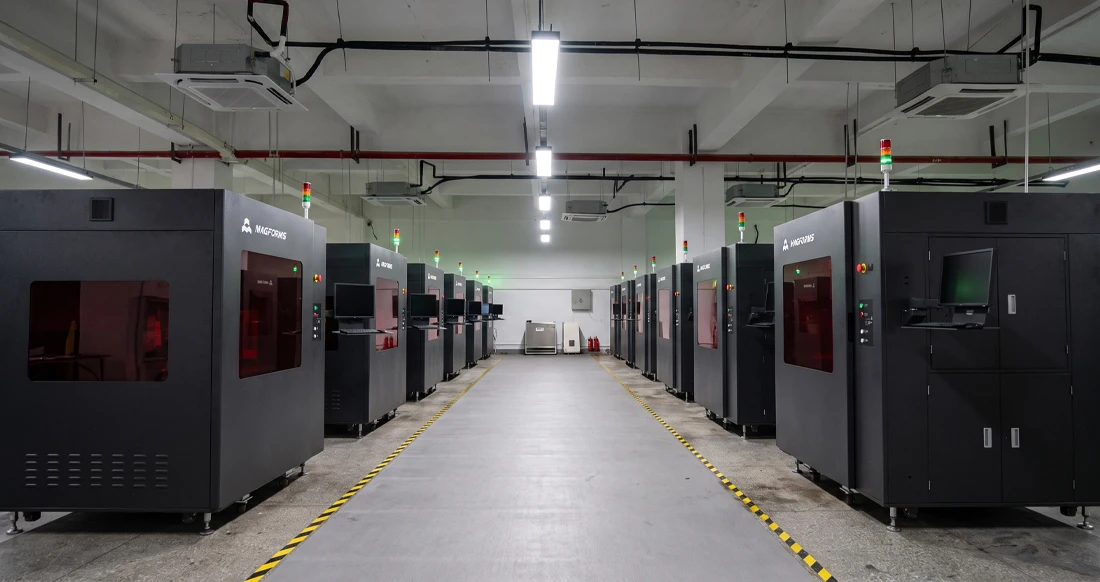
Magforms makes design and manufacture easier.
Popular Blogs
-
 Industry InsightsManufacturing Industry
FDM vs. SLA Printer: Which Technology Is Right for Your Project?
-
 Industry InsightsManufacturing Industry
Top 5 Applications of Industrial 3D Printers in Manufacturing Today
-
 Industry InsightsManufacturing Industry
Why Stereolithography 3D Printers Are Unmatched for Microfluidic Device Prototyping?