What to Look for When Buying a Professional SLA Printer?
When selecting a professional SLA printer, businesses must evaluate several critical factors to ensure optimal return on investment. An SLA printer utilizes stereolithography technology to produce high-precision parts through layer-by-layer photopolymerization, making it essential for industries requiring exceptional detail and surface finish. Key considerations include printing accuracy, build volume, material compatibility, operational stability, and comprehensive technical support. The choice between proprietary and open-source systems significantly impacts long-term operational costs and flexibility. Understanding these fundamental aspects enables procurement teams to make informed decisions that align with their specific production requirements and budget constraints.

Understanding SLA Printer Technology and Its Advantages
Stereolithography represents a revolutionary approach to additive manufacturing that has transformed how industries approach prototyping and small-batch production. This technology employs a precise laser system to selectively cure liquid photopolymer resin, creating solid structures with remarkable accuracy and surface quality.
How SLA Technology Works?
The center guideline of stereolithography includes photopolymerization, where bright light triggers chemical responses in fluid tar to shape strong plastic. Not at all like conventional fabricating strategies, this handle builds objects layer by layer from the foot up, permitting for complex geometries that would be inconceivable or greatly exorbitant to deliver through routine means.
Advanced SLA frameworks join advanced laser checking advances that essentially upgrade execution capabilities. Variable spot-size laser printing innovation speaks to a breakthrough in addressing the conventional trade-off between speed and exactness. Frameworks utilizing this advancement can accomplish 30-50% speedier printing speeds compared to routine strategies, whereas keeping up uncommon detail quality.
Key Advantages of Professional SLA Systems
Professional-grade stereolithography hardware offers unmatched accuracy for requesting applications across numerous businesses. The innovation exceeds expectations in creating parts with smooth surface wraps up, fine subtle elements, and tight resiliences that meet exacting mechanical standards.
Material flexibility stands as another noteworthy advantage, with advanced frameworks supporting a broad range of specialized tasks. These incorporate standard gums for common prototyping, engineering-grade materials for useful testing, biocompatible choices for therapeutic applications, and castable tars for gems and dental work.
The integration of fake insights and machine learning calculations in modern SLA printers has advanced and improved their capabilities. These shrewd frameworks can optimize checking designs and printing parameters naturally, resulting in extra speed enhancements of up to 20% whereas decreasing the probability of print failures.
Critical Factors to Consider When Buying a Professional SLA Printer
Selecting the right stereolithography system requires careful evaluation of multiple technical and operational parameters that directly impact production outcomes and long-term value.

Print Quality and Resolution Specifications
Print determination speaks to the most crucial detail for proficient applications. Industrial-grade frameworks regularly offer layer statures extending from 0.01mm to 0.2mm, with the finest settings empowering propagation of intricate points of interest fundamental for dental models, gem models, and accuracy designing components.
The laser spot measure plays a pivotal part in deciding both print quality and speed. Progressed frameworks utilize variable spot-size innovation, utilizing fine spots of 0.18-0.2mm for point by point forms and bigger spots of 0.5-0.6mm for inside filling. This approach optimizes the balance between exactness and efficiency.
Print precision includes dimensional exactness over the whole construct stage. Proficient frameworks ought to keep up resiliences of ±0.1mm for parts measuring up to 100mm in length. This level of precision guarantees that printed models precisely speak to the latest generation parts and meet gathering requirements.
Build Volume and Production Capacity
Build volume straightforwardly relates to generation adaptability and productivity. Large-format frameworks empower printing of curiously large, useful parts in single builds or group generation of numerous smaller components at the same time. This capability essentially decreases per-part costs and generation time for high-volume applications.
Production capacity contemplations expand past basic construct volume to incorporate variables such as printing speed, post-processing necessities, and fabric utilization efficiency. Frameworks with optimized checking calculations and variable laser innovations can drastically decrease cycle times while keeping up quality standards.
Material Compatibility and Supply Chain Considerations
Material compatibility speaks to a basic factor influencing both operational adaptability and long-term costs. Open-source frameworks that bolster third-party tools give noteworthy advantages in terms of fabric taken a toll control and provider diversification.
The accessibility of specialized materials custom-fitted to particular applications upgrades the esteem recommendation of proficient SLA frameworks. Engineering-grade gums with improved mechanical properties, high-temperature resistance materials, and biocompatible alternatives expand the range of conceivable applications and showcase opportunities.
Supply chain steadiness becomes especially imperative for generation situations where steady fabric accessibility directly impacts delivery plans. Built up providers with worldwide dissemination systems and specialized support capabilities give more noteworthy operational security than constrained or territorial suppliers.
Maintenance, Troubleshooting, and Long-Term Operational Considerations
Successful implementation of professional stereolithography systems requires a comprehensive understanding of maintenance requirements and operational best practices that ensure consistent performance and minimize downtime.
Routine Maintenance Protocols
Regular support plans are essential for keeping up print quality and extending gear life expectancy. Day by day methods incorporate gum level observing, construction stage cleaning, and optical component assessment. These scheduled assignments avoid defilement issues and guarantee ideal laser performance.
Weekly support includes more exhaustive cleaning of the tar tank, assessment of the FEP film or glass plate, and calibration confirmation. Month to month strategies incorporate comprehensive framework diagnostics, grease of moving components, and substitution of consumable parts according to manufacturer specifications.
SLA printer dealing with and capacity conventions essentially affect both print quality and operational costs. Gum defilement from tidy, surrounding light introduction, or cross-contamination between distinctive fabric sorts can result in print disappointments and fabric waste. Actualizing controlled capacity situations and legitimate dealing with strategies minimizes these risks.
Troubleshooting Common Issues
Layer attachment issues regularly stem from off-base introduction settings, sullied construct stages, or worn FEP movies. Efficient investigating approaches include deliberate alteration of presentation parameters and normal substitution of consumable components according to utilization cycles.
Print disappointments related to the back structure plan or introduction can be minimized through legitimate program utilization and administrator training. Understanding the relationship between portion geometry, bolster necessities, and printing parameters empowers reliable generation of complex parts.
Dimensional precision issues may show calibration float, temperature variations, or gum maturing impacts. Customary calibration strategies and natural checking offer assistance keep up tight resistances basic for exactness applications.
Market Solutions and Cost Considerations for Professional SLA Printers
The professional stereolithography market offers diverse options tailored to different operational scales and application requirements, ranging from compact desktop systems to large-format industrial installations.

Market Landscape and Technology Leaders
The proficient SLA showcase includes a few levels of innovation and estimating structures. Entry-level proficient frameworks regularly run from $15,000 to $50,000, offering strong execution for small to medium-scale operations. Mid-tier mechanical frameworks, estimated between $50,000 and $150,000, give improved construct volumes, progressed fabric compatibility, and predominant stability features.
High-end mechanical frameworks surpassing $150,000 consolidate cutting-edge advances such as numerous laser arrangements, automated fabric taking care of, and integrated quality checking frameworks. These stages target large-scale generation situations and investigate tasks requiring the most extreme throughput and precision.
Market pioneers have built up notoriety through reliable innovation and comprehensive customer service. Be that as it may, developing producers are challenging established players through advanced innovations and competitive pricing procedures, making openings for cost-conscious buyers looking for high-performance alternatives.
Total Cost of Ownership Analysis
Beyond beginning gear costs, proficient SLA frameworks cause ongoing costs for materials, support, and operational support. Gum costs regularly run from $150 to $500 per liter, depending on fabric details and provider connections. Yearly utilization changes altogether based on generation volume and portion complexity.
Maintenance costs incorporate the substitution of consumable components such as FEP films, gum tanks, and laser modules. Legitimately kept up frameworks can work for thousands of hours between major component substitutions, but budgeting for these inescapable costs guarantees continuous operations.
Technical back and preparing speak to extra taken a toll contemplations that altogether affect operational victory. Comprehensive back bundles counting inaccessible diagnostics, on-site benefits, and administrator preparing give esteem through decreased downtime and optimized performance.
Matching SLA Printer Choices to Business Needs: A Decision Support Framework
Successful stereolithography system selection requires alignment between technical capabilities and specific business requirements, considering both current needs and future growth potential.
Application-Specific Requirements
Different industries place varying demands on SLA system capabilities. Dental applications require biocompatible materials and specific certifications, while aerospace components demand engineering-grade materials with documented properties and traceability. Understanding these application-specific requirements guides appropriate system selection.
Production volume expectations significantly influence optimal system configuration. Low-volume, high-mix production environments benefit from flexible systems with rapid changeover capabilities, while high-volume applications may justify automated handling systems and multiple printer installations.
Quality requirements vary dramatically across applications, from conceptual prototypes requiring basic dimensional accuracy to functional parts demanding tight tolerances and specific material properties. Matching system capabilities to quality requirements prevents over-specification while ensuring adequate performance.
Vendor Evaluation Criteria
Technical SLA printers represent a critical differentiating factor among suppliers. Responsive support organizations offering rapid problem resolution minimize production disruptions and ensure optimal system utilization. Twenty-four-hour support availability and guaranteed response times provide additional operational security for critical production environments.
Training and knowledge transfer services enhance long-term system value through improved operator proficiency and reduced error rates. Comprehensive training programs covering operation, maintenance, and troubleshooting enable organizations to maximize their technology investments.
Parts availability and service network coverage affect long-term operational costs and system reliability. Suppliers with global service networks and local parts inventory provide superior support compared to limited regional operations.
Magforms: Advanced SLA Technology Solutions
Magforms has established itself as a technology leader in professional stereolithography systems through continuous innovation and comprehensive customer support. The company's approach combines cutting-edge hardware with proprietary technologies that address common industry challenges.
Proprietary Technology Advantages
Magforms systems incorporate high-end hardware configurations featuring internationally renowned components, including German Scanlab galvanometers, AOC lasers, and Panasonic AC servo motors. This premium component selection ensures exceptional performance, reliability, and extended operational lifespans.
The Lab300 model exemplifies Magforms' commitment to precision through its stable marble base construction and ±0.1mm printing accuracy for parts up to 100mm in length. This industrial-grade stability enables consistent production of precision components across extended production runs.
Variable laser spot-size technology developed by Magforms delivers significant productivity improvements while maintaining exceptional quality standards. The intelligent system automatically selects optimal laser parameters for different part regions, maximizing both efficiency and precision.

Integrated Solutions Approach
Magforms differentiates itself through an integrated supply of both materials and equipment, ensuring optimal compatibility and performance. This comprehensive approach eliminates common issues associated with third-party material compatibility while providing customers with single-source accountability for their entire stereolithography solution.
The company's open-source design philosophy allows customers flexibility in material selection while maintaining the option to utilize optimized proprietary materials. This balanced approach provides operational flexibility while ensuring access to the latest material innovations.
With 22 patents and 30 registered trademarks, Magforms maintains a strong intellectual property foundation supporting continuous innovation. The company's global presence, serving over 300 enterprises across dozens of countries, demonstrates proven capability in diverse market environments.
Conclusion
Selecting a professional SLA printer requires careful evaluation of technical specifications, operational requirements, and long-term support considerations. The most successful implementations result from thorough analysis of application needs, production volumes, and quality requirements matched against available technology capabilities. Material compatibility, maintenance requirements, and supplier support quality represent critical factors that significantly impact long-term operational success and total cost of ownership. As stereolithography technology continues advancing through innovations in laser systems, artificial intelligence integration, and material development, buyers must consider both current needs and future scalability requirements.
FAQ
What are the main differences between SLA and other 3D printing technologies for industrial applications?
SLA technology utilizes liquid photopolymer resins and laser-based curing to achieve superior surface finish and dimensional accuracy compared to FDM systems. While FDM printers use heated thermoplastic filaments, SLA systems produce smoother surfaces requiring minimal post-processing. DLP technology shares similar resin-based chemistry but uses different light sources, typically resulting in faster printing for certain geometries but potentially lower resolution than advanced SLA systems.
How do I select the optimal resin materials for my specific application requirements?
Material selection depends on several factors, including mechanical property requirements, environmental exposure conditions, and post-processing needs. Standard resins work well for visual prototypes and concept models, while engineering-grade materials provide enhanced strength and temperature resistance for functional testing. Biocompatible resins meet medical and dental application requirements, and castable materials enable jewelry and precision casting applications. Consulting with material suppliers and conducting application-specific testing ensures optimal material selection.
What maintenance routines are essential for sustaining professional SLA printer performance?
Daily maintenance includes resin level monitoring, build platform cleaning, and basic system inspection. Weekly procedures involve resin tank cleaning, optical component inspection, and calibration verification. Monthly maintenance requires comprehensive cleaning, consumable part replacement, and system diagnostics. Proper resin storage, environmental control, and operator training significantly impact maintenance requirements and overall system reliability.
Partner with Magforms for Your Professional SLA Printer Needs
Magforms offers comprehensive stereolithography solutions designed specifically for demanding industrial applications. Our advanced SLA printer systems feature proprietary variable spot-size technology, premium German components, and integrated material optimization, delivering exceptional performance and reliability. With 24/7 technical support, guaranteed response times, and global service capabilities, we ensure your operations maintain maximum productivity. Contact our technical specialists at info@magforms.com for personalized consultations, sample demonstrations, and detailed pricing information. As a leading SLA printer manufacturer, we provide customized solutions tailored to your specific production requirements and operational goals.
References
1. Gibson, I., Rosen, D., & Stucker, B. "Additive Manufacturing Technologies: 3D Printing, Rapid Prototyping, and Direct Digital Manufacturing, Second Edition." Springer Publishing, 2015.
2. Melchels, F.P.W., Feijen, J., & Grijpma, D.W. "A Review on Stereolithography and Its Applications in Biomedical Engineering." Biomaterials Journal, Volume 31, Issue 24, 2010.
3. Jacobs, P.F. "Rapid Prototyping and Manufacturing: Fundamentals of Stereolithography." Society of Manufacturing Engineers, 1992.
4. Chartier, T., Chaput, C., Doreau, F., & Loiseau, M. "Stereolithography of Structural Complex Ceramic Parts." Journal of Materials Science, Volume 37, 2002.
5. Ligon, S.C., Liska, R., Stampfl, J., Gurr, M., & Mülhaupt, R. "Polymers for 3D Printing and Customized Additive Manufacturing." Chemical Reviews, Volume 117, Issue 15, 2017.
6. Standard, A.S.T.M. "Standard Terminology for Additive Manufacturing Technologies." ASTM International F2792-12a, 2012.

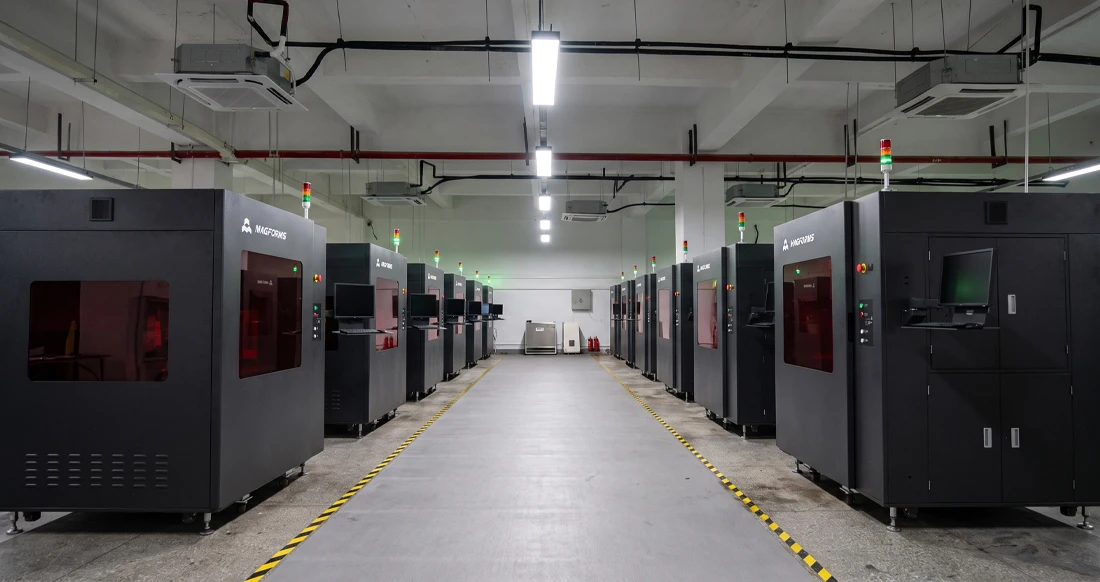
Magforms makes design and manufacture easier.
Popular Blogs
-
 Industry InsightsManufacturing Industry
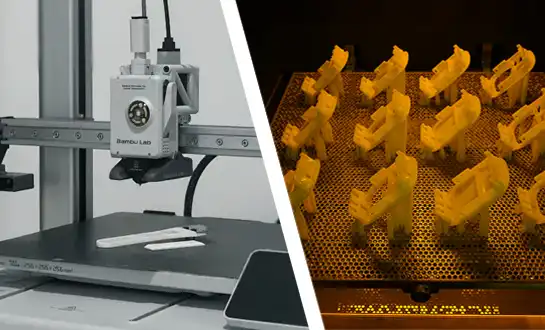
FDM vs. SLA Printer: Which Technology Is Right for Your Project?
-
 Industry InsightsManufacturing Industry
Top 5 Applications of Industrial 3D Printers in Manufacturing Today
-
 Industry InsightsManufacturing Industry
Why Stereolithography 3D Printers Are Unmatched for Microfluidic Device Prototyping?