5 Factors on How to Choose a Large Scale 3D Printer
To choose the best industrial printing option, you need to know how current photopolymerization technologies produce results that are good enough for production. A large-scale resin 3D printer can make things that desktop systems can't because it can combine huge build volumes with micron-level accuracy that is hard for standard methods to match. These tools meet important business needs in fields like medical device customization, high-volume dental manufacturing, aircraft component validation, and automobile rapid prototyping. When procurement teams look at their choices, they should pay attention to five technical and practical factors that have a direct effect on the quality of production, the prices of operations, and the long-term return on investment (ROI) in competitive industrial settings.
Understanding the Core Technology and How Large-Scale Resin 3D Printers Work
The Fundamentals of Resin Curing Technology
In industrial photopolymerization devices such as SLA equipment, precise UV laser energy initiates chemical crosslinking that solidifies liquid photopolymers layer by layer. If certain bands of UV light (usually 355nm) hit photosensitive glue, they cross-link molecules, which hardens the material in seconds. This method differs from filament extrusion in that it generally produces more isotropic mechanical properties compared with FDM processes, meaning strength variation between axes is significantly reduced. Resin systems get an injection-mold surface quality straight from the build plate, while FDM methods make layer lines that can be seen. Stereolithography (SLA) uses scanning lasers and galvanometer mirrors to cure the material point-by-point; Digital Light Processing (DLP) projects whole layers through micro-mirror arrays; and Masked Stereolithography (mSLA) uses high-resolution LCD screens as digital photomasks. There are pros and cons to each method when it comes to speed, clarity, and the cost of building an area. Advanced laser systems in SLA systems keep the spot size the same over large areas, and mSLA technology lets businesses that are tight on money scale more efficiently.

Resolution and Its Impact on Industrial Applications
The print quality tells you if your parts meet the size requirements set by medical regulatory bodies or aircraft certification bodies. High-performance large-format resin systems (primarily SLA equipment) achieve XY precision between 25 and 85 microns over build areas larger than 600 mm through controlled laser spot optimization. Unlike LCD-based mSLA systems, true SLA systems do not rely on screen resolution but instead depend on laser spot size, optical calibration, and galvanometer accuracy. This optical uniformity keeps more than 90% of the light strength the same from the center to the edges, which stops edge distortion that destroys big flat shapes. The thickness of the Z-axis layer has an equal effect on the mechanical strength and the surface finish. Layers of 25 to 100 microns are common for industrial resin printing. Dentures or jewelry master designs are the only things that can use smaller settings. When procurement teams understand this link, they can choose technology that meets their tolerance needs without spending too much on accuracy that isn't needed.
Material Compatibility Across Industries
In addition to standard photopolymers, advanced resin recipes include engineering-grade materials that can handle the high temperatures inside an automobile's engine, biocompatible mixes for surgery guides, large-scale SLA resin 3D printers, and high-impact-resistant resin formulations for functional end-use parts such as consumer housings. Leading makers create unique resins for different uses, such as ABS-like materials for snap-fit assemblies, clear formulas for seeing how fluids flow, and flexible elastomers that behave like Shore A 40–95 hardness ranges. When it comes to operating freedom and cost control, material compatibility has a direct effect. When compared to private container systems, systems built with open material platforms make it possible to buy resins from other companies, which lowers the cost per liter by 30 to 50 percent. But because of this, materials need to be tested thoroughly to make sure they meet strict guidelines for mechanical qualities and accuracy in measurements before they can be used in production. Temperature-controlled resin vats keep the right viscosity for even layer bonding, which is especially important when working with ceramic- or high-temperature formulas.
Performance Metrics: Precision, Build Volume, and Energy Efficiency
Balancing Build Volume with Dimensional Accuracy
For industrial manufacturing to work, the tools used must be able to handle full-size samples without losing their accuracy. Large format systems with 400x400x500mm build areas make it possible to make single-piece parts for car interiors or whole helmets, which gets rid of the structural problems that come from gluing together multiple parts. The hardest part is keeping tight standards across these larger dimensions, since temperature gradients and mechanical displacement get worse as the machine gets bigger. It is important for precision standards to list both the exact accuracy (usually ±0.1 to 0.2mm) and the relative accuracy as a percentage of the part's size (often ±0.05% of length). These measurements determine whether your transmission housings fit properly with metal parts or whether your dental aligner models fit patients' teeth correctly. To check what the maker says, procurement workers should ask for third-party metrology reports using coordinate measuring machines (CMM). This is especially important for parts that cover the whole build volume.

Energy Consumption and Operational Sustainability
When they are making, industrial 3D printers use between 1.5 and 4 kW of power, and their annual energy costs can be anywhere from $3,000 to $12,000. This depends on how much they are used and how much electricity costs where they are located. LED UV panels are used instead of standard mercury lamps in energy-efficient designs. This cuts power use by 40% and increases the life of the light source from 2,000 hours to 20,000 hours. This makes it cheaper to replace consumables and lessens unexpected downtime for part changes. For constant resin viscosity and layer bonding, thermal control devices keep chamber temperatures fixed between 25°C and 35°C. In temperature-controlled buildings, insulated building rooms lower the load on HVAC systems, and smart power management systems go into sleep mode when the building is not being used. When looking at the total cost of ownership, procurement teams should ask for specific power usage profiles in print, idle, and standby states so they can correctly model running costs over the 5 to 7-year lifecycles of equipment.
Maintenance Protocols and Reliability Engineering
Equipment uptime has a direct effect on shipping promises and work plans. Industrial-grade machines have precise ball screws, two sets of linear rails on the Z-axes, and leveling systems that stay in place even after thousands of print cycles. Preventive maintenance plans usually include replacing the FEP film every 50 to 100 print hours, checking the resin vat for finished residue buildup, and cleaning the optical window to keep light leakage from getting worse. Part selection is part of reliability engineering. Failure rates for machines made with industrial servomotors and hardened mechanical systems are less than 3% per year, while failure rates for consumer-grade components are between 8 and 12%. This toughness is very important for service providers, since printer downtime has a direct effect on their income. When procurement teams look at different sellers, they should look at the guarantee terms for wearable parts, the availability of spare parts, a large-scale resin 3D printer, and paperwork from previous setups that shows the average time between failures (MTBF).
Comparing Large-Scale Resin vs. Filament 3D Printers for Industrial Use
Technology Comparison and Application Fit
When compared to filament extrusion methods, resin-based photopolymerization has very different benefits. Ra values below 1.6 microns can be achieved straight from the build plate, so there is no need for extra machining for cosmetic samples or pattern-making. This advantage is very important in fields like consumer electronics, where production-representative surface textures are needed for fit-and-finish approval, or in medical applications that need smooth shapes for surfaces that patients touch. Filament systems are great for making big structure parts where the cost of the materials and how well they work are more important than the finish on the outside. Engineering thermoplastics, such as ABS, Polycarbonate, and ULTEM, are better at withstanding heat and being strong against impacts, making them ideal for checking the functionality of mounting frames or environmental housings. But because they have lower resolution and layer lines that can be seen, they can't be used for detailed parts that need to be within tight standards or for cosmetic evaluation. The selection structure looks at the complexity of the part's geometry, the surface finish that is needed, the mechanical property needs that must be met, and the production volume. For accuracy and throughput, dental labs that print hundreds of aligner models every day only use large-scale resin 3D printer systems. On the other hand, aerospace tooling manufacturers might use both technologies, with resin printers for complex jigs and fixtures and filament systems for larger composite layup mandrels.
Cost-Benefit Analysis for B2B Procurement
For industrial resin systems, the initial investment goes from $15,000 for simple big-format machines to more than $150,000 for dual-laser SLA systems that can build volumes on the order of meters. Depending on the engineering features, material costs add $80-$300 per liter. Typical part densities use 0.8 to 1.2 liters per kilogram of final components. Engineering thermoplastic fibers, on the other hand, cost $50 to $150 per kilogram, which makes them a cheaper choice for big, solid shapes. To figure out the total cost of ownership, you need to know how much work is needed for post-processing, how much material is wasted, and how many parts are rejected. When set correctly, resin systems have 92–96% first-print success rates, while for complex filament prints that need lots of support structures, the rate is only 75–85%. This dependability edge cuts down on wasted materials and the time engineers have to spend fixing builds that didn't work. Post-processing work for resin parts takes about 15 to 25 minutes per build, including washing, sealing, and removing the support. This is compared to 30 to 60 minutes for filament prints that need a lot of sanding or vapor smoothing.ROI timelines depend on how intense the application is. When service bureaus process 40 or more build plates every month, they usually get their equipment costs back through client billings within 18 to 24 months. On the other hand, internal R&D departments see value in faster product development cycles that cut time-to-market by 30 to 40 percent compared to traditional prototyping methods.
Real-World Case Studies
By using large-scale resin 3D printer systems for dashboard trim pieces and HVAC duct prototypes, a car supplier in the Midwest cut the time it took to test internal parts from six weeks to nine days. Because full-size, one-body parts could be made with a surface finish that was close to what would be used in production, design freeze decisions could be made during the first review meetings instead of waiting for machined prototypes. This sped up and saved $340,000 a year by cutting down on tooling changes and making program starts faster. With industrial mSLA systems with 380x380x450mm build sizes, a company that makes orthodontic devices went from making 150 to 800 aligner models every day. By printing more than 60 models in a 6-hour build cycle, the parallel production capacity cut down on outsourcing costs while keeping the 0.1mm accuracy needed for proper tooth fit. Material costs went down by 40% thanks to better support structures and recycling processes for resin, which greatly increased per-unit profits. A European company that makes aircraft parts used large-scale resin 3D printer technology to make complicated airflow validation models and wind tunnel test articles. Post-processing time was cut by 70% compared to previous FDM processes thanks to the isotropic strength properties and smooth surface finish. Dimensional accuracy within ±0.08mm across 500mm spans met strict measurement standards for aerodynamic testing programs.
Selecting Trusted Brands and Suppliers: Ensuring Reliability and Support

Evaluating Manufacturer Credentials and Market Presence
Your choice of supplier will decide whether the tools you buy will produce reliably over their 5–7-year useful life. Established companies show their dedication by having large patent files that protect their own technologies, registered logos that show they have invested in their brand, and records of installations at hundreds of industrial customers. These qualifications don't show short-term market opportunism, but rather long-term financial security and ongoing R&D investment. A position on the global market shows that a company is reliable in a wide range of working environments and legal frameworks. Manufacturers who take part in foreign trade shows like Formnext in Frankfurt, RAPID + TCT in Detroit, and TCT Asia in Shanghai show that their products are mature and that customers trust them. Because they can be seen, they can directly evaluate tools, sample materials, and have technical conversations that sellers who only work from home can't do. The framework for technical help is just as important. When problems happen, manufacturers who have regional service centers with qualified technicians, keep spare parts in stock locally, and promise to respond the same day, keep output as much as possible. These features are especially useful for service bureaus and manufacturers who work in shifts and where downtime has a direct effect on income and customer promises.
Warranty Coverage and After-Sales Support
Full insurance plans should cover mechanical systems, optical parts, and control electronics for at least 12 months, with the option to extend coverage to 36 months. Important parts like UV light sources, LCD screens, and resin vat systems need to be looked at separately because they have a big effect on running costs. Find out if the guarantee covers service on-site or if the equipment needs to be sent back to a service station. Shipping 200–500 kg industrial machines to a service depot adds to the difficulty and time needed to fix them. Support after the sale includes more than just fixing problems. It also includes software changes, creating new material profiles, and helping with app engineering. Leading providers offer cloud-connected systems that allow for online troubleshooting, proactive maintenance alerts based on data about how components are used, and over-the-air firmware changes that fix bugs or improve performance. This connection cuts down on the number of service calls needed and increases the time between big repairs.
Procurement Best Practices for Large-Scale Resin 3D Printer Systems
Advice on how to buy large-scale resin 3D printer systems that work well. Competitive buying strategies weigh the costs of purchasing against the value of the asset over its entire life. Price cuts of 12 to 18% are common when you buy a lot of units at once. This is helpful for companies that want to standardize across multiple locations or service offices that want to grow. Single-source dependencies, on the other hand, leave you open to risk if the quality or service of a seller drops. Diversified stocks lower this risk, but they make it harder to train operators and keep track of materials. When buying from foreign makers, import logistics need to be carefully planned. For big purchases like machinery, it's important to know the Incoterms (usually DDP or DAP), customs classification codes, and tax rates so that you don't go over budget. Lead times vary from 6 to 16 weeks at the moment, based on where the maker is located, the large-scale resin 3D printer, and what customizations are needed. These are all things that affect project planning and timelines for capacity growth. Leasing choices offer different ways to buy things for businesses that don't have a lot of cash on hand or would rather treat running expenses differently in their accounting. Over 36 to 60 months, monthly payments are usually between 2.8% and 3.5% of the value of the equipment, and some rules let you buy the equipment or get new technology at the end of the term. This structure makes it easier to use the newest technology more quickly without worrying about it becoming obsolete. This is especially helpful in additive manufacturing markets that change quickly.
Safety, Environmental Impact, and Regulatory Compliance
Essential Safety Protocols for Resin Handling
Photopolymer resins have volatile chemicals that need to be handled correctly to protect the health and safety of workers. Personal protective equipment standards (like nitrile gloves, safety glasses, and protective aprons), spill response procedures, and first aid methods for skin or eye contact events are all part of comprehensive safety programs. Material Safety Data Sheets (MSDS) list specific dangers, exposure limits, and emergency reaction plans that must be included in safety plans for facilities and training programs for operators. Ventilation needs depend on how volatile the resin is and how the building is set up. In industrial settings, there must be at least 10 air changes per hour with direct exhaust to the outside. This keeps volatile organic compounds (VOCs) from building up and irritating or sensitizing the lungs. Enclosed print rooms with activated carbon filters lower VOC levels by 85–95%, which makes them useful in shared labs or office areas where dedicated ventilation isn't possible. With automated handling tools, workers don't have to touch uncured resins as much. Isopropyl alcohol or water-based cleaning solutions are pumped through spray pipes in closed-loop washing stations. This cleans parts without having to be immersed or scrubbed by hand. These systems collect dirty wash fluids so they can be thrown away properly or recycled using distillation equipment. This keeps the fluids out of the environment and cuts the cost of consumables by 60–70% compared to single-use processes.

Environmental Stewardship and Waste Management
Resin waste lines need to be properly identified and disposed of by licensed workers who work with hazardous garbage. Before they can be thrown away, uncured liquid resin, contaminated supports, and failed prints need to be UV-cured to polymerize reactive components. This turns dangerous liquid waste into non-hazardous solid waste that can be thrown away in a normal industrial way. This healing process cuts the cost of dumping by 40 to 60 percent while still following most environmental laws. Closed-loop material systems are used by forward-thinking makers to recycle unused resin from build vats, filter out contamination with 50-micron screens, and then add clean resin back into production processes. These systems keep print quality uniform by checking for contamination and cutting down on material waste by 15 to 20 percent. With built-in material inventory tracking, you can avoid using outdated resin, which can cause prints to fail and lose production time. Designs for tools that use less energy leave less of an impact on the environment and lower operating costs. LED-based UV light sources use 40% less power than standard mercury lamps and don't need to be thrown away when they're no longer needed. Smart thermal management keeps the room at the right temperature by insulating it and heating only the areas that need it, instead of using high-power heating elements all the time. These steps to improve efficiency are in line with business sustainability efforts that are becoming more and more important in buying decisions.
Regulatory Compliance and Future-Proofing Investments
Regulatory frameworks for worker safety, environmental protection, and product quality standards are always changing in manufacturing settings. When a manufacturer's products meet the standards for CE marking (Europe), UL approval (North America), and ISO 9001 quality management systems, it shows that they care about following the rules and making sure their products are safe. These certifications make it easier for facilities to get approvals when adding new tools to work environments that are already in place. Medical device manufacturing (FDA 21 CFR Part 820, ISO 13485), aerospace production (AS9100), and car supply lines (IATF 16949) are all affected by rules that are specific to those industries. For this type of additive manufacturing equipment to work in these areas, the methods must be proven to work, the materials must be able to be tracked, and strict quality control rules must be followed. Manufacturers who offer pre-validated process parameters, material certificates of analysis, and IQ/OQ/PQ documents shorten the time it takes for regulators to approve products and lower the costs of compliance. Chemical exposures and leaks into the surroundings at work will be closely watched by regulators in the future. By choosing low-VOC resins, protected processing equipment, and complete waste management systems ahead of time, you can keep your equipment purchases from becoming useless as rules get stricter. When manufacturers show they are following the rules by using third-party testing and clear safety documents, they set up their customers for long-term business success.
Conclusion
To choose the best large-scale resin 3D printer, you need to think about its technical skills, running costs, and strategic vendor relationships. To make an informed choice, you should understand the basics of photopolymerization, compare different technologies, and match performance metrics to your unique application needs. Reliable providers who offer full support and follow safety rules will protect your investment and allow you to keep increasing production. These five factors give procurement teams the confidence to choose equipment that gives a clear return on investment (ROI) through faster product development, better part quality, and lower production costs in a wide range of industry settings.
FAQ
1. What build volume should I target for my industrial applications?
The choice of build volume is based on the biggest part size you expect, plus 20 to 30 percent for support structures and batch production plans. Maximum available volumes (600x600x400mm or bigger) are best for service bureaus that work on a variety of client projects. For high-volume aligner production, 300x300x400mm platforms are enough for dedicated dental labs. Meter-scale systems are in high demand because they need to validate full-scale components for automotive and aircraft uses. However, they are more expensive and require more facility infrastructure. Equipment lasts between 5 and 7 years, so think about your 3-year production plan instead of your current wants. Check to see if having several smaller machines instead of one big one gives you better speed and redundancy.
2. How do material costs compare between proprietary and open systems?
Using cartridge or RFID-locked materials, proprietary resin systems usually cost between $180 and $400 per liter. These systems have been tested and proven to work, but they don't allow for cost improvement. Through competition buying, open material platforms bring down prices to $80 to $200 per liter, but they need to be tested for material characterization before they can be used in production. The total cost of materials for each part relies on its shape, how well it is supported, and how much glue is used. Low-volume users are willing to pay more for guaranteed compatibility, while high-volume manufacturers often explain the original testing costs to get lower ongoing material costs. Find the break-even points between system methods by figuring out how much material is used each year.
Partner with Magforms for Your Large-Scale Resin 3D Printer Needs
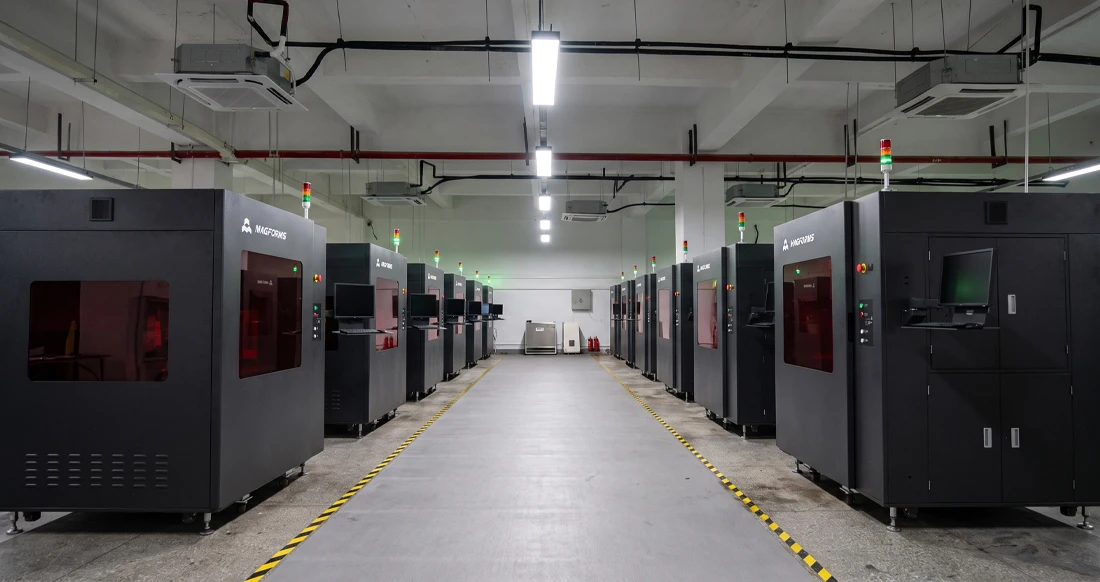
Magforms offers industrial-grade printing solutions that are backed by 22 patents and have been used by more than 300 businesses around the world. With perfectly matched materials and tools, our integrated method gets rid of compatibility problems, allowing 30% faster print speeds and micron-level accuracy that goes beyond industry standards. Our systems give you the dependability and accuracy you need for your tasks, whether you're prototyping auto parts, increasing dentist production, or checking the quality of aircraft pieces. Our expert team offers full help from installation to production optimization, making sure that you get the most out of your investment and service. Get in touch with our experts at info@magforms.com to talk about how Magforms' large-scale resin 3D printer solutions can change the way you make things with tools designed for harsh industrial settings.
References
1. Gibson, I., Rosen, D., & Stucker, B. (2021). Additive Manufacturing Technologies: 3D Printing, Rapid Prototyping, and Direct Digital Manufacturing (3rd ed.). Springer.
2. ASTM International. (2021). ASTM F2792-12a: Standard Terminology for Additive Manufacturing Technologies. ASTM Committee F42 on Additive Manufacturing Technologies.
3. Wohlers, T., & Campbell, R. I. (2022). Wohlers Report 2022: 3D Printing and Additive Manufacturing Global State of the Industry. Wohlers Associates.
4. Ligon, S. C., Liska, R., Stampfl, J., Gurr, M., & Mülhaupt, R. (2017). Polymers for 3D Printing and Customized Additive Manufacturing. Chemical Reviews, 117(15), 10212-10290.
5. Stansbury, J. W., & Idacavage, M. J. (2016). 3D Printing with Polymers: Challenges among Expanding Options and Opportunities. Dental Materials, 32(1), 54-64.
6. ISO/ASTM 52915:2020. Specification for Additive Manufacturing File Format (AMF) Version 1.2. International Organization for Standardization.

Magforms makes design and manufacture easier.
Popular Blogs
-
 Industry InsightsManufacturing Industry
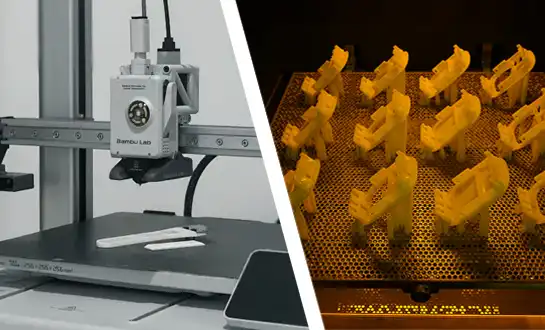
FDM vs. SLA Printer: Which Technology Is Right for Your Project?
-
 Industry InsightsManufacturing Industry
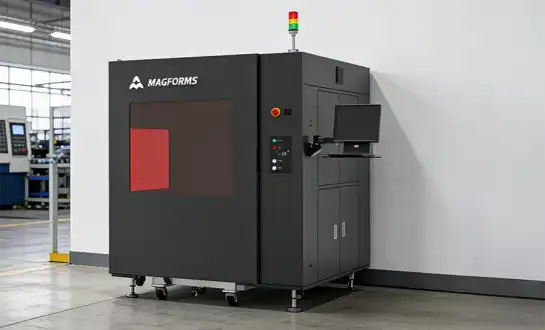
Top 5 Applications of Industrial 3D Printers in Manufacturing Today
-
 Industry InsightsManufacturing Industry
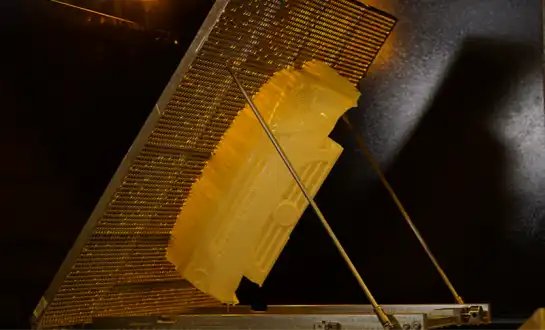
Why Stereolithography 3D Printers Are Unmatched for Microfluidic Device Prototyping?