Affordability and Efficiency with SLA Home Printers
Professional-grade additive manufacturing used to be an expensive treat. Still, now, stereolithography technology that is easy on the wallet has made it possible for businesses of all kinds to use it. There is a low-cost SLA printer that is both affordable and accurate enough for industrial use. It uses UV-curable resin systems and advanced optical engines to achieve accuracy at the micron level at a price that makes sense for small to medium-sized businesses, new service bureaus, and specialized manufacturing operations. Instead of expensive, specialized equipment that needs a lot of money, these more accessible systems allow procurement teams to use rapid prototyping, test different design versions, and make small batches of products without sacrificing quality or accuracy in measurements or surface finish. This changes the way companies develop products and respond to market needs in a fundamental way.
Understanding Low-Cost SLA Printers: How They Work and Their Core Benefits
Modern stereolithography equipment that is made to be affordable uses the same photopolymerization principles as high-end industrial tools. However, the equipment is less expensive because of smart engineering decisions rather than lower performance. At its core, most low-cost SLA printer systems in this segment are based on mSLA (LCD) technology, using a 405nm LED array as the UV light source to cure photopolymer resin layer by layer—specifically, cure liquid photosensitive resin layer by layer, building three-dimensional things from digital models that are very accurate in terms of their shape.
Technical Architecture and Operational Mechanics

The main improvement that makes it affordable is the way light is delivered. Masked Stereolithography (mSLA) technology is used by new, less expensive machines to cure each layer in a single exposure using an LCD mask. This method shows whole-layer pictures at the same time on high-resolution black-and-white LCD screens. It greatly reduces the complexity of the mechanical system while achieving pixel sizes (XY resolution) typically between 35 and 50 microns, with actual dimensional accuracy depending on calibration, resin properties, and exposure settings. The monochrome screens are a big improvement over older RGB screens because they let more light through, which means that the parts cure faster and last longer—more than 2,000 hours of use. The Z-axis uses linear rail systems with lead screws that can provide theoretical Z-axis step resolution of 10 to 25 microns, with practical accuracy influenced by mechanical stability and resin behavior, ensuring that all layers stay in place during long print jobs. FEP (Fluorinated Ethylene Propylene) film release layers are used in resin tanks to make sure that finished parts can separate easily after each layer exposure, preventing adhesion failures. Build volumes usually run from 153×77×160mm for small models to 302×161×380mm for mid-format units, accommodating a wide range of component sizes while still having desktop footprints that are suitable for workshops.
Core Advantages for B2B Procurement
The value offer is more than just a lower price. Competitive resin prices keep operational costs low—standard formulations cost $25 to $45 per liter for standard resins, while unique materials used in closed-ecosystem commercial printers cost more than $150 per liter. Another important benefit is that the printers can use third-party resins because they have open material systems that allow compatibility with third-party resins that allows it. This means that procurement teams can find specific formulations like dental-grade biocompatible polymers or high-temperature engineering materials based on the needs of the project rather than being limited by vendor lock-in. Maintenance needs are kept to a minimum by following the right procedures. Regular maintenance includes filtering the resin between prints, checking the LCD screen every so often, and cleaning the UV source tasks technical staff can do without special training. This makes implementation faster, so companies can use additive powers without having to spend a lot of money on equipment or hire specialized technicians. When you combine low-entry low-cost SLA printer hurdles with professional output quality, you get a very good return on investment for businesses that do iterative design validation or custom tooling production.
Comparing Low-Cost SLA Printers with Other Printing Technologies and Models
To choose the right additive manufacturing tools, you need to know how performance changes across price ranges and technology groups. When you compare cheap stereolithography systems to other options and more expensive ones using objective scientific measures, it is easy to see where they stand in the current market.
Performance Benchmarking Against Alternative Technologies
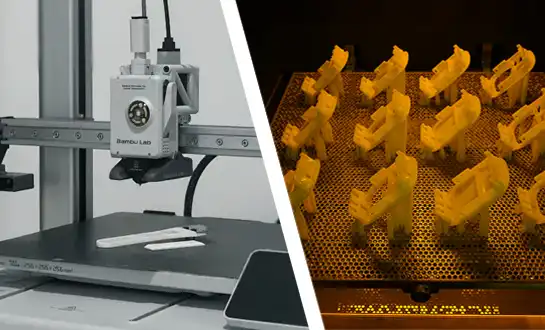
Most of the time, Fused Deposition Modeling (FDM) is used as a reference because it is widely used and relatively inexpensive. FDM machines can cost anywhere from $200 to $800, but the parts they make have visible layer lines and mechanical qualities that vary in different directions. This means that the strength changes a lot depending on the direction of the print because of how the layers stick together. A low-cost SLA printer can produce parts with more uniform mechanical properties compared to FDM, although slight anisotropy still exists due to the layer-by-layer curing process and finishes that do not need much post-processing. Layer heights of 25 to 50 microns can be reached, which makes the surface quality approach injection-molded standards in visual appearance, especially after post-processing such as washing and UV curing. This precision edge is very important for jobs that need to look good, like making cases for electronics or samples for medical devices. Digital Light Processing (DLP) technology uses digital micromirror arrays instead of LCD masks to cure photopolymers. MSLA-based variants offer a cost-effective alternative to DLP, with consistent pixel-based exposure across the build area, though each technology has trade-offs in optical uniformity and edge definition across the full build platform, eliminating edge-softness problems.
Cost-Value Analysis Compared to Industrial SLA Systems
Premium laser-based stereolithography equipment from well-known brands costs between $80,000 and $350,000 because it has features like large-format build chambers, automated resin handling, and special material formulations optimized for aerospace or biomedical certifications. These features are aimed at workplace settings that need batch output and paperwork to show compliance with regulations. Budget options priced between $300 and $4,500 give up automation and build volume but keep the core precise requirements, such as XY accuracy within ±50 microns and fine feature resolution. Cost-per-part economics makes the actual effect clear for people who make decisions about buying. Service center outsourcing fees would add up to $900 to $1,250 a month for a dental lab that makes 50 orthodontic models every month. When you buy a low-cost SLA printer for $2,500 and pay $8 to $12 for materials per model, you get your money back in four months while keeping control of your plan and protecting your intellectual property. This return profile works for jewelry patterns, engineering models, and custom tooling where iteration speed is important.
Procurement Guide: How to Select and Purchase the Best Low-Cost SLA Printer
Successful equipment acquisition demands systematic evaluation of technical specifications against operational requirements, coupled with strategic supplier relationship development to ensure sustained performance value throughout the equipment lifecycle.
Critical Specification Assessment Framework
When choosing a build amount, you should think about both your current production needs and your growth plans. Companies that mostly make dental models or jewelry parts find 130x80x160mm chambers to be enough. On the other hand, 190x120x200mm platforms are better for engineering development because they can hold more parts per build or bigger assembly validations. It is important to look closely at specs for dimensional accuracy, since makers may talk about positioning resolution without talking about the real tolerances that can be used. Quality, low-cost SLA printer systems are accurate through user-validated test prints that show ±0.1mm consistency in size on 50mm calibration cubes and the ability to copy 0.4mm hole widths without the need for post-drilling.

Supplier Evaluation and Support Infrastructure
Material ecosystem adaptability is one thing that sets makers apart. When it comes to third-party resins, open-source software platforms let you change the parameters, but private systems may not be as compatible because they use encrypted USB authentication or RFID tags. Before ordering a lot of equipment, procurement teams should make sure that material matching claims are true by trying samples and making sure that the materials will stick well and keep their shape. Support systems after the sale are especially important for businesses that do not have their own additive manufacturing experts. Comprehensive service agreements should include the ability to diagnose problems remotely, quick availability of new parts (especially LCD screens and resin tanks that must be shipped within 48 hours), and the ability to get help from application engineers to improve print parameters. Regional service networks with trained techs who can do on-site repair visits within 72 hours prevent extended production disruptions when hardware problems happen. Leading brands of low-cost SLA printer equipment that cost less than $500 include Anycubic, Elegoo, Phrozen, and Creality, each offering unique benefits. Anycubic focuses on touchscreen displays; Elegoo maximizes build volume; Phrozen stands out through optical engineering; Creality uses economies of scale to offer competitive pricing on feature-rich setups. Industrial-grade parts like dual linear rail Z-axes, heated resin vats for temperature-sensitive materials, and built-in air filtering systems are available in the $1,500–$4,500 range. These professional-grade components reduce consumable replacement frequency and improve the consistency of output for specialized manufacturing operations.
Strategic Sourcing Channels for Volume Procurement
Instead of buying from a retail market, companies that want to install multiple units or change parts on a regular basis should work directly with manufacturers. Authorized dealer networks offer bulk prices, with savings of 12–18% on orders of five units or more and 25–30% on orders of twenty units or more. They also offer centralized warranty management and professional training packages. A lot of the time, these partnerships include testing programs that let single units be tested first before committing to bigger contracts for buying things.
Maximizing Efficiency: Maintenance, Troubleshooting, and Optimal Settings
Sustained performance from affordable stereolithography equipment depends on disciplined operational protocols and proactive issue resolution strategies that prevent minor irregularities from escalating into production-disrupting failures.
Preventive Maintenance Protocols
How resin is managed has a big effect on how reliable prints are and how long consumables last. Long-term UV exposure and pollution from partly cured particles break down photosensitive materials, so they need to be filtered through 190-micron paint strainers between print sessions. Every 15 to 20 print hours, rubbing alcohol and lint-free wipes should be used to clean the tanks thoroughly. The FEP film should also be checked for cloudiness or micro-tears that affect its release properties. Adhesion failures during the job can be avoided by replacing the film periodically based on wear, clouding, or mechanical damage rather than a fixed number of prints. The low-cost SLA printer LCD screen requires attention despite its protected construction. Checking for resin seepage around gaskets and built-up debris on the protected glass once a month keeps the light transfer at its best. Cooling fan intake filters should be cleaned or replaced every three months to maintain the intended thermal performance. Build platform leveling verification should occur weekly to ensure proper positioning within a 0.05mm error.
Systematic Troubleshooting Methodologies
Layer adhesion problems that show up as prints coming off the build plates are usually caused by not enough exposure time, not leveling the platform properly, or dirty FEP film surfaces. Resolution follows a diagnostic hierarchy: check the tramming of the platform, add 15-20% more exposure time to the bottom layer, and look for resin curing residue on the release film. Persistent issues may indicate depleted resin batches—photopolymers lose reactivity over 6-8 months—or ambient temperatures falling below the suggested range. Print warping and measurement errors are often caused by poorly designed support structures rather than machine calibration. If a feature hangs more than 45° from the vertical, it needs tighter support placement or less layer contact to keep it from over-curing and building up internal stress. Software slicers can automatically create supports, but manual review and adjustment based on part shape knowledge prevent surface flaws and measurement distortion. Calibration test prints should be executed with each new resin formulation to establish baseline parameters.
Parameter Optimization for Material Performance
To get the best results from different resin formulas, you need to carefully tune the parameters beyond the set specs provided by the maker. Standard resins usually cure well with layer exposures of 6 to 8 seconds and beginning layer exposures of 40 to 60 seconds. But industrial materials like ABS-like or tough resins need 10-15% longer exposures to fully crosslink and develop their mechanical properties. Transparent resins pose their own problems. Excessive exposure can lead to yellowing or reduced transparency due to overcuring and become opaque, so shorter testing times must be balanced against the need for good adhesion through repeated test matrix evaluation. Choosing the right layer height strikes a balance between print time and surface quality. When compared to 50-micron settings, 25-micron settings give bent shapes a better surface finish and require less post-processing sanding, but they also double print times.50-micron layers are best for parts with mostly flat surfaces or those that need a lot of support structures. Finer resolutions should be saved for surfaces that will be seen by customers or precision joining features. When slicing software allows varying layer capability, while most mSLA slicers use fixed layer heights per print, optimization is typically achieved by selecting appropriate layer thickness based on part requirements—fine detail zones at 25 microns, bulk volumes at 50 microns is the best way to balance speed and quality.
Applications and Use Cases of Low-Cost SLA Printers in B2B Contexts
Affordable stereolithography technology has catalyzed transformation across industry segments by enabling localized, high-quality output that was previously only possible with expensive equipment or outside service centers.
Dental and Medical Device Manufacturing
For making orthodontic models, surgery guides, and temporary prosthetics, digital dentistry low-cost SLA printer processes depend a lot on low-cost SLA printer models. For clear aligner treatment to work, the patient's teeth must be accurately copied using intraoral scanning. The trays must be heated to the right temperature, and the patient's teeth must move in an expected order. A normal dental practice that makes 40 sets of aligners every month can get materials for about $9 to $12 per model set instead of paying $22 to $35 to a lab. This saves the practice over $11,000 a year and cuts production time from 5 to 7 days to the same day. Biocompatible resins make it possible to make surgical guides in clinical settings, cutting down on shipping delays. These systems are both affordable and accurate, with a return on investment usually between 6 and 14 months based on case volume.

Jewelry Design and Investment Casting
Jewelry makers use low-cost SLA printers and castable resin formulas to make master designs that burn out smoothly during investment casting processes. Stereolithography can make digital designs with 0.05mm feature accuracy and sub-5 micron surface roughness, while traditional wax carving or CNC milling has trouble with complicated shapes like filigree details, hollow structures, or organic textures. Castable resins made for completely ash-free burnout stop the inclusion flaws that happen when molds aren't cleaned well enough, raising casting output rates by 8 to 15 percent. Pattern making for custom engagement rings costs about $2–4 for materials and two to three hours of printing time. Studios that make between 15 and 25 custom pieces a month can get their money back on the tools they bought within three months while gaining design iteration flexibility—clients review physical prototypes before final casting commitment.
Engineering Prototyping and Functional Testing
When the quality of the surfaces made by FDM isn't good enough or when CNC cutting takes too long, product development teams use inexpensive stereolithography for iterative design validation processes. The low-cost SLA printer can make smooth, paintable surfaces that look like they were injection-molded, which is especially useful for consumer electronics cases. This lets market research focus groups and pictures for crowdfunding campaigns happen before investing in tooling. Functional prototyping is used for things like trying snap-fits, live hinges, and thread forms in mechanical systems. For confirmation tests, engineering resins with high tensile strength can mimic structural thermoplastic behavior well enough for validation testing. A consumer product startup making a wearable device said they were able to complete 12 design iterations in eight weeks using their own printers and spending only $340, in contrast to the 14 weeks and $8,700 they would have paid for outsourcing.
Educational Institution Implementation
Technical schools and university engineering programs are using cheaper stereolithography equipment more and more to give students experience with professional-level additive manufacturing without research-level equipment budgets. Hands-on experience with resin handling practices, support structure design, and post-processing processes helps students learn skills that are useful in the workplace and support capstone projects. Manufacturers' academic pricing plans bring down the price of each unit, making departmental adoption feasible. The value in the classroom goes beyond learning technical skills. Students get hands-on practice with design-for-additive-manufacturing principles and learn how geometric planning for layer-based production is different from the limitations of subtractive manufacturing. This real knowledge base is useful no matter what job path you choose, because additive techniques are changing the way products are made in many fields, from cars to consumer goods.
Conclusion

The cost-benefit analysis of adopting precision additive manufacturing has changed a lot since stereolithography became more accessible by making equipment platforms cheaper. Dental practices, engineering companies, and other types of businesses can now get micron-level accuracy in measurements and injection-molded surface finishes without having to go through the capital funding process. This change is made possible by low-cost SLA printer platforms with new optical architectures, open material ecosystems, and easier upkeep needs that lower total ownership costs while keeping the performance qualities that define professional-grade stereolithography. Strategic procurement decisions grounded in thorough specification assessment, supplier relationship development, and application-specific parameter optimization enable businesses to capture substantial ROI through reduced outsourcing expenses, accelerated development cycles, and enhanced design iteration flexibility.
FAQ
1. Can Low-Cost SLA Printers Deliver Professional-Grade Accuracy?
These days, low-cost SLA printer models can print with XY resolutions of 35 to 50 microns and Z-axis placement accuracy of 25 microns. This is good enough for making dental orthodontic models, jewelry casting patterns, and samples for testing ideas in the engineering world. With calibrated LED light sources and monochrome LCD screens with 4K+ images, it is now possible to reliably reproduce 0.4mm holes, 0.3mm wall thicknesses, and surface finishes that need little post-processing—performance levels previously exclusive to equipment exceeding $50,000 purchase prices.
2. What Factors Should Guide Budget Versus Premium Model Selection?
When making a decision, the factors should put production volume needs, material specialization needs, and support infrastructure standards at the top of the list. For businesses that make fewer than 100 parts a month, $300 to $1,500 systems are enough when using standard resin formulations. For environments with higher throughput or specialized materials like biocompatible dental resins or high-temperature engineering polymers, $2,500 to $4,500 platforms offering heated vats, advanced filtration, and longer warranty coverage are needed.
3. Which Manufacturers Offer Reliable Purchasing Channels?
Anycubic, Elegoo, Phrozen, and Creality all have networks of approved distributors that handle warranties and provide technical help. Direct maker websites make pricing and specifications clear, and well-known online markets make it easy for customers to read reviews and make smart decisions. Before committing to bigger orders, B2B procurement teams that want to deploy multiple units should talk to area salespeople to work out volume pricing and pilot program terms before committing to larger orders.
Partner with Magforms for Advanced Low-Cost SLA Printer Solutions
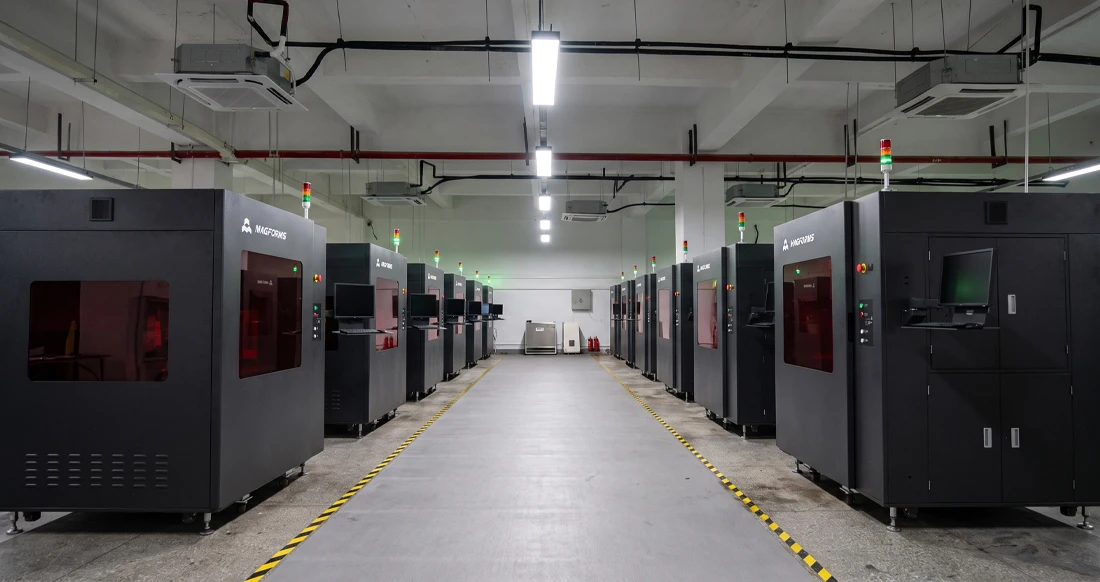
Magforms offers a streamlined way to get cheap stereolithography by using perfectly matched material and equipment systems, eliminating the compatibility issues that can make printing less reliable in settings with a lot of different vendors. Our own low-cost SLA printer platforms that combine optimized mSLA (LCD-based) architecture with advanced exposure control algorithms and AI-optimized scanning paths to print 30% faster than the average in the industry while still keeping micron-level accuracy in dimensions that have been validated in industrial prototyping and precision model applications, with potential for use in regulated industries when certified materials and workflows are applied. With 22 patents and 30 filed trademarks to support its commitment to constant innovation, Magforms equipment demonstrates much lower failure rates than the market average.
The company's technical support team has decades of experience between them in additive manufacturing, offering application engineering advice, material optimization methods, and quick debugging that keeps production running smoothly. Comprehensive training programs make sure that your team gets the most out of the equipment from the moment it is set up, and ongoing software changes and proactive upkeep advice make it last longer. Magforms is a trusted low-cost SLA printer seller that works with over 300 businesses in dozens of countries. Contact our experts at info@magforms.com to talk about unique solutions addressing your specific production requirements, volume pricing structures, and technical validation through sample part testing before purchase commitment.
References
1. Gibson, I., Rosen, D., & Stucker, B. (2021). Additive Manufacturing Technologies: 3D Printing, Rapid Prototyping, and Direct Digital Manufacturing (Third Edition). Springer International Publishing.
2. Ligon, S. C., Liska, R., Stampfl, J., Gurr, M., & Mülhaupt, R. (2017). Polymers for 3D Printing and Customized Additive Manufacturing. Chemical Reviews, 117(15), 10212-10290.
3. Stansbury, J. W., & Idacavage, M. J. (2016). 3D Printing with Polymers: Challenges Among Expanding Options and Opportunities. Dental Materials, 32(1), 54-64.
4. Quan, H., Zhang, T., Xu, H., Luo, S., Nie, J., & Zhu, X. (2020). Photo-Curing 3D Printing Technique and Its Challenges. Bioactive Materials, 5(1), 110-115.
5. Melchels, F. P., Feijen, J., & Grijpma, D. W. (2010). A Review on Stereolithography and Its Applications in Biomedical Engineering. Biomaterials, 31(24), 6121-6130.
6. Bagheri, A., & Jin, J. (2019). Photopolymerization in 3D Printing. ACS Applied Polymer Materials, 1(4), 593-611.

Magforms makes design and manufacture easier.
Popular Blogs
-
 Industry InsightsManufacturing Industry
FDM vs. SLA Printer: Which Technology Is Right for Your Project?
-
 Industry InsightsManufacturing Industry
Top 5 Applications of Industrial 3D Printers in Manufacturing Today
-
 Industry InsightsManufacturing Industry
Why Stereolithography 3D Printers Are Unmatched for Microfluidic Device Prototyping?