The Need for Speed: Exploring Fast Printing Resins in 3D Printing
Today, speed is the most important thing for manufacturers to have, and additive manufacturing makes this point very clear. A Fast resin 3D printer is a step forward in vat photopolymerization technology. It uses monochrome LCD screens, advanced release films, and optimized photopolymer resins to achieve printing speeds of over 100 mm/h under optimized conditions. This innovation solves a major problem in the industry: the delay between the idea and the real prototype. Companies in the electronics, medical, and automobile industries will be able to make changes to designs in hours instead of days.
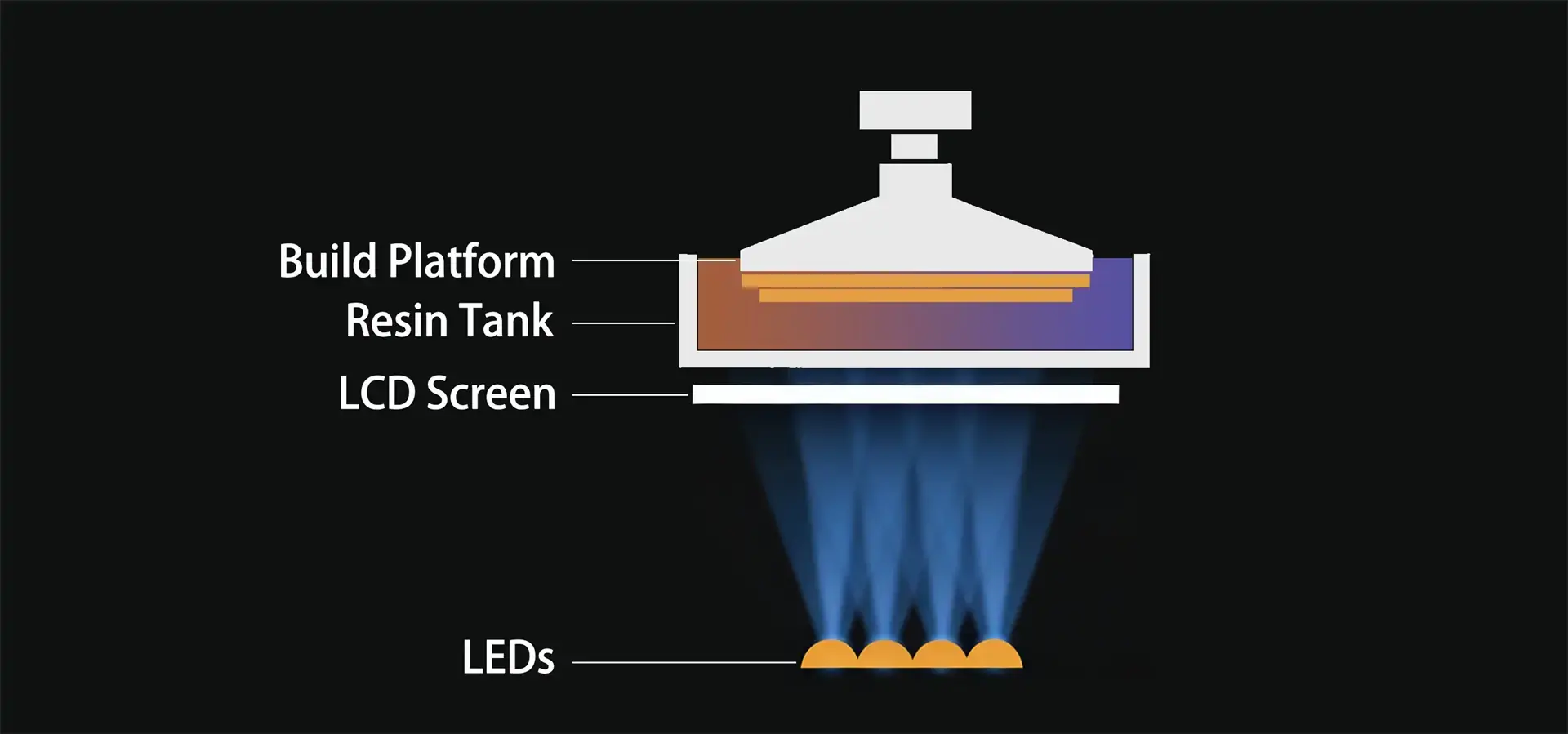
Understanding Fast Resin 3D Printing Technology
Compared to regular stereolithography methods, rapid resin printing has a very different basic structure. Traditional SLA machines use laser-based point exposure, while fast resin systems typically adopt LCD-based masked stereolithography (mSLA), where a UV LED backlight passes through an LCD mask to cure entire layers simultaneously. When you combine this method with low-viscosity photopolymer mixtures that have high-sensitivity photoinitiators, exposure times can reach 0.5–1.5 seconds per layer when using high-reactivity resins and high-intensity light sources.
The Mechanics Behind Speed
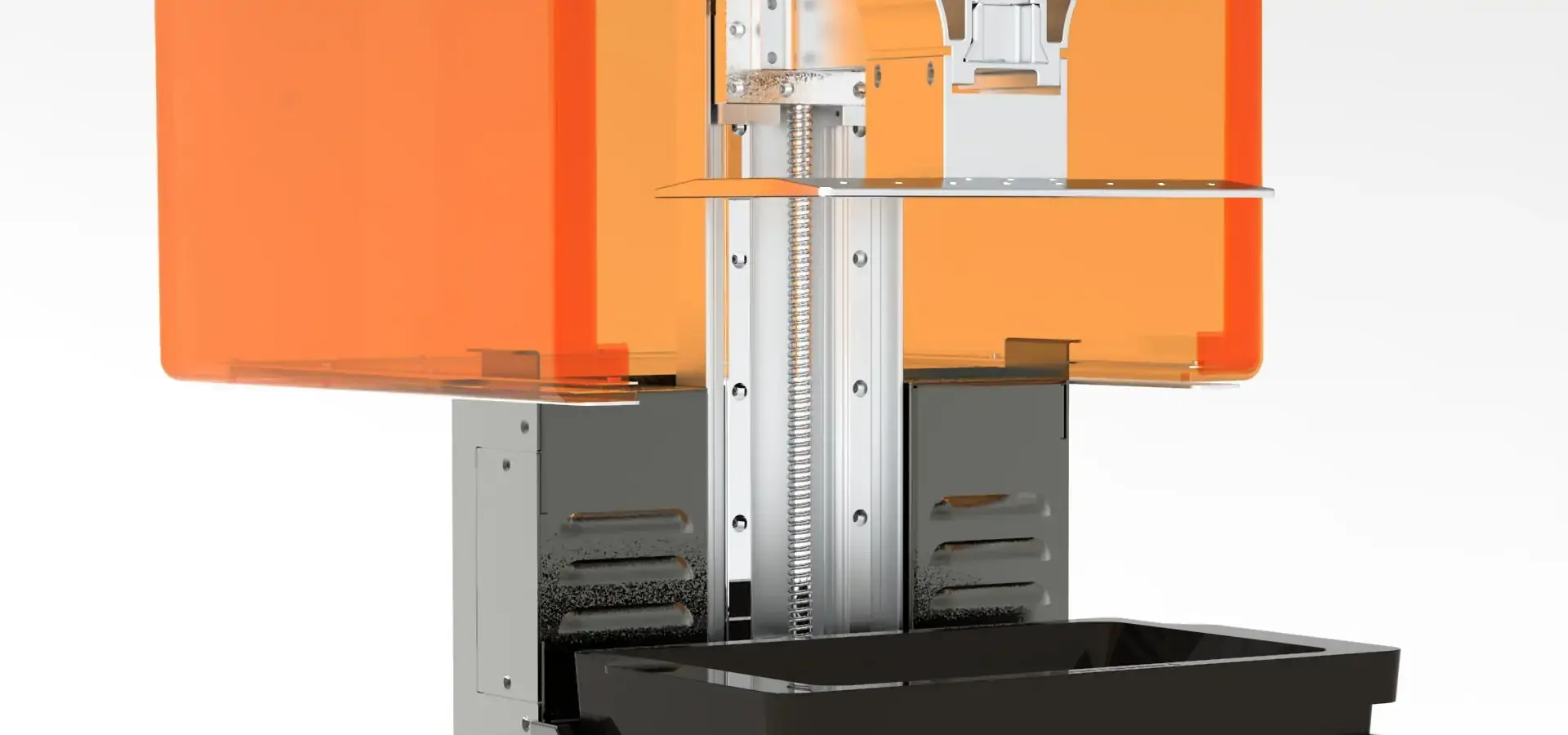
The mechanical parts that make fast printing possible include two sets of linear rails that are strengthened with ball screws. This keeps the Z-axis stable at less than 0.01 mm of wobble, even at high-speed lift conditions (typically up to 200–300 mm/min depending on process settings). The release film technique is also very important. Advanced Composite Films (ACF) and Non-Fluorinated Ethylene Propylene (nFEP) materials exhibit lower surface energy and reduced adhesion, resulting in significantly lower peel forces compared to standard FEP films, which means they have about half as much peel force as regular FEP films. This cuts down on the time it takes for the build platform and resin vat to separate, which gets rid of a big time bottleneck in layer-by-layer creation.
Optical Systems and Curing Efficiency
Modern fast resin systems use Chip-on-Board (COB) light sources that deliver irradiance levels above 6 mW/cm² with over 90–95% light uniformity across the build area. This even spread of energy makes sure that the polymerization process happens all the way across the build area, with no light bleeding or warping of the dimensions. High irradiance and precise optical collimation enabling pixel sizes typically ranging from 19–35 μm, depending on 8K–12K LCD configurations. This means that even when the machine is running at full speed, small details are kept at microscale limits.
Comparative Advantages Over Traditional Methods
When compared to filament-based deposition methods, resin printing has a smoother surface and more complicated shapes. When you use a Fast resin 3D printer, the layer lines are significantly reduced compared to FDM processes, resulting in smoother surfaces. This means that parts made with this printer can achieve surface roughness typically in the range of Ra 1.6–3.2 μm, depending on process parameters and materials, right from the build platform. When compared to regular SLA equipment, fast resin systems cut production time by about 300% while keeping the same level of accuracy in size. Usually, fast resin 3D printers are typically within ±0.05 mm for small to medium-sized parts under calibrated conditions for working samples and engineering parts. When these systems are used in factories, machine downtime and material waste are cut down by a large amount. The closed-loop motor control systems constantly check the separation forces and change the lift speeds on the fly. This keeps prints from failing because of poor detachment. This smart process control means that batch consistency rates are higher than 98%, which is a very important measure for service offices that handle production queues for multiple clients.
Comparing Fast Resin 3D Printers: Choosing the Right Solution
To choose the right tools, you need to know how speed, sharpness, and material compatibility all work together. The choice process is very different for applications that need fast prototyping and those that need fine tooling.
Performance Metrics That Matter
Print speed is only one aspect of what the machine can do. In a full review, the curing time of each layer, the speed of the Z-axis, the use of build space, and thermal management during constant operation are all taken into account. The 150mm per hour vertical speed of the equipment must be able to keep up this speed during long print sessions without getting too hot or losing its accuracy. In jewelry casting processes that make a lot of jewelry, where systems run 24 hours a day, making hundreds of wax-castable designs, thermal dissipation is very important. Specifications for layer clarity need to be looked over very carefully. Many systems claim to have micron-level XY resolution based on projection specs, but the actual resolution relies on the resin's properties and how the exposure is set up. Most of the time, engineering-grade tough resins need longer exposure times than normal formulas, which means that faster speeds aren't possible. Because of this trade-off between material performance and processing speed, tools must be chosen based on the application.
Application-Specific Equipment Selection
Dental care that is done digitally is a very demanding use case. To be able to treat patients the same day, chairside dentistry labs need tools that can make full arch models, surgical guides, and orthodontic aligner bases in 20 to 40 minutes. In this market area, the right equipment is defined by its speed and biocompatible material approval. For intraoral uses, printers must be able to handle resins that are FDA-approved or CE-marked and have class II accuracy. Different standards are more important to different automotive development teams. For design testing of snap-fit systems and mechanical housings, engineering resins need to have a tensile strength of more than 55MPa and a heat deflection temperature of more than 80°C. These mixtures usually harden more slowly than regular resins, so equipment with higher optical output (LED intensity and exposure efficiency) is required to keep the flow at a good level. Build volumes comparable to common automotive components—usually at least 190 x 120 x 200 mm—to avoid the need to separate and put together parts. Very high-resolution tools that keep the XY accuracy at 25 microns help people who work on housings for wearing electronics and small precision parts. Headphone shells and smartwatch cases have complex shapes with small details like 0.3mm snap tabs and logo holes that need this level of resolution. A Fast resin 3D printer that meets these needs usually has 12K monochrome LCD screens with pixels that are less than 20 microns in size.
Material Versatility Considerations
Compatibility with different glue formulas has a direct effect on how flexible operations can be and how well costs are managed. Proprietary material environments limit the vendors that can be used and raise the costs of consumables, which is especially bad for small businesses that are trying to stick to tight running budgets. Open-platform systems that work with third-party resins give you buying power by letting you buy in bulk from many sources. However, this versatility needs strong process parameter management because pairs of materials and machines that aren't adjusted can lead to dimensional changes or surface flaws.
Optimizing Fast Resin 3D Printing Processes for Maximum Speed
To get to the possible maximum throughput, you have to optimize the process in a planned way across many factors. By understanding how layer thickness, exposure time, and lift dynamics affect each other, professionals can get the most out of their tools.
Layer Thickness and Exposure Calibration
The main trade-off between speed and quality is choosing the layer height. Going from 50-micron layers to 100-micron layers cuts the total number of layers in half, which means the print time is cut in half as well. This change works well for practical prototypes, where the mechanical qualities and accuracy of the dimensions are more important for functional prototypes than surface texture quality when using a fast resin 3D printer. But at higher layer heights, stepping marks can be seen on curved surfaces and angled features. Even though it takes longer to print, keeping 25 to 50 micron layers helps parts that need smooth curves or fine text details. Calibration of the exposure stops both under-curing and over-curing failure modes. When there isn't enough UV energy, the layers are physically weak and can separate during printing or after processing. Excessive exposure leads to lateral light bleeding (overcuring), which makes features bigger than they were meant to be and holes smaller. To do calibration correctly, you need to print standard test models at different exposure levels, use digital calipers to check the accuracy of the dimensions, and choose parameters that produce dimensions that are within ±0.02mm of the CAD specs.
Build Orientation and Support Strategy
The part position on the build platform has a big effect on both how long it takes to print and how good the end part is. Cutting down on Z-height lowers the number of layers and the time it takes to print. But direction also affects the need for a support structure, the peel forces that occur when layers separate, and the quality of the surface finish. Flat surfaces that are parallel to the build platform fix against the release film and take on its pattern. After processing, the support needs to be removed. By tilting these surfaces 15 to 30 degrees from horizontal, you can get rid of direct film contact. This improves the quality of the surface while slightly raising the Z-height. Algorithms for support generation must find a mix between how well they print and how well they work afterward. Dense support systems make sure that the printing works, but they also take longer to clean and use more material. The choice of touchpoint width affects both the strength of the support's attachment and the scarring that results from removal. Large tips stick well, but they leave marks that need to be sanded out. Small touchpoints reduce surface effect but increase the chance of separation during printing, especially on features that hang over the edge and are subject to strong peel forces.
Maintenance Protocols for Sustained Performance
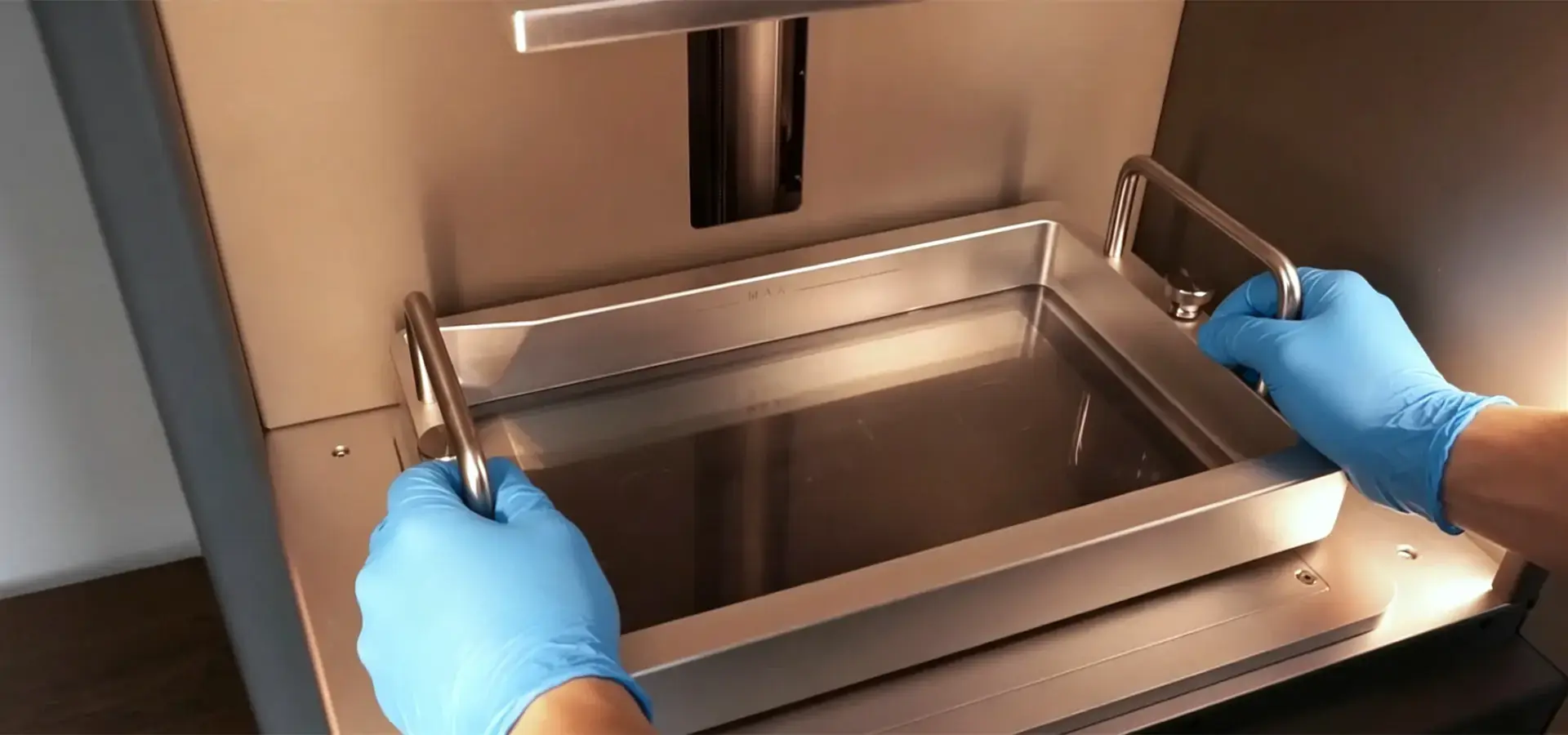
For consistent throughput, repair plans must be very strict. Replacement times for release films depend on the type of material and how often it is printed, but are usually between 200 and 500 printing hours. Degradation of the film shows up as clouding, scratching, or loss of clarity. This directly lowers the UV penetration and makes the exposure times longer. Slow quality loss can be stopped by replacing things before they break down badly. Cleaning the resin vat gets rid of the partly finished particles that build up during printing. These impurities can stick to later prints and make the surface look bad or cause localized curing failures in certain areas. Filtration through 190-micron mesh strainers once a week gets rid of debris and keeps the resin useful. Cleaning the vat completely with isopropyl alcohol every 40 to 60 hours of printing stops the resin's properties from breaking down because of gradual photoinitiator degradation due to repeated UV exposure. Maintaining the optical windows makes sure that light always gets to the resin vat. Fingerprints, dust, and resin spills on the LCD screen or LED array cover lower the effective light. This means that exposure times have to be longer, which cancels out the speed benefits. Cleaning once a week with optical-grade alcohol and cotton cloths keeps transmission working well. This easy maintenance job keeps the exposure settings calibrated and stops the output from slowly going down.
Procurement Guide: Buying Fast Resin 3D Printers for B2B Use
When buying strategic tools, the total cost of ownership, supplier stability, and long-term support infrastructure are all things that are taken into account, not just the initial purchase price. When businesses buy things, they need thorough evaluation systems that take practical facts into account over multiple years of deployment.
Investment Analysis and Budgeting
Prices for industrial-grade fast resin systems range from $3,000 to $25,000, based on the number of parts needed, the resolution, and the automatic features. Entry-level units that are good for small design companies and new service providers usually cost between $3,000 and $7,000. They have built sizes of about 130 x 80 x 160 mm and work with standard resins. Mid-range equipment, which costs between $8,000 and $15,000, has bigger build areas than 190 x 120 x 200 mm, more automated features like auto-resin pouring, and a wider range of material certifications, such as engineering-grade formulas. High-end production systems that cost between $16,000 and $25,000 have large build sizes of up to 245 x 138 x 250 mm, built-in heating systems for specialty resins, and advanced process software that can be monitored from afar. These specs are good for medium and large factories that need to be able to make a lot of things at once and work with a lot of different materials.
Total Cost of Ownership Considerations
Long-term business economics are greatly affected by consumable costs. The amount of resin needed depends on the shape of the part and how much support it needs, but on average, normal recipes use about $150 per liter of resin, while specialized engineering or biocompatible materials use $250 to $400 per liter. Depending on the size and type of material, replacement release film costs between $50 and $150 per unit. In normal conditions, replacements are needed every 300 working hours. Maintenance supplies like nitrile gloves, cotton cleaning cloths, and isopropyl alcohol for cleaning cost an extra $30 to $50 per working machine every month. Facilities with more than one unit should plan to have backup key parts like extra build platforms and resin vats on hand so that they don't have to shut down too often when parts fail unexpectedly.
Supplier Evaluation and Partner Selection
Important non-technical selection factors are the supplier's reputation and the system for providing help after the sale. When equipment breaks down, production capacity is lost, and deliveries to customers are delayed. This is why quick expert help is so important. Some things that should be used to judge a company are how quickly they usually answer technical questions, how many local service techs are available, and how many new parts they have in stock. Warranty terms need to be carefully looked over and not just given as durations. Fully comprehensive coverage should include optical parts like LCD screens and LED arrays, which are expensive replacements. Making warranty limits clear keeps repair costs from coming up out of the blue due to operating-wear items or damage from bad material usage.
Training and help with getting started speed up operating skills and lower the number of mistakes made at the start. Suppliers who offer on-site installation, hands-on user training, and thorough process parameter rules for approved materials show that they care about their customers' success after the sale is over.
International Procurement Logistics
When buying tools across borders, there are extra things to think about, like import taxes, shipping issues, and voltage compatibility. Different countries have very different duties and taxes that can add anywhere from 10% to 25% to the cost of landing goods. Correctly classifying goods using Harmonized Tariff Schedule codes makes sure that the right duties are applied and that there are no delays in clearing customs. Specialized packing and handling are needed to ship fragile optical components. To protect equipment while it's being shipped across foreign borders, reputable providers use custom foam inserts and shock sensors. To lower the financial risk of damage during transport, insurance should cover the full replacement value, which should include taxes and freight costs. Checking for electrical compatibility avoids problems during installation. When used in 220V areas, equipment made for 110V markets needs voltage converters, which adds cost and creates possible failure points. These problems can be avoided by making sure voltage standards are met and getting power sources that are right for the area during procurement.
Future Trends and Innovations in Fast Resin 3D Printing
As resin printing technology moves forward, speeds will keep getting faster, materials will have better qualities, and workflows will be more integrated. Understanding new developments helps procurement workers buy tools that will work in the future and are in line with long-term goals.
AI-Enhanced Process Optimization
The use of artificial intelligence (AI) offers adaptable exposure control, which allows a fast resin 3D printer to change the curing settings based on feedback in real time. Machine vision systems that check the quality of the layer polymerization can find cases of under-curing or over-curing and make changes to the printing parameters to fix them in the middle of the print. This closed-loop improvement cuts down on the number of test prints needed and speeds up the process of qualifying new materials. By looking at motor current draw, temperature curves, and print success rates, predictive maintenance programs can tell when a part will break down before it actually does. Replacement of worn-out parts regularly during planned repair windows avoids unplanned downtime and improves the management of extra parts inventory.
Advanced Resin Chemistry
Next-generation photopolymer formulations aim to improve cure speed, mechanical qualities, and weather safety all at the same time. Photoinitiator systems that are triggered by narrower wavelength bands are the subject of the current study. These systems allow for more accurate energy delivery and less over-cure bleeding. These formulas allow for lower effective layer heights without slowing down the speed proportionally. Bio-based resin creation meets the needs of the climate and government regulations while keeping the same performance levels. Plant-based monomers have similar mechanical qualities to options made from oil, but they produce less hazardous trash. For medical and dental uses, regulatory approvals lean more and more toward biocompatible products with well-established safety ratings.

Workflow Automation and Integration
Automated post-processing devices get rid of the need for people to wash, cure, and remove supports by hand. Integrated workstations that take build platforms straight from printers, clean, cure with UV light, and support detachment with little help from a user. This technology cuts down on the time needed to handle each part and makes the process more consistent, which is especially helpful for service offices that have to handle long production lines. Integrating a manufacturing execution system (MES) lets an entire company keep track of output and plan resources. Communicating print job progress, material usage, and quality measures to centralized screens makes capacity planning easier and finds bottlenecks in facilities with multiple printers. This level of visibility helps make practical choices based on data and supports efforts to keep getting better.
Supply Chain Implications
Fast resin printing is used in distributed manufacturing methods to bring on-demand output closer to the customers. Businesses don't have to keep up centralized production sites. Instead, they can put equipment at regional service centers, which cuts down on transportation costs and delivery times. Localized production is a cost-effective way to make customized parts and new parts because of its fast printing speeds and wide range of materials. In digital inventory ideas, digital files and shared printing resources are used instead of real extra parts stocks. Instead of keeping actual stockpiles, medical device dealers and auto repair shops can make replacement parts as needed. This change frees up capital that was being held in inventory and makes it easier to get parts for old or low-volume parts.
Conclusion
The progress made in fast resin printing technology has completely changed the costs and abilities of making in many different industries. Modern systems can achieve throughput levels that were previously impossible in vat photopolymerization processes. They do this by mixing layer exposure times of less than one second with improved release mechanisms and material formulations that work best. Businesses can gain a competitive edge through shorter development processes and quick small-batch production by carefully choosing equipment that balances speed, clarity, and compatibility with different materials. As AI-enhanced process control and next-generation resin chemistry continue to improve, performance is expected to get even better. This means that the choices being made now about procurement are very important for long-term business competitiveness.
FAQ
1. What factors most significantly influence print speed in resin systems?
The main things that affect print speed are the time it takes for each layer to cure, the speed of the Z-axis lift, and the force that separates the build platform from the release film. Because they let more UV light through, monochrome LCD screens fix layers a lot faster than RGB ones. Shorter exposure times are possible with low-viscosity resins that contain a lot of photoinitiator. Newer release films lower the peel force, which lets you lift the film faster without losing any prints. Practical output is based on how these factors interact with each other.
2. Can fast resin printers accommodate engineering-grade materials?
Modern methods can work with a wide range of materials, such as tough plastics that are similar to ABS, high-temperature formulas, and flexible elastomers. However, because of the way they are chemically made, industrial materials usually need longer exposure times than normal plastics. This slows down the print speeds a bit. With these tough formulas, equipment with a higher optical output keeps up a good flow. Material approval and mechanical property data checks are done to make sure that the resins chosen fit the needs of the application.
3. How do you maintain quality consistency at accelerated printing rates?
For quality to stay the same, exposure must be carefully calibrated, release film must be replaced regularly, and preventative maintenance must be followed. Printing test models on a regular basis makes sure that the accuracy of the dimensions stays within the limits set. Watching peel force signs finds release film decline early, before it affects the success of the print. Parameter drift can be stopped by keeping the atmospheric temperature and resin viscosity constant. These organized steps make sure that speed benefits don't come at the cost of part quality.
Partner with Magforms: Your Fast Resin 3D Printer Supplier
Magforms offers unified material and equipment solutions that are designed to get rid of the compatibility problems that come up in processes that use more than one provider. Our special Fast resin 3D printers can print at speeds more than 30% faster than the average in the industry. This is possible with advanced high-uniformity LED optical systems and optimized LCD masking algorithms and AI-optimized scanning paths, which means that you can get prototypes and production parts much faster. Our technology is backed by 22 patents and has been used successfully by more than 300 businesses around the world. It is used in difficult industries like the automobile, aerospace, dentistry, and consumer electronics.
Our linked development of materials and tools guarantees accuracy in measurements down to the micron level while keeping failure rates well below the standards set by the industry. When third-party materials are used with generic devices, print errors and unexpected downtime are frequent. This integration stops those problems from happening. Our experienced engineering team offers technical support and quick answers to practical questions. They also offer thorough training programs that help your team become more skilled faster. Get in touch with us at info@magforms.com to talk about your unique production needs and find out how our fast resin 3D printer maker skills can help you make more things.
References
1. Gibson, I., Rosen, D., & Stucker, B. (2021). Additive Manufacturing Technologies: 3D Printing, Rapid Prototyping, and Direct Digital Manufacturing (3rd ed.). Springer International Publishing.
2. Jacobs, P. F. (2019). Rapid Prototyping & Manufacturing: Fundamentals of Stereolithography. Society of Manufacturing Engineers.
3. Ligon, S. C., Liska, R., Stampfl, J., Gurr, M., & Mülhaupt, R. (2017). Polymers for 3D Printing and Customized Additive Manufacturing. Chemical Reviews, 117(15), 10212-10290.
4. Stansbury, J. W., & Idacavage, M. J. (2016). 3D Printing with Polymers: Challenges Among Expanding Options and Opportunities. Dental Materials, 32(1), 54-64.
5. Quan, H., Zhang, T., Xu, H., Luo, S., Nie, J., & Zhu, X. (2020). Photo-curing 3D Printing Technique and Its Challenges. Bioactive Materials, 5(1), 110-115.
6. Bagheri, A., & Jin, J. (2019). Photopolymerization in 3D Printing. ACS Applied Polymer Materials, 1(4), 593-611.

Magforms makes design and manufacture easier.
Popular Blogs
-
 Industry InsightsManufacturing Industry
FDM vs. SLA Printer: Which Technology Is Right for Your Project?
-
 Industry InsightsManufacturing Industry
Top 5 Applications of Industrial 3D Printers in Manufacturing Today
-
 Industry InsightsManufacturing Industry
Why Stereolithography 3D Printers Are Unmatched for Microfluidic Device Prototyping?