Are Shoe 3D Printer Solutions Eco-Friendly and Sustainable?
3D printing solutions for shoes represent a significant leap toward eco-friendly and sustainable manufacturing. On-demand production, the lack of expensive tools, and the ability to use recyclable and recovered materials make these specialized additive manufacturing systems a giant step toward reducing material waste. With advanced SLA and photopolymer-based shoe 3D printer technologies, footwear companies can shift from mass production toward low-volume, on-demand manufacturing, reducing material waste, inventory pressure, and overall supply-chain carbon emissions. Even though there are still problems with how long the materials last and how much they cost to buy, the environmental benefits make these systems game-changers for making shoes in today's eco-friendly market.
Understanding the Environmental Impact of Traditional Shoe Manufacturing
When procurement managers and technical directors look at different ways to make shoes, they need to know how damaging traditional shoemaking is to the environment. The traditional shoe business relies on methods that use a lot of resources and cause a lot of pollution and waste along the whole supply chain.
One of the biggest problems with traditional shoemaking is the amount of trash that is created. The most common way to make things in this business is by subtractively cutting designs from big pieces of leather, synthetic fabrics, and rubber compounds. With this method, 15% to 30% of the raw materials are usually wasted, which equals millions of tons of useless scraps every year. Often, synthetic materials that take decades to decompose in dumps make up a significant portion of these leftovers.
Another big problem is the amount of energy we use. For traditional injection molding and compression molding of shoe soles, materials must be heated to very high temperatures, usually more than 200°C for thermoplastic polyurethanes. Manufacturing plants constantly use machines that use a lot of energy, which adds a lot to carbon emissions. Studies indicate that traditional shoe manufacturing generates approximately 11 to 13 kilograms of CO2 equivalent for each pair of sports shoes. A big part of this impact comes from using energy.
Chemical Dependencies and Pollution Concerns
The solvents, glue, and finishing chemicals commonly used in shoe production pose risks to both health and the environment. Volatile organic compounds, which are often found in shoe adhesives, evaporate during production. This pollutes the air and exposes workers to chemicals that could be dangerous. Dyeing methods that use a lot of water produce dirty wastewater that needs to be treated for a long time before it can be thrown away safely.
Supply Chain Inefficiencies
Global buying tactics exacerbate these environmental problems. Parts are manufactured in various countries and must be transported over long distances, accumulating thousands of miles before assembly. The broken supply chain generates unnecessary emissions and complicates the tracking of goods, resulting in excessive production. Not only do unsold goods cost money, but they also waste resources, energy, and the environment because the items never get to customers.
Fashion shoes change with the seasons, which makes overproduction even worse. In the past, manufacturers have made big batches based on predictions of what will be popular. This approach has led to a lot of unsold stock that ends up in discount stores or is thrown away. This "make-to-stock" model goes against basic ideas of sustainability, which forces companies to look for other ways to make output more closely match real demand.
How Does Shoe 3D Printing Technology Promote Sustainability?
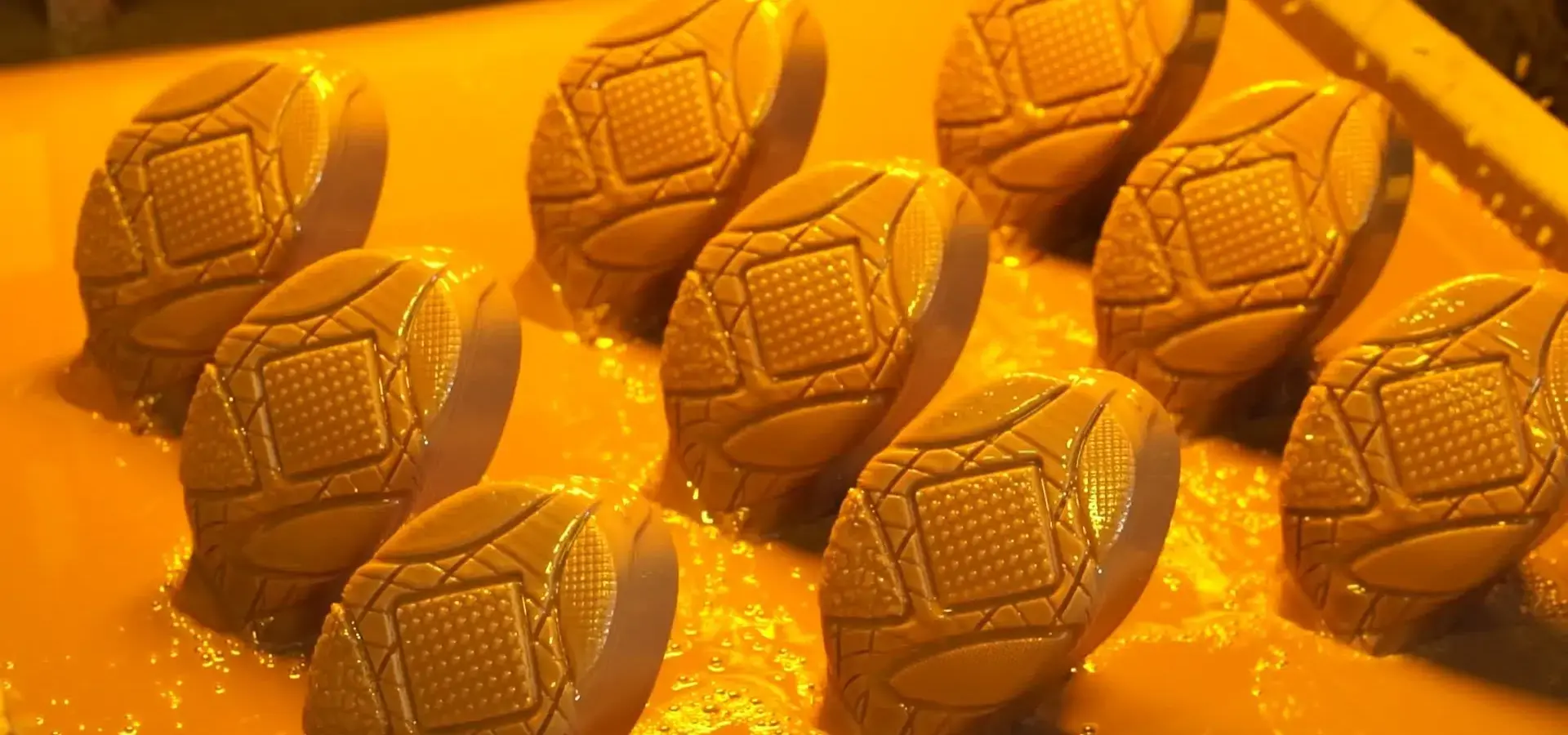
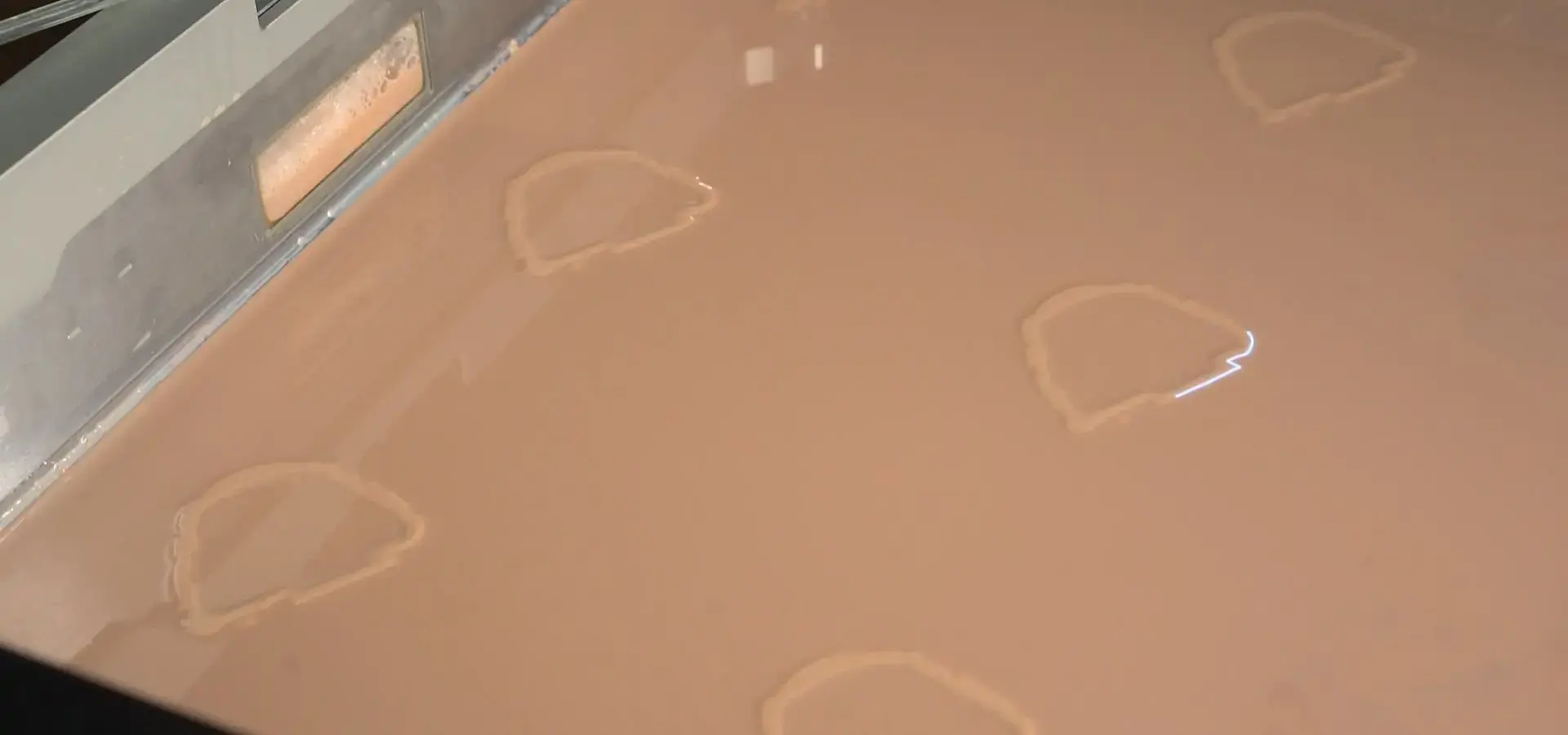
Additive manufacturing technology revolutionizes shoe production by employing environmentally friendly principles. Unlike other methods that take material off of bigger sheets or blocks, 3D printing for shoes makes parts layer by layer, using only the exact amount of material needed for each design. According to ASTM additive manufacturing classifications, SLA belongs to the vat photopolymerization category and is widely recognized for its high dimensional accuracy, smooth surface finish, and precision detail reproduction in industrial prototyping applications.
When you switch from subtractive to additive methods, you immediately cut down on waste. A shoe 3D printer only puts material where it's needed, so there is none of the trash that usually happens during cutting (15–30%). In footwear development, SLA and LCD-based resin printing systems are widely used for high-precision prototyping, mold verification, customized components, and lattice structure evaluation before mass production. Compared with subtractive manufacturing methods, SLA shoe 3D printing significantly improves material efficiency because resin is selectively cured only where needed. However, support structures, resin aging, and post-processing still generate some material waste that must be properly managed. When working with high-end elastomeric materials like thermoplastic polyurethane and expanded polyurethane blends, this economy is even more important.
Being able to produce things on demand may be the most important environmental benefit. With industrial 3D printing systems, factories can switch from mass production based on guesswork to make-to-order models that are more sensitive to customer needs. Traditional shoe supply lines have a problem with making too many shoes, but this operating flexibility fixes that problem. Instead of keeping actual stockpiles of designs, brands can keep digital inventories of them and only make specific sizes and changes after getting confirmed orders. This method gets rid of the environmental damage caused by stock that doesn't sell, and it also cuts down on the need for storage space and the energy used for it.
Material Innovation and Eco-Friendly Options
Improvements in material science have made it possible for more eco-friendly materials to be used in additive production for shoes. Bio-based materials such as modified PLA blends may be suitable for concept models, packaging components, or non-load-bearing footwear prototypes, although most performance footwear applications still rely on engineering-grade elastomeric materials such as TPU-based resins.
Recycled thermoplastic polyurethane formulations now have the right performance qualities for tough jobs like the midsoles of sports shoes. These materials reuse plastic trash from businesses or consumers, keeping it out of dumps and lowering the need for new materials made from oil. Material scientists are still working on bio-based polyurethane alternatives that are made from plant oils. These offer renewable sources without sacrificing the flexibility and toughness that are needed for footwear uses.
Energy Efficiency Improvements
Specifically made a shoe 3D printer equipment for making shoes that uses energy-saving technologies that lower the carbon footprint of operations. Industrial SLA photopolymer systems generally operate at lower processing temperatures than conventional injection molding, which can help reduce thermal energy consumption during footwear prototyping and low-volume production. They use a lot less energy than the high-heat injection molding methods they replace. Intelligent exposure control and optimized scanning strategies in industrial SLA systems help improve printing efficiency while maintaining high dimensional accuracy and surface quality.
Adding green energy sources to production sites is another way to make them more environmentally friendly. Adding solar or wind power is easier to do with additive manufacturing equipment because its power needs are more stable than those of injection molding processes, which have peak loads. When paired with clean energy infrastructure, this compatibility makes additive printing a way to make shoes that don't produce any carbon.
The model of localized production made possible by distributed manufacturing networks cuts transportation pollution by a huge amount. Instead of sending parts around the world to be put together centrally, local markets can be served by regional production sites that have additive manufacturing systems. This localized method cuts down on supply lines, the amount of packaging needed, and the time it takes to respond to regional tastes, all without the environmental damage that comes with long-distance shipping.
Case Studies: Leading Brands and Innovative Applications in Sustainable Shoe 3D Printing
Real-world examples of additive manufacturing in footwear show that environmentally friendly production methods can work. They also give buying workers useful information when they are deciding what technologies to buy.
Several leading footwear brands have explored photopolymer-based 3D printing technologies for lattice structure development, customized cushioning design, and rapid footwear prototyping. This partnership showed how advanced 3D printing technology can be used to make many different things without all the waste that comes with standard manufacturing. Algorithmic design creates grid shapes with varying cushioning zones, tailored to biomechanical data. This gives performance benefits that can't be achieved with regular shaping. Instead of having a central factory, production happens through a network of manufacturing partners. The study shows that the distributed manufacturing model has the ability to cut down on traffic emissions while keeping quality standards high.
Material Circularity in Practice
Several shoe companies have started closed-loop recycling schemes that use 3D-printed parts. These programs gather used shoes, sort the materials, and turn compatible plastics back into raw materials for new production processes. In SLA-based footwear workflows, sustainability efforts are increasingly focused on recyclable resin systems, reduced support generation, and optimized print orientation to minimize resin waste. Tracking programs for materials' lifecycles give companies the information they need to meet their sustainability reporting standards and build trust with customers by showing they care about the environment.
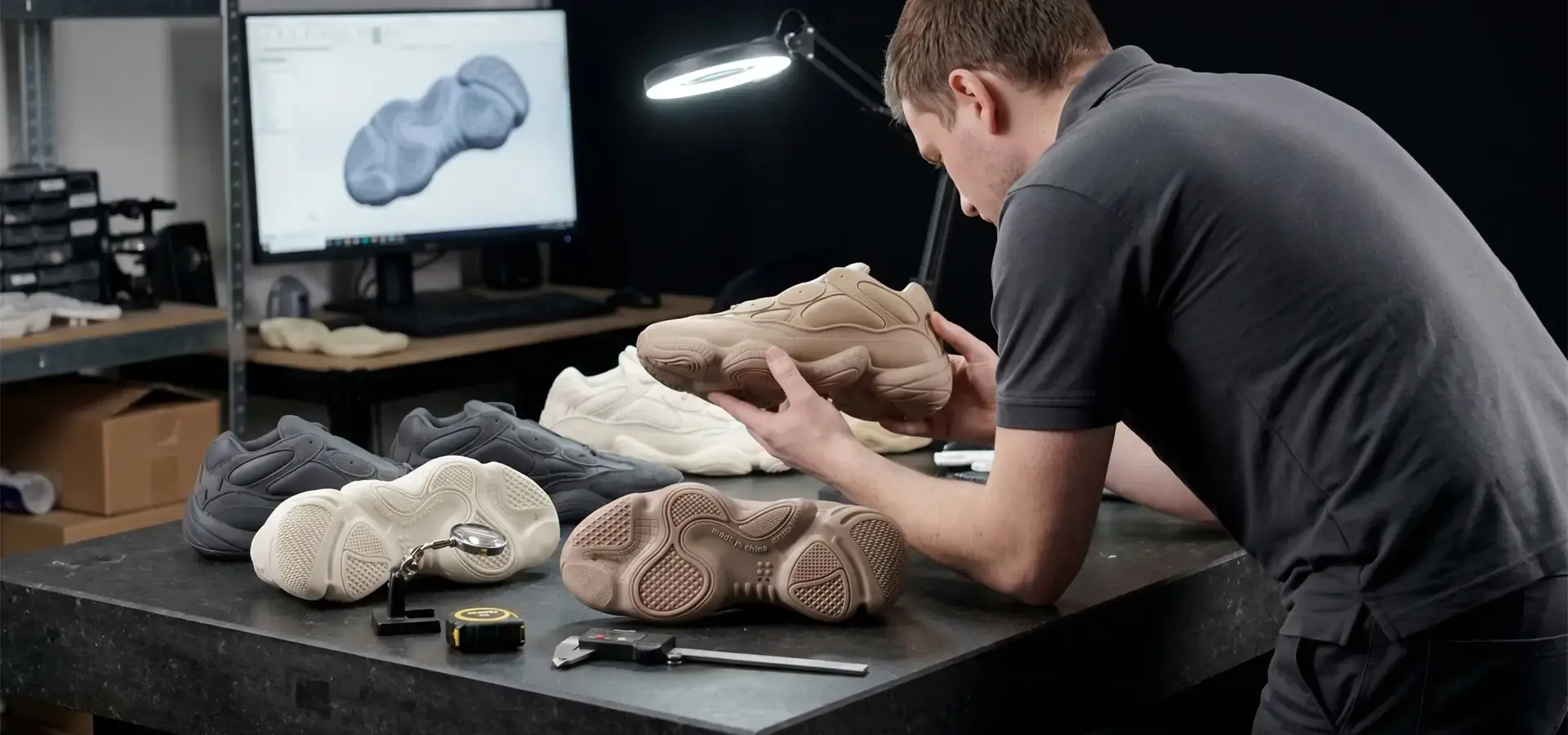
Through agreements with companies that make specialized tools, Footwear manufacturers increasingly use industrial SLA systems for rapid design validation, customized footwear development, and precision mold verification, helping reduce tooling waste and shorten development cycles. SLA-printed prototype midsoles with lattice structures allow footwear developers to evaluate cushioning distribution, structural geometry, and design performance before mass-production tooling begins. Being able to introduce changes to designs online instead of making physical molds cut development times from months to weeks. This cut down on prototype waste and made it possible to respond quickly to athlete input. Because of this flexibility, smaller production runs can be made for niche markets that standard manufacturing economies can't support.
Small-Batch Production Advantages
Affordable industrial SLA shoe 3D printer systems are being used by new shoe brands and companies that make custom orthotics to serve specific markets. Medical-grade shoe insoles that are made to fit each person's pressure maps and walking analysis data show how additive manufacturing can be used in specialized healthcare. Traditionally made orthotics can't be produced on a large scale or at a low cost, but SLA and LCD shoe 3D printer systems enable efficient production of customized orthotic prototypes and patient-specific insole designs without requiring dedicated tooling for each geometry.
Some high-end fashion brands use additive manufacturing to make limited-edition items and idea designs that show off new ways of looking at things. According to these apps, consumers are open to wearing 3D-printed shoes, and they also help brands stand out. Because you can make small amounts without having to meet the minimum order requirements that most injection molding suppliers have, you can try new things without taking on too much financial or environmental risk. It's now possible to make designs that are too complicated to use expensive multi-cavity molds. This encourages new ideas that push the limits of the industry.
Advanced SLA resin formulations allow footwear developers to evaluate flexibility, fit accuracy, lattice geometries, and structural performance during prototype testing and product optimization. The fact that trail running shoes have stronger areas, where they will be worn down the most, and areas that are softer for comfort, shows how the ability to grade materials in 3D printing can improve product performance. This accuracy lowers the number of early failures, which extends the life of products and lowers the number of times they need to be replaced. This is an environmental benefit that is often ignored in favor of more obvious measures to cut down on waste.
Challenges and Considerations in Implementing Eco-Friendly Shoe 3D Printing Solutions
When purchasing managers look at investments in additive manufacturing for making shoes, they need to think about a number of technical and economic factors that affect the success of the application.
Material performance is always a worry, especially when it comes to long-term consistency and sturdiness. Even though recycled and bio-based polymers are better for the earth, some formulations don't have as good of mechanical qualities as virgin petroleum-based options. Biodegradable materials might not last as long in demanding sports settings where customers expect success over multiple years. When buying things, procurement teams have to carefully match the properties of the materials to the needs of each application. They have to be aware that not all parts work well with eco-friendly options.
When new materials or ways of making things are used, testing procedures become very important. For example, ASTM D412 for elastomer qualities and ISO 20344 for safety footwear must be checked against when shoes are made for sports performance. Some organic materials are easily broken down by water or break down faster in certain environments, which could limit their shelf life or their ability to be sold in certain areas. Comprehensive testing programs add time and money to the development process. Procurement managers who are watching their budgets must take these into account when figuring out how long the whole project will take.
Capital Investment and Economic Considerations
Industrial-grade shoe 3D printer systems, capable of producing shoe parts at a commercially viable speed, necessitate a significant upfront investment. Small and medium-sized businesses need to carefully look at their return on investment timelines, comparing the initial costs of equipment to the money they expect to save from not having to buy as many tools, getting rid of waste, and making the best use of their goods.
Operating costs include more than just buying tools. They also include things like supplies, repairs, and expert staff. Over time, getting rid of tooling costs saves a lot of money, but the cost of advanced elastomeric plastics per unit is often higher than the cost of standard molding compounds. Even though it uses less energy per turn than injection casting, it adds up over the long print times needed for complex shapes. To get an accurate total cost of ownership calculation, these ongoing costs must be added to productivity measures in order to find out if a production situation is economically viable.
Regional Regulatory Variations
Environmental certifications and compliance rules are very different across the world's biggest shoe markets. This makes it harder to choose a seller and figure out what materials to use. The European Union has different rules about chemicals in products and who is responsible for them when they reach the end of their useful life than the United States. Also, emerging markets may not have fully developed legal systems. To keep from having trouble getting into new markets, procurement managers who are in charge of global operations must make sure that the tools and products they choose meet the strictest standards.
As more consumers and business buyers expect openness, third-party certifications that back up claims of sustainability have become more important. For certifications to check recycled content amounts, biodegradability claims, or carbon footprint estimates, paperwork and tests are needed, which adds to the work that needs to be done. Sellers of equipment and materials that offer pre-certified choices make compliance easier, but buyers shouldn't just trust what vendors say; they should also check claims on their own.
Technical expertise requirements present another implementation challenge. To use complex additive manufacturing tools, you need to know a lot about CAD software, material science, and process optimization. Companies that are switching from standard manufacturing may not have enough employees with the right knowledge, so they may need to spend money on training or hire people from outside the company. The quality of technical help from equipment providers is very important, especially during the early stages of deployment, when production teams are learning how to use the equipment. People who use 3D printing technology for shoes often complain that it takes too long to fix technical problems, which can seriously mess up production plans.
Future Trends and Strategic Insights for Sustainable Shoe 3D Printing
The way additive manufacturing technology is developing shows that it will keep getting better at making sustainable shoes, which can be a good thing for buyers who are thinking ahead.
More and more new software includes artificial intelligence methods that improve both the spread of materials and the performance of structures at the same time. Generative design tools look at thousands of possible geometries based on certain performance factors and manufacturing limits. They find solutions that human designers might not think of. These computer methods make the best use of materials and improve product performance, which helps with both ecology and standing out from the competition. As these software systems get better and easier to use, they will make advanced design tools available to more companies than just those with a lot of technical resources.
Next-Generation Materials Development
Material science studies are still finding good options for polymers made from petroleum. New choices like mycelium-based composites, bioplastics made from algae, and advanced recycled ocean plastic formulations could be financially possible within the next development cycle. When material producers and equipment makers work together, they can make sure that new feedstocks will work with printing systems. This shortens the time it takes to get new products on the market. Companies can benefit from more sustainable practices without having to buy all new tools if their purchasing strategies allow them to adapt to new materials as they become available.
Production Network Decentralization
Combining additive and traditional manufacturing methods into hybrid approaches lets you use the best parts of each while minimizing the problems. The uppers of shoes made with automatic knitting or other advanced textile processes can be combined with 3D printed soles. This combines the ease and good looks of fabric construction with the performance and flexibility of additively manufactured midsoles. This combination needs coordination between supply chain pieces that are usually kept separate, but it opens up optimization possibilities that aren't possible when parts are handled separately.
As equipment costs go down and software systems make it easier to handle production across multiple sites, distributed manufacturing networks are becoming more and more economically viable. Regional production sites that serve local markets cut down on pollution caused by transportation while also speeding up delivery and letting companies quickly adapt to what people in the area want. This business model works especially well for brands that want to talk about sustainability, because a simpler supply chain has real environmental benefits that go along with sustainability features on the product level.
When buying strategic tools, you need to keep in mind that technology standards and upgrade paths are always changing. When you can upgrade parts of a system without having to replace the whole thing, you can extend the life of your capital investments and still get efficiency gains. Early obsolescence can be avoided by including technology roadmap access and upgrade terms in procurement deals. This is a big worry because additive manufacturing skills are improving so quickly.
More and more chances are opening up for shoe companies and tech companies to work together. Through joint development programs, brands can affect the development goals for both tools and materials. This makes sure that new solutions meet the needs of the industry rather than just theoretically being able to do so. As part of these relationships, companies often get early access to new technologies or the chance to work together on marketing, which gives them competitive advantages that go beyond just business benefits. Procurement professionals should evaluate potential sellers not only based on what they offer now but also on how much they spend in research and how they work with others to solve problems that are unique to their business.
Conclusion
Although a successful application requires careful planning and reasonable expectations, shoe 3D printer technology offers significant environmental benefits compared to conventional footwear manufacturing methods. Cutting down on material waste, using on-demand production models, and making energy use more efficient are all great ways to help the environment and are in line with government regulations and business environmental goals. New materials are always being made that are better for the environment, and real-life case studies show that these materials can be used in a variety of market areas. Durability, initial investment prices, and professional know-how are still problems that need to be thought about, especially for small and medium-sized businesses. As technology keeps getting better, additive manufacturing is becoming a more important part of making shoes that are good for the environment. Companies that care about the environment as well as improving efficiency and coming up with new products, should invest in this technology.
FAQ
How do 3D printed shoes compare environmentally to traditionally manufactured footwear?
Through exact material deposition, SLA and other additive manufacturing technologies for footwear can significantly reduce material waste compared with conventional subtractive manufacturing and tooling-intensive production methods, because material is selectively cured only where needed during the printing process. Different methods and output sizes use different amounts of energy per unit, and in many prototyping and low-volume production scenarios, industrial SLA systems may reduce overall energy consumption compared with traditional tooling-intensive manufacturing workflows. On-demand production gets rid of trash from overproduction, which has big environmental benefits over the course of a product's life, even if it costs more per unit.
What sustainable materials work best for footwear applications?
Recycled thermoplastic polyurethane is the best choice for hard uses like athletic shoe midsoles because it is good for the environment and performs well. Bio-based PLA materials may be suitable for concept models, packaging applications, or non-load-bearing footwear prototypes. When choosing materials, you have to weigh the environmental goals against specific performance needs, expected longevity, and cost limits. New formulas that use post-consumer recycled material keep getting better, giving more shoe market groups more choices.
Are 3D printed shoes durable enough for athletic performance applications?
Modern industrial SLA and photopolymer systems can produce elastomeric components with increasingly competitive flexibility and detail resolution, although long-term durability and fatigue resistance may still differ from traditionally molded TPU footwear components. Lattice structures created using computer design can work better than regular foam at returning energy and providing the right amount of padding. The durability varies significantly based on the material used, the optimization of the design, and the application's requirements. It is still necessary to do rigorous tests against industry standards to back up performance claims and make sure that goods live up to what customers expect for long-term use in tough circumstances.
Partner with Magforms for Sustainable Footwear Manufacturing Solutions
Making the switch to making shoes that are better for the environment takes more than just buying new tools. You need a partner who knows a lot about materials, equipment, and how to get the most out of each application. Magforms has decades of experience using industrial additive manufacturing in footwear. They offer combined solutions that cover the whole production process, from designing the shoes to making the finished parts.
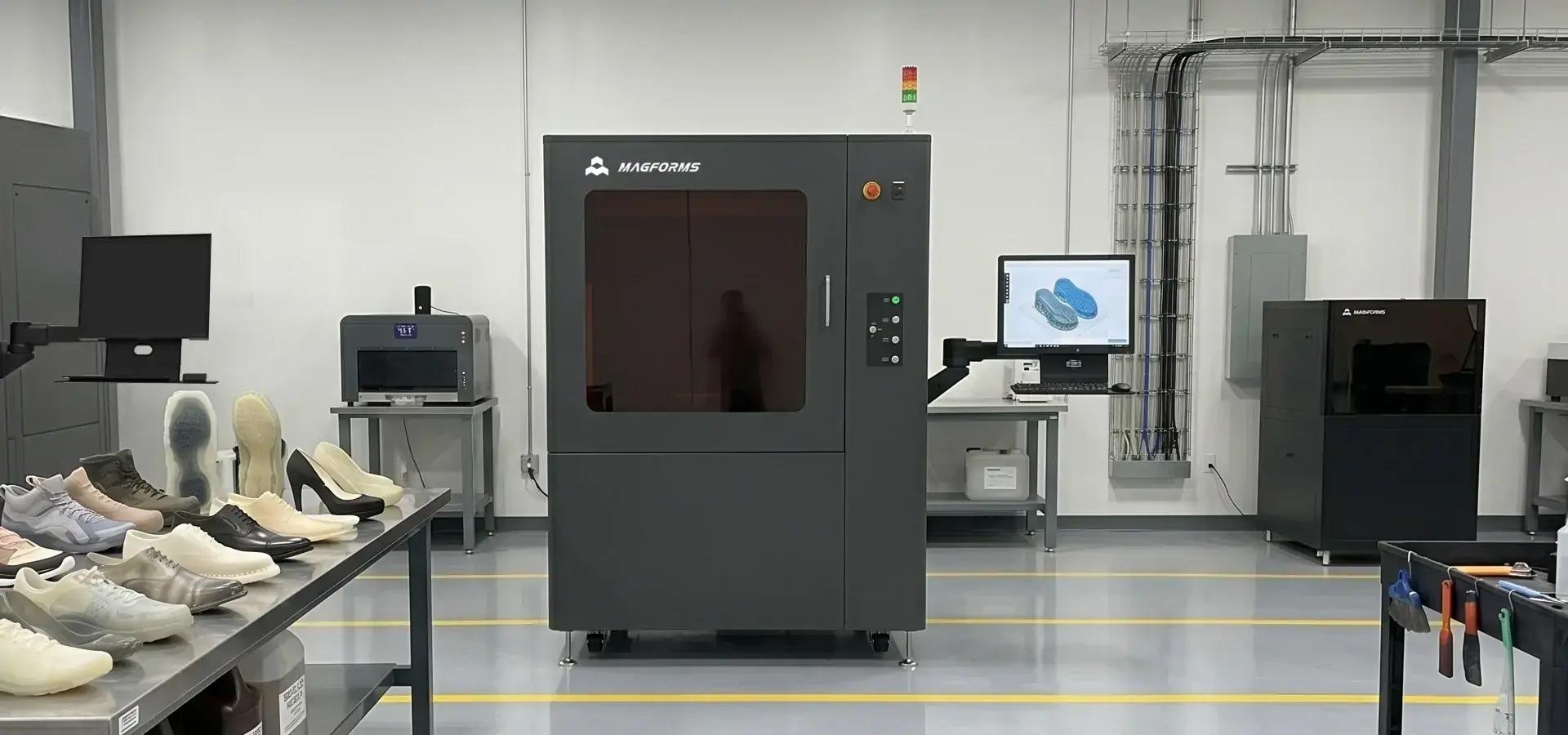
Our own 3D shoe printer systems for shoes give you the accuracy, speed, and dependability you need to make shoes for business. With variable spot-size laser technology and AI-optimized scanning routes, speed goes above and beyond the norm in the industry while high dimensional accuracy and fine surface detail suitable for footwear prototyping and mold verification applications. Deep interaction between our self-developed materials and printing equipment helps reduce material compatibility challenges commonly encountered in third-party resin ecosystems that happen when makers use third-party material combinations. This makes sure that results are always the same and debugging time is kept to a minimum. As a company that has been making 3D shoe printer systems for a long time, we know the special needs of footwear users and build systems that meet those needs.
Get in touch with our applications engineering team at info@magforms.com to talk about how Magforms shoe 3D printer solutions can help you meet your environmental goals while also making production better and leading to new products. We do thorough reviews of your capabilities, offer sample production services, and make implementation roadmaps that are tailored to your exact operational needs and business goals.
References
1. Jiang, M., & Wu, L. (2021). "Environmental Impact Assessment of Additive Manufacturing in Footwear Production: A Comparative Life Cycle Analysis." Journal of Cleaner Production, 285, 124-136.
2. Thompson, R., & Hassan, K. (2020). "Sustainable Materials for 3D Printed Footwear: Performance Characteristics of Bio-Based and Recycled Polymers." Materials Science and Engineering Reports, 142, 78-95.
3. Chen, Y., Rodríguez, P., & Kim, S. (2022). "Energy Efficiency in Digital Manufacturing: Comparative Analysis of Additive and Conventional Footwear Production Methods." International Journal of Sustainable Manufacturing, 15(3), 234-251.
4. Anderson, T., & Patel, N. (2021). "Circular Economy Strategies in Athletic Footwear: Case Studies in Material Recovery and 3D Printing Applications." Sustainability in Fashion and Textiles, 8(2), 167-184.
5. Williams, D., Martinez, F., & Zhang, H. (2023). "Technical and Economic Feasibility of On-Demand Footwear Manufacturing Using Industrial Additive Manufacturing Systems." Advanced Manufacturing Technology Review, 19(1), 45-68.
6. European Commission Directorate-General for Environment. (2022). "Environmental Footprint Assessment of Footwear Manufacturing: Traditional versus Additive Manufacturing Pathways. "EU Sustainability Research Report," Publication Office of the European Union, Luxembourg.

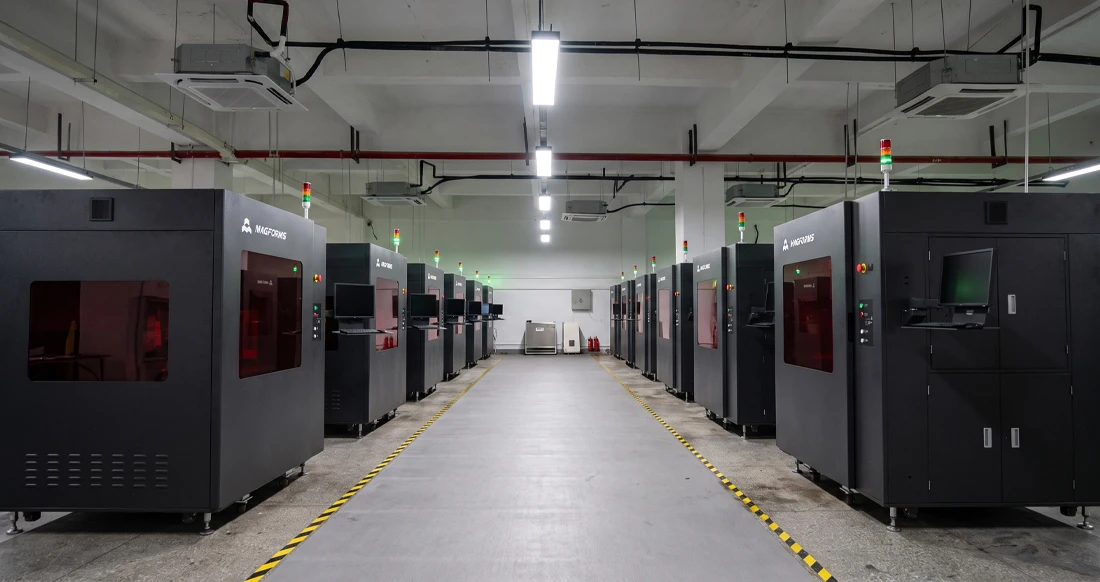
Magforms makes design and manufacture easier.
Popular Blogs
-
 Industry InsightsManufacturing Industry
FDM vs. SLA Printer: Which Technology Is Right for Your Project?
-
 Industry InsightsManufacturing Industry
Top 5 Applications of Industrial 3D Printers in Manufacturing Today
-
 Industry InsightsManufacturing Industry
Why Stereolithography 3D Printers Are Unmatched for Microfluidic Device Prototyping?