Best Practices to Optimize Workflow on an Industrial SLA 3D Printer System
Improving the industrial SLA 3D printer's process directly raises production output, lowers material waste, and raises the standard of parts. Best practices include making pre-print file preparation faster by making sure the model is oriented correctly and supports are placed intelligently, following consistent resin management protocols to keep the model clean, planning preventative maintenance to avoid unplanned downtime, and improving post-processing methods like automated washing and UV curing. Manufacturers can meet tight production plans in aircraft, automotive, medical, and consumer electronics by using advanced features like variable laser spot technology and real-time process monitoring and closed-loop control systems. These features help them achieve repeatability and precision.
Understanding the Industrial SLA 3D Printing Workflow
A high-precision UV laser specifically cures liquid resin layer by layer in stereolithography additive production. This process is called photopolymerization. The laser source, galvanometer scanning system, resin vat, and controlled build platform are the main parts of an industrial SLA 3D printer that all work together to make the printer work. Each part affects the quality of the end part and how well the process works.

Core Process Steps in SLA Printing
Slicing software turns CAD files into stacked cross-sections to start the printing process. The build base is lowered into the resin vat, and a laser lines up each cross-section on the top of the liquid. Once the curing process is complete, the build platform moves along the Z-axis, allowing fresh liquid resin to reflow over the newly solidified layer. Before the next exposure cycle, a recoater blade makes sure that the resin is spread out evenly. When production managers understand these steps in order, they can figure out where delays or mistakes might be coming from, which lets them make focused changes.
Key Performance Metrics That Define Workflow Success
Three main factors determine how well a SLA process works: print speed, which is measured in millimeters per hour; dimensional accuracy, which is shown by positional variation across the XYZ axes; and surface finish quality, which is shown by roughness values. German Scanlab galvanometers and AOC lasers can enable scanning speeds of up to 6 to 10 meters per second under optimized industrial configurations, which has a direct effect on output. Platform positioning with dimensional accuracy of up to ±8 micrometers makes sure that parts meet technical limits for direct assembly confirmation. Surface roughness values below one micrometer can significantly reduce or minimize the need for additional finishing steps, which lowers the overall cost of production.
Common Workflow Bottlenecks That Limit Production Efficiency
In many work settings, problems that keep happening limit productivity. When engineers physically align parts or make supports without optimization tools, print preparation takes too long. When temperature control isn't done well, the thickness of the resin can change, which means that it doesn't cure completely and fails more often. Delays happen after processing when cleaning and drying steps are done by hand and are not standardized. Hardware problems that cause equipment to stop working can throw off schedules, especially if it takes a long time for replacement parts or expert help to appear. By identifying these bottlenecks, it's easy to see where improvements to process will have the most impact.
👉 Understanding Stereolithography (SLA) Technology
Identifying and Breaking Performance Bottlenecks in Industrial SLA Printing
The first step in optimizing production is to take a careful look at how well the current system is working. Comparing real output to ideal capacity shows inefficiencies that were not obvious. Tracking how much material is used for each effective part shows where trash is coming from. By writing down trends of frequency and accuracy shift during calibration, maintenance gaps can be found.
Conducting a Comprehensive System Performance Audit
Every step of the industrial SLA 3D printer printing process is looked at in a thorough audit. Check to see if CAD file types make splitting more efficient or add extra work that isn't needed. Check to see if the way resin is stored follows the manufacturer's instructions for light and temperature. Check the build platform for differences in flatness that could make it harder for the first layer to stick. Check that the laser's power level stays the same over long print runs. When using Panasonic servo motors in equipment, the platform placement accuracy stays within ±8 micrometers, but when using cheaper parts, they drift outside of accepted limits over time. This methodical approach finds the exact spots where action will make the most difference.
Implementing Calibration and Maintenance Best Practices
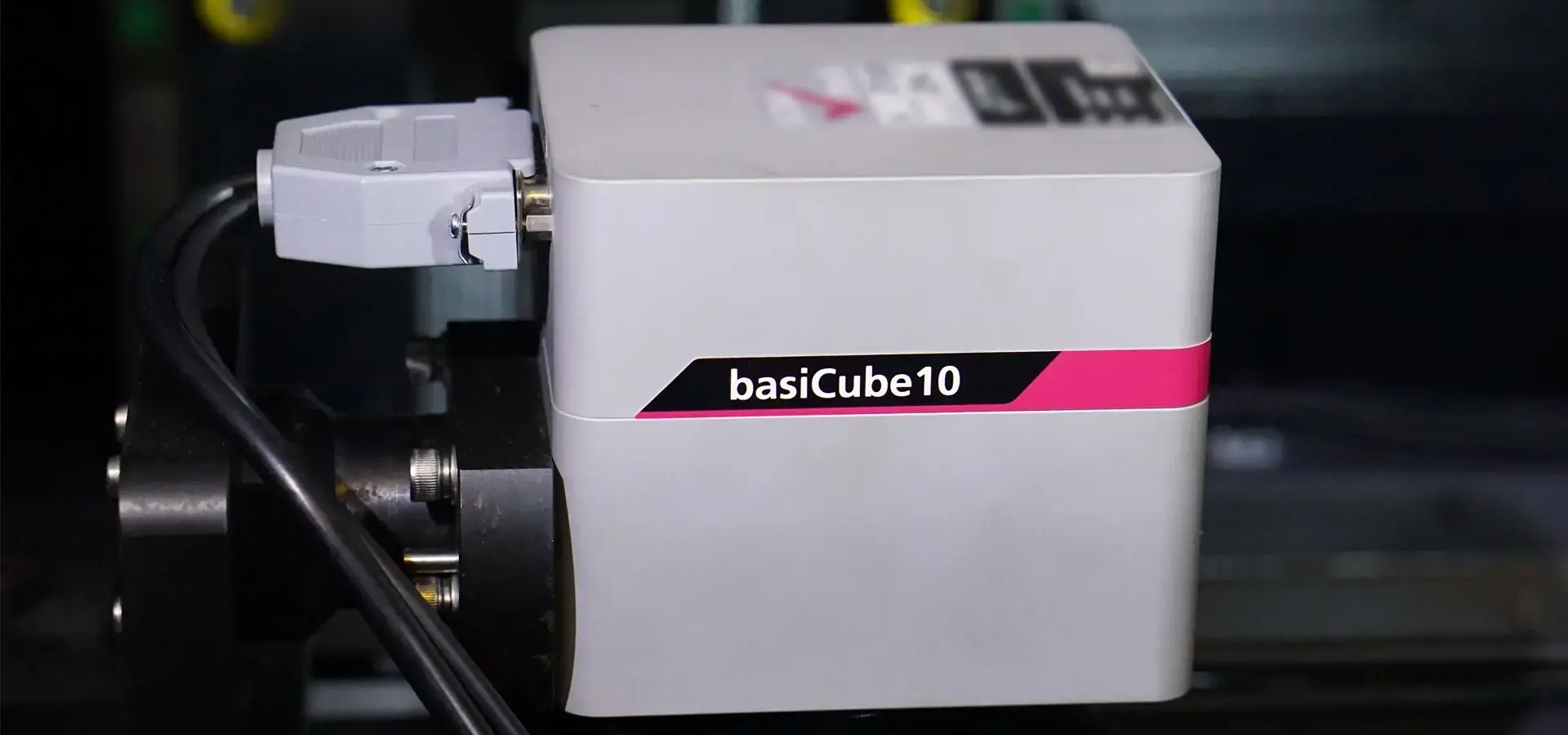
Regular tuning keeps precision from getting worse over time. The evenness of curing is affected by how circular the laser spots are. Equipment with modern galvanometer systems keeps the spots almost perfectly circular across the whole build area. When the recoater blades are lined up correctly, the resin layers are even and minimizing streaks or air pocket formation. Platform flatness testing with accurate measuring tools finds curvature before it affects the quality of the part. When machines are built with low-expansion marble bases and HIWIN linear guides from Taiwan, they don't let temperature change during long production runs. Setting calibration plans based on actual print hours instead of calendar days makes care more in line with how the Industrial SLA 3D Printing system is actually used.
Real-World Case Studies Demonstrating Measurable Improvements
After putting in place optimized support generation methods and standardized post-processing processes, a car prototyping center cut the number of part iteration rounds by 40%. By switching to changeable laser spot technology that can change between 0.5 millimeter infill spots and 0.15 millimeter contour spots, a dentistry lab was able to increase daily output from 45 to 68 aligner models. A company that makes airplane parts got rid of 90% of complaints about measurement accuracy by moving to machines with built-in temperature control systems that keep the resin fluid even when the temperature changes in the room. Targeted workflow improvement leads directly to a competitive edge, as shown by these results.
👉 Industrial SLA 3D Printing Categories & System Types
Optimizing Key Workflow Dimensions for Industrial SLA Printers
Three important parts of the processes need to be carefully watched over in order to achieve operational excellence: pre-print preparation, material handling, and post-processing. When done in a planned way, each stage offers different chances to improve speed for industrial SLA 3D printers.
Efficient Print Preparation Methods That Reduce Failures
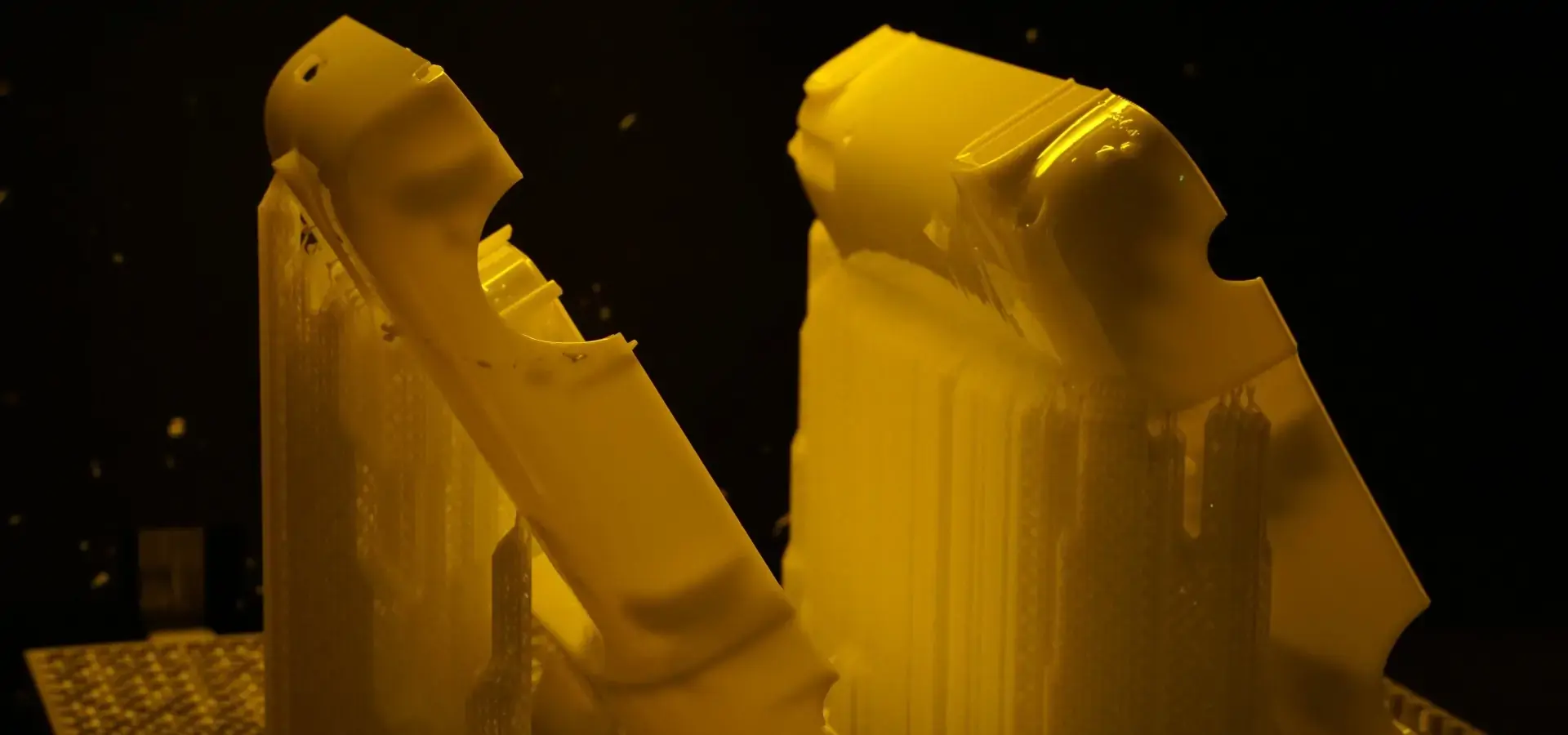
The right model position reduces the need for support while improving the surface finish on important faces. By hollowing out solid shapes, less photopolymer resin is consumed and print times are cut down without any loss of structural integrity. Intelligent support placement algorithms find the right mix between how easy it is to remove the support and how well it anchors during the healing process. Software that can change the thickness of layers can adjust the resolution to the complexity of the shape, only adding finer layers where the quality of the surface calls for them. When used with easy-to-use slicing tools like Magforms' iBuild 2.0, this process is sped up by clean interfaces that work smoothly on all devices, even mobile ones.
Material Selection and Handling Best Practices
When you source resins from different companies, you can save money because open material systems don't have proprietary locks. Most resins with a wavelength of 355 nanometers will still work with each other, so users can try different combinations for different uses. Proper storage maintains resin stability and prevents premature polymerization or sedimentation; containers should be kept closed and stored between 18 and 28 degrees Celsius. Before each print run, resin screening gets rid of finished particles that could damage optical parts or make surface flaws. Temperature control features built into modern systems keep flow at its best no matter what the outside conditions are, so prints don't fail when temperatures change with the seasons.
Advanced Post-Processing Techniques for Consistent Quality
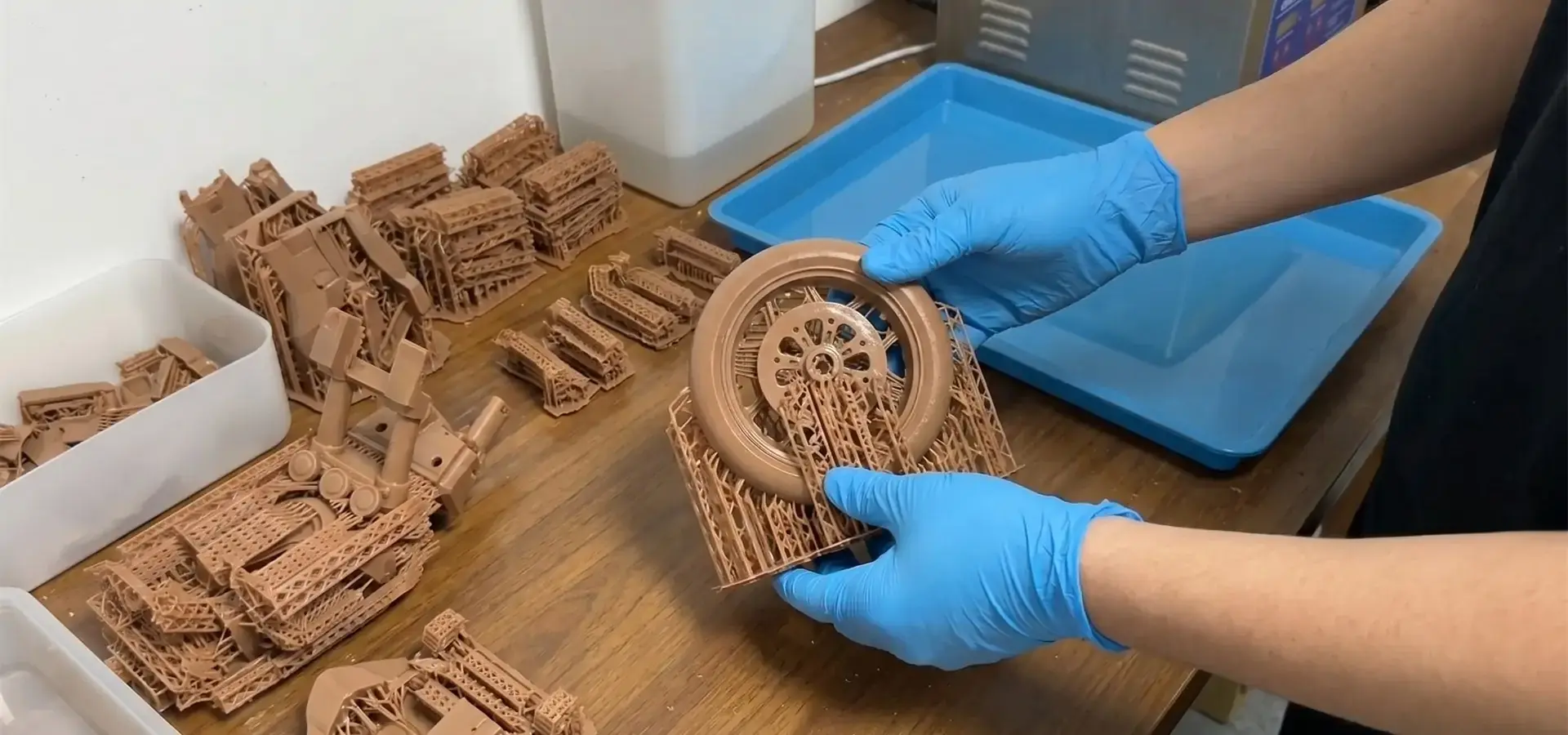
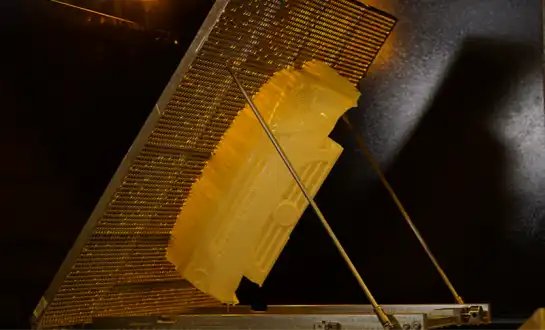
Automated washing systems are better than human methods at getting rid of uncured resin, especially from internal pathways that are hard to reach. The percentage of isopropyl alcohol should stay above 90% so that water doesn't soak in and weaken the mechanical qualities. UV curing rooms with controlled strength and length make sure that photopolymerization is complete without too much contact, which can make the material brittle. When support rods are angled in equipment designs, printed parts can drain extra resin back into the vat more effectively. This cuts down on cleaning time and material waste. Grayscale exposure techniques help reduce visible layer lines and improve surface smoothness, bringing parts closer to injection-mold-level surface quality in visual appearance and texture consistency in appearance.
Choosing the Right Industrial SLA 3D Printer for Your Workflow Needs
Choosing the right equipment is the most important choice when it comes to long-term production. The perfect system strikes a mix between technical requirements and total cost of ownership, while also leaving room for growth as production needs change for an industrial SLA 3D printer.
Critical Technical Parameters for Procurement Evaluation
The largest size of a part without division is set by the build volume. For medical uses, making full-arch dental models needs enough Z-height for vertical stacks, while dashboards for cars need large XY planes. The smallest feature detail is controlled by the size of the laser spot. Micro-spots between 0.15 and 0.2 millimeters allow for complex grid structures and small text. Accurate platform placement is directly related to meeting dimensional tolerances; standards tighter than ±10 micrometers allow working parts to be directly manufactured. Throughput is based on scanning speed; systems that can do 12 meters per second can finish a lot of tasks faster than systems that can only do 3 meters per second. Material support breadth makes sure that apps can change over time.
Comparing Leading Manufacturers and Their Unique Strengths
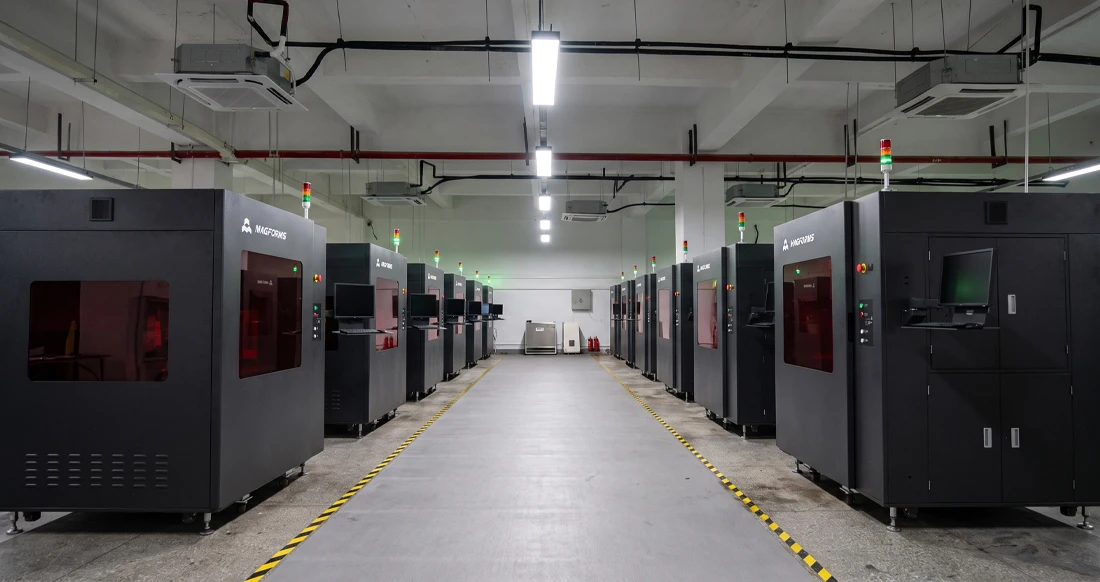
There are both well-known players and new, creative rivals in the market. Legacy makers built their names on dependability, but their proprietary systems often make it hard to do important things. New brands use open designs, which lower the cost of doing business. Magforms stands out because it engineers both materials and tools together, which gets rid of the compatibility problems that come up in settings with a lot of different vendors. Industrial production cycles that go on 24 hours a day, seven days a week, are stable when AOC lasers are used in the equipment. Galvanometers made by the German company Scanlab provide accurate scanning lines that stay accurate for millions of contact cycles. Platform, recoater, and liquid level controls can move quickly and without errors thanks to Panasonic servo motors. Schneider electrical components ensure system reliability, while UV shielding enclosures help protect operators from exposure to UV radiation.
👉 SL800 Industrial SLA 3D Printer System
Total Cost of Ownership Considerations Beyond Purchase Price
The initial capital cost is only a small part of the total costs over the life of the asset. Costs that keep coming up, like resin, recoater films, and new optical windows, add up quickly. The rules of the service contract say whether simple repairs take days or hours of downtime. Models for selling software have an impact on long-term budgets; permanent licenses avoid fees that keep coming up and cut into profits. Using widely known parts in equipment makes it easier to find parts and cuts down on the time it takes to fix problems. Machines with failure rates of less than 1% are more productive and use less scrap material, which saves money. Professional after-sales teams that react within 24 hours keep project timelines from getting thrown off by plan changes.
Implementing Lean Workflow Strategies to Sustain Industrial SLA Printing Efficiency
For long-term success, models for continuous improvement must change as output needs do. As materials change, workers leave, and equipment gets older, static processes get worse over time. By using focused optimization, lean manufacturing concepts can be applied to an industrial SLA 3D printer to keep businesses competitive.
Establishing Measurable KPIs for SLA Operations
Metrics that can be measured allow for precise tracking of success. The first-time print success rate shows how often parts print the first time correctly. Scheduling efficiency is shown by the average build time per component. The material output rate shows where waste is coming from. The pass rate for the dimensional accuracy check shows how consistent the quality is. Concerns about dependability are raised by the length and frequency of downtime. The self-learning scanning systems in the equipment constantly improve print lines based on past experience, making speeds up to 20% faster than the standard performance. Keeping track of these changes proves that technology investments were worthwhile and helps plan future updates.
Building a Culture of Continuous Improvement
Cross-functional teams find ideas that groups that work alone would miss. Production workers see trends of calibration shift that happen over and over again. Engineers find parts of the design that make it harder to remove supports. Procurement experts keep track of differences in how well materials work from one provider to the next. Regular review meetings turn these views into process improvements that can be used. Tribal information is recorded by documentation tools before staff changes happen. Training programs make teams with a wide range of skills that can solve typical problems without needing outside help.
Integrating Automation and Monitoring Software
Anomalies are found before they affect the quality of the part through real-time process tracking. Laser power monitors let workers know when output drops, and mirrors need to be cleaned or realigned. Dry runs that damage vat membranes are stopped by resin level sensors. Temperature monitors make changes to the climate control system so that the best conditions for printing are always met. Engineers can figure out what's wrong and change settings without having to go to the production floors thanks to remote access. Cloud-based systems collect data from many computers and show trends that can't be seen at the level of a single computer. These computer tools add to human knowledge, not take it away.
Conclusion
To get the most out of an industrial SLA 3D printer's workflow, you need to pay careful attention to the planning, execution, and post-processing steps. By understanding the core parts and speed metrics, you can make focused changes that get rid of bottlenecks. Consistent quality is achieved by following calibration procedures, best practices for material handling, and improved post-processing techniques. The total cost of ownership goes down when you choose tools with proven component dependability and open material architectures. Setting up lean processes with measurable KPIs, a mindset of ongoing improvement, and monitoring automation keeps the gains over time. When manufacturers follow these best practices, they get higher throughput, lower prices per part, and better accuracy in measurements for a wide range of demanding uses.
FAQ
What factors most impact print success rates on industrial SLA systems?
The healing uniformity is directly affected by the quality of the material and how it is stored. Surface flaws are caused by dust or other unwanted particles getting into the resin. Temperature changes affect viscosity, which makes layer production less thorough. The precision of the calibration tells us if the laser is focusing properly across the whole build platform. Machines that have temperature control built in keep the resin's flow at its best no matter what the outside temperature is, so they don't break when the weather changes with the seasons.
How often should industrial SLA equipment undergo calibration?
The regularity of calibration is based on how often it is used, not on a date. Equipment that works all the time needs to have its platform smoothness, laser spot circularity, and recoater alignment checked once a week. Machines that are used intermittently may maintain calibration stability over a period of approximately one month, depending on environmental conditions and system design. Systems made with precision HIWIN linear guides and low-expansion marble bases don't drift as much as systems made with normal metal frames.
Can workflow optimization compensate for hardware limitations?
Process changes make a big difference in what the tools can do, but they can't get around basic hardware limitations. Dimensional errors caused by old galvanometers can't be fixed by better positioning and supports. Fine post-processing can't bring back details that were lost because of laser spots that are too big. By choosing tools with better core components, you can build a solid basis for optimizing workflow.
Partner with Magforms: Your Trusted Industrial SLA 3D Printer Supplier
When used with reliable tools made for business needs, workflow optimization works at its best. Magforms offers combined solutions that combine precise tools with materials that are made for specific applications. This gets rid of compatibility problems that lower print success rates. Our systems have AOC lasers that keep their output stable during continuous production, German Scanlab galvanometers that make sure accuracy at the micron level, and Panasonic servo motors that can place things accurately to within 8 micrometers. When compared to older methods, variable laser spot technology speeds things up by 30 to 50 percent, and self-learning systems keep improving performance over time. Magforms gives you a long-term edge over the competition with 22 patents that support ongoing innovation, a professional after-sales team that responds within 24 hours, and open material systems that work with most 355-nanometer resins. Reach out to our team at info@magforms.com to discuss how our industrial SLA 3D printer solutions can help you meet your budget and output goals.
References
1. Gibson, I., Rosen, D., & Stucker, B. (2021). Additive Manufacturing Technologies: 3D Printing, Rapid Prototyping, and Direct Digital Manufacturing (3rd ed.). Springer.
2. Jacobs, P.F. (2020). Rapid Prototyping & Manufacturing: Fundamentals of Stereolithography. Society of Manufacturing Engineers.
3. Quan, Z., Wu, A., Keefe, M., et al. (2019). "Additive manufacturing of multi-directional preforms for composites: opportunities and challenges." Materials Today, 18(9), 503-512.
4. Stansbury, J.W., & Idacavage, M.J. (2018). "3D printing with polymers: Challenges among expanding options and opportunities." Dental Materials, 32(1), 54-64.
5. Thompson, M.K., Moroni, G., Vaneker, T., et al. (2022). "Design for Additive Manufacturing: Trends, opportunities, considerations, and constraints." CIRP Annals - Manufacturing Technology, 65(2), 737-760.
6. Zúñiga, J.M., & Cortes, A. (2020). "The role of additive manufacturing and antimicrobial polymers in the COVID-19 pandemic." Expert Review of Medical Devices, 17(6), 477-481.

Magforms makes design and manufacture easier.
Popular Blogs
-
 Industry InsightsManufacturing Industry
FDM vs. SLA Printer: Which Technology Is Right for Your Project?
-
 Industry InsightsManufacturing Industry
Top 5 Applications of Industrial 3D Printers in Manufacturing Today
-
 Industry InsightsManufacturing Industry
Why Stereolithography 3D Printers Are Unmatched for Microfluidic Device Prototyping?