How Light Curing Technology Powers Industrial SLA 3D Printer Performance
Modern industrial stereolithography systems work so well because they use light-curing technology as their main engine. Industrial SLA 3D Printers use carefully managed ultraviolet lasers to specifically polymerize liquid photosensitive resins. This turns them into solid parts layer by layer with amazing accuracy. Manufacturers in the car, aerospace, medical, and consumer electronics industries can use this photopolymerization method to get micron-level accuracy, high-quality surface finishes, and mechanical properties that meet strict production standards. These systems deliver consistent output for rapid prototyping and small-batch manufacturing through tightly integrated laser control systems, engineered photopolymer resins, and high-precision scanning algorithms.
Understanding Industrial SLA 3D Printing and Light Curing Technology
A complex light-curing system is at the heart of every high-performance stereolithography system. Industrial SLA 3D Printers work by photopolymerization, a method in which certain bands of ultraviolet light cause chemical reactions to happen in liquid resin. When the UV laser hits the resin surface, it starts cross-linking between polymer chains. This makes the material harden into exact geometric forms that are set out in digital design files.
👉 SLA 3D printing technology explained
The Photopolymerization Process
Controlled exposure to a 355nm UV laser wavelength initiates polymerization reactions in the resin and transforms the liquid resin into a solid component. Industrial SLA systems use high-stability solid-state UV lasers with tightly regulated power output that give a constant energy density across the whole build platform. This uniformity is necessary to make sure that the mechanical features of every printed part are the same. With the help of very accurate galvanometer mirrors, the laser beam quickly and accurately follows the cross-section of each layer. Magforms systems typically integrate German Scanlab galvanometers with industrial-grade UV laser modules to ensure stable beam positioning and consistent spot geometry, which makes for more accurate shaping than irregular beams used in lower-quality equipment.
Industrial Versus Desktop Systems
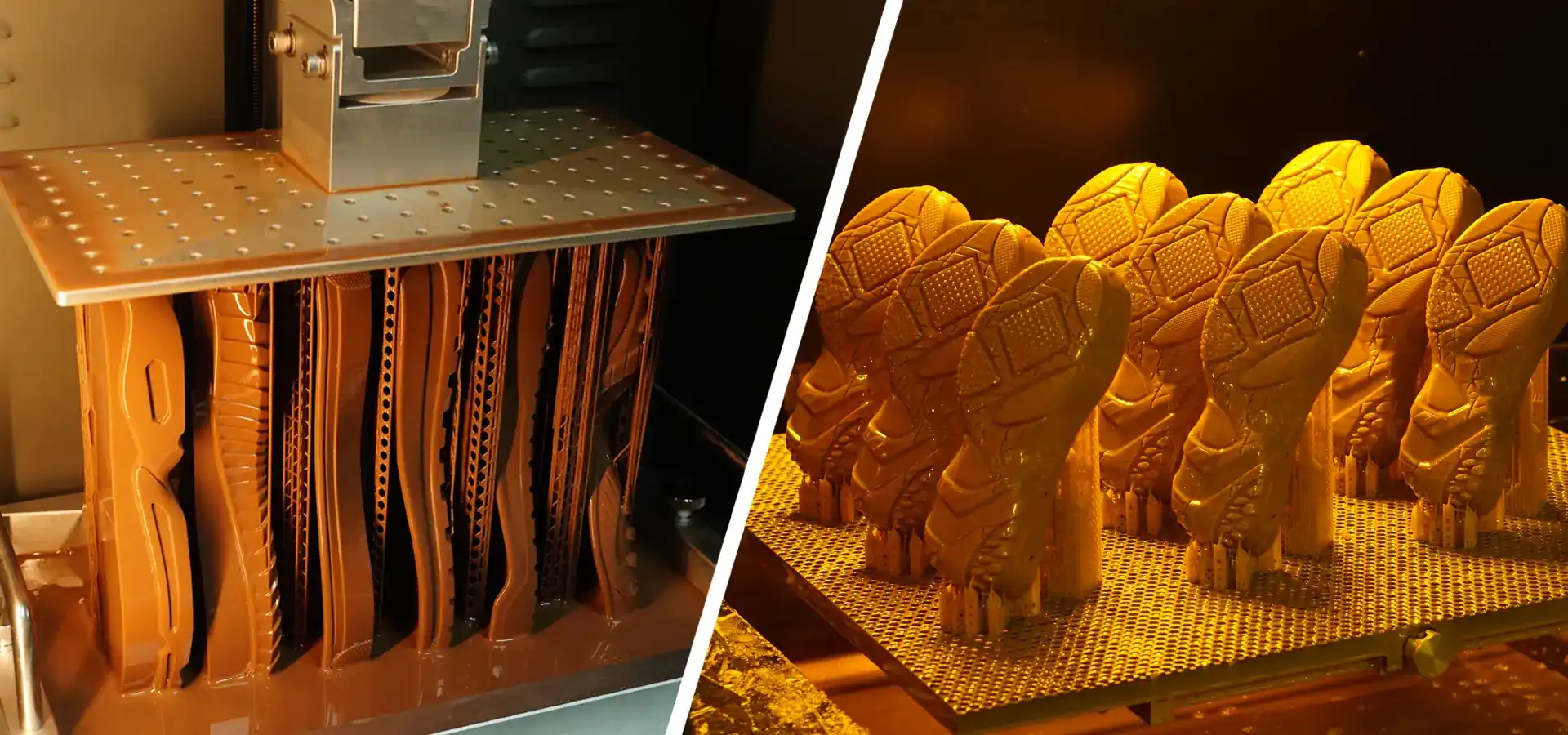
There are many more differences between industrial and home stereolithography than just the build space. Industrial SLA 3D Printers are built on reinforced metal structures with vibration-damping base systems designed to improve dimensional stability during long production runs. These systems are made with business-grade parts, such as high-precision servo motors capable of micron-level positioning accuracy under controlled operating conditions, HIWIN linear guides from Taiwan that last longer, and Schneider electrical parts that make sure the systems work properly. Temperature-controlled resin vats keep the viscosity from changing, which could hurt the quality of the print. Also, built-in tracking systems keep an eye on the laser power output during each job to make sure that the cure parameters stay the same.
👉 Industrial SLA printer classification
Resin Material Characteristics
Photosensitive resins made for industrial use have carefully designed qualities that strike a balance between how well they react with light and how well they work mechanically. The curing rate under laser exposure depends on resin photoreactivity and its energy absorption characteristics, and how viscous it is affects how the resin flows and how well the layers stick together. Engineering resins that look like ABS or polypropylene, clear resins for optical uses, high-temperature materials that can bend heat above 100°C, and safe choices for medical devices are some of the new formulations. Open material systems that work with most 355nm resins let makers choose the best materials for each job without being limited by vendor lock-in rules that raise costs.
Key Performance Advantages Enabled by Light Curing Technology
Light curing technology has a direct effect on all the important performance metrics that procurement officials look at when they evaluate stereolithography equipment. How precisely UV light starts resin polymerization affects the accuracy of measurements, the quality of the surface, the strength of the material, and the speed of production.
Dimensional Accuracy and Precision
It takes more than high-resolution laser sights to get tight specs. Through a combination of different technologies, Magforms industrial SLA 3D printers are capable of achieving dimensional accuracy of approximately 0.1 mm for small features and around 0.1% for larger geometries under optimized process conditions. The German Scanlab galvanometers make exact scanning lines that get rid of positioning mistakes, and the AOC laser's circular laser spot makes sure that the energy is spread evenly across all points. The build platform is controlled by Panasonic servo motors that keep the recoater's position accurate to within ±0.03mm.
Surface Quality and Detail Resolution
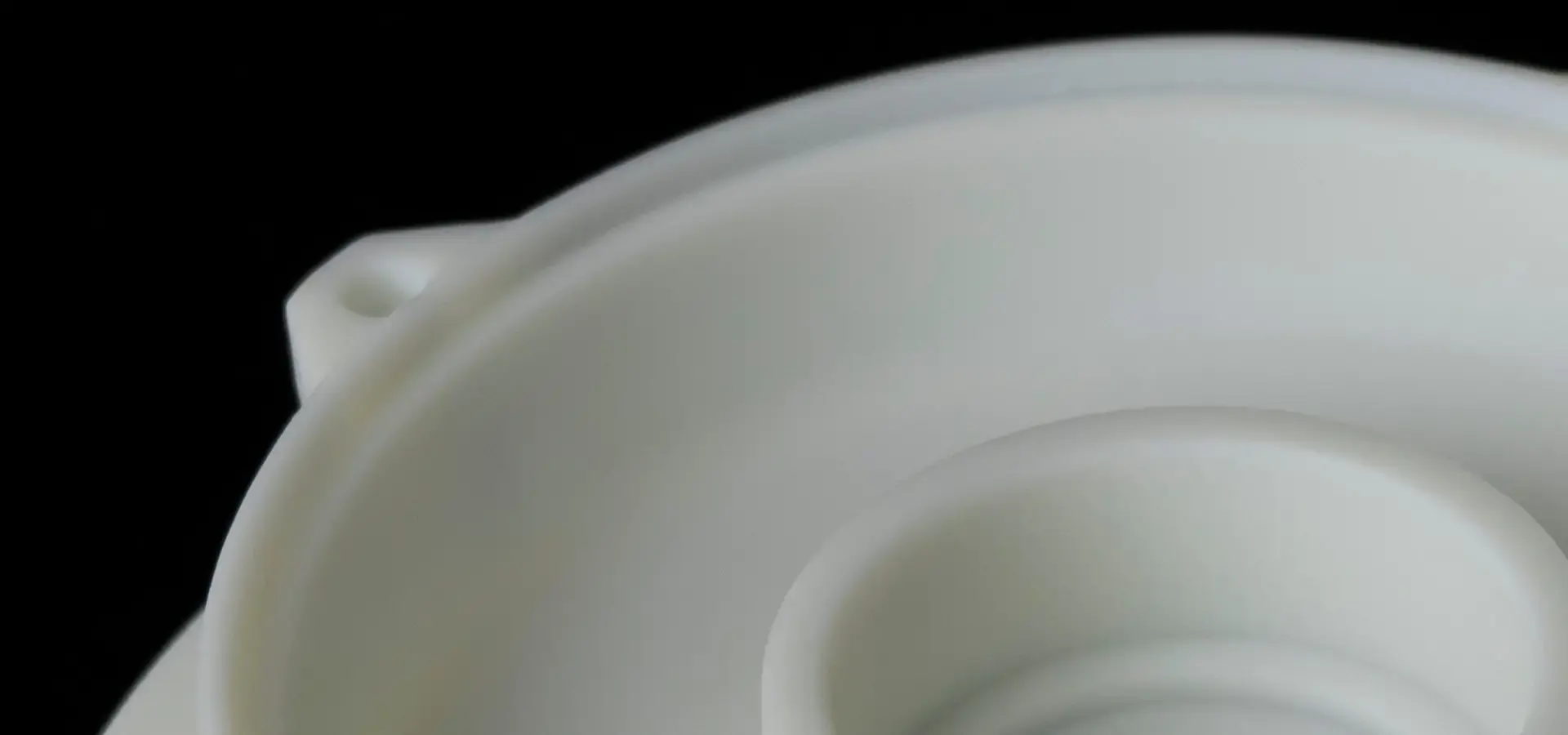
Variable laser spot technology is a big step forward in the surface finish of stereolithography. Magforms systems can adjust laser spot size dynamically between approximately 0.15 mm and 0.6 mm depending on geometry and slicing parameters, based on whether the laser is following fine lines or filling in solid areas. With this smart change, parts are made with a few obvious layer lines while still getting a lot done. Fixed-diameter beams would not be able to show sharp edges, fine patterns, or detailed details, but the micro-spot feature makes it possible. The stair-stepping effect between layers is even less noticeable thanks to a built-in grayscale processing method. The surface quality is almost as good as an injection-molded finish right from the printer.
Mechanical Properties and Strength
How well the end part works is directly related to how well the resin cured. If polymer chains do not receive sufficient UV exposure, they do not fully cross-link, resulting in weaker, more brittle parts with a higher risk of early failure. Too much contact can cause forces inside the material that can cause it to warp or crack. Industrial SLA 3D Printers maintain optimized curing conditions through real-time control of laser exposure and scan parameters. Post-curing under controlled UV exposure further completes polymerization and improves cross-link density, enhancing final mechanical performance. Parts made with properly controlled light curing have isotropic strength qualities, which means they work the same way no matter what direction the build is oriented. This is a big advantage over technologies that depend on layers, like FDM.
Build Speed and Efficiency
Variable spot technology and high-speed galvanometer scans work together to make production processes much faster. Magforms systems equipped with Scanlab galvanometers operate at scanning speeds of up to approximately 12 m/s under optimized conditions, though most of the time they work at speeds between 6 and 10 meters per second. When solid areas need to be filled, the system changes to the bigger 0.5–0.6 mm spot, which covers the area 30–50% faster than regular fixed-spot systems. An intelligent scanning system keeps learning from print data it has collected, finding the best ways to work up to 20% faster than competing equipment. These speed benefits directly lead to shorter lead times for prototyping projects and higher daily throughput for service offices that handle orders from many clients.
👉 SL800 Industrial SLA 3D Printer
Industrial SLA 3D Printing Applications Empowered by Light Curing
Precision light curing opens up uses in many different industries where exact measurements, a smooth surface, and the right material qualities are important for success. Stereolithography technology is really useful for both development and production because it can be used in many different ways.
Automotive Industry Applications
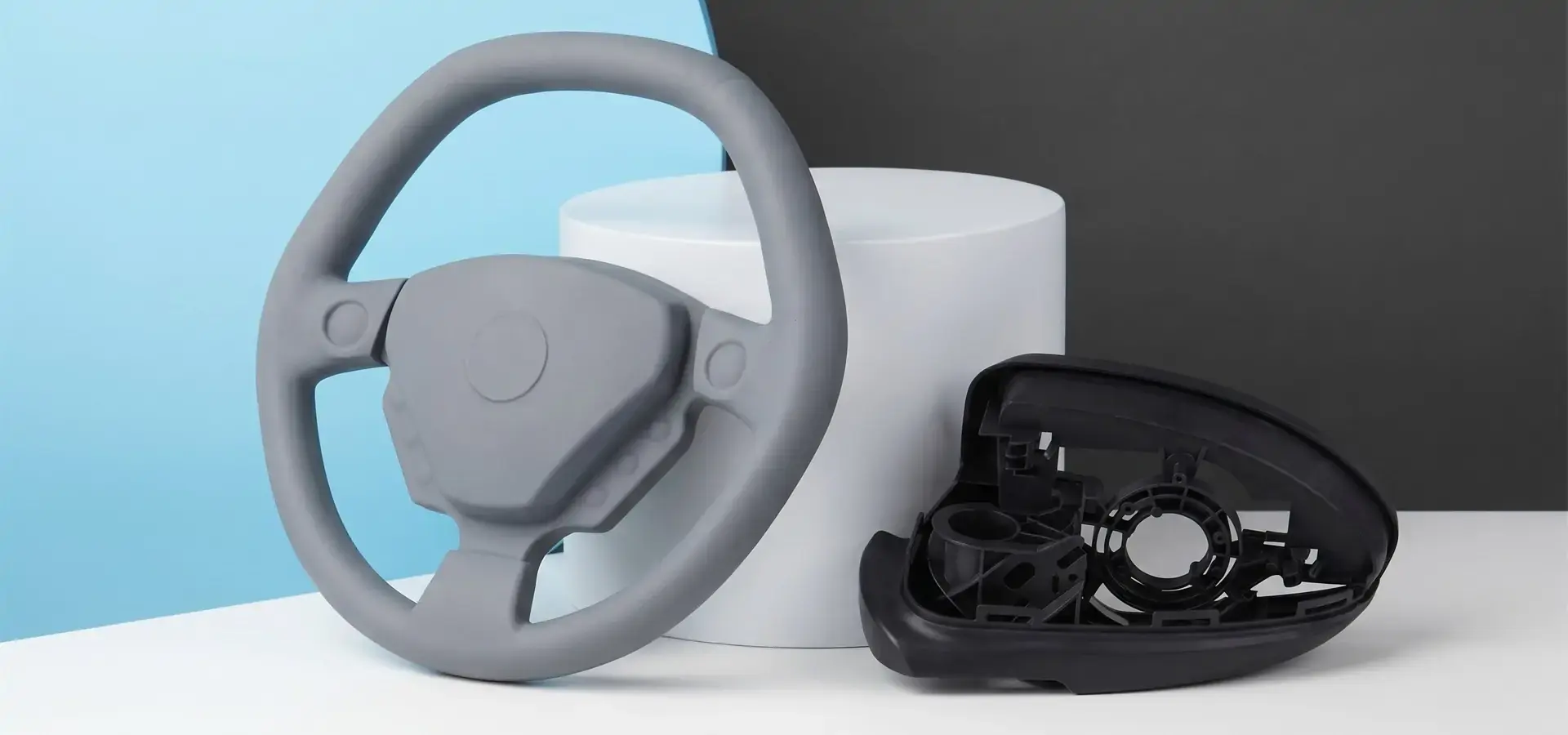
Automotive companies use industrial stereolithography to make quick prototypes of working systems, interior parts, and outer trim pieces that need to fit together perfectly. Before they are put into injection mold equipment, which can cost hundreds of thousands of dollars, dashboard samples are tested for fit and ergonomics. Small amounts of custom interior parts for limited-edition cars or aftermarket items can be made cheaply. Because transparent resin can be used, samples of headlight lenses and lighting systems can be made to test their visual performance. Automakers can get new models on the market faster because they can make complicated shapes with built-in snap-fits and assembly features.
Aerospace Component Production
Aerospace uses need very high levels of accuracy and regularity in materials because of strict safety rules and government control. Industrial SLA 3D Printers help this industry by making small, precise joints, custom mounts, and parts with odd shapes that would take a long time to machine using traditional methods. When made with certified materials, stereolithography parts that have been properly cured can be used for functional testing and certain non-critical aerospace validation applications when certified materials and validated processes are used, due to their dimensional accuracy and isotropic mechanical properties.
Medical and Dental Solutions
Stereolithography technology is being used more and more in personalized medicine to make devices and planning tools that are specific to each patient. Dental labs use industrial SLA 3D printers to make precise tooth models for planning orthodontic treatment. These models are then used to make bases for clear aligner thermoforming, which has a direct effect on how well the treatment works. Light-curing technology is needed to get very accurate measurements of the patient's body so that surgical guides can be used to put in implants. Biocompatible resins make it possible to make temporary crowns and unique mold trays for tooth impressions.
Consumer Electronics Development
In consumer electronics, product development processes are always getting shorter because companies are racing to come up with new features before their rivals. Industrial stereolithography speeds up this process by making samples that "look-like, work-like" the end product in terms of how it looks and how it works. Wearable tech, true wireless earbuds, and smart home items can all have cases made overnight and tested the next day.
Cultural Creative and Footwear Industries
Designers who work in culturally creative areas like stereolithography find it useful because it lets artists make their ideas real with few limitations. Decorative models, limited-edition collectibles, and display pieces can be made with a level of detail that can't be achieved with standard casting or sculpting. Industrial SLA 3D Printers are used in the shoe business to make shoe lasts and custom midsoles, which allows comfortable designs be tested quickly and improved. The technology's ability to make complicated lattice structures and tailored cushioning shapes that improve performance while lowering weight is especially helpful for athletic shoe makers.
Comparing Industrial SLA 3D Printers: Focus on Light Curing Technologies
Before you can evaluate stereolithography tools, you need to know the basic differences between light-curing methods and how they affect the ability to make things. Not all industrial SLA 3D printers work the same way, even if their specification sheets look a lot alike.
Light Source Technologies
The laser system is the most important part when it comes to print quality and dependability. Industrial SLA 3D Printers from companies like Magforms use solid-state UV lasers that give stable, constant power output that can support production plans that run 24 hours a day, seven days a week. The wavelength of these lasers is typically 355nm, which is widely used in industrial SLA systems due to its strong compatibility with photopolymer resins. Cheaper systems might use light sources that aren't as stable and lose power over time, which can cause curing and size differences that aren't regular.
Galvanometer Systems and Scanning Precision
With galvanometer mirrors, the laser beam can move across the resin surface at speeds and accelerations that mechanical crane systems would not be able to handle. German Scanlab galvanometers built into Magforms equipment set the bar for accuracy and dependability in the industry. They maintain precise beam positioning even under high-speed scanning conditions. Lower-quality galvanometers might make mistakes with positioning or beam distortion at the edges of the build area, which could lead to differences in size across big parts. How well galvanometers and laser control systems work together decides whether the laser spot stays round all the time or becomes oval at very sharp angles, which has a direct effect on the accuracy of the part.
Variable Spot Technology Advantages
With old stereolithography systems, laser spot sizes are set, so makers have to pick between printing quickly and getting fine details. This problem is solved by variable spot technology, which changes the spot width on the fly while the writing is happening. The system uses a 0.15–0.2 mm micro-spot to trace part outlines and fine support structures. It changes to 0.5–0.6mm when filling solid parts where high sharpness isn't needed, which covers the area much faster. This smart adaptation makes the system 30–50% faster than fixed-spot systems without lowering the quality of the details. The technology works best on parts that have both big, solid sections and small, complex features. It cuts down on print time while keeping accuracy where it counts.
Build Volume Considerations
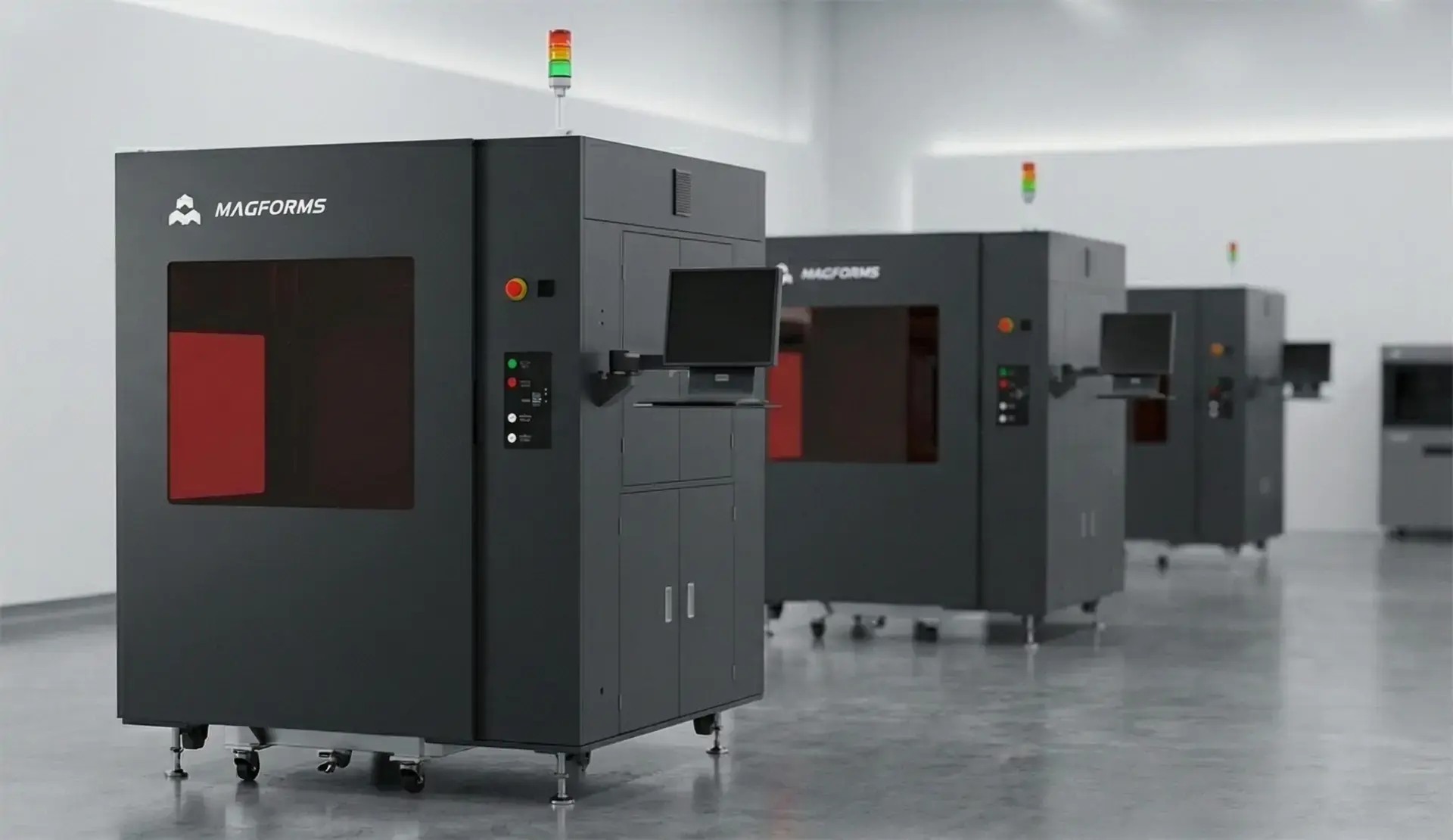
The printing of big parts or many pieces at once is common in industrial settings. The size of the build platform directly affects how flexible and efficient the output is. Magforms has a wide range of systems, from small Lab300-series printers that work well in dental labs and small service offices to large SL-series printers that can handle big assemblies or large-scale production jobs. As the build size goes up, platform flatness requirements become more important. Magforms keeps flatness within 0.2mm for SL-series machines and within 0.5mm for even the biggest platforms. This level of detail makes sure that the layer width and size are the same across the whole build area.
Material Compatibility and Open Systems
Many industrial SLA 3D printers use proprietary resin cartridges with RFID locks or validation keys that only let users use materials that the maker sells at higher prices. These closed systems make it harder to choose materials and make running costs much higher. With an open-system design that works with any 355nm photosensitive resin, manufacturers can choose the best materials for each job based on price and performance needs. Magforms equipment doesn't have any limits on the materials it can work with, so users can test out new resin formulas as they come out or make their own materials for specific uses. For study centers and makers who work with advanced materials, this flexibility is very useful.
Maintenance and Procurement Considerations for Industrial SLA Printers
To get the most out of your tools and your investment, you need to know how to maintain precision light-curing systems and what factors should go into your purchase choice.
Critical Maintenance Procedures
Regular laser power adjustment is the first step in making sure that the print quality stays the same. Solid-state lasers may experience gradual power drift over extended operational cycles, so they need to be adjusted on a regular basis to keep the right energy density for curing resin completely. Most industrial systems have power tracking built in, which lets workers know when calibration is needed. To make sure the beam is positioned correctly, the galvanometer plates must stay clean and in the right place. Even tiny dust particles can scatter the laser beam and lower the quality of the print. The optical path parts, like lenses and protected screens, need to be cleaned according to the manufacturer's instructions, using solvents that won't harm the optical coatings.
Procurement Decision Framework
Procurement managers should set clear measures that are in line with their business needs when they look at industrial SLA 3D printers. Specifications for dimensional accuracy should be based on real limits that can be reached, not theoretical values. The best way to make sure this is to ask for sample parts that have been printed on the specific model of equipment that is being considered. Throughput is more important than build speed. A slightly slower printer that is more reliable may make more finished parts in a month than a faster machine that breaks down more often.
Financing and ROI Considerations
Buying capital tools needs to be backed up by clear estimates of the return on investment. When using stereolithography for testing, you should figure out how much faster design changes are when you do it yourself instead of outsourcing. Many companies report ROI within 12 to 18 months depending on utilization rate, application type, and production volume. For production purposes, it is important to weigh the prices of each part, which include materials, labor, and overhead, against other ways of making the part or buying parts. Because stereolithography does not require dedicated hard tooling, it is often more economical for small-batch production scenarios. This is because the quality of the parts is the same as when they were made.
Conclusion
The speed, dependability, and range of uses of current stereolithography devices are all based on light-curing technology. Industrial SLA 3D Printers use carefully calibrated UV lasers, advanced galvanometer systems, and smart scanning algorithms to produce parts with the right dimensions, surface quality, and mechanical properties for the aerospace, medical, consumer electronics, and specialty manufacturing industries. Industrial-grade equipment is different from consumer-grade equipment because it has variable spot technology, open material compatibility, and a wide range of strong components. This lets makers get consistent results in production settings.
FAQ
What makes light-curing technology essential for industrial SLA performance?
The photopolymerization process turns liquid resin into solid parts when it is exposed to light. The accuracy with which UV energy is applied decides the surface finish, mechanical qualities, and sizes. Industrial systems use precise galvanometers and high-power, stable lasers that keep the energy level the same across big build platforms. This ensuring consistent part quality that is difficult to achieve with less stable light source systems.
How does variable spot technology improve printing efficiency?
Variable spot systems change the laser's width on the fly, ranging from 0.15 mm for small details to 0.6 mm for solid filling of gaps. This improvement cuts print time by 30–50% compared to fixed-spot methods while keeping detail quality high where accuracy is important. This speeds up production without affecting the accuracy of the parts.
What maintenance does an industrial SLA printer require?
Laser power adjustment, optical component cleaning, resin vat replacement, and mechanical system lubrication should all be done on a regular basis to keep the laser working at its best. An Industrial SLA 3D Printer usually requires procedures done every three months, and resin surfaces are cleaned every day. Following the manufacturer's plan for preventive maintenance cuts down on unexpected downtime and keeps the print quality high over time.
Why choose open material systems over proprietary resins?
Open systems that can use any 355nm resin get rid of seller lock-in and rising material costs. Manufacturers can choose the best materials for each job based on price and performance needs. This can cut material costs by 40 to 60 percent compared to special cartridge systems and increase the number of jobs that can be done.
Partner with Magforms for Advanced Industrial SLA Solutions
Magforms offers industrial SLA 3D printer systems designed for applications requiring high accuracy, reliability, and production consistency. German Scanlab galvanometers, AOC solid-state lasers, Panasonic servo motors, and high-quality parts from Schneider and HIWIN are all built into our systems. This architecture is designed to improve system stability and long-term process consistency. Variable spot technology speeds up production by 30 to 50 percent while keeping accuracy at the micron level. Most 355nm resins can be used with open material compatibility, which gets rid of proprietary limits that drive up running costs. We offer tested solutions backed by helpful expert support 24 hours a day, 7 days a week. We have 22 patents, 30 registered trademarks, and over 300 happy customers around the world in the automobile, aerospace, medical, and electronics industries. Our skilled after-sales team quickly fixes problems to keep production from being held up. Magforms' tools and full support can help you speed up and lower the cost of product development, no matter if you run a small service center or are in charge of R&D for a Fortune 500 company. Email our engineering team at info@magforms.com right now to talk about your needs and get sample parts that show how precise our industrial SLA 3D printer manufacturer is. Find out how our method of integrating materials and tools solves problems with compatibility, cuts down on downtime, and makes your manufacturing more flexible.
References
1. Gibson, I., Rosen, D., Stucker, B., & Khorasani, M. (2021). Additive Manufacturing Technologies (3rd ed.). Springer International Publishing.
2. Jacobs, P. F. (1992). Rapid Prototyping & Manufacturing: Fundamentals of Stereolithography. Society of Manufacturing Engineers.
3. Ligon, S. C., Liska, R., Stampfl, J., Gurr, M., & Mülhaupt, R. (2017). Polymers for 3D Printing and Customized Additive Manufacturing. Chemical Reviews, 117(15), 10212-10290.
4. Melchels, F. P., Feijen, J., & Grijpma, D. W. (2010). A review of stereolithography and its applications in biomedical engineering. Biomaterials, 31(24), 6121-6130.
5. Quan, H., Zhang, T., Xu, H., Luo, S., Nie, J., & Zhu, X. (2020). Photo-curing 3D printing technique and its challenges. Bioactive Materials, 5(1), 110-115.
6. Zhang, J., Xiao, P., & Dumur, F. (2020). High-performance photopolymers for 3D printing: chemical perspectives and applications. Polymer Chemistry, 11(21), 3541-3570.

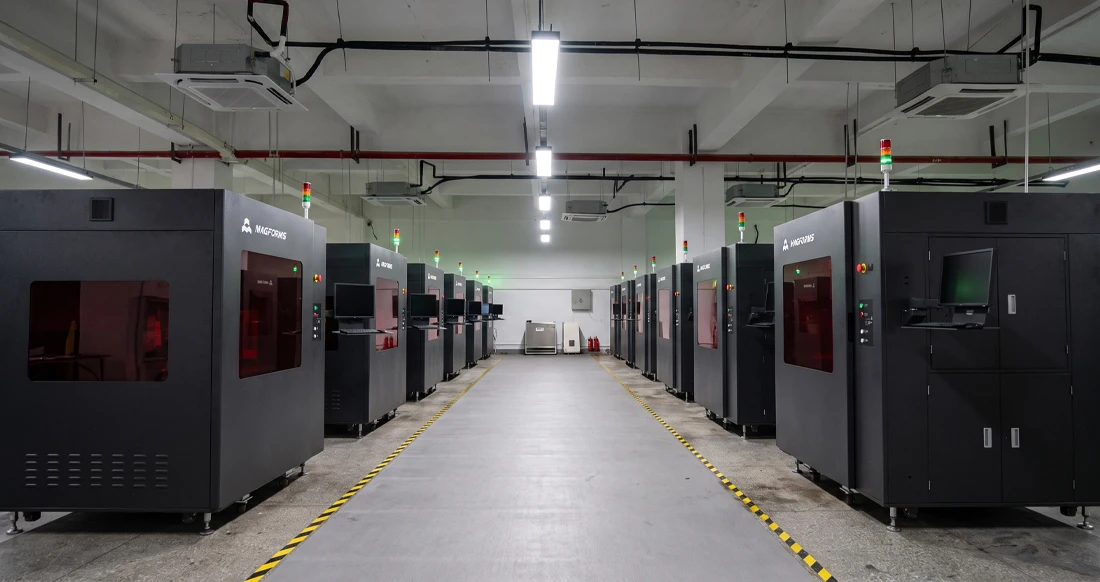
Magforms makes design and manufacture easier.
Popular Blogs
-
 Industry InsightsManufacturing Industry
FDM vs. SLA Printer: Which Technology Is Right for Your Project?
-
 Industry InsightsManufacturing Industry
Top 5 Applications of Industrial 3D Printers in Manufacturing Today
-
 Industry InsightsManufacturing Industry
Why Stereolithography 3D Printers Are Unmatched for Microfluidic Device Prototyping?