Best Stereolithography 3D Printer Uses for Precision Parts
Making complex parts in today's industry requires a level of accuracy that has never been seen before. Stereolithography 3D printer technology is at the forefront of this change because it can make things very accurately and with high-quality surfaces that are hard for standard manufacturing methods to do. SLA technology uses advanced UV lasers to cure photopolymer resins, which lets it make complex shapes with accuracy as good as 0.05 mm. This makes it essential for many uses, from medical devices to aircraft parts. Because it can make isotropic parts with finishing that are as smooth as glass, SLA printing is the best way to solve problems in precision production.

Understanding Stereolithography 3D Printing for Precision Parts
Through precise UV laser exposure, stereolithography turns liquid photopolymer resins into solid parts. It is a very advanced form of additive manufacturing. A powerful laser is pointed at the top of liquid resin, curing material layer by layer based on computer design specs. This is how the technology works.
Technical Foundation of SLA Technology
There are a few key parts that make up the core design of professional SLA systems that determine how sharp and well they print. Laser tracking works very well with high-end galvanometer systems, such as the German Scanlab units that are used in machinery. From 25 microns to 140 microns, these devices can change their XY precision, and from 25 microns to 300 microns, they can change the width of their Z sheets. Modern SLA printers can dynamically adjust laser spot size to balance speed and accuracy. It fills up faster inside the body when there are big laser spots between 0.5 and 0.6 mm, and it makes sure that the contours and features are clear when there are small laser spots between 0.18 and 0.2 mm. Finding the right mix between speed and accuracy has been a problem in business for a long time. This two-step method solves that problem.
 |
Technology Deep Dive How SLA Laser Precision Impacts Print Accuracy Understand how galvanometer systems, laser spot control, and layer resolution define final part quality in modern SLA printers.
|
Material Versatility and Performance Characteristics
There are many different kinds of photopolymers that can be used with professional SLA systems. Each one was made to do a specific job. Engineering resins are like ABS in some ways and can be used for prototyping. High-temperature forms of these resins keep their shape when heated above 250°C. Biocompatible resins meet Class I and IIa medical standards and can be used in dentistry and surgery. Castable plastics, on the other hand, allow jewellery and precision casting to be done without any ash burnout. When the SLA process takes place, chemicals cross-link, which gives the material its isotropic strength. In this case, the parts' mechanical traits are the same in every direction. One big difference between this and filament-based printing is that the Z-axis is often weak because of issues with layer bonding.
Top 4 Applications of SLA 3D Printers for Precision Parts
Because SLA technology is so flexible and the Stereolithography 3D printer is accurate, it is used in a huge range of industries. Knowing about these important uses helps procurement workers figure out the best ways for their companies to use them.
Medical and Dental Manufacturing
SLA technology is used in the medical field to make unique surgery guides, dental models, and orthodontic devices that are very precise and biocompatible. Dental labs use SLA printers to make exact molds, crown models, and aligner bases that need to have exact shapes that are unique to each patient.SLA's ability to make physically correct models from CT and MRI data is very helpful for planning surgeries. These models help doctors do complicated treatments and find the best ways to do them, which improves patient outcomes and cuts down on operating room time.

Aerospace and Automotive Prototyping
Parts used in aerospace have to meet strict standards for weight, strength, and accuracy. SLA technology is great at making light samples of complex internal structures, like cooling lines in turbine parts or complicated brackets with the best possible shapes.SLA is used in the car industry for making quick prototypes of inner parts, testing parts that work, and special tools. Because the technology can make parts with moving parts and snap-fit connections, it's possible to fully test designs before investing in expensive injection molding tools.
Electronics and Consumer Technology
Consumer gadgets are getting smaller, so manufacturers need to find ways to make small, precise parts with tight standards. In response to these needs, SLA technology makes very precisely measured housings for wearable tech, sample connectors, and internal structure parts. Because SLA can make a smooth surface, it doesn't need a lot of post-processing. This makes it perfect for making samples that look good and testing units that work for consumer electronics development.
Industrial Tooling and Fixtures
More and more, manufacturing companies depend on special tools and fixtures to make output as efficient as possible. SLA technology makes it possible to quickly make jigs, tools, and assembly aids that would be too expensive to make from solid materials. The ability to incorporate complicated internal geometries, like cooling tunnels or vacuum tubes, into tooling components makes them more useful than standard ways of making things. This feature cuts down on the cost of Stereolithography 3D printer tools while speeding up the production process.
Factors to Consider When Choosing SLA 3D Printers for Precision Parts
To choose the right SLA system, you need to carefully look at the technology requirements, operational needs, and long-term business goals. Professionals in procurement have to find a balance between performance and price, making sure that the tools they choose meet the needs of specific applications.
Resolution and Accuracy Specifications
The quality and accuracy of the final parts are directly affected by the print sharpness. XY resolution, which is based on the size of the laser spot and the accuracy of the galvanometer, changes how tiny features and smooth curved surfaces are shown. The layer width choices determine the Z-axis resolution, which in turn affects the quality of the surface finish and the accuracy of the dimensions in the vertical direction. Modern systems have different levels of sharpness, so users can find the best print settings for each part at hand. Fine resolution settings are best for parts that need a lot of detail, while faster, rougher settings may be better for bigger parts that need to be made faster.
Build Volume and Throughput Considerations
The required build number and throughput are set by the production needs. Desktop systems usually have build sizes that are good for small parts and samples, while industrial systems can handle bigger parts or make a lot of parts at once. Large-format SLA printers make it possible to make useful parts that are too big in a single build, so they don't need to be put together, and there aren't any problems with tolerance stack-up. Batch printing makes the most of output by making many parts at once, which lowers the cost of making each part.

Material Compatibility and Cost Management
Open-source material support helps keep costs down and gives you more options for how to use the material. Systems that work with resins from other companies let purchasing teams get the best deals on materials while also getting access to unique formulas made for certain uses. Limits on proprietary materials can have a big effect on long-term running costs. Checking the total cost of ownership, which includes material costs, helps make sure that choices about purchases are in line with long-term spending goals.
Comparing SLA 3D Printers: Making an Informed Purchase Decision
At the moment, the market has a lot of different SLA choices with a range of prices and levels of potential. Knowing the competition helps people who work in procurement make smart choices that match the need for success with the need to stay within budget.
Performance Tiers and Market Positioning
Entry-level professional SLA systems have great accuracy and surface quality, making them ideal for testing and small-scale production. These systems are usually a good deal for businesses that are just starting out with additive manufacturing or that don't need to make a lot of things. Advanced features like hot resin tanks, complex peeling processes, and better automation are found in industrial-grade systems. When it comes to high-volume production settings, where quality Stereolithography 3D printer and dependability are very important, these methods are perfect.
Technology Integration and Workflow Optimization
Modern SLA systems work perfectly with CAD tools and industrial processes that are already in place. Advanced slicing software figures out the best support structures and print positions to get the best quality parts with the least amount of material and post-processing needed. Automated features, like checking the resin level and managing prints from afar, make it easier for operators to do their jobs and make sure that the production is consistent. Businesses need these skills more and more as they grow their additive manufacturing processes.
Support Infrastructure and Service Capabilities
A complete technical support framework makes sure that the system works at its best and that production stops as little as possible. Rapid reaction choices, such as remote diagnostics and on-site help, keep operations running smoothly and keep production plans safe. Training programs and technical tools help businesses get the most out of their money by making sure workers know the best ways to do things and how to optimize them. Over time, the system's skills grow as it gets regular software changes and new features.
Optimizing the Use of SLA 3D Printers for Precision Parts in B2B Settings
To successfully use SLA technology, it needs to be carefully integrated into the way things are made, and processes and methods need to be constantly improved. When businesses adopt SLAs in a planned way, they get better results and a faster return on their investment.
Workflow Integration Strategies
Finding the best ways to use SLAs in current product development and manufacturing processes is the first step to effective SLA integration. The technology works really well for fast development, which is when different versions of a design need to be tested quickly in real life to make sure they work well and look good.SLA can make end-use parts without having to buy expensive tools, which is useful for small-batch production. With this feature, businesses can serve special markets or make custom versions without spending a lot of money.

Quality Management and Process Control
Setting uniform quality standards means putting in place the right process controls and recording methods. Calibration and repair plans that are followed regularly ensure that accuracy and dependability are maintained over time. The way parts are handled has a big effect on their quality and the regularity of production. The best printing conditions for Stereolithography 3D printers and the fewest flaws are maintained by following the right procedures for storing resin, filtering it, and keeping it from getting contaminated.
Future Technology Trends and Opportunities
New developments in SLA materials make it possible to use them in more places and situations. Advanced industrial resins with better mechanical qualities make it possible to directly make working parts that used to need to be made in the usual way. Integrated post-processing systems and material handling solutions are examples of improvements in automation that have made work easier and allowed production to grow. Because of these changes, SLA technology is becoming more appealing for users with bigger volumes.
Conclusion
Three-dimensional printing using stereolithography is a revolutionary way to make precise parts for a wide range of commercial uses. SLA is an important tool for companies that want to gain a competitive edge in product development and industrial speed because it is very accurate, has great surface quality, and can work with a wide range of materials. To make sure you get the best return on your investment and stay ahead of the competition, you need to carefully look at the technical requirements, business needs, and long-term strategy goals before you start implementing.
FAQ
1. What materials work best with SLA printers for precision applications?
For precise tasks, engineering-grade photopolymer resins that are designed for mechanical performance and physical stability work best. High-temperature resins keep their accuracy even when they are under a lot of heat, and tough resins make things last for practical tests. Biocompatible mixtures meet the needs of medical devices without lowering their accuracy.
2. How does SLA compare to FDM for prototype functionality testing?
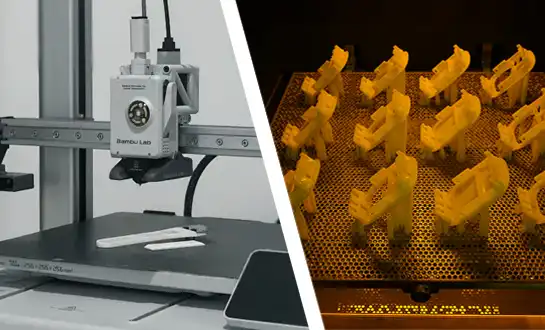
When compared to FDM methods, SLA technology gives better precision in measurements and surface finish. The isotropic strength of SLA parts makes it easier to test the mechanical qualities and assembly surfaces more accurately. SLA is also great at making internal shapes that are complicated and fine features that FDM has trouble reproducing correctly.
3. What maintenance practices ensure consistent SLA print quality?
Cleaning resin tanks and replacing FEP films on a regular basis keeps things clear and stops pollution. Regular laser calibration checks make sure that the accuracy stays high, and proper resin filtering gets rid of bits that are only partly fixed and could cause problems. Controlling the environment so that the temperature and humidity stay fixed is the best way to get consistent healing and accurate measurements.
Partner with Magforms for Advanced Stereolithography Solutions
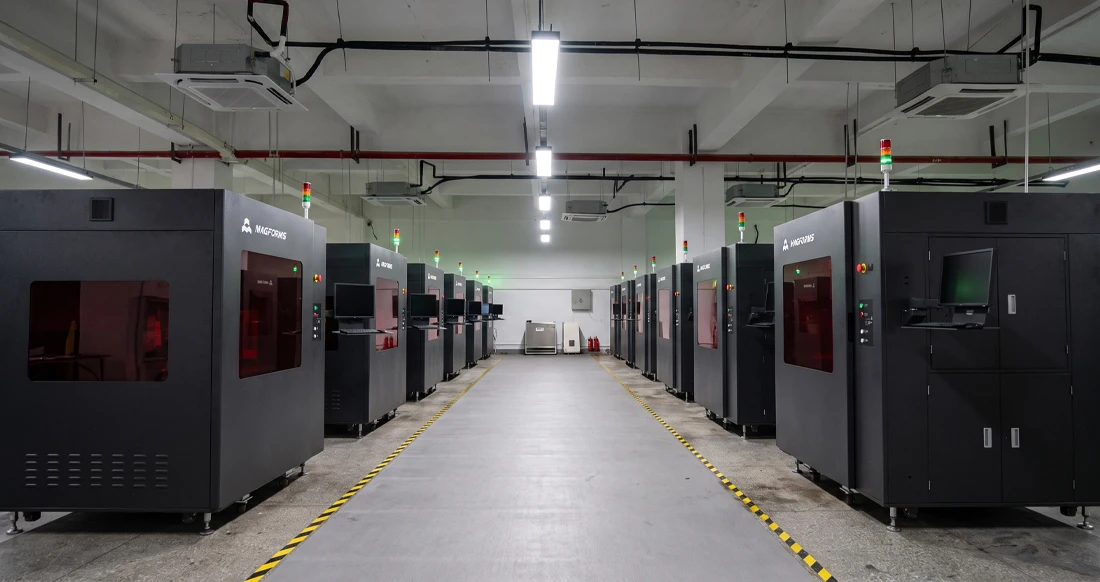
Magforms offers cutting-edge SLA technology options, Stereolithography 3D printers that are designed to work with precision manufacturing. With German Scanlab galvanometers, AOC lasers, and advanced variable spot-size technology, our industrial-grade systems can print 30–50% faster than traditional ways while still being very accurate. We offer full technical support, including 24/7 consultation and quick response service, along with 22 patents and a stereolithography 3D printer for sale packages that remove compatibility problems by optimizing both materials and equipment. Get in touch with our knowledgeable staff at info@magforms.com to find out how our tried-and-true solutions can improve your precision manufacturing.
References
1. Gibson, I., Rosen, D., & Stucker, B. (2021). Additive Manufacturing Technologies: 3D Printing, Rapid Prototyping, and Direct Digital Manufacturing. Springer International Publishing.
2. American Society for Testing and Materials. (2020). ISO/ASTM 52900-15 Standard Terminology for Additive Manufacturing Technologies. ASTM International.
3. Ligon, S. C., Liska, R., Stampfl, J., Gurr, M., & Mülhaupt, R. (2017). Polymers for 3D Printing and Customized Additive Manufacturing. Chemical Reviews, 117(15), 10212-10290.
4. Melchels, F. P., Feijen, J., & Grijpma, D. W. (2018). A Review on Stereolithography and its Applications in Biomedical Engineering. Biomaterials, 31(24), 6121-6130.
5. Pham, D. T., & Gault, R. S. (2019). A Comparison of Rapid Prototyping Technologies. International Journal of Machine Tools and Manufacture, 38(10-11), 1257-1287.
6. Zocca, A., Colombo, P., Gomes, C. M., & Günster, J. (2020). Additive Manufacturing of Ceramics: Issues, Potentialities, and Opportunities. Journal of the American Ceramic Society, 98(7), 1983-2001.

Magforms makes design and manufacture easier.
Popular Blogs
-
 Industry InsightsManufacturing Industry
FDM vs. SLA Printer: Which Technology Is Right for Your Project?
-
 Industry InsightsManufacturing Industry
Top 5 Applications of Industrial 3D Printers in Manufacturing Today
-
 Industry InsightsManufacturing Industry
Why Stereolithography 3D Printers Are Unmatched for Microfluidic Device Prototyping?