How Can SLA 3D Printing Eliminate Prototype Development Bottlenecks?
Stereolithography (SLA) 3D printing technology changes the way prototypes are made by breaking down standard manufacturing limits by curing photopolymers quickly, layer by layer. This advanced approach to additive manufacturing gets rid of some of the problems that traditional prototyping methods have, like long lead times, high tooling costs, and limited design freedom. SLA systems shorten development processes by letting digital data be directly transformed into physical data. They also keep the precise tolerances needed for functional testing and validation in the medical, consumer electronics, aerospace, and automotive industries.

Understanding Prototype Development Bottlenecks
There are many issues with the usual way of making prototypes that make it harder to stick to project schedules and costs. Teams that use traditional cutting or injection moulding to make prototypes often have to wait weeks or months for them to come. These wait times get longer when new designs need to set up new tools or change the code in big ways. It takes a lot of money to make prototypes, which is another big problem. For CNC milling and injection casting, you need to pay a lot of money up front for the parts, tools, and time to program them. Small-batch prototype runs can't be done easily if the cost of the tools is higher than the value of each part. Companies have to decide whether to cut corners on design proof or wait longer to get into the market.
Limited Design Freedom and Manufacturing Constraints
There are physical limits to the old ways of making things that make it hard to come up with new ideas. With regular subtractive manufacturing, it is still not possible or not worth the money to make parts with complicated lattice structures, internal channels, and undercuts. Because of these restrictions, engineers have to make ideas simpler, which might make them less useful and effective. It's even harder because the planning and production teams can't talk to each other. When a sample's needs change, the people who make it have to move tools around, reprogram machines, and maybe even make new moulds. For companies that want to get their goods to market faster, this iterative process makes the process take longer and cost more.
Material Testing and Validation Delays
Traditional prototyping often requires multiple manufacturing processes to test different material properties and configurations. Each iteration demands separate setup procedures, quality inspections, and validation protocols. These sequential steps create cascading delays that push product launches beyond competitive windows and market opportunities.
Introduction to SLA 3D Printing Technology
Stereolithography is a sophisticated method of additive manufacturing that carefully cures liquid photopolymer resins into solid structures using focused laser energy. With this layer-by-layer method, digital CAD files can be turned directly into real prototypes, without the need for any tooling or machining. Compared to other additive production technologies, SLA systems are very good at getting the dimensions and surface finish just right. The photopolymer hardening process makes surfaces that are smooth and have few layer lines. This means that you don't have to do as much post-processing as you would with 3D printing, fused deposition modelling. This feature is especially useful for prototypes that need to be tested for exact fit or aesthetics.

Advanced Material Chemistry and Properties
Today's SLA technology lets a lot of different photopolymer mixtures be made that are specifically made for different uses. Standard resins have great surface quality and keep their shape well for visual tests. The mechanical qualities of engineering-grade formulations, on the other hand, are like those of thermoplastic inserts. High-temperature formulations are used to test cars, biocompatible resins are used in medicine, and flexible elastomers are used to make new market goods. The properties of the material don't change for any form of prototype because SLA processing uses a fast-curing method. In the old way of making things, the stresses of machining or the conditions of moulding can change a material's qualities. Photopolymer curing, on the other hand, makes uniform mechanical qualities that are perfect for the end use.
Precision and Resolution Capabilities
Professional SLA systems achieve layer resolutions as fine as 10 microns, enabling reproduction of intricate surface textures and complex geometric features. This precision level supports functional prototyping applications where dimensional accuracy directly impacts performance validation and fit testing procedures.
How SLA 3D Printing Addresses Prototype Development Bottlenecks
By getting rid of standard manufacturing limits, 3D print technology through SLA systems completely changes how long it takes to make prototypes. Compared to traditional cutting or moulding, digital file preparation takes much less time to set up. This means that prototypes can be made in hours instead of weeks. It is especially clear how cost-effective SLA prototyping is for low-volume uses where investing in standard tools is not a good idea. Material use goes up or down directly with part geometry, so no waste comes with subtractive production. This efficiency means that project costs can be predicted and budgets for development programs are better allocated.
Rapid Iteration and Design Validation
Multiple design revisions can happen during a single development cycle with SLA technology, which supports agile product development methods. Engineers can look at changes to designs overnight, taking feedback into account and making improvements without the usual delays in manufacturing. This ability to do multiple iterations quickly speeds up the evaluation process and lowers the overall risk of development. SLA processing makes it easy to make things with complicated geometric shapes that are hard to make any other way. Biomimetic structures, consolidated assemblies, and internal cooling pathways can all be prototyped as single parts, which gets rid of the need for assembly steps and possible failure points. This freedom in design encourages new product models that give companies an edge over their competitors.
Enhanced Functional Testing Capabilities
SLA prototypes manufactured with engineering-grade photopolymers enable comprehensive functional testing under realistic operating conditions. Mechanical properties, including tensile strength, impact resistance, and thermal stability, can be evaluated using prototypes that accurately represent production material characteristics. The high surface quality achievable through SLA processing supports detailed aesthetic evaluation and user experience testing. Smooth surfaces eliminate the roughness typical of other additive manufacturing technologies, enabling accurate assessment of visual and tactile product characteristics essential for consumer acceptance.

Practical Considerations When Integrating SLA 3D Printing into Procurement
Strategic procurement decisions regarding SLA technology 3D printing require careful evaluation of equipment capabilities, material compatibility, and operational requirements. Understanding the relationship between printer specifications and intended application requirements ensures optimal technology selection for specific development programs. Equipment selection should prioritize build volume capabilities aligned with anticipated prototype sizes while considering resolution requirements for intended applications. Desktop systems prove adequate for small electronic components and jewelry prototypes, while industrial platforms support large automotive panels and architectural models within single build operations.
Material Compatibility and Supply Chain Considerations
When compared to proprietary ecosystems that limit resin options, open-platform SLA systems give you more freedom in where you get your materials and how you spend your money. Because of this, procurement teams can look at more than one source, compare prices, and come to an agreement that meets quality standards. Material qualification processes should check that photopolymers work as expected under the conditions of the tests. To get useful prototype evaluation results, the validation standards must be met for mechanical properties, dimensional stability, and environmental resistance.
Comparing SLA with Alternative Manufacturing Methods
When it comes to some things, SLA-based 3D printing is definitely better than traditional manufacturing. Rapid prototyping apps like SLA are used when they can't use traditional methods because of the design's complexity, the number of iterations, or the time limits. But if you need to do a lot of things, you might want to buy standard tools, even if they cost more at first. Still, CNC machining is better for models that need to be made of metal or have very tight tolerances on their sizes, which photopolymer can't do. Injection moulding is a cheap way to make more than a few hundred prototypes, and the same methods will be used for the end product.
Future Trends and Strategic Advantages of SLA in B2B Procurement
SLA keeps getting better in a lot of different fields thanks to discoveries in photopolymer chemistry. Next-generation resins are better in terms of how they work mechanically. As an example, carbon-filled resins are stronger for their weight, while glass-filled resins are harder. When you automate SLA processes, you reduce the amount of work that needs to be done by hand and improve the consistency of production for making scaled samples. Quality inspection, post-processing, and setting up the build platform can all be done automatically, so the tools can be used most efficiently.
Digital Supply Chain Integration
Spread manufacturing strategies are easier to use with 3D printing. These strategies lower shipping costs and delivery times for businesses that buy things all over the world. Shipping delays can be avoided by making samples close to where the design teams work. This also makes it easy to make changes to the design and meet testing needs quickly. Digital inventory ideas let you make samples whenever you need them, without having to store them. CAD files can be sent anywhere in the world and made in any country. This lets supply chain strategies be adaptable to changing market conditions and competition very quickly.
Strategic Partnership Development
Building relationships with 3D printing experienced SLA solution providers gives you ongoing technical help and application knowledge that goes beyond just buying equipment. These partnerships give people access to new materials, advice on how to improve processes, and help with fixing problems, which helps people get the most out of their technology purchases. Magforms is a good example of this partnership method because they offer full technical support 24 hours a day, seven days a week, through remote consultation, on-site engineering help, and regular training programs. Their unified material and equipment options get rid of worries about connectivity while guaranteeing performance for important prototype development tasks.
Conclusion

SLA 3D print technology eliminates traditional prototype development bottlenecks through rapid iteration capabilities, cost-effective production, and unlimited design freedom. The precision and material versatility inherent in photopolymer curing enable functional testing and validation procedures that accelerate product development cycles while reducing overall project costs. Strategic integration of SLA systems into procurement workflows supports agile manufacturing strategies essential for maintaining competitive advantage in rapidly evolving markets.
FAQ
1. What are the main advantages of SLA over other 3D printing technologies?
SLA technology delivers superior surface finish quality, dimensional accuracy, and material property consistency compared to FDM or SLS alternatives. The photopolymer curing process produces smooth surfaces with minimal post-processing requirements while supporting diverse material formulations for specific application needs.
2. How does SLA printing cost compare to traditional prototyping methods?
SLA prototyping eliminates tooling costs and setup fees associated with conventional manufacturing, making it cost-effective for low-volume applications. Material costs scale directly with part geometry, providing predictable pricing for budget planning purposes.
3. What design considerations are important for SLA prototype development?
Successful SLA prototyping requires attention to support structure placement, resin drainage pathways, and orientation optimization. Understanding these design principles ensures reliable printing results and minimizes post-processing requirements.
4. Can SLA prototypes withstand functional testing requirements?
Engineering-grade photopolymers deliver mechanical properties suitable for comprehensive functional testing, including tensile, impact, and thermal evaluation. Material selection should align with specific testing requirements to ensure meaningful validation results.
5. What post-processing procedures are required for SLA parts?
SLA parts require washing in appropriate solvents to remove uncured resin, followed by UV curing to complete the photopolymer reaction. Support structure removal and surface finishing may be necessary depending on application requirements.
Partner with Magforms for Advanced SLA 3D Print Solutions
Magforms delivers industry-leading SLA technology through integrated material and equipment solutions designed for professional prototype development. Our variable spot-size laser systems achieve 30-50% faster printing speeds while maintaining micron-level accuracy essential for functional testing applications. As an experienced 3D print manufacturer, we provide comprehensive support, including rapid-response technical consultation, on-site engineering assistance, and extensive training programs.
Our open-platform design enables flexible material sourcing, while our proprietary photopolymers deliver optimized performance characteristics for demanding applications. Contact our technical team at info@magforms.com to discuss your prototype development requirements and discover how our SLA solutions can eliminate bottlenecks in your development processes.
References
1. Gibson, I., Rosen, D., and Stucker, B. "Additive Manufacturing Technologies: 3D Printing, Rapid Prototyping, and Direct Digital Manufacturing." Springer Science & Business Media, 2021.
2. Melchels, F.P.W., Feijen, J., and Grijpma, D.W. "A Review on Stereolithography and its Applications in Biomedical Engineering." Biomaterials, Vol. 31, No. 24, 2020.
3. Jacobs, P.F. "Rapid Prototyping & Manufacturing: Fundamentals of Stereolithography." Society of Manufacturing Engineers, 2019.
4. Chartschenko, I. "Stereolithography: Materials, Processes and Applications." William Andrew Publishing, 2022.
5. Kumar, S. and Kruth, J.P. "Advanced Applications of Rapid Prototyping Technology in Modern Engineering." International Journal of Advanced Manufacturing Technology, 2021.
6. Thompson, M.K., Moroni, G., and Vaneker, T. "Design for Additive Manufacturing: Trends, Opportunities, Considerations, and Constraints." CIRP Annals - Manufacturing Technology, Vol. 65, Issue 2, 2020.

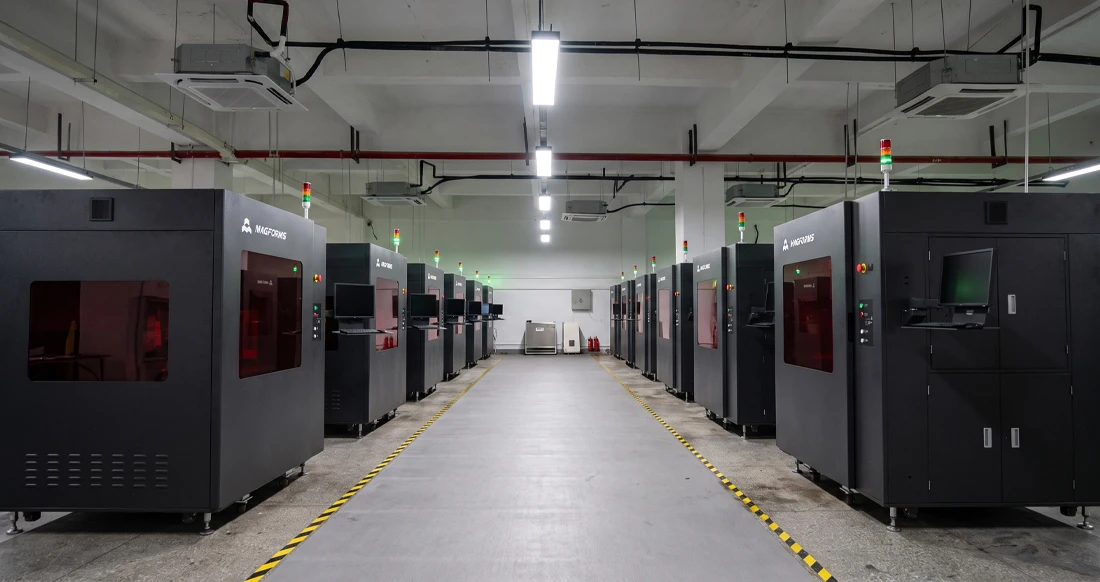
Magforms makes design and manufacture easier.
Popular Blogs
-
 Industry InsightsManufacturing Industry
FDM vs. SLA Printer: Which Technology Is Right for Your Project?
-
 Industry InsightsManufacturing Industry
Top 5 Applications of Industrial 3D Printers in Manufacturing Today
-
 Industry InsightsManufacturing Industry
Why Stereolithography 3D Printers Are Unmatched for Microfluidic Device Prototyping?