Boost Your Business with High-Demand 3D Print Services
In today's business world, quick new ideas and efficient production are necessary. This is why 3D print services are an important part of staying competitive. Companies can turn digital designs into real goods at a speed and accuracy that has never been seen before thanks to advanced additive manufacturing technologies. These technologies get rid of the limitations of traditional manufacturing while cutting costs. Professional 3D print solutions let companies make prototypes more quickly, customize a lot of products, and keep their supply lines flexible so they can react quickly to market needs in a wide range of fields, from healthcare to automobiles.
Understanding 3D Printing Technology and Its Business Benefits

Core Processes and Technologies Powering Additive Manufacturing
Additive Manufacturing (AM), the name given to 3D printing technology, is a big change from the way things have been made in the past. Different from subtractive methods like CNC machining or formative methods like injection casting, additive manufacturing uses digital CAD files to build three-dimensional objects one layer at a time. This bottom-up approach to building gets rid of the physical limitations that come with traditional ways of making things.
The technology solves important problems in the industry by getting rid of the high one-time technical costs that come with tools and molds. This makes low-volume production affordable. These days, 3D printers can make internal channels, lattice structures, and combined parts that are too complicated for standard machining methods to handle. This feature opens up new design and usefulness options for products that were limited by production limitations before.
Tangible Business Benefits for Modern Enterprises
Advanced options for additive manufacturing make operations more efficient and help keep costs down. Through digital inventory systems, the technology separates supply lines so that parts can be made on demand close to where they are used. This method cuts down on storage costs and wait times by a huge amount while making it easier to meet customer needs.
Companies that use professional 3D printing services say that the time it takes to make new products is cut down by a large amount. Being able to quickly change designs without having to make expensive changes to the tools speeds up the innovation process and cuts down on the time it takes for new goods to reach the market. Companies can try several versions of a design at the same time to find the best ones for performance before going to full-scale production.
Material Versatility and Industrial Applications
Professional 3D printers can use a wide range of materials with different chemical compositions to meet the needs of different industries. Photopolymer resins come in a variety of forms, such as standard rigid resins, specialized high-impact tough resins, flexible elastomers with Shore A hardness grades between 50 and 90, and castable wax resins for making jewelry or metal parts. Businesses can choose the best qualities for their needs thanks to the wide range of materials available.
Direct production of end-use parts in aerospace-grade alloys is possible with metal powder methods, and industrial thermoplastics have mechanical qualities that are similar to those of injection-molded parts. When you can choose materials based on performance needs instead of manufacturing limitations, you can create and build products in new ways.

Choosing the Right 3D Print Services and Solutions for Your Business
Comparing Manufacturing Technologies and Capabilities
Understanding what each 3D print technology can and can't do is important for making smart choices about what to buy. Stereolithography (SLA) systems are great for making detailed samples and master models because they can make high-resolution parts with smooth surfaces. The XY precision of these devices is usually between 20 and 50 microns, and the Z-axis layer height can be changed down to 10 microns.
Fused Deposition Modeling (FDM) technology can be used to make working prototypes and production parts because it can work with a wide range of materials and build big amounts. Modern FDM systems can work with engineering-grade materials like high-temperature thermoplastics and carbon fiber reinforced resins that keep their qualities in tough situations.
Selective Laser Sintering (SLS) gives parts uniform mechanical qualities and gets rid of the need for support structures. This means that complicated shapes with moving parts can be printed as whole units. This technology is great for making practical parts that are meant to be used and have mechanical qualities that are similar to those of injection-molded parts.

Evaluating Equipment Performance and Reliability
Professional 3D printers need strong moving parts to keep the quality of their output stable over long production runs. Precision lead screws and two linear rails in a high-quality linear motion system get rid of Z-axis wobble, which can lower the quality of the surface. Internationally accepted parts, like German Scanlab galvanometers and Panasonic AC servo motors, are used in advanced systems to make sure they work reliably.
When thinking about build volume, part size needs must be balanced with system area limits. For professional use, build envelopes are usually between 115x65mm for small, detailed parts and 300x300x400mm for big, functional models or building models. For small-batch production needs, being able to group multiple components in a single build makes things a lot more productive.
Material Compatibility and Cost Considerations
Open-source equipment designs let you choose the materials you use, which isn't possible with private material systems. Businesses can save money on materials while still meeting quality standards thanks to this flexibility. Professional 3D printer providers have huge collections of materials, from basic photopolymers to specially made mixtures for certain uses.
Controlling quality and making sure materials are always the same are very important in production settings. Lot-to-lot variations can affect the quality of the part and how accurately it fits its dimensions. This is why seller trustworthiness is an important factor in choosing a supplier. Professional providers follow strict quality control rules and give clear information about the materials they use to ensure consistent results.
Implementing 3D Printing in Your Business Workflows
Equipment Setup and Integration Strategies
To successfully add 3D printing, you need to carefully plan where to put the equipment and how to integrate it into the process. To keep print quality uniform, professional setups take into account things like stable temperature, the need for airflow, and vibration isolation. Modern industrial systems often need special places to be installed where the air quality can be managed.
Integrating software is a key part of making workflows more efficient. Professional 3D printers work with common file types and can be easily integrated with current CAD systems to make learning as easy as possible. Advanced systems have automatic slicing methods and print queue management that make planning and carrying out production easier.
Staff Training and Operational Readiness
For 3D printing to work well, employees need to be fully trained on how to use the tools, handle materials, and follow quality control processes. Professional providers offer organized training programs that cover both how to use the equipment technically and how to fix problems. By knowing the qualities of the material and the processing factors, workers can find the best print settings for each job.
Maintenance plans and preventative care guidelines make sure that equipment works well and lasts a long time. Regular calibration checks, cleaning processes, and replacement plans for parts keep downtime to a minimum and keep output quality high. Professional support teams give ongoing advice and the ability to do online diagnostics so that problems can be fixed quickly.
Quality Control and Process Optimization
Using good quality control methods makes sure that output is uniform and finds ways to make the process better. Professional 3D printing companies set up testing procedures that check the accuracy of the dimensions, the quality of the surface, and the properties of the material. Statistical process control methods help find patterns and make the best use of the factors for processing.
To optimize a process, you need to know how design traits, material properties, and processing factors all work together. Professional sellers offer design standards and processing suggestions that increase the chances of success while lowering the amount of waste and post-processing work that needs to be done.
Real-World Applications and Case Studies of 3D Printing in B2B Procurement
Aerospace and Defense Manufacturing Solutions
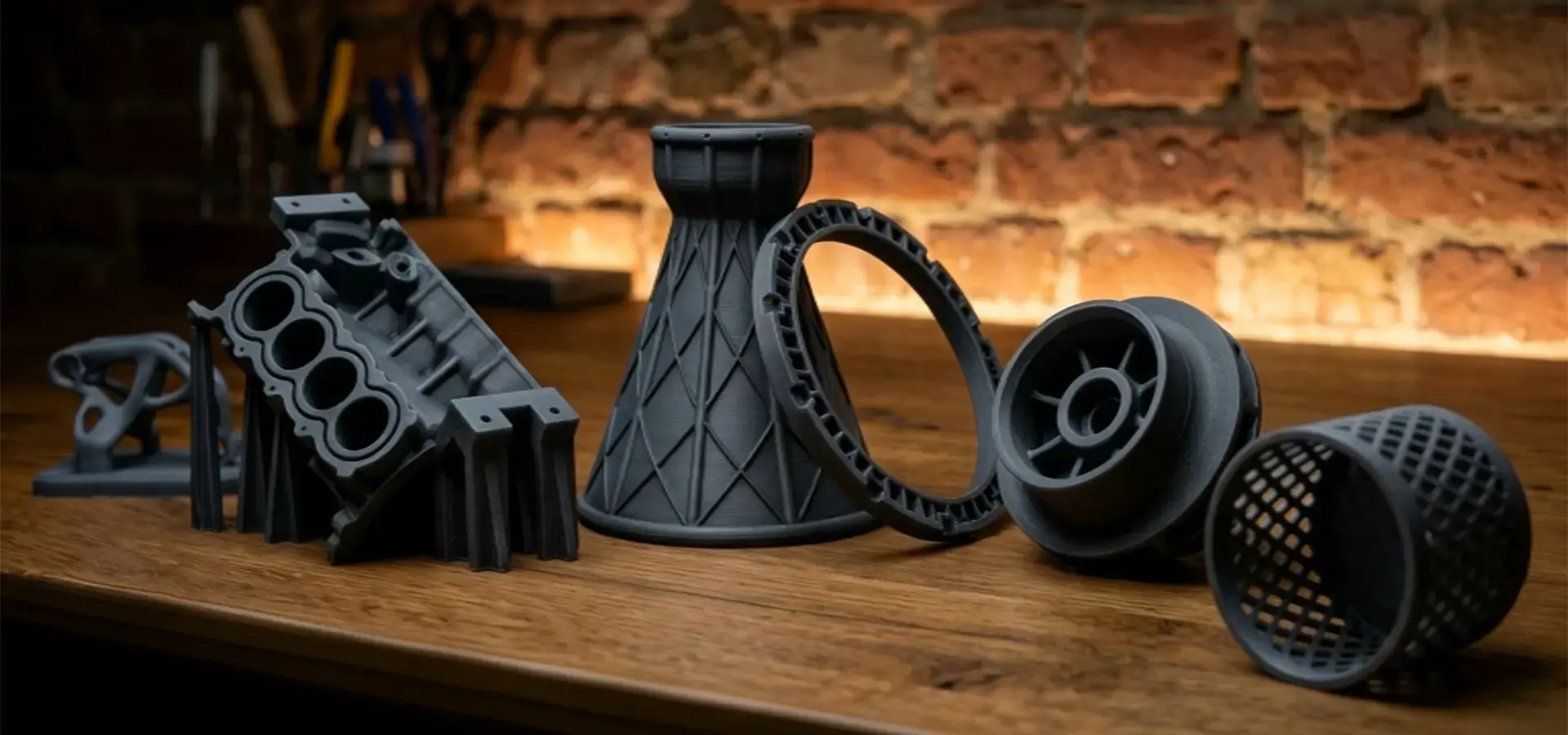
Advanced 3D print technologies have the ability to change everything, as shown by their use in aircraft. Direct Metal Laser Sintering (DMLS) makes it possible to make complicated fuel nozzles and light structure frames that combine multiple parts into a single unit. This consolidation cuts down on failure points and achieves weight reduction goals that are very important in aircraft use.
Companies that use these tools say that they have a lot more creative freedom and can optimize efficiency. By making internal cooling pathways and optimized load paths possible, component designs can be made that work better than options that are usually made, while also making the system simpler.
Medical and Dental Customization Services
3D printing is used in the medical field to make devices that are specific to each patient. This is possible because each unit can be mass-customized to fit the needs of a different body part. For surgical guide production, CT scan data is used to make precise tools that speed up procedures and improve surgery results.
Dental uses show how on-demand manufacturing for customized goods can save money. Small amounts of patient-specific aligners and dental models can be made at a low cost, so there is no need to keep a lot of stock on hand like with traditional manufacturing methods. This improves patient results by making sure the aligners and models fit perfectly and are comfortable to wear.
Automotive Prototyping and Tooling Applications
3D print technology is used by automakers to quickly make assembly jigs, clamps, and robotic end-of-arm technology. The technology makes it possible to make lightweight, comfortable tools that keep workers from getting tired and give designers the freedom to make changes based on feedback from production.
Customized interior parts and sample development for niche car models are two examples of production uses. Making working prototypes quickly shortens the time it takes to validate designs and lets you test the market before spending a lot of money on tools.
Conclusion
Businesses can do things like make fast prototypes, customize products, and handle their supply chains more quickly and easily with the help of advanced 3D print services. This technology gets rid of the limitations that come with standard manufacturing and opens the door to new ways of designing products and planning production. To get the best return on investment from professional implementation, you need to carefully think about which technologies to use, how to integrate them into your process, and what skills your seller has. Companies that use these technologies strategically have big benefits over their competitors because they get products to market faster, have more creative freedom, and can respond more quickly to customer needs.

FAQ
What criteria should I use to select a professional 3D print supplier?
Professionals should choose suppliers based on their professional skills, quality control methods, and the compatibility of their materials. Check the resolution, build volume, and material choices of the tools to make sure they meet the needs of your application. Quality certificates and written records of process controls show that the work is done to professional standards and the quality is always the same.
How do typical lead times compare for custom 3D printed components?
Professional 3D printing services usually have lead times between 2 and 7 working days, but this depends on the complexity of the part, the type of material needed, and any post-processing that needs to be done. For normal materials and shapes, rush services can cut down on the time it takes to 24 to 48 hours. Processing times may need to be longer for complicated structures or materials that aren't commonly used.
What quality assurance measures should I expect from professional suppliers?
Professional providers use complete quality control systems that check measurements, test materials, and keep records of the whole process. You can expect thorough quality reports that include statistics on confirmed dimensions and material properties. For important uses, advanced providers offer process traceability and batch documentation.
Partner with Magforms: Your Trusted Industrial 3D Print Manufacturer
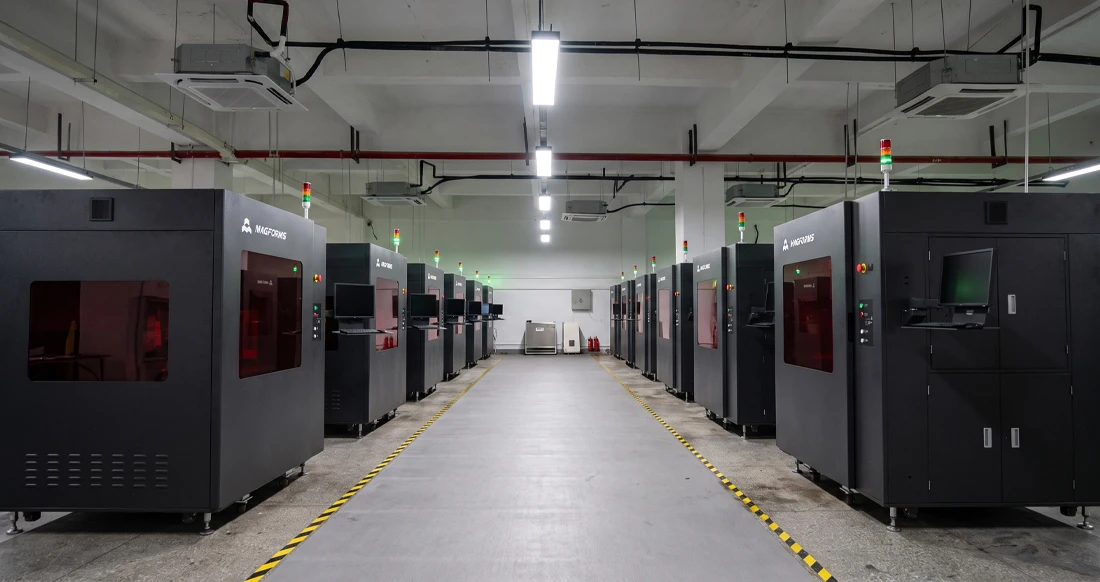
Magforms offers the best 3D printing services by combining cutting-edge technology with a wide range of support services. Our industrial-grade systems are made with German Scanlab galvanometers, AOC lasers, and Panasonic servo motors, which make them very reliable and accurate for tough jobs. We offer cutting-edge technology backed by years of experience. We have over 22 patents and 30 protected brands. Our open-source design attitude encourages material flexibility, and our unified method uses the best hardware and materials to give you the best performance. Get in touch with our expert team at info@magforms.com to find out how our advanced 3D print supply services can change the way you make things and help your business grow faster by using precise additive manufacturing solutions.
References
1. Gibson, Ian, David Rosen, and Brent Stucker. "Additive Manufacturing Technologies: 3D Printing, Rapid Prototyping, and Direct Digital Manufacturing." New York: Springer, 2021.
2. Wohlers, Terry, and Tim Gornet. "Wohlers Report 2023: 3D Printing and Additive Manufacturing Global State of the Industry." Fort Collins: Wohlers Associates, 2023.
3. Sculpteo. "The State of 3D Printing 2023: Annual Report on Global Adoption and Market Trends." Paris: Sculpteo Industry Survey, 2023.
4. American Society for Testing and Materials. "Standard Terminology for Additive Manufacturing Technologies." ASTM F2792-12a, West Conshohocken: ASTM International, 2023.
5. Kellner, Thomas. "Industrial 3D Printing: How Additive Manufacturing is Transforming Supply Chains and Production." Cambridge: MIT Technology Review, 2023.
6. Huang, Samuel H., Peng Liu, Abhiram Mokasdar, and Liang Hou. "Additive Manufacturing and Its Societal Impact: A Literature Review." International Journal of Advanced Manufacturing Technology, Vol. 125, 2023.

Magforms makes design and manufacture easier.
Popular Blogs
-
 Industry InsightsManufacturing Industry
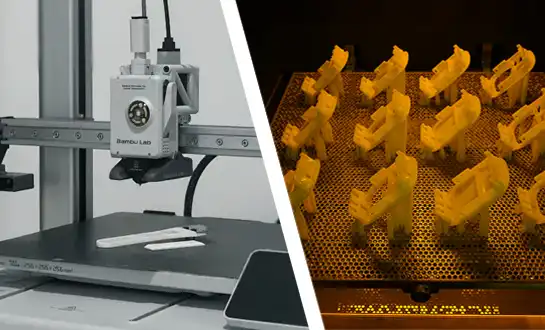
FDM vs. SLA Printer: Which Technology Is Right for Your Project?
-
 Industry InsightsManufacturing Industry
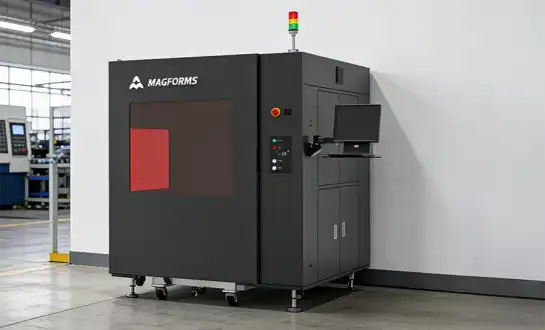
Top 5 Applications of Industrial 3D Printers in Manufacturing Today
-
 Industry InsightsManufacturing Industry
Why Stereolithography 3D Printers Are Unmatched for Microfluidic Device Prototyping?