How to Choose the Best Resin Printer for Your Business Needs?
You need to carefully think about your production needs, income, and long-term operating goals in order to choose the right resin printer for your business. Photopolymerization technology in a resin printer lets it make very exact parts with great surface quality. This makes it perfect for businesses that need precise dimensions and fine details. If you know what you need for your application, like fast prototyping, small-batch production, or specialized manufacturing, you can find the best option that balances performance, cost-effectiveness, and dependability for long-term business success.
Understanding Resin Printing Technology for Business Applications

The resin 3D printing technology is a big step forward in additive manufacturing. It uses photopolymerization to turn liquid photopolymer materials into solid, very detailed things. Traditional filament-based printing methods are very different from how this technology works. It offers better accuracy and surface quality that meet strict industry standards.
Core Technologies and Their Business Impact
Stereolithography (SLA), Digital Light Processing (DLP), and Liquid Crystal Display (LCD) are the main types of plastic printing methods. Different light sources and curing processes are used by each technology, which has an effect on the printing speed, clarity, and quality of the parts. SLA systems use precise laser beams to fix plastic point by point, which makes them very accurate for making shapes with many angles. Digital micromirror devices used in DLP technology project whole layers at once, which greatly shortens the time it takes to print bigger cross-sections.
|
Technology |
Light Source |
Speed |
Accuracy |
|---|---|---|---|
|
SLA |
Laser |
Medium |
Very High |
|
DLP |
Projector |
Fast |
High |
|
LCD |
UV screen |
Very Fast |
Medium |
Modern commercial resin printers can make details as small as 10 to 50 microns, and the most modern ones can get as small as 10 microns. With this feature, manufacturers can make working prototypes, tools, and finished parts that used to require expensive standard manufacturing methods. The isotropic qualities of finished resin parts ensure that their mechanical strength is the same in all directions. This is not the case with filament-printed parts, which are anisotropic.

Material Versatility and Performance Characteristics
Modern resin formulations include a lot more than just basic photopolymers. They also include engineering-grade materials with better mechanical properties, biocompatibility certifications, and unique qualities like being clear, flexible, or resistant to high temperatures. For dental uses, medical-grade resins must meet strict biocompatibility standards. For precision tooling uses, ceramic-filled formulas offer great physical stability.
Defining Your Business Requirements: Segmenting Needs for Optimal Match
To choose the right resin printer, you should first carefully look at your unique output scenarios and operational needs. It is important to make sure that the printer's capabilities match your manufacturing goals because different business apps need different performance qualities.
Production Volume and Application Analysis
Knowing how much you plan to make will help you decide whether you need desktop systems for rapid prototyping or industrial-grade machines that can make batches all the time. Small design companies and new businesses can often benefit from entry-level systems that are easy on the wallet and produce high-quality prints in small quantities. On the other hand, well-known manufacturers who need steady throughput need strong industrial platforms that have a history of dependability.
Specific needs for an application have a big impact on printer selection. Jewelry makers need tools that can work with castable resins that don't contain any ash during the burning process. For patient-specific uses, dental labs need materials that are safe and that are consistently accurate in terms of size. For useful testing, automotive development needs a lot of parts to be built at once and engineering-grade materials.
Budget Considerations and Total Cost Analysis
Planning a budget includes more than just the original costs of the tools. It also includes ongoing costs like replacement parts, consumable materials, professional support, and maintenance needs. Entry-level systems might have low prices at first, but the cost of each part might be higher because of limited materials or less efficient use. Most of the time, industrial systems offer better long-term value because they increase output, make materials more flexible, and make them last longer.
To figure out the total cost of ownership, you have to look at how much material is used, how often prints fail, how often repair is needed, and how long you expect the equipment to last. Systems with open material platforms can save you a lot of money because they don't need proprietary resins and let you use competitive buying methods.
Detailed Comparison and Evaluation of Top Resin Printers
There are many types of resin printing systems on the market today, from simple tabletop units that don't cost much to complex industrial systems. Knowing the differences between top makers and how they use technology lets you make smart buying decisions based on objective performance standards.

Technology Platform Analysis
Different leading makers have come up with different ways to use resin printing technology, and each has its own benefits for different uses. Formlabs was the first company to make desktop SLA technology, and their systems are easy for professionals to use. Peopoly, on the other hand, works on large-format LCD systems that are great for high-volume output at a great price. Phrozen makes high-resolution LCD printers that can print at very high speeds, and Anycubic has cheap options for people who want to save money.
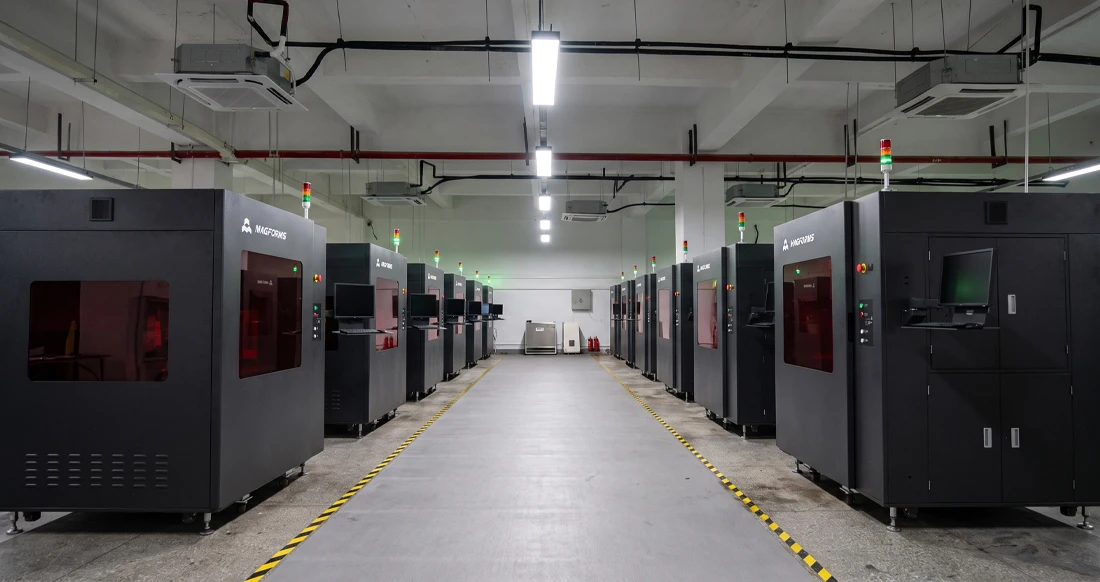
Advanced features like changeable spot-size laser technology are built into industrial-grade systems from companies like Magforms. This makes them 30–50% faster than regular systems. Precision parts, like German Scanlab galvanometers and AOC lasers, are used in these platforms to make sure they are very reliable and work consistently.
Performance Metrics and Capabilities
Print precision is a key differentiator, with the best systems being able to reach XY resolutions of 20 to 50 microns and Z-axis layer heights of as little as 10 microns. But resolution isn't the only thing that affects print quality. Light regularity, mechanical stiffness, and thermal stability are also very important. These all have a big effect on the accuracy and finish of the final part.
Build number issues are very different depending on the needs of the program. Most desktop systems have built-in areas that are 120 to 200 mm wide, which are good for small parts and samples. Industrial platforms can hold large amounts bigger than 400 mm in any direction, which lets them make big parts or do a lot of work at once. The best build volume relies on the sizes of your usual parts and how efficiently you want to make them.
Practical Considerations for Procurement and Maintenance
To successfully set up a resin printer, you need to pay close attention to the details of purchasing, your relationships with suppliers, and the printer's ongoing upkeep needs. These operating factors have a big effect on the total cost of ownership and long-term output.
Supplier Selection and Support Services
Finding dependable providers with a wide range of support services is key to a smooth rollout of equipment and ongoing operating success. Suppliers should be judged on their technical knowledge, reaction times, supply of spare parts, and training programs. For applications that are essential to production, suppliers that offer technical support 24 hours a day, seven days a week, and promise a quick answer are very helpful.
When buying industrial-grade equipment that needs specialized care, it's best to go with sellers who have been around for a while and offer service in your area. Magforms and other companies like it offer full help packages that include guaranteed expert support over the phone and on-site service when needed.
Maintenance Protocols and Best Practices
Following the right repair steps will make sure that your equipment lasts longer and produces uniform prints. Regular maintenance tasks like cleaning, calibrating, and replacing parts keep the machine running at its best and avoid costly downtime. Industrial systems need more complex ways to be maintained, but they usually have longer repair gaps and better records.
Setting up preventive maintenance plans based on what the maker suggests and how the equipment is used helps find problems before they affect production. Keeping enough extra parts on hand, especially for parts that are used up quickly, like LCD screens or FEP films, lowers the risk of downtime and keeps production going.
Making the Final Decision: Criteria and Recommendations for B2B Clients
All technical, financial, and practical factors should be taken into account during the final printer selection process. This should help you make a choice that fits with your business goals and growth plans.

Performance Optimization and Industry Alignment
Making sure that the printer's features match the needs of the business guarantees the best performance and return on investment. For automotive uses, large build sizes and engineering materials that work well together are helpful. For medical uses, safe materials and accurate measurements are more important. Jewelry makers need systems that are designed to work best with resins that can be made and to reproduce small details.
Case studies show how applications have worked well in different fields. When a major dental lab added industrial SLA systems with automatic post-processing, they were able to cut production costs by 40%. Using large-format resin printers for functional testing parts, a car supplier cut the time it took to make prototypes from weeks to days.
Integration and Scalability Considerations
Think about how the new tools will fit in with the current quality systems and processes. Advanced connectivity features, cloud-based tracking, and automatic reporting in systems make operations run more smoothly and give useful output data. Scalability potential makes sure that your investment can grow with your business as it needs to.
Modern industrial systems have advanced features, such as deep learning methods for process optimization, which can boost speed by an extra 20% through smart scanning path optimization. These skills give businesses that need to be as efficient and reliable as possible big benefits over their competitors.
Conclusion
When choosing the best resin printer for your business, you need to think about its technical skills, operational needs, and budget. You can find systems that give you long-term value and a competitive edge if you know what your program needs are, how much you need to make, and your quality standards. Instead of just looking at the beginning equipment prices, it's important to think about the total cost of ownership, the ability of the supplier to support the system, and its long-term scalability potential. Modern resin printing technology opens up new ways to improve efficiency and come up with new ideas in a wide range of industries. To get the most out of your investment, you need to be very careful when choosing what to print on.
FAQ
What factors should I prioritize when evaluating resin printer performance?
As the most important technical factors, pay attention to print quality, build volume, printing speed, and material suitability. But machine reliability, the level of assistance from the supplier, and the total cost of ownership are also very important. Think about what your individual application needs. For example, dental applications need materials that are accurate in terms of size and biocompatibility, while jewelry making needs materials that can reproduce fine details and work with castable resin.
How do I calculate the true cost of resin printer ownership?
The original investment in equipment, ongoing material costs, upkeep costs, replacement parts, and possible downtime costs are all part of a total cost study. Take into account the rates at which materials are used, which change a lot depending on the application and print setting. Think about the ability to change the price of materials. Systems that can handle multiple plastic brands are better at keeping costs down than platforms that only use one brand of material. Costs of training and ramp-up times for output should be included in your estimates.
What maintenance requirements should I expect for industrial resin printers?
Industrial systems need to be calibrated, cleaned, and have parts replaced frequently. Typical care includes replacing the FEP film, cleaning the resin tank, maintaining the optical system, and checking the accuracy from time to time. More advanced systems often have automatic repair alerts and steps that show you how to do things. Plan your budget for parts that will need to be replaced often, and get in touch with experienced service providers for more complicated fixes.
Contact Magforms for Your Resin Printer Requirements
Magforms comes up with cutting-edge resin printer solutions that are made for tough industrial uses in many different fields. Our integrated method combines our own custom gear with the best material formulations, which guarantees that your production needs will be met with excellent performance and dependability. Our technological advances are backed by 22 patents and 30 filed trademarks. We offer complete solutions, such as changeable spot-size laser technology that speeds up systems by 30 to 50 percent compared to standard ones. Our global footprint helps more than 300 businesses around the world, and our expert technology teams are available 24 hours a day, seven days a week for consultations. Whether you're looking for a resin printer provider for small-batch testing or large-scale production, our experts can help you find the right one and offer you the best prices for buying in bulk. Email us at info@magforms.com to talk about your unique needs and find out how our advanced printing solutions can help you make more things.
References
1. Gibson, I., Rosen, D., Stucker, B., & Khorasani, M. (2021). Additive Manufacturing Technologies: 3D Printing, Rapid Prototyping, and Direct Digital Manufacturing. Springer International Publishing.
2. Jacobs, P. F. (2019). Fundamentals of Stereolithography: Photopolymerization and Applications in Manufacturing. Society of Manufacturing Engineers Technical Publication.
3. Lipson, H., & Kurman, M. (2020). Industrial 3D Printing: Technology Roadmaps and Implementation Strategies for Manufacturing Excellence. John Wiley & Sons Professional Publishing.
4. Thompson, M. K., Moroni, G., Vaneker, T., & Fadel, G. (2018). Design Considerations for Additive Manufacturing: Fused Deposition Modeling and Stereolithography Processes. ASME Manufacturing Science and Engineering Division.
5. Quan, H., Zhang, T., Xu, H., Luo, S., Nie, J., & Zhu, X. (2020). Advanced Materials for Stereolithographic 3D Printing Applications: Chemistry, Processing, and Applications. Chemical Engineering Journal Publication Series.
6. Williams, R. J., & O'Brien, C. M. (2021). Business Implementation of Additive Manufacturing: Strategic Considerations for Industrial Adoption. Manufacturing Technology Institute Research Publications.

Magforms makes design and manufacture easier.
Popular Blogs
-
 Industry InsightsManufacturing Industry
FDM vs. SLA Printer: Which Technology Is Right for Your Project?
-
 Industry InsightsManufacturing Industry
Top 5 Applications of Industrial 3D Printers in Manufacturing Today
-
 Industry InsightsManufacturing Industry
Why Stereolithography 3D Printers Are Unmatched for Microfluidic Device Prototyping?