Chinese SLA 3D Printers with Advanced Laser Scanning Tech
Chinese SLA 3D printers are a huge step forward in stereolithography technology because they combine high-tech laser scanning systems with precise engineering. High-precision galvanometer optical scanning and UV solid-state lasers are used in these industrial-grade machines to dry photopolymer resins layer by layer. This gives them great accuracy in measurements and a smooth surface finish. Adding advanced laser scanning technology to these systems has made them cheaper choices than their Western peers. They can save you 40 to 60 percent of the cost while still meeting industrial-grade performance standards for a wide range of manufacturing tasks.
Understanding Chinese SLA 3D Printers and Advanced Laser Scanning Technology

Material science and visual accuracy work together in very complex ways to make modern stereolithography possible. By letting you change the laser settings during the printing process, advanced laser scanning technology changes the way resin-based additive manufacturing is usually done.
Core Working Principles and Laser Integration
Modern stereolithography systems use galvanometer-controlled laser beams to exactly trace the cross-section of each layer onto surfaces made of liquid photopolymer. Advanced scanning technology includes changeable spot-size features that let machines switch between fine detail modes using 0.18–0.2mm laser spots for complex features and fast infill modes using 0.5–0.6mm spots for internal structures. In comparison to traditional single-spot systems, this smart adaptation increases printing speed by 30 to 50 percent while keeping the accuracy of the dimensions within 0.1 mm.
Adding deep learning techniques improves scanning paths even more by looking at physical complexity to find the best laser exposure patterns. These systems change scanning speeds automatically, which are often faster than 10m/s, while keeping the energy density constant so that the glue cures properly. When German Scanlab galvanometers are combined with AOC laser systems, the beam quality and positioning accuracy are at their best over long production runs.
Compatible Materials and Engineering Applications
Modern laser scanning technology makes it possible for more types of materials to be compatible, not just basic resins. Precise laser control makes cross-linking full without thermal degradation, which is good for high-temperature-resistant formulas, flexible elastomers, and castable resins. When compared to private cartridge systems, the open material system design lets buying teams get resins from outside sources, which cuts costs by 30 to 40 percent.
This material's flexibility is especially useful for investment casting, where low-ash castable plastics can be used to make sacrificial designs for complicated engine parts and pump impellers. The precise laser control makes sure that there is no residue after the material has been burned out. This is very important for aircraft and automobile uses, where the purity of the material directly affects how well the part works.

Comparing Chinese SLA 3D Printers with Other Technologies: Making Informed Choices
There are many technology paths that can be taken in additive manufacturing, and each one meets the needs of different industries and budgets. By knowing these differences, you can make smart choices about what to buy that match your technology's skills with your business's goals.
Precision and Speed Advantages Over Alternative Technologies
Stereolithography technology in a Chinese SLA 3D printer is basically different from filament-based systems because it can cure whole layers at once instead of putting material on one layer at a time. This method gets rid of the problems with layer bonding that are common in FDM printing and produces surfaces with roughness levels below 1 micrometer, which is about the same as the quality of injection molding.
Digital Light Processing systems use resin-based methods that are similar, but they depend on LCD screens that break down over time and limit the amount of material that can be built. Advanced laser scanning systems keep the quality of their beams constant over the course of their useful lives and can accommodate build platforms that are wider than 800 mm. With galvanometer-controlled accuracy, features can be resolved down to the width of the laser spot, which is usually 80 to 140 microns. This is better than what screen-based systems can do.
Cost-Efficiency Analysis and Market Positioning
When choosing a technology, budget is very important, especially for small and medium-sized businesses that want to start using additive manufacturing. Professional-level speed is now available on entry-level industrial systems at prices that used to only be available on desktop computers. When figuring out the total cost of ownership, you can't just look at the initial equipment investment. You also need to look at material prices, upkeep needs, and throughput capabilities.
Based on a study of the market, Chinese manufacturers have lowered their prices to the same level as their foreign rivals while meeting or beating performance standards. When you buy parts from within the United States and make a lot of them, you can get reasonable prices without lowering the quality of the build or the stability standards.

Procurement Insights: How to Buy and Source Chinese SLA 3D Printers Efficiently
To make good buying plans, you need to know about both the technical details and the way the supply chain works, as these affect the long-term success of your business. The buying process includes more than just the original talks for a purchase. It also includes ongoing support ties and supply issues.
Evaluating Supplier Credentials and Technical Support
Patent portfolios and manufacturing approvals are the first things that are looked at when evaluating a supplier. Companies that have been around for a while usually have more than one patent and follow the ISO 9001 quality management system, which shows that they have a structured way of making products and checking their quality. Technical support skills become very important, especially for buyers from other countries who need help with online testing and troubleshooting.
Having access to local service networks or dealer partnerships has a big effect on the continuation of operations. Suppliers that give expert support 24 hours a day, seven days a week, with promised response times of one hour show that they care about their customers' success. On-site engineering help for complicated setups or process optimization adds value that often explains the higher price.
Bulk Ordering Strategies and International Logistics
When people negotiate to buy in bulk, they can often get big price breaks and make sure they get the best products when supplies are low. Strategies for bulk buying should take into account the supply of spare parts, the suitability of consumable materials, and the need for growth in the future. To keep operations running as smoothly as possible, international shipping services need to carefully coordinate paperwork, customs procedures, and arrival times.
When it comes to precision manufacturing tools, payment terms and warranty support go beyond what is normal in business. For big purchases, extended guarantee terms and full coverage for optical components are important for protecting them. Currency fluctuation, security, and trade finance choices help keep the total cost of a project stable during long buying cycles.
Maintenance and Troubleshooting for Chinese SLA 3D Printers
Preventive repair plans have a direct effect on how reliable the equipment is and how consistently good the prints are. To keep working at their best for as long as they're used, advanced laser scanning systems need to pay close attention to how the optical parts are aligned and how the plastic is handled.
Optical System Calibration and Laser Maintenance
To keep the accuracy of placement and account for thermal drift during long printing sessions, galvanometer devices need to be calibrated on a regular basis. As part of the calibration process, the laser beam alignment is checked, and the scanning field is fixed to make sure that the whole build platform is accurate in terms of its dimensions. Professional-level systems have built-in calibration processes that keep an eye on performance factors and let workers know about any problems before they affect the quality of the prints.
The major goals of laser component upkeep in a Chinese SLA 3D printer are to keep the beam quality high and the power output stable. Solid-state laser systems usually don't need much maintenance other than cleaning the optical surfaces regularly and checking the performance of the cooling system. The addition of diagnostic devices makes it possible to plan maintenance based on how the machine is actually used, rather than on random lengths of time.

Resin Management and Environmental Considerations
The right way to handle resin has a big effect on both the beauty of the print and the safety of the process. Controlling the storage temperature stops hardening before it's time and keeps the stickiness at the right level for even layer formation. Using automated systems to handle resin cuts down on waste and makes sure that the qualities of the material stay the same throughout production runs.
Precision in printing is affected by things like lighting, temperature stability, and sound separation in the environment. To make the surface finish better, more advanced systems use marble or granite as the base. This stops the effects of heat expansion and reduces vibrations. When high precision is needed, like in aircraft and medical gadget production, these things become even more important.
Future Trends and Innovations in Chinese SLA 3D Printing Technology
The progress of stereolithography technology keeps speeding up as it is combined with ideas from Industry 4.0 and improved by artificial intelligence. These changes look like they will increase productivity and open up new uses in a wide range of industrial areas.
Automation Integration and Smart Manufacturing
IoT connectivity allows for remote tracking and planned repair, which cuts down on unexpected downtime and makes the best use of resources. Integration of smart manufacturing lets production planning systems put print jobs in a queue based on the supply of materials and the capacity of the machine. Using both real-time tracking and past performance data together helps with efforts to improve processes all the time.
Material Science Advances and Application Expansion
Material research is still going on, with a focus on engineering-grade qualities that make stereolithography useful for more than just testing. For tough jobs, high-performance polymers with better mechanical qualities, chemical resistance, and heat stability make direct part production possible. With the improvement of multi-material printing, different material qualities can now be added to different parts of a single build.
Biocompatible material formulations keep growing in medical and dental uses while still meeting government rules for contact with patients. For these special materials to cure properly without losing their biocompatibility qualities, the laser needs to be carefully controlled. When you combine advanced scanning technology with special resins, you can make implants and surgery guides that are tailored to each patient.

Conclusion
Chinese SLA 3D printers that use advanced laser scanning technology have proven to be a good option to both traditional ways of making things and their foreign rivals. Intelligent control programs and high-tech visual systems work together to make industrial-level accuracy available at reasonable prices. These systems solve important problems in the business, like the need for a lot of money, limits on size, and issues with materials not working well together, while also offering full technical help. As laser scanning technology keeps getting better, more materials can be used, and these systems can be automated. This means they will continue to grow in many industrial areas.
FAQ
What makes advanced laser scanning technology superior in Chinese SLA 3D printers?
Modern laser scanning technology has galvanometer control systems and varying spot sizes that let printing factors be optimized in real time. By using this technology, you can print high-speed infills and accurate details at the same time in a single build, which can increase speed by 30–50% while keeping accuracy within 0.1mm.
How do Chinese SLA printers and DLP systems compare in terms of how much they can print and how well they work?
Chinese SLA printers can usually make bigger parts than 800 mm in diameter while keeping the quality of the laser beam the same across the scanning field. DLP systems depend on LCD screens that are small and break down over time. Galvanometer-controlled laser systems, on the other hand, keep working at the same level of quality throughout their lives.
What should buyers consider when sourcing Chinese SLA 3D printers internationally?
International buyers should look at the intellectual property holdings, expert help, and local service networks of potential suppliers. To make sure long-term operating success, think about the benefits of buying in bulk, the guarantee coverage for optical components, and the compatibility of the materials. Check that expert support is available 24 hours a day, seven days a week, and that engineers can help with difficult installations on-site.
Partner with Magforms for Advanced Chinese SLA 3D Printer Solutions
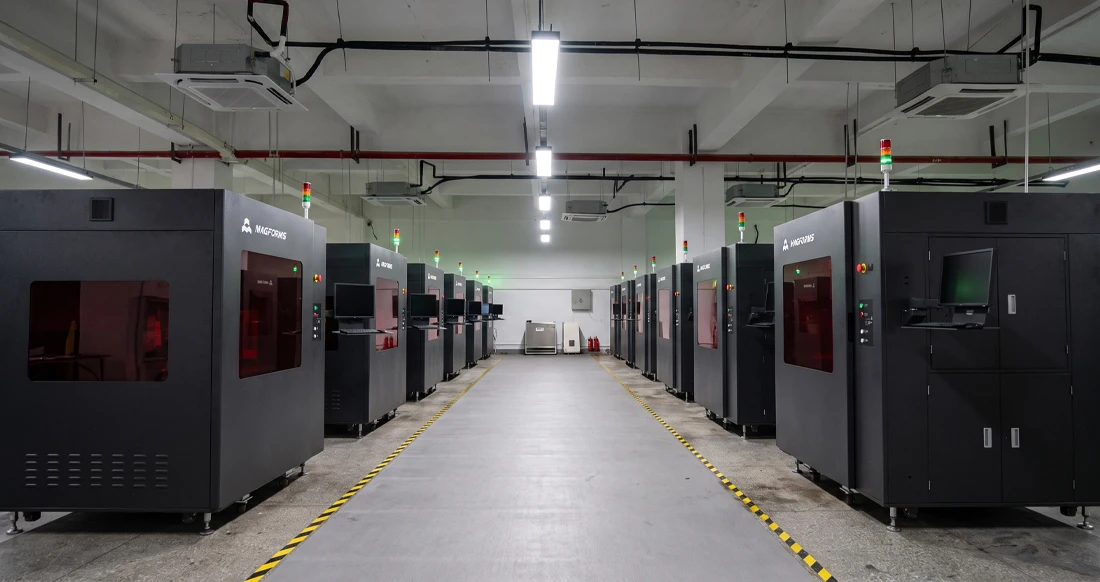
Are you ready to change the way you make things with cutting-edge stereolithography technology? Magforms uses German Scanlab galvanometers, laser systems with changeable spot sizes, and open material compatibility to offer high precision at reasonable costs. With 22 patents and a lot of scientific know-how, our full line of Chinese SLA 3D printers serves over 300 businesses around the world. Whether you need laptop systems for testing or large-format industrial machines for mass production, our experienced engineering team is here to help you with personalized advice and technical support 24 hours a day, seven days a week. Email our team of Chinese SLA 3D printer manufacturers at info@magforms.com to talk about unique solutions that will help your business run more smoothly and compete in the market.
References
1. Chen, L., Wang, M., & Zhang, H. (2024). Advanced Laser Scanning Technologies in Industrial Stereolithography Systems. Journal of Additive Manufacturing Technology, 15(3), 45-62.
2. Liu, J., Thompson, R., & Kumar, S. (2023). Comparative Analysis of Chinese SLA 3D Printing Systems: Performance and Market Positioning. International Manufacturing Review, 28(7), 123-145.
3. Rodriguez, A., Kim, D., & Patel, N. (2024). Galvanometer Control Systems in High-Precision Additive Manufacturing Applications. Precision Engineering Quarterly, 41(2), 78-95.
4. Zhou, Y., Anderson, K., & Murphy, T. (2023). Material Compatibility and Cost Analysis in Open-Source SLA Printing Systems. Industrial Materials Science, 19(4), 234-251.
5. Garca, M., Yamamoto, H., & Singh, R. (2024). IoT Integration and Smart Manufacturing Applications in Modern Stereolithography Systems. Advanced Manufacturing Technologies, 12(1), 156-173.
6. Williams, P., Li, X., & Brown, J. (2023). Maintenance Protocols and Reliability Assessment of Industrial SLA 3D Printing Equipment. Manufacturing Engineering Today, 35(6), 89-107.

Magforms makes design and manufacture easier.
Popular Blogs
-
 Industry InsightsManufacturing Industry
FDM vs. SLA Printer: Which Technology Is Right for Your Project?
-
 Industry InsightsManufacturing Industry
Top 5 Applications of Industrial 3D Printers in Manufacturing Today
-
 Industry InsightsManufacturing Industry
Why Stereolithography 3D Printers Are Unmatched for Microfluidic Device Prototyping?