Can 3D Printing Machines Produce Functional Parts Quickly?
The way businesses make useful parts has changed dramatically thanks to modern 3D printing machines. Absolutely! With today's modern additive manufacturing systems, it is possible to make useful, end-use parts quickly while still keeping the accuracy and material qualities needed for tough uses. With stereolithography (SLA) and other industrial technologies, production processes can be measured in hours instead of days. This changes how testing and small-batch manufacturing work. Speed, on the other hand, relies on a lot of things, like the shape of the part, the material chosen, the layer precision, and the machine's powers. When buying, workers are looking for tools to make useful parts; knowing about these factors helps them make smart choices.
Understanding How 3D Printing Machines Work for Functional Part Production
To make functional parts, you need to know how 3D printing machines work. Using digital design files as a guide, additive manufacturing makes three-dimensional things by adding layers of material on top of each other. This layer-by-layer method is very different from subtractive methods like CNC cutting, and it has clear benefits for making complicated shapes and unique parts.
Core Technologies and Their Speed Characteristics
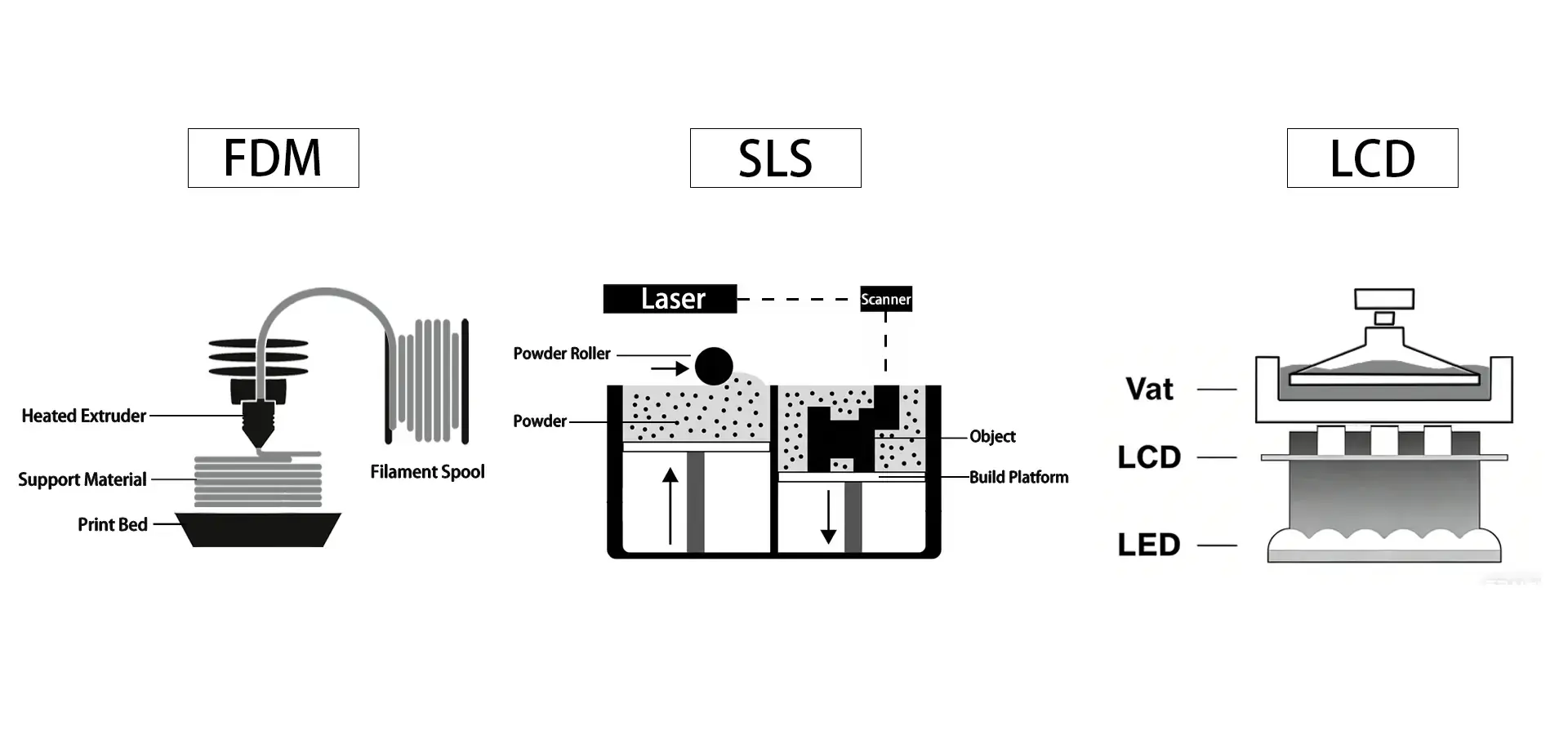
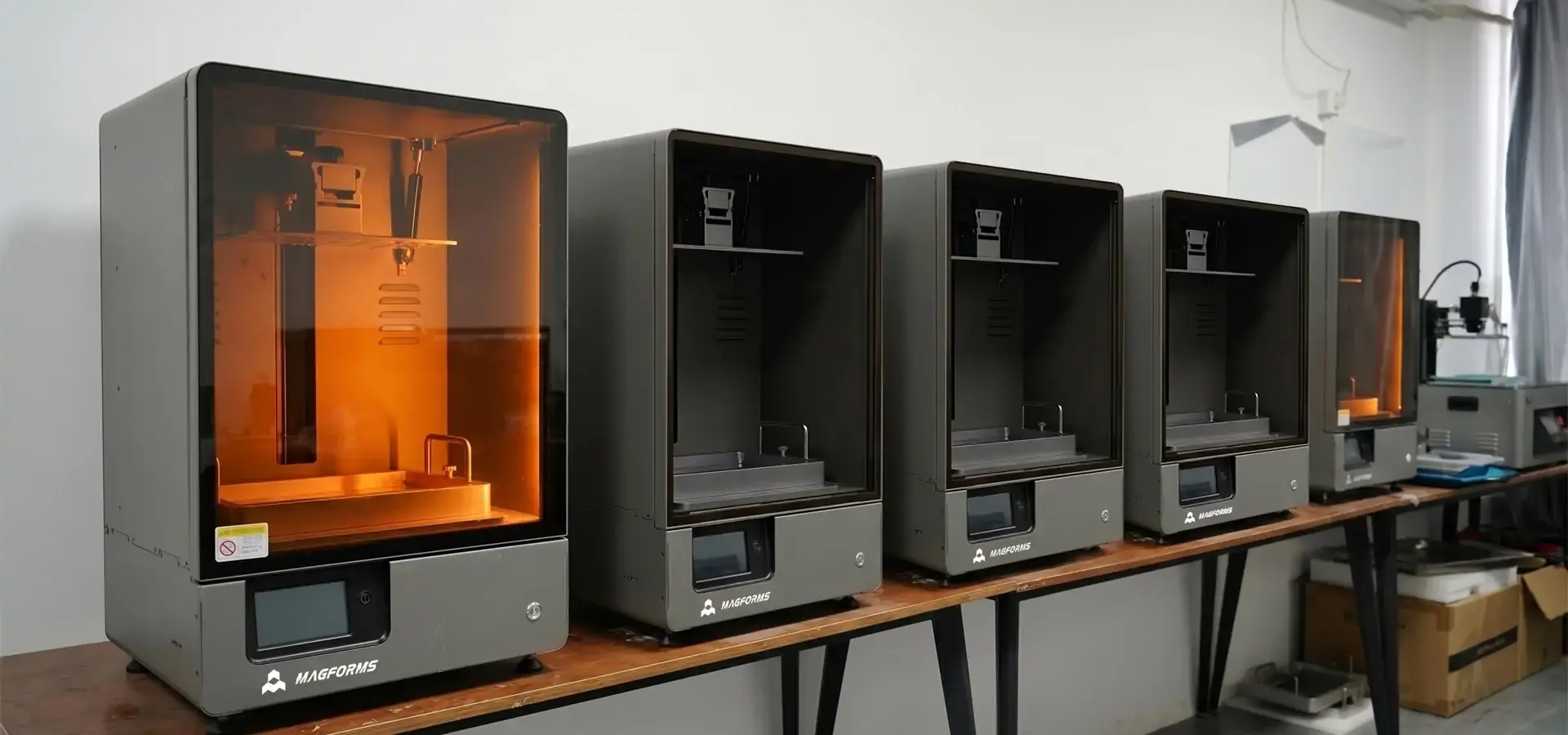
Different printing methods can print on different types of materials and at different speeds. Fused Deposition Modeling (FDM) pushes hot polymer filaments through heated tubes to make parts. For medium-sized parts, this process can take anywhere from 8 to 24 hours. Selective Laser Sintering (SLS) uses lasers to bond powdered materials together, making strong parts with good mechanical qualities but taking a long time to process afterward. Using UV light to cure liquid photopolymer resins, resin-based 3D printing technologies such as SLA and LCD can achieve excellent surface quality and fine detail reproduction. Compared with traditional laser-based SLA systems, modern LCD 3D printing machines like the P13 Pro use high-resolution LCD masking technology to cure entire layers simultaneously, significantly improving production efficiency. Combined with fast-curing engineering resins and optimized exposure control, depending on part geometry, layer settings, and resin selection, the P13 Pro can complete many complex functional parts within 4 to 8 hours.
Material Selection Impact on Speed and Durability
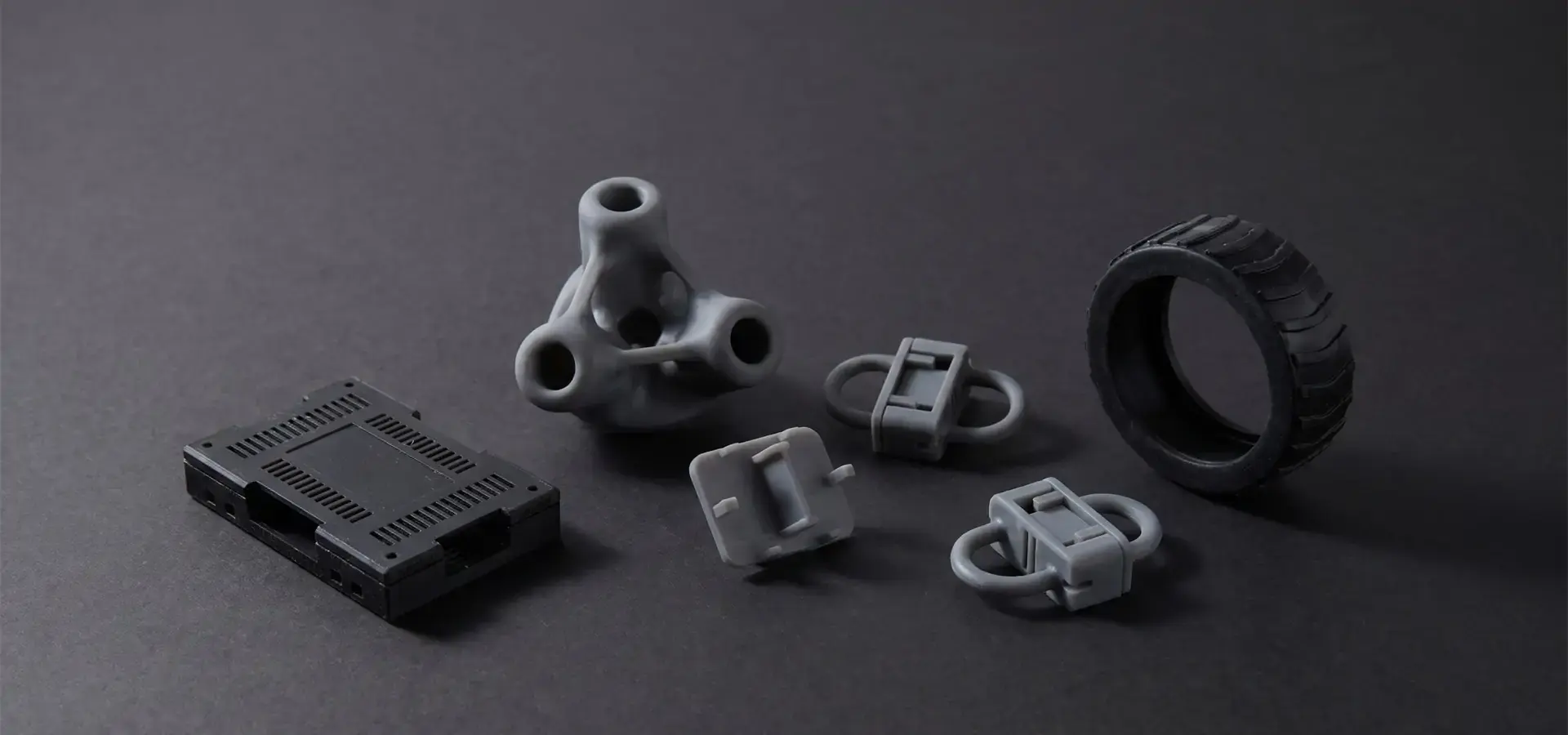
The choice of material has a huge effect on both the speed of production and the functionality of the result. Standard photopolymer resins cure quickly, but they might not be strong enough for load-bearing uses. For engineering-grade photopolymers, like high-temperature, flexible, and tough formulations, exact exposure conditions are needed, which can make print times 20–40% longer than with standard formulations. But these special materials have qualities that are similar to injection-molded plastics, which means they can be used in final products. Metal powder systems make metal parts that work, but they move more slowly because they have to control heat better. For functional part manufacturing, engineering-grade resins should be selected based on mechanical requirements such as tensile strength, impact resistance, thermal stability, and long-term dimensional accuracy rather than print speed alone.
Industrial Versus Desktop Equipment
While desktop machines are good for idea models and quick prototypes, they aren't reliable enough, don't work with all materials, and can't make a lot of parts at once for useful part production. Industrial-grade systems have precision motion systems, temperature-controlled rooms, and advanced material handling that make sure that measurements are always correct and that the same thing is made over and over again. For example, a dentistry lab that prints orthodontic aligners needs the stability that can only be found in industrial equipment. Each aligner needs to work properly and meet limits of just a few microns, which can only be done with systems that have two heating sources and stable temperature conditions. Modern industrial LCD 3D printing machines also benefit from monochrome LCD technology, which offers higher UV transmission efficiency and longer screen lifespan compared with earlier RGB LCD systems. This improvement enables faster curing speeds, more stable production, and lower long-term maintenance costs for industrial users.
Can 3D Printing Machines Deliver Speed Without Compromising Functionality?
The hardest thing about industrial additive manufacturing is finding the right balance between fast output and keeping things working properly. As technology improves, producers can more and more reach both goals at the same time.
Factors Influencing Print Speed
3D printing machines production time is directly related to layer thickness. Thicker layers (100–150 microns) shorten print time but might hurt surface finish and fine clarity. Thinner layers (25–50 microns) make production processes longer but give better surface quality with less post-processing. Pixel resolution, light uniformity, and exposure control are also critical factors in LCD 3D printing machines. Advanced LCD systems optimize exposure parameters dynamically across different model regions, allowing thicker sections to cure efficiently while maintaining fine detail accuracy in smaller features. This adaptive exposure strategy improves production efficiency while preserving dimensional precision.
Emerging Technologies Accelerating Production
High-performance LCD 3D printing machines improve productivity through larger monochrome LCD panels, faster exposure cycles, and parallel layer curing technology. Since each layer is cured simultaneously rather than point-by-point scanning, LCD systems can significantly reduce production time for batch manufacturing. Some advanced resin 3D printing systems reduce layer transition delays through optimized peeling motions and high-speed Z-axis movement, improving overall production efficiency. This gets rid of the break between layers that usually slows down production. Some manufacturers have introduced AI-assisted exposure optimization and intelligent slicing algorithms that reduce unnecessary lift movements, improve layer transition efficiency, and shorten overall print cycles.
Real-World Production Examples
Using an industrial LCD resin 3D printing machine to print customized dashboard parts cut prototype iteration cycles from three weeks to four days. This lets the seller test the design before investing in injection mold tooling, which costs tens of thousands of dollars. A company that makes medical devices can make surgery guides overnight, which makes it possible to plan cases the same day, which wasn't possible before. In competitive areas where speed-to-market is key to success, these shorter response times are a strategic advantage.
Common Bottlenecks and Solutions
Production slowdowns are usually caused by poor upkeep rather than problems with the technology itself. Print times are longer, and failure rates are higher when there is resin contamination, optical surface degradation, or bad calibration. Setting up regular cleaning schedules, keeping the setting in good shape, and changing products as directed by the maker all help keep performance at its highest level. The P13 Pro deals with weather problems by using a dual heating constant-temperature system that keeps the room at a constant temperature even in cold buildings. This is a common problem that makes less advanced equipment fail to print.
Comparison of 3D Printing Machines with Traditional Manufacturing for Functional Parts
To choose the best manufacturing method, you need to know the pros and cons of each method in terms of production rate, part complexity, and time constraints.
Speed and Cost Considerations
CNC cutting works great for metal parts that need to be very precise, but it's expensive for parts with complicated shapes because of the time and money needed to set up the machine and waste materials. It could take two hours to prepare and three hours to run a machine to make a metal bracket. Sixty percent of the raw material would be taken away as chips. When making a lot of parts (thousands), injection casting has the lowest cost per unit, but it takes weeks and costs $5,000 to $50,000 to make the mold. Additive manufacturing doesn't need any tools at all—a complicated bracket can be made in six hours with very little setup time, so it's a good option for small orders of less than 500 units.
Flexibility and Design Freedom
Traditional methods put design limits; for example, injection molding needs draft angles and walls that are all the same thickness, and cutting has trouble with internal channels and grid structures. 3D printing machines don't put many limits on geometry, so topology-optimized designs can be made that are strong but light. If an aircraft bracket is rebuilt for additive manufacturing, it might weigh 40% less than a machined version of the same thing, but it could still hold the same amount of weight, thanks to grid structures inside that can't be milled.
Precision and Build Volume Analysis
Dimensional accuracy of modern commercial printing systems is within ±0.1mm over 300mm lengths, which is good enough for most practical uses. The P13 Pro has a large build space (302.4 x 161.98 x 380 mm), which is big enough to print three normal shoe molds at the same time or one big part up to 380 mm long. With this feature, big parts don't have to be cut up into smaller pieces that need to be put together after printing, which saves time and reduces the chance of mistakes.
Market Trends in High-Speed Systems
Companies that make equipment are racing to make systems that work faster and still meet quality standards. Under optimized material and layer settings, some high-speed resin systems can achieve build speeds approaching 100 mm per hour in specific applications, which is twice as fast as machines from three years ago. At the same time, material makers have made rapid-cure plastic mixtures that keep their mechanical qualities while cutting down on contact times. As faster technology and better materials come together, additive manufacturing is becoming a better option for building bridges. It can make hundreds or thousands of parts before the cost of standard machining makes sense.
How to Choose the Right 3D Printing Machine for Fast Functional Part Production
When choosing strategic equipment, it's important to make sure that the 3D printing machine's powers match the production goals, whether the goal is to make proof samples or limited amounts of end-use components.
Matching Capabilities to Production Goals
Because prototyping is all about speed and being able to change designs quickly, normal plastic methods with reasonable build sizes work well. For end-use manufacturing, materials need to have certain mechanical properties, biocompatibility (for medical uses), or special features like being able to withstand high temperatures. Buyers should make sure that the tools they are interested in support the range of materials they will be using. When compared to private ecosystems, which force users to buy from a single seller at higher prices, open material systems are cheaper and give users more options.
Evaluating Speed, Quality, and Cost Factors
The total cost of ownership includes more than just the buying price. It also includes the cost of materials, repairs, and operating labor. A machine with a low purchase price but a high failure rate costs more in the long run because of lost materials, extra work to fix it, and late supplies. Print success rate should be carefully looked at—systems that achieve 95% first-print success compared to 80% achieve much lower effective costs. Manufacturers' claims about production speeds are often based on ideal conditions that are rarely met in real life, so they should be checked against sample part shapes at goal quality levels.
Critical B2B Purchasing Criteria
Long-term equipment usefulness depends on warranty coverage and help after the sale. Comprehensive guarantees that last two to three years and quick technical support help lower the risk of downtime. Problems can be fixed faster if there are nearby service workers or the ability to do diagnostics from a distance. Customization options are important when production needs change. Investment safety is provided by flexible systems that can accept software changes, more material tanks, or higher build volumes. Flexible funding programs lower the amount of cash that is needed, so businesses can match payment plans with the amount of money they make from using their tools.
Trusted Solutions for Industrial Needs
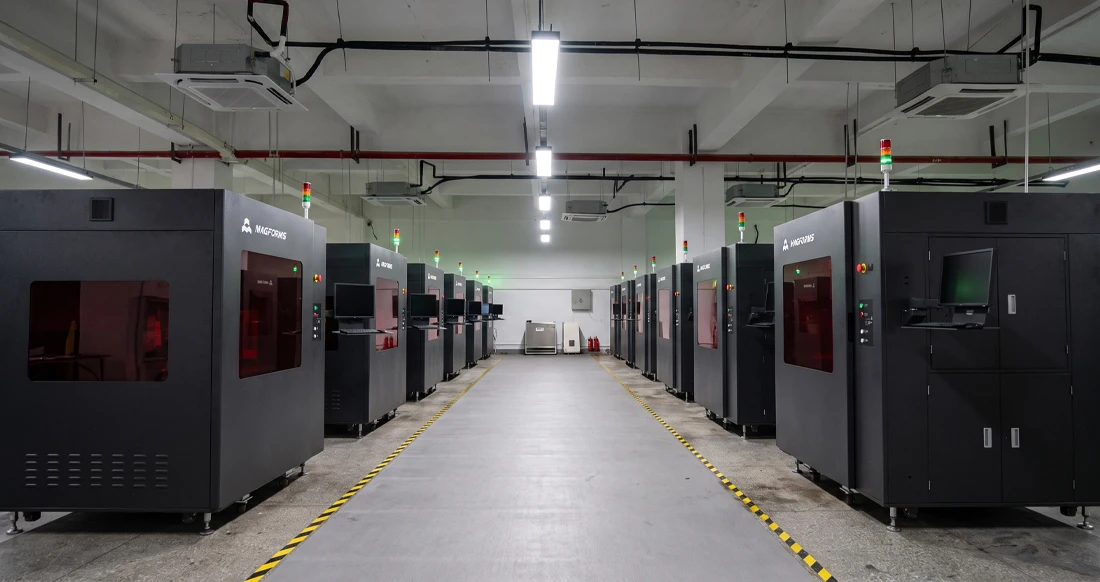
Customers around the world know and trust Magforms because it has a history of trustworthiness and performance. The company has 22 patents and works with over 300 businesses around the world. It offers bundled material-equipment solutions that get rid of the connectivity problems that come up in settings with products from different vendors. This method is shown by the P13 Pro, which uses self-developed resins that are perfectly matched to the printer's cure settings to ensure accurate measurements and reduce the number of print failures. Buyers get access to tested technology that comes with a lot of application engineering help, from setting up the technology for the first time to making sure it works best in production. The built-in storage lets you print without an internet connection, and you can change the device's settings directly from the screen. This is a useful design that was based on years of working in tough factory conditions.
Maintenance and Troubleshooting Tips to Ensure Consistent Fast Production
To keep up a high output rate, you need to do thorough preventative maintenance and quickly fix problems when they come up. When you don't take care of your equipment, quality and output always go down.
Essential Routine Practices
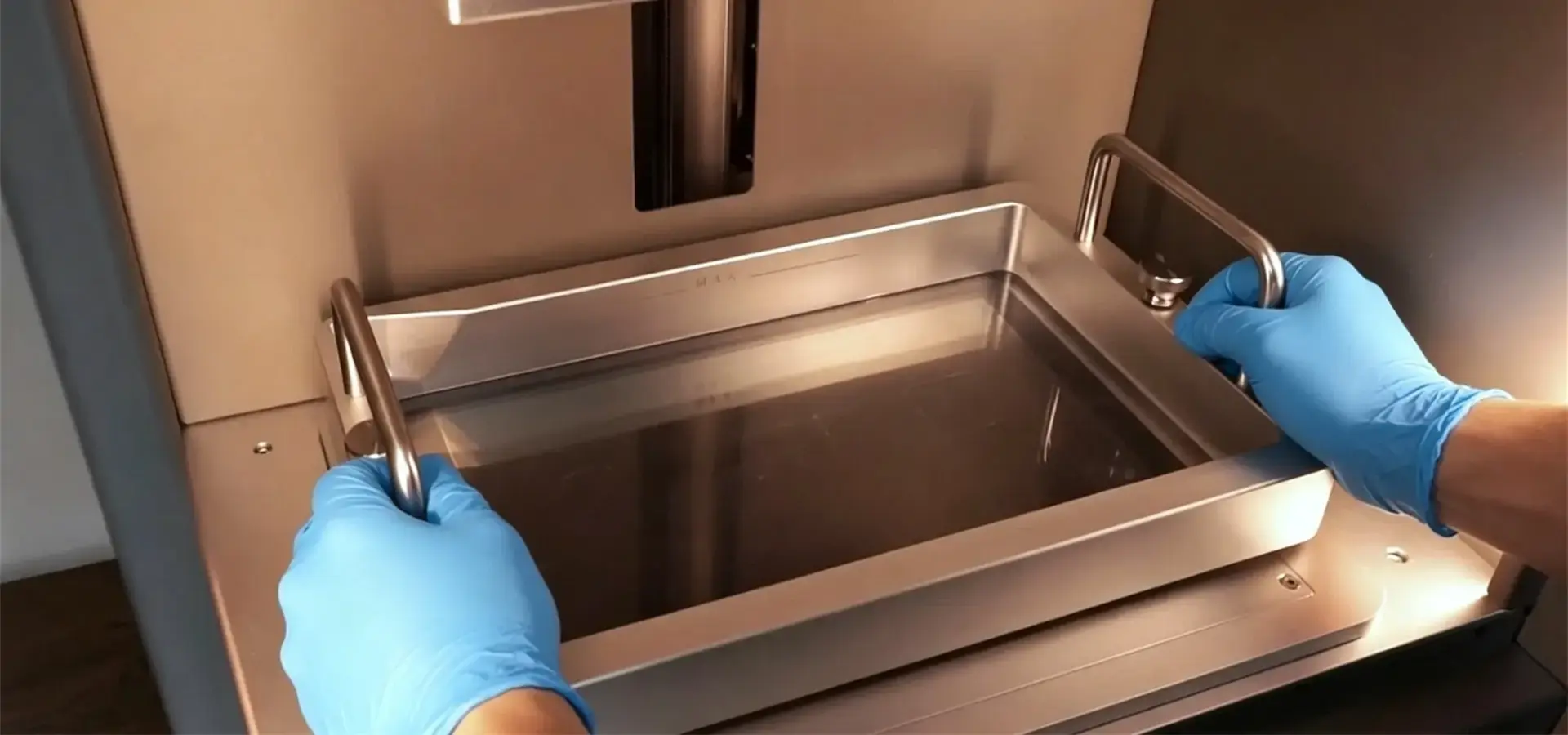
Cleaning resin tanks every day gets rid of partly finished particles that cause surface flaws and needless tank replacements. Power loss that causes longer exposure times and partial healing can be avoided by checking and cleaning the LCD screen surface, optical protection glass, and UV light source components once a week. Every month, the build platform is calibrated to ensure it remains perfectly parallel to the LCD exposure surface and resin vat film. This is necessary for the first layer to stick and for accurate measurements. Replacing worn-out parts like resin filters, FEP films, and wiper blades on time keeps small problems from getting worse and leading to major breakdowns.
Identifying and Resolving Common Issues
Layer binding that changes over time is often a sign of changing temperatures or material degradation. In more advanced models, intelligent monitoring systems can detect abnormal exposure conditions, temperature fluctuations, or layer separation issues during production, so problems can be fixed quickly before they spread to higher layers. Print problems that happen in the same places on the build platform could mean that the calibration is off or that the LCD exposure components or protective optical surfaces are contaminated. Systematic fixing using the manufacturer's diagnostic procedures makes it easy to quickly find the root causes, which could be mechanical, visual, or material-related. This lets you take the right steps to fix the problem.
Best Practices for Equipment Longevity
Working with equipment in a certain temperature range, humidity level, and air flow pattern greatly increases the life of its parts. High-efficiency air filtration systems help reduce exposure to volatile organic compounds (VOCs) released during resin printing from harming both the equipment and the people who use it. Parts don't break down before they should if you don't use harsh cleaning solvents that may damage seals, LCD protective surfaces, and transparent optical components. By following the manufacturer's instructions for software changes, you can make sure that your equipment continues to get better performance and more material compatibility after you buy it.
Conclusion
Modern additive manufacturing technology, including 3D printing machines, clearly answers the question of whether printing systems can make useful parts quickly: yes, they can, as long as buyers choose the right materials and tools for their needs. Industrial-grade systems have the speed, accuracy, and dependability needed to make useful parts in a wide range of fields, from medical devices to cars. Procurement professionals can make smart choices that speed up product development and allow for flexible production strategies when they understand how technology choice, material qualities, and operating practices affect each other. In the coming years, we can expect even more advanced features thanks to faster tools, better materials, and smarter process controls.
FAQ
How fast can current 3D printing machines produce functional parts?
Production speeds are very different depending on the technology, the size of the part, and the quality standards. At normal resolution settings, Resin-based 3D printing systems, including SLA and LCD technologies, typically achieve vertical build speeds of 20 to 40 mm per hour depending on resin type, layer thickness, and exposure settings. A small useful part that is 50x50x30mm could be finished in three to four hours, if support structures are included. It could take 12 to 18 hours for bigger parts, like a 200mm car body. These production times can be further reduced through high-speed monochrome LCD systems, optimized exposure settings, and batch-printing configurations. To set reasonable goals, you need to look at sample parts made of target materials and quality standards instead of depending on possible top speeds.
Which materials work best for functional parts?
Photopolymer materials that are made for engineering use have the right mechanical qualities for useful uses. Tough plastics can handle impact and bending stress, making them good for housings and snap-fit systems. High-temperature mixtures keep their shape above 150°C, which is important for parts that go under the hood of cars. Flexible materials make seals and parts that reduce vibrations possible. Instead of using stock formulas that don't have the right performance qualities, choosing materials should be based on the unique needs of the application, such as load conditions, weather exposure, and measurement limits.
Should businesses buy or lease equipment for manufacturing?
Leasing lowers the amount of money you need to pay up front and gives you the freedom to change as technology improves. When there is enough production to support ownership and the equipment will be used for core business tasks for five years or more, it makes sense to buy it. Using a mix of methods, like buying tried-and-true base systems and renting cutting-edge gear for testing, can help balance risk and freedom. Instead of just looking at the purchase price, financial models should take into account all of the costs of owning something, such as repairs, supplies, and operating labor.
Partner with a Trusted 3D Printing Machine Supplier
Magforms is ready to help you meet your needs for useful parts by providing you with high-speed, accurate, and dependable industrial tools. We know what it takes to run a high-stakes manufacturing setting because we are a reputable 3D printing machine maker that serves over 300 businesses worldwide. Our P13 Pro system has a very large build volume, dual temperature control, and high-efficiency filtering, all built into one platform that is made for busy production plans. Magforms offers complete material-equipment solutions that get rid of interface problems and boost output. These solutions are backed by 22 patents and full expert support. Email our expert team at info@magforms.com to talk about your unique application needs, get full specs, or set up equipment demos that show how it works before you commit.
References
Anderson, C. (2023). Additive Manufacturing for Industrial Production: Technologies, Materials, and Economics. Industrial Press.
Chen, L., & Martinez, R. (2024). Speed optimization in photopolymerization-based 3D printing systems. Journal of Manufacturing Science and Engineering, 146(3), 234-248.
Gibson, I., Rosen, D., & Stucker, B. (2024). Additive Manufacturing Technologies: 3D Printing, Rapid Prototyping, and Direct Digital Manufacturing (3rd ed.). Springer.
International Organization for Standardization. (2023). ISO/ASTM 52900:2023 Additive manufacturing—General principles—Fundamentals and vocabulary.
Thompson, M. K., et al. (2023). Design considerations for additive manufacturing: Framework and case studies. Rapid Prototyping Journal, 29(5), 891-910.
Wohlers, T., & Campbell, I. (2024). Wohlers Report 2024: 3D Printing and Additive Manufacturing Global State of the Industry. Wohlers Associates.

Magforms makes design and manufacture easier.
Popular Blogs
-
 Industry InsightsManufacturing Industry
FDM vs. SLA Printer: Which Technology Is Right for Your Project?
-
 Industry InsightsManufacturing Industry
Top 5 Applications of Industrial 3D Printers in Manufacturing Today
-
 Industry InsightsManufacturing Industry
Why Stereolithography 3D Printers Are Unmatched for Microfluidic Device Prototyping?