Can a Budget SLA Printer Handle Engineering-Grade Resins?
A budget SLA printer can work with engineering-grade resins, but only if you know what it can and can't do and make sure it's calibrated correctly. To cure photopolymer resins one layer at a time, modern low-cost mSLA (Masked Stereolithography) systems—often marketed as budget SLA printers—use monochrome LCD screens and 405nm UV LED arrays. Layer heights below 50 microns and XY resolutions covering 22 to 50 microns are just a few of the amazing features of these machines, which usually cost less than $1,000. They're a great bridge between hobbyist tools and professional-grade applications. But engineering-grade resins require precise temperature control, consistent UV exposure for complete curing, and formulations that deliver robust mechanical properties. When procurement managers and engineers set the exposure times properly and keep the best working temperatures between 68°F and 86°F, budget systems can make prototypes that work and have good mechanical qualities for things like car parts, dental models, and phone cases.
Understanding Budget SLA Printers and Engineering-Grade Resins
Defining Budget SLA Technology and Its Core Architecture
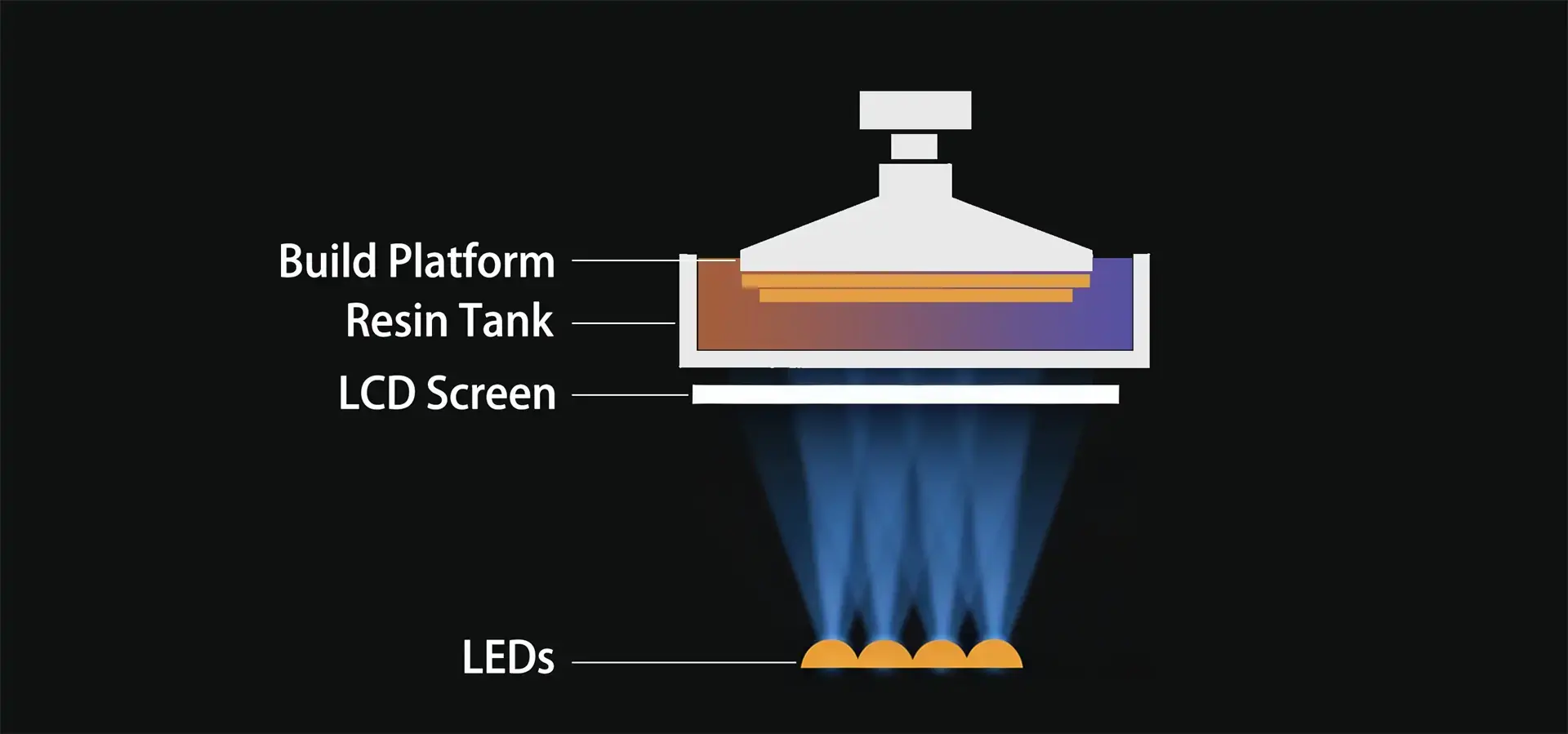
The phrase "Budget SLA printer" has completely changed what it means to be able to use resin-based additive manufacturing. In the past, stereolithography needed expensive galvanometers and laser systems, which meant that small producers couldn't use it because they couldn't afford the startup costs of more than $5,000. Most of the low-cost electronics on the market today use MSLA technology, which employs a high-resolution LCD screen to mask UV light and selectively cure each layer. This change in architecture gets rid of the need for complicated optical calibration while keeping the important 405nm wavelength standard needed for photopolymer cure. Instead of using lasers to trace lines, these systems cure entire layers at once, which makes the mechanics much simpler. A quality budget resin printer has dual linear rails for the Z-axis to keep it from wobbling, a monochrome LCD screen that lasts for 2,000 to 3,000 hours of printing, and light engines that provide greater than 90% UV distribution uniformity. Build volumes range from small 120x68x150mm platforms to medium-sized ones, with screens with 4K, 8K, or even 12K resolutions. The hardware can produce parts with high strength in the XY plane, though Z‑axis strength is typically lower due to layer adhesion limits. Dimensional accuracy is usually within ±0.05mm.
Engineering-Grade Resins: Types and Performance Standards
Standard photopolymers used for artistic models are not nearly as good as engineering-grade resins. These specialized formulations are designed to have the same mechanical properties as injection-molded thermoplastics, making them suitable for functional testing and end-use parts in demanding environments. Three primary categories dominate the engineering resin market: high-strength resins mimicking ABS or polycarbonate with tensile strengths exceeding 50 MPa; flexible resins with shore hardness ratings from 40A to 95A for gaskets and living hinges; and heat-resistant resins that maintain dimensional stability at temperatures beyond 150°C. Professional applications require these materials to meet stringent standards. In automotive rapid prototyping, resins must withstand thermal cycling and mechanical stress testing. Dental applications demand biocompatible certifications and precise dimensional accuracy for surgical guides and orthodontic appliances. Aerospace components need materials that maintain integrity under extreme temperature fluctuations while exhibiting minimal moisture absorption. Each resin formulation has unique viscosity characteristics and curing requirements that challenge budget printer capabilities, particularly regarding UV light penetration depth and post-cure thermal processing.
Key Challenges When Using Engineering-Grade Resins on Budget SLA Printers
Technical Limitations: Light Source and Curing Constraints
Budget SLA printers have UV LED arrays that work well with standard resins, but might not be able to handle highly filled or deeply pigmented industrial formulas. Light penetration depth determines layer bonding strength, and engineering resins containing glass fibers, ceramic particles, or specialized additives can scatter UV light, reducing effective curing. The 405nm wavelength standard works well for most photopolymers, but optimal absorption varies across resin chemistry. Some high-performance formulations are optimized for 355nm wavelengths used in industrial systems, resulting in incomplete curing or requiring exposure times so lengthy that print jobs become impractical.
Print volume and dimensional precision present additional hurdles. Engineering applications often require parts with tight tolerances across larger formats. Budget platforms with build areas under 200mm struggle with automotive interior panels or medical device housings requiring full-scale validation. The LCD masking approach introduces slight light bleed at pixel edges, potentially affecting dimensional accuracy in parts with wall thickness under 1mm. Z-axis resolution, while impressive at 10-50 micron layer heights, can still produce visible layer lines on curved surfaces that require extensive post-processing for functional testing.
Common Print Failures and Their Root Causes
Warping ranks among the most frustrating failures when using engineering resins on budget equipment. High-strength formulations often exhibit significant polymerization shrinkage—volume reduction during curing—creating internal stresses. Without heated build chambers, temperature gradients between freshly cured layers and ambient air cause differential shrinkage, leading to warped corners and detached prints. Poor layer adhesion manifests as delamination or horizontal cracking, typically resulting from insufficient exposure times that fail to create adequate chemical bonding between layers.
Brittleness in supposedly "tough" engineering resin parts usually traces to two causes: over-curing from excessive UV exposure that continues cross-linking beyond optimal polymer network formation, or insufficient post-cure processing. Many engineering resins require thermal post-curing at specific temperatures (often 60-80°C) for extended periods to complete polymerization and develop full mechanical properties. Budget printer users sometimes skip this step, resulting in parts that appear solid but fracture under moderate stress. Resin handling errors compound these issues—expired materials, contamination from mixing different formulations, or moisture absorption in hygroscopic resins all degrade final part quality.
Comparative Analysis: Budget SLA Printers vs Other 3D Printing Technologies for Engineering Applications
Budget SLA Versus FDM and MSLA Technologies
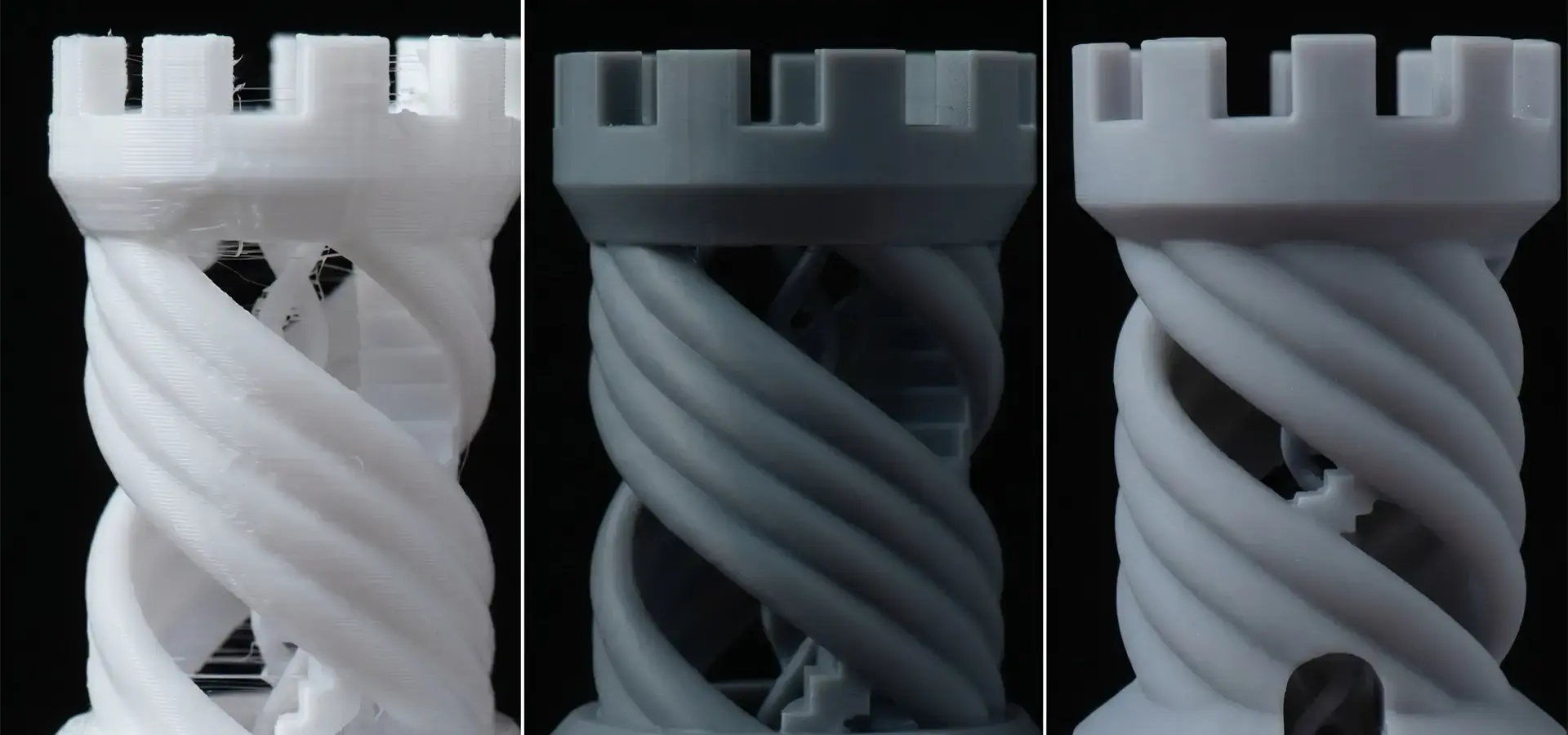
When evaluating additive manufacturing technologies for engineering prototypes, resolution and surface finish characteristics diverge significantly. Fused Deposition Modeling (FDM) extrudes thermoplastic filaments through heated nozzles, creating parts with visible layer lines and surface textures unsuitable for applications requiring smooth cosmetic finishes or precise mating surfaces. Budget resin printers achieve XY resolutions of 22-50 microns compared to FDM's typical 100-400 micron nozzle diameters, enabling reproduction of fine threads, small text, and intricate geometries impossible with filament systems.
Material compatibility comparisons reveal interesting trade-offs. FDM technology offers genuine engineering thermoplastics—actual ABS, nylon, polycarbonate, and even PEEK—providing authentic material properties for functional testing. Engineering-grade resins attempt to mimic these properties through photopolymer chemistry but rarely achieve identical performance, particularly regarding impact resistance and long-term UV stability. However, resin systems excel at complex geometries with undercuts and internal channels that would require extensive support removal in FDM workflows.
Budget Versus Industrial-Grade SLA Systems
Industrial stereolithography systems employ laser-based scanning rather than LCD masking, offering distinct advantages for production environments. Laser systems provide adjustable spot sizes and scanning speeds, optimizing exposure patterns for different geometries within a single build. They typically feature larger build volumes (300x300x400mm and beyond), heated resin tanks maintaining optimal viscosity, and robust mechanical systems engineered for 24/7 operation. These capabilities come at a high cost—industrial units start around $15,000 and easily exceed $50,000 for premium models.
Performance and reliability disparities become apparent under continuous operation. Industrial printers undergo thousands of hours of validation testing and incorporate redundant systems for critical components. Failure rates remain far below budget alternatives, crucial for businesses where downtime directly impacts revenue. However, for prototyping workflows and small-batch production, budget platforms deliver surprising value. A dental lab producing 10-20 models daily may find a $800 budget resin printer meets production demands at a fraction of industrial equipment costs.
Selecting the Right Budget SLA Printer for Engineering-Grade Resins
Critical Evaluation Criteria for B2B Procurement
Resolution specifications for a budget SLA printer deserve careful analysis beyond marketing numbers. A printer advertising 8K resolution means the LCD contains 7680x4320 pixels, but actual XY resolution depends on the build plate dimensions. An 8K screen across a 190mm width delivers approximately 24-micron pixel pitch, while the same screen across a 290mm width yields 38-micron resolution. Engineering applications requiring fine threads or small text need the tighter pixel pitch. Build volume considerations must balance part size requirements against the realization that larger platforms increase per-layer exposure times due to greater surface area requiring UV curing.
Resin compatibility extends beyond simple 405nm wavelength matching. The printer's light engine intensity, measured in milliwatts per square centimeter, determines exposure times and influences compatibility with heavily pigmented or filled engineering resins. Systems with adjustable UV power offer flexibility when working with diverse material libraries. Temperature control, often overlooked in budget platforms, significantly impacts success rates with viscous engineering formulations. Printers incorporating heated build chambers or resin tank heaters reduce failure rates in uncontrolled workshop environments.
The evaluation process should include hands-on testing with actual engineering resins relevant to intended applications. We've observed that manufacturers supplying sample parts or offering trial programs enable validation of dimensional accuracy and mechanical properties before capital commitment. The differences between marketing specifications and real-world performance with demanding materials can be substantial, making empirical testing invaluable for procurement decisions.
Accessories and Consumables for Optimal Performance
Building a complete production workflow requires investment beyond the printer itself. Washing stations utilizing isopropyl alcohol or specialized cleaning solutions remove uncured resin from printed parts, essential for achieving final surface quality and mechanical properties. Two-stage washing—initial rinse followed by a clean alcohol bath—prevents resin residue contamination. UV curing chambers complete the polymerization process, particularly critical for engineering resins requiring elevated temperatures to achieve rated mechanical properties.
Resin storage demands attention to prevent premature degradation. Amber or opaque bottles protect photosensitive materials from ambient light exposure, while airtight seals prevent moisture absorption in hygroscopic formulations. Temperature-stable storage areas prevent viscosity changes that affect print parameters. Many engineering resins have shelf lives of 6-12 months, requiring inventory management to prevent material waste.
Replacement parts inventory ensures minimal downtime when consumables fail. FEP films typically cost $15-$30 and should be stocked in multiples since failures occur unpredictably. LCD screens, the most expensive consumables at $50-$150, degrade gradually over thousands of printing hours. Monitoring print quality indicators like corner adhesion failures or unexplained exposure inconsistencies helps predict screen replacement needs before catastrophic failures waste expensive engineering resin and production time. Post-processing equipment, including sanding supplies, primer coatings, and measuring instruments, completes the ecosystem required for producing engineering-quality parts from budget platforms.
Maximizing ROI: Practical Use Cases and Best Practices
Real-World Engineering Applications and Performance Benchmarks
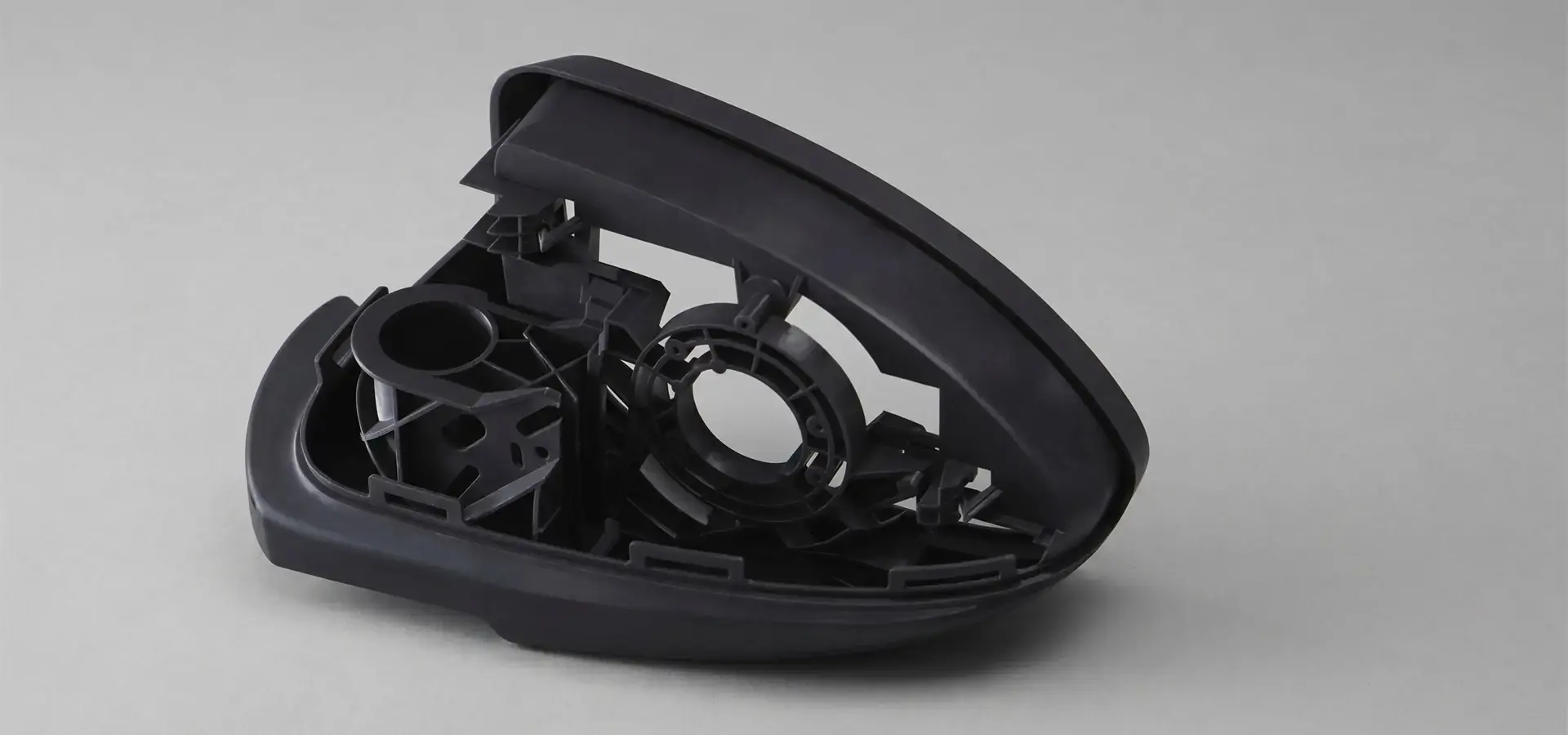
By bringing a budget SLA printer into their business, a California-based automotive accessory manufacturer reduced prototype iteration time from three weeks to four days. Previously, outsourcing prototype production to service bureaus cost $200-$500 per part with multi-day lead times. Their $750 printer investment paid for itself within the first month, producing dashboard trim prototypes and custom mounting brackets using high-strength engineering resin. The parts withstood thermal cycling tests from -20°C to 80°C, validating fitment before committing to injection molding tooling costs exceeding $15,000.
A dental laboratory in Texas implemented budget resin printing for surgical guide production, processing 15-20 cases weekly. Using biocompatible engineering resin certified for temporary intraoral contact, they achieved dimensional accuracy within 0.1mm—sufficient for guided implant placement procedures. The workflow included CT scan data conversion to STL files, support generation optimized for thin-wall structures, printing at 50-micron layers, and post-curing at 60°C for 30 minutes. Material costs averaged $3 per guide compared to $45 for outsourced production, generating substantial margin improvement while maintaining clinical quality standards.
An electronics prototyping firm utilized budget platforms for wearable device housing development, appreciating the technology's ability to reproduce fine details like snap-fit features and thin living hinges. They discovered that flexible engineering resins enabled functional testing of assembly sequences impossible with rigid FDM materials. Print settings optimization proved crucial—reducing layer height to 25 microns for smooth curved surfaces, while accepting 50-micron layers for internal structures, balanced quality against print time. Their experience demonstrated that thoughtful parameter adjustment extracts professional results from budget equipment.
Optimizing Print Settings for Engineering Polymers
Exposure time calibration represents the single most impactful parameter affecting engineering resin print quality. The process begins with manufacturer-recommended settings, then refines through test prints. Exposure matrices printing small columns at varying exposure times (incrementing by 0.5-second intervals) reveal optimal settings where parts exhibit good mechanical strength without brittleness from over-curing. Bottom layer exposure typically requires 8-12 times normal exposure duration, creating the strong foundation essential for large engineering parts.
Layer height selection balances surface finish against print speed and mechanical properties. Thinner layers (25-30 microns) produce superior surface smoothness and reduce the "stair-stepping" effect on angled surfaces, but double print times compared to 50-micron layers. For many engineering resins, thinner layers can improve interlayer bonding due to more complete curing, but they increase print time. Optimizing exposure parameters for any chosen layer height is essential to maximize mechanical strength. Strategic layer height variation—using thin layers for cosmetic surfaces and thicker layers for internal structures—optimizes the quality-speed tradeoff.
Magforms has developed extensive application expertise, helping customers optimize engineering resin workflows on our compatible printer systems. Our technical team provides material-specific profile recommendations that have reduced customer setup time by 60% compared to trial-and-error approaches. The integrated supply approach we've pioneered—matching our proprietary engineering-grade resins with precisely calibrated printer hardware—eliminates the compatibility guesswork plaguing users mixing third-party materials with generic equipment. This synergy delivers the reliability that procurement managers require when transitioning prototype production in-house.
Conclusion
When users are aware of their equipment's limits and set up the right processes, budget SLA printers have evolved into capable tools for engineering-grade resin applications. Modern MSLA technology delivers micron-level resolution and surface finish quality that rivals industrial systems at a fraction of the cost. Success requires disciplined attention to temperature control, exposure calibration, and maintenance routines that optimize performance with demanding materials. The cost-effectiveness calculations favor budget platforms for prototyping, small-batch production, and specialized applications across the dental, automotive, and electronics sectors. While these systems cannot match the reliability and build volumes of industrial equipment, they democratize access to high-precision additive manufacturing for small enterprises and research institutions. Procurement managers evaluating these technologies should prioritize hands-on testing with relevant engineering resins, invest in complete workflow infrastructure, including washing and curing equipment, and partner with suppliers offering material-hardware integration expertise.
FAQ
1. Can budget systems produce truly functional engineering parts?
Budget resin printers absolutely produce functional parts for many engineering applications, though with caveats. Parts printed with proper exposure calibration and post-cure processing achieve mechanical properties approaching injection-molded plastics. Tensile strengths of 50-60 MPa and flexural moduli exceeding 2 GPa are attainable with premium engineering resins. However, long-term UV stability and impact resistance typically lag behind genuine thermoplastics. These parts excel in prototyping, form-fit-function testing, and low-stress applications but may not suit high-cycle mechanical components or outdoor exposure without protective coatings.
2. What maintenance schedule ensures consistent quality?
Maintaining consistent print quality with engineering resins demands regular attention. Clean the vat and filter resin after every 5-10 prints to remove debris. Inspect and replace FEP film every 20-30 prints or when cloudiness appears. Check build plate leveling weekly, as mechanical vibration gradually shifts alignment. LCD screens require monthly inspection for cured resin spots that create shadows; these should be gently cleaned with isopropyl alcohol. Lubricate Z-axis linear rails quarterly to maintain smooth movement. This maintenance rhythm, while time-intensive, prevents the cascading failures that waste expensive engineering resin and production time.
3. How do I calculate ROI for bringing printing in-house?
ROI calculations should compare current outsourcing costs against total in-house expenses, including equipment ($300-$1,000), resins ($40-$150/kg), consumables ($20-$40 monthly), labor (2-4 hours weekly for small operations), and facility requirements (ventilated space, cleaning supplies). A business currently spending $1,500 monthly outsourcing prototype production can typically achieve 4-8 month payback periods with budget equipment. The calculation improves dramatically when factoring in intangible benefits: compressed development timelines, design iteration flexibility, and intellectual property protection from keeping proprietary designs in-house.
Partner with Magforms for Engineering-Grade SLA Solutions
Magforms stands ready to support your transition to in-house engineering-grade resin printing with our integrated materials and equipment solutions. Our team has spent years optimizing printer-resin compatibility, eliminating the dimensional deviations and print failures common when mixing third-party components. We offer comprehensive technical consultation tailored to your specific application requirements—whether producing automotive prototypes, dental appliances, or precision electronics housings. Our proprietary engineering resins paired with calibrated printer profiles deliver over 30% faster print speeds than industry averages while maintaining micron-level accuracy. Contact our technical specialists at info@magforms.com to discuss your procurement needs, request material samples, or schedule equipment demonstrations. As an established budget SLA printer manufacturer with 22 patents and service to over 300 enterprises globally, we provide the expertise and support infrastructure that transforms budget platforms into reliable production assets, backed by competitive bulk pricing and extended warranty programs for B2B customers.
References
1. Gibson, I., Rosen, D., Stucker, B., & Khorasani, M. (2021). Additive Manufacturing Technologies (3rd ed.). Springer International Publishing.
2. Ligon, S. C., Liska, R., Stampfl, J., Gurr, M., & Mülhaupt, R. (2017). Polymers for 3D Printing and Customized Additive Manufacturing. Chemical Reviews, 117(15), 10212-10290.
3. Stansbury, J. W., & Idacavage, M. J. (2016). 3D printing with polymers: Challenges among expanding options and opportunities. Dental Materials, 32(1), 54-64.
4. Bagheri, A., & Jin, J. (2019). Photopolymerization in 3D Printing. ACS Applied Polymer Materials, 1(4), 593-611.
5. Pagac, M., Hajnys, J., Ma, Q. P., Jancar, L., Jansa, J., Stefek, P., & Mesicek, J. (2021). A Review of Vat Photopolymerization Technology: Materials, Applications, Challenges, and Future Trends of 3D Printing. Polymers, 13(4), 598.
6. Quan, H., Zhang, T., Xu, H., Luo, S., Nie, J., & Zhu, X. (2020). Photo-curing 3D printing technique and its challenges. Bioactive Materials, 5(1), 110-115.

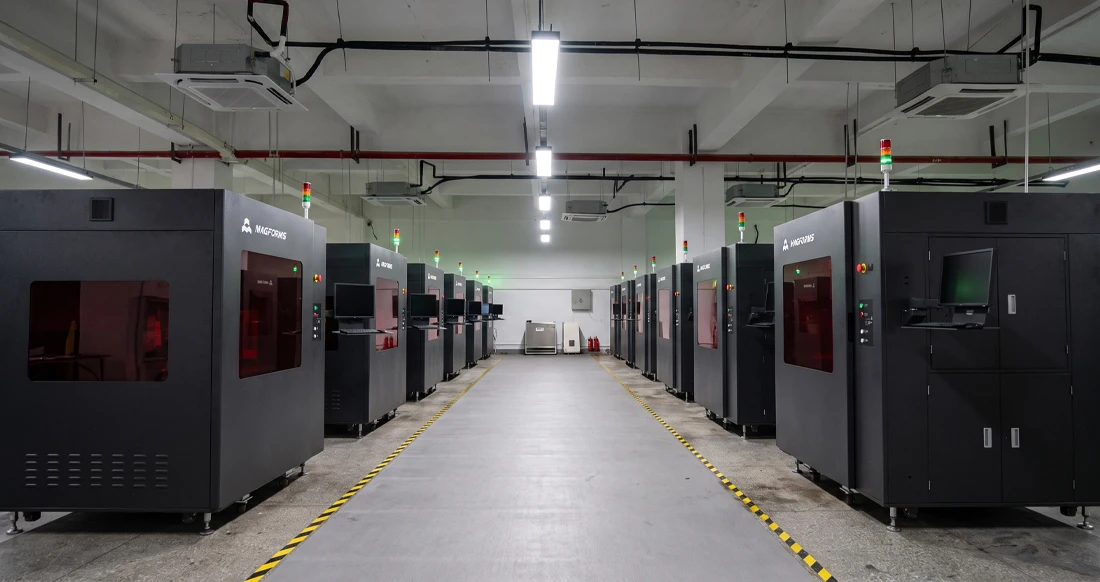
Magforms makes design and manufacture easier.
Popular Blogs
-
 Industry InsightsManufacturing Industry
FDM vs. SLA Printer: Which Technology Is Right for Your Project?
-
 Industry InsightsManufacturing Industry
Top 5 Applications of Industrial 3D Printers in Manufacturing Today
-
 Industry InsightsManufacturing Industry
Why Stereolithography 3D Printers Are Unmatched for Microfluidic Device Prototyping?