What Are the Key Features of a Big Format SLA 3D Printer?
If you're looking for business additive manufacturing solutions, knowing what makes a big format SLA 3D printer different from other machines can greatly improve the things you can make. These systems combine the famous accuracy of stereolithography with build sizes that are bigger than 600mm x 600mm x 400mm, and in some cases can reach 2 meters. They use strong UV lasers with 355nm wavelengths to cure photopolymer resins layer by layer. This lets them make big, single-piece parts that don't have the structural flaws and stack-up mistakes that are common with segmented assemblies. One big problem in high-precision manufacturing can be solved by printing full-size seats for cars, aerospace housings, or architecture models, all at the same time.
Understanding Big Format SLA 3D Printers: Core Concepts and Mechanisms
Since it was first created, stereolithography has changed a lot, and big format SLA 3D printer systems are the most advanced versions of this technology right now. Industrial big format SLA 3D printers are made for demanding production settings where surface quality and accuracy of dimensions cannot be sacrificed. This is different from desktop SLA printers, which are used by artists or for small-scale prototyping.
How Stereolithography Works at Scale
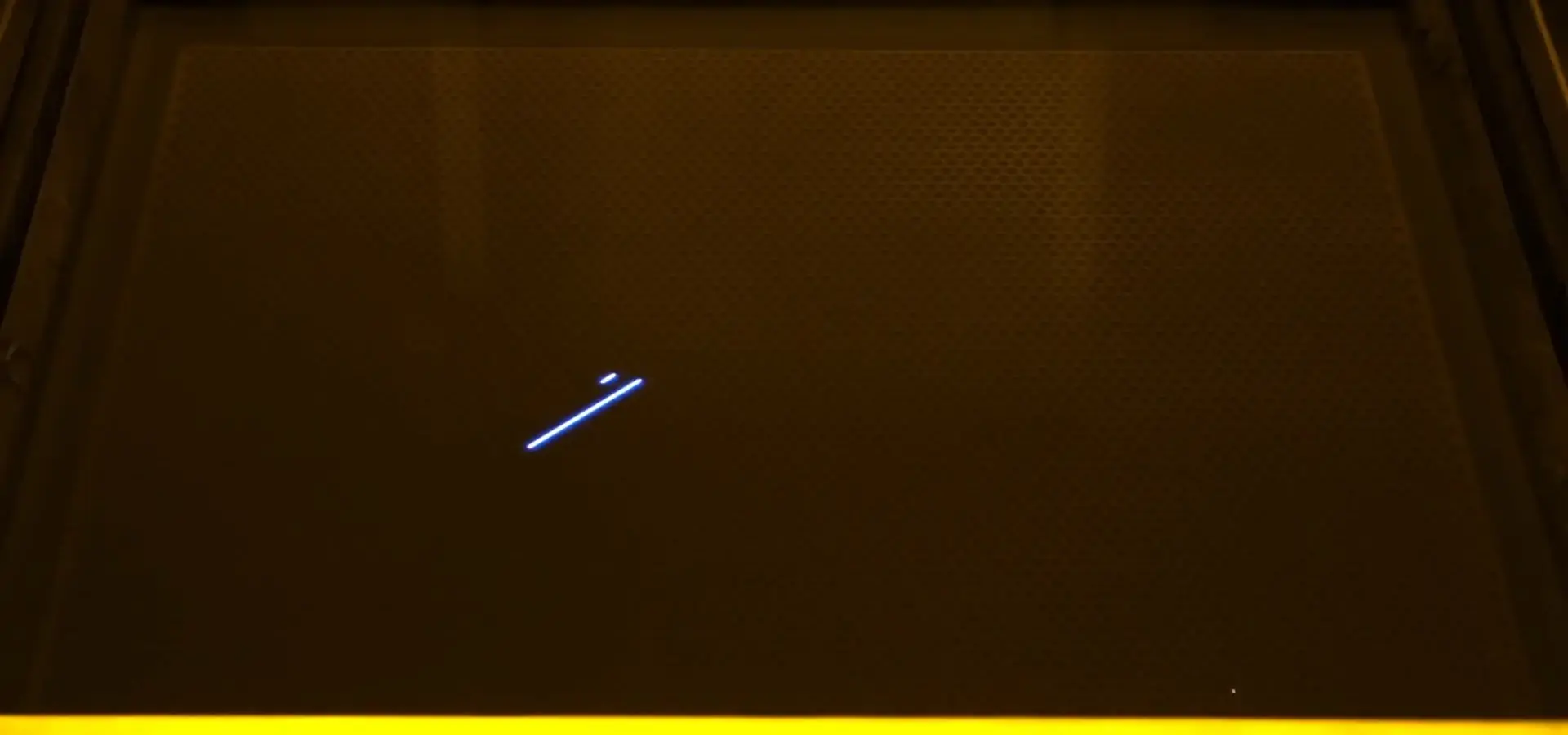
A UV laser or projector carefully cures liquid photopolymer resin into solid layers. This is the basic idea behind all SLA devices. What changes a lot at the big format SLA 3D printer level is the tech that is needed to keep accuracy across very large build areas. Solid-state Nd: YVO4 lasers and precision galvanometer scanners are used in these tools. They can trace complicated geometries at speeds of more than 7 meters per second while keeping spot accuracy within microns. The resin vat is a complex part of Big format SLA 3D printer equipment; it can hold between 100 and 500 kg of material. Modern machines have hot vats that keep the viscosity constant during long print jobs. This makes sure that the part's mechanical features are the same all over. Automated level tracking and recirculation systems stop temperature differences and pigment sedimentation that could hurt the quality of the print.
Structural Engineering for Precision at Scale
To keep micron-level accuracy across a 1-meter build platform, the mechanics must be very stable. The heavy-duty steel frames and granite-reinforced Z-axis modules in high-end Big format SLA 3D printers are designed to dampen vibrations during the build and recoating process. These machines have precise motion control systems that keep the layers aligned within ±0.05mm to ±0.1mm. This is very important when printing parts for medical or military uses that need to be very accurate. Another important new idea for the big format SLA 3D printer is variable beam spot technology. Modern systems don't use a set spot size. Instead, they change it on the fly between 0.15mm for fine feature edges and 0.8mm for fast internal hatching. When compared to traditional single-spot systems, this adaptive method speeds up build times by more than 30% while keeping detail where it matters most.
Essential Features That Define Big Format SLA 3D Printers
There is a lot more to these systems' value offering than just having a bigger work envelope. There are a number of features that work together to give procurement managers looking at manufacturing options the dependability and output quality that make the investment worth it.
Exceptional Build Volume and Scalability
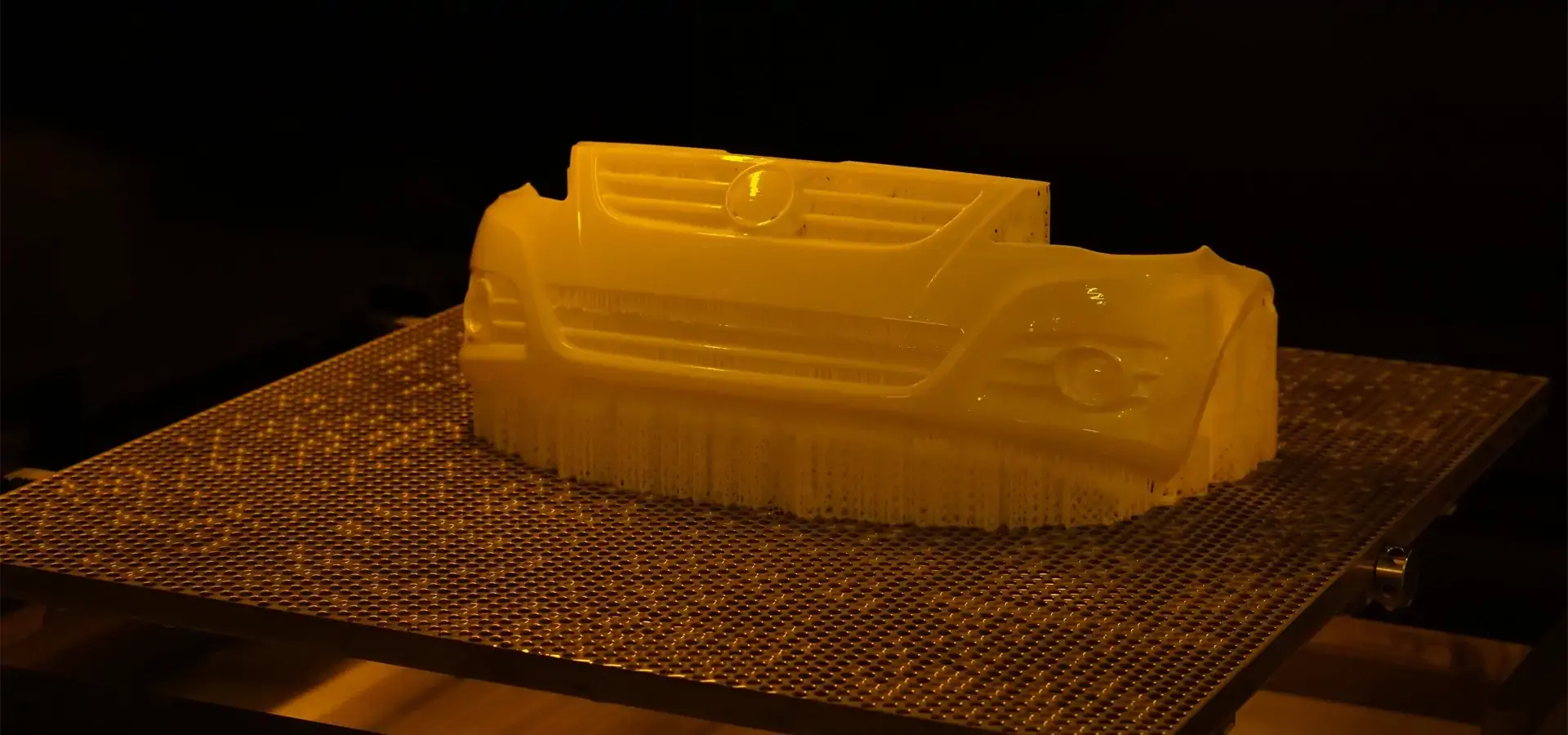
The main purpose of any big format SLA 3D printer is its build volume. Basic industrial units might have 600mm cubes, but top-of-the-line systems can handle 800mm x 800mm x 600mm or bigger. With this much space, auto designers can print whole bumper parts for testing in the wind lab, and medical device makers can make a lot of surgical guides at once, which greatly increases output. When you compare production costs, the scaling advantage stands out even more. When you look at labor, material waste, and machine usage rates, printing 20 dental models one at a time on a desktop machine instead of all at once on a big format SLA 3D printer can cut per-part costs by 60–70%.
Surface Finish and Resolution Superiority
When big format SLA 3D printer systems are properly adjusted, surface roughness (Ra) values often reach less than 1µm right off the printer. FDM systems can't get close to this finish quality without a lot of post-processing. This surface quality comes from the ability to resolve layers; on high-end machines, Z-axis steps can be changed down to 25 microns. The XY resolution is usually between 0.05mm and 0.15mm, depending on the size of the laser spot and how precisely it scans. This makes it possible to copy the fine textures, complicated shapes, and small details needed for high-fidelity samples or investment casting patterns. Parts are often painted or plated right away without being rough-sanded first. This cuts down on finishing work by 50% or more compared to the old way of doing things.
Material Versatility and Compatibility
One problem that 3D printing buyers have had for a long time is that makers lock their equipment to private resins, which makes the material environments more restrictive. Many Big-format SLA 3D printers work best with materials that are made by the same company, but more and more people are moving toward open-source platforms. There are a huge number of material choices for the big format SLA 3D printer. Standard materials are cheap and work well for simple modeling needs. Engineering resins have better mechanical qualities, like HDT temperatures above 200°C, tensile strengths that are close to those of injection-molded thermoplastics, and chemical resistance that is good for functional tests. Clear resins are used for optical purposes, flexible materials are made for gaskets and seals, biodegradable resins are approved for making medical devices, and castable resins are made to burn out cleanly for investment casting.
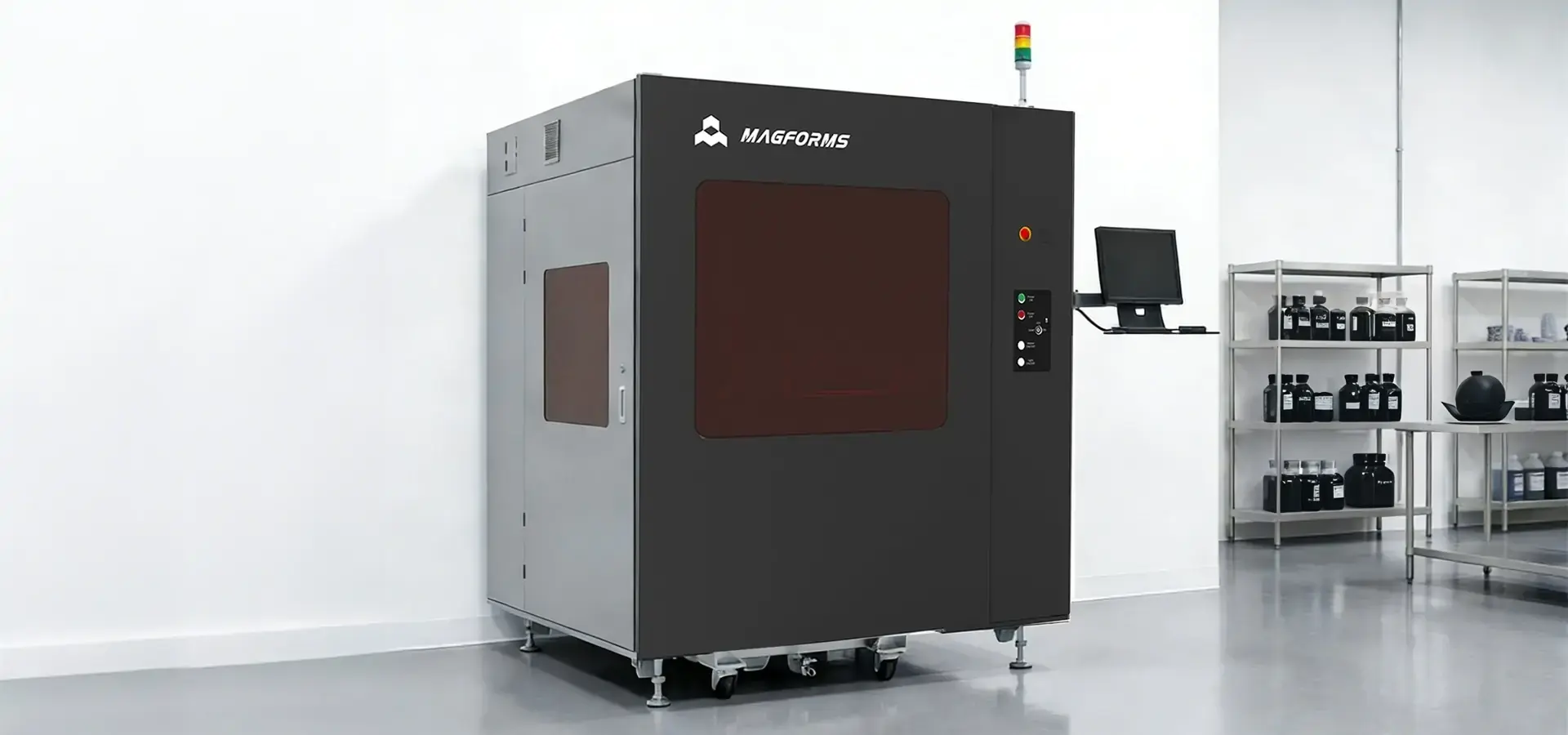
Magforms has solved the problem of compatibility by creating an environment of materials and equipment that work together to make self-developed plastics and printers work better. This gets rid of the size differences and print flaws that happen when third-party materials that aren't matched correctly interact with hardware factors in unpredictable ways. This makes sure that processes are reliable from beginning to end.
Applications and Industrial Use Cases of Big Format SLA 3D Printers
The usefulness of big format SLA 3D printers can be seen in many fields, each using different features to resolve unique production issues.
Automotive and Aerospace Prototyping
Big-format SLA 3D printer tools are used by automotive design teams to make full-size "fit-check" versions of things like instrument panels, grilles, and interior trim. Because the measurements are so accurate, designers can use real models to test assembly routines and ergonomics before buying expensive injection molding tools. These prototypes can be tested in wind tunnels or climate rooms using high-stiffness composite resins. This gives information about how they fly and how long they last that can't be gotten from computer models alone. Even tighter tolerances and material standards are needed for aerospace uses. SLA's ability to make organic shapes that are hard for traditional cutting is used to make small batches of complicated frames, housings, and ducting parts. Being able to insert internal channels, lattice structures, and conformal cooling pathways opens up design options that were limited before because of manufacturing issues.
Tooling, Jigs, and Fixtures Manufacturing
Production hardware is a great example of a use case where big format SLA 3D printers give you a great return on investment. In the past, making custom tools, inspection fittings, and assembly aids took weeks of work and cost a lot of money. Printing these tools overnight in long-lasting industrial resins cuts costs by about the same amount as cutting lead times by 80 to 90%. Big format SLA 3D printer stereolithography is being used by investment casting foundries to make substitute master models. Specialized castable resins can be used to print complex shapes like turbine housings or engine blocks. These resins burn cleanly during the shell-firing process, leaving no ash behind. This takes the place of making wax tools the old way, and design lead times go from months to days.

Comparing Big Format SLA 3D Printers with Other 3D Printing Technologies
When procurement workers know where stereolithography fits in the bigger picture of additive manufacturing, they can choose technologies that are best for their production needs.
SLA Versus FDM: Resolution and Surface Quality Trade-offs
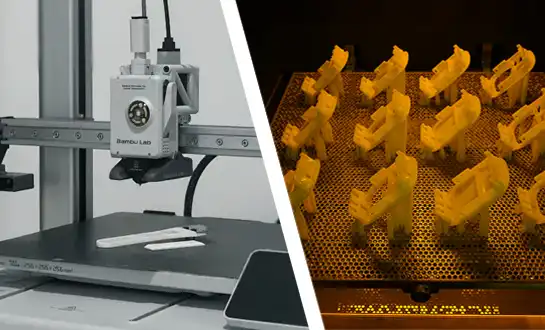
Fused deposition modeling (FDM) is the most popular type of 3D printing for beginners because it is easy to use and doesn't cost much. The layer-by-layer extrusion method, on the other hand, leaves behind obvious layer lines and rough surfaces that need a lot of work to be fixed up before they can be used. Big format SLA 3D printers can make surfaces that are 5–10 times smoother than FDM printers can, and they can also print features more clearly than FDM printers can. The trade-off is that photopolymer resins usually cost two to three times more per kilogram than FDM filaments, and SLA requires additional post-processing steps such as washing and UV post-curing.
SLA Versus DLP: Build Volume and Speed Considerations
Instead of using a laser to trace each layer, Digital Light Processing (DLP) employs a digital projector to cure an entire layer simultaneously. This method is faster for smaller parts because layer times are measured in seconds, no matter how complicated the part is. However, DLP systems face challenges when scaling to large build volumes. Since the projector’s fixed pixel resolution is distributed over the entire build area, quadrupling the build platform size reduces the effective XY resolution. Big format SLA 3D printers with scanning lasers have spot precision that stays the same, no matter what the build area is. This makes them better for making big parts with fine details.
Procurement Guide: What to Consider When Buying a Big Format SLA 3D Printer
To make an informed buying choice, you need to weigh the technical capabilities against the available budget, the needs of the business, and the need for long-term assistance. When procurement managers regularly look at these factors, they set up their companies to successfully adopt new technologies.
Price Benchmarking and Investment Analysis
Big format SLA 3D printers range in price from $50,000 for basic commercial units to $500,000 or more for top-of-the-line multi-laser systems that can print the biggest objects. Figuring out why prices vary helps buyers find tools that do what they need to do without spending money on features that aren't necessary. Some of the things that affect the cost most are the number and power of lasers used, the efficiency of material handling, the complexity of the software, and the extras that come with the kit, like washing and curing stations. To find the total cost of ownership, you have to add up how much the materials are used, how much they cost to maintain, how often they need to be replaced, and how much work needs to be done.
A proper ROI study should look at more than just the economics of making one part. It should also consider the value of shorter development cycles, lower tooling costs, and faster design iterations. Many businesses decide that the competitive edge of getting goods to market 3 to 6 months faster is worth the cost of buying equipment that seems pricey on a part-by-part basis.
Warranty Coverage and Service Infrastructure
Manufacturers offer a wide range of equipment warranties, from restricted coverage for one year to full coverage for three years that covers parts, labor, and preventative maintenance. It's just as important to know what your guarantee doesn't cover as what it does. For example, many warranties don't cover parts that need to be replaced often, like resin tanks and recoater blades. The provision of service infrastructure has a huge impact on the continuation of production. Buyers should make sure that makers have regional service centers stocked with spare parts or that approved service partners can react in a reasonable amount of time. Companies that work multiple shifts or have busy production schedules can explain the cost of extended warranties or service contracts that promise maximum reaction times by reducing downtime.
Magforms stands out because it offers full help after the sale, which includes machine upkeep, software updates, and technical training programs. Because the company has been in the business for so long, they have a lot of knowledge that helps them fix problems faster and give better application advice than companies that treat big format SLA 3D printers as an afterthought.
Conclusion
Big-format SLA 3D printers have grown up and are now ready for production. They can meet the high standards for accuracy, dependability, and output that are needed in industrial settings. The technology's ability to make big parts out of a single piece with perfect surface quality and accurate measurements solves major problems in the car, aircraft, medical, and consumer goods industries. When purchasing managers look at these systems, they should put accuracy in measurements, the ability to work with different types of materials, the need for upkeep, and the ability to get help from the seller ahead of build volume and print speed. When you combine matched materials and tools, as Magforms does, you solve the compatibility problems that have previously made it hard for businesses to use 3D printing. This makes sure that there are reliable processes that reduce waste and downtime while increasing production efficiency.
FAQ
1. How does a large-format stereolithography system prevent warping on extensive flat surfaces?
Big format SLA 3D printers that are more advanced use complex support generation algorithms and scanning strategies, like checkerboard patterns, to spread out any remaining stress equally across large areas. During the build process, heated build chambers maintain a stable thermal environment, minimizing differential shrinkage and internal stresses that lead to warping. When these two methods are used together, they make sure that the dimensions stay the same on parts with large flat areas that are longer than 500 mm.
2. Can third-party resins be used with industrial stereolithography equipment?
Some systems are open-source, but most industrial Big format SLA 3D printers get the best performance from resins that are tuned to work best with certain laser bands and cure profiles. This matching makes sure that the mechanical qualities, like tensile strength and heat deflection temperature, are approved to meet industry standards. Using third-party materials that haven't been tested may affect the accuracy of measurements, the performance of machinery, and even cancel equipment warranties. For production-critical uses, this isn't a good trade-off when it comes to material costs.
3. What facility requirements do large-format stereolithography systems need?
For installation, the temperature must be kept between 22°C and 25°C, and the relative humidity must be less than 40%. UV-protected lighting prevents the resin from curing prematurely, and an industrial-grade ventilation system controls volatile organic compounds (VOCs) released during washing and post-curing processes. The largest systems, which can weigh more than 1,000 kg when fully loaded with resin, may also need a floor that can handle a lot of weight and sound isolation.
Ready to Partner with a Trusted Big Format SLA 3D Printer Manufacturer?
Magforms has been in the business for a long time, has 22 patents, and has helped over 300 companies around the world. They can offer complete additive manufacturing options that meet your most difficult production needs. Our custom-made tools and improved material systems get rid of the interface problems and performance unknowns that come with using third-party parts that don't work well together. Our team has the technical knowledge and real-world experience to help your business succeed, whether you're a big format SLA 3D printer service office looking for reliable high-throughput equipment, an automaker wanting to speed up development cycles, or a medical device company needing biocompatible precision. Technical directors, procurement managers, and business leaders can email us at info@magforms.com to talk about how our big format SLA 3D printer solutions can change the way you make things and give you a clear return on investment (ROI) by cutting down on production costs and speeding up time to market.
References
1. Gibson, I., Rosen, D., & Stucker, B. (2021). Additive Manufacturing Technologies: 3D Printing, Rapid Prototyping, and Direct Digital Manufacturing (3rd ed.). Springer.
2. Jacobs, P. F. (2020). Stereolithography and Other RP&M Technologies: From Rapid Prototyping to Rapid Tooling. Society of Manufacturing Engineers.
3. Lipson, H., & Kurman, M. (2019). Fabricated: The New World of 3D Printing. John Wiley & Sons.
4. Gebhardt, A. (2018). Understanding Additive Manufacturing: Rapid Prototyping, Rapid Tooling, Rapid Manufacturing. Hanser Publications.
5. Wohlers, T., & Gornet, T. (2024). Wohlers Report 2024: 3D Printing and Additive Manufacturing Global State of the Industry. Wohlers Associates.
6. ASTM International. (2022). ASTM F2792-12a: Standard Terminology for Additive Manufacturing Technologies. ASTM International Standards Organization.

Magforms makes design and manufacture easier.
Popular Blogs
-
 Industry InsightsManufacturing Industry
FDM vs. SLA Printer: Which Technology Is Right for Your Project?
-
 Industry InsightsManufacturing Industry
Top 5 Applications of Industrial 3D Printers in Manufacturing Today
-
 Industry InsightsManufacturing Industry
Why Stereolithography 3D Printers Are Unmatched for Microfluidic Device Prototyping?