What Factors Determine Accuracy in Industrial SLA 3D Printing?
The main thing that sets high-performance additive manufacturing apart from simple testing toys is accuracy. In industrial stereolithography, a part's ability to be regularly made within micron-level standards is a direct indicator of whether it passes strict quality checks or is thrown away. The accuracy of an industrial SLA 3D printer comes from its laser optics, precision-calibrated motion systems, optimized resin chemistry, and carefully managed environmental conditions. When these parts are lined up correctly, makers can make dental implants, aerospace links, and automobile tooling that fits the dimensions without having to do a lot of extra work. When buying teams know what makes this accuracy possible, they can choose equipment that gives them a real return on their investment instead of equipment that doesn't work well and throws off production plans.
Understanding Accuracy in Industrial SLA 3D Printing
Defining Dimensional Fidelity and Precision
Dimensional fidelity is a measure of how closely the measurements of a printed item match those of its CAD model. To fit properly on assembly jigs, a car interior part that was meant to be 150.00 mm must measure within ±0.15 mm after it has been printed. Repeatability is what precision means. For example, making ten identical parts that are all 150.10 mm long shows high precision, even if the parts are slightly off-target. Resolution tells you the smallest detail that a system can safely show, like 0.3 mm for text height or 0.5 mm for wall width. In industrial settings, all three traits are needed at the same time. A medical surgery guide that needs sub-millimeter accuracy for drilling cannot handle differences in size between batches. For aerospace braces to be interchangeable, they need mechanical connections that can be predicted and are accurate. For paint finishes to go on smoothly, the housings of consumer gadgets must be able to record small surface textures at a high resolution.
Why Accuracy Matters in Manufacturing Workflows
Poor accuracy has a cost-effect that spreads through output. When a dentistry lab prints aligner casts that shrink without warning, it loses expensive orthodontic resin and delays treatment for patients. When a car service bureau sends clients sample dashboards that aren't working right, they lose their trust and have to pay to do the work again. If a shoe creator can't copy complicated lattice structures, they miss market launch dates. When limits are tight for industrial SLA 3D printers, work has to be done later. When accurate systems make parts, they don't need much cleaning, filling, or remaking. It takes less time for assembly teams to force parts that don't fit together. Fewer batches are turned down by quality testers. These business improvements directly lead to higher customer happiness and higher profit margins.
Key Technical Factors Affecting Accuracy in Industrial SLA 3D Printers
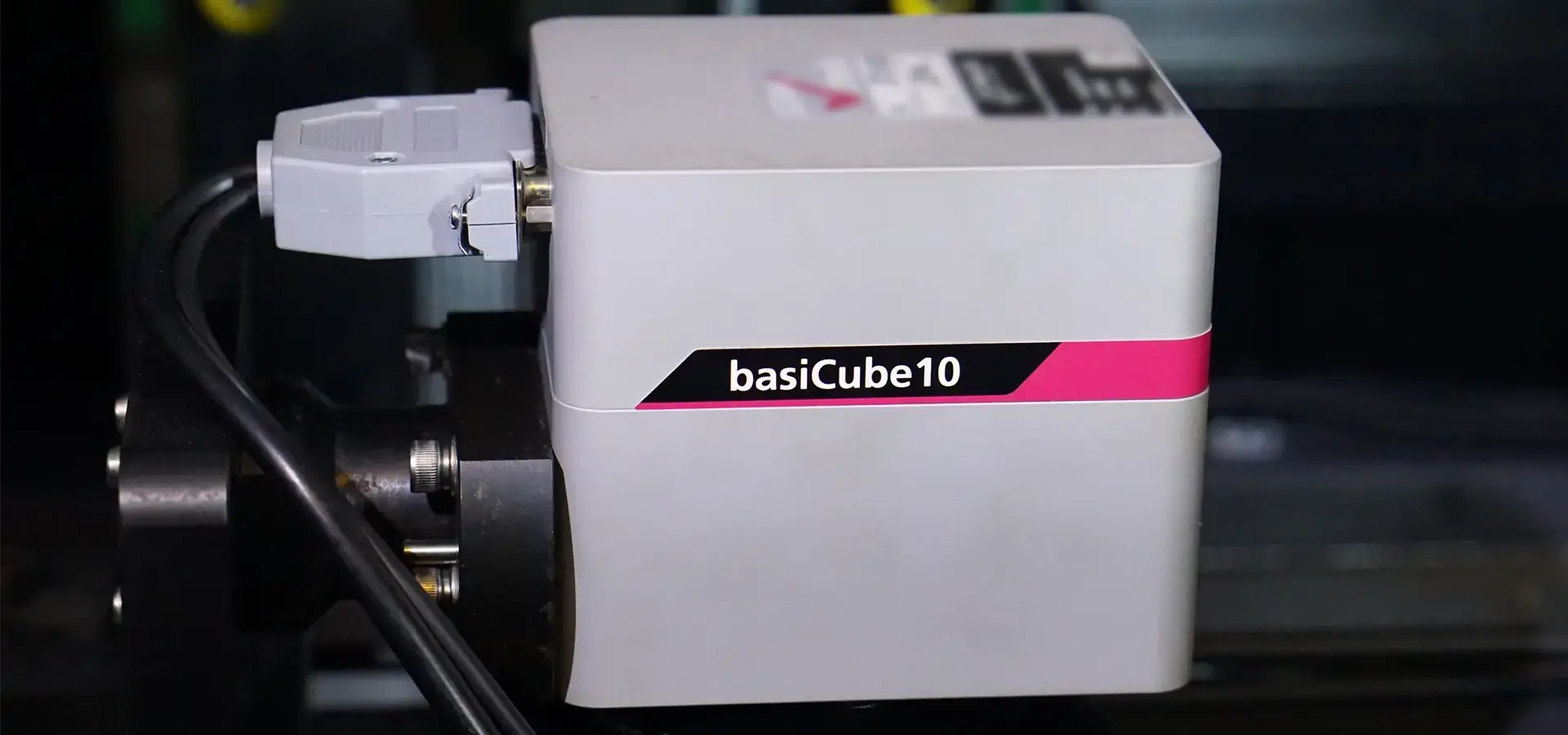
Laser Spot Size and Scanning System Performance
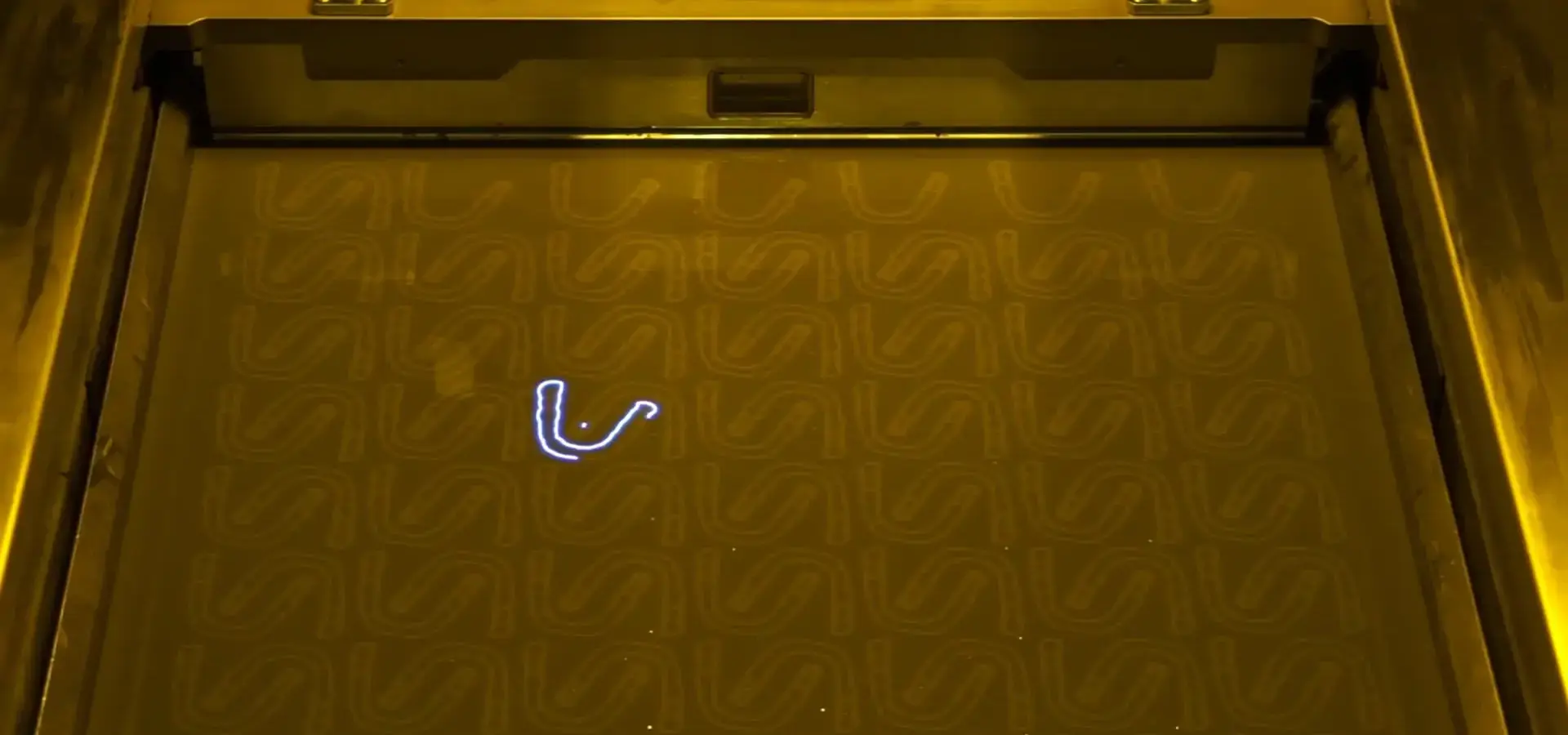
The smallest feature that can be cured is determined by the laser focal point diameter. High-end galvanometer scanners can accurately position this spot to within a few microns across the whole build platform. With variable spot technology, the beam width changes on the fly, getting narrower to 0.08 mm for small features like gear teeth and wider to 0.80 mm for quickly filling in solid areas. This flexibility speeds up output without lowering the quality of the edges. The scanning speed influences heat buildup in the resin vat. Systems operating at 15 meters per second or more minimize temperature gradients that cause inconsistent curing rates. Magforms' own scanning path algorithms cut down on laser travel that isn't needed. This makes printing faster by over 30% compared to regular raster patterns while keeping the accuracy of the position.
Resin Material Properties and Curing Behavior
The viscosity of photopolymers affects how resin flows around support structures. Low-viscosity resins drain well, but they might not be very strong. High-viscosity industrial resins make things tough and keep them from moving between layers. During polymerization, shrinkage rates directly reduce end measurements. For example, if a resin shrinks by 3%, a 100mm design will become a 97mm part unless it is compensated for. Setting the layer width must match the cure depth per laser pass. Layers that are not fully cured bond poorly and may delaminate under stress. Over-cured layers bleed past the edges that were meant to be there, making the walls thicker and filling in small holes. Temperature-sensitive resins can exhibit inconsistent behavior as ambient conditions change. For physical stability, climate control is necessary.
Magforms solves these problems by optimizing both the materials and the tools at the same time. Our proprietary resins are calibrated with our printer hardware to set up exposure curves that take into account different shrinkage rates. This stops shops from having to try things out and make mistakes when they mix third-party materials with equipment that isn't made for them.
Layer Thickness and Exposure Control
Thinner layers show more Z-axis detail, but they take longer to build. Smooth shapes can be made on figures with a layer height of 0.05 mm, and mechanical brackets can be made with a layer height of 0.15 mm. Adaptive layer thickness methods change the height based on the shape, only using thin layers where the curve of the surface calls for them. How thorough the polymerization is on industrial SLA 3D printers is affected by the exposure time per layer. If there isn't enough contact, surfaces that are sticky can make measurement mistakes when probed. When layers are exposed to too much light, they bond together into nearby holes, blocking internal pathways. Cross-sectional area changes are taken into account by dynamic exposure correction. To keep heat from building up, big solid layers get a little less power.
Environmental and Calibration Standards
Mid-print, temperature shifts alter the viscosity of the resin. A drop of 10°C typically raises viscosity and reduces material flow, affecting how layers are formed. The shelf life and UV clarity of resin are both affected by humidity. Professional methods keep the temperature and humidity inside the building rooms at ±2°C and <40% RH. Regular tuning checks that the laser's position matches the numbers that were given. Every month, printed test items are compared to verified gauge blocks. To account for mirror movement, galvanometer offsets are changed automatically by programs. Before it is shipped, Magforms' equipment is put through more than 1,000 hours of continuous operation testing. This makes sure that the temperature stability stops the calibration creep during production runs.
Comparing Industrial SLA 3D Printing Accuracy with Other Technologies
SLA Versus DLP Projection Systems
Digital light projectors are used by DLP devices to cure whole areas at the same time. This is faster for small parts, but the pixel size, which is usually 50 to 100 microns, lowers the XY sharpness. Finer details like gear ratchets or microfluidic pathways can be captured by industrial SLA 3D printer laser scans, which can achieve spot sizes of 20 to 50 microns. DLP projectors often suffer from non-uniform illumination, leading to dimensional inconsistency across the build platform.
Point-by-point curing in SLA lets you use different exposure methods within the same layer, so you can increase power for thick support bases and decrease it for thin overhangs. DLP's uniform exposure can't tell the difference, so it has to use settings that either over-cure thin parts or under-cure big ones.
Accuracy Benchmarks Against SLS and FDM
Selective laser sintering (SLS) fuses powder particles to produce robust parts with an accuracy around ±0.3%, though it struggles with fine features below 0.8 mm and leaves granular surfaces that require extensive post-processing. Fused deposition modeling (FDM) extrudes molten thermoplastic filament, delivering strong mechanical properties but producing visible layer lines (typically at 0.2 mm heights) and tolerances of roughly ±0.5 mm, constrained by nozzle diameter. In contrast, high-end industrial SLA 3D printers can produce parts over 300 mm long with surface roughness under 1.0 µm straight from the printer, eliminating the weeks of manual finishing required by SLS and FDM before assembly or coating.
High-end industrial SLA 3D printers can make parts that are more than 300 mm long and have a surface roughness of less than 1.0 µm right out of the printer. This gets rid of the need for weeks of finishing by hand that SLS and FDM parts need before they can be put together or coated.
Best Practices to Maximize Accuracy in Industrial SLA 3D Printing
Pre-Print Design Optimization
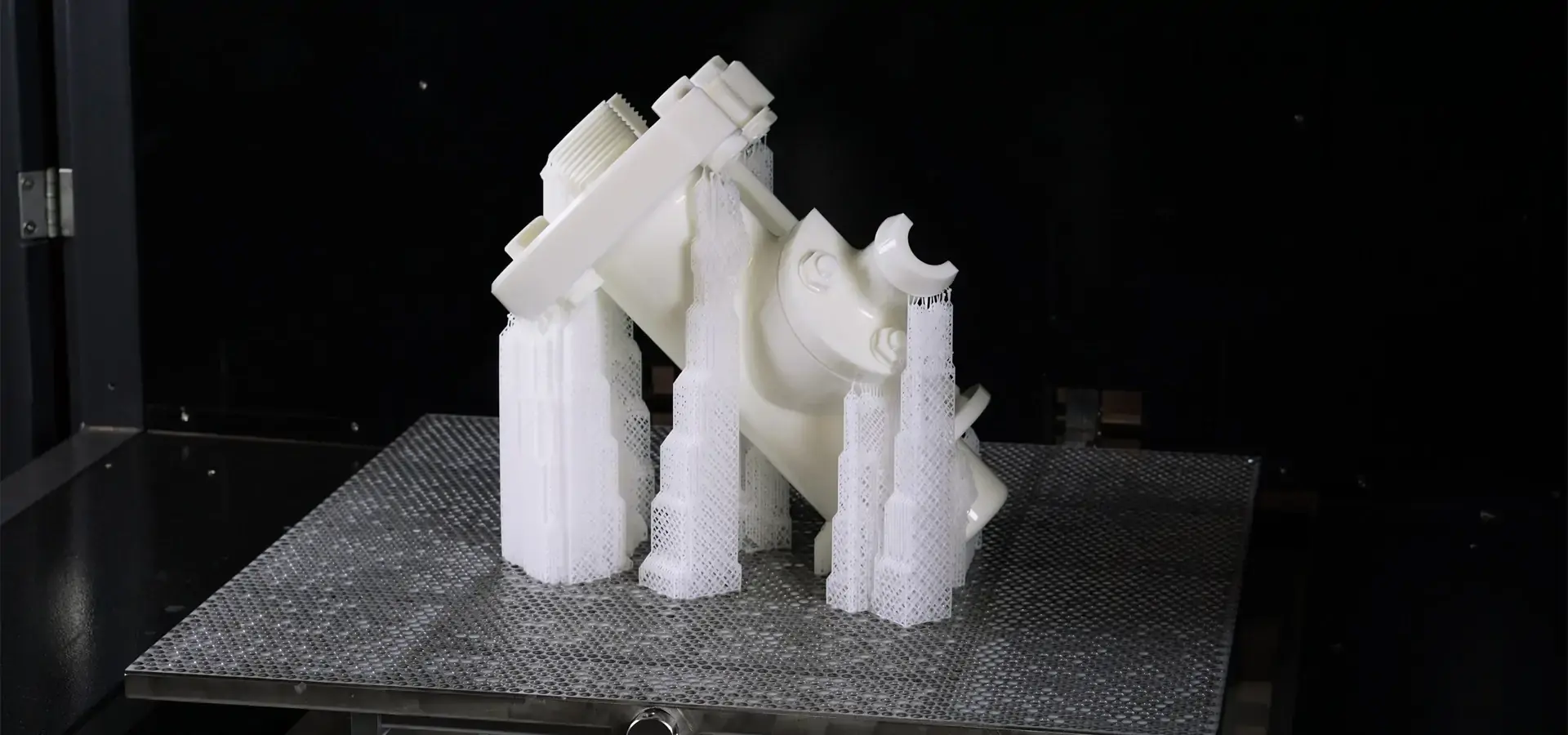
Orientation changes both the amount of support needed and the accuracy of the measurements. Putting a flat base next to the build platform in a straight line reduces the peel forces that can bend thin walls. By tilting cylinder-shaped parts, the pressure forces inside hollow spaces are lowered. Support placement software shouldn't connect directly to important joint surfaces; placing touchpoints on non-functional areas protects the purity of the dimensions where they matter.
Making holes in big solid blocks saves money on materials, but you have to be smart about where the drain holes go. Uncured resin that gets stuck inside closed spaces adds weight that is hard to predict and puts pressure on the material while it cures. CAD models should include drain holes that are 3–5 mm wide and placed so that they can drain completely without weakening load-bearing parts.
Process Parameter Tuning
Software for slicing sets, exposure patterns, and support production. If you turn on anti-aliasing, stair-stepping on slanted surfaces will be smoother. Support density combines the need for a safe connection with the difficulty of removal. Not enough support can cause sagging, while too many can leave marks on the surface. Base layer exposure is usually three to five times longer than normal layers to make sure that the platform sticks well and parts don't come off during builds.
The pulling forces on large cross-sections are changed by the lift speeds between layers. Rapid lifts cut down on print time, but they also increase the chance of part separation. Slow pulls with short breaks let the resin flow back equally. Modern devices monitor peel force in real time and change speeds on the fly.
Magforms' industrial SLA 3D printer platforms have AI-optimized slicing, which looks at the shape of the part to suggest the best angles and automatically changes exposure maps to account for different wall thicknesses. This takes away the need to guess, so workers can get results that are as good as those of experts who have years of experience.
Procurement Considerations for Accurate Industrial SLA 3D Printers
Interpreting Technical Specifications
Laser spot size descriptions can be misleading. For example, a '50μm spot' could refer to the Gaussian beam width at half-maximum intensity rather than the actual size of the cured feature. Ask for test prints with common shapes like 0.3 mm holes, 0.5 mm slots, and dimensional blocks. Use calibrated micrometers to compare these to stated limits.
Repeatability standards talk about how different prints of the same file can be. If a system says it can repeat measurements to within 0.05 mm, it should be able to make ten identical frames that differ by no more than 0.05 mm in any dimension. During the review step, ask for demonstration photos.
Evaluating Manufacturer Support and Ecosystem
Precision can degrade when scaling to larger build platforms, as the longer laser path from the galvanometer to the corners increases beam deviation. A 600mm x 600mm device can have better specs than an 800mm x 800mm unit from the same company. Instead of trying to make the platform as big as possible, match the build size to the needs of the part.
Laser modules, galvanometer kits, and optical components are expensive parts that are likely to break. Their warranties should cover them. Compare how long it takes for technical help questions to be answered. When there is a production emergency, manufacturers who offer 24/7 phone support and on-site service within 48 hours can keep costs down.
Long-term working freedom is based on how well the materials work together. Open-source systems can use resins from other companies, but profile creation has to be done by hand. Closed communities offer stores of approved materials, but they make it harder to optimize costs. Magforms strikes a mix between these two methods. Our industrial SLA 3D printer hardware works with standard 355nm resins, and our own formulations give the best performance by using pre-calibrated exposure profiles.
Training plans help teams get better faster. A full training process should include steps for upkeep, troubleshooting common issues, and ways to improve the design. Magforms offers both in-person workshops and online certification lessons to make sure that users get the most out of their tools right from the start.
Financial and Strategic Decision Factors
Leasing for industrial SLA 3D printers spreads costs over the life of the equipment, so money is saved for things like stocking up on materials and making improvements to the building. On a yearly basis, buying resin in bulk cuts the price per liter by 15 to 25 percent. Find the total cost of ownership, which includes things like vat films and cleaning solvents that need to be replaced, as well as the estimated part throughput and repair times.
Scalability planning is important for businesses that want to grow. One large industrial SLA 3D printer might work better than three smaller ones because it needs less setup time and makes better use of the material. On the other hand, distributed capacity provides backup—if one machine breaks down for repair, output doesn't stop.
How easy it is to get long-term help depends on the supplier's image and stability. Magforms holds 22 patents and 30 registered trademarks, which shows that it can keep coming up with new ideas. Our goods are used by more than 300 businesses around the world, which gives us the installed base we need to keep making software changes and new products. We take part in industry shows in several countries, which helps us stay in touch with changing production needs.
When picking an industrial SLA 3D printer provider, you need to weigh the short-term technical skills against the long-term relationship. Magforms' method of integrating materials and equipment gets rid of compatibility issues, and our extensive technical support infrastructure makes sure that your investment gives you accurate results for as long as it is used.
Conclusion
In industrial stereolithography, accuracy comes from how well laser optics, material chemistry, environmental controls, and operating discipline work together. Procurement teams need to look beyond the main specs and test samples and look at the total cost to see how well the product will work in the real world. To get real manufacturing-grade accuracy, Industrial SLA 3D printer systems use calibrated hardware, materials that work best, and support communities that cover everything. Manufacturers can choose equipment that turns digital designs into effective physical parts that meet the strict tolerances needed for aircraft, medical, automotive, and electronics uses if they understand the technical factors and best practices described here.
FAQ
1. How often should I calibrate my industrial SLA system?
Calibration checks done once a month keep the accuracy at its best. To do this, standard test objects must be printed and then compared to approved gauge blocks. The galvanometer mirror offsets are changed automatically by calibration programs to account for heat drift and mechanical wear. Verification every two weeks may help high-volume operations that print 40 hours or more a week, especially when making parts with tight tolerances for medical or aircraft uses.
2. What accuracy differences exist between SLA and other 3D printing methods?
Most industrial SLA systems can get an accuracy of ±0.1mm and a surface roughness of less than 1.0µm. SLS powder-based systems can achieve accuracy of ±0.3%, but the surfaces they produce are rougher and require extensive post-processing. FDM extrusion offers robust mechanical strength but exhibits visible layer lines (typically at 0.2mm heights) and tolerances around ±0.5mm due to the nozzle diameter. Compared to DLP's pixel-limited resolution or FDM's 0.4mm nozzle diameter, SLA's laser-based curing delivers superior feature resolution (down to 50 microns).
3. How does resin selection impact dimensional precision?
The end size is directly affected by how much the resin shrinks while it cures. Materials that shrink by 2 to 4 percent need to be adjusted in CAD models or slicing tools. Low-viscosity resins move easily, but they might not be very hard. High-performance industrial resins keep their shape after curing, but they need careful exposure control. Using combined material-equipment systems like Magforms makes sure that the properties of the resin fit the printer's settings, so you don't have to keep trying different sizes until you get it right.
Partner with Magforms for Precision Additive Manufacturing Solutions
Magforms is ready to help you make the switch to accurate and speedy stereolithography production. As a well-known company that makes industrial SLA 3D printers, we offer hardware and material solutions that are fully backed by 22 patents and have been tested by more than 300 clients around the world. With variable spot laser technology and AI-optimized scans, our systems can achieve micron-level accuracy. This cuts print times by over 30% while keeping the accuracy of the dimensions. Our technical team can be reached at info@magforms.com for application-specific advice, live equipment demos, and special purchase packages. We offer thorough training, quick response to service requests, and various payment options to fit your business needs and budget.
References
1. Gibson, I., Rosen, D., & Stucker, B. (2021). Additive Manufacturing Technologies: 3D Printing, Rapid Prototyping, and Direct Digital Manufacturing (3rd ed.). Springer.
2. Jacobs, P. F. (1992). Rapid Prototyping & Manufacturing: Fundamentals of Stereolithography. Society of Manufacturing Engineers.
3. ISO/ASTM 52902:2019. Additive manufacturing — Test artifacts — Geometric capability assessment of additive manufacturing systems. International Organization for Standardization.
4. Melchels, F. P., Feijen, J., & Grijpma, D. W. (2010). A review on stereolithography and its applications in biomedical engineering. Biomaterials, 31(24), 6121-6130.
5. Quan, H., Zhang, T., Xu, H., Luo, S., Nie, J., & Zhu, X. (2020). Photo-curing 3D printing technique and its challenges. Bioactive Materials, 5(1), 110-115.
6. ASTM F2792-12a. (2012). Standard Terminology for Additive Manufacturing Technologies. ASTM International.

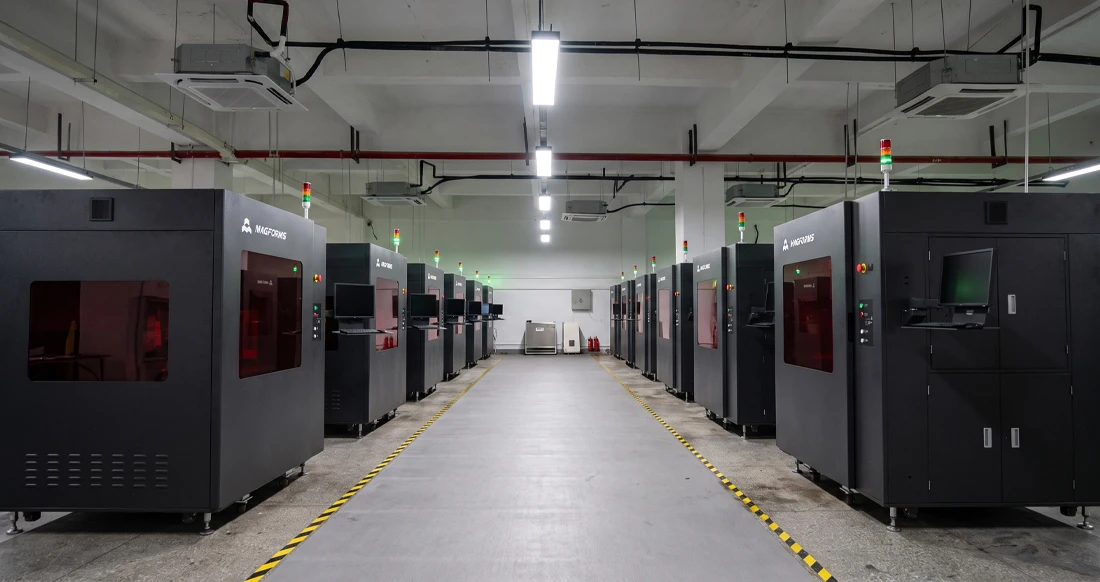
Magforms makes design and manufacture easier.
Popular Blogs
-
 Industry InsightsManufacturing Industry
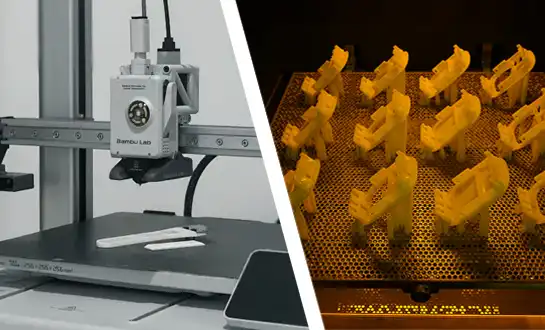
FDM vs. SLA Printer: Which Technology Is Right for Your Project?
-
 Industry InsightsManufacturing Industry
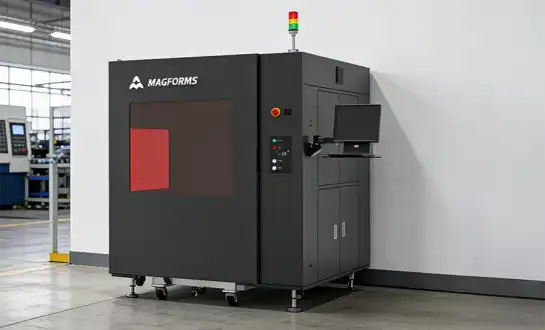
Top 5 Applications of Industrial 3D Printers in Manufacturing Today
-
 Industry InsightsManufacturing Industry
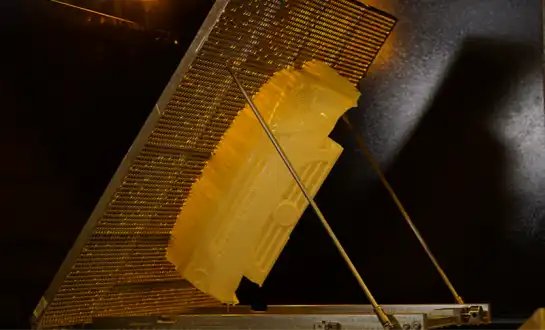
Why Stereolithography 3D Printers Are Unmatched for Microfluidic Device Prototyping?