Can a Fast Resin 3D Printer Deliver Consistent Quality?
A fast resin 3D printer can definitely produce consistent quality if it is designed with a precise optical system, stable mechanical architecture, and optimized material interaction, and the best possible interaction between materials. Modern fast resin printers, particularly LCD-based (mSLA) systems, use advanced features like high-intensity monochrome LCD screens, precise layer exposure control, and specialized release films to print faster than 100 mm/hour while maintaining high accuracy. The key is to choose equipment that has a high throughput, strict tuning rules, and full after-sales support to make sure that all of the layers cure evenly and all of the parts meet the limits for size.
Understanding Fast Resin 3D Printing Technology
Core Technologies Driving Speed and Precision
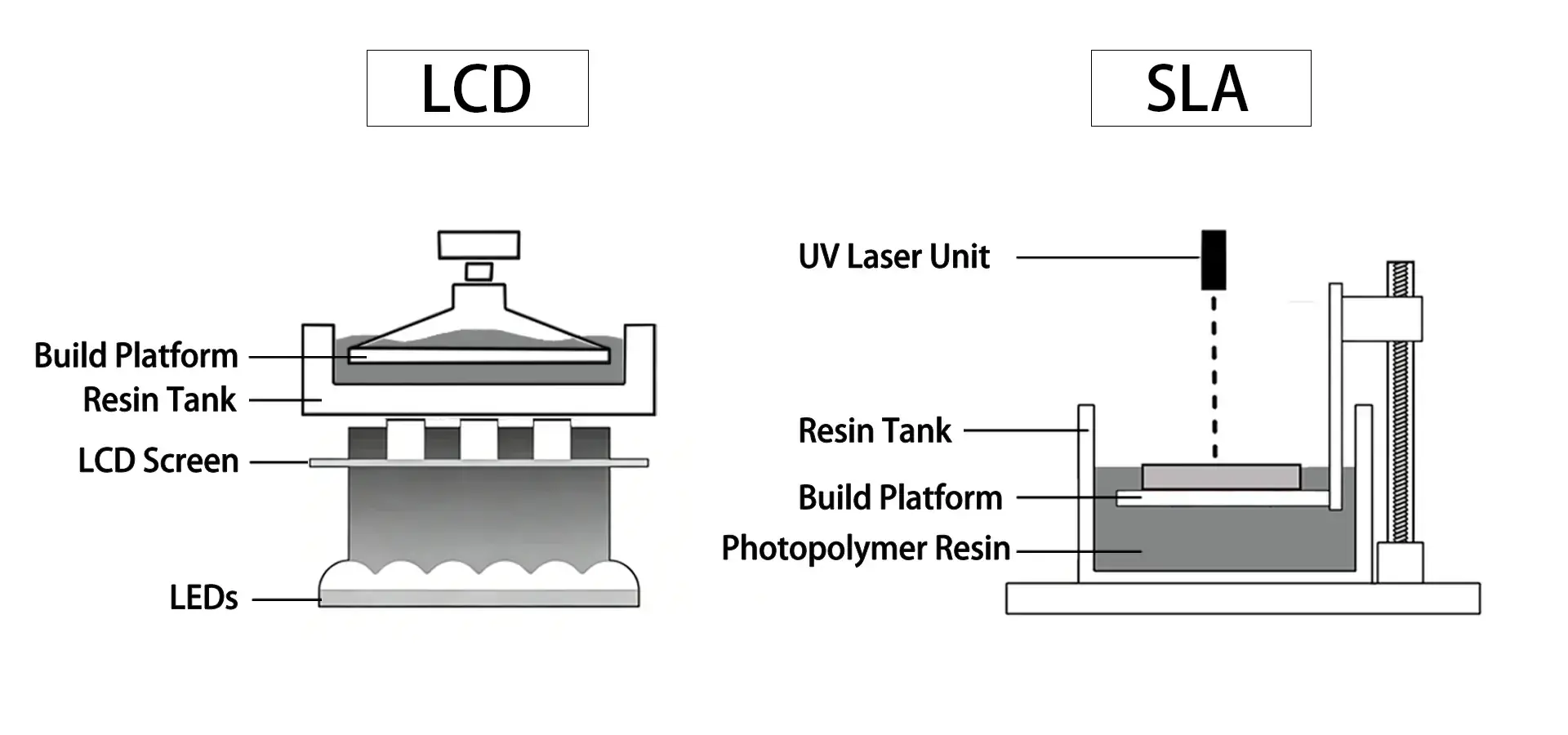
How we perceive fast resin 3D printer modeling has changed a lot since vat photopolymerization came along. There is a complex interaction between visual systems, mechanical accuracy, and material science at the heart of this change. Modern high-speed LCD printers have monochrome LCD screens delivering irradiance levels above 6 mW/cm², allowing layer curing in 1–2 seconds. This contrasts with early laser-based SLA units, which had slower point-by-point exposure and hydrodynamic limitations. These machines utilize Masked Stereolithography designs, distinct from DLP systems, to cure entire layers at once. Instead of tracing each layer point-by-point like laser SLA, LCD printers cure whole layers simultaneously. This method of parallel processing cuts build times by a significant amount while keeping XY resolutions between 20 and 50 microns. The closed-loop motor control system enables Z-axis acceleration up to 100 mm/s² while maintaining stable layer alignment. This makes sure that layer alignment stays within ±0.01 mm even when the motors are oscillating quickly. Material suitability is also critical for keeping quality high while working quickly. Engineering-grade photopolymers now have a viscosity of less than 200 mPa·s and better photo-initiator sensitivity, which lets them quickly reflow between layers and start polymerizing as soon as they are exposed. This chemical improvement prevents common issues such as uneven surfaces or incomplete curing that have occurred with fast printing in the past.
Key Speed Factors Without Compromising Detail
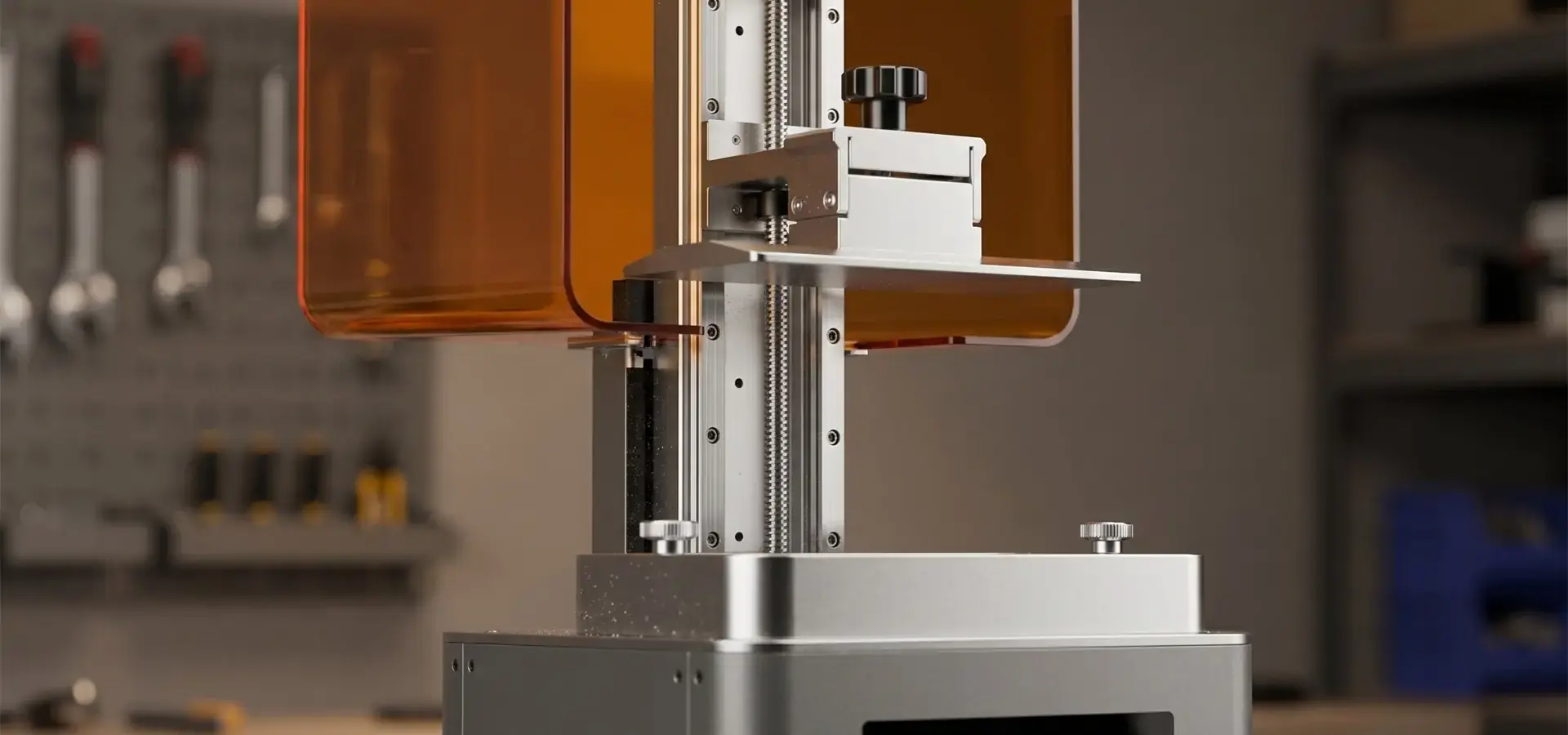
A fast resin system meets quality standards based on several technical factors. The main variable is exposure time; shorter lengths speed up builds but need stronger light and carefully measured resin formulations. Another parameter is layer thickness. Thick layers take less time to print, but they might not be as smooth on curved shapes. When there is a lot of work to be done, the release device needs extra care. Advanced composite films (ACF) and non-stick fluoropolymer layers lower peel forces by up to 50%, which stops layers from coming apart during quick pulls. This is crucial when making fine filigree patterns for jewelry or thin-walled parts for samples of consumer electronics. Two linear rail systems, reinforced with lead screws, provide the mechanical steadiness necessary for consistent layer stacking. Without this stiff framework, even small wobbles (greater than 0.01mm) build up over hundreds of layers, causing measurement drift that makes it difficult to test for functional fit or make sure the assembly is correct.
Benefits for Multi-Industry B2B Applications
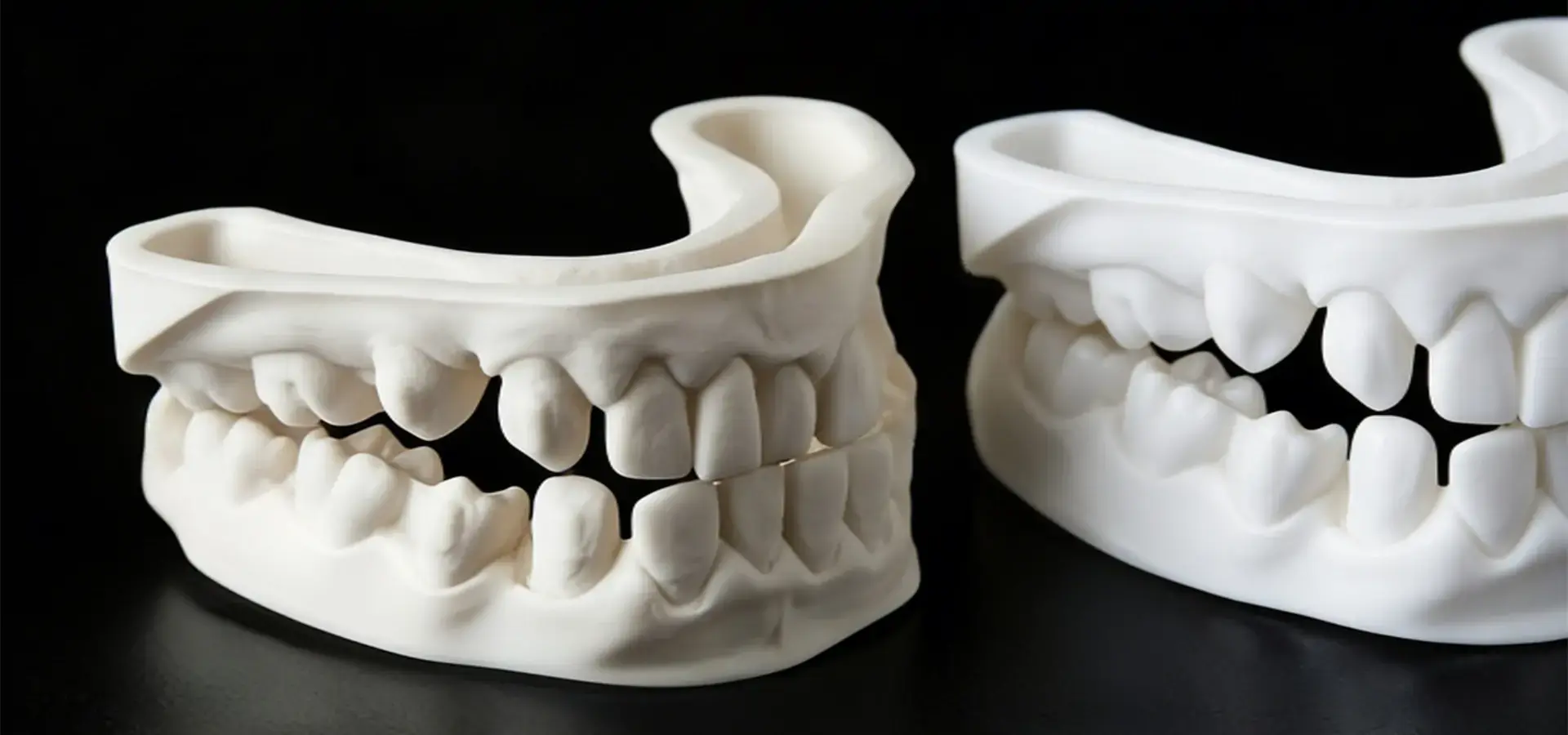
When designers can make changes to their work in hours instead of days, it alters the product development processes. This is true in industries from automobiles to aerospace. Before investing in expensive injection molds, automotive R&D teams use these systems to make sure that snap-fit kits work and that internal parts are within tight tolerances (±0.05 mm). The speed advantage lets you try multiple versions of a design in a single shift, which cuts down on development times that used to take months. Same-day production of orthodontic models and surgical guides helps chairside processes in dentistry labs. Now, a whole lot of aligner casts can be made in less than 40 minutes, so patients can get them right away, and there is no longer the need to pay for outside lab work. This response directly results in happier patients and increased productivity in the office. Aerospace applications require both speed and specific material performance. When high-temperature resins fix quickly without losing their shape accuracy, it becomes cost-effective to make small batches of complex connections and parts with odd shapes. Being able to make verified prototypes on demand helps agile design ideas and meets strict certification standards in the industry.
Can Speed Compromise Print Quality? Exploring the Challenges
Common Quality Issues in High-Speed Printing
Increasing the speed of production naturally adds mechanical and chemical stresses that can show up as flaws. Lift speeds that are too fast often prevent the resin from reflowing and settling between exposures, causing layers to not stick together well. This scenario causes parts to separate when they are put under useful loads, which means they can't be used for mechanical tests or final applications. When thermal differences form during rapid curing processes, they cause distortions in shape and warping. The exothermic polymerization process makes heat, and if you don't have the right tools in place to get rid of that heat, changes in temperature in different areas can cause stress inside the material. Over time, these internal stresses are gradually released, which makes the shapes twist away from what the CAD called for. Another issue arises when curing consistency varies, particularly when exposure times are extended. When there isn't enough energy delivered, uncured resin becomes trapped inside parts, which weakens their mechanical properties and makes the surfaces sticky enough that they fail quality checks after processing. On the other hand, too much exposure lets light into nearby areas, blurring fine details and making measurements less accurate.
Performance Trade-offs: Speed versus Precision
There are measurable changes in the output properties between normal and accelerated printing modes. Standard resin printers that work at 30–50 mm/h vertical speeds can usually get surface roughness values below 1.6 μm, which is good for making visual mockups and idea models. If no countermeasures are taken, pushing speeds up to 170 mm/hour can make the surface rougher to Ra 2.5–3.0 μm. The quality of the layer interface changes noticeably when the speed is adjusted. Printing more slowly lets all the resin drain out and spread evenly, which makes smoother interlayer bonding. Rapid cycles can trap tiny holes at the surfaces, which lowers the tensile strength by 10 to 15 percent compared to normal speeds. This trade-off holds significant importance for working prototypes undergoing stress or longevity testing. Modern equipment, on the other hand, along with smart software tuning, makes many of these flaws less noticeable. Adaptive exposure algorithms change the amount of light based on the cross-sectional area. This makes sure that the fix depth is right even when the machine is running quickly. Lift speeds change based on the shape of the part; they slow down for big cross-sections that need more resin movement and speed up for thin layers with low peel forces.
Best Practices for Maintaining Consistency
To get consistent quality at high speeds, you need to use regular testing and preventative maintenance plans. Before every important production run, the Z-axis should be calibrated to make sure that the build platform is perfectly aligned with the LCD screen. Even differences of 0.02 mm can cause the first layer to stick unevenly, which can lead to failures dozens of layers later. The way resin is managed has a direct effect on uniformity. Photopolymers break down over time when exposed to light and oxygen in the air, making them less reactive and thicker over time. By rotating the resin vats and cleaning the media before each print, you can get rid of the cured bits that would otherwise leave marks on the surface. Controlling the temperature is also important. Keeping the resin between 25°C and 28°C improves its flow and speed of drying. There is a regular schedule for checking and replacing the release film. Light transmission consistency decreases as films get micro-scratches and optical clouding, which leads to exposure areas. By changing the films every 500 to 800 print hours, workers can stop the quality from slowly getting worse, which they might not notice until they compare new parts to baseline samples.
Fast Resin 3D Printers vs. Alternative Technologies: A B2B Perspective
Comparative Analysis: Resin versus FDM and SLA
When buying, teams look at investments in additive manufacturing, knowing the strengths of each technology helps them match the right application. Fused deposition modeling (FDM) systems can save you money on materials and make things easier to use, but they can't match the fine detail and smooth surface finish of photopolymerization methods. Even at 100-micron settings, FDM's layer lines are visible, making it unsuitable for dental models or jewelry masters who require smooth surfaces. Traditional laser SLA printers are highly accurate but slower because each layer is scanned point-by-point, unlike masked LCD systems, which cure entire layers simultaneously. Because of these limitations, traditional SLA works best for very precise tasks like making tools for aircraft, but it's not as good for mass production. High-speed resin systems are a good compromise because they offer accuracy close to SLA while delivering significantly higher throughput than traditional laser SLA systems. The surface finish quality is good enough for both visual samples and useful end-use parts. You can now choose from engineering-grade formulas that match ABS-like toughness or high-temperature deflection resistance.
Technology Selection for Specific Industries
Fast resin platforms are increasingly used in dentistry and medicine because they are safe and customizable. Class I or II medical device compliance is needed to make surgery guides, dental arches, and implant placement jigs. Many specialized resins now meet this requirement. The speed makes single-unit production cost-effective, which fits nicely with the move toward personalized medicine. Jewelry makers put a lot of emphasis on how well castable plastic works with delicate features like filigree patterns or stone settings. MSLA printers with high-resolution LCD panels (8K or 12K) maintain sub-millimeter accuracy, enabling multiple jewelry pieces to be printed simultaneously without losing fine details. Because the cycle time is shorter, casting houses can run continuous production shifts, which increases the equipment's return on investment. When developing consumer devices, changes to the design have to be made quickly, and tight tolerances have to be kept so that testing of component fit is possible. It is now possible for engineering materials made for high-speed printing to have flexural modulus values higher than 2.5 GPa. This means that practical snap-fit verification and drop test confirmation can be done. Development times that used to take weeks are cut down by being able to print overnight and test the next morning.
Leading Solutions and Performance Metrics
There are different types of tools on the market right now that can meet different scales and accuracy needs. Small design companies and new service bureaus that need cost-effective freedom can use entry-level industrial units that cost between $3,000 and $8,000. These usually have build sizes of about 130x80x150mm and an XY precision of 50 microns, which is good enough for prototyping needs in general. Systems in the $15,000 to $35,000 price band are aimed at proven service providers and corporate R&D teams. As the build envelopes get bigger—to 200x130x200mm—higher-density LCD panels maintain or improve XY resolution and edge definition. These machines have better thermal management, automatic resin handling, and longer guarantee coverage to support activities that happen on multiple shifts. Large-format industrial platforms that cost more than $50,000 are used by companies that make aircraft, automobiles, and medical devices, and need to be able to do batch production. Build sizes up to 600x400x400mm can hold many parts in a run or big parts made of a single piece, like car interior panels. AI-optimized slicing software, real-time tracking, and predictive maintenance alerts are all built into these systems. This makes sure that the quality stays the same over thousands of work hours.
Procurement Guidance: How to Choose and Buy a Fast Resin 3D Printer
Defining Your Technical Requirements
Figuring out how much output and quality is needed is the first step in choosing the right tools. Figure out how many parts you expect to ship each month, taking into account both current jobs and expected growth. A dental lab that makes 50 models a week needs different throughput capabilities than a car supplier that makes working prototypes for design reviews every three months. The level of accuracy needed directly affects the choice of tools. For jobs that need dimensions to be accurate to within ±0.1mm over 200mm spans, you need industrial-grade tools with temperature-controlled work areas and precise linear guides. Visual versions that aren't as important may be able to handle differences of up to 0.2 mm, which lets you think about cheaper platforms. Another important characteristic is material suitability. If you need special resins for things like high-temperature formulations for car engine parts, flexible materials for prototypes of wearable tech, or biocompatible grades for medical tools, make sure that the equipment you're looking at supports open-material systems instead of proprietary cartridge lock-in. This adaptability stops future bottlenecks and keeps running costs low.
Evaluating Total Cost of Ownership
The purchase price is only the first part of a long-term business study. Consumable costs, like the price of plastic and the replacement of release films, add up over the life of an item. Machines that need special materials often have 30–50% higher prices on plastics, which cancels out any savings on gear in the first year of production. Maintenance needs and the supply of parts affect the continuation of operations. When regular repairs need to be made, equipment that is made with modular, user-serviceable parts has less downtime. It's important to know exactly what your warranty covers. For example, some makers don't cover LCD screens and release films under normal warranties, which can cause you to pay extra during the first year of ownership. Different providers offer very different levels of training and technical help. Comprehensive onboarding programs with hands-on calibration training, material profiling workshops, and fixing methods help operators become more skilled faster. Responding to technical help, whether by phone, email, or virtual desktop assistance, keeps small problems from getting so bad that they stop production.
Partnering with Reliable Suppliers
To find reliable, fast resin 3D printer makers, you need to look at both their technical skills and their service infrastructure. Companies that have a lot of patents and brand filings show that they keep investing in research and development and protecting their intellectual property. Exporting to dozens of countries and working with hundreds of businesses is a sign that the market is real and that the business is mature. Vertically integrated companies that make both products and tools have clear benefits. When the same engineering team works on both optimizing resin formulas and hardware specs, problems with compatibility go away. This gets rid of the size differences, print flaws, and unexpected downtime that come from third-party material mismatches, which are a problem for many operations. Participating in foreign trade shows and professional training programs in different regions shows a dedication to customer success that goes beyond making sales. Suppliers who support technology transfer programs and keep local service networks running make sure that help is always available when operating problems appear.
Ensuring Long-Term Quality: Best Practices and Future Outlook
Calibration and Optimization Protocols
Systematic calibration processes must be built into production workflows in order to keep output quality uniform. Using precision measure blocks to check the Z-axis once a week makes sure that the settings for layer thickness match what is actually being deposited. Using standardized test patterns to check the XY's accuracy once a month finds optical system degradation before it affects production parts. Material analysis figures out the best contact conditions for each type of resin. The color loading, filler content, and photo-initiator quantity all affect how each photopolymer reacts in its own way. By using graduated exposure matrices to make test prints, the best choices for matching cure depth, surface finish, and dimensional accuracy can be found. Controlling the environment makes tools more useful. Keeping the temperature around 20°C to 25°C and the relative humidity below 60% stops mist from forming on optical surfaces and keeps the flow properties of resin stable. When temperatures change with the seasons, facilities need to have dedicated printing areas or climate-controlled rooms.
Preventive Maintenance and Troubleshooting
Using structured repair plans stops quality from slowly going down. Every day, release films are checked daily for scratches or clouding, that mean they need to be replaced. Cleaning the sides of resin vats once a week gets rid of the partly cured residue that makes the appearance rough. Lubricating the Z-axis lead screws once a month keeps the motion smooth and reduces vibration and ensures smoother motion control. Systematic fixing finds the root causes of quality problems that happen even after precautions have been taken. Layer binding problems are often caused by not enough first-layer contact or build platform surfaces that are dirty. Warping usually means that there are problems with controlling heat or designing the support system correctly. Surface flaws are often caused by particles getting into the plastic or the release films breaking down. Documentation techniques help with efforts to keep getting better. An analysis database is made by keeping track of print factors, environmental conditions, and material batch numbers for each production run. When errors happen, connecting quality metrics to process variables helps find what went wrong and how to fix it.
Emerging Innovations and Future Capabilities
Resin printing technology is moving in the direction of smarter process control and more automation. AI-powered software now looks at the shapes of parts and automatically creates the best support structures. This cuts down on the time needed to prepare by hand and increases the success rate. By keeping an eye on motor current signatures and optical system performance, machine learning algorithms can figure out when repairs need to be done. This lets them change parts before they break. The uses of material science are growing all the time, thanks to discoveries. New photopolymer formulations have qualities that were only available in thermoplastics before. For example, they have chemical protection that is the same as polypropylene and heat deflection temperatures that are higher than 200°C. With these engineering-grade materials, resin printing can be used for small-batch production instead of just testing. Adding automation is the next big step toward increasing output. Lights-out operation is possible with robotic part removal systems, automatic post-processing stations, and material handling solutions. These improvements, along with the ability to print at high speeds, make resin-based additive manufacturing a viable option to standard injection molding for orders below 10,000 units.
Conclusion
To get constant quality with fast Resin 3D printer technology, you need to carefully choose your tools, keep a close eye on the process, and keep making improvements. When properly designed mechanical systems, advanced optical designs, and optimized materials work together, modern high-speed systems show that throughput and precision don't have to be incompatible. To be successful, you need to make sure that the equipment you use fits the needs of the job, follow thorough upkeep procedures, and work with providers who are committed to providing long-term customer support. Resin-based additive manufacturing is becoming more and more important in the dental, automobile, aircraft, medical, and consumer electronics industries as automation, materials science, and smart software keep getting better.
FAQ
What print speeds qualify as "fast" for resin 3D printers?
What are some "fast" print speeds for fast resin 3D printers? Fast LCD-based (MSLA) 3D printer systems can build vertically faster than 100 mm/h, with some modern models reaching 170 mm/h in rapid mode. This is 200–300% faster than early laser SLA systems, which typically achieved 30–50 mm/h. The amount of time saved depends on the shape of the part and the choices for layer thickness, but users often say that overnight prints can be cut down to 3–4-hour cycles.
How do fast resin printers maintain quality at high speeds?
Several combined technologies work together to keep quality high at high speeds. Without lowering the quality, monochrome LCD screens give off more light, which speeds up the healing process. Low-tension release sheets lower peel forces, which stop layers from coming apart during quick pulls. Dynamic settings are changed based on cross-sectional area by AI-optimized exposure algorithms. This makes sure that the fix depth is right even in complex shapes. Even when the Z-axis moves quickly, precision mechanical systems keep the setting accuracy at less than 10 microns.
What industries benefit most from high-speed resin printing?
Dental labs can now make models for orthodontic devices and surgery guides the same day. Manufacturers of jewelry can make a lot of castable master designs in one day. Companies that make cars and consumer gadgets speed up the testing of working prototypes for snap-fit applications. Aerospace makers make small batches of tested parts that meet very tight standards. Medical device makers make surgical tools that are tailored to each patient as part of clinical processes.
Ready to transform your production with a trusted, fast resin 3D printer manufacturer?
Magforms combines decades of experience with additive manufacturing with developing materials and tools in-house, which gives them unmatched reliability for harsh production settings. Our custom resin mixes and high-precision tools are put through a lot of tests to make sure they work well together. This keeps rival systems from having problems like missing dimensions or unexpected downtime. We give your business the technical support it needs with 22 patents, 30 protected trademarks, and service that has been used by over 300 businesses in dozens of countries. Our engineering team is ready to help you find the best solutions, whether you're looking to increase the capacity of a dental lab, speed up the testing process for cars, or start making things that are good enough for space travel. Get in touch with info@magforms.com right away to talk about how our fast Resin 3D printer for sale portfolio can meet your specific needs for speed, accuracy, and material. We offer full training, quick technical support, and a real stake in your success.
References
1. Gibson, I., Rosen, D., & Stucker, B. (2021). Additive Manufacturing Technologies: 3D Printing, Rapid Prototyping, and Direct Digital Manufacturing (3rd ed.). Springer.
2. Stansbury, J. W., & Idacavage, M. J. (2016). 3D printing with polymers: Challenges among expanding options and opportunities. Dental Materials, 32(1), 54-64.
3. Melchels, F. P., Feijen, J., & Grijpma, D. W. (2010). A review of stereolithography and its applications in biomedical engineering. Biomaterials, 31(24), 6121-6130.
4. Quan, H., Zhang, T., Xu, H., Luo, S., Nie, J., & Zhu, X. (2020). The photo-curing 3D printing technique and its challenges. Bioactive Materials, 5(1), 110-115.
5. Dizon, J. R., Espera, A. H., Chen, Q., & Advincula, R. C. (2018). Mechanical characterization of 3D-printed polymers. Additive Manufacturing, 20, 44-67.
6. Hornbeck, L. J. (2019). Digital light processing for high-speed, high-resolution additive manufacturing. Proceedings of SPIE - The International Society for Optical Engineering, 10932, 109320D.

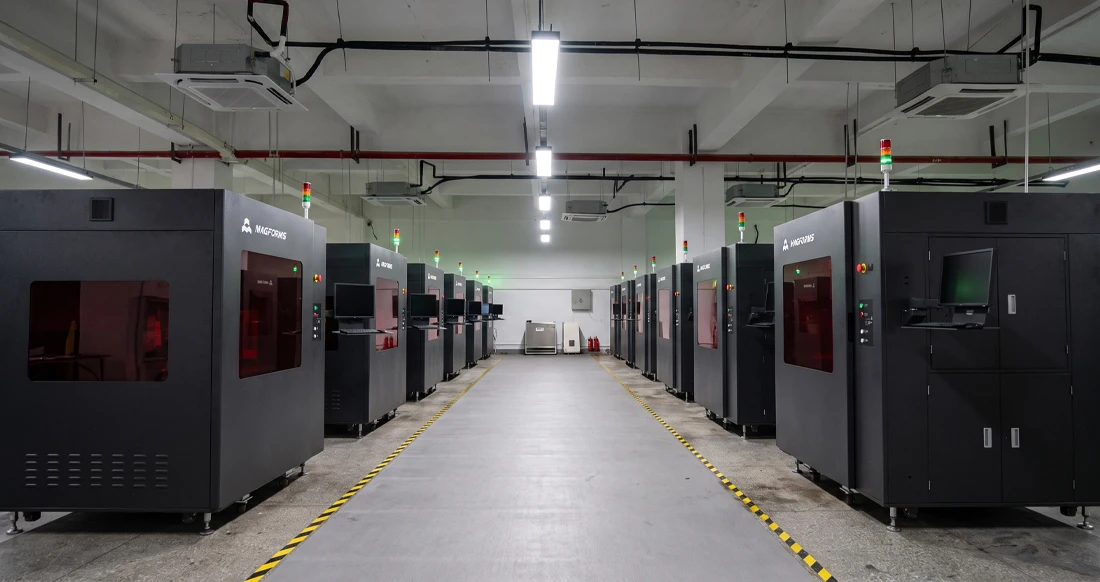
Magforms makes design and manufacture easier.
Popular Blogs
-
 Industry InsightsManufacturing Industry
FDM vs. SLA Printer: Which Technology Is Right for Your Project?
-
 Industry InsightsManufacturing Industry
Top 5 Applications of Industrial 3D Printers in Manufacturing Today
-
 Industry InsightsManufacturing Industry
Why Stereolithography 3D Printers Are Unmatched for Microfluidic Device Prototyping?