Shoe 3D Printer Workflow: From Design to Finished Product
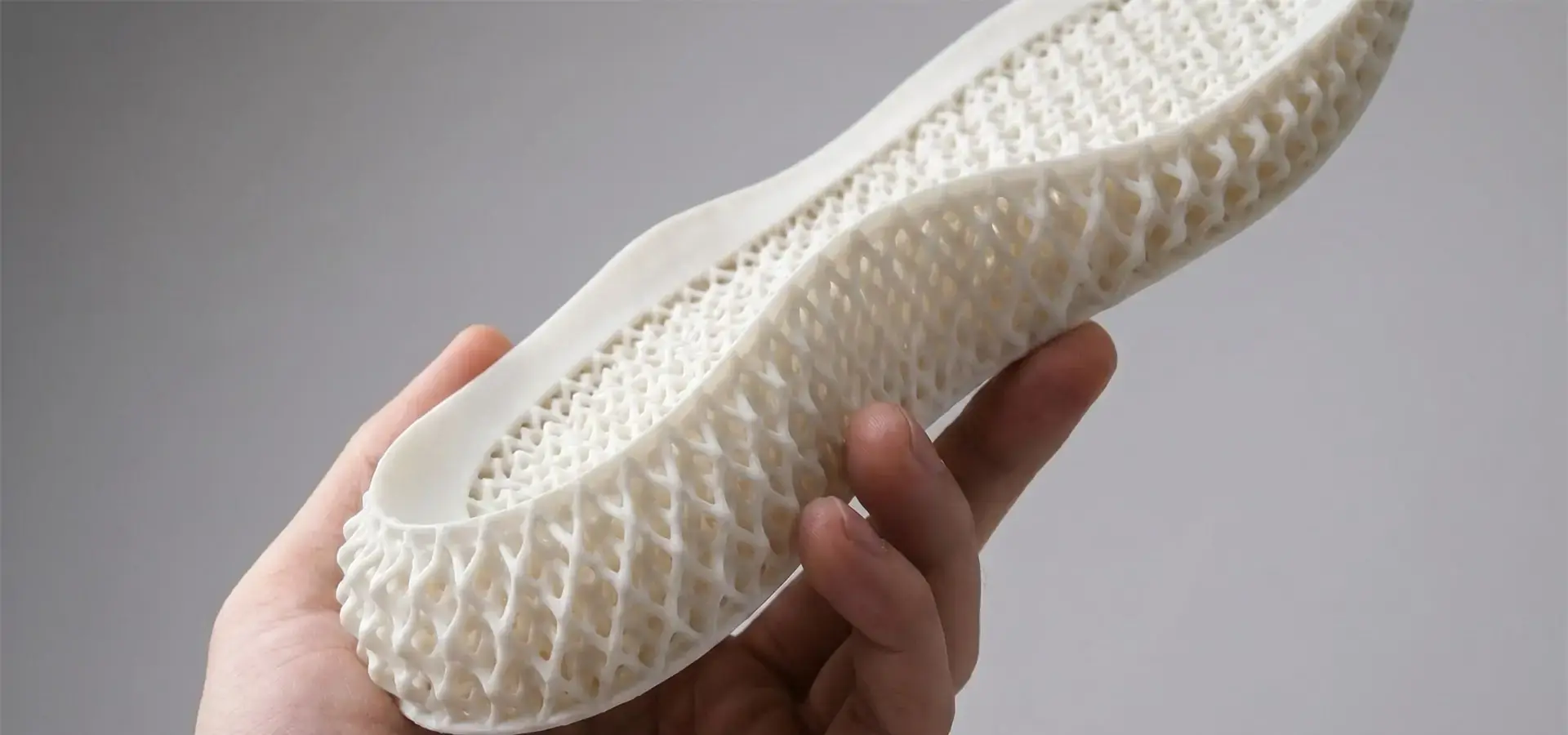
Through a carefully planned series of design, material preparation, additive production, and finishing steps, the shoe 3D printer workflow turns digital ideas for shoes into real products. A specialized SLA shoe 3D printer directly fabricates high-performance midsoles, insoles, and intricate lattice structures from engineering-grade elastomeric photopolymers. These resins deliver energy return properties that rival or exceed traditional TPU and EPU, while the laser-based Stereolithography process provides superior surface fidelity, tight tolerances, and fully isotropic mechanical strength—qualities essential for durable footwear components. This fast method gets rid of the need for expensive molds, shortens the time it takes to make a product from months to weeks, and opens up geometric options—like variable-density cushioning zones—that aren't possible with standard injection molding methods.
Understanding the Shoe 3D Printing Workflow
Procurement managers and technical leaders who are looking at advances in additive manufacturing need to know how the whole process works. Each step has a direct effect on the quality of production, the efficiency of costs, and the success of time-to-market.
Digital Design and CAD Preparation
The process starts with computer-aided design software that is made for shoe building. Design teams use anatomy data from 3D foot scans to make parametric models that can be used to make personalized fit profiles. Engineers can use advanced software to make mathematical lattice structures that can have mechanical qualities that can be changed. For example, the effective Shore hardness can be precisely tuned from 40A at the forefoot to 95A at the heel within a single continuous part by optimizing the geometry and density of the SLA-printed lattice structures. This part of the computational design phase affects how well the finished product works, so choosing the right software and having experienced designers is an important part of the procurement process.
Material Selection and Pre-Processing
The choice of material has a direct effect on how well the shoe works, how long it lasts, and how much it costs. For SLA-based shoe manufacturing, specialized elastomeric photopolymer resins are formulated to deliver flexibility and durability that rival traditional TPU, while achieving energy return rates that often exceed 75%—making them ideal for sports footwear where high rebound is critical. These photopolymers are engineered to cure into precisely defined lattice geometries, turning digital performance specifications directly into physical cushioning properties. Controlling the temperature and humidity of the air around the material before it is printed helps keep it from absorbing water, which can affect the accuracy of the dimensions. During the build cycle, the shoe 3D printer has to keep the surroundings in a certain way so that the material qualities are the same from batch to batch.
Printing Technology and Build Execution
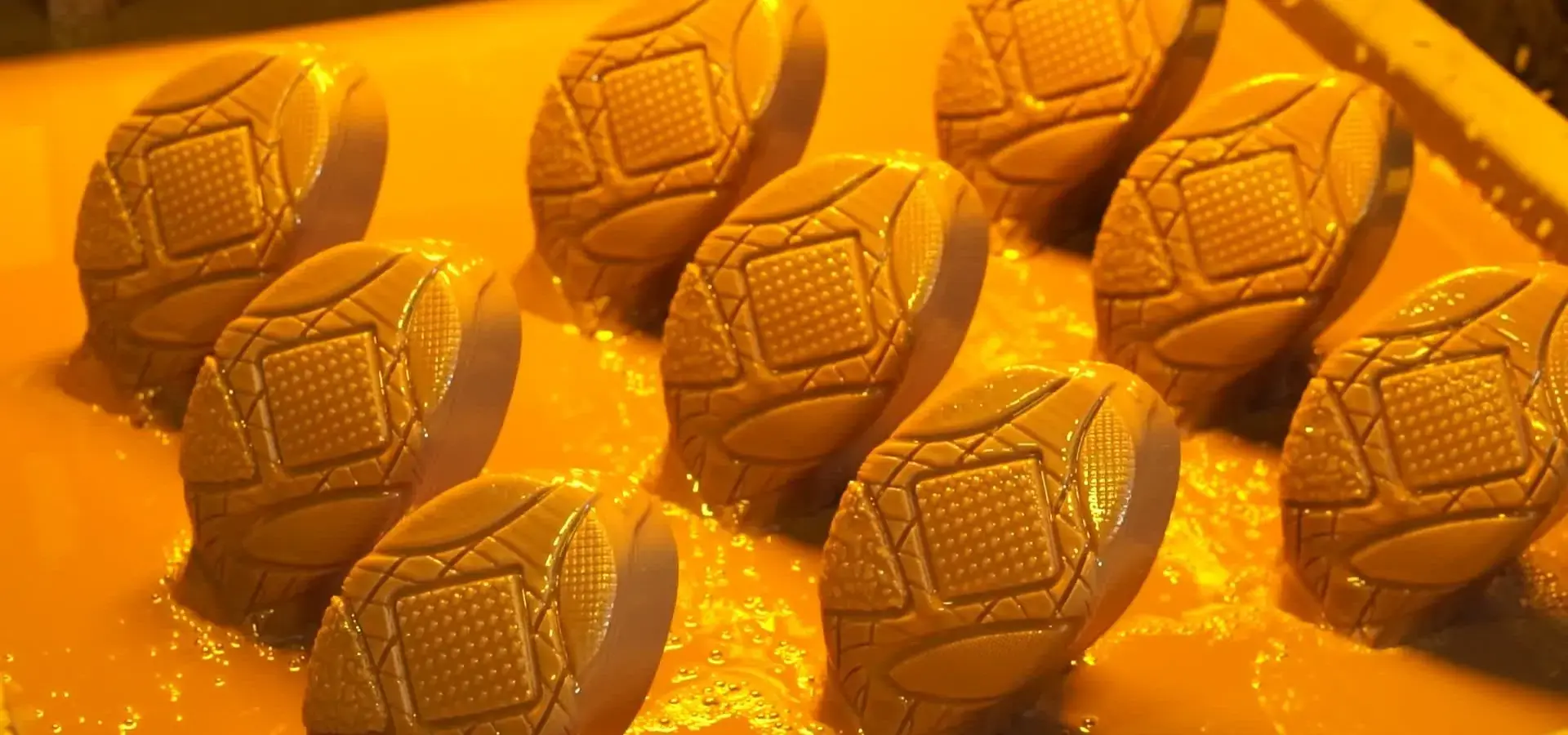
Stereolithography (SLA) stands as the definitive additive technology for footwear manufacturing, uniquely capable of producing high-resolution, ultra-smooth lattice structures with fully isotropic mechanical properties. In a specialized SLA shoe 3D printer, a high-precision UV laser selectively cures liquid photopolymer resin layer by layer, enabling the creation of intricate interior pathways with unrivaled surface smoothness. Scanning-laser SLA systems maintain a decisive advantage in geometric complexity and micron-level precision across the entire build platform. Industrial SLA platforms reliably achieve sub-50-micron feature resolution and the smoothest possible surface finish directly out of the printer, producing shoe midsoles where both dynamic fatigue life and aesthetic clarity are mission-critical.
Modern 3D shoe printers have sensors that watch them in real time and can find problems like recoater blade irregularities or spots where the printer is getting too hot. These quality control measures lower the number of defects and cut down on waste during long production runs. Teams in charge of buying things should focus on getting things that offer full process tracking, since failures that go unnoticed during overnight builds can cause big material losses and schedule delays.
Post-Processing and Surface Finishing
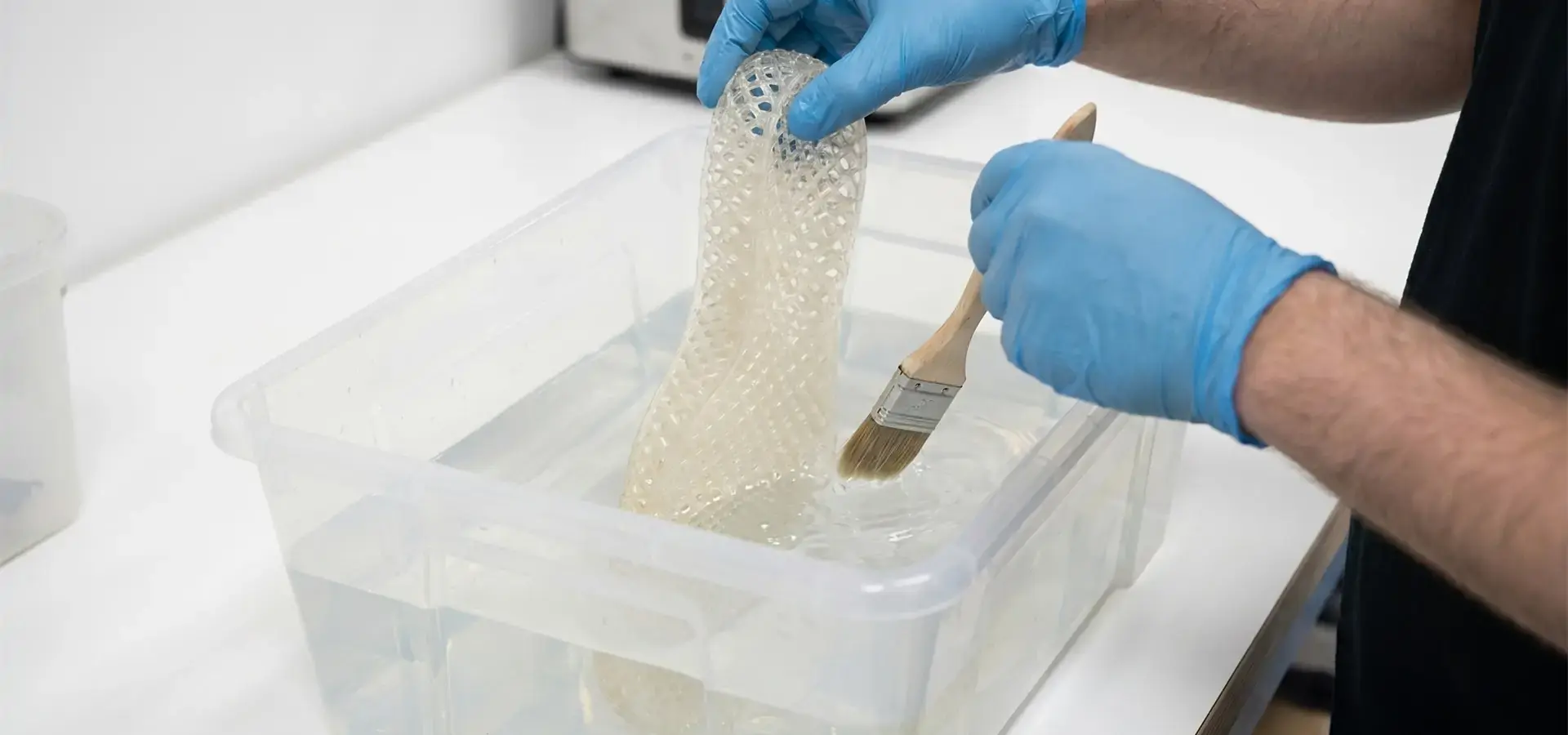
To meet the aesthetic and functional standards expected in the footwear market, printed parts need to be carefully processed after they are made. For SLA-printed shoe components, post-processing begins with the removal of support structures and thorough cleaning of uncured resin from intricate lattice channels using solvent baths or ultrasonic agitation. This is followed by a controlled post-curing cycle under UV light to fully stabilize the material's mechanical properties before any surface finishing is applied. Techniques for finishing the surface, like light sanding, clear coating, or dyeing, enhance appearance and provide essential protection against UV degradation and moisture breakdown. In some situations, this stage needs mechanical testing, such as figuring out the compression set according to ASTM D395 standards and measuring the tensile strength according to ASTM D412 standards. Before moving on to assembly, these test procedures make sure that each batch meets certain performance standards.
Assembly and Quality Assurance
In the last step of the process, 3D-printed parts are put together with standard shoe parts like laces, knitted uppers, and logos. Midsoles are attached to the top sections using either adhesive bonding or mechanical fastening. Bond strength testing confirms the structure's stability under cyclic stress conditions. Coordinate measuring machines or optical scanning systems are used in quality assurance processes to check the accuracy of the dimensions by comparing the as-built geometry to the original CAD specs. To make sure something will last for a long time, fatigue testing mimics long wear cycles, which are often more than one million compression rounds. This complete quality system makes sure that all goods that leave the building meet both internal standards and industry-specific standards, like ISO 20344 for safety footwear.
Advantages of Using Shoe 3D Printers Over Traditional Manufacturing
When you switch from traditional production methods to additive manufacturing, you can see measurable changes in several performance areas that have a direct effect on your bottom line and your place in the market.
Elimination of Tooling Costs and Lead Time Reduction
In traditional shoemaking, a lot of money has to be spent up front on metal molds and injection casting. Each set of molds costs between $15,000 and $50,000 and takes six to eight weeks to make. The shoe 3D printer totally skips this cost of capital, so accepted digital files can be used for immediate production. This big change changes the economics of low-volume production and special orders. It makes small batch runs financially possible where they didn't make sense before, based on cost-benefit analysis. Iterations of prototyping that used to take weeks can now be finished in days, which speeds up the testing in the market and the approval of designs.
Mass Customization Without Cost Penalties
With traditional production, changes to the design of a product cost a lot because they need new tools. With additive manufacturing, this idea is completely turned on its head—making a unique shape doesn't cost more than making similar parts. This feature enables true mass customization, letting brands offer customized fit based on biomechanics data collected by scanning machines in stores. Companies that make athletic shoes use this edge to make boots that are perfect for each player's unique walking style and pressure distribution map. Medical uses go even further, like making orthotic insoles that are perfectly shaped to fit the patient's body for treatment of plantar fasciitis or problems with the feet caused by diabetes.
Freedom of geometry and performance improvement
Engineers can use the shoe 3D printer to make complex internal structures that would be hard to make with traditional shaping methods. Variable-density lattice structures put flexible cells in areas that will be hit hard and fixed shapes in areas that need to be stable and controlled. This zonal tuning improves energy return, shock absorption, and proprioceptive input all in a single continuous component. This gets rid of the problems that come with multi-part midsole designs, like having to put them together and finding places where they might break. Generative design programs look at thousands of different geometric arrangements and find arrangements that are both strong and light. This leads to solutions that human designers would never think of using traditional methods.
Sustainability and Less Waste
In the old way of making shoes, a lot of materials are wasted during the cutting steps, resulting in the throwing away of 20 to 30 percent of the materials that were used. When you use injection molding, you get flash trash and track systems that need to be thrown away or recycled, which takes a lot of energy. In SLA printing, uncured resin from the build vat is filtered and reused in subsequent builds, routinely achieving material utilization rates of over 95%. This near-net-shape process applies material only where structurally required, virtually eliminating the cut-off waste streams typical of traditional shoe manufacturing. Cutting down on waste saves money, helps companies be more environmentally friendly, and supports their sustainability efforts—all of which are becoming more important in purchasing choices as companies adopt circular economy principles and carbon reduction goals.
Choosing the Right Shoe 3D Printer for Your Business Needs
It's important to carefully think about technical specs, output needs, and the total cost of ownership over the lifetime of the equipment when choosing the right additive manufacturing equipment.
Prototyping vs. Needs for Production
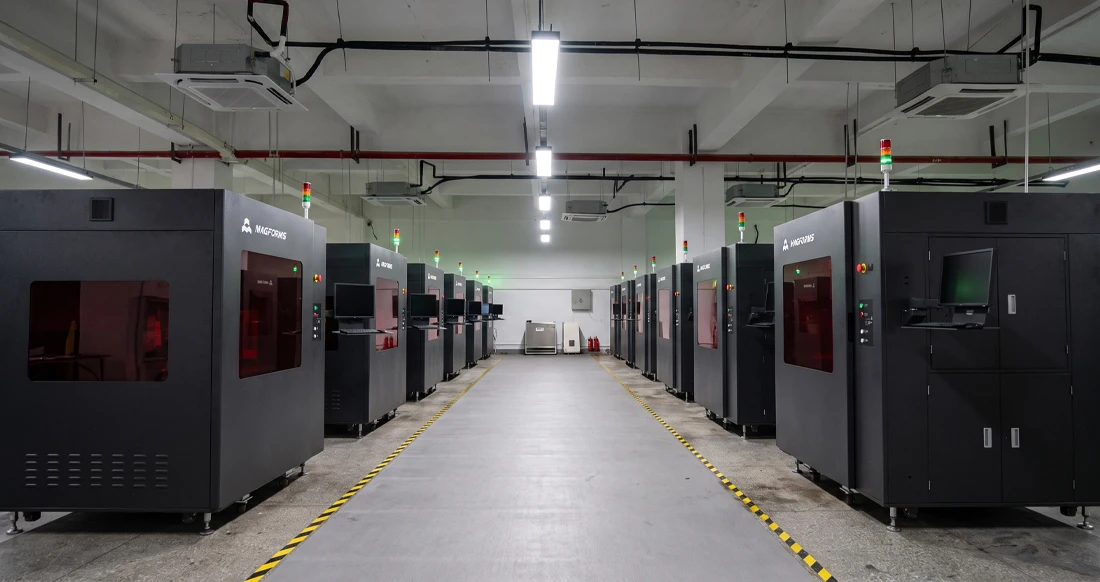
Desktop shoe 3D printer systems with build sizes of around 300 x 200 x 300 mm and material costs of $80-150 per kilogram are good for design studios and development teams that want to make changes quickly. These tools let you quickly test the functionality and validity of your designs without having to spend a lot of money on an industrial system. For operations that focus on production, they need higher throughput, bigger build rooms that can fit more parts per cycle, and strong process controls that make sure there is stability from batch to batch. Industrial scanning-laser SLA systems with build sizes greater than 500 x 500 x 500 mm can fabricate dozens of midsoles simultaneously, delivering the unit economics required for large-scale production while maintaining the surface finish and precision that SLA is known for.
Compatibility of Materials and Open Systems
Many basic systems only let users use materials made by the company that made the system. This limits the system's ability to be used in different ways and leaves buyers open to supply chain problems and price hikes. Open-architecture shoe 3D printer platforms that can use third-party materials are favored by professional buying strategies because they allow for competitive sourcing and material optimization for specific uses. Being able to work with engineering-grade photopolymers, flexible elastomeric resins, and high-temperature resins opens up more application options and keeps you from getting locked into one provider, which can make it harder to keep costs down in the long run.
Metrics for Accuracy, Speed, and Dependability
In addition to marketing claims, technical specs need to be carefully looked over. Independent tests should be used to make sure that the dimensions are correct, and expert methods should keep the tolerances within ±0.2mm across the whole build volume. Print speed specs need to be understood in context. In resin-based systems, scanning-laser Stereolithography (SLA) delivers the optimal balance of micron-level precision and throughput for footwear. Unlike masked DLP or LCD systems, which can suffer from edge-voxel artifacts and intensity falloff across large areas, top-tier SLA platforms maintain uniform, sub-50-micron feature resolution across the entire build envelope. This makes SLA the established choice not just for high-detail master patterns, but for the direct, consistent mass production of elastomeric midsoles and shoe components. Metrics for reliability are just as important, since unplanned downtime has a direct effect on production plans and customer promises. The shoe 3D printer should have failure rates of less than 5% based on recorded performance data from the field, and help from large service networks that can quickly respond to repair needs.
Total Cost of Ownership Analysis
The price of buying something is only one part of how much it will cost over its lifetime. A full financial study needs to look at things like how much material is used, how much energy is needed, repair contracts, spare parts inventory, and the cost of teaching operators. Some systems need expensive custom plastic tanks or print surfaces that need to be replaced every so often, which adds $3,000 to $8,000 a year to the cost of running the system. Software licensing fees, testing supplies, and post-processing tools are some other costs that have a big effect on figuring out the return on investment. For accurate five-year total cost of ownership estimates that help with smart capital allocation choices, procurement teams should ask suppliers for detailed cost breakdowns.
Technical training and support after the sale
The ability of the equipment doesn't mean much without skilled workers and a technical help system that can be used quickly. The company that sells 3D shoe printers should offer thorough training programs that cover things like how to improve designs, how to handle materials safely, how to set up print parameters, and how to fix problems. Technical help teams that are quick to respond and know a lot about applications keep downtime to a minimum when process problems happen. Some makers offer remote tracking services that find problems before they cause print failures. This keeps material waste and production delays to a minimum. Using customer references and written response time measures to judge a supplier's service skills helps procurement teams stay away from sellers who don't have enough support resources.
Common Challenges and Solutions in Shoe 3D Printing Workflow
Even though additive manufacturing has a lot of benefits, it can be hard to put into practice because of technical issues that can hurt quality, efficiency, and profits if they are not properly fixed.
Print Flaws and Consistency in Quality
Surface roughness, differences in dimensions, and mechanical property inconsistencies are all common quality problems that make products less useful and less satisfying for customers. Most of the time, these flaws are caused by poor weather controls, bad material handling, or print settings that aren't set up properly. Using strong standard operating procedures addresses most quality issues, including strict control of resin temperature and viscosity in the build vat, verification of optical window clarity, and routine laser power calibration before every production run. The shoe 3D printer should have closed-loop temperature control that keeps the build platform's temperature within ±2°C of being the same all over. Differential scanning calorimetry is used to test materials on a regular basis to make sure that the feedstock is consistent. This stops batch-to-batch differences that show up as changes in the mechanical properties of final parts.
Moving from prototypes to mass production
When you move from development-scale activities to commercial production levels, you find bottlenecks that weren't there during the review phases. Manual support removal and part washing operations grow linearly with the number of parts, while printing capacity grows geometrically with the addition of more equipment. This means that post-processing activities often become limiting factors. Investing in automated support removal stations, resin washing systems, and post-curing equipment is necessary to keep unit costs low as production levels rise. Optimizing build planning with building algorithms makes the best use of the chamber, which increases the number of parts per build by 30–40% compared to human layout methods. This planning practice has a direct effect on the ROL of tools and the amount that can be made.
How the material works and how it is tested
Making sure that 3D-printed parts work as they should requires strict testing methods that are in line with industry norms and the needs of the application. Compression set testing according to ASTM D395 confirms that elastic recovery is possible after prolonged loads, which is important for midsole uses that are hit over and over again. Abrasion resistance testing with Taber abrasers according to ASTM D1044 shows that the surface of the shoe parts will last. Dynamic mechanical analysis describes the fluid behavior across a range of temperatures, making sure that the performance is good in both hot and cold environments. These validation processes need specialized testing tools and trained staff, which means that purchase planning needs to account for extra infrastructure investments. Working with skilled 3D shoe printer providers that offer application engineering help speeds up the approval of materials and lowers the risk of development.
Integration of software and management of digital workflow
Multiple software systems are used for modeling, scanning, simulation, and manufacturing control in modern shoe creation. Making sure that data can flow easily between these systems stops mistakes and gets rid of the need to convert files by hand, which takes time. The shoe 3D printer environment should work with common file types like STL, 3MF, and AMF, and it should also be able to connect directly to popular CAD programs like SolidWorks, Rhino, and Fusion 360. During production, manufacturing execution systems that keep track of part genealogy, material lot numbers, and process factors make it possible to fully follow a part's history and find its root cause when quality problems arise. This digital infrastructure is a big execution issue that goes beyond buying tools and includes integrating IT systems and building up the skills of staff.

Future Trends Shaping the Shoe 3D Printing Industry
New technologies and changing market needs are constantly changing the way shoes are made. This creates both possibilities and competitive stresses for procurement professionals who are thinking about long-term investment strategies.
Multi-Material and Gradient Printing Capabilities
Next-generation shoe 3D printer systems will be able to dispense more than one type of material, which will allow them to make parts with qualities that change in different places during the same build cycle. With this new technology, designers can now combine rigid photopolymers for structural support with soft elastomeric resins for comfort zones, all within a single continuous build. This means that there are no longer any building steps or possible failure modes for delamination. Functionally graded materials whose Shore hardness changes constantly from one area to another improve performance in ways that can't be done with traditional manufacturing or the current single-material additive processes. Early tests of this technology have already shown that it can work in study settings. It should be available for sale in the next product creation cycle.
AI-Driven Design Optimization and Automation
More and more, design optimization processes will be done automatically by AI programs that look at biomechanical data to make personalized shoe shapes without any help from a person. After being taught on thousands of gait analysis datasets, machine learning models find connections between foot shape, pressure distribution patterns, and the best cushioning setups. This lets them make custom designs in minutes instead of hours, which is what human engineering takes. Automated print parameter optimization uses computer vision systems to watch the building process live and change the laser power, scan speed, and layer thickness on the fly to account for differences in the material or changes in the environment. These smart systems make it easier for people who don't know how to use machines to do it while also improving quality, stability, and production efficiency.
Expansion into Medical and Performance Applications
Athletic shoes are the main focus of the business world right now, but medical and therapy uses have a lot of room to grow as regulations get clearer and more clinical proof comes in. Custom orthotic devices made with 3D printing technology for shoes help with a wide range of conditions, such as serious pronation disorders, differences in limb length, and problems from diabetic neuropathy. Performance uses go beyond general markets and into niche ones, like military boots that are designed to fit the biomechanics of each fighter or safety shoes with impact protection that are made for the dangers in the workplace. These high-value uses support higher prices that help manufacturers make more money while meeting the wants of underserved market segments. Purchasing teams in industries close by should keep an eye on these changes, since successful methods in footwear often spread to other industries with similar technology needs.
Distributed Manufacturing and On-Demand Production
Traditional supply chain designs move away from centralized mass production and toward distributed micro-factories placed close to end consumers. This is made possible by additive manufacturing's digital inventory models. When stores have 3D shoe printers, they can make customized items on demand. This cuts down on the costs of keeping finished goods in stock and makes sure that all SKU versions have the perfect size available. This change cuts down on shipping lengths and the carbon emissions that come with them. It also improves the customer experience by letting personalized goods be sent out the same day. In addition to manufacturing equipment, this change needs digital design libraries, automatic order processing systems, and standardized quality assurance procedures to make sure that output is the same across production nodes that are in different places.
Conclusion
The shoe 3D printer workflow is a complete rethinking of how shoes are made. It replaces processes that rely on tools with flexible digital production systems that allow for customization, faster development cycles, and shapes that weren't possible before. To make implementation work, you need to pay close attention to design optimization, material choice, printing parameters, and post-processing processes. Each of these steps affects the quality of the end product and the cost of production. When procurement workers look at investments in additive manufacturing, they need to weigh the technical skills against the total cost of ownership and make sure there is enough infrastructure to support suppliers. As the technology keeps getting better by being able to work with more materials, being automated by AI, and having more uses, early adopters will gain competitive advantages in terms of speed, ability to customize, and efficiency that will be hard for traditional manufacturers to copy.
FAQ
What makes a shoe 3D printer different from standard 3D printers?
A specialized SLA shoe 3D printer is engineered specifically for footwear production, utilizing large-format resin vats and precision optics to print full-size midsoles and intricate lattice structures. Unlike standard desktop printers, industrial SLA systems incorporate precisely heated build chambers and advanced recoating mechanisms to handle high-viscosity elastomeric photopolymers, ensuring uniform micron-thick layers. The pinpoint accuracy of a focused laser spot produces isotropic lattice structures—meaning consistent strength in all directions—which is essential for midsoles that endure repetitive impact forces. Desktop printers lack the build volume, thermal management, and vibration-damped mechanics necessary for producing durable, production-grade footwear components.
How durable are shoes produced with additive manufacturing?
When paired with the right materials and process settings, parts made with industrial shoe 3D printers last a very long time. Well-processed SLA-printed elastomeric photopolymer midsoles can endure over a million compression cycles without significant degradation, matching or exceeding the performance benchmarks set by traditional EVA foam while offering the added benefit of fully customized lattice geometries. The right post-processing steps, such as stress-release heat treatment and surface sealing, improve hydrolysis resistance and UV stability. Independent testing according to ASTM D412 shows tensile strengths greater than 8 MPa and elongation at break greater than 350%, proving that it can be used in hard industrial and sports settings. Material choice and handling skill have a big effect on how long an end component lasts.
Should my business invest in desktop or industrial shoe 3D printer equipment?
The choice is mostly based on the amount of output needed and the complexity of the application. Desktop systems that cost between $5,000 and $25,000 and can make small parts quickly are useful for design teams that do a lot of prototyping and changes. For businesses ramping to full-scale production, industrial scanning-laser SLA systems with build chambers exceeding 500 mm are the necessary investment. These platforms deliver the throughput and part economics required for commercial output while preserving the surface quality and isotropic strength that define SLA technology. These systems cost between $150,000 and $500,000, but at scale, each part costs less than $15. When a business isn't sure how much it will sell, it might look into service bureau partnerships at first. Once demand is stable enough, it can switch to its own tools, which means it doesn't have to pay for any extra costs.
Partner with Magforms for Advanced Shoe 3D Printer Solutions
Magforms makes shoe 3D printer systems that use their own materials and carefully designed tools, so there are no interface problems like there are in mixed-vendor setups. When we optimize both the materials and the tools at the same time, we can print at speeds over 30% faster than the average in the industry while keeping accuracy at the micron level over long production runs. With 22 patents covering our core technologies and a history of working with over 300 companies around the world, we have the experience and dependability that procurement workers need. Our technical support team provides thorough training, quick-fix responses, and ongoing application engineering help. They take care of the issues that arise after the sale that frequently stop additive manufacturing projects. As a well-known company that exports 3D shoe printers to dozens of countries, we know the different needs of industries, from making medical devices to developing rocket parts. Get in touch with our team at info@magforms.com to talk about your unique needs, get technical specs, or set up on-site tours of our newest systems designed for use in footwear.
References
1. Gibson, I., Rosen, D., Stucker, B., & Khorasani, M. (2021). Additive Manufacturing Technologies, 3rd Edition. Springer International Publishing.
2. Stansbury, J. W., & Idacavage, M. J. (2016). 3D printing with polymers: Challenges amid expanding options and opportunities. "Dental Materials," 32(1), 54-64.
3. Choi, J. W., Kim, H. C., & Wicker, R. (2020). "Multi-material stereolithography for customized footwear manufacturing." Journal of Manufacturing Processes, 58, 1124-1135.
4. Thompson, M. K., Moroni, G., Vaneker, T., Fadel, G., Campbell, R. I., Gibson, I., Bernard, A., Schulz, J., Graf, P., Ahuja, B., & Martina, F. (2016). "Design for Additive Manufacturing: Trends, opportunities, considerations, and constraints." CIRP Annals - Manufacturing Technology, 65(2), 737-760.
5. Saleh Alghamdi, S., John, S., Roy Choudhury, N., & Dutta, N. K. (2021). "Additive manufacturing of polymer materials: Progress, promise, and challenges." Polymers, 13(5), 753.
6. Janusziewicz, R., Tumbleston, J. R., Quintanilla, A. L., Mecham, S. J., & DeSimone, J. M. (2016). "Layerless fabrication with continuous liquid interface production." Proceedings of the National Academy of Sciences, 113(42), 11703-11708.

Magforms makes design and manufacture easier.
Popular Blogs
-
 Industry InsightsManufacturing Industry
FDM vs. SLA Printer: Which Technology Is Right for Your Project?
-
 Industry InsightsManufacturing Industry
Top 5 Applications of Industrial 3D Printers in Manufacturing Today
-
 Industry InsightsManufacturing Industry
Why Stereolithography 3D Printers Are Unmatched for Microfluidic Device Prototyping?