Can a Fast Resin 3D Printer Reduce Production Time Significantly?
A fast resin 3D printer can cut production time by a huge amount. It can print at speeds of more than 100 mm per hour, which is typically 2–3 times faster than traditional laser-based SLA systems. These high-speed units have optimized release films, monochrome LCD screens, and precise motor control that reduce the time it takes for layers to separate and the force needed to peel. This means that prototypes and small-batch runs can be finished in hours instead of days. This directly addresses prototyping delay, which is a major problem in the medical, consumer goods, and car industries during product development processes.
Introduction
Resin 3D printing has become a major force in modern industrial production, giving producers all over the world unmatched accuracy and flexibility. In today's market, speed is what makes the difference between success and failure. Cutting down on wait times and making it easy to adapt to changing customer needs are no longer options; they are necessary. We know how challenging it is for buying teams and engineering leaders to choose equipment that meets the needs of speed, accuracy, and low cost. This guide looks into whether advanced photopolymerization gear can really help B2B buying clients cut down on production times. We look at the technical design, real-world uses, and strategic issues that manufacturing professionals need to think about to confidently add the Fast Resin 3D printer to their processes.

Understanding Fast Resin 3D Printing Technology
Advanced photopolymerization hardware is very different from normal plastic systems and filament extrusion hardware. How these tools turn liquid photopolymer into rigid layers is what makes them different. Instead of laser tracking points by point, technologies such as LCD-based Masked Stereolithography (mSLA) and Digital Light Processing (DLP) use simultaneous exposure to accelerate the curing process.
How Acceleration Works
Traditional SLA systems use a single laser to trace each layer, limiting productivity. Fast resin 3D printers use high-transmittance monochrome LCD screens or digital micromirror arrays to project whole layers at the same time. With this method of parallel processing, the exposure time per layer can be reduced to around 1–2 seconds for standard resins, while engineering-grade materials may require slightly longer exposure depending on formulation. Total layer cycle time also depends on lift and separation parameters. The optical system usually uses Chip-on-Board (COB) light sources that deliver stable UV irradiance (typically in the range of 5–15 mW/cm², depending on system design). This makes sure that the polymerization process is complete, even though the curing time per layer is reduced.
In addition to changes in optics, technical improvements are also crucial. These days' high-speed units have two sets of linear rails that are strengthened with precise ball screws. This keeps the Z-axis stable within 0.01 millimeters, even when lifting speeds that can reach 100–300 mm per minute, depending on process tuning. When compared to regular FEP films, release film technology like Advanced Composite Film (ACF) or Non-Fluorinated Ethylene Propylene (NFEP) can significantly reduce peel force compared to standard FEP films, improving separation efficiency and print stability. This decrease stops layers from coming apart and accelerates the process of separating the build plate from the resin vat.
Comparative Performance
It's easy to see the benefits of these systems when you compare them to regular SLA or filament-based printers. Normal resin printers can build up to 50 millimeters per hour vertically, while fast resin 3D printers can build up to 100–170 millimeters per hour, depending on how they are set up. Filament printers can make bigger structural parts, but they can't match the level of detail and surface finish needed by dental labs, jewelry makers, or people developing electronics precisely. A fast resin 3D printer is perfect for fields where time and accuracy are important because it can keep XY resolution between 20 and 50 microns while tripling output.
These tools are also different because they can handle data. High-performance mainboards can handle dense voxel data streams in real time, which stops buffer underruns that could cause layer inconsistencies. This computer efficiency makes sure that increases in motor speed lead to reliable, repeatable results in production.
Key Benefits of Using Fast Resin 3D Printers in Production
When manufacturers use a fast resin 3D printer, they say that the time it takes to make prototypes and small batches is cut by more than fifty percent. These time savings affect every step of the product development process and allow design changes to be made in a single shift instead of over several days.
Speed Without Compromise
It is possible to make parts faster than 100 millimeters per hour without lowering their quality. Optimized optical systems ensure high light uniformity across the build area, which is critical for dimensional consistency across the whole build platform. This stops light bleeding and keeps the dimensions accurate. Within 0.05 millimeters, engineering teams can verify snap-fit tolerances and test working units in the same afternoon that parts are developed. For a wide range of uses, from tooth prosthetics to detailed jewelry masters, high-resolution outputs with smooth surface finishes are still essential. These systems produce such a high-quality surface that they often eliminate the need for extra finishing steps. This cuts down on time and labor costs even more. This mix of speed and surface polish is especially helpful for dental labs that make models for orthodontic aligners or surgery guides. It makes it possible to fit patients on the same day.
Operational Reliability
To keep the printer working at its best, you need to pay attention to both mechanical and chemical factors. Routine maintenance tasks, like checking release films for wear, adjusting the Z-axis leveling, and cleaning resin to get rid of cured particles, keep things running smoothly with little unplanned downtime. Equipment incorporates robust thermal cooling systems to manage the exothermic heat generated during rapid polymerization. Such reliability is needed for equipment to work 24 hours a day in high-volume settings. This dependability is shown by Magforms' equipment, which goes through strict proof testing. Before they hit the market, our systems are put through thousands of hours of continuous operation tests that show failure rates that are much lower than the average for the business. This security lets production capacity grow while reducing the costly downtime that comes with platforms that aren't as well-developed. When proprietary materials and tools work together, there are no compatibility problems. When the whole process is designed as an integrated solution, dimensional errors, print flaws, and sudden stops caused by third-party material mismatches just don't happen.
Material Versatility
Different photopolymer formulas increase the number of possible uses. When you mix high photoinitiator sensitivity with low viscosity engineering resins (under 200 millipascal-seconds), you can get rapid reflow and polymerization right away. This chemical optimization helps a wide range of materials, from clear resins for optical samples to high-temperature mixes for testing functionality while under heat stress. Flexible resins are used to make flexible parts, and castable resins are used for casting in jewelry and dentistry. Being able to switch between types of materials without having to change the tools provides service bureaus the operating flexibility they need to meet the needs of a wide range of clients.

Real-World Applications and Case Studies
Real-world examples of deployment show measurable gains in quality and speed across many businesses. These cases show how fast resin 3D printers change the way things are made and how businesses work.
Digital Dentistry
Dental labs face constant pressure to reduce response times while maintaining high standards of accuracy. In the old way of doing things, it took two to three hours to make a single tooth-arch model. This caused delays in patient treatment plans. Fast resin 3D printer methods cut this time down to 20 to 40 minutes, which lets aligners be made and fitted to patients right away on the same day. This speedup revolutionizes chairside work, enabling doctors to scan, print, and provide orthodontic devices all in one visit. It's impossible to overstate how precise these uses must be. To make sure they fit right and keep the patient comfortable, intraoral devices need limits within micrometers. These needs are met by advanced photopolymerization gear, which operates at speeds not achievable with traditional systems while maintaining XY accuracy typically in the 20–50 micron range. One medium-sized dental lab said that switching to Fast Resin 3D printers increased daily output by 180% while lowering material waste and labor costs at the same time.
Jewelry Manufacturing
Casting shops that make jewelry out of valuable metals have to meet tight deadlines because demand changes with the seasons. The ability to make many wax models in one night has a direct effect on how many can be made and how much money can be made. When working with delicate filigree structures, lower peel forces enabled by nFEP release films are critical. Older methods often damaged small details when separating layers, which led to scrap rates higher than 15%. As microfactories, fast resin 3D printers are set up to run continuously, making hundreds of castable models every day. One company that makes unique engagement rings cut the time it took from approval of the design to finished casting from seven days to three. This gave them a clear competitive edge during busy wedding seasons. Consistent measurement accuracy also increased the number of successful castings because designs kept their shape during the burnout process.
Automotive Prototyping
Before investing in machinery, automotive design teams need to be able to make quick changes to make sure the design fits, works, and looks appealing. Parts of the dashboard, interior trim, and specialized connections need to be accurate in terms of shape and have material qualities that are similar to those of production plastics. Engineers can test load-bearing structures and snap-fit systems just hours after finalizing the CAD file, thanks to high-toughness ABS-like engineering resins with enhanced toughness and thermal stability, optimized for high-speed LCD printing. One car supplier that makes custom interior parts for niche vehicle types said they were able to shorten their research and development cycle by 35%. Being able to try several different versions of a design on the same day made it easier to find and fix problems faster, which shortened the time it took to go from an idea to production tools. This flexibility is especially useful in fields where market share is based on time to market.
Medical Device Development
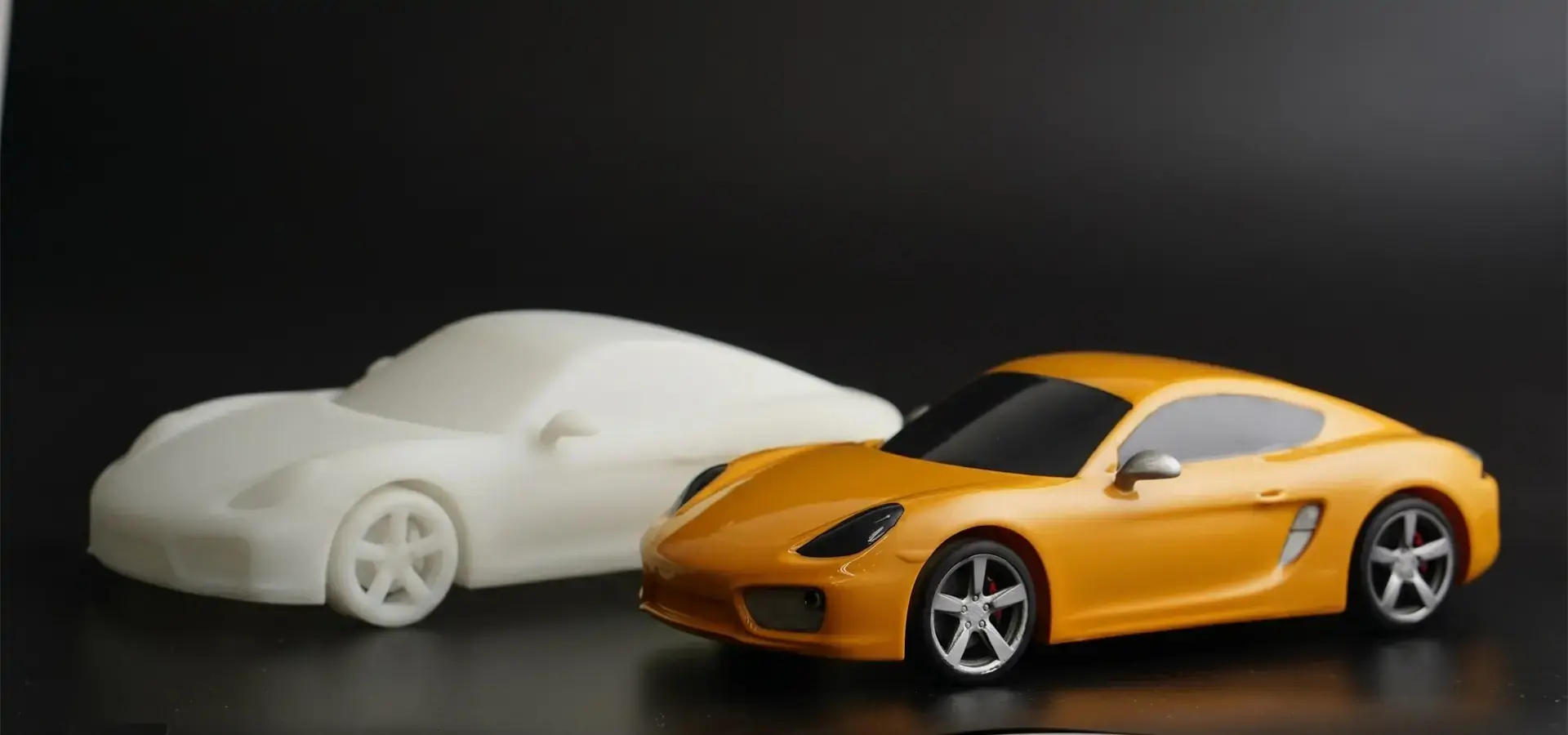
Manufacturers of surgical guides and creators of orthopedic implants need machines that can accurately turn image data specific to each patient into physical devices. Contemporary resin systems offer a mix of speed and accuracy that helps personalized medicine efforts while keeping production costs low. One medical device company that makes unique surgical cutting guides cut the time it takes to make them from 48 hours to eight, so they could be delivered the next day for planned surgeries. The biocompatible materials that work with these systems can be used for clinical applications when certified biocompatible materials and validated workflows are applied, not just for testing. This feature fits with the larger trend in the medical field toward customized, patient-specific solutions that can't be made cheaply with standard methods.
How to Choose the Right Fast Resin 3D Printer for Your Business?
To choose the right tools, you need to carefully look at their technical specs, working needs, and total ownership costs. Decisions about purchases have long-lasting effects on production ability, so it is important to do a full assessment.
Evaluating Core Specifications
The build volume tells the printer how many and what size parts to make each time. Dental labs and jewelry makers often put the platform area first to get the biggest batches possible, while car sellers may need extra space for taller parts. Both the XY pixel density and the Z-axis layer width of a resolution standard have a direct effect on the surface finish and the reproduction of fine details. Systems equipped with high-resolution LCD panels (e.g., 8K–16K screens) can deliver finer pixel sizes and improved detail reproduction, maintaining clarity even at high printing speeds. Fast resin 3D printer requirements need to be understood in the context of the document. Manufacturers often list the fastest lift speeds without explaining how long it takes to finish a part, which depends on the number of layers, the length of exposure, and how the separation works. Requesting sample parts that are printed at the speeds that are promised is an objective way to check the performance. It's not just the top speed that matters; equipment that hits its top speed more smoothly gives more regular results than systems that change speeds quickly.
 |
Buyer's Guide Choosing a Resin 3D Printer? Start Here Learn which specifications matter most, including print speed, resolution, build volume, and material compatibility. Make confident purchasing decisions with expert guidance. |
Material Compatibility and Cost
Limiting equipment to private materials makes operations less flexible and raises the cost of consumables. Open-material platforms let buying teams find and evaluate other providers. This makes prices more competitive and protects the supply chain. We understand this worry, which is why Magforms systems work with both our own highly improved formulas and approved resins from other companies. This method gives the performance benefits of matched material-hardware coupling while still letting buying remain independent. Total operating costs include more than just the initial cost of buying the tools. Resins, release films, and new optical parts are some of the consumables that add up over the printer's useful life. It's better to use cost per part or cost per milliliter printed to make budget forecasts than to use headline buy prices. Energy use, which is often forgotten, has an effect on working costs in places with a lot of people using tools all the time.
Support and Service Infrastructure
How quickly output can start up again after problems happen is determined by the quality of the technical help. Manufacturers that offer thorough training, quick fixing help, and easily accessible new parts keep costly downtime to a minimum. We keep a specific technical support team with deep knowledge in both gear operation and material science. This way, we can make sure that when problems arise, our clients get quick, useful help. Our service infrastructure includes software patch packages, preventive maintenance programs, and application engineering advice. These are all tools that help devices last longer and give you the best return on your investment. The terms of the warranty show that the maker trusts the product to work well. Standard one-year guarantees offer basic safety, but choices for longer coverage show a dedication to long-term performance. When it comes to operational intensity, Magforms offers flexible service agreements. For example, for production-critical installations where unplanned downtime directly affects income, there are reaction times that are sped up.
Integration and Workflow Considerations
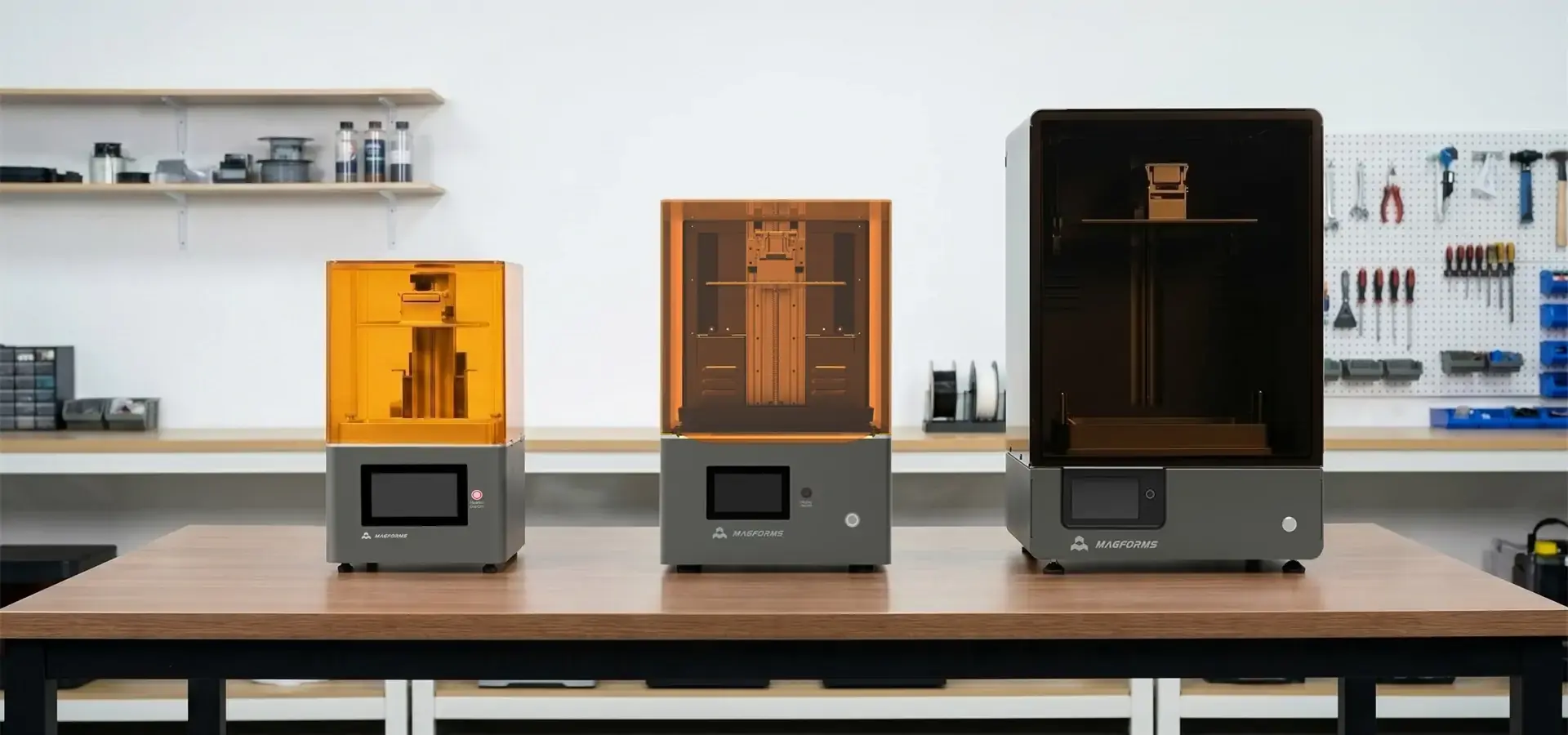
The equipment needs to work well with the design tools, post-processing infrastructure, and quality control processes that are already in place. Support for industry-standard STL and OBJ file types makes sure that data sharing goes smoothly, and built-in support for preparation tools makes it easier to train operators. Post-processing needs, like washing, drying, and support removal, affect the total production time and should be looked at along with printing speed requirements. We know that implementing new technology requires more than just installing new tools. Our professional classes and technical training programs give teams hands-on training that makes them more skilled faster and lowers the learning curve that can delay return on investment. These apps teach you how to choose the right material, how to optimize print parameters, how to fix problems, and the best ways to do preventive maintenance.
Conclusion
When properly matched to the needs of the application, fast resin 3D printer technology can cut production times by a large amount. Manufacturers can finish projects in hours instead of days thanks to faster photopolymerization and curing processes, better mechanical systems, and engineered material formulas. These benefits have been proven by clear increases in throughput, part quality, and running costs in fields ranging from dental labs to automobile prototyping. To make implementation work, you need to pick the right tools, think about how much it will cost to own everything, and work with makers who are willing to offer full support. Companies that value speed and accuracy in their manufacturing operations should invest because shorter lead times and faster testing times give them a competitive edge.
FAQ
Can high-speed resin systems handle full industrial-scale production volumes?
When speed and accuracy are important for winning in a competitive market, fast resin 3D printer hardware really shines in fast prototyping and small- to medium-batch production. Even though these systems make hundreds of parts every week, they are not meant to take the place of injection molding or other high-volume mass production methods. When unit costs stay low enough, the best range of applications includes design validation processes, bridge tooling, special manufacturing, and limited production runs.
What maintenance routines ensure continuous operational reliability?
Failures in adhesion that stop production can be avoided by checking and replacing release films on a regular basis. Cleaning the optical parts keeps the exposure even, and Z-axis correction done on a regular basis keeps the accuracy of the measurements. Filtration of resin gets rid of partly finished particles that could lead to print flaws. Most makers say that maintenance checks should be done once a week in areas with average use and every day in places where the equipment is used 24 hours a day. Maintenance that is done the right way makes equipment last longer and keeps the standard of the output that is needed for professional manufacturing.
Are there safety considerations for operating these systems in manufacturing settings?
Photopolymer resins need to be handled properly, which includes wearing rubber gloves, making sure there is enough air flow, and getting rid of waste the right way. If you keep touching uncured resin, it can make your skin more sensitive, so you have to wear safety gear. UV healing stations give off strong ultraviolet light that needs to be protected from the eyes or designed to be contained. Material Safety Data Sheets tell you how to handle each mixture in a certain way. Setting up standard working procedures and teaching employees safe ways to do things keeps the workplace healthy and productive.
Accelerate Your Production with Magforms Fast Resin 3D Printer Solutions
Magforms has decades of experience in the field and 22 patents and 30 filed trademarks that help them make high-speed resin printing solutions that solve real manufacturing problems. Our machines can print at speeds faster than 170 millimeters per hour and keep the accuracy of the dimensions down to the micron-level precision. They also have failure rates that are significantly lower than typical industry benchmarks based on internal long-duration testing. Our special materials and electronics are deeply integrated, so there are no compatibility problems that lead to defects or unexpected downtime. This makes sure that production runs smoothly from the first design to the finished parts.
As a reliable company that makes fast resin 3D printers for over 300 businesses in dozens of countries, we offer full support, including technical training, application engineering advice, and a service infrastructure that is always ready to help. Our solutions can be scaled up or down to meet the needs of your business, whether you run a dental lab that needs same-day turnaround, a jewelry casting house that needs to maximize overnight batch production, or a car design team that needs to make quick changes to prototypes. Email our team at info@magforms.com to talk about your particular needs and find out how our tried-and-true technology can shorten your production times while increasing part quality and lowering the total cost of ownership.
References
1. Gibson, I., Rosen, D., & Stucker, B. (2021). Additive Manufacturing Technologies: 3D Printing, Rapid Prototyping, and Direct Digital Manufacturing (3rd ed.). Springer.
2. Ligon, S. C., Liska, R., Stampfl, J., Gurr, M., & Mülhaupt, R. (2017). Polymers for 3D Printing and Customized Additive Manufacturing. Chemical Reviews, 117(15), 10212-10290.
3. Stansbury, J. W., & Idacavage, M. J. (2016). 3D printing with polymers: Challenges among expanding options and opportunities. Dental Materials, 32(1), 54-64.
4. Bagheri, A., & Jin, J. (2019). Photopolymerization in 3D Printing. ACS Applied Polymer Materials, 1(4), 593-611.
5. Quan, H., Zhang, T., Xu, H., Luo, S., Nie, J., & Zhu, X. (2020). The photo-curing 3D printing technique and its challenges. Bioactive Materials, 5(1), 110-115.
6. Lim, K. S., Galarraga, J. H., Cui, X., Lindberg, G. C. J., Burdick, J. A., & Woodfield, T. B. F. (2020). Fundamentals and Applications of Photo-Cross-Linking in Bioprinting. Chemical Reviews, 120(19), 10662-10694.

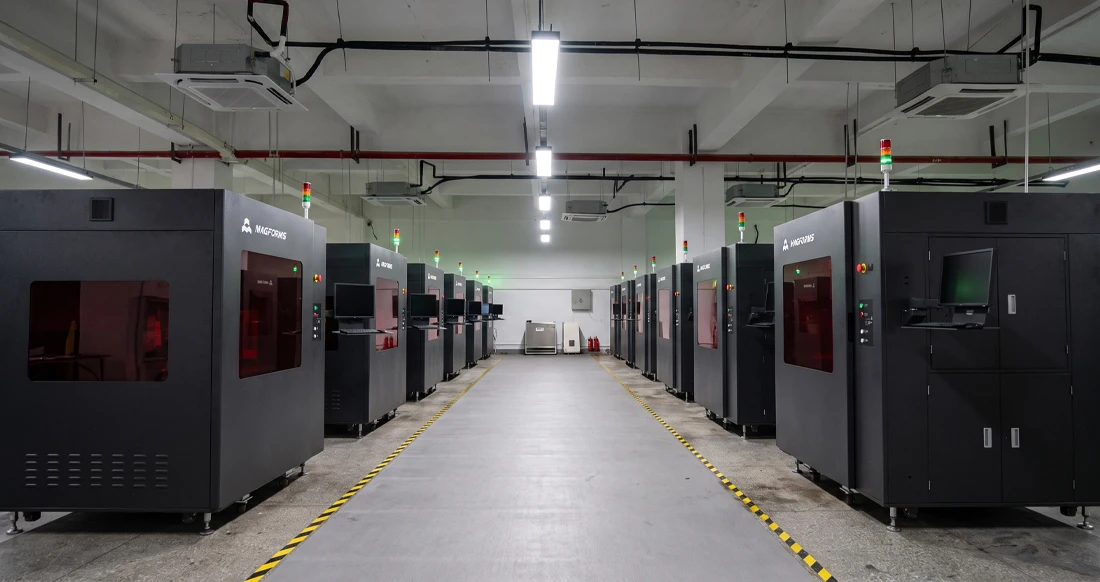
Magforms makes design and manufacture easier.
Popular Blogs
-
 Industry InsightsManufacturing Industry
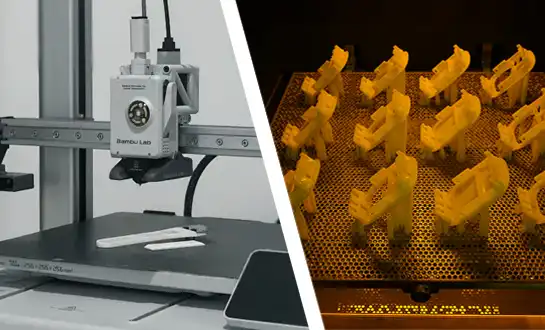
FDM vs. SLA Printer: Which Technology Is Right for Your Project?
-
 Industry InsightsManufacturing Industry
Top 5 Applications of Industrial 3D Printers in Manufacturing Today
-
 Industry InsightsManufacturing Industry
Why Stereolithography 3D Printers Are Unmatched for Microfluidic Device Prototyping?