Can Desktop Stereolithography 3D Printers Match OEM Manufacturing Standards?
It's becoming more and more likely that desktop Stereolithography 3D printers can really meet OEM manufacturing standards, but with some important caveats. These days, Desktop Stereolithography 3D printers are more than just tools for testing; they are real production tools. They offer precise measurements down to the micron level, high-quality surfaces, and consistent mechanical qualities that meet the needs of many OEMs, especially for small to medium-sized runs, complicated shapes, and quick development processes. But to be successful, you need to choose equipment that has a history of being stable, can work with a variety of materials, and comes with full expert support to help improve consistency and reduce variation between prints and passes strict quality checks.
Understanding Desktop Stereolithography 3D Printing Technology
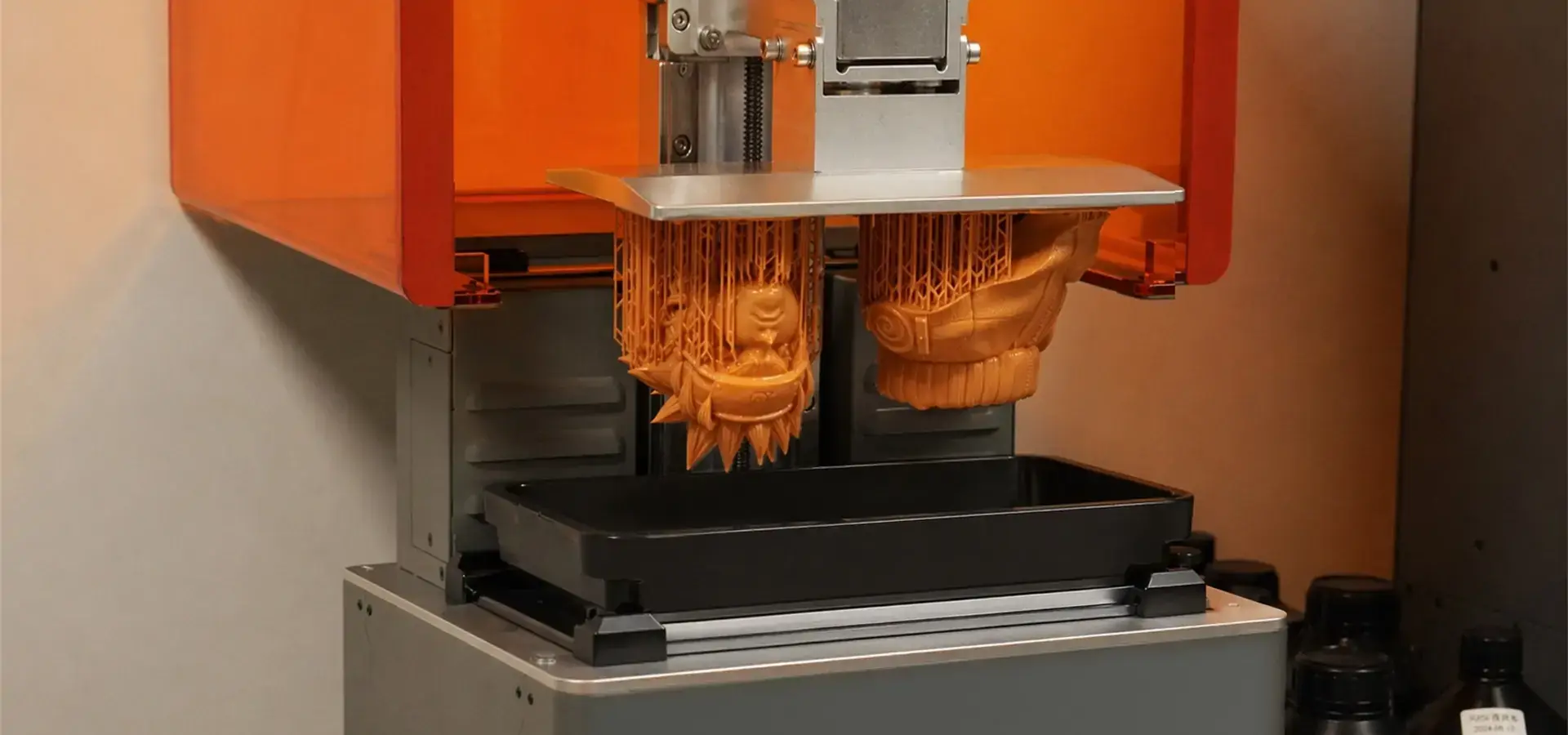
Desktop Stereolithography 3D printer technology (commonly referring to mSLA-based resin printing in desktop systems) is a consumer-to-professional grade form of vat photopolymerization technology. It allows for high-resolution additive manufacturing in a compact system. In most modern desktop Stereolithography 3D printer systems, a UV LCD screen (mSLA technology) selectively masks light to cure liquid photopolymer resin layer by layer, turning it into solid parts with relatively isotropic mechanical behavior compared to FDM printing that are very good at reproducing details.
How Light-Based Resin Curing Works
Fused Deposition Modeling pushes out molten thermoplastic filament and has obvious layer lines and directed weakness. Desktop Stereolithography 3D printer technology chemically bonds layers during photopolymerization, producing parts with more isotropic behavior compared to FDM, although slight Z-axis anisotropy can still exist depending on resin type and exposure settings, which is critical for functional parts used in downstream assembly or engineering applications. The build platform is gradually lifted and lowered within a resin vat, while a UV LCD screen selectively exposes each full layer at once, curing the photopolymer resin according to the digital model slice. The base moves after a layer hardens, and new liquid resin coats the surface. This lets the next layer form.
Critical Hardware Components
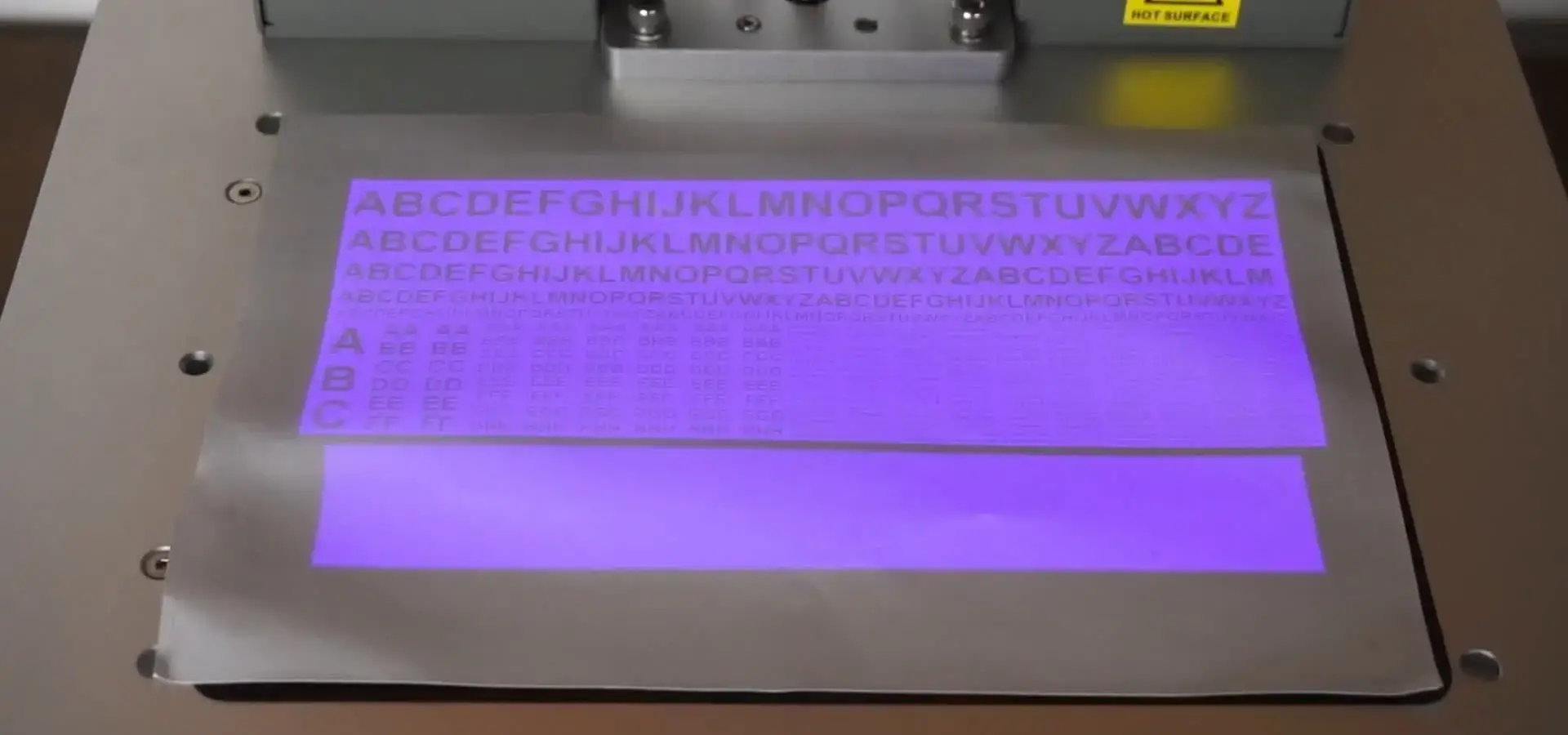
A desktop Stereolithography 3D printer's throughput is primarily influenced by motion system design, exposure strategy, and resin curing efficiency. Desktop mSLA systems use a UV LCD screen to selectively expose each layer at once, and the XY resolution is defined by the pixel size of the LCD. This differs from industrial laser SLA systems, which use galvanometer-controlled lasers (galvo scanners) with spot sizes typically between 85 to 140 microns to achieve fine features and curved surfaces.
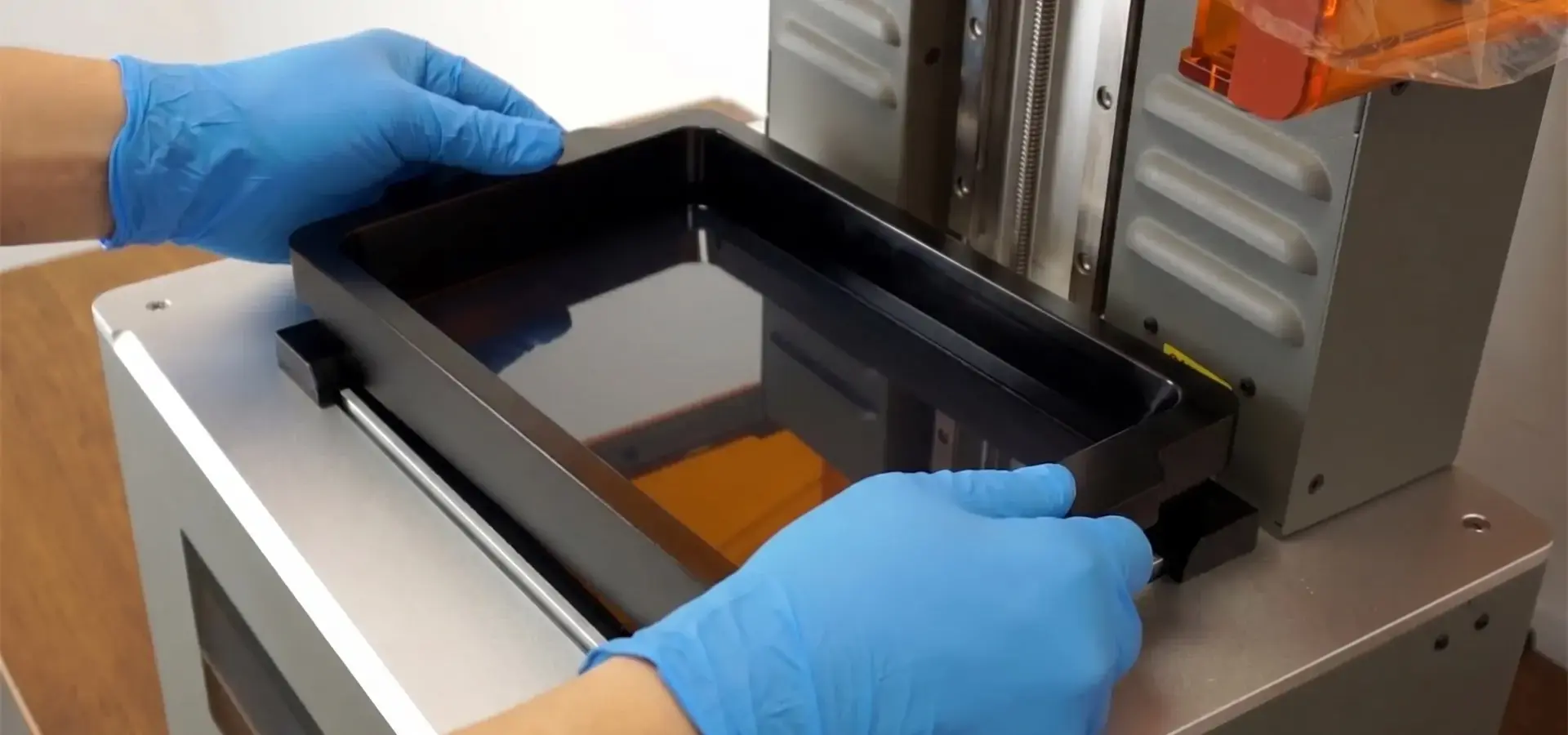
The resin pot has an optical window made of PDMS or FEP film. This window allows UV light transmission while providing a non-stick surface. It gradually wears due to repeated peel forces and UV exposure, usually requiring replacement after 1–3 liters of printed resin, depending on resin type and usage.
Z-axis motion in Desktop SLA printers is controlled by precise linear actuators, with layer heights adjustable from 25 to 300 microns. Tighter layers improve surface smoothness and dimensional fidelity but increase print time. OEM users should consider these trade-offs relative to production speed and throughput requirements.
Can Desktop SLA Printers Meet OEM Manufacturing Demands?
If desktop Stereolithography 3D printer technology meets OEM production standards, it depends on three main performance factors: how accurate the measurements are, how good the surface finish is, and how repeatable the process is from batch to batch. When these factors match industry standards, Desktop Stereolithography 3D printers go from being useful for testing to being useful for production.
Dimensional Accuracy and Surface Finish
OEM parts often need tight standards to make sure they fit correctly in systems, especially in medical devices, consumer electronics, and car interiors. When made, desktop Stereolithography 3D printers can typically achieve surface roughness values (Ra) below 5–10 microns, depending on layer height, resin type, and post-processing. This is a lot better than FDM parts, which usually have Ra values above 15 microns. This natural surface quality cuts down on post-processing work, which speeds up time-to-market while still meeting stylistic and useful standards.
Parts made with desktop Stereolithography 3D printers have great form accuracy for undercuts, lattice structures, and thin walls, which are shapes that are hard to make with standard methods. Since there are no obvious stair-stepping artifacts, curved surfaces and organic geometries can achieve surface quality that in some cases approaches injection-molded appearance, depending on resin type, orientation, and post-processing, although some applications may still require light sanding or polishing.
Industry Standards Compliance
Following ISO and ASTM standards for measurement checking, material properties, and process proof is often necessary to meet OEM quality standards. Coordinate measuring tools (CMMs) can be used to check that desktop Stereolithography 3D printer parts are in line with ISO 286 accuracy classes. Material datasheets from resin makers list mechanical qualities like tensile strength, flexural modulus, and impact resistance. This lets engineers check if the resin is suitable for the purpose it will be used for.
By making many similar parts over a long period of time, repeatability testing shows if a desktop Stereolithography 3D printer keeps producing the same things. Machines with automated resin handling and closed-loop calibration can improve process stability and reduce failure rates compared to entry-level desktop systems.This means that they can support higher output levels without having to recalibrate often or have unplanned downtime.
Overcoming Limitations: Maintenance, Troubleshooting & Optimization
To keep the quality of the output consistent, OEM processes that use desktop Stereolithography 3D printer systems need preventative maintenance plans and set procedures for fixing problems. Understanding typical failure types and taking steps to stop them reduces downtime and increases return on investment.
Printer Calibration and Resin Management
When the calibration is done right, the build platform stays perfectly aligned to the optical window in the resin vat. This stops layer adhesion failures and dimensional shift. Most desktop Stereolithography 3D printers have guided calibration processes that change the platform's height and leveling. However, changes in the surroundings, like weather, can mean that the system needs to be recalibrated from time to time.
The thickness of resin changes with temperature, which changes how it flows and how it cures. Print stability is best when the working temperature stays stable between 20°C and 25°C. Regularly filtering resin that hasn't been used will get rid of partly finished particles that can cause flaws. Properly keeping materials in dark containers away from UV light stops polymerization from happening too soon and increases the shelf life of materials.
Environmental Impacts on Output Quality
The results of post-processing are affected by humidity, especially during the washing and drying steps. High humidity can make it hard for isopropyl alcohol to evaporate, leaving behind residues that make surfaces look cloudy. On the other hand, if there isn't enough air during UV post-curing, cross-linking may not happen fully, which lowers the mechanical qualities. Controlled settings with humidity levels that are constantly checked make sure that parts always work the same way.
Purchasing Desktop SLA Printers for OEM Use: What to Consider
When making choices about what to buy for OEM uses, technical specs, total cost of ownership, and vendor support must all be carefully looked at. When choosing the right desktop Stereolithography 3D printer, you have to think about both your short-term and long-term spending needs.
Essential Evaluation Criteria
Build volume directly affects nesting efficiency and production throughput in batch printing workflows. Systems with 150 x 150 x 200 mm build boxes can fit most small, precise parts and allow nesting of multiple parts to speed up production. Both the XY and Z-axis resolution specs must match the tightest tolerances needed by your OEM applications. Medical devices and precision tools can use machines with pixel sizes below 50 microns in LCD-based systems, depending on screen resolution and optical calibration.
Print speed, which is measured in millimeters per hour of vertical build, depends on layer height, resin exposure time, and LCD pixel resolution in mSLA printers. Unlike laser SLA, there is no galvanometer scanning; exposure occurs layer-by-layer across the entire XY plane simultaneously. Advanced desktop systems may optimize pixel-level exposure and layer curing times to achieve faster throughput.
Compatibility of materials is a key difference. Open-material platforms let buying teams get engineering resins from more than one seller, so they don't have to stick with one provider. This can reduce consumable costs in some production environments. On the other hand, unique material systems might provide the best performance, but they make it harder to control costs and be flexible with operations.
Leading Manufacturers and Key Features
The desktop Stereolithography 3D printer market is dominated by a few companies, and each one has its own benefits that are best for certain OEM situations. Formlabs' systems are easy for teams that are new to additive manufacturing to use because they have user-friendly processes and large material libraries. Anycubic offers choices that are easy on the wallet and work well, which makes it appealing to businesses and small service providers. Peopoly focuses on open-source platforms that let advanced users make a lot of changes. These platforms are good for research schools and other specific uses. Elegoo produces affordable LCD-based desktop Stereolithography 3D printers, which differ technically from laser-scanning SLA systems in exposure method and resolution architecture.
Future Outlook: Desktop SLA Printers in OEM Manufacturing
Desktop Stereolithography 3D printers are becoming more important in OEM production platforms thanks to improvements in resin chemistry, printer automation, and digital integration. New trends point to a wider range of materials, faster output rates, and better blending of workflows.
Advancements in Resin Chemistry
Next-generation photopolymers for desktop Stereolithography 3D printers have better biocompatibility, better mechanical qualities, and better temperature protection. New formulations have elongation at break values higher than 100%. This makes it possible for live hinge designs and flexible structures that were only possible with thermoplastics that were injected. High-temperature engineering resins can typically withstand short-term heat deflection temperatures above 200°C, while continuous use temperatures are generally lower depending on formulation. This means they can be used in industry tools and parts that go under the hood of cars.
Ceramic-filled plastics allow post-processing steps called sintering that turn green parts that were printed into fully thick ceramic parts that are very hard and stable at high temperatures. These materials make desktop Stereolithography 3D printer technology useful in high-tech industries like electronics and aircraft, where standard ceramics need to be expensively machined or molded in a complicated way.
Integration with CAD/CAM Systems
More and more modern desktop Stereolithography 3D printers connect directly to computer-aided design and production platforms. This makes data movement faster and reduces mistakes that happen when files are prepared by hand. With intelligent nesting algorithms, real-time print tracking, and automated support generation, engineers can start production runs straight from design software. This speeds up iteration cycles and makes it easier to track.
Automated visual inspection systems now work as part of quality control processes. These systems compare printed parts to digital models and mark any differences in size before the parts go into assembly lines. This integration makes sure that OEM standards are always followed while cutting down on the work needed for human review.
Hybrid Manufacturing Setups
When you mix desktop Stereolithography 3D printer technology with subtractive machining, injection molding, and standard ways of making things, you get hybrid processes that make the most of the best features of each technology. Tooling inserts made with SLA cut down on cast costs and lead times, and CNC machining gives the final finish on the surface and tight tolerances on important contacts. This complementary method makes the best use of resources and cuts down on the time it takes to build a product.
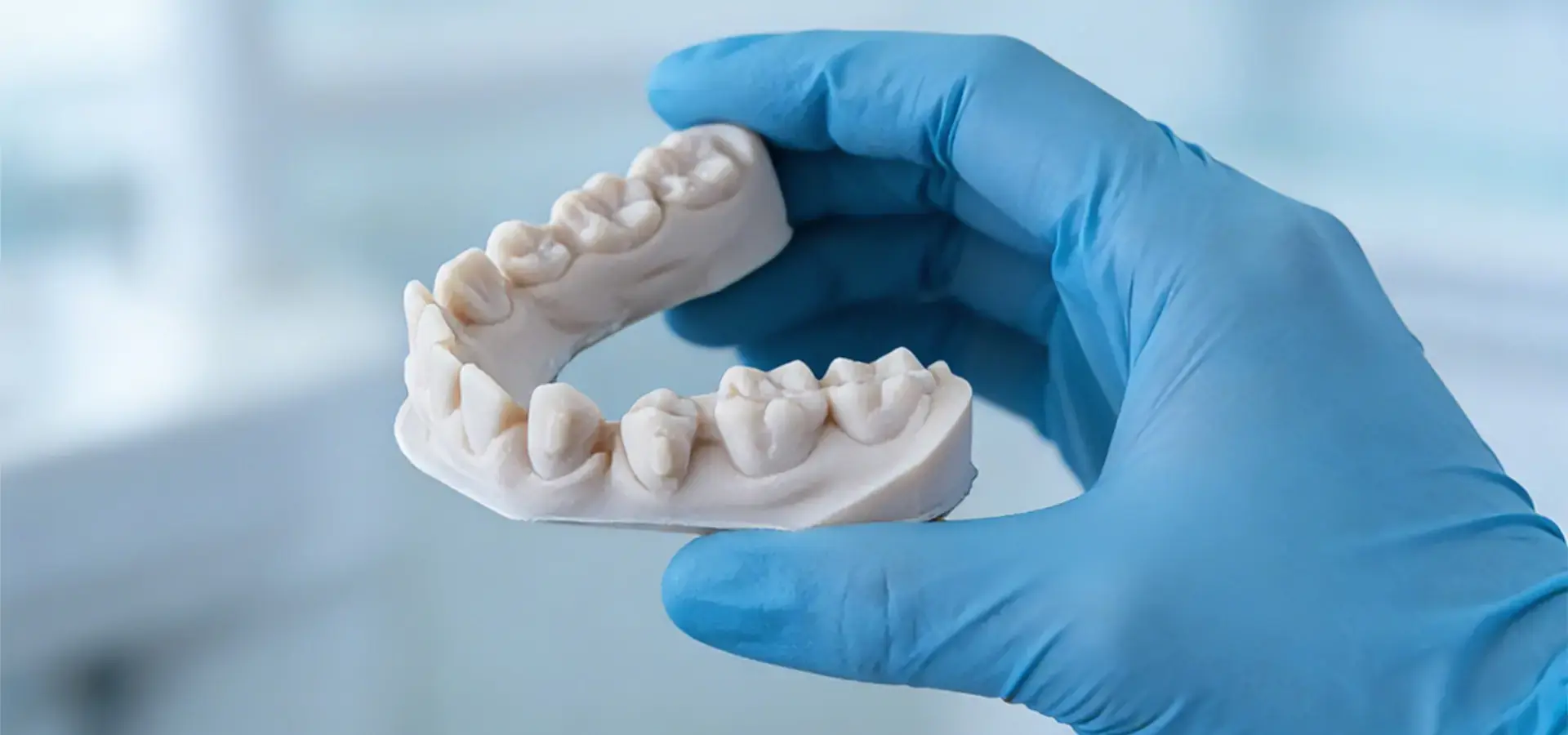
Automotive uses desktop Stereolithography 3D printer technology for quick prototyping of inner parts and special customization. Aerospace uses it for complex geometry validation and small-batch connections. The medical industry uses it for devices that are specific to each patient and for surgery planning models.
Conclusion
Desktop Stereolithography 3D printers, especially mSLA desktop systems, have become increasingly reliable tools for OEM prototyping and small-batch manufacturing, particularly where surface quality, geometric complexity, and short lead time are critical. Their limited build volume and throughput make them better for small to medium-sized production runs, but their ability to make complex shapes without expensive tools makes them very useful for fast development, custom manufacturing, and making specialized parts. To be successful, you need to choose equipment that has been shown to be reliable, works with a wide range of materials, and has strong seller support. As resin chemistry improves and automation gets better, desktop Stereolithography 3D printer technology will continue to grow in the medical, consumer electronics, military, and automobile industries.
FAQ
1. Can desktop stereolithography 3D printers achieve the tolerances required for functional OEM parts?
Modern Desktop Stereolithography 3D printers can typically achieve dimensional accuracy within ±0.05–0.2 mm, depending on part geometry, calibration, and material shrinkage, which makes them suitable for applications such as injection mold validation, surgical guides, and precision tooling. Surface roughness values below 5 microns, as-printed, get rid of the need for extra finishing in many situations, meeting OEM standards for both looks and functionality.
2. What routine maintenance extends printer longevity and ensures consistent output?
A regular resin filter gets rid of partially finished particles that cause flaws, and regular calibration keeps the platform level. Vat film wear varies significantly by resin type and usage; replacement intervals are typically based on print cycles rather than fixed resin volume (e.g., 1–3 liters is only a rough reference range). Keeping the temperature of the surroundings stable between 20°C and 25°C helps the resin move and cure evenly.
3. How does cost-effectiveness compare for low-volume manufacturing versus traditional methods?
Desktop Stereolithography 3D printer technology gets rid of the need for expensive tools, so it's a good choice for small amounts of less than 1,000 units. The prices for each part include the cost of materials, labor, and the wear and tear on the machines. This helps the company stay competitive when quick changes and complicated shapes require higher costs than usual production wait times.
4. What safety measures are necessary when operating stereolithography equipment?
Liquid photopolymer resins can be harmful to the environment and people's skin, so you need to wear rubber gloves, safety glasses, and make sure there is enough air flow with VOC filters. Setting up strict rules for handling and getting rid of waste protects operators and makes sure that rules are followed.
Discover Magforms' Advanced Desktop Stereolithography 3D Printer Solutions
Magforms is a reliable company that sells desktop Stereolithography 3D printers. They offer complete solutions that include their own resin formulas and well-designed tools. Our innovations are backed by 22 patents and 30 filed trademarks. They get rid of the compatibility problems that come up with mixed-vendor setups, improving consistency from the first calibration cycle onward.
Our equipment is used for fast prototyping and small-batch production by hundreds of companies in the automobile, aerospace, medical, and consumer electronics industries. Our technical support team offers thorough training, quick troubleshooting, and fast delivery of extra parts to keep your production plans safe and minimize downtime. No matter if you need safe materials for medical devices or high-temperature resins for tooling inserts, our open-material platform gives you the freedom to do what you need to do without losing performance.
You can talk to our team at info@magforms.com about your OEM needs, ask for sample parts, or set up a technical meeting. Let us show you how Magforms desktop Stereolithography 3D printers can help your manufacturing processes with their dependability, accuracy, and support.
References
1. Gibson, I., Rosen, D., & Stucker, B. (2021). Additive Manufacturing Technologies: 3D Printing, Rapid Prototyping, and Direct Digital Manufacturing (3rd ed.). Springer International Publishing.
2. American Society for Testing and Materials. (2020). ASTM F2792-12a: Standard Terminology for Additive Manufacturing Technologies. ASTM International.
3. Jacobs, P. F. (1992). Rapid Prototyping & Manufacturing: Fundamentals of Stereolithography. Society of Manufacturing Engineers.
4. International Organization for Standardization. (2019). ISO/ASTM 52900:2015: Additive manufacturing — General principles — Terminology. ISO Central Secretariat.
5. Melchels, F. P., Feijen, J., & Grijpma, D. W. (2010). A review on stereolithography and its applications in biomedical engineering. Biomaterials, 31(24), 6121-6130.
6. Gao, W., Zhang, Y., Ramanujan, D., Ramani, K., Chen, Y., Williams, C. B., Wang, C. C., Shin, Y. C., Zhang, S., & Zavattieri, P. D. (2015). The status, challenges, and future of additive manufacturing in engineering. Computer-Aided Design, 69, 65-89.

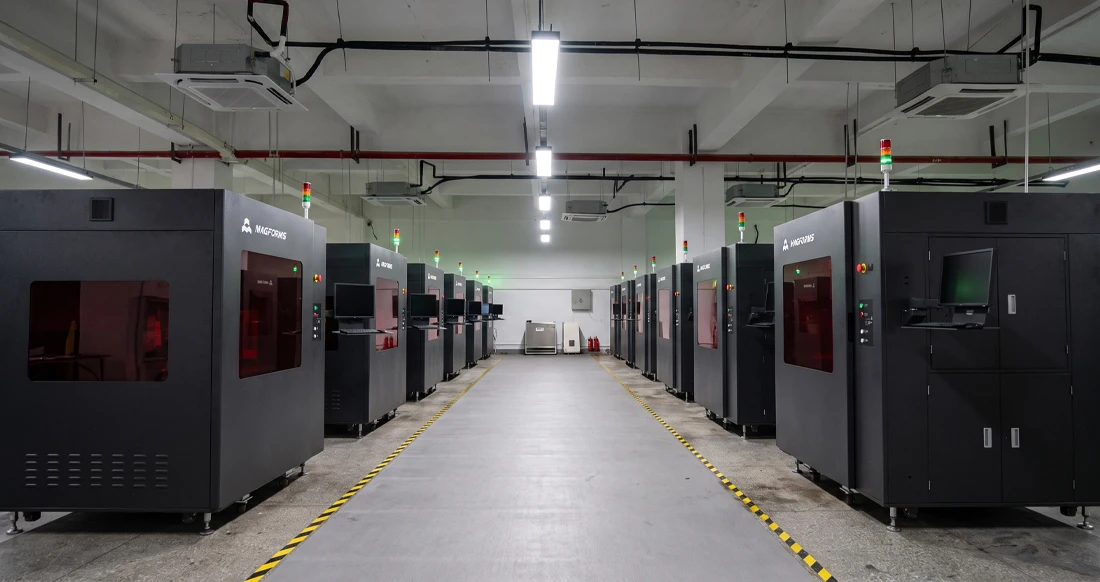
Magforms makes design and manufacture easier.
Popular Blogs
-
 Industry InsightsManufacturing Industry
FDM vs. SLA Printer: Which Technology Is Right for Your Project?
-
 Industry InsightsManufacturing Industry
Top 5 Applications of Industrial 3D Printers in Manufacturing Today
-
 Industry InsightsManufacturing Industry
Why Stereolithography 3D Printers Are Unmatched for Microfluidic Device Prototyping?