How Do Budget SLA Printers Compare in Precision to High-End Models?
The accuracy gap between budget SLA printers and industrial SLA systems has narrowed significantly in recent years. Modern LCD-based MSLA printers can now achieve XY pixel sizes of approximately 22 to 50 microns, making them suitable for dental models, jewelry casting, consumer product prototyping, and many low-volume manufacturing applications. While high-end industrial SLA systems still provide advantages in large-format dimensional stability and ultra-tight tolerance control, many commercial users now find that properly calibrated budget SLA printers deliver more than enough precision for prototyping, dental production, jewelry casting, and low-volume manufacturing workflows.
Understanding Budget SLA Printers and Precision Basics
What Defines a Budget SLA Printer?
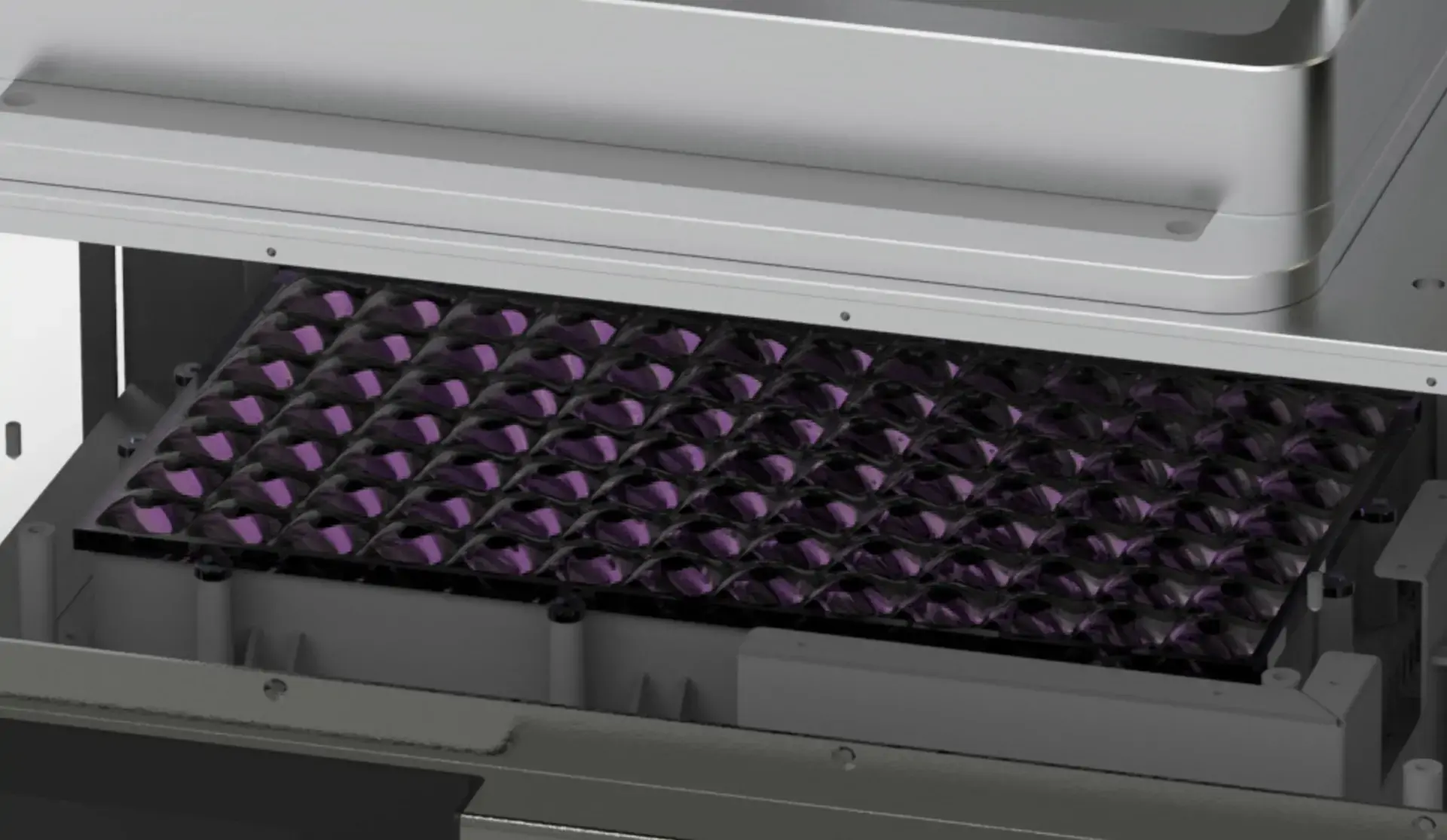
Most budget SLA printers on today's market are actually LCD-based mSLA (Masked Stereolithography) systems that make resin 3D printing more accessible for small businesses, studios, and prototyping users. These systems mainly use mSLA technology, where a 405nm UV LED light source passes through a high-resolution monochrome LCD mask to selectively cure each resin layer. MSLA cures an entire layer simultaneously, while traditional laser-based SLA systems scan each layer point-by-point using galvanometer-controlled laser optics. This simplified optical architecture significantly reduces system cost while still delivering high-resolution surface quality and reliable dimensional consistency for many professional applications. Modern monochrome LCD panels can achieve XY pixel sizes of approximately 22–50 microns, although actual dimensional accuracy depends on calibration, resin properties, and mechanical stability. This meets the needs of dental labs that make surgery guides and product designers who make prototypes for consumer electronics housings. Historically, high equipment costs limited access to high-resolution resin printing, but mSLA technology has significantly lowered the barrier to entry. In the past, spending more than $5,000 was needed to get layer heights below 50 microns. Budget SLA printers make high-quality resin printing more accessible to startups, dental labs, design studios, and small manufacturing teams, allowing them to validate prototypes and tooling concepts in-house without relying heavily on external service providers.
Factors Influencing Print Precision
For resin printing to be accurate, three factors must be controlled simultaneously. In-plane precision is controlled by XY resolution, which is based on LCD pixel pitch. A 16K monochrome LCD system with ultra-high pixel density can achieve pixel sizes as small as approximately 20×26 microns, depending on the build-area dimensions and optical configuration. Most of the time, the lead screw pitch and motor step angle determine the Z-axis precision, which is between 10 and 50 microns per layer. Thinner layers improve surface smoothness but increase total print time. Layer adhesion and release dynamics also play an important role in print precision. Each layer has to stick to the one below it while also peeling off the FEP film at the bottom of the resin vat. Not enough exposure leads to delamination, and too much light bleeds detail. Exposure times depend on the type of resin being used. For example, standard resins cure in 1 to 3 seconds per layer, while engineering-grade resins may require longer exposure times, typically between 3 and 8 seconds per layer depending on resin viscosity and pigment concentration. Temperature fluctuations between 15°C and 35°C can significantly affect resin viscosity, which directly influences curing behavior and dimensional consistency.
Key Differences in Precision Between Budget and High-End SLA Printers
Hardware Quality and Optical Systems
Industrial SLA systems still maintain advantages in optical uniformity, large-format dimensional stability, and long-duration production consistency. However, modern LCD systems have improved substantially in light-source uniformity, motion control, and exposure calibration, reducing the practical accuracy gap for many commercial applications.
Material Compatibility and Performance Impact
Resin formulation plays a critical role in overall print precision and dimensional stability. Standard photopolymer resins used in budget SLA printers typically experience measurable curing shrinkage, which can affect thin-wall geometry and dimensional stability if exposure parameters are not optimized. Industrial engineering resins are formulated with lower shrinkage characteristics and improved thermal stability, helping reduce deformation during precision manufacturing workflows. Some dental model resins can maintain dimensional deviations within approximately ±50 microns across a 50 mm span.
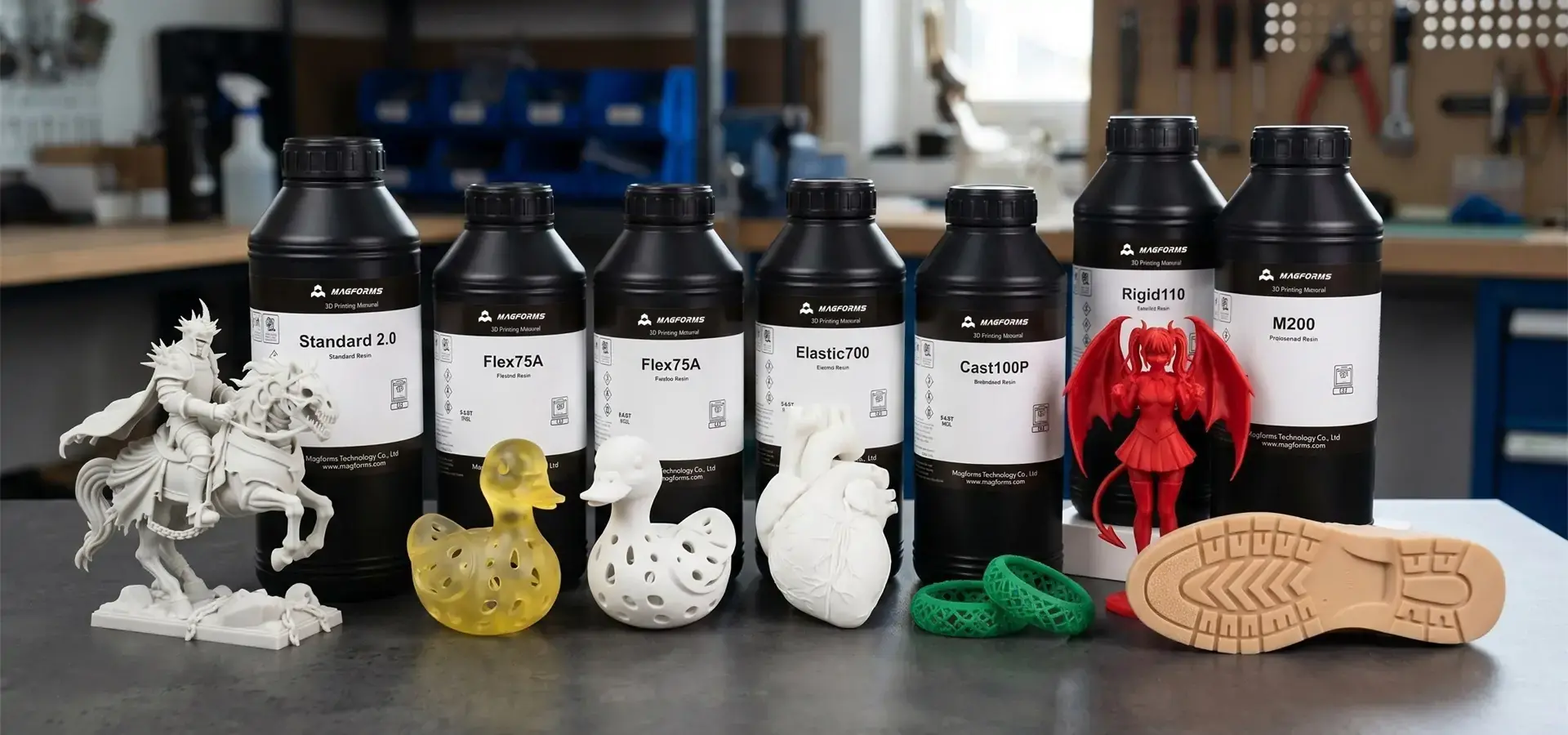
Most budget SLA printers work with open-source material environments, which means they can use third-party resins but usually require manual exposure calibration for different resin formulations. The amount of photoinitiator and color in each resin affects how deeply it cures. Incorrect calibration may lead to elephant-foot artifacts, support instability, or complete print failures. Magforms addresses this challenge by optimizing both printer hardware and photopolymer materials within an integrated workflow ecosystem. Their special resins are already designed to fit their gear. This integrated workflow reduces the need for extensive trial-and-error parameter tuning, which cuts down on waste and helping improve first-print success rates and reducing material waste during production setup. For many prototyping, dental, and jewelry applications, the practical dimensional difference between a well-calibrated mSLA printer and an entry-level industrial SLA system is now small enough that workflow efficiency and operating cost become more important purchasing factors than absolute micron-level accuracy.
Maintenance and Common Issues Affecting Budget SLA Printer Precision
Essential Routine Maintenance Practices
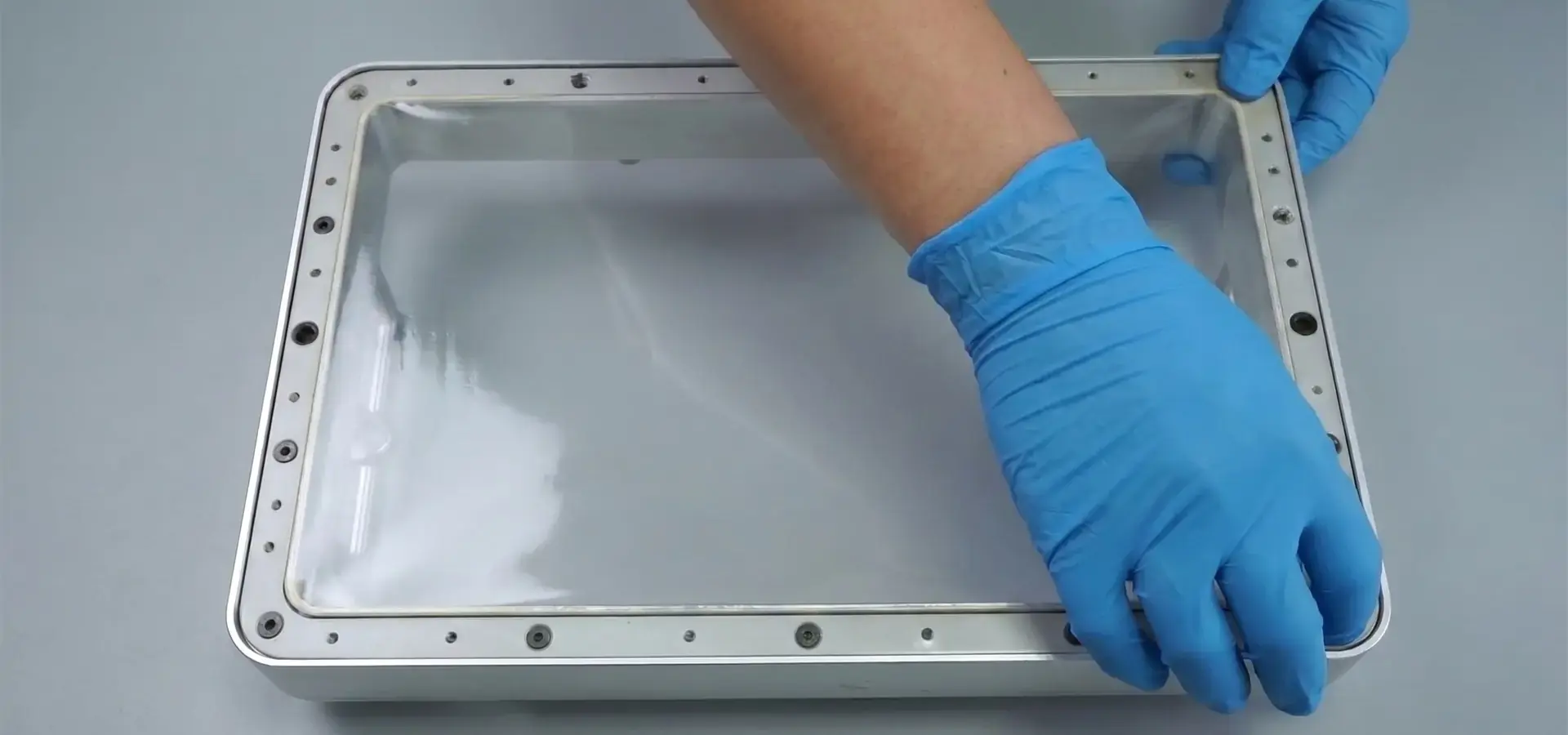
To keep the accuracy of budget SLA printers, they need to be carefully maintained. Prolonged UV exposure gradually degrades LCD panels over time, making them consumable components in mSLA printers. Earlier RGB LCD screens generally had much shorter service lives than modern monochrome LCD panels. Today's monochrome LCD panels can often provide 2,000–3,000 hours of operational lifespan under normal production conditions. Regular exposure calibration tests can help identify dead pixels or uneven exposure before they affect production quality. When to change FEP film depends on how often you print. Over time, the FEP membrane may develop clouding, scratches, or minor deformation that can affect release performance and print consistency. Newer nFEP release films can help reduce peeling forces and improve layer separation consistency. Periodic inspection and proper cleaning of the build platform are important for maintaining reliable first-layer adhesion. The Z-axis lead screw should also be checked for greasing once a month to avoid binding.
Troubleshooting Common Precision Problems
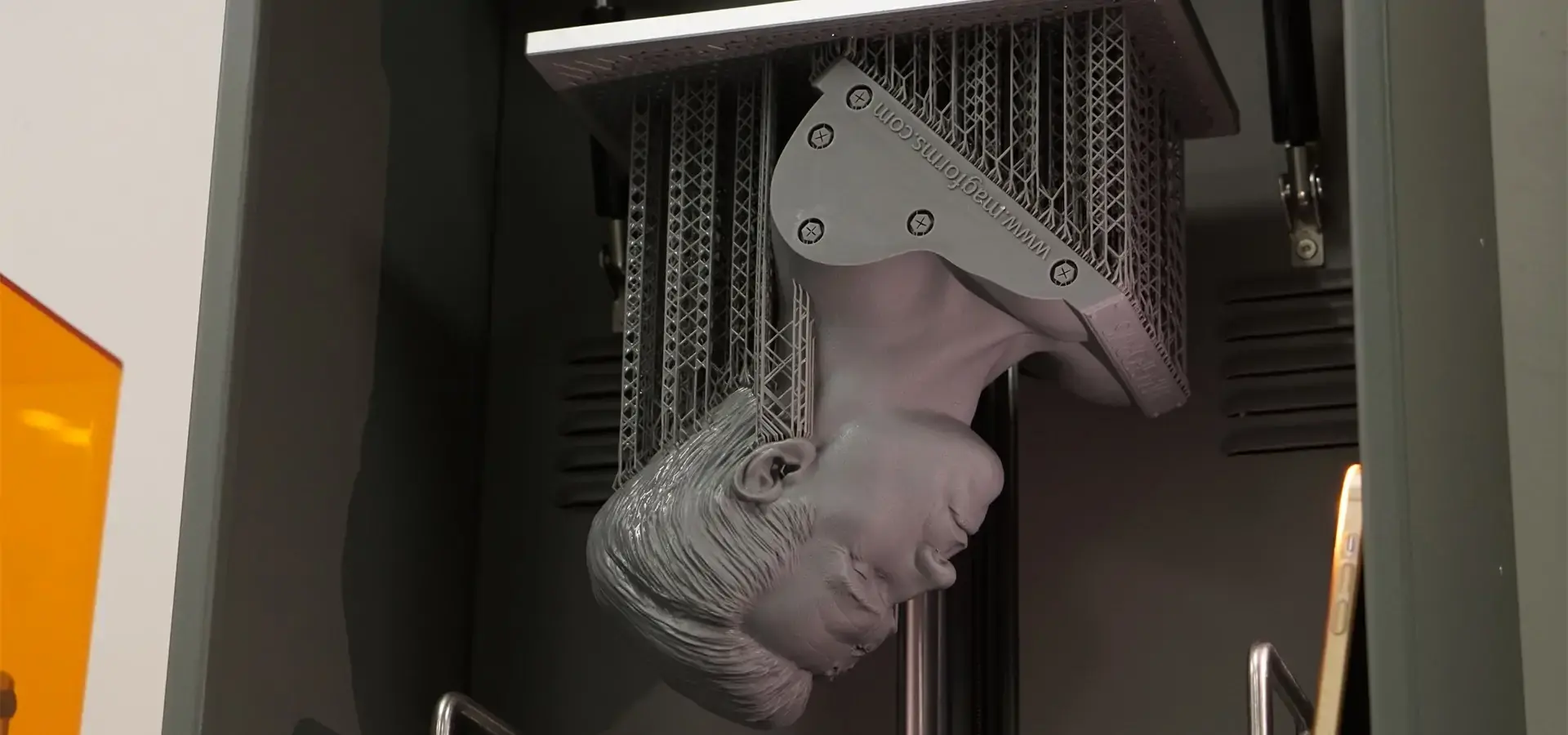
If temperature differences make the curing process uneven, warping will happen. Printing parts overnight in cold workshops can cause temperature changes of up to 10°C, which can affect how well the layers stick together. Maintaining a stable ambient temperature near 25°C and using an enclosed printing chamber can help improve layer consistency and reduce warping. Layer delamination, which looks like straight cracks, happens when the bottom layer isn't exposed enough. Adhesion is improved by extending the bottom exposure time from 20 seconds to 30 seconds and adding two more bottom layers. When exposure settings do not match the curing characteristics of the resin, surface roughness shows up. Excessive exposure can cause light bleeding, softening edges and increasing wall thickness by approximately 100–200 microns. To calibrate, you print XY test cubes and gradually lower the regular layer exposure by 0.2 seconds at a time until the measured dimensions closely match the CAD model. When applications require extremely tight repeatability across larger production volumes or oversized parts, industrial SLA systems may provide additional process stability and automation advantages.
Procurement Considerations for B2B Clients: Selecting the Right SLA Printer for Precision Needs
Evaluating Precision Benchmarks and Total Cost
Procurement teams must translate marketing claims into practical production requirements. Ask for sample prints of standard test shapes with overhangs, fine features, and dimensional accuracy marks, like the "Ameralabs Town" test model. Digital calipers are commonly used to verify critical dimensions; large deviations may indicate insufficient calibration accuracy or mechanical instability. When figuring out the total cost, you need to include things like LCD screens ($80 to $150 each), FEP films ($15 to $30), and resin consumption rates (usually 0.5 to 2 liters per week in busy places). Maintenance-related downtime can directly affect production scheduling and workflow efficiency. Lower-cost resin printers may experience higher maintenance-related downtime due to adhesion failures, film wear, or calibration issues. Industrial systems with optimized hardware engineering and predictive maintenance features generally provide more stable long-term production performance. When you're comparing suppliers, look at their guarantee terms. Comprehensive coverage, which includes LCD screens and optical components, versus basic structural warranties, shows that the seller is committed to providing long-term support.
Comparing Technologies: FDM, DLP, and MSLA
Fused Deposition Modeling (FDM) is widely used for functional prototypes and engineering applications that require thermoplastics such as ABS, Nylon, PC, or carbon-fiber-reinforced materials, but it can only get layer lines to be 100 to 200 microns thick. DLP systems use digital projectors to cure entire resin layers simultaneously and can produce smoother edge transitions on certain curved geometries. However, projector-based optical systems may require more maintenance over time compared with LED-based LCD systems. For small- to medium-sized resin parts under 200 mm, mSLA technology is widely recognized for offering an excellent balance between cost, print resolution, and production speed. Many dental laboratories prefer mSLA systems because of their fast layer exposure speeds, high detail quality, and relatively low operating costs. When automotive development teams need parts that are 300 mm or bigger, they like laser-based SLA because it keeps the dimensions stable across large build plates. Understanding the unique needs of an application helps choose technologies that go beyond general accuracy requirements. Because mSLA systems combine high resolution, fast layer exposure, and relatively low hardware cost, they have become one of the fastest-growing segments in professional desktop resin printing.
Future Outlook and Enhancements in Budget SLA Printer Precision
Emerging Hardware Innovations
Next-generation light-source technologies are expected to further improve the consistency and precision of budget SLA printers. Emerging Micro-LED exposure systems are being explored in next-generation resin printers to improve localized exposure control and light uniformity across larger build areas, helping improve exposure consistency across the entire build area. Early prototype systems have demonstrated improved light-uniformity performance across larger build areas. Closed-loop Z-axis positioning is made possible by advanced motion systems that use linear encoders to account for lead screw slack in real time. Active thermal-management systems are gradually becoming more common in affordable desktop resin printers. Systems that cost $10,000 or more already have built-in resin-level sensors and automatic refill processes. Now, models that cost less than $2,000 are starting to come out with these features, which require less human input.
Software and AI-Driven Improvements
Machine-learning-based support generation systems trained on large print datasets can now automatically place supports in the best places. These systems analyze part geometry, find stress peaks, and make minimal-contact supports that protect the surface finish while keeping the structure strong. Predictive maintenance units keep an eye on things like LCD lifespan, FEP clarity, and mechanical wear and tear, planning replacements before they break. Cloud-connected printers let you watch and queue prints from afar, which is very important for service companies that manage many machines. Over-the-air firmware changes improve exposure profiles and add new material compatibility, which makes gear last longer. These improvements make it possible for even budget SLA printers to get close to industrial precision standards. This is especially true for tasks that can handle differences of up to 50 microns, such as jewelry casting patterns and tabletop models.
Conclusion
Modern LCD-based budget SLA printers have evolved far beyond entry-level prototyping tools. With improvements in monochrome LCD technology, motion control systems, resin engineering, and exposure calibration, many budget SLA printers can now achieve dimensional consistency that was previously possible only with significantly more expensive industrial systems. While traditional laser-based SLA platforms still offer advantages for ultra-large parts and highly regulated manufacturing environments, LCD technology has become a practical and cost-efficient solution for a growing range of professional applications, including dental production, product validation, jewelry casting, and low-volume manufacturing.
FAQ
1. Can Budget SLA Printers Achieve Professional-Grade Precision?
Within the limits of their capabilities, Budget SLA printers can achieve professional-grade results within their intended application range. Properly calibrated LCD printers are widely used by dental laboratories for producing dental models, surgical guides, and aligner molds where high dimensional consistency is required. The key is to know what these systems can't do. They're great at parts that are less than 150 mm and have features that are bigger than 0.3 mm, but they have trouble with big, thin-walled parts that tend to bend. With proper calibration and process control, dimensional deviations in the ±30–50 micron range are achievable for many small-format applications. This level of precision is sufficient for many prototyping, dental, jewelry, and low-volume manufacturing applications.
2. What Maintenance Routines Preserve Print Quality?
Cleaning the FEP film once a week with rubbing alcohol keeps resin dust from building up and distorting the image. Re-leveling the build plate once a month makes up for mechanical wear. Using exposure calibration models to test the screen every 200 print hours finds degradation early. To get rid of hardened particles, resin should be run through strainers with a 100-micron size every 5 to 10 prints. Monitoring the ambient temperature makes sure that the ideal range is between 20°C and 30°C, and regular firmware changes from makers improve the exposure profiles.
3. How Do MSLA Printers Compare to FDM for Precision Work?
MSLA printers generally provide finer surface detail and smaller feature resolution than most standard FDM systems. When industrial thermoplastics are used, and bigger build volumes are used, FDM is great for testing practical strength. For master patterns, tooth tools, and jewelry casting, MSLA technology typically delivers finer surface detail and smoother finishes because of its high-resolution photopolymer curing process. FDM, on the other hand, is best for jigs, fixtures, and assembly samples where margins for size are greater than ±0.2mm.
Partner with Magforms for Precision-Driven 3D Printing Solutions
When selecting a budget SLA printer provider, buyers should evaluate more than hardware specifications alone. Long-term production stability, material compatibility, workflow efficiency, and after-sales technical support all play critical roles in successful resin printing operations. Magforms offers integrated LCD printing solutions that combine precision-engineered hardware, optimized photopolymer materials, and workflow-focused process support. Our advanced monochrome LCD systems feature optimized exposure calibration, stable thermal management, and reliable motion control to help deliver consistent dimensional accuracy across professional printing applications. With 22 patents, 30 filed trademarks, and deployments across more than 300 businesses worldwide, Magforms supports customers in dental manufacturing, product prototyping, jewelry production, and industrial development workflows. Our technical team provides material profiling, calibration guidance, and responsive troubleshooting support to help reduce downtime and improve production reliability. For businesses evaluating long-term resin printing solutions, Magforms provides sample validation support, application consultation, and scalable purchasing options tailored to professional LCD production environments. You can talk to our buying experts at info@magforms.com about your accuracy needs, ask for example prints, and look into our volume pricing structures that are designed for budget SLA printer makers, service bureaus, and industrial developers looking for reliable long-term partnerships.
References
1. Gibson, I., Rosen, D., Stucker, B., & Khorasani, M. (2021). Additive Manufacturing Technologies (3rd ed.). Springer International Publishing.
2. Patel, R., & Menezes, P. (2022). Precision Analysis of Desktop Stereolithography Systems for Biomedical Applications. Journal of Manufacturing Processes, 74, 112-126.
3. Wang, L., Zhou, J., & Liu, Y. (2023). Comparative Study on Dimensional Accuracy of Budget and Industrial SLA Printers. Rapid Prototyping Journal, 29(4), 678-691.
4. American Society for Testing and Materials. (2022). ASTM F2792-12a: Standard Terminology for Additive Manufacturing Technologies. ASTM International.
5. Chen, H., Wu, D., & Zhang, K. (2023). Material-Machine Compatibility Optimization in Low-Cost Resin 3D Printing Systems. Additive Manufacturing, 61, 103-118.
6. European Dental Industry Association. (2024). Precision Requirements for Digital Dentistry: Guidelines for 3D Printing Applications. EDIA Technical Report Series.

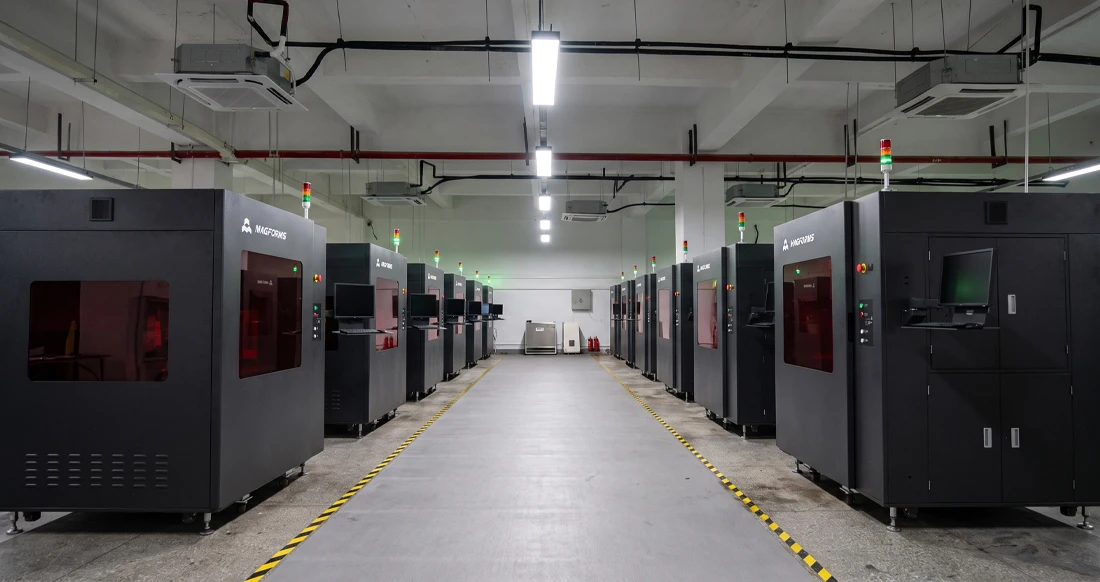
Magforms makes design and manufacture easier.
Popular Blogs
-
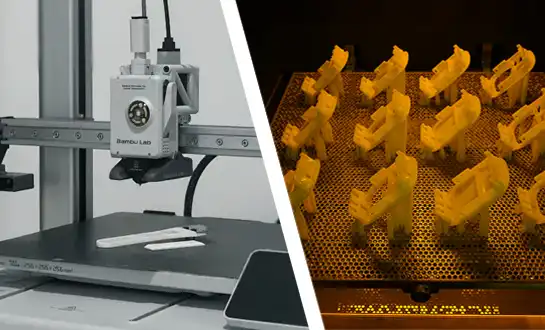 Industry InsightsManufacturing Industry
FDM vs. SLA Printer: Which Technology Is Right for Your Project?
-
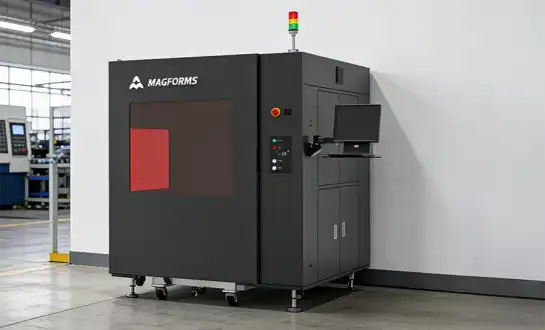 Industry InsightsManufacturing Industry
Top 5 Applications of Industrial 3D Printers in Manufacturing Today
-
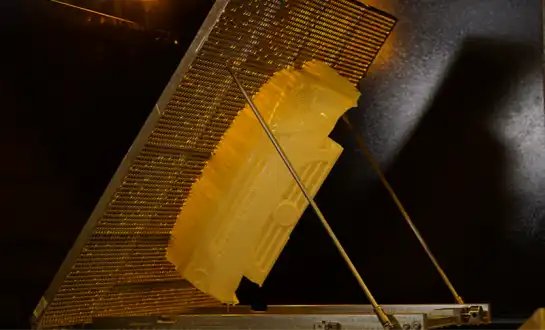 Industry InsightsManufacturing Industry
Why Stereolithography 3D Printers Are Unmatched for Microfluidic Device Prototyping?