Can Industrial SLA 3D Printers Achieve True End-Use Part Quality?
When procurement heads and technical leads look at new ways to make things, they often have one important question: Can stereolithography tools really make parts that are good enough for production? Yes, that's correct. Modern industrial SLA 3D printers are more than just tools for making prototypes. They are now reliable production platforms capable of manufacturing end-use parts that meet strict quality standards in the medical, aerospace, automobile, and consumer electronics industries. The exact laser curing, advanced resin formulas, and improved post-processing processes in these systems make it possible to achieve production-grade dimensional accuracy, surface finish, and mechanical performance for many industrial applications.
Understanding Industrial SLA 3D Printing Technology
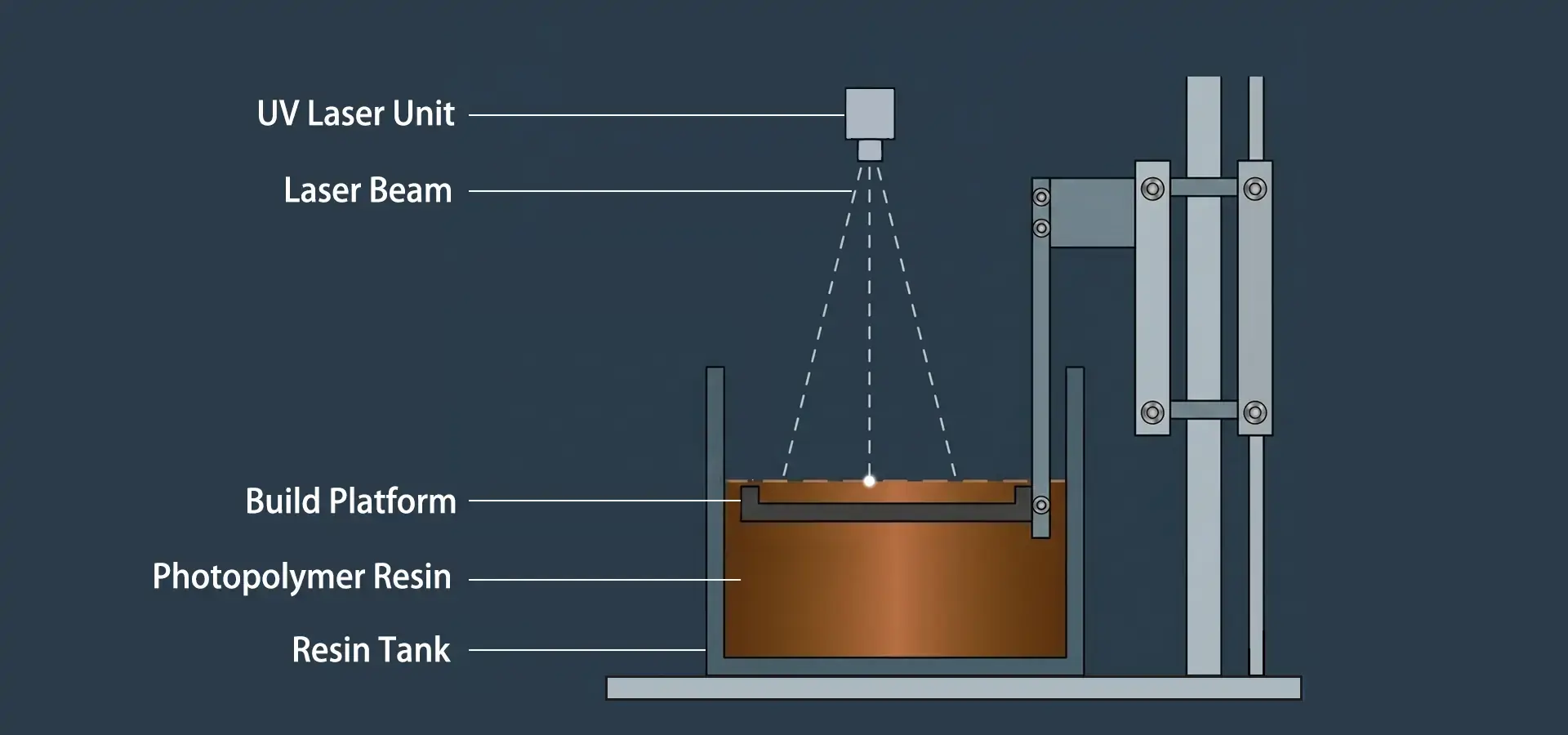
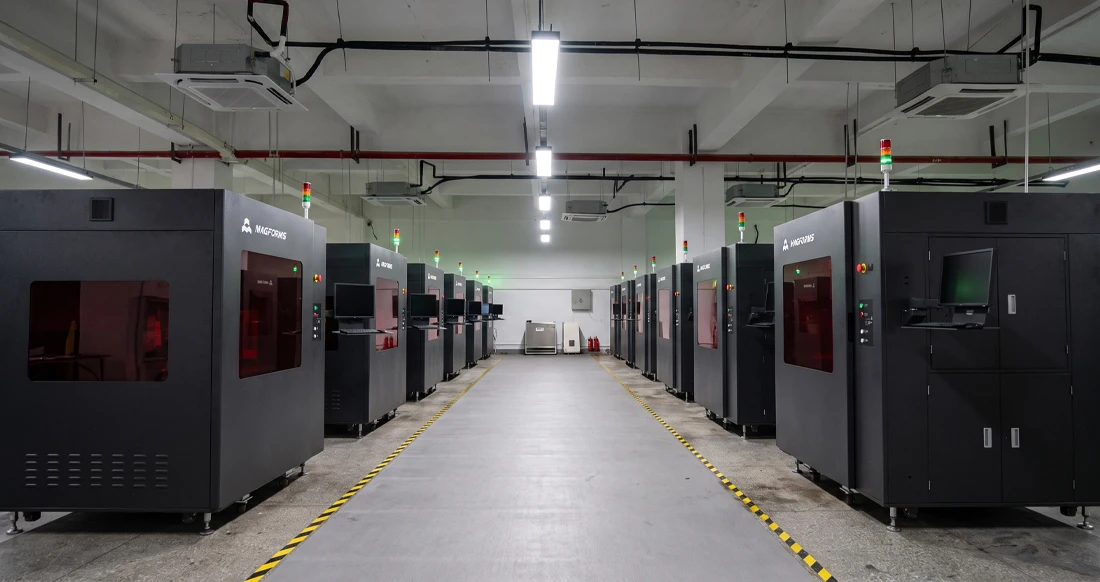
One of the most advanced additive production methods available right now is stereolithography. An industrial SLA 3D printer works by carefully curing liquid photopolymer resin layer by layer with a high-power solid-state laser. This lets the printer build things from the bottom up with great detail. Industrial systems, on the other hand, have advanced galvanometer scanning systems, large-format enclosed build rooms, and complex resin management that make sure the same results are achieved across production cycles.
How Laser Curing Creates Precision Parts
A computer 3D model is cut into thin horizontal pieces to start the process. Each cross-section is traced onto the resin surface by a UV laser. This speeds up the photopolymerization process by crossing chemical bonds. When a layer hardens, the build platform moves down a small amount, usually between 0.05 mm and 0.25 mm, allowing fresh liquid resin to recoat the cured layer surface. Dynamic galvanometer scanning systems enable high-speed laser positioning, improving scanning efficiency while maintaining precision during complex builds. This lets you work on small details and quickly scan for gaps.
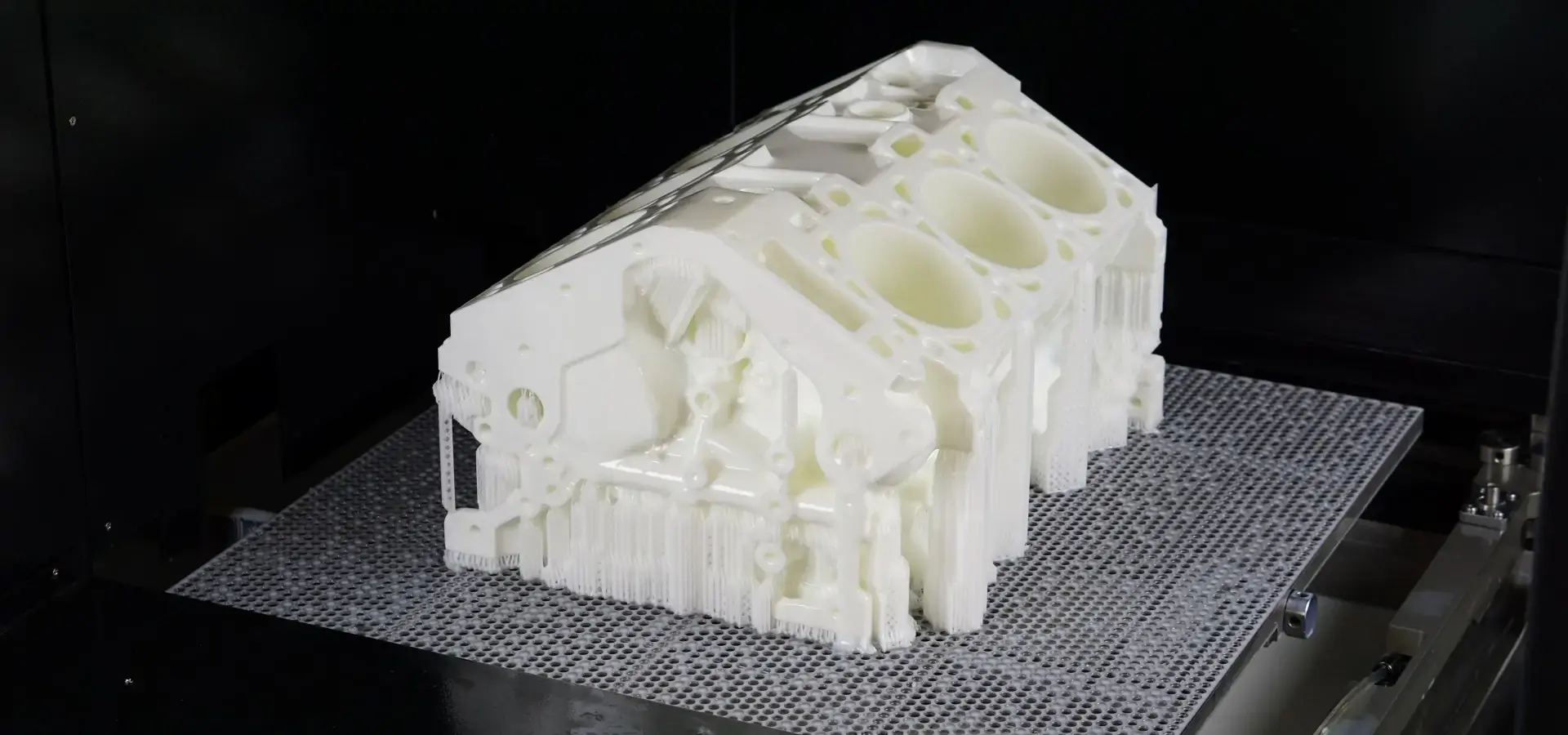
With these precise optics and carefully managed chemicals, it is possible to get laser spot sizes and minimum feature details as fine as 80 microns and exceptionally smooth surfaces that can achieve near injection-mold quality after post-processing. Because of these benefits, vat photopolymerization is highly suitable for manufacturing complex geometries with inside channels, sharp edges, and smooth side walls, which is hard to do with standard CNC machining without spending a lot of money.
Material Versatility Drives Application Breadth
A wide range of photosensitive materials designed to meet specific performance needs can be used in industrial SLA 3D printers. Formulations that are similar to ABS can withstand impacts and be machined. Polypropylene-like resins provide improved flexibility and fatigue resistance for snap-fit and functional assembly applications. High-temperature SLA resins can achieve heat deflection temperatures exceeding 140°C, making them suitable for tooling, under-hood automotive testing, and thermal validation applications. Transparent resins make glasses and light guides clear optically, and safe materials meet ISO 10993 standards for making medical devices.
Magforms has created its own resin formulas that work best with our equipment design. This makes sure that everything works together smoothly and reduces dimensional inconsistencies and process variability commonly found in mixed-material workflows. This strategy that combines materials and tools greatly raises production dependability and yield rates.
Can Industrial SLA 3D Printers Deliver True End-Use Part Quality?
To get quality good enough for production, you need more than just high-tech tools. It needs careful attention to the process factors, the choice of material, the direction of the part, the support strategy, and the level of rigor after processing. Properly optimized stereolithography systems can consistently produce parts that meet industrial performance requirements and practical requirements when these parts are lined up.
Addressing Common Quality Challenges
Even though technology has improved, there are still some problems that can lower the quality of parts if they are not handled properly. Early-generation materials still have problems with resins breaking easily, but new industrial SLA resins offer significantly improved toughness compared with earlier photopolymer materials. During curing, warping can happen if internal forces build up widely, especially in shapes with large cross-sections or thin walls. When layers don't stick together evenly, they can separate when they are put under mechanical stress.
These problems rarely happen because of limits in the tools. Most of the time, they are caused by wrong machine settings, weak support systems, or hasty post-processing. Setting up strict quality assurance systems, such as using coordinate measure tools to check for errors and ASTM-compliant mechanical testing, can help find problems and make processes better.
Comparative Advantages Over Alternative Technologies
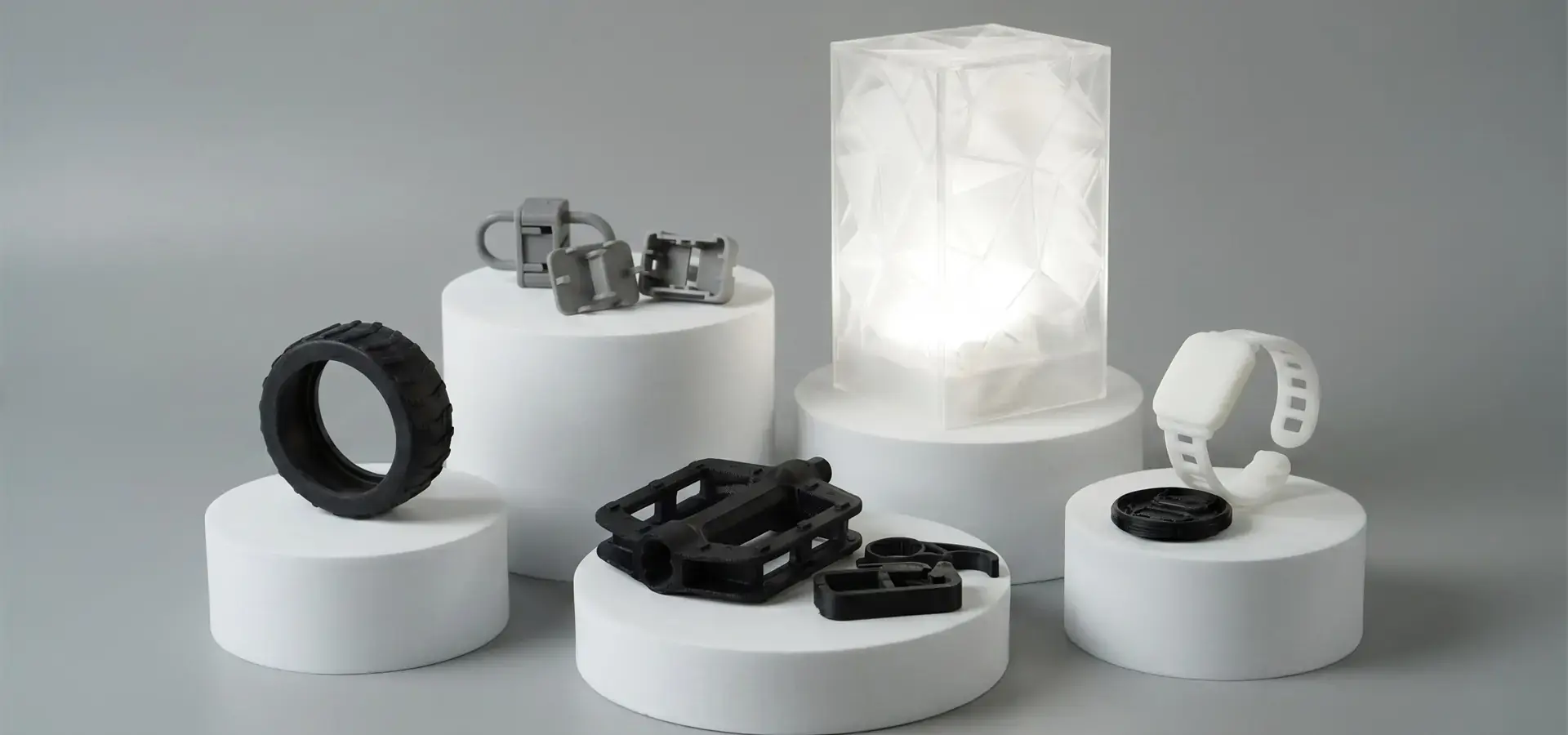
When looking at different types of additive manufacturing, industrial SLA 3D printer systems are better than selective laser sintering or fused deposition modeling in many ways. SLA gives surfaces that look like injection molds right from the build platform, significantly reducing visible layer lines compared with filament extrusion technologies. SLA parts generally exhibit more uniform mechanical properties and stronger interlayer bonding than FDM-printed parts, reducing anisotropy and improving structural consistency across different build orientations.
Stereolithography using industrial SLA 3D printers has better surface smoothness and feature clarity than SLS, but powder-based methods are better at working with thermoplastics that melt at higher temperatures. The choice depends on the needs of the application: SLA is widely preferred for applications requiring exceptional surface finish, fine detail resolution, and dimensional precision, while SLS is often selected for mechanically demanding thermoplastic parts requiring higher heat and impact resistance.
Industrial SLA 3D Printers in the Global Market: Comparison & Procurement Insights
To choose the best stereolithography system, you need to weigh the technical specs against the total cost of ownership, the dependability of the provider, and the availability of long-term support infrastructure. B2B buyers need to think about more than just the initial cash spending.
Key Technical Specifications to Compare
Minimum feature detail and dimensional fidelity are strongly influenced by system resolution. The XY resolution of most commercial units is between 50 and 150 microns, and the Z-layer width can be changed between 25 and 100 microns. The build volume goes from small 300x300x400mm platforms that are good for dental labs to big 600x600x800mm envelopes that can hold automotive panels. Printing speed depends on laser power, scan strategy, and layer exposure parameters. The output is measured in cubic centimeters per hour instead of linear millimeters per second.
Material fit is also very important. Open-material systems allow compatibility with third-party resins, but differences in exposure parameters, viscosity behavior, and curing profiles may require additional process validation to ensure consistent print quality. Material and hardware optimization is guaranteed by closed environments, but running costs may go up. Magforms' method has the best of both worlds: our special formulations promise top performance, and selected third-party approval increases the number of possible uses without lowering the quality.
Evaluating Total Cost of Ownership
The price of the purchase is only one part of the long-term investment. Costs keep going up because of the resin used. Depending on the performance grade, material costs can range from $150 to $500 per liter. Replacement costs are affected by how long lasers last, which is usually between 10,000 and 20,000 hours for good solid-state units. Maintenance tasks include changing the resin pot on a regular basis, cleaning the optical window, and calibrating the machine to keep the energy level consistent.
Time lost due to problems slows work down more than any other cost. Failure rates for different brands of equipment are very different. Magforms systems are tested continuously for thousands of hours before they are released, and their failure rates are much lower than the standards in the business. When problems happen, our quick-response technical support team does remote tests and fast shipments of parts to keep production running as smoothly as possible.
Practical Applications and Industry Use Cases
Stereolithography technology has grown and is now ready for production in many fields, each with its own quality standards and government rules.
Automotive and Aerospace Manufacturing
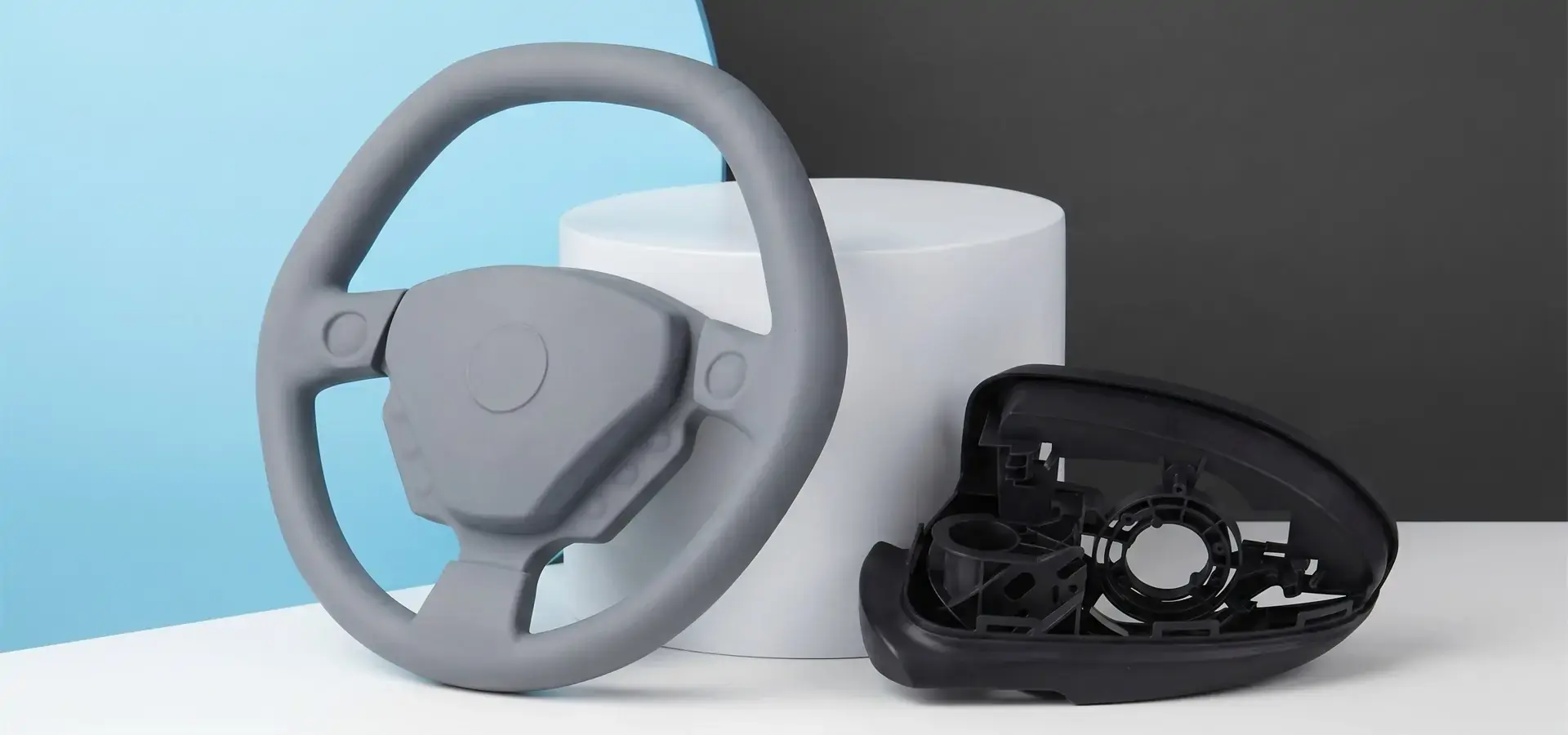
Automakers use industrial SLA 3D printers to make quick prototypes of panel elements, interior parts, and custom trim pieces. Being able to make surface finishes that look like they were made with an injection mold speeds up the design approval process. This lets style teams test the ergonomics and aesthetics of a product before investing in expensive tooling. It's now possible to make niche auto items in small quantities without having to spend a lot of money on tools.
For aerospace uses, precise measurements and the ability to track materials are essential. Stereolithography is great for making airflow test models, complicated ducting, and lightweight brackets. Parts are put through a lot of tests, such as measurement checking that meets AS9100 quality standards and mechanical analysis to make sure they can hold a load. Because the technology can make complex internal pathways, it is very useful for reducing weight and controlling temperature.
Medical Device and Dental Applications
Biocompatible materials and methods that have been tested are needed in the healthcare industry. Dental labs use stereolithography to make a lot of orthodontic models, clear aligner templates, and surgery guides that are customized for each patient based on CT scans. The smoothness of the surface keeps bacteria from growing, which meets hospital safety standards. Materials pass USP Class VI biocompatibility testing, which allowing safe short-term patient contact applications.
Medical device makers make prototypes of surgical tools, training models for the human body, and special implant parts. The technology shortens the time it takes for regulatory approvals by letting designers make changes and test them quickly before going on to final manufacturing processes.
Future Outlook: Advancements and Trends in Industrial SLA 3D Printing
The world of additive production is changing quickly because of new materials, the need to integrate robotics, and concerns about sustainability.
Next-Generation Resin Chemistries
The goal of research into hardened photopolymers is to make them as strong against impact and long-lasting as industrial thermoplastics like nylon and polycarbonate. Filled resins containing ceramic or metallic particles enable functional prototypes that conduct heat better or block electromagnetic waves. UV-stabilized formulations protect against outdoor weathering, which means they can be used in more places, like naval and building settings.
Magforms puts a lot of money into research and development (R&D) for materials and works with top chemical sources to create custom formulas for new uses. Our testing procedures make sure that our materials will hold up against harsh environments and change over time, so our customers can be sure that they are choosing the right materials for tough applications.
Industry 4.0 Integration and Smart Manufacturing
Data connection and process tracking are important in modern production settings. Industrial SLA 3D printers of the next generation work with production execution systems to provide real-time build tracking, predictive maintenance alerts, and quality paperwork that is done automatically. When machine vision systems find problems in the middle of printing, they stop the job to keep from wasting material.
Cloud-based process management makes it possible for design files to be sent safely to regional production sites so that they can be made on demand in the area. This model cuts down on shipping costs and wait times while also helping to reach sustainability goals by leaving behind as little carbon as possible.
Sustainability and Circular Economy Initiatives
People who care about the environment want plant-based resins and support materials that can be recycled. Closed-loop resin recovery systems are being looked into by equipment makers as a way to get back material that wasn't used in failed prints or support structures. Energy-efficient laser systems and improved scanning methods lower the amount of power needed for each part, which lowers the amount of carbon dioxide released during operation.
Magforms is always looking for new eco-friendly ideas, balancing the need for efficiency with caring for the earth. Our dedication to environmentally friendly making is in line with a worldwide movement toward better business practices.
Conclusion
There is a clear answer to the question of whether industrial SLA 3D printer systems can make real parts for end use: when used correctly, current stereolithography technology can make parts that are good enough for production. SLA helps companies in the car, aerospace, medical, and consumer electronics industries make useful parts that meet strict performance standards. They do this by using exact laser control, advanced material formulations, rigorous process optimization, and thorough post-processing. As material chemistry improves and Industry 4.0 becomes more stable, stereolithography will play a bigger part in distributed manufacturing and on-demand production. This will solidify its place as a key additive manufacturing technology for high-value uses.
FAQ
1. What dimensional accuracy can I expect compared to CNC machining?
CNC machining generally provides tighter tolerances for critical metal components, while industrial SLA 3D printers excel at producing complex geometries, internal structures, and rapid design iterations with high dimensional consistency. When it comes to internal holes and complicated undercuts that are hard to do with subtractive methods, this technology really shines.
2. How long do solid-state lasers last in production environments?
Most high-quality lasers can work for more than 10,000 to 20,000 hours. Power calibration on a regular basis keeps the energy level fixed, which means that the quality of the parts stays the same over the laser's lifetime.
3. Can stereolithography parts be used outside?
Standard photopolymer resins may experience UV aging and mechanical degradation during prolonged outdoor exposure without protective coatings or UV-stabilized formulations. Outdoor uses are possible with UV-stabilized formulas or protective clear coats, but ASTM G154 weathering validation is suggested for prolonged contact.
4. Why is post-curing so important for the features of the material?
As the parts leave the build room, they are still only partly polymerized. Cross-linking is finished by UV post-curing, which meets all of the material's temperature and dynamic strength requirements.
Partner with Magforms for Production-Ready Industrial SLA 3D Printer Solutions
To make great products, you need more than just the right tools. You also need a seller you can trust who is dedicated to your success. Magforms offers materials and tech solutions that work together to make production very precise and stable. Our own resin formulas and printer designs get rid of interoperability problems that lower quality and downtime. Our systems meet the strict needs of makers in the automobile, aerospace, medical, and electronics industries. Their optimized scanning algorithms help improve printing efficiency and reduce non-productive laser travel time during large-format builds and deliver industrial-grade dimensional accuracy suitable for precision engineering and production validation workflows, validated through long-term industrial production use cases.
As a well-known industrial SLA 3D printer manufacturer, we can help you with your purchase by giving you clear pricing information, flexible funding options, and full after-sales service that includes installation, training, and ongoing technical support. Our global distribution network guarantees fast delivery and specialized knowledge. It is backed by 22 patents and has been used by over 300 businesses around the world with great success. Magforms has options that can be scaled up or down to fit your budget and production needs, whether you run a small service bureau or are in charge of R&D for a global company. Email our team at info@magforms.com right now to get a personalized consultation, review of a sample part, or a full quote that is made to fit the needs of your particular application.
References
1. Gibson, I., Rosen, D., & Stucker, B. (2021). Additive Manufacturing Technologies: 3D Printing, Rapid Prototyping, and Direct Digital Manufacturing (3rd ed.). Springer.
2. Melchels, F. P., Feijen, J., & Grijpma, D. W. (2020). "A review on stereolithography and its applications in biomedical engineering." Biomaterials, 31(24), 6121-6130.
3. Stansbury, J. W., & Idacavage, M. J. (2019). "3D printing with polymers: Challenges among expanding options and opportunities." Dental Materials, 35(1), 37-52.
4. Quan, H., Zhang, T., Xu, H., Luo, S., Nie, J., & Zhu, X. (2020). "Photo-curing 3D printing technique and its challenges." Bioactive Materials, 5(1), 110-115.
5. Pagac, M., Hajnys, J., Ma, Q. P., Jancar, L., Jansa, J., Stefek, P., & Mesicek, J. (2021). "A review of vat photopolymerization technology: Materials, applications, challenges, and future trends of 3D printing." Polymers, 13(4), 598.
6. Bagheri, A., & Jin, J. (2019). "Photopolymerization in 3D printing." ACS Applied Polymer Materials, 1(4), 593-611.

Magforms makes design and manufacture easier.
Popular Blogs
-
 Industry InsightsManufacturing Industry
FDM vs. SLA Printer: Which Technology Is Right for Your Project?
-
 Industry InsightsManufacturing Industry
Top 5 Applications of Industrial 3D Printers in Manufacturing Today
-
 Industry InsightsManufacturing Industry
Why Stereolithography 3D Printers Are Unmatched for Microfluidic Device Prototyping?