Can Industrial SLA 3D Printers Reduce Lead Times in Manufacturing?
These days, production needs to be quick without losing quality. In every industry, production plans are getting shorter, customer standards are rising, and competition is getting tougher. Cutting down on lead time is no longer just a practical goal; it's now a must-have strategy. Tooling, machining lines, and multi-stage prototyping are some of the traditional ways of making things that cause problems that slow down product starts and raise costs. Industrial SLA 3D printers offer a revolutionary answer to these problems. These systems use high-precision stereolithography technology to help makers make complicated parts quickly, without having to follow normal rules. We've seen personally how this technology changes the way production works in the medical, consumer electronics, aerospace, and automotive industries, cutting down on time to market while keeping high-quality standards.
Understanding Industrial SLA 3D Printing and Its Role in Manufacturing Lead Times
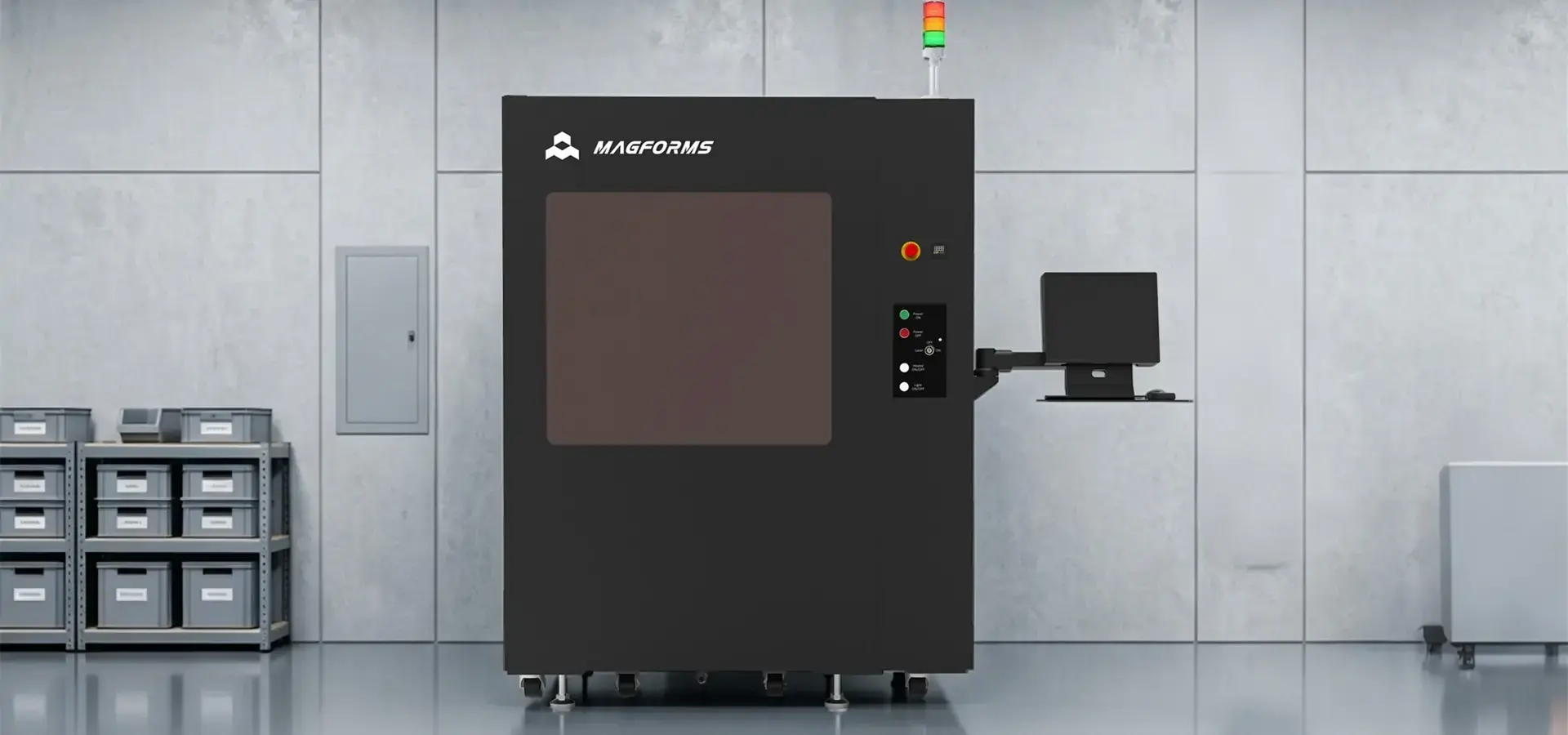
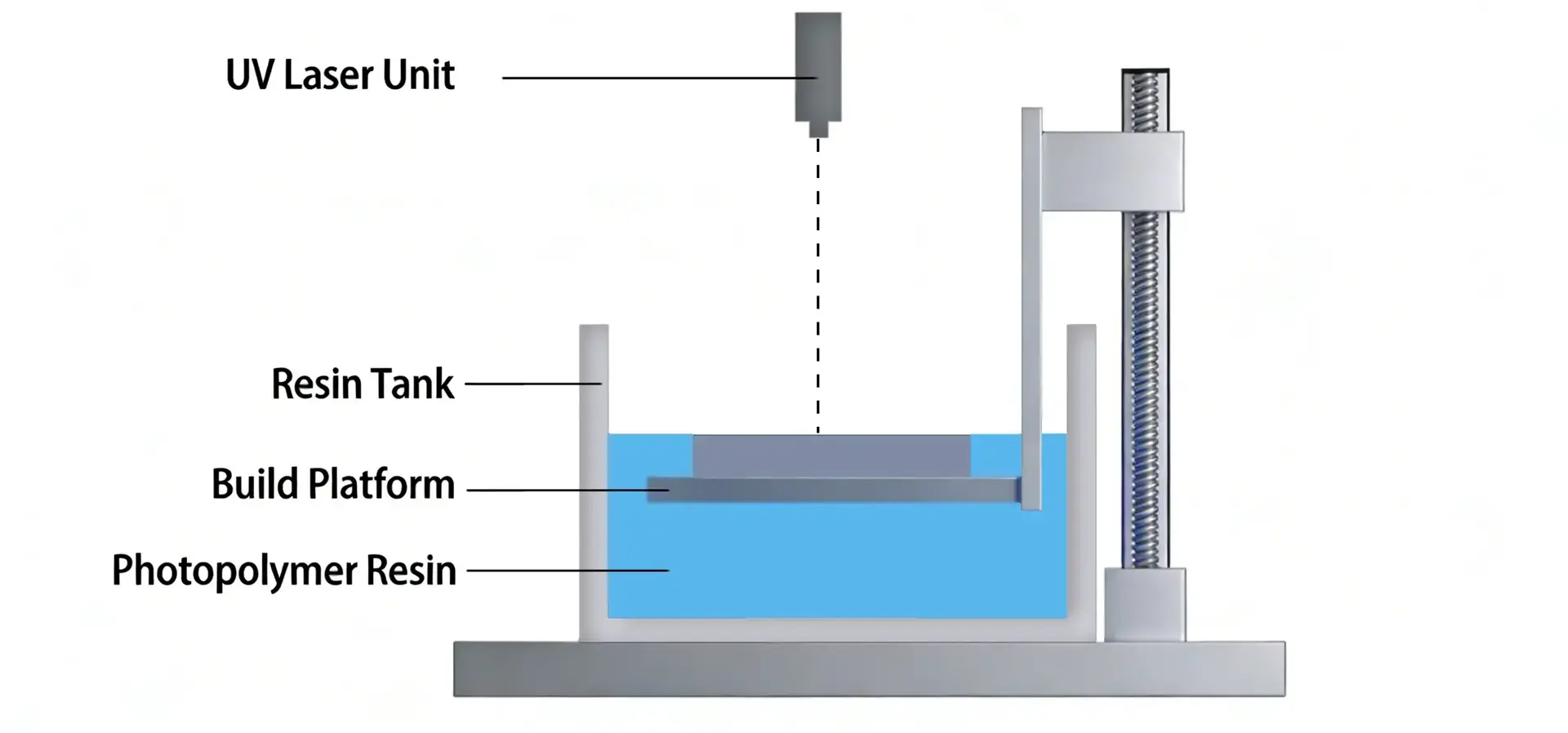
Industrial stereolithography represents a major advancement over desktop-scale 3D printing technologies. At its core, an industrial SLA 3D printer uses a UV solid-state laser, commonly operating at a wavelength of 355 nm to cure liquid photopolymer plastic one layer at a time. The process produces highly detailed parts with excellent interlayer bonding, dimensional accuracy typically within ±0.1 mm, and smooth surface finishes that can achieve Ra 1–3 μm after proper post-processing.
The Technical Foundation of Speed and Precision
Industrial systems are different from consumer-grade equipment because they have strong granite or steel bodies, advanced closed-loop scanning galvanometer systems, and advanced heat management. These parts work together to keep the quality of the prints the same over long production runs. The laser beam spot sizes run from 0.08mm to 0.80mm, which lets users find the right mix between fast infill scanning and fine detail contouring. Layer thicknesses are usually between 0.05 mm and 0.25 mm, and dynamic focusing systems allow scanning speeds of up to 15 meters per second. This level of technical complexity has a direct effect on the time it takes to make things. With traditional CNC machining methods, it could take days to produce a single sample with complicated inside shapes. An industrial SLA system can make the same part in one night, and the quality of the surface often means that no other finishing steps are needed. Another benefit is that the material can be used in a lot of different ways. For example, ABS-like photopolymer resins can simulate certain mechanical characteristics of ABS for functional testing applications, clear formulations can be used for optical parts, and high-temperature resins with heat deflection temperatures above 100°C can meet the needs of different applications without having to change the equipment.
Process Workflow and Time Advantages
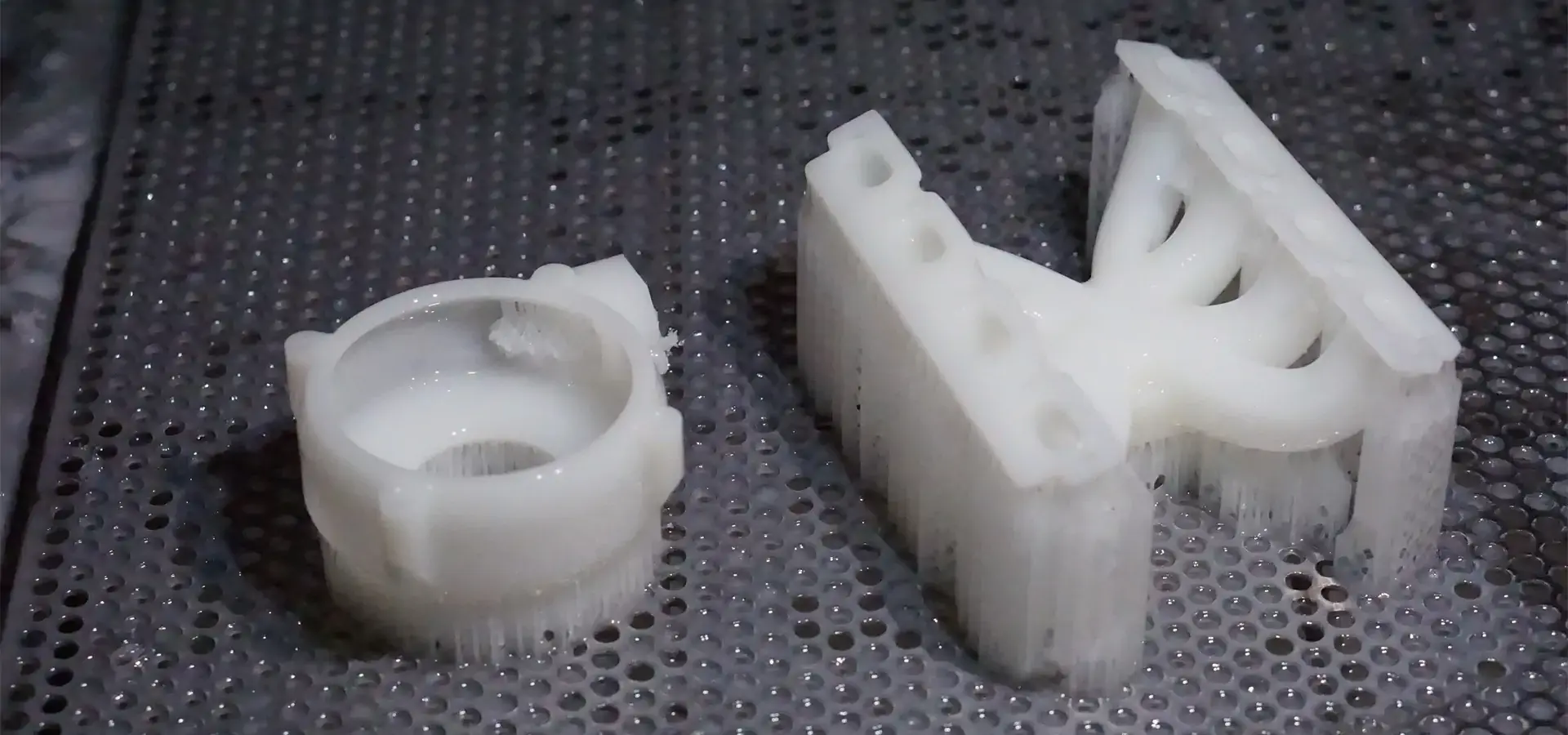
Following common additive manufacturing workflows and standards such as ISO/ASTM 52915 for file interoperability, CAD design files are changed into forms that machines can read. This is the first step in the manufacturing process. Support structures are made automatically by formulas that are tweaked to use the least amount of material while keeping the part from warping. Advanced automated nesting and build preparation software can significantly reduce setup time from hours to minutes. Manufacturers of aerospace parts use an industrial SLA 3D printer to test intricately designed parts like precise joints before spending a lot of money on expensive tools. Automotive R&D teams produce functional vehicle prototypes and customized internal parts, which cuts the time it takes to make a new model by weeks. Medical device companies make surgical guides and orthodontic aligner bases with the exact measurements of each patient. This means that custom goods can be sent within days instead of weeks. Each example shows how getting rid of standard steps in the manufacturing process directly cuts down on wait times.
How Industrial SLA 3D Printers Help Reduce Manufacturing Lead Times
Manufacturing bottlenecks are caused by things that can be planned for, like the time it takes to get tools, the capacity of machine centers, and the minimum order numbers needed for batch production. By allowing on-demand manufacturing, industrial SLA technology breaks down these barriers.
Eliminating Tooling Dependencies
For traditional injection molding, you need steel or metal tools that are made in a process that takes 4 to 8 weeks and costs tens of thousands of dollars. When designs change, tools need to be changed or replaced completely, which adds to the time it takes to make things. An industrial SLA 3D printer turns digital files into working samples right away, so the design can be checked out before any money is spent on tools. Using this method, automakers have cut the time it takes to make a prototype from 12 weeks to 3 weeks, which greatly speeds up their time to market. Consumer electronics manufacturers have to meet very strict development deadlines. Housings for wearable devices and parts of headphones need to be redesigned many times to get the best usability and looks. Stereolithography makes it possible to make look-and-feel samples overnight, and the surfaces can be finished right away so they can be painted or plated. Focus group testing with samples that are almost ready for production lets teams get feedback that they couldn't get from rough mock-ups. This method of parallel development, in which design improvement and market testing happen at the same time, cuts months off the time it takes to sell a product.
Accelerating Small-Batch Production
Making things in small quantities comes with its own set of problems. Below a certain quantity, traditional methods can't be used cheaply, so makers have to either wait for a long time or buy too much inventory. Industrial SLA fills in this gap by making small-batch output cost-effective. This feature is used by the artistic and cultural industries to make limited-edition decorative models, and shoe makers use it to make shoe molds and accessory prototypes without having to meet a minimum order quantity. The technology is especially helpful for 3D printing service providers who have to meet the needs of a wide range of clients. With different types of materials, an industrial SLA 3D printer can make dental models, precise electrical housings, and aircraft parts all at the same time without having to change its tools. Because of this, service companies can offer delivery times that traditional job shops can't keep. This gives them an edge in markets where timeliness decides who gets the contract.
Comparing Industrial SLA 3D Printing with Other Technologies for Lead Time Optimization
When manufacturing experts look at additive technologies, they need to know how the different processes affect the time it takes to make things. Stereolithography works really well in some situations, but not all of them.
Technology Performance Comparison
Selective Laser Sintering can work with nylon-based powders that don't need any support structures. This makes it better for making complex shapes and parts that fit inside each other. However, SLS parts typically exhibit rougher surface textures than SLA parts and often require additional sanding, sealing, or finishing for cosmetic applications. Digital Light Processing uses projector technology to cure entire layers simultaneously, which could allow for faster build speeds than laser scanning point by point. Many DLP systems traditionally offer smaller build volumes than large-format industrial SLA platforms, although newer industrial DLP systems are expanding in size capability. Fused Deposition Modeling is still the cheapest way to make simple prototypes, but standard FDM processes may exhibit visible layer lines and anisotropic mechanical behavior, especially in lower-cost systems, often requiring additional finishing for presentation-grade parts. If lowering lead times is the main goal, these post-processing steps can cancel out FDM's original speed edge. An industrial SLA 3D printer strikes a good mix between several factors. Large build sizes (platforms bigger than 800mm x 800mm x 500mm in high-end systems), high dimensional precision, and better surface quality make stereolithography very useful for situations where part quality can't be sacrificed even though deadlines are tight.
Cost-Performance Considerations
The cost of buying equipment is a big choice factor. High-end imported industrial systems often involve higher acquisition and material costs because they need special materials that aren't available anywhere else. This is a big problem for tiny businesses that are trying to stay within their limits. In addition to the buying price, the total cost of ownership includes the cost of materials, the cost of upkeep, and the ability to change how the business is run. Manufacturers should look at providers that offer options that include both materials and tools. When printer systems and materials are engineered to work together, compatibility problems that lead to dimensional errors, print failures, and unexpected downtime become much less common. This dependability is very important when production plans depend on tools working the same way every time. Proven reliability through long-duration operational validation helps manufacturers maintain stable production schedules with reduced print interruption risks. When figuring out return on investment, the whole output cycle needs to be taken into account. When compared to cheaper options with higher failure rates and slower flow, a system that costs 20% more but cuts wait times by 40% and improves yield rates often gives a better return on investment (ROI).
Maintenance, Troubleshooting, and Best Practices to Sustain Lead Time Improvements
Technology by itself can't ensure reliable results. Operational discipline determines whether technical capabilities can consistently translate into reliable production results.
Preventive Maintenance Protocols
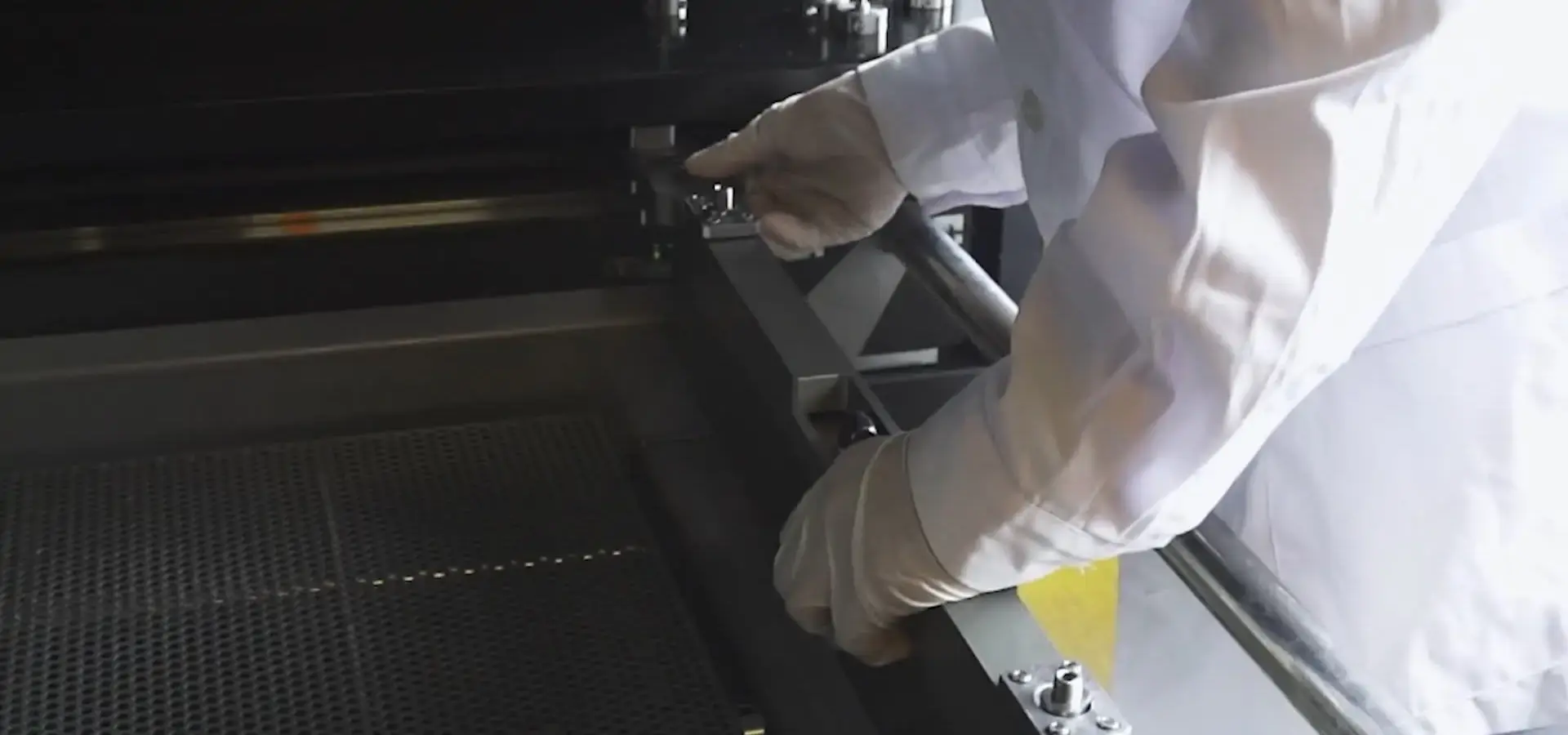
Over time, resin vats and optical interfaces gradually wear over time due to repeated UV exposure and resin interaction, which can affect curing consistency if not maintained properly. When parts are replaced on a regular basis based on their build hours, quality doesn't slowly go down, which might not be noticeable until they fail inspection. Laser power adjustment keeps the energy level constant even as optical parts age. This makes sure that the equipment's accuracy in measurements stays within the specifications for its whole life. Galvanometer scanning systems need to be checked on a regular basis to make sure the beam setting is correct. Small amounts of drift can add up over large parts and cause measurement mistakes that need to be reprinted. We suggest that optical tracks be cleaned once a week and that known-good files be printed once a month to set speed baselines.
Common Failure Modes and Resolution
It's usually easy to figure out why prints fail. Insufficient support structures can lead to deformation, layer shifting, or print failure during the peeling and recoating process. This part of trial and error is cut down by modern slicing software with AI-optimized support generation, but operator knowledge is still useful. Figuring out how the direction of a part affects both the time it takes to build and the amount of support it needs can help set up to go faster and produce more regular results. Environmental factors have a big effect on results. Temperature fluctuations can affect resin viscosity and curing behavior, which can change how it cures. Some material formulations are affected by humidity. Controlled production settings with stable conditions reduce the number of factors that could affect quality and lead to the need for repeats. Similar rules apply to storing materials. For example, resins stored in sealed containers away from UV exposure keep their qualities the same, so there aren't any batch-to-batch differences that make process improvement harder.
How to Procure Industrial SLA 3D Printers to Maximize Lead Time Benefits
For strategic procurement to work, suppliers need to be judged on more than just the specs of their tools.
Supplier Evaluation Criteria
A supplier's reputation and knowledge in the field show how well they can meet difficult manufacturing needs. Companies that have been using industrial additive manufacturing for a long time know how to deal with problems that are unique to each application and can give advice that goes beyond how to use the tools. Patent portfolios and brand filings show that a company is serious about real innovation, not just reselling generic hardware. After-sales help is very important. How quickly technical questions are answered, how easy it is to get replacement parts, and how well field service workers can do their jobs all affect operating consistency. In addition to basic replacement, warranties should cover performance promises that make sure systems keep the accuracy and dependability levels that were agreed upon during the coverage time. Being present in the global market has useful benefits. Suppliers who work with customers in more than one region usually keep their supply lines stronger and their service practices more consistent. Participating in international industry exhibitions shows that you are interested in the market and gives you the chance to directly test tools before making a purchase decision.
Integrated Solutions for Maximum Reliability
The biggest operational danger comes from materials and tools that don't work well together. Using third-party resins may save you money, but they can bring problems that lead to failed prints, wrong measurements, and unplanned downtime. When output dates are coming up, these problems get even worse. These problems can't happen with integrated systems for an industrial SLA 3D printer, in which the same company makes both the printing materials and the tools. This deep integration of material formulations and machine parameters helps ensure stable and efficient production workflows from project initiation to final part completion. This way of doing things completely changes the practical equation. Instead of trying to figure out why a certain plastic acts strangely on a certain machine, teams can focus on improving production, knowing that the material and equipment pair has been thoroughly tested.
There are benefits to performance that go beyond dependability. When suppliers use their own technologies, like variable spot-size laser systems and AI-optimized scanning paths, they can print at speeds that are 30% or more faster than the average in the industry. When you combine these abilities with micron-level accuracy and stable continuous operation, you get the high-efficiency, high-precision production capacity that actually cuts down on lead times that are driving people to adopt new technologies.
Flexible Acquisition Options
Getting capital equipment follows different patterns based on the size and financial plan of the company. Large makers with big R&D budgets might choose to buy the technology outright to save money in the long run. Design companies, new service providers, and specialized component processors are all examples of small and micro businesses that often have limited cash and need flexible financing or leasing options. Companies that use multiple systems or distributors that serve area markets may be able to save money by signing bulk purchasing deals. Time-to-productivity is sped up by complete kits that include shipping, installation, and operator training. This helps businesses see their return on investment (ROI) more quickly. Technical training programs that cover how to operate and maintain tools, as well as how to get the most out of applications, make sure that teams can fully utilize the system's capabilities instead of working below its potential because they lack the necessary knowledge.
Conclusion
Lead times for manufacturing have a direct effect on how strong an industry is in every field. Traditional bottlenecks, like waiting for tools to arrive, waiting in line for cutting, and planning batches, are problems that additive manufacturing solves well. Through on-demand manufacturing, the elimination of machine dependencies, and the production of high-quality parts with minimal post-processing requirements, industrial SLA 3D printers offer quantifiable time savings. To be successful, you need more than just good tools. You also need solid combined solutions, a full support system, and the discipline to keep performance consistent. When companies look at this technology, they should focus on providers that offer proven material-equipment integration, strong after-sales support, and a range of flexible acquisition choices that fit their size and needs.
FAQ
1. How does dimensional accuracy compare between industrial SLA 3D printers and CNC machining?
Some features can be machined with tighter tolerances with CNC cutting, especially on flat areas and simple shapes. Industrial stereolithography systems can typically achieve dimensional accuracy around ±0.1 mm or ±0.1%, depending on part geometry, material behavior, and system calibration. The additive method works great for internal holes and undercuts that are hard to machine with traditional methods, and it often gets rid of the need for extra steps that would normally make wait times longer.
2. What maintenance intervals keep industrial SLA 3D printers operating reliably?
Unplanned downtime can be avoided with regular upkeep. The resin tank should be checked once a week, and replacements should be planned based on the total number of build hours, as suggested by the maker. Laser power adjustment is usually done once a month to keep the energy level steady as optical parts age. Cleaning the work areas every day and checking the accuracy of the galvanometer on a regular basis makes sure that the dimensions stay the same from one production run to the next.
3. Can stereolithography parts withstand outdoor environmental exposure?
Standard photopolymer resins may degrade during prolonged outdoor UV exposure unless UV-stabilized formulations or protective coatings are applied. Certain UV-stabilized formulas and protective coats make things last a lot longer outside. For uses that need to be exposed to the elements outside, the right materials should be chosen during purchase, and solutions should be thought about after processing. ASTM G154 accelerated weathering testing is commonly used to evaluate long-term UV durability for outdoor applications.
Accelerate Your Manufacturing Timeline with Magforms Industrial SLA 3D Printer Solutions
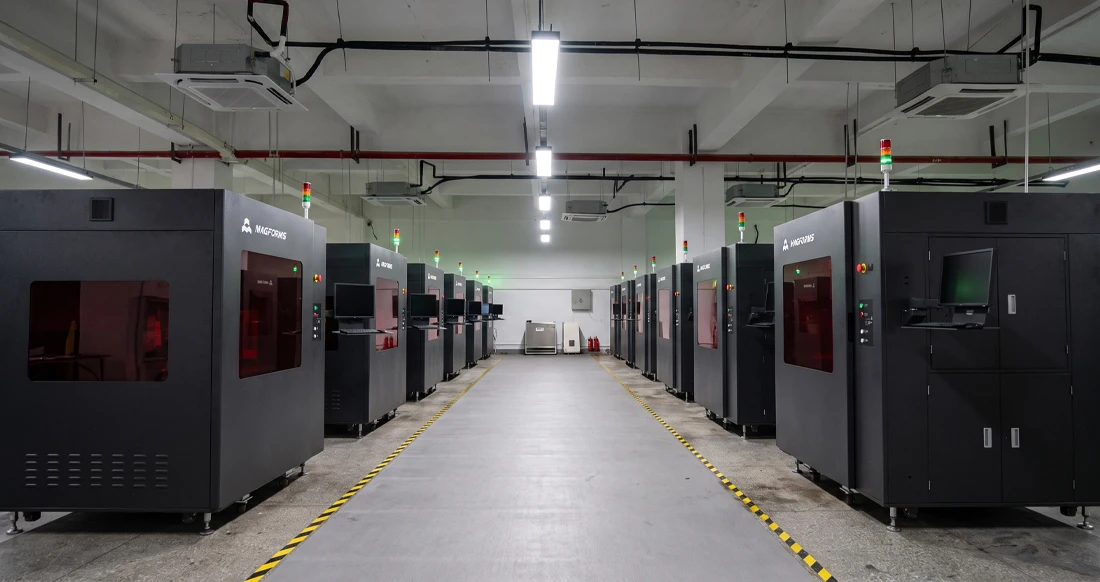
Magforms offers the unified method needed to get the most out of lead time savings in tough production environments. Our industrial SLA 3D printer systems use custom-made materials and tools, so they don't have the compatibility problems that come up with sets that use parts from different companies. Optimized scanning strategies and variable spot-size laser technology can significantly improve build efficiency compared with conventional fixed-spot SLA systems. We offer proven reliability backed by full technical support. Our 22 patents support ongoing innovation and validation through over 300 business deployments around the world. Through thousands of hours of continuous operation testing, our equipment has failure rates that are much lower than the industry average. This means that your production plans will stay on track. Whether you operate a small 3D printing service bureau or oversee research and development for a global aerospace company, our flexible acquisition options, such as direct purchase, leasing, and bulk buying deals, can be tailored to your business's size and budget. Get in touch with info@magforms.com to talk about how Magforms industrial SLA 3D printer systems can speed up your production and put you in touch with a reliable source who wants your manufacturing success.
References
1. Gibson, I., Rosen, D., Stucker, B., & Khorasani, M. (2021). Additive Manufacturing Technologies (3rd ed.). Springer International Publishing.
2. ISO/ASTM International. (2021). ISO/ASTM 52915:2020 - Specification for additive manufacturing file format (AMF) Version 1.2. ASTM International.
3. Jacobs, P.F. (2020). Stereolithography and Other RP&M Technologies: From Rapid Prototyping to Rapid Tooling. Society of Manufacturing Engineers.
4. Chua, C.K., & Leong, K.F. (2022). 3D Printing and Additive Manufacturing: Principles and Applications (6th ed.). World Scientific Publishing.
5. Ligon, S.C., Liska, R., Stampfl, J., Gurr, M., & Mülhaupt, R. (2017). Polymers for 3D Printing and Customized Additive Manufacturing. Chemical Reviews, 117(15), 10212-10290.
6. Wohlers, T. (2023). Wohlers Report 2023: 3D Printing and Additive Manufacturing Global State of the Industry. Wohlers Associates, Inc.

Magforms makes design and manufacture easier.
Popular Blogs
-
 Industry InsightsManufacturing Industry
FDM vs. SLA Printer: Which Technology Is Right for Your Project?
-
 Industry InsightsManufacturing Industry
Top 5 Applications of Industrial 3D Printers in Manufacturing Today
-
 Industry InsightsManufacturing Industry
Why Stereolithography 3D Printers Are Unmatched for Microfluidic Device Prototyping?