Can SLA Printing Transform Your Rapid Prototyping Workflow?
Of course. Rapid prototyping has been changed by SLA printer technology, which offers accuracy, surface quality, and material flexibility that standard production methods just can't match. Companies can now use advanced stereolithography systems to make working samples with finishing similar to injection molding. These systems can achieve dimensional accuracy of 0.1 mm and work with a variety of engineering-grade resins. This change is more than just faster; it completely changes how companies in many different fields, from cars to medical devices, create new products, go through validation rounds, and respond to changes in the market.

Understanding SLA Printing Technology and Its Impact on Rapid Prototyping
As an advanced form of additive manufacturing, stereolithography uses carefully calibrated UV laser systems to cure liquid photopolymer resins one layer at a time. This vat photopolymerization technology builds parts from the bottom up, instead of traditional methods that involve cutting away material or shaping it. This lets complex shapes be made that would be impossible or too expensive to make with traditional methods.
How SLA Technology Works in Modern Manufacturing?
A strong UV laser, usually working at the 355nm range, is guided by scanning galvanometers across a tank of liquid resin. This is what the process is based on. When the laser beam hits the photopolymer, it starts a chemical process that turns the liquid into a solid that has the same traits everywhere. This process gets rid of the problems with layer bonding that happen a lot with filament-based technologies. This makes parts that are strong in all directions.
Several important parts that decide print quality and dependability are built into modern industrial SLA printer systems. German Scanlab galvanometers precisely place the beam, and high-tech laser systems keep the power output steady during long printing sessions. The Z-axis moving system on the build platform, which usually uses Panasonic AC servo motors, makes sure that layers are placed correctly, which is necessary to keep limits for size.

Revolutionary Impact on Prototyping Workflows
The changes that SLA technology makes to rapid prototyping processes are not limited to just making them faster. Using old-fashioned prototyping methods, making usable parts would often take weeks and involve a lot of different suppliers, tooling preparation, and long wait times. With SLA printing, this time frame is cut down to hours or days, which makes it possible to do iterative design processes that weren't possible before.
The quality of the surface finish is another new step forward. Surface roughness values for SLA parts are less than 1 Ⴍm, which means they don't have the stair-stepping effects that other 3D printing methods do. This grade level cuts down on or gets rid of the need for post-processing, which directly saves money and speeds up project finish.
Comparing SLA with Other 3D Printing Technologies for Prototyping Efficiency
Understanding the main differences between SLA, FDM, and DLP systems is important when looking at 3D printing technologies for testing purposes so that you can make smart purchasing choices. Each technology has its own benefits that depend on the needs of the application, the amount of output, and the quality standards.
SLA Versus FDM: Precision and Surface Quality Analysis
Fused Deposition Modeling is still popular because it is easy to use and works with a wide range of materials. However, it has big problems when prototyping needs to be very precise or have better surface finishes. Layers made by FDM systems are usually 100 to 300 microns thick, but layers made by modern SLA systems can be as thin as 25 microns. This difference has a direct effect on how accurate the prototype is and how well it can catch small design details.
The qualities of the materials used in these systems are also very different. Layer adhesion forces cause FDM parts to have uneven properties, which can lead to weak spots along the Z-axis that can affect the results of functional tests. Because SLA parts have isotropic strength qualities, they give more accurate data during the validation steps of prototypes.
DLP Technology Comparison and Market Positioning
Digital Light Processing is like SLA technology in some ways, but it uses a different way to get light. In some cases, DLP systems can print faster because they can cure whole layers at once, but in exchange for speed, they usually lose clarity. Because DLP is built on pixels, it makes pixelation noticeable on curved surfaces. SLA laser systems, on the other hand, make smooth curves that are necessary for making prototypes that look good.
Advanced SLA systems use variable spot-size laser technology, which strikes the perfect balance between speed and accuracy. Large laser spots speed up the filling process inside the body, while small spots make sure that the contours are defined precisely. Compared to traditional stereolithography, this new technology speeds things up by 30 to 50 percent while keeping the quality of the surface high.

Optimizing Your SLA Printing Workflow for Maximum Productivity
To get consistently good results from SLA printing, you need to pay close attention to the material you choose, the process settings, and the steps you take after the printing is done. To optimize a process successfully, you need to know how these factors affect each other and use best practices that reduce variation while increasing output.
Strategic Material Selection and Compatibility Considerations
Open-source equipment designs are very helpful for groups that need to be able to change their materials quickly. Open platforms let users get materials from a variety of sources at low costs, unlike proprietary systems that only let users use resins made by a certain maker. This adaptability is very helpful for projects that need specific qualities like being able to withstand high temperatures, being clear, or being biocompatible.
There is now a wide range of mechanical qualities in engineering-grade resins, from soft elastomers to rigid, high-strength composites. To choose the right material, you need to match the resin's properties to the job it's going to be used for while also taking into account things like curing times, the need for support structures, and compatibility after processing.
Process Parameter Optimization and Quality Control
To get the best print quality with an SLA printer, you need to carefully adjust the exposure times, laser power settings, and layer heights based on the plastic mixture and the shape of the part. Poor layer bonding and dimensional errors happen when the exposure is too low. On the other hand, feature blooming and dimensional swelling happen when the exposure is too high. In more advanced SLA printer systems, there are automatic calibration processes that change parameters based on the material and the surroundings.
Designing the support system has a big effect on both the success rates of prints and the amount of work that needs to be done afterward. Smart support methods make sure that the least amount of material is used while still making sure that the part is stable enough during the printing process. Placing supports correctly stops them from deforming and makes them easy to remove without hurting important areas.
Post-Processing Excellence and Quality Assurance
Post-processing is an important part of the workflow that has a direct effect on the quality and accuracy of the end product's dimensions. In order to clean, all of the uncured resin must be removed using the right chemicals, which are usually ethyl alcohol or special cleaning solutions. If you don't clean everything completely, you'll end up with sticky surfaces and differences in size that make the sample less useful.
The cross-linking process that started during printing is finished by UV curing. This improves the mechanical qualities and physical stability. Controlled exposure times and temperatures that are specific to each resin mixture are part of the right curing methods. Too much curing can make the material rigid and change its shape, while too little curing leads to poor mechanical qualities.

Procurement Insights: How to Purchase SLA Printers and Supplies for B2B Clients
To get through the complicated process of industrial SLA buying, you need to know about both the technical details and the business issues that affect the long-term success of operations. When making smart procurement choices, you should weigh the initial cash investment against the total cost of ownership, which includes things like repairs, upkeep, and support services.
Evaluating Technical Specifications and Performance Metrics
When evaluating SLA systems, the build volume powers must match the apps that will be used. Large-format printing makes it possible to make useful parts that are too big or to process many parts at once, which increases workflow efficiency. Systems with build volumes bigger than 600x600x400mm can handle architectural models, aircraft parts, and car panels that smaller systems can't.
Specifications for printing precision with an SLA printer need to be carefully looked at beyond simple marketing claims. Measurements of dimensional range should be based on specific test shapes and situations. SLA printer systems that can get an accuracy of ±0.1 mm for parts shorter than 100 mm are industrial-grade and can be used for practical development and low-volume production.
Supplier Evaluation and Support Infrastructure Assessment
A complete system for after-sales assistance is an important procurement factor that is often missed during the original evaluations. Technical support teams should be able to respond quickly, especially in work settings where downtime has a direct effect on project deadlines. Response times of less than an hour for expert advice and four hours for problem solving are the best in the business.
Organizations can get the most out of their tools while reducing operating risks with the help of training programs and knowledge transfer services. Full training should include how to use the equipment, how to maintain it, how to fix problems, and how to make the process run more efficiently. Staff members stay up to date on program changes and new material by getting regular training updates.
Future Trends and Strategic Considerations for SLA Printing in Rapid Prototyping
Materials science, optical systems, and the merging of artificial intelligence are all making progress that is speeding up the fast development of SLA technology. By understanding these trends, businesses can make plans that help them take advantage of new skills and keep their technology from becoming outdated.
Emerging Technology Integration and Performance Enhancements
The addition of artificial intelligence is a huge step forward in SLA printing technology. Deep learning algorithms look at print data to find the best scanning lines. This cuts print times by about 20% while keeping quality standards the same. These systems learn from past prints to predict and stop common failure modes. This raises the success rate and lowers the amount of wasted material.
Variable spot-size laser technology is a good example of how the industry is moving toward smart improvement. Systems change the beam's properties automatically based on the shape, using big spots for quick filling inside and small spots for an accurate copy of details. This flexible method gets around the usual trade-offs between speed and accuracy.
Market Evolution and Competitive Advantages
Material innovation keeps bringing SLA uses to markets that weren't possible before. High-temperature resins can be used in the engine bay of cars, and safe formulas can be used to make prototypes of medical devices. Ceramic-filled composites have qualities that are similar to those of traditional building materials. This makes functional testing possible, which correctly predicts how the product will work in real life.
When you combine products and tools from the same sources, you don't have to worry about compatibility issues that have come up with multiple sellers in the past. Optimized material-printer pairs give consistent results while making debugging easier and lowering unplanned downtime. This connection is especially helpful for businesses that need to make sure that the quality of their prints is the same on all of their systems.
Conclusion
Rapid prototyping processes have been completely changed by SLA printer technology, which offers accuracy, surface quality, and a wide range of materials. Being able to make injection-molded parts of high quality in hours instead of weeks makes it possible for iterative design processes that speed up the innovation cycle in many fields. Advanced SLA printer systems with lasers with varying spot sizes, AI optimization, and open-source material compatibility give current production settings the performance and freedom they need. To successfully adopt SLA printer technology, you need to know how the capabilities of your tools, the choice of materials, and the optimization of your processes all affect each other. You also need to make sure that you have the right support system in place to ensure long-term operating excellence.
FAQ
How does SLA printing compare to FDM technology for prototype durability?
Parts made with SLA printing have isotropic strength properties, which means they have the same mechanical properties along all directions. Parts made with FDM printing, on the other hand, are weak where layers meet. Because of this basic difference, SLA samples work better for functional testing and uses that need consistent structural stability, no matter which way the stress is applied.
What are the best SLA printers for high-volume prototyping operations?
Large-format systems with build sizes greater than 600x600x400mm, changeable spot-size laser technology for speed optimization, and strong mechanical parts like granite or steel chassis construction are all good for high-volume operations. Systems that can automatically move materials and do batch processing are the most efficient at getting things done.
What maintenance practices help reduce downtime and repair costs for SLA systems?
Most operating problems can be avoided by regularly calibrating optical parts, cleaning resin vats properly, and replacing worn-out parts like FEP films. Setting up preventive maintenance plans based on usage hours instead of calendar intervals makes systems more reliable and reduces the number of unexpected breakdowns.
Which industries benefit most from SLA printing technology integration?
Because they need high accuracy, complicated geometries, and quick iteration cycles, the automotive, aircraft, medical device, and consumer electronics businesses all get a lot out of SLA technology. These industries especially benefit from being able to make working samples that properly show how the final part will work.
How do material costs compare between proprietary and open-source SLA systems?
Because they let you buy from more than one seller, open-source systems usually cut the cost of materials by 30 to 50 percent compared to private ones. This adaptability is especially useful for tasks that need to be done in large quantities or that need specific qualities from the material.
Partner with Magforms for Advanced SLA Solutions
Magforms is a leader in industrial SLA printer technology. They offer complete solutions that mix state-of-the-art gear with specially designed materials to give customers the best performance and dependability. Our systems are made with high-quality parts, like German Scanlab galvanometers and changeable spot-size laser technology that makes printing 30–50% faster while keeping accuracy at the micron level. The open-source design theory breaks down the usual limits on materials, letting different resin formulas from around the world be used at low cost.
Magforms offers full support through quick-response expert teams and in-depth training programs. Our innovation pipeline is backed by 22 patents and 30 filed trademarks. We have served over 300 businesses in dozens of countries around the world, which shows that we can provide reliable SLA printer options for tough industrial uses. Get in touch with us at info@magforms.com to find out how our high-tech stereolithography tools can change the way you do fast prototyping.
References
1. Gibson, I., Rosen, D., & Stucker, B. "Additive Manufacturing Technologies: 3D Printing, Rapid Prototyping, and Direct Digital Manufacturing" (2nd Edition). Springer Publishing, 2015.
2. Elchels, F. P. W., Feijen, J., & Grijpma, D. W. "A Review on Stereolithography and its Applications in Biomedical Engineering." Biomaterials Journal, Vol. 31, Issue 24, 2010.
3. Hull, C. W. "Apparatus for Production of Three-Dimensional Objects by Stereolithography." United States Patent Office, Patent Number 4,575,330, 1986.
4. Jacobs, P. F. "Rapid Prototyping & Manufacturing: Fundamentals of Stereolithography." Society of Manufacturing Engineers, 1992.
5. Stampfl, J., & Liska, R. "New Materials for Next Generation Stereolithography." Macromolecular Chemistry and Physics, Vol. 206, Issue 13, 2005.
6. Zhou, C., Chen, Y., Yang, Z., & Khoshnevis, B. "Digital Material Fabrication Using Mask-Image-Projection-Based Stereolithography." Rapid Prototyping Journal, Vol. 19, Issue 3, 2013.

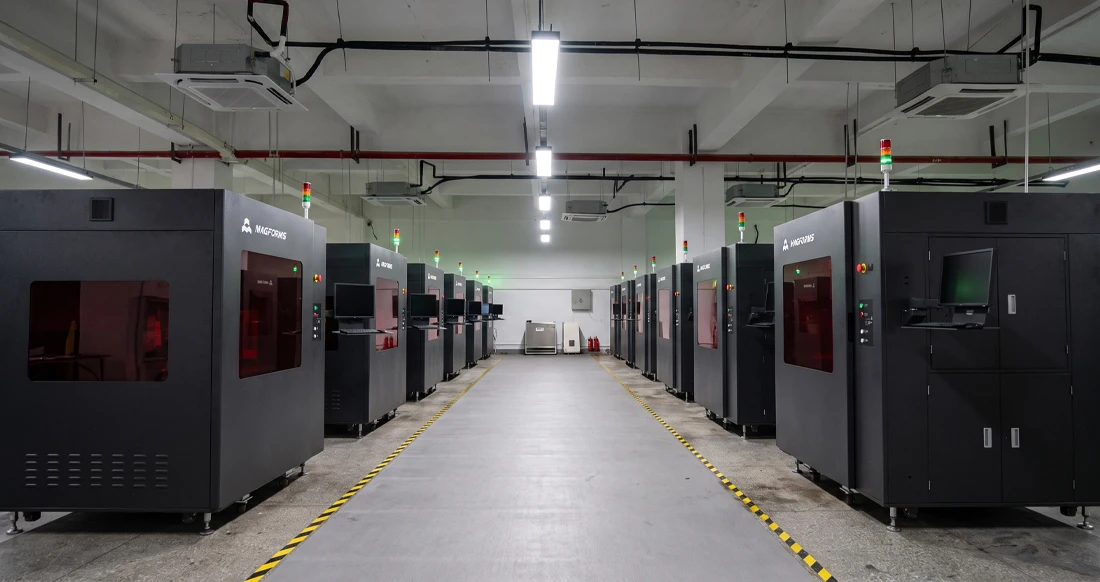
Magforms makes design and manufacture easier.
Popular Blogs
-
 Industry InsightsManufacturing Industry
FDM vs. SLA Printer: Which Technology Is Right for Your Project?
-
 Industry InsightsManufacturing Industry
Top 5 Applications of Industrial 3D Printers in Manufacturing Today
-
 Industry InsightsManufacturing Industry
Why Stereolithography 3D Printers Are Unmatched for Microfluidic Device Prototyping?