Desktop Stereolithography 3D Printer for Precision Prototyping
Desktop Stereolithography 3D printers change the way precision testing is done by making systems that are small and easy to use, which can achieve high accuracy. These high-tech tools use light-curing photopolymer technology to make samples with a very fine surface finish and exact measurements. A Desktop Stereolithography 3D printer is different from traditional ways of making things because it can make complicated shapes quickly. This makes it essential for industries like automotive, aircraft, medicine, and consumer electronics that need cost-effective ways to prototype ideas.
Understanding Desktop Stereolithography 3D Printers for Precision Prototyping

Desktop Stereolithography 3D printers, based on masked SLA (mSLA) or LCD technology, bring professional-level additive manufacturing into smaller, office-friendly formats. These systems use precise ultraviolet LEDs and high-resolution LCD screens to selectively cure liquid photopolymer resin in layers, turning it into solid, isotropic parts with good dimensional accuracy.
How SLA Technology Works and Core Principles
A build base is submerged in liquid resin to start the photopolymerization process. An array of UV LEDs projects images through an LCD mask, curing each layer simultaneously. This process creates strong chemical bonds within each layer, giving parts isotropic mechanical properties. Unlike extrusion-based systems, the parts maintain uniform strength regardless of orientation.
The XY resolution of modern desktop mSLA systems is typically between 35 and 90 microns, while the Z-axis layer height can be adjusted between 25 and 100 microns. With a high-resolution LCD and 405nm UV light, these systems can reproduce fine details, micro-channels, and sharp corners necessary for functional prototypes.

Key Advantages Over Alternative Technologies
FDM, DLP, and SLS systems all have drawbacks that desktop mSLA technology addresses. FDM printers struggle with surface smoothness and dimensional precision. mSLA/LCD printers minimize layer lines and produce surfaces comparable to injection molding. Isotropic strength ensures consistent mechanical behavior under stress, unlike FDM parts, which are weaker along layer boundaries.
Desktop mSLA printers do not require high-temperature chambers or powder handling like SLS systems, making them suitable for office environments. Compared to DLP systems, mSLA/LCD printers offer high XY resolution over the entire build area and consistent curing across layers.
Material Versatility and Applications
Engineering resins that mimic ABS and polypropylene, safe dental and medical resins that meet Class I/IIa standards, and castable resins for jewelry and investment casting are all compatible with desktop mSLA/LCD systems. This makes them suitable for a wide range of tasks, from rapid prototyping to producing functional parts in multiple industries.

Comparing Desktop Stereolithography 3D Printers: Making the Right Choice for Your Business
Choosing the best desktop mSLA system requires evaluating technical specifications, business requirements, and total cost of ownership. Systems on the market cater to different users, from small design offices to larger prototyping operations.
Technical Specifications and Performance Metrics
Modern desktop mSLA/LCD systems in 2026 offer high-resolution LCD panels, stable UV LED arrays, and reliable resin vats. Print accuracy is typically within 0.1 mm of standard build dimensions. High-end units provide tighter tolerances for precision applications.
Build volume is an important factor. Desktop mSLA/LCD printers usually range from 120x68x150 mm for compact units up to 302x161x380 mm for larger models. The right choice depends on the typical part size and batch quantity.
Scalability and Application Fit Analysis
Desktop mSLA technology works well for both single prototypes and small batch production. Rapid design iteration supports engineering teams and service providers handling multiple projects. The technology excels when reproducing fine details, smooth surfaces, and accurate dimensions.
Precision is critical for automotive components, aircraft connectors, dental appliances, and consumer electronics prototypes. Jewelry designers rely on castable resins for master patterns and molds.
ROI Considerations and Investment Planning
Total cost of ownership includes equipment purchase, maintenance, replacement parts, and operator training. For companies producing prototypes regularly, desktop mSLA systems often pay for themselves within 12–18 months, especially versus outsourcing production.
Material costs vary by resin type and supplier. Open-platform systems that allow flexible resin choices are generally more cost-effective than closed, proprietary platforms, helping reduce operating costs while maintaining print quality.

Procurement Essentials: How to Buy and Optimize Your Investment in Desktop Stereolithography Printers
Strategic purchasing requires evaluating vendors, pricing, and long-term support. Successful projects depend on balancing current production needs with potential future scalability.
Vendor Selection and Supplier Evaluation
Reliable desktop Stereolithography 3D printer suppliers have extensive knowledge, offer comprehensive support, and demonstrate success across multiple markets. Evaluation criteria include product reliability, customer satisfaction, and distribution reach. International vendors with broad networks ensure access to parts and technical support.
Essential Accessories and Consumables
A complete setup requires more than the base printer. Washing stations, UV curing units, and precision measuring tools are important for high-quality output. High-quality consumables like resins, replacement vats, and maintenance kits directly impact performance. Compatibility with various resin types helps reduce costs and improve flexibility.
After-Sales Support and Service Considerations
Expert support includes installation, training, and maintenance guidance. Leading vendors provide 24/7 online assistance and on-site service when needed. Hardware and software warranties, along with regular updates, help maintain long-term system reliability.
Optimizing the Performance and Maintenance of Your Desktop Stereolithography Printer
Consistent high-quality output requires routine maintenance, careful calibration, and proactive repairs. Well-maintained systems last longer, perform more reliably, and reduce downtime.
Calibration Procedures and Quality Assurance
Regular calibration of the Z-axis, UV intensity, and build platform ensures uniform layer thickness and dimensional accuracy. Using standard test geometries and ASTM-compliant test coupons helps verify mechanical properties and reproducibility. Logging calibration and test results helps plan maintenance and track performance trends.
Maintenance Routines and Component Care
Resin vat inspection and cleaning are critical for consistent performance. LCD panels, optical paths, and protective covers should be checked and cleaned regularly. Environmental controls such as stable temperature and dust filtration extend component life and maintain print quality.
Software Optimization and Workflow Enhancement
Advanced slicing software allows optimization of supports, layer exposure, and build orientation. CAD integration speeds the workflow from concept to print. Documenting best print settings for specific materials or applications builds institutional knowledge and reduces setup time.
Future Trends and Innovations in Desktop Stereolithography 3D Printing
Desktop mSLA technology continues to improve speed, resolution, and material compatibility, expanding accessibility and functionality.
Emerging Technologies and Performance Enhancements
Higher-resolution LCD panels, improved UV LED arrays, and faster image processing increase print speed and accuracy. Mechanical improvements like reinforced linear guides and stepper/servo systems enhance stability and reliability. These changes improve quality and reduce maintenance needs.
Industry 4.0 Integration and Connectivity
IoT connectivity allows remote monitoring, predictive maintenance, and fleet management. Cloud-based management tools and AI-assisted quality control streamline operations and reduce human error. Smart materials with embedded sensors provide real-time feedback during printing.
Sustainability and Environmental Considerations
Eco-friendly resins, energy-efficient LEDs, and optimized curing processes reduce environmental impact. Recycling programs for failed prints and leftover resin support circular economy initiatives, aligning with stricter environmental regulations.
Conclusion
Desktop Stereolithography 3D printers have transformed precision prototyping by making high-accuracy printing accessible, affordable, and office-friendly. These systems allow rapid iteration, complex geometries, smooth surfaces, and reliable dimensions. Their isotropic strength and material versatility make them essential for automotive, aerospace, medical, consumer electronics, and jewelry applications. Selecting the right vendor, planning support, and maintaining equipment are key to success. As technology advances, desktop mSLA systems will continue to accelerate prototyping and reduce time-to-market.
FAQ
What distinguishes Desktop mSLA/LCD printers from traditional SLA?
Desktop mSLA systems use LCD screens to expose whole layers at once, while SLA uses a laser to trace each layer. mSLA provides fast printing with high XY resolution and consistent curing, suitable for office-friendly environments.
What post-processing requirements apply to SLA printed parts?
When the parts come out of the printer, they are still "green," which means they need to be washed in rubbing alcohol or special cleaning methods to get rid of the extra resin. Post-curing under UV light at a fixed temperature gives the best mechanical qualities and stability for polymer cross-linking. For certain material properties and physical stability, it is important to do the post-processing right.
How should organizations handle safety considerations with photopolymer resins?
Liquid photopolymers can irritate the skin and harm the environment, so they need to be handled safely. Nitrile gloves, safety glasses, and good air systems with VOC filters are all required safety gear. Unlike FDM filaments, managing liquid glue needs strict safety rules and the right way to get rid of waste.
What factors determine resin tank lifespan and replacement scheduling?
Laser exposure and mechanical stress from part separation wear down the optical window material (PDMS or FEP) over time. Most treated resin lasts between 1 and 3 liters before clouding starts to affect the quality of the picture. By checking for optical clarity and physical damage on a regular basis, strategic replacement timing can keep results consistent.
Can Desktop Stereolithography 3D printers produce functional mechanical components?
Standard resins tend to be brittle, but special industrial versions make them tougher and more flexible. "Tough" and "Durable" plastic types have lower modulus and higher elongation, making them perfect for snap-fit systems and uses that load and unload repeatedly. The choice of material has a direct effect on how well it works.
Transform Your Prototyping Capabilities with Magforms Desktop Stereolithography Solutions
Magforms offers state-of-the-art Desktop Stereolithography 3D printer technology made just for high-quality development. Our systems use German Scanlab galvanometers, advanced variable spot-size laser technology, and our own deep learning algorithms to print 30–50% faster while still being accurate to the micron level. As one of the top companies making desktop Stereolithography 3D printers, we offer full solutions that include optimized materials, thorough training, and technical help 24 hours a day, seven days a week, with promised response times of less than an hour. Get in touch with our knowledgeable staff at info@magforms.com to find out how our tried-and-true technology helps more than 300 businesses around the world. Feel the difference in your modeling process when you optimize both the materials and the tools you use together.
References
1. Gibson, Ian, David Rosen, and Brent Stucker. "Additive Manufacturing Technologies: 3D Printing, Rapid Prototyping, and Direct Digital Manufacturing." Springer Science & Business Media, 2021.
2. Melchels, Ferry P.W., Jan Feijen, and Dirk W. Grijpma. "A Review on Stereolithography and its Applications in Biomedical Engineering." Biomaterials 31, no. 24 (2010): 6121-6130.
3. Jacobs, Paul F. "Fundamentals of Stereolithography." Society of Manufacturing Engineers, 2019.
4. Quan, Huan, Tao Zhang, Hua Xu, Shangqin Luo, Jun Nie, and Xiaoqun Zhu. "Photo-curing 3D Printing Technique and Its Challenges." Bioactive Materials 5, no. 1 (2020): 110-115.
5. Hull, Charles W. "Apparatus for Production of Three-Dimensional Objects by Stereolithography." US Patent Office, Patent Documentation Series, 1986.
6. Zhou, Chi, Yong Chen, Zuoguang Yang, and Babak Khoshnevis. "Digital Material Fabrication Using Mask-Image-Projection-Based Stereolithography." Rapid Prototyping Journal 19, no. 3 (2013): 153-165.

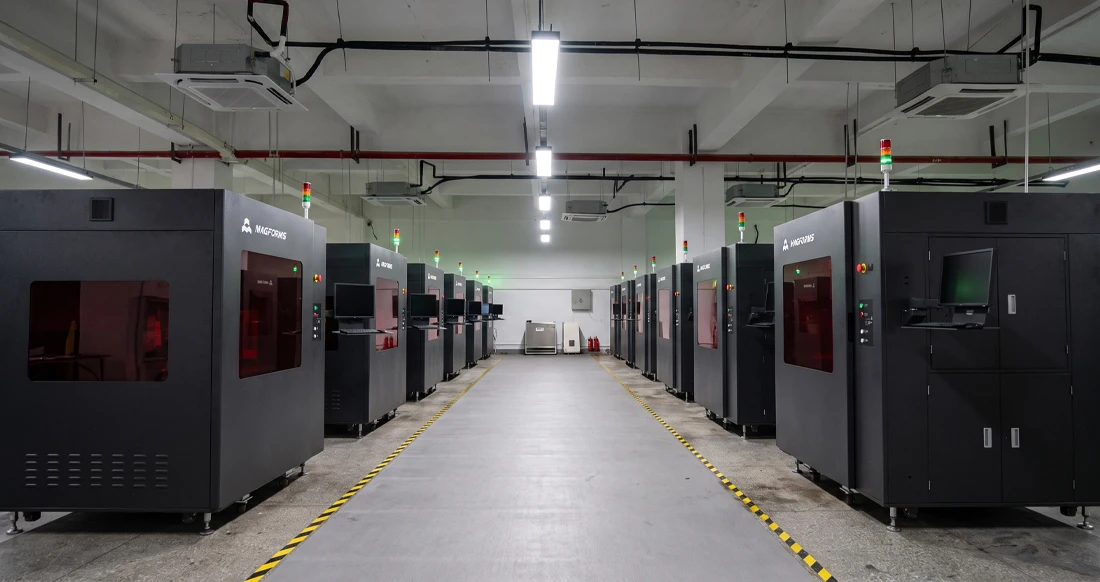
Magforms makes design and manufacture easier.
Popular Blogs
-
 Industry InsightsManufacturing Industry
FDM vs. SLA Printer: Which Technology Is Right for Your Project?
-
 Industry InsightsManufacturing Industry
Top 5 Applications of Industrial 3D Printers in Manufacturing Today
-
 Industry InsightsManufacturing Industry
Why Stereolithography 3D Printers Are Unmatched for Microfluidic Device Prototyping?