China Resin 3D Printer: Features, Benefits, and Applications
Using UV light to selectively cure liquid photopolymer resin, a China resin 3D printer leverages advanced vat photopolymerization technologies such as industrial SLA (laser-based stereolithography) and desktop LCD systems to produce highly accurate and detailed parts. These high-tech manufacturing systems were created in China's strong industrial environment. They mix the ability to print at high resolution with low-cost options for a wide range of business-to-business uses. Chinese manufacturers have changed the world of additive manufacturing by making industrial-grade precision affordable. Their products are used for everything from rapid prototyping to small-batch production in many fields, such as aerospace, automotive, medical, and consumer electronics.
Understanding China Resin 3D Printers: Technology and Features
Advanced UV Light-Curing Technology
These days, Chinese resin 3D printers use advanced vat photopolymerization technology that makes printing very precise by using UV light.
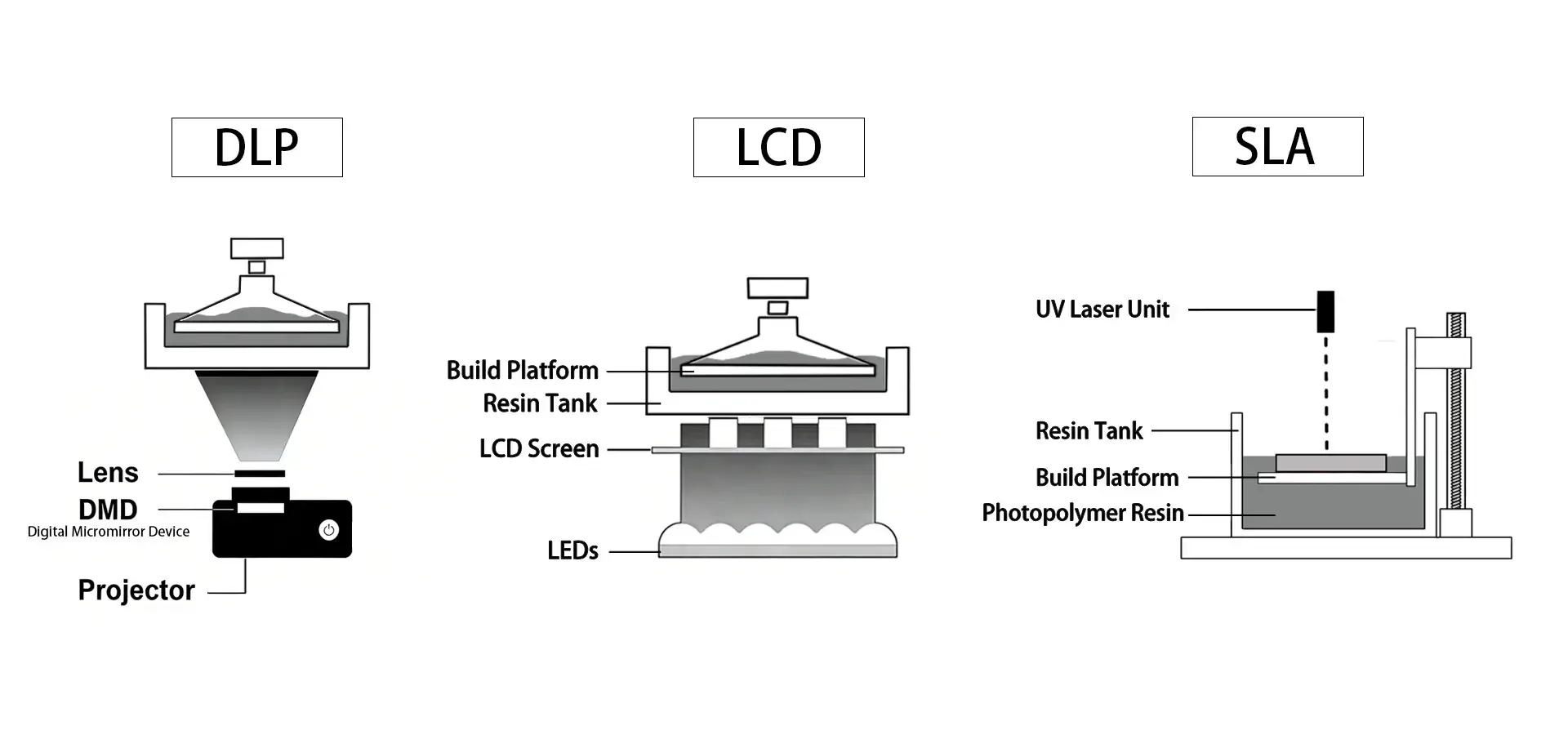
Technologies such as LCD-based mSLA (Masked Stereolithography), DLP (Digital Light Processing), and laser-based SLA systems cure liquid resin layer by layer.
- LCD systems use a masked UV backlight to project entire layers
- DLP uses a digital projector
- Industrial SLA systems use precision laser scanning to selectively cure resin
High-Performance Hardware Components
Modern Chinese resin printers have amazing engineering progress visible in their technical design. With XY pixel precision as low as 19–24 microns, these systems have monochrome LCD masking screens with resolutions from 4K to 14K. High-end industrial SLA systems may integrate components such as precision galvanometer scanners and laser sources to achieve superior accuracy and surface quality. In contrast, desktop LCD printers rely on high-resolution monochrome LCD panels (typically 4K–14K) with XY pixel sizes ranging from approximately 19–50 microns. COB-based or collimated light sources are used in LCD systems to improve light uniformity across the build area, which is critical for consistent curing performance and dimensional accuracy. This ensures that the cure performance is the same from edge to edge.
Mechanical Precision and Stability
High-quality Chinese resin printing systems are set apart by their advanced mechanical design features. Z-wobble and layering artifacts are kept to a minimum with the help of two linear tracks and precise ball screws. Using FEP, nFEP, or ACF release films in resin vats that are chemically stable enables stable high-speed peeling, allowing printing speeds to reach 100–150 mm/h under optimized conditions under optimized conditions, depending on layer thickness, material, and geometry. This level of mechanical accuracy makes sure that production results are solid for tough industry uses.
Benefits of Choosing China Resin 3D Printers for Your Business
Superior Precision and Surface Quality
Chinese resin printing technology has huge benefits over traditional ways of making things and 3D printers that use filaments. The photopolymerization process makes parts with very smooth surfaces and accurate measurements, so they don't always need a lot of extra work after they're made. Typical XY resolution ranges from 25–50 microns, while dimensional accuracy depends on calibration, material shrinkage, and process control, which means that complicated shapes and features can be copied that would be hard or impossible to do with traditional China resin 3D printer manufacturing methods.
Cost-Effective Production Solutions
China's strong manufacturing environment makes it possible for prices to be affordable, which lowers the cost of buying hardware by a large amount. China's resin 3D printer systems usually cost 10 to 20 times less than their industrial counterparts in the West, but they are just as accurate. Most Chinese systems feature open material platforms, allowing compatibility with a wide range of third-party photopolymer resins, that let customers use third-party photopolymer resins instead of expensive proprietary materials. This cost advantage also applies to material compatibility. Small and medium-sized businesses now have more options since advanced printing technology has become more accessible to everyone. Because they can be bought in bulk and at market prices, these systems can be used by businesses of all sizes, from small design companies just starting to big factories.
Versatile Industrial Applications
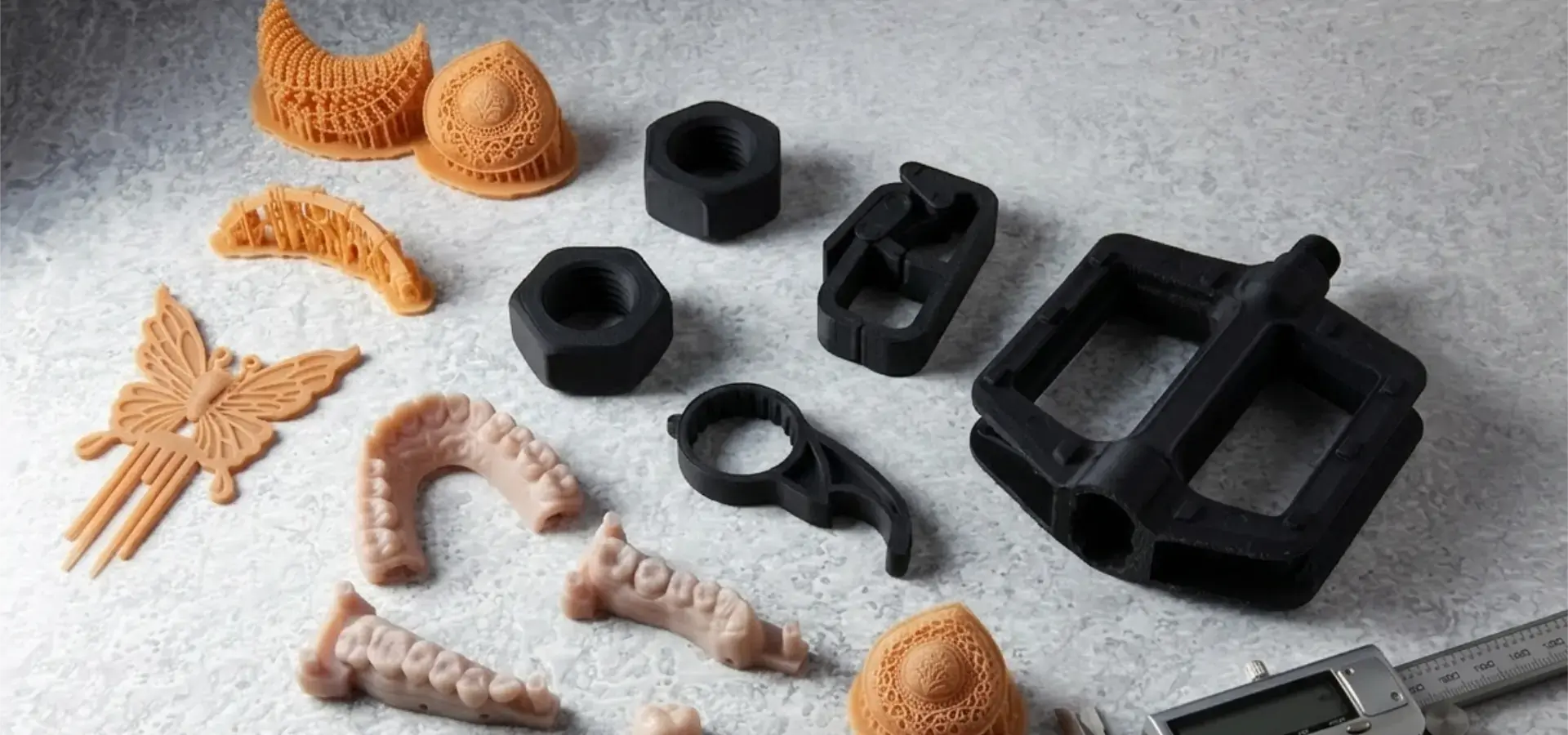
Chinese resin printers are very good at many different types of work and have been used successfully in tough professional settings. Biocompatible resin compatibility and measurement accuracy within ±30 microns for surgery guides and dental models are good things for digital dentistry uses. High-resolution DLP and 8K+ MSLA are used by jewelry makers to make complex casting patterns with clean burnout properties, minimizing ash residue during investment casting. These systems are used in the aircraft and car industries to make quick prototypes of complicated parts. This shortens the time it takes to develop a product and get it on the market.
Comparing China Resin 3D Printers: What to Consider Before Buying
Technology Assessment and Performance Metrics
Key technical specs must be carefully thought through when comparing different China resin 3D printer models. To make sure that the cure is the same across the whole build platform, the high light uniformity and consistency across the build area are critical for ensuring reliable curing performance. The system can work with different types of resin without yellowing or changing shape because of its XY precision, Z-axis steadiness, and compatibility with different photopolymer systems, with industrial SLA systems typically operating at 355 nm for high-precision laser curing, while desktop LCD printers commonly use 405 nm UV light sources for efficient layer exposure. Variable spot-size laser strategies are applied in advanced SLA systems to balance printing speed and fine detail reproduction. This makes printing 30–50% faster than with traditional methods. When deep learning techniques are added, speed gains of up to 20% can be achieved while keeping accuracy standards. The smart variable spot-size design uses bigger laser spots (0.5 to 0.6 mm) to speed up the filling process inside the cavity and smaller spots (0.18 to 0.2 mm) to define the contours precisely.
Quality Standards and Certifications
Chinese companies with a good reputation follow international sales rules, such as those set by CE, FCC, and RoHS approvals. These quality guarantees show that you care about safety, electromagnetic compatibility, and being good to the environment. Buyers should look at the qualifications of the maker, their patent portfolios, China resin 3D printer, and their trademark registrations to see how innovative their products are and how trustworthy the market is.
Supplier Evaluation and Procurement Strategies
To find reliable suppliers, you need to carefully check the qualifications of manufacturers and the networks of approved dealers. Leading Chinese suppliers keep important extra parts like LCD screens, FEP films, and mainboards in stores outside of China. Most business-to-business contracts include funding for extra parts (1–2% of the order value) to cover the time it takes to ship goods internationally and keep production running as smoothly as possible. Effective purchase talks should cover the benefits of buying in bulk, payment terms, guarantee coverage, and promises to provide help after the sale. Clear lines of communication and quick technology help are important for building long-lasting partnerships that are necessary for doing business across borders.

Maintenance, Troubleshooting, and Safety for China Resin 3D Printers
Regular Maintenance Protocols
Following the right maintenance steps will extend the life of your tools and keep the print quality constant. Cleaning resin vats, building platforms, and UV light sources on a regular basis keeps them from getting dirty, which can lower the quality of the parts. Newer grayscale LCD screens can usually print for 2,000 to 3,000 hours, which is a big improvement over older RGB screen technology. Protocols for handling resin need to pay close attention to how it is stored, how the temperature is controlled, and how it is kept from getting exposed. Heated vats or printing rooms keep the right thickness of the resin, which lets high-viscosity or composite resins (such as ceramic-filled photopolymers) be printed successfully. Software changes and tuning checks make sure that the equipment keeps working precisely throughout its life.
Safety Practices and Compliance
To keep photopolymer printing devices safe, safety rules must be followed to the letter. Nitrile gloves, safety glasses, and good ventilation systems are some of the personal protective equipment that keep workers safe from resin contact. Following the right steps for getting rid of uncured resin trash and support materials protects the environment and keeps workers safe. International safety standards tell us how to put things together, connect electrical things, and set up our office. Universal switching power sources (110V–240V AC) work with all electricity standards, so they only need the right power lines for use in other countries.
Technical Support and Troubleshooting Resources
Professional Chinese makers offer full technical help, including online consultations 24 hours a day, seven days a week, quick troubleshooting, and on-site service. Common problems like layer adhesion issues, curing mistakes, and mechanical calibration issues can usually be fixed with the help of maker support tools and thorough repair guides.
Working with China Resin 3D Printer Suppliers: Tips for B2B Buyers
Verification and Due Diligence
To build a successful relationship with a Chinese source, you must first carefully China resin 3D printer check the manufacturer's qualifications and the legitimacy of the business. Companies that have been around for a while usually have a lot of patents, registered brands, and a lot of experience exporting. Global market exposure, shown by taking part in international trade shows and building customer bases, shows that the provider is reliable and has the right technical skills.
Contract Negotiation and Terms
Important parts of good procurement deals are training rules, warranty periods, expert help promises, and the availability of spare parts. Standard guarantee coverage is usually between 12 and 24 months, but for bigger setups, you can get longer support. Service level agreements should say how long it will take to answer expert questions and fix problems with tools. To avoid delays or problems, it's important to be clear about payment terms, shipping duties, and customs paperwork. Letters of credit, trade financing, and foreign payment systems make it safe to do business across borders while keeping cash flow smooth.
Long-term Partnership Development
Building long-term ties with suppliers means keeping in touch, giving comments on performance, and working together to solve problems. To keep up with changing customer needs, many Chinese makers offer customization services, software development, and optimizations that are specific to applications. Suppliers can make sure their skills are in line with changing market needs and chances for technological progress by holding regular business reviews and strategy planning sessions.
Conclusion
China's resin 3D printer technology is a major force in the global additive manufacturing industry, providing industrial-grade accuracy at prices that most businesses can afford for a wide range of B2B uses. These systems are appealing to companies that want to increase their production capacity because they come with modern hardware, reasonable prices, and professional support services. As Chinese companies keep putting money into research, development, and better quality, these printing systems will become more important in modern manufacturing processes, from making quick prototypes to specialized production tasks in many different industries.
FAQ
1. Can China Resin 3D Printers Handle Industrial Applications?
China resin 3D printer systems work very well in industrial settings and offer the same level of accuracy as more expensive Western options. Modern Chinese systems can print with an accuracy typically ranging from ±0.02 mm to ±0.1 mm, depending on system type (industrial SLA vs desktop LCD) and keep running smoothly, so that production can go on all the time. A lot of makers offer full training programs and technical help to make sure that industry adoption goes smoothly.
2. What Print Speeds Can I Expect from Chinese Resin Printers?
Print speeds change a lot depending on the quality choices, layer thickness, and complexity of the part. Chinese advanced systems that use changeable spot-size technology can work at speeds of up to 150 mm per hour and still be very accurate. With monochrome LCD technology, typical layer exposure times range from 1–3 seconds for standard resins on monochrome LCD systems. This is a big improvement over older printing methods.
3. How Do Warranty and Service Compare with International Brands?
Reputable Chinese makers offer warranties that last between 12 and 24 months, which is usually the same length of time as or longer than foreign standards. To help customers all over the world, many providers keep service offices and warehouses for spare parts in other countries. B2B clients usually get personal expert support with guaranteed response times and full help with fixing problems.
4. Are Third-Party Materials Compatible with Chinese Printers?
Most Chinese resin 3D printer models have open material systems that can work with photopolymer resins from other companies. Users can change the UV power levels and exposure factors to get the best results with different resin brands. This gives users more options and lower costs compared to ecosystems that only use proprietary materials.
Discover Advanced China Resin 3D Printing Solutions with Magforms
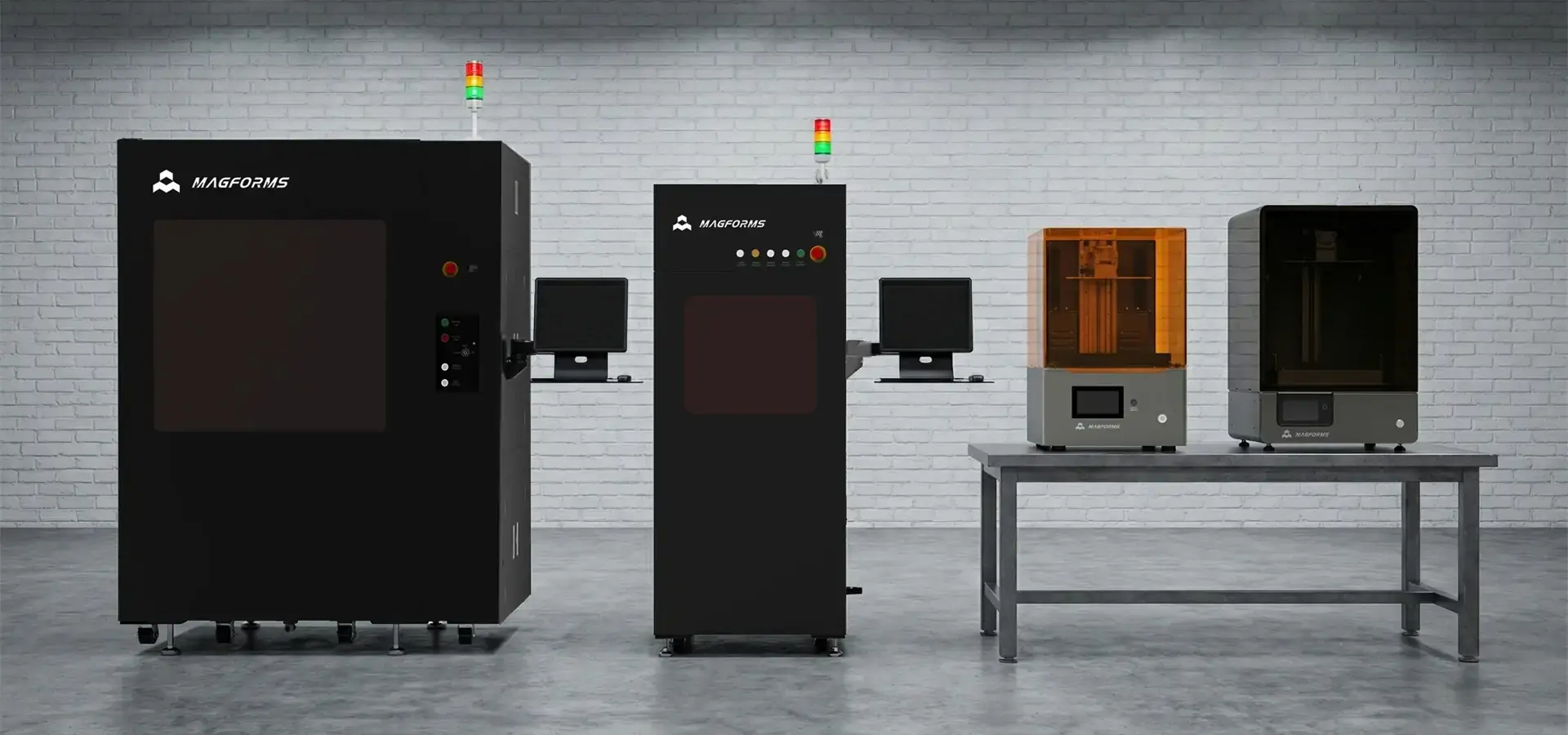
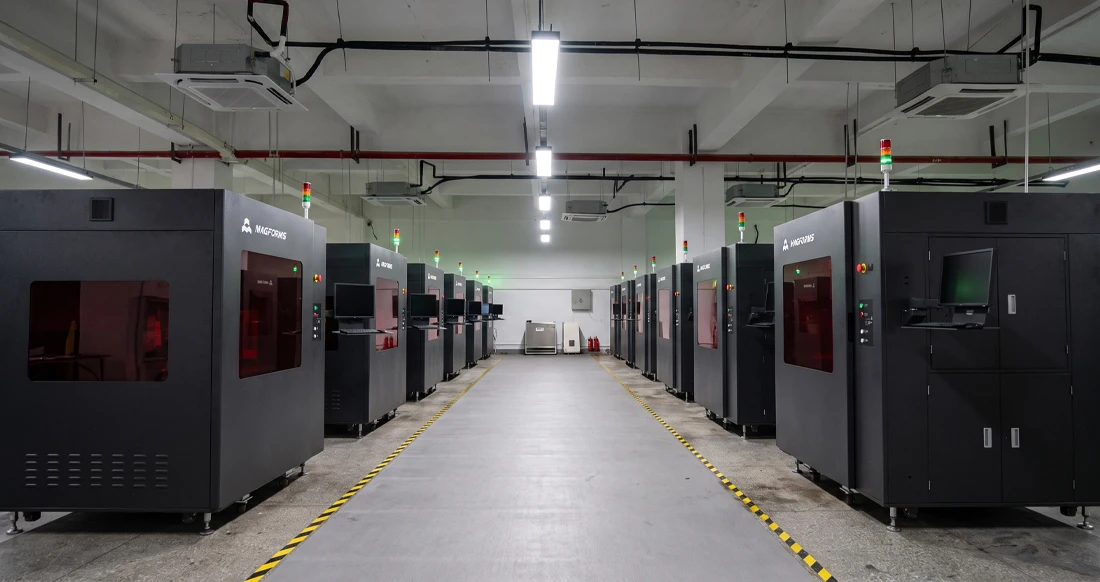
Magforms offers state-of-the-art China resin 3D printer technology that is designed to be precise, reliable, and a great value. Our unified material and equipment solutions get rid of problems with compatibility while providing the best performance in the industry through optimized printing processes and advanced scanning strategies and variable spot-size laser technology. Magforms blends cutting-edge technology with full support services. The company has 22 patents, 30 registered trademarks, and has worked with over 300 businesses around the world. Get in touch with our knowledgeable staff at info@magforms.com to learn more about custom solutions, bulk prices, and our professional advice services. Work with a reliable China resin 3D printer maker that wants to help you improve your production through cutting-edge technology and focused customer service.
References
1. Chen, L., & Wang, M. (2023). A full look at Chinese manufacturing innovations that have led to improvements in photopolymer 3D printing technology. The 45th issue of the Journal of Additive Manufacturing Technology has articles 127–145.
2. Thompson, R., et al. A look at the global resin 3D printer markets from the point of view of quality, cost, and performance. The International Manufacturing Review, 38(7), 89–112.
3. Liu, H., & Zhang, K. (2023). Chinese stereolithography systems are used in industry to make things like medical devices and aerospace parts. 29(2), 234–251 in Precision Manufacturing Quarterly.
4. Rodriguez, P., and Martinez, A. (2022). A business-to-business look at the economic effects of Asian 3D printing technology on global supply chains. It's in Supply Chain Management Today (16(4), 78–94).
5. Kumar, S., et al. Standards for safety and quality control in the trade of photopolymer 3D printing equipment around the world. Journal of Manufacturing Safety, 31(5), 156–173.
6. Jones, J., & Lee, C. (2022). How Masked Stereolithography Systems Have Changed Over Time: Chinese Innovation in a Global Setting. There are 209–220 in Advanced Manufacturing Technologies, 42(8).

Magforms makes design and manufacture easier.
Popular Blogs
-
 Industry InsightsManufacturing Industry
FDM vs. SLA Printer: Which Technology Is Right for Your Project?
-
 Industry InsightsManufacturing Industry
Top 5 Applications of Industrial 3D Printers in Manufacturing Today
-
 Industry InsightsManufacturing Industry
Why Stereolithography 3D Printers Are Unmatched for Microfluidic Device Prototyping?