P13 Pro Resin 3D Printer User Experience: Smart Features for Easy Operation
The P13 Pro is a big step forward in resin 3D printer technology. It combines smart automation with professional-level accuracy to solve important problems that production companies are having. This high-tech LCD resin 3D printer has smart operating features that get rid of common barriers to adoption, like hard-to-understand setup steps, uneven output quality, and long learning curves that put a lot of stress on technical teams. The device changes how businesses use additive manufacturing with its strong 380 mm printing height and easy-to-use interface. The smart heating system, automated leveling routines, and one-touch material profile switching let workers focus on making things instead of managing the machines. Through careful engineering, this system provides consistent measurement accuracy within ±0.05 mm for 100 mm models while keeping operations simple so that teams of all skill levels can get professional results right away.

Understanding the Intelligent Architecture Behind Operational Excellence
Modern industry needs tools that can work in a variety of settings without losing their ability to do their job consistently. The idea behind this printer's engineering is to make the user experience as smooth as possible by integrating smart systems that work well together.
Built-In Climate Control for Material Versatility
The dual heating system with two sets of heating ports keeps the temperature even throughout the build room, so it doesn't depend on the surroundings like some other systems do. This smart heat management makes this resin 3D printer capable of working with industrial resins, flexible materials, and high-temperature mixtures without having to do anything by hand. No longer do operators have to waste time preheating materials with outside tools or making changes to account for changes in seasonal temperatures. The system checks the surroundings and makes adjustments automatically to make sure that the drying process is the same whether it's done in a climate-controlled facility or a workshop where the temperature changes.
Precision Through Advanced Motion Control
Industrial P-grade dual linear guide rails allow for parallel motion accuracy of up to 7 μm, which makes building very stable as layers are added on top of each other. This mechanical accuracy, along with an industrial-grade high-precision lead screw, makes sure that the Z-axis moves smoothly even for tall builds. The 58 kg full-metal chassis absorbs shocks that usually lead to surface flaws. This reduces the ripple effects that damage the accuracy of measurements. Because of these technical decisions, there are fewer failed prints, less wasted materials, and more stable production schedules that factory managers can plan their plans around.
Intelligent Light Source Management
The 91 imported LED array provides great light consistency, P13 Pro, across the entire build platform. This solves a common issue in many resin 3D printers, where uneven curing leads to weak spots in finished parts. With 10 μm resolution and grayscale control of XY pixels, advanced image processing technology gets rid of obvious pixel lines that need extra finishing steps. The better cooling system makes the light sources last longer while keeping the same output intensity. This cuts down on long-term costs and unexpected repairs that slow down production.

Real-World Operational Advantages That Transform Production Workflows
The careful addition of features that focus on the customer solves the everyday problems that slow down production cycles and require more workers in regular 3D printing businesses.
Streamlined Setup and Material Management
Traditional methods require workers to do a lot of work that takes a lot of time. These errors are taken care of by this solution's smart design choices: The resin vat has useful features like an ergonomic handle, a pouring spout built in, clear amount marks, and four-point fixing pins that make sure it is installed correctly. The large volume lets you print for longer periods of time without having to stop and refill, which is important for overnight production runs or group production. The one-button cleaning feature makes maintenance procedures easier and cuts down on the time needed between material changes. With just one touch, you can import material profiles that have already been set up. The exposure times, lift speeds, and layer thickness factors are instantly changed to work best with certain resin formulas. This takes away the need for guessing and lowers the level of technical knowledge needed by workers to switch between types of materials.
Intuitive Interface Design That Accelerates Training
The 5-inch color touchscreen makes it easy to see information, so workers can check on the progress of a print job, change settings, and react to system alerts without having to look at technical manuals. Experienced users can fine-tune settings for specific tasks by adjusting parameters directly, while fixed modes provide safe starting points for common production tasks. When you enter the build room, the concealed lighting turns on immediately, making it easier to see while removing parts and inspecting them without the need for extra lighting.
Effortless Physical Interaction
Accessibility is thought about in every part of the physical form. The vertical push-pull door mechanism works easily and with little force, which is very different from split-cover designs that need separate pieces to be lifted, carried, and stored. This seemingly small detail has a big effect on how efficiently machines are run in busy production areas where workers are responsible for many machines at once. The automatic leveling system with four-point build plate mounting makes setting easier, so new users can get the calibration right without having to go through a lot of training.
Production Capacity That Meets Diverse Industry Requirements
Understanding how production works in the real world helped create the system's unique set of capabilities that set it apart from others being evaluated.
Exceptional Build Volume Optimization
The 302 × 162 × 380 mm build envelope makes the best use of vertical room, P13 Pro, which lets 12 shoe lasts (98 × 36 × 268 mm each) be made at the same time in a single process. This batch capacity significantly improves the economics of using a resin 3D printer for prototyping and small-batch footwear production. The 380 mm height range fits all normal shoe sizes, so you don't have to print bigger models in more than one session. This focus on the vertical direction leads to higher throughput than machines with similar sizes but limited height.

Speed Without Compromise
At 0.2 mm layer thickness, a 300 mm tall model can be finished in about 3 hours and 15 minutes. This is a production rate that meets the needs of both fast prototyping deadlines and quick-turn manufacturing responsibilities. This performance comes from the improved light source output, the material healing properties that work well, and the smart motion control that cuts down on movement that isn't needed. Manufacturers can make changes to designs in just one workday instead of waiting for long development rounds. This cuts down on the time it takes for new goods to reach the market.
Dimensional Accuracy for Functional Applications
For 100 mm models, the method keeps dimensional errors within ±0.05 mm, which meets the requirements for mechanical parts, tooth appliances, and precision tooling. This accuracy comes from the way that industrial-grade parts work together: the collimated light source makes sure that the curing boundaries are exact, the rigid base stops positional drift, and the machine's optimal compatibility with the resin stops shrinkage differences. Parts come out ready to be functionally tested or finished off without having to go through the time-consuming and expensive process of correcting their dimensions.
Building Confidence Through Environmental and Maintenance Considerations
Long-term operational success rests on equipment that fits in well with current production settings and doesn't need a lot of ongoing support.
Workplace Environment Management
As part of its job, the built-in air filtering system actively removes resin vapors from the build room, keeping the workplace healthy and comfy. When working in an open workshop with a lot of people close to the printing equipment, this function is especially useful. Because the exhaust is screened, there is no need for separate equipment rooms or specialized ventilation systems, which makes planning the building more difficult.
Serviceability and Longevity
The steps for replacing parts are based on what is actually needed for the P13 Pro repair. To change the imaging screen, all that needs to be done is to remove the securing tape. This is something that workers can do without needing to have specialized technical training or a lot of downtime. This makes it easier to do regular upkeep without having to call a service technician, which lowers the total cost of ownership. The strong construction and industrial-grade parts mean that maintenance intervals are longer than on equipment with consumer-grade parts. This means that running costs are more reliable and production stops happen less often.

Material Compatibility That Expands Application Possibilities
Limiting tools to private materials makes operations less flexible and raises the cost of consumables. This open-materials mindset solves a major problem with buying. The system comes with better process settings for resins that work well together, so you can be sure of good results with tried-and-true formulas. The stable temperature and precise curing control can work with a wide range of materials, from common modeling plastics to engineering-grade mixtures that need to have specific mechanical qualities. Because it is so flexible, a single machine can be used for many tasks at different points of product creation, which increases the rate at which capital equipment is utilized. Purchasing managers can negotiate better with resin providers and check out different materials as production numbers grow or as application needs change.
Conclusion
The carefully integrated smart features of this LCD resin 3D printer go beyond technical specifications to improve the entire operational experience. Every design choice was made to make professional additive manufacturing easy for a wide range of team members. This includes features like automatic leveling and one-touch material profiles that speed up the hiring process and a strong mechanical architecture that ensures consistent output quality. Large build volumes, fast production speeds, and accuracy down to the micron level make up a skill profile that can be used in footwear, medical devices, consumer electronics, and precise tooling, among other things. Businesses looking at buying production equipment will find this mix of ease of use and professional performance very appealing, especially when they compare it to the total cost of ownership and the need for production efficiency that are key to making successful investments in manufacturing technology.
FAQ
1. What makes the P13 Pro suitable for high-volume production environments?
The system has a strong build height of 380 mm and fast production speeds, so a 300 mm model can be finished in just over three hours. The 2 kg resin vat allows for longer print sessions without having to be refilled, and the industrial-grade parts make sure that the printer works perfectly even when it's running all the time. The automatic features require less work from the operator, which makes it easier to handle several machines at once.
2. How does the device handle different resin types?
With just one click, you can import material profiles that have already been set up. All exposure and motion settings are instantly changed to get the best results with certain resin formulations. The two-heating system keeps temperatures fixed so that materials with different viscosities and curing needs can be used. This gets rid of the need to try things out and see what works and what doesn't when moving between material types. This feature lets a single machine handle a wide range of tasks without needing separate tools for each type of material.
3. What training is required for new operators?
The easy-to-use touchscreen interface and automatic setting steps mean that training is not needed as much. The automatic leveling system, one-button cleaning function, and pre-set material profiles make it easy for users to quickly get professional results. The ergonomic design, which includes easy-to-use door controls and vat handling, lowers physical demands and lets team members with different technical skills add to production tasks effectively.
Partner With Magforms for Your Industrial 3D Printing Success
Magforms offers complete options for additive manufacturing that go far beyond just providing tools. Our unified method combines precise tools like the P13 Pro with improved resin mixtures, getting rid of interoperability problems that stop production. We offer technology relationships instead of just selling tools. Our 22 patents and 30 registered trademarks support ongoing innovation. Our technical support team brings years of experience in the field to every job. They offer on-site training, help with optimizing processes, and quick fixes that keep downtime to a minimum. Our solutions cover all aspects of your business, whether you're expanding a 3D printing service center, bringing fast prototyping in-house, or switching to additive manufacturing for production tools. Get in touch with us at info@magforms.com to talk about how our experience as a P13 Pro supplier can help you reach your industrial goals faster with equipment that is designed to be reliable and get results.
References
1. Gibson, I., Rosen, D., & Stucker, B. (2021). Additive Manufacturing Technologies: 3D Printing, Rapid Prototyping, and Direct Digital Manufacturing. Springer International Publishing.
2. Wohlers, T. (2022). Wohlers Report 2022: 3D Printing and Additive Manufacturing Global State of the Industry. Wohlers Associates.
3. Ligon, S. C., Liska, R., Stampfl, J., Gurr, M., & Mülhaupt, R. (2017). "Polymers for 3D Printing and Customized Additive Manufacturing." Chemical Reviews, 117(15), 10212-10290.
4. Quan, Z., Wu, A., Keefe, M., Qin, X., Yu, J., Suhr, J., Byun, J. H., Kim, B. S., & Chou, T. W. (2015). "Additive Manufacturing of Multi-Directional Preforms for Composites: Opportunities and Challenges." Materials Today, 18(9), 503-512.
5. Tofail, S. A., Koumoulos, E. P., Bandyopadhyay, A., Bose, S., O'Donoghue, L., & Charitidis, C. (2018). "Additive Manufacturing: Scientific and Technological Challenges, Market Uptake and Opportunities." Materials Today, 21(1), 22-37.
6. Attaran, M. (2017). "The Rise of 3-D Printing: The Advantages of Additive Manufacturing over Traditional Manufacturing." Business Horizons, 60(5), 677-688.

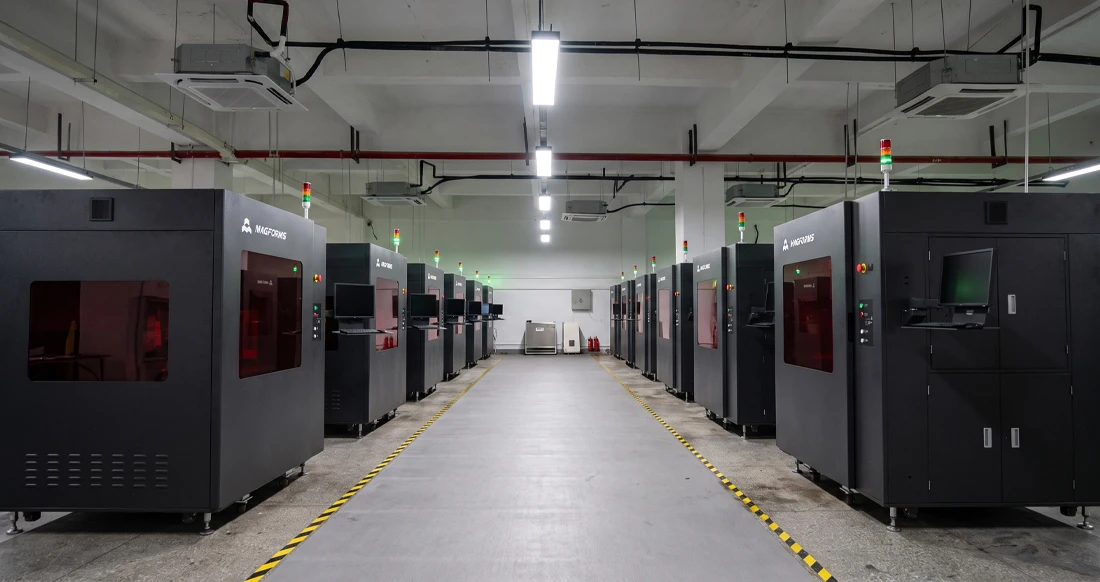
Magforms makes design and manufacture easier.
Popular Blogs
-
 Industry InsightsManufacturing Industry
FDM vs. SLA Printer: Which Technology Is Right for Your Project?
-
 Industry InsightsManufacturing Industry
Top 5 Applications of Industrial 3D Printers in Manufacturing Today
-
 Industry InsightsManufacturing Industry
Why Stereolithography 3D Printers Are Unmatched for Microfluidic Device Prototyping?