China Resin 3D Printer for Professional Product Validation
Speed and accuracy are what make the difference when it comes to skilled product approval. A cost-effective China resin 3D printer delivers high precision, rapid prototyping capabilities, and reliable performance. It can be used to make many things, such as automotive components, medical models, aerospace prototypes, and consumer electronics products. Injection-moulded parts can be made quickly with these tools, which use modern vat photopolymerization technologies. For buying teams and R&D offices all over the world, this is a big help.
Understanding China Resin 3D Printer Technology for Product Validation
Core Technologies Behind Resin Printing
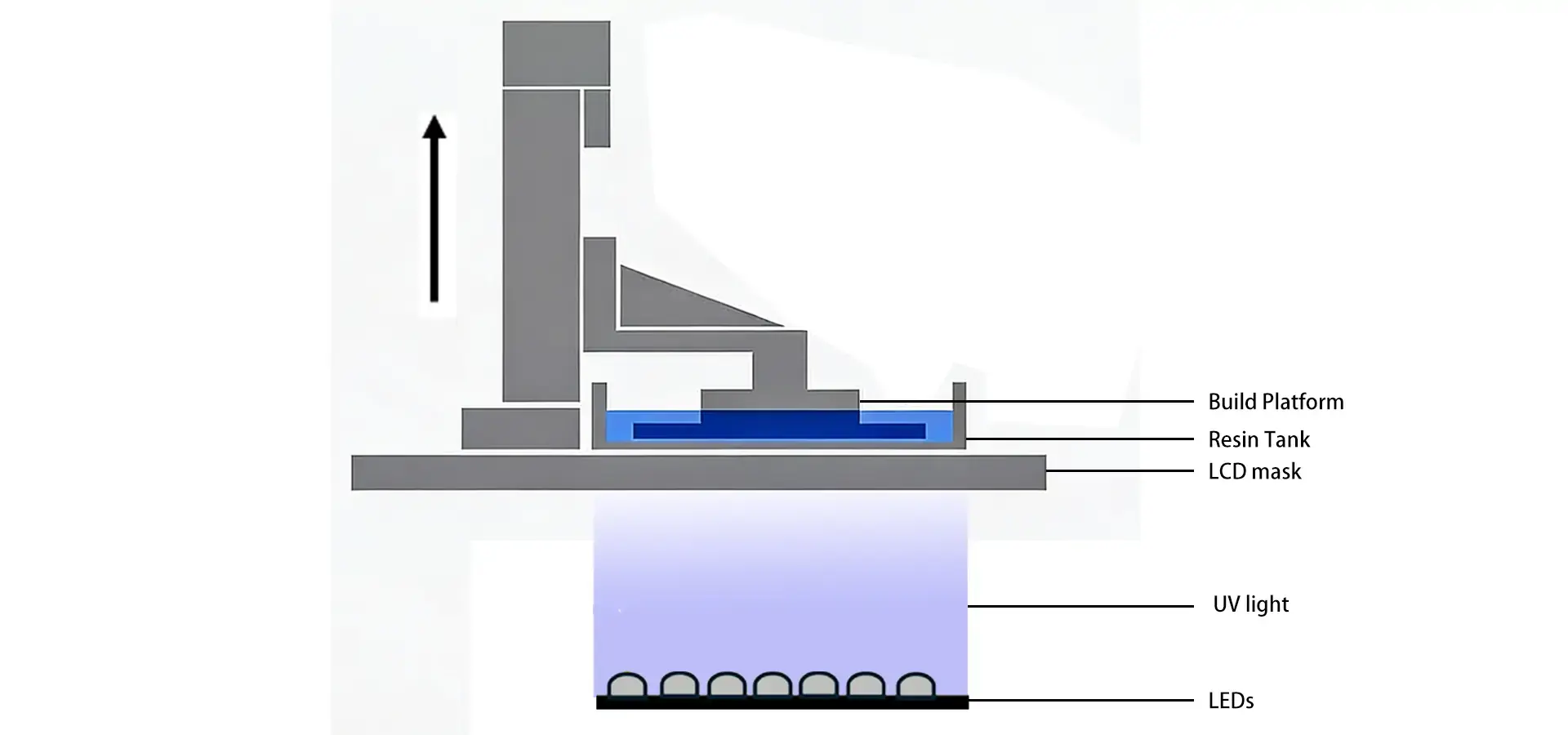
There are three major resin-based additive manufacturing technologies used today: Stereolithography (SLA), Digital Light Processing (DLP), and Masked Stereolithography (mSLA). Among them, LCD-based mSLA technology has become the dominant solution in the China resin 3D printer market due to its balance of precision, productivity, and cost efficiency. Each method uses photopolymerization, a method in which ultraviolet light changes liquid resin into solid polymer structures layer by layer by starting chemical reactions. Fused Deposition Modelling (FDM) uses heat to push thermoplastic strands out of a mould. Resin methods, on the other hand, produce better surface quality and more accurate shapes. Chinese manufacturers have significantly advanced LCD-based mSLA technology by integrating high-resolution monochrome LCD screens ranging from 8K to 14K, enabling finer pixel accuracy and improved light transmission efficiency. This enables XY pixel resolutions as fine as 19–24 microns, depending on screen size and optical configuration. Many industrial LCD systems employ COB (Chip-on-Board) UV light sources with advanced optical lenses, achieving high illumination uniformity across the entire build platform and improving dimensional consistency. This helps minimize edge-to-edge curing variation, resulting in more consistent dimensional accuracy across the entire build platform.
Key Advantages for Product Validation Workflows
LCD resin printing addresses many of the challenges encountered during professional product validation and prototyping workflows. The technology produces highly detailed parts with smooth surfaces that closely resemble injection-moulded components. Compared with FDM printing, LCD resin printing typically requires less surface finishing to achieve a smooth appearance, although washing and post-curing are still necessary. Mechanical parts with complex internal channels, snap-fit systems, and sub-millimetre features can be made straight from CAD models to real samples with very little change. Through advances in technology, print speeds have sped up by a huge amount. Modern LCD resin printers can achieve significantly higher vertical print speeds than previous generations, particularly when paired with high-speed resin formulations and optimized release mechanisms. This means that complicated structures that used to take several days to make can now be made in just one day. Research and development teams in the aircraft and car industries use this feature to quickly try different versions of designs before investing in new tools.
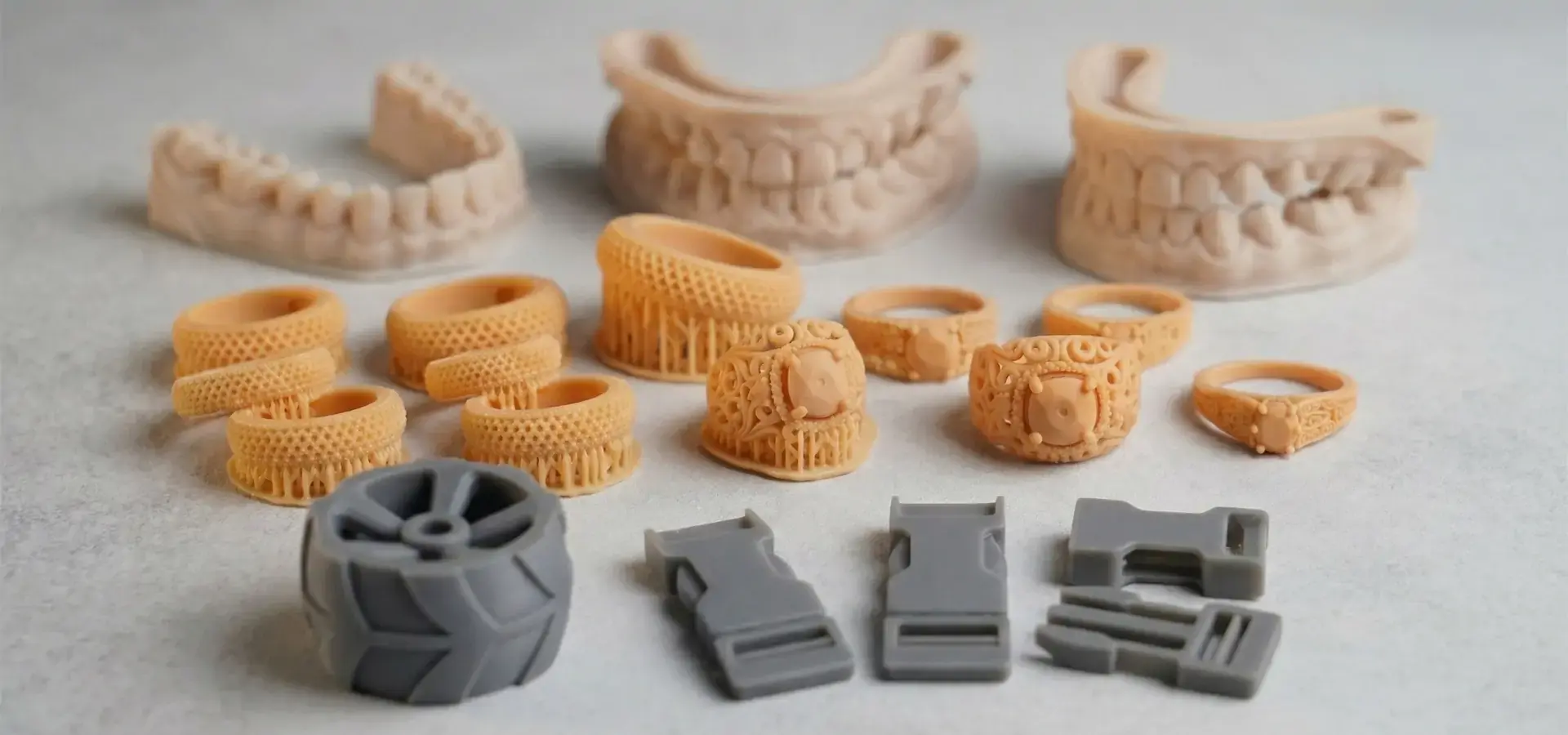
The flexibility of materials makes confirmation possible in more ways than just testing. Engineering-grade resins are formulated to simulate the mechanical characteristics of materials such as ABS, polypropylene, and glass-filled nylon, which lets you try their functionality under mechanical stress. Transparent resins enable visual inspection of optical components, fluid channels, and light-transmission features. Flexible resins can simulate silicone components, rubber seals, and soft-touch product features. Castable resins are widely used in dental and jewellery manufacturing. They burn cleanly and don't leave behind any ash.
Practical Applications Across Industries
Resin printing is used by companies that make medical devices to make surgery guides and samples of implants that are specific to each patient. Dental laboratories commonly produce aligner models, surgical guides, and crown patterns with dimensional tolerances suitable for professional clinical workflows. Consumer electronics companies make prototypes of complicated smartphone cases and wearable tech shells to make sure the ergonomics work before mass production. These examples from real life show how photopolymerization technology connects the stages of computer creation and physical tests.
How to Choose the Right Resin and Printer for Your Validation Needs
Establishing Technical Requirements
Setting approval goals for a China resin 3D printer is the first step in making procurement choices. Technical leaders have to compare the needed XY precision, Z-layer thickness, and build volume to certain part shapes. Applications requiring fine textures and intricate details often benefit from LCD systems with XY pixel resolutions around 25 microns or below. When thinking about print speed, you have to match the need for output with your budget, since faster systems cost more. Material fit is an important factor in judging something. When compared to private ecosystems, open-material systems lower the cost per kilogram by 40 to 60 per cent because they can use resins from other companies. This adaptability is very important for businesses that need specific mixtures, like safe resins for medical uses, high-temperature engineering resins for under-hood automotive validation, or optically clear materials for making prototype lenses.
Resin Selection Framework
Understanding different resin categories helps simplify material selection. Standard resins are suitable for low-cost visual models and general-purpose prototypes. Tough, ABS-like, and nylon-like resins are common engineering-grade materials that have mechanical qualities good for practical tests, such as tensile strength above 50 MPa and elongation at break above 15%. Flexible resins can copy Shore A hardness grades from 40 to 95, which allows for sealing and seal confirmation. Castable resins are useful for jewellery and dental investment casting because they don't run out easily. Lightpipe tests and seeing the flow of fluids are possible with transparent formulas. Each group covers a different confirmation situation, so sourcing teams have to match the qualities of the resin with the testing methods. Supplier technical datasheets give important measurements, like cure time, shrinking rates, and post-cure needs, that affect how work gets done and the quality of the results.
Supplier Evaluation Criteria
Long-term practical success depends on things like warranty coverage and help after the sale. Manufacturers with a good reputation offer service agreements that cover everything from replacing parts to updating software and giving expert training. Response time for fixing questions has a direct effect on the consistency of production, since printer problems that aren't fixed cause whole validation plans to be pushed back. Certification standards, like CE, FCC, and RoHS compliance, make sure that technology meets international safety and electromagnetic compatibility standards. This makes it easier to get goods from one country to another.
Comparing Top China Resin 3D Printers: Performance, Pricing, and Value
Performance Segmentation
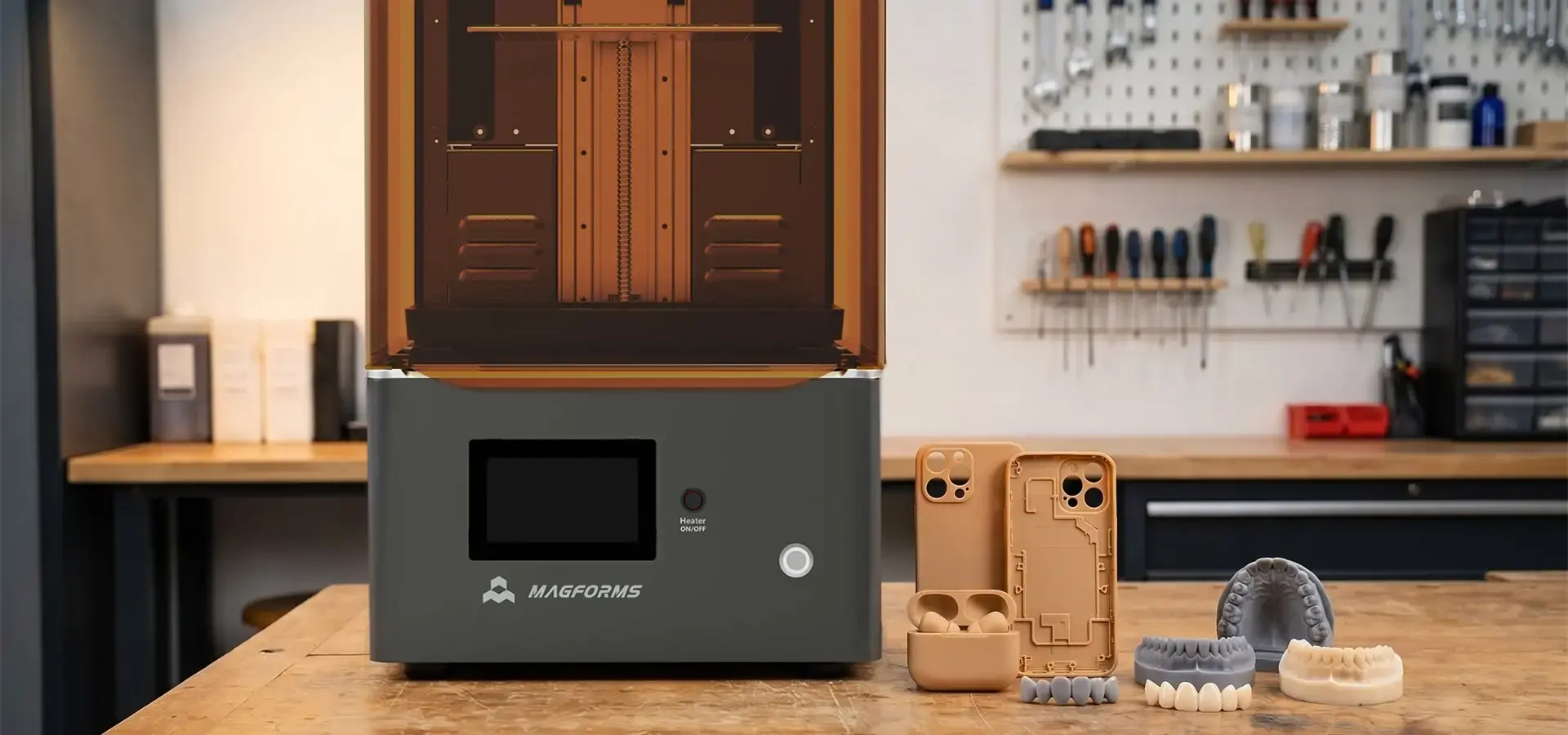
China resin 3D printer manufacturers offer systems ranging from compact desktop machines to large-format industrial platforms. Small design teams and new service providers that need moderate output can use desktop models with 8K black-and-white screens and build areas measuring 192 x 120 x 200 mm. Mid-range industrial LCD systems commonly offer 12K to 14K resolution and build volumes around 300 × 200 × 400 mm. These systems are capable of maintaining consistent dimensional performance across extended production cycles, which helps with the testing of aircraft parts and the creation of dental labs. Different levels of performance have different print speeds. For example, cheap models need 8–12 seconds per layer, while premium systems paired with high-speed resins may achieve exposure times of approximately 1–2 seconds per layer.
Build quality changes a lot from one maker to the next. Precision-machined aluminium frames keep vibration-related artefacts to a minimum, and rigid resin vats equipped with nFEP (non-fluorinated ethylene propylene) or ACF (Advanced Composite Film) release films help reduce peeling forces and extend consumable life. These technical details set solid production equipment apart from craft printers made for individuals.
Cost Analysis Beyond Purchase Price
The total costs of ownership go beyond the original costs of buying the property. Operating costs are affected by how often FEP or release film replacement intervals vary depending on resin type, print volume, operating conditions and how long LCD screens last. Rates of resin use depend on the shape of the part and the creation of the support structure. Validation projects usually use between 0.5 and 2 litres of resin per job. Linear rail greasing, optical component cleaning, and software changes need to be done by trained professionals or through service contracts regularly. There are possibilities for wholesalers and big production plants to buy in bulk. When you buy more than ten machines, you can get volume deals that lower the cost per unit by 15% to 25%. You can also discuss maintenance packages that help you plan your budget. When importing, things to think about include shipping operations, customs fees, and following local rules. Experienced providers can handle these issues with the help of well-established delivery networks.
Competitive Positioning
Resin printers made in China are cheaper and work better than similar printers made in Japan or the West. In many cases, Chinese systems offer significantly lower acquisition costs than comparable equipment from established international brands to meet the same resolution and build rate requirements. This makes high-precision additive manufacturing more accessible to everyone. Because of this difference in cost, companies can set up more than one validation machine instead of making projects wait in queue for a single high-cost unit. This speeds up the general process of product development. Key measures now show that performance is equal. Leading Chinese manufacturers have significantly narrowed the performance gap in dimensional accuracy and surface quality compared with many established international competitors. This has been proven by independent testing and feedback from users around the world. Five years ago, there was a big gap in technology. Now, that gap has shrunk, and buying decisions are more based on total value offer than on brand heritage.
Maintaining and Troubleshooting Your China Resin 3D Printer for Continuous Validation Efficiency
Routine Maintenance Protocols
Maximising equipment uptime for a China resin 3D printer requires disciplined maintenance schedules. Daily procedures include removing cured resin from vat surfaces, inspecting release film for cloudiness or punctures, and cleaning the build plate with isopropyl alcohol to ensure proper adhesion. Weekly tasks involve checking linear rail lubrication, tightening mechanical fasteners, and calibrating the Z-axis zero position using paper levelling techniques. Monthly maintenance addresses optical components. LCD screens accumulate resin residue that reduces light transmission efficiency, requiring gentle cleaning with microfiber cloths and optical-grade solvents. UV light source intensity degrades over 2,000-hour operational lifespans, necessitating output verification using light meters and eventual LED array replacement. Resin storage conditions—sealed containers away from sunlight at 15-25°C—prevent premature polymerisation and maintain material consistency.
These maintenance practices directly impact print reliability. Properly installed FEP or release films help maintain stable peeling forces and reduce print failures. Manufacturers should follow the film tension and installation procedures recommended by the equipment supplier. Calibrated Z-axis positioning eliminates first-layer adhesion problems that waste materials and delay validation schedules. Organisations implementing structured maintenance protocols report 40% fewer unplanned stoppages compared to reactive approaches.
Common Failure Modes and Solutions
Print delamination represents the most frequent operational challenge. This occurs when peel forces exceed build plate adhesion, causing parts to separate mid-print. Solutions include reducing lift speeds from 150mm/min to 80mm/min, increasing bottom layer exposure times to 40-50 seconds, and adding supplementary supports beneath large cross-sectional areas. FEP film replacement resolves delamination caused by decreased release properties. Dimensional inaccuracies stem from multiple sources. Uncalibrated exposure times produce over-cured parts with expanded dimensions or under-cured weak structures. Test matrix printing—producing calibration cubes with varying exposure parameters—identifies optimal settings for specific resin-printer combinations. Temperature fluctuations affect resin viscosity and cure depth, necessitating climate-controlled production environments for precision work maintaining ±1°C stability.
Software-related issues involve slicing parameter optimisation. Support structure placement balances part stability against post-processing effort, while hollowing strategies reduce material consumption and internal stresses. Firmware updates from manufacturers address motion control bugs and introduce performance enhancements, requiring periodic installation through USB or network connections.
Performance Optimisation Strategies
Advanced users implement several techniques to maximise output quality. Resin filtering between print jobs removes partially cured particles that cause surface defects. Ultrasonic cleaning stations automate support removal and surface cleaning, reducing manual labour and improving finish consistency. Post-curing chambers providing controlled UV exposure and elevated temperatures optimise mechanical properties, increasing tensile strength by 20-30% versus uncured baseline values. Hardware accessories extend functional capabilities. Heated build chambers maintain 35-40°C environments for engineering resins requiring elevated processing temperatures. Automatic resin dispensing systems refill vats during extended print jobs, enabling unattended overnight operation. These investments yield measurable returns through increased throughput and reduced labour requirements.
Partnering with Reliable China Resin 3D Printer Suppliers for B2B Procurement Success
Identifying Reputable Manufacturers
Supplier selection determines equipment reliability and long-term support quality. Established manufacturers demonstrate technical credibility through patent portfolios, international certifications, and participation in industry exhibitions. Companies holding ISO 9001 quality management certifications maintain consistent production standards, while those with multiple years of export history understand international shipping logistics and regulatory compliance. OEM relationships provide validation of manufacturing competence. Suppliers producing private-label equipment for recognised brands demonstrate engineering capabilities and quality control systems meeting stringent specifications. Customer references from similar industries—automotive, aerospace, medical—offer practical insights into equipment performance under comparable operational demands. Site visits to manufacturing facilities reveal production scale, testing infrastructure, and engineering resources supporting ongoing product development.
Strategic Sourcing Advantages
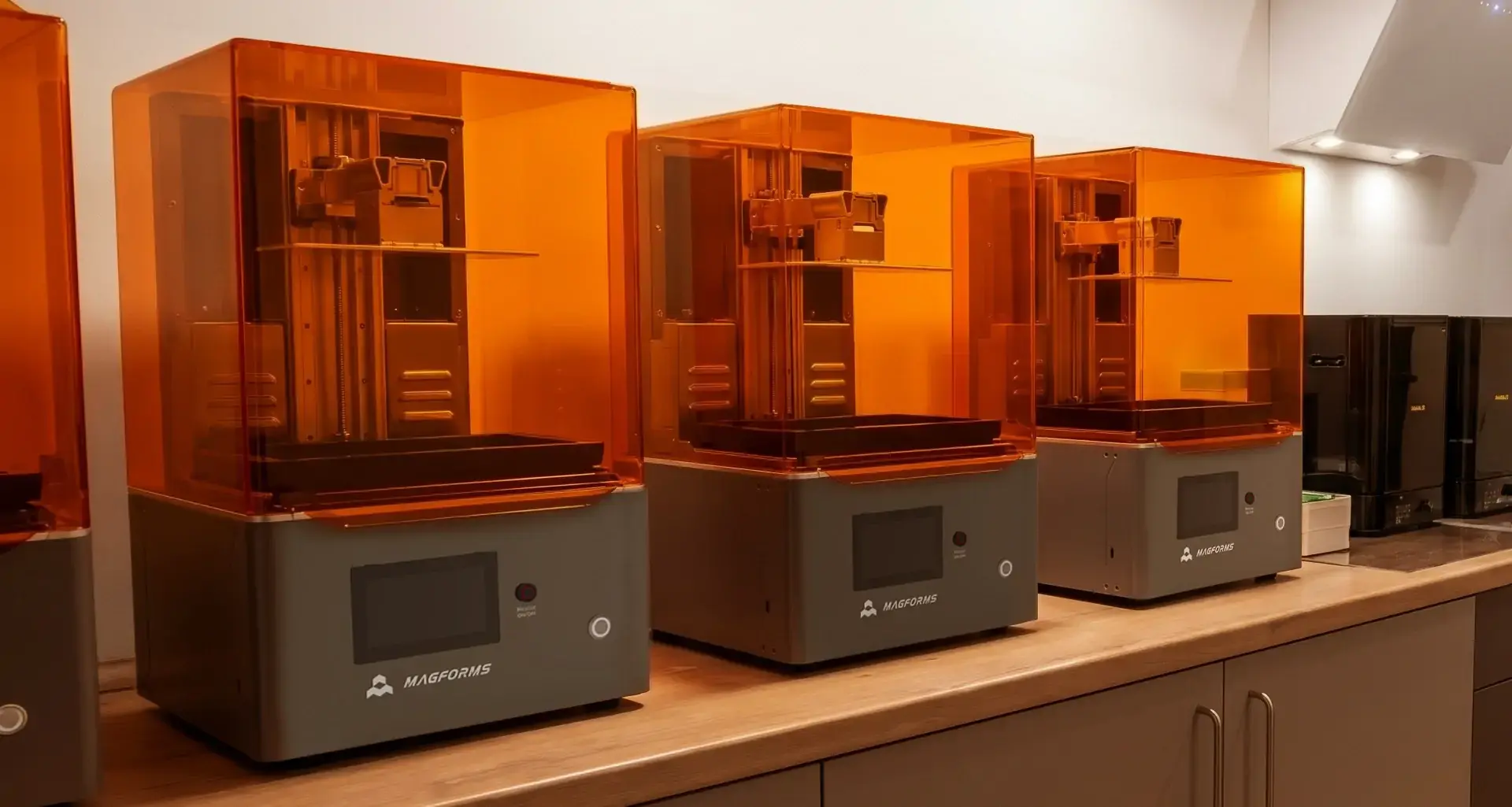
Chinese suppliers offer several compelling benefits for B2B procurement. Manufacturing concentration in Shenzhen and Dongguan provides deep supply chain integration, enabling rapid prototyping of custom configurations and short lead times for volume orders. Competitive pricing structures reflect efficient production economies and lower overhead costs, translating to better capital equipment ROI for purchasing organisations. Responsive technical support for a China resin 3D printer has improved dramatically as Chinese manufacturers expand international operations. English-speaking application engineers provide remote troubleshooting assistance across time zones, while growing distributor networks offer local service capabilities. Warranty programs typically cover one-year comprehensive parts replacement, with optional extended coverage available through negotiated service contracts.
Procurement Process Considerations
Transparent pricing models eliminate hidden costs in international transactions. Reputable suppliers provide detailed quotations specifying equipment configuration, included accessories, shipping terms (FOB/CIF), and payment structures. Bulk order negotiations yield volume discounts and favourable payment terms, such as a 30% deposit with the balance due upon delivery and installation verification. Shipping logistics require coordination of freight forwarding, customs documentation, and import duty calculation. Experienced suppliers manage these processes through established partnerships with international carriers and customs brokers. Delivery timelines typically span 4-8 weeks from order confirmation to on-site installation, factoring in manufacturing lead time, ocean freight transit, and customs clearance procedures.
Building enduring supplier relationships supports evolving validation needs. Manufacturers offering application development assistance help optimise printing parameters for new materials and component geometries. Training programs covering equipment operation, maintenance procedures, and troubleshooting protocols ensure internal teams maximise equipment utilisation. These collaborative partnerships extend beyond transactional equipment purchases to become strategic enablers of product development capabilities.
Conclusion
Professional product validation demands equipment that balances precision, speed, and economic viability. China resin 3D printers have evolved into sophisticated tools meeting stringent requirements across automotive, aerospace, medical, and electronics industries. The technology's ability to produce injection-mould-quality prototypes with overnight turnaround transforms development workflows, enabling rapid iteration and confident design decisions. Successful procurement requires careful evaluation of technical specifications, material compatibility, and supplier capabilities. The competitive advantages offered by Chinese manufacturers—exceptional price-performance ratios, extensive material options, and improving support infrastructure—make them compelling sources for organisations seeking to enhance validation capabilities. Strategic supplier partnerships deliver ongoing benefits through technical collaboration, training programs, and responsive service that sustains long-term operational efficiency.
FAQ
What makes resin printing superior to filament methods for validation?
Resin-based photopolymerization achieves surface finishes and dimensional accuracy unattainable with FDM technology. The layer-by-layer curing process can produce highly detailed geometries with excellent surface quality and dimensional accuracy. This precision proves essential when validating snap-fit assemblies, threaded connections, and optical components where sub-millimetre deviations cause functional failures. Engineering-grade resins simulate production material properties, enabling meaningful mechanical testing during development phases.
How do I manage resin handling safety in production environments?
Liquid photopolymer resins may emit odours and chemical vapours during processing, making proper ventilation an important safety consideration. Professional installations incorporate activated carbon filtration systems or external exhaust ducting to maintain air quality. Personal protective equipment—nitrile gloves and safety glasses—prevents skin contact and eye exposure during handling procedures. Material Safety Data Sheets provide specific guidance for each resin formulation, detailing first aid procedures and disposal requirements. Post-curing operations utilise enclosed UV chambers that contain emissions while optimising part mechanical properties.
What training investments are necessary for equipment operation?
Operators require a foundational understanding of slicing software, support generation strategies, and machine calibration procedures. Comprehensive training programs spanning 2-3 days cover equipment operation, routine maintenance, troubleshooting protocols, and material handling safety. Technical directors benefit from advanced sessions addressing parameter optimisation, custom material profiling, and workflow integration. Ongoing support through video tutorials, technical documentation, and responsive application engineering ensures teams maintain proficiency as they encounter diverse component geometries and validation requirements.
Unlock Your Product Validation Potential with Magforms
Magforms stands ready to support your professional validation requirements through integrated material and equipment solutions specifically engineered for multi-industry applications. Our proprietary resin formulations and precision hardware deliver the speed, accuracy, and reliability that R&D teams and procurement managers demand. With 22 patents, 30 registered trademarks, and proven performance across 300+ global enterprises, we've established ourselves as a trusted China resin 3D printer supplier. Our technical team brings years of specialised expertise in automotive prototyping, medical device development, aerospace component validation, and consumer electronics testing. We understand the critical importance of dimensional accuracy, material consistency, and operational uptime in professional environments. Magforms equipment incorporates advanced LCD exposure systems, optimized optical designs, and intelligent process control technologies, enabling high productivity while maintaining excellent dimensional accuracy.
Comprehensive support ensures your investment delivers sustained value. We provide equipment installation, operator training, preventive maintenance programs, and responsive troubleshooting assistance. Our LCD-based resin printing systems combine open-material flexibility with optimised resin-printer compatibility, delivering reliable performance across a wide range of professional validation applications. Contact info@magforms.com to discuss your specific validation requirements and discover how our solutions can accelerate your product development timelines.
References
1. Gibson, I., Rosen, D., & Stucker, B. (2021). Additive Manufacturing Technologies: 3D Printing, Rapid Prototyping, and Direct Digital Manufacturing (3rd ed.). Springer International Publishing.
2. Ligon, S.C., Liska, R., Stampfl, J., Gurr, M., & Mülhaupt, R. (2017). Polymers for 3D Printing and Customised Additive Manufacturing. Chemical Reviews, 117(15), 10212-10290.
3. Stansbury, J.W., & Idacavage, M.J. (2016). 3D Printing with Polymers: Challenges among Expanding Options and Opportunities. Dental Materials, 32(1), 54-64.
4. Quan, H., Zhang, T., Xu, H., Luo, S., Nie, J., & Zhu, X. (2020). Photo-curing 3D Printing Technique and Its Challenges. Bioactive Materials, 5(1), 110-115.
5. Revilla-León, M., & Özcan, M. (2019). Additive Manufacturing Technologies Used for Processing Polymers: Current Status and Potential Application in Prosthetic Dentistry. Journal of Prosthodontics, 28(2), 146-158.
6. Derakhshanfar, S., Mbeleck, R., Xu, K., Zhang, X., Zhong, W., & Xing, M. (2018). 3D Bioprinting for Biomedical Devices and Tissue Engineering: A Review of Recent Trends and Advances. Bioactive Materials, 3(2), 144-156.

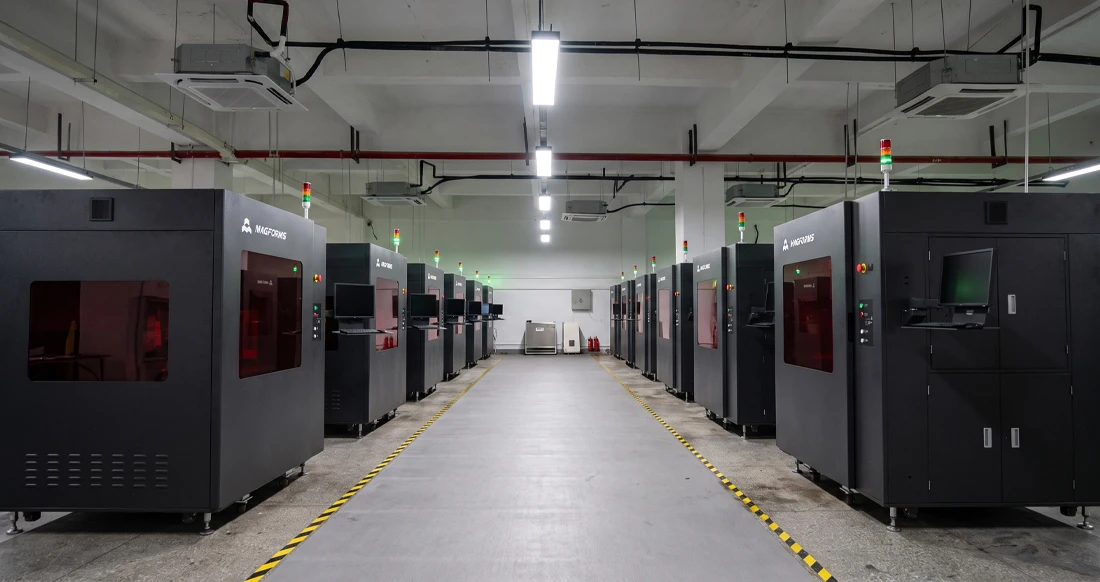
Magforms makes design and manufacture easier.
Popular Blogs
-
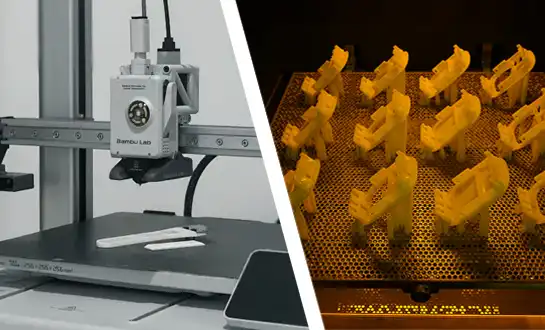 Industry InsightsManufacturing Industry
FDM vs. SLA Printer: Which Technology Is Right for Your Project?
-
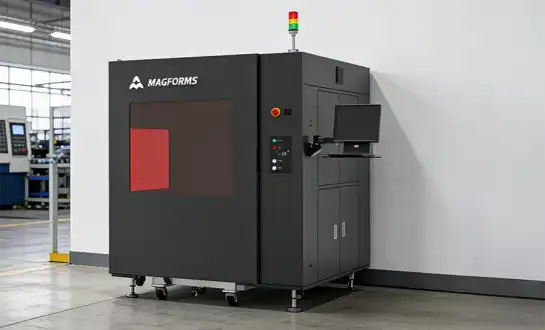 Industry InsightsManufacturing Industry
Top 5 Applications of Industrial 3D Printers in Manufacturing Today
-
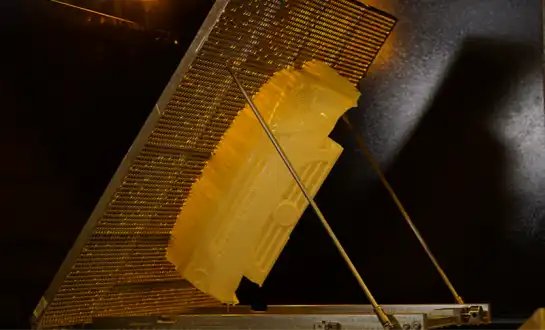 Industry InsightsManufacturing Industry
Why Stereolithography 3D Printers Are Unmatched for Microfluidic Device Prototyping?