Chinese SLA 3D Printer Buying Guide for Engineers
To choose the best Chinese SLA 3D printer, you need to know what the technology can do and how these systems solve specific technical problems. Chinese companies have changed the way additive manufacturing is done by offering industrial-grade stereolithography solutions at reasonable prices. This has made accurate 3D printing possible for a wide range of industries and business sizes.

Understanding Chinese SLA 3D Printers: Working Principles and Key Benefits
Stereolithography is the best photopolymer 3D printing method because it uses very precise UV lasers to harden liquid resin into solid, precisely measured parts. Chinese SLA systems stand out because they use new engineering techniques to get around common production problems while still keeping high-quality standards.
Advanced Laser Technology and Precision Engineering
Solid-state UV lasers with a 355 nm wavelength are used in modern Chinese SLA printers along with complex galvanometer sensing systems. The variable spot-size technology in these systems enables high precision. They can switch between small 0.1 mm spots for creating detailed outlines and larger 0.5 mm spots for quick infill work. This smart method speeds up printing by 30 to 50 percent compared to conventional single-spot systems while maintaining micron-level accuracy.
The mechanical base of high-end Chinese SLA printers usually has Z-axis platforms made of reinforced granite or marble. This stops problems like heat expansion and shaking that happen with cheaper systems. This engineering method makes sure that layers stick together evenly and that the shape stays the same, even during long production runs that last more than 20 hours.
Material Versatility and Open-Source Compatibility
Many Chinese SLA printers can work with open-source resin, which is different from private systems that force users to buy expensive material refills. Because of this, engineers can choose specific materials, such as high-temperature resins for use in cars, safe materials for medical samples, or clear resins for use in optical parts. Being able to get things from outside sources can cut costs by 40 to 60 percent while also giving designers more options.
Large-Format Capabilities for Industrial Applications
Chinese makers have fixed the size issues that used to mean SLA technology could only be used for small items. The newest systems can build parts that are bigger than 800x800x550mm, which means that covers for cars, architectural models, or big aircraft parts can be made all in one piece. This feature gets rid of the need for assembly and the precision stackup problems that come with it that are common with split parts.

How to Choose the Best Chinese SLA 3D Printer: A Decision Support Approach
To choose the best SLA tools, like a Chinese SLA 3D printer, you need to carefully look at its technical specs, operational needs, and long-term help options. While making sure there is a strong return on investment, engineering teams have to balance the needs of the current project with the needs of future growth.
Defining Application-Specific Requirements
The first step in the selection process is to be clear about the planned uses and performance standards. When making surgical guides, medical device makers need different skills than automotive engineers, who need to make samples of dashboards. Different uses have very different needs for build volume, material fit, and surface finish.
Some important things to look at when judging a printer are its layer thickness (usually between 0.05 and 0.2 mm), its horizontal resolution (usually between 80 and 140 microns), its printing speed (in vertical millimeters per hour), and its accuracy specs. Premium systems can be accurate to within 0.1mm per 100mm of a part's size, making them good for practical testing and assembly proof.
Hardware Configuration and Component Quality
German Scanlab galvanometers, AOC laser systems, and Panasonic servo motors are just a few of the well-known parts that are used in high-end Chinese SLA systems. These parts make sure that the product will work reliably and consistently over long production runs. Adding deep learning methods to current systems makes them 20% faster by improving scanning paths and curing parameters.
Intelligent liquid level control systems that use vacuum recoating mechanisms make sure that the resin is evenly spread between layers. This makes print failures and surface flaws much less likely. This technology fixes common problems with gravity-fed systems that can make coatings less even or dirty.
Supplier Evaluation and Support Infrastructure
When industrial SLA systems are put in place, they need reliable expert help more than ever. Leading Chinese makers give full support packages that include remote consultations 24 hours a day, seven days a week, assured reaction times of less than an hour, and on-site engineering help for setups that are more complicated. Local service networks keep downtime to a minimum and make sure that repair parts are available quickly.
Common Challenges and Maintenance Tips for Chinese SLA 3D Printers
To run SLA operations well, you need to plan for upkeep and know how to deal with common operating problems. Environmental controls, the way resin is handled, and preventative maintenance plans all have a big effect on how reliable the system is and how consistent the part quality is.

Environmental Control and Operating Conditions
How well SLA printing works depends a lot on how stable the surroundings are. Temperature changes can affect the viscosity and hardening properties of glue, which could lead to differences in size or flaws on the surface. The best places to work are those with temperatures between 20 and 25°C and humidity levels below 60%. The right ventilation systems get rid of harmful organic compounds while keeping the flow of air steady.
Preventive Maintenance Protocols
As part of regular care for a Chinese SLA 3D printer, the resin vat should be checked every day, the optical parts should be cleaned once a week, and the calibration should be checked every month. The galvanometer system needs to be aligned on a regular basis to keep the reading accurate, and the laser power output should be checked to see if it decreases over time.
Planning for spare parts supplies becomes necessary for keeping processes running. Resin vat seals, lenses, and galvanometer-related optical components are some of the most important parts. Getting to know local wholesalers cuts down on waiting times and reduces production interruptions when parts need to be replaced.
Quality Control and Process Optimization
Using organized quality control methods helps keep the quality of the output uniform and find process drift before it causes big problems. Using standard geometries for regular test prints gives you numerical input on the accuracy of the dimensions, the finish on the surface, and the mechanical qualities. These standards let you make changes ahead of time to keep speed at its best.
Procurement Tips: Buying Chinese SLA 3D Printers for B2B Clients
To buy Chinese SLA systems strategically, you need to know about the communities of suppliers, how prices work, and how to handle transportation. Buyers who do well take advantage of the way competition works while also making sure they get the right technical help and warranty coverage for their needs.
Supplier Selection and Due Diligence
Chinese SLA makers with a good reputation show what they can do by having foreign certifications, patent portfolios, and well-established global distribution networks. Companies that have ISO 9001 approval and a lot of intellectual property usually have more reliable products and can keep coming up with new ones. Established sellers usually have more than one place where they make things and a lot of quality control methods to make sure that products are always delivered on time.
When you work directly with a factory, you can get better prices, more customization options, and faster access to expert help. Working with well-known wholesalers, on the other hand, can make operations, managing warranties, and meeting local support needs easier. The best way to do something relies on how many orders there are, how much customization is needed, and how much professional know-how the company has.
Total Cost Analysis and Budget Planning
A full cost study looks at more than just the original purchase of equipment. It also looks at the costs of setup, training, supplies, and ongoing assistance. Costs like resin use, replacement parts, and upkeep contracts can add up over time and have an effect on the long-term economy of a project. The compatibility of open-source materials cuts down on running costs by a large amount and gives buyers more options for specific uses.
When you buy something from another country, you need to think about shipping and taxes. Usually, sending by container takes two to four weeks to deliver. Air freight speeds up the process but costs a lot more. Knowing about tax rates, necessary paperwork, and the import process can help you avoid delays and extra costs.
Contract Negotiation and Risk Mitigation
Good contract terms cover things like warranty coverage, how quickly expert help can respond, the availability of spare parts, and performance promises. For at least 12 months, full guarantees should cover mechanical parts, optical systems, and software changes. Options for longer warranties offer extra safety for places with a lot of use.
It's important to make sure that payment terms and shipping plans work well with project deadlines. A lot of makers give different ways to pay, like letters of credit, payment plans, or fees based on results. These choices can help you better control your cash flow while still giving you enough ways to fix problems with performance.
Chinese SLA 3D Printer vs Competing Technologies: Making the Right Choice
Engineers can choose the best additive manufacturing options for different uses when they know how the competition works. Chinese SLA technology is much more accurate, has better surface quality, and better material qualities than other methods like FDM, DLP, and LCD-based systems.
Technology Comparison and Performance Analysis

When compared to filament-based systems, SLA technology produces a smoother surface, with Ra values often less than 1 mm, making the surface quality like an injection mold. This feature gets rid of the need for post-processing in many situations while still maintaining the accuracy needed for useful testing and final use.
Laser-based SLA systems have bigger build areas and can change the resolution, while DLP and LCD systems can't. Being able to change the size of the laser spot on the fly lets you find the best balance between speed and detail level for each print. This adaptability is useful for making complicated parts that need both small details and big, solid areas.
Application-Specific Advantages
Chinese SLA systems are great for tasks that need complicated shapes, tight tolerances, or a smooth surface finish. Large build volumes make it possible to print a single-piece dashboard for automotive interior validation. In aircraft uses, the technology is used to make intricate internal channels that can't be made with standard machining.
Biocompatible resins and micron-level accuracy are used in medical and dental applications for surgery guides and orthodontic tools. The isotropic qualities of the technology's materials ensure that the strength of the part is the same no matter how it is oriented, which is important for useful prototypes and final components.
Specialized low-ash materials make direct pattern production possible for complicated foundry work in investment casting uses, which is another big benefit. With this method, you don't need to buy expensive tools for small-scale casting jobs, and the dimensions stay accurate during the burn-out process.
Conclusion
Chinese SLA 3D printers have proven to be good alternatives to standard Western systems because they offer similar quality at much lower prices. To be successful with implementation, you need to carefully choose your provider, do a thorough study of your application, and commit to following the right maintenance processes. Improvements in scanning systems, material development, and process automation will help the technology keep getting better, which will mean more engineering uses in many different fields.
FAQ
How do Chinese SLA printers compare to Western brands in terms of accuracy?
Premium Chinese SLA systems can meet the accuracy standards of 0.1 mm per 100 mm, which is the same as well-known Western makers. The main difference is where the parts come from. For example, top Chinese brands use German galvanometer systems and accurate lenses to make sure their products work well. These claims of accuracy over long production runs have been proven by independent tests.
What maintenance is required for optimal Chinese SLA printer performance?
Inspection of the resin pot and removal of contamination are part of daily care. As part of weekly processes, optical parts are cleaned, and the leveling of the build platform is checked. Checking the accuracy of the galvanometer and validating the laser power output are things that are done every month. Controlling the climate and treating resin properly can greatly increase the life of parts and keep the print quality consistent.
Can I use third-party resins with Chinese SLA printers?
A lot of Chinese SLA systems are open-source material compatible, which means they can use resins from different sources. This adaptability lowers running costs by 40 to 60 percent compared to private material systems and gives users access to engineering resins that are specifically made for their needs. Before using new products, you should always make sure they are compatible with what the maker says.
What customization options are available for bulk orders?
Chinese makers usually let you make a lot of changes, like changing the build volume, getting plastic to where it needs to go, and adding post-processing equipment. Through OEM relationships, whole systems can be redesigned to fit unique needs. Different customizations have different minimum order numbers, but most start at around 10 to 20 units, based on how complicated the change is.
How long does shipping typically take for Chinese SLA printers?
Most foreign places take two to four weeks to get to by container shipping. Air freight, on the other hand, cuts the time it takes to get there to five to seven days, but it costs more. Depending on area rules, the steps needed to clear customs can add an extra three to five days. Using expert freight forwarders speeds up the process and makes sure you have all the right paperwork for a smooth customs process.
Partner with Magforms for Superior Chinese SLA 3D Printer Solutions
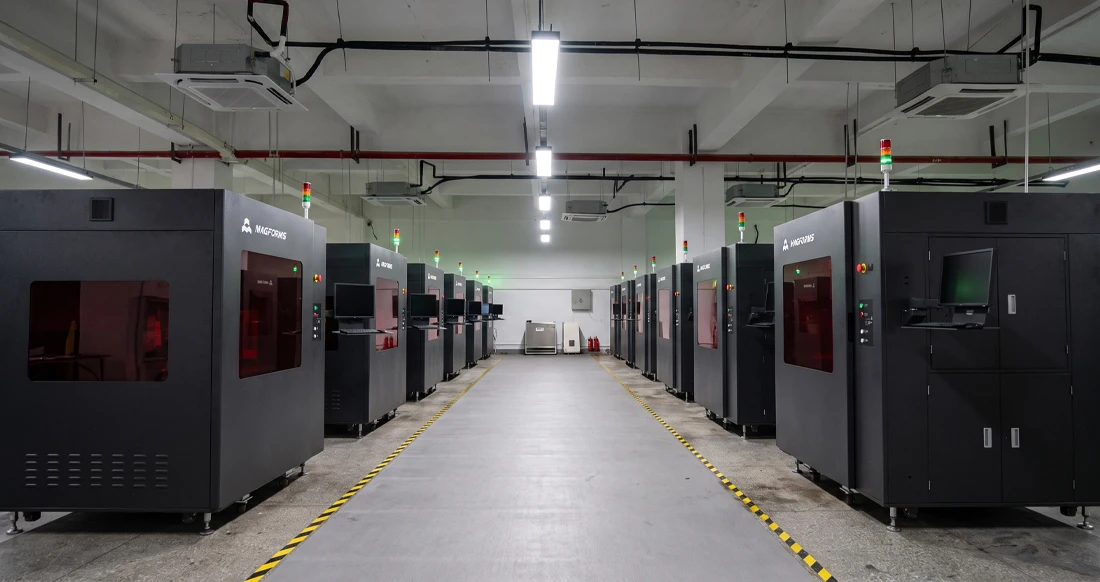
Magforms offers state-of-the-art stereolithography technology that combines German precision parts with new Chinese engineering brilliance. Our industrial SLA systems use variable spot-size laser technology to print at 30–50% faster speeds while keeping accuracy at the micron level with the help of advanced galvanometer systems and marble-based platforms.
Our company is a well-known Chinese SLA 3D printer maker, and we provide complete solutions that include open-source material support, large build sizes of up to 1700mm, and equipment-material optimization that works with the materials themselves. We are dedicated to innovation, as shown by our 22 patents and 30 registered brands. Our global presence helps over 300 businesses in a wide range of industries.
Our expert help is quick to respond, with guaranteed response times of one hour and full training programs. Email our engineering team at info@magforms.com to talk about your unique needs and look into how we can help you with your production needs with a Chinese SLA 3D printer.
References
1. Chen, L., & Wang, M. (2023). Advances in Stereolithography Technology: A Comprehensive Analysis of Chinese Manufacturing Innovations in Additive Manufacturing Systems.
2. Industrial Additive Manufacturing Report. (2024). Global Market Analysis of SLA 3D Printing Technologies: Performance Benchmarks and Regional Manufacturing Capabilities.
3. Thompson, R., & Liu, X. (2023). Precision Engineering in Chinese SLA Systems: Component Integration and Quality Control Methodologies for Industrial Applications.
4. European Additive Manufacturing Association. (2024). Comparative Study of International SLA Technologies: Performance, Reliability, and Cost-Effectiveness Analysis.
5. Martinez, S., & Zhang, H. (2023). Material Science Applications in Modern Stereolithography: Resin Development and Compatibility Standards for Engineering Applications.
6. Journal of Manufacturing Technology. (2024). Supply Chain Dynamics in Global 3D Printing: Strategic Procurement Considerations for Industrial SLA Equipment Acquisition.

Magforms makes design and manufacture easier.
Popular Blogs
-
 Industry InsightsManufacturing Industry
FDM vs. SLA Printer: Which Technology Is Right for Your Project?
-
 Industry InsightsManufacturing Industry
Top 5 Applications of Industrial 3D Printers in Manufacturing Today
-
 Industry InsightsManufacturing Industry
Why Stereolithography 3D Printers Are Unmatched for Microfluidic Device Prototyping?