Desktop SLA 3D Printer Materials: What Are Your Options?
When you choose materials for your desktop SLA 3D printer, you're mainly picking from a number of different photopolymer resins, each of which was made to meet specific industrial and business production needs. The stereolithography process in professional desktop LCD (mSLA) 3D printers uses UV-curable liquid resins that are cured layer-by-layer through a masked LCD light source. Compared to filament-based methods, this method provides better detail and surface finish. You can choose from standard resins that are cheap and good for testing ideas, as well as engineering-grade formulas that can handle heat, chemicals, and mechanical stress. To maximize your investment in a desktop SLA 3D printer and maintain high production quality across various applications, it's essential to identify the resin that best aligns with your manufacturing objectives. This is true whether you're prototyping automotive parts, making dental models, or making investment casting patterns.
Understanding Desktop SLA 3D Printing Materials
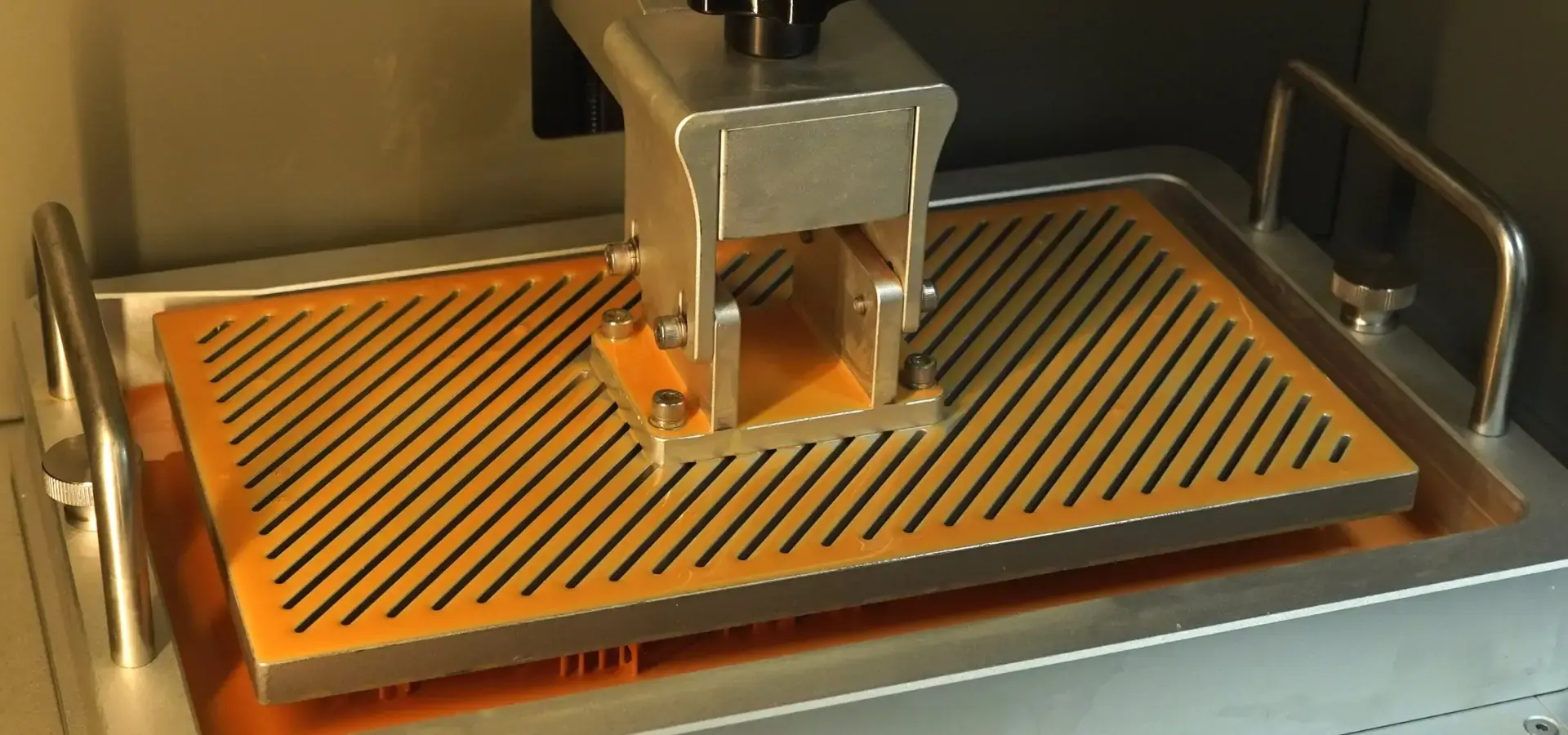
It is important to understand how photopolymer resins behave during the photopolymerization process to achieve accurate stereolithography printing results. These materials are made up of liquid monomers and oligomers that cross-link quickly when exposed to uniformly projected 405 nm UV light through an LCD masking screen. This turns them from thick liquids into solid, precisely measured parts.
Physical and Chemical Properties That Matter
How fast you can print and how well the layers stick together depend on viscosity. Resins with a lower viscosity (usually 100–200 cPs at 25°C) move more easily across the build platform. This lets layers separate faster, and prints take less time. In temperature-controlled production settings, higher viscosity formulas may need resin tanks that are heated to keep the best flow properties.
The curing time directly impacts the amount of work you can accomplish. Typical layer exposure times for modern photopolymer resins made for industrial desktop SLA 3D printers typically range from 1.5 to 4 seconds per layer in LCD-based systems, based on layer thickness and light intensity in the LCD exposure system. This parameter affects not only the speed of production but also the mechanical qualities of final parts, since areas that aren't fully cured can weaken the structure.
Tensile strength, extension at break, and flexural modulus are all parts of material longevity. Tensile strengths of standard resins are usually between 30 and 40 MPa, which makes them suitable for making form-and-fit samples. Engineering-grade materials push these limits to 60–80 MPa, approaching certain mechanical characteristics of injection-molded thermoplastics such as ABS under controlled conditions. Knowing these specs helps buying teams match the strength of materials to the stresses that their goods will face in the real world.
Critical Parameters for B2B Procurement
For businesses that need tight tolerances, dimension precision is still crucial. When used with precise desktop SLA 3D printers capable of achieving typical dimensional tolerances within ±0.1–0.2% under controlled conditions, with high-quality photopolymer resins helping maintain consistent dimensional accuracy within this range. For making useful jigs, fixtures, and end-use parts that need to connect to current systems, this uniformity is essential.
The stability of shelves affects how well you handle your goods and how much you spend. Most resin bottles that haven't been opened will keep working for 12 to 18 months if they are kept between 15 and 25°C and out of direct sunlight. Once opened, exposure to air, moisture, and ambient light can degrade material properties within three to six months. To reduce waste, it is important to plan material turnover.
These basic features have a direct effect on how you plan production, how you check for quality, and the overall cost of running your desktop SLA 3D printer. Choosing materials that meet your specific technical needs cuts down on the costs of trial and error and speeds up the time it takes to get new products on the market.
Types of Desktop SLA 3D Printing Materials and Their Applications
The market for photopolymer resin has changed a lot, and now there are specialized formulations that solve specific industrial problems in many different businesses. To get the most out of your stereolithography tools, you need to know which type of material will best meet your production needs.
Standard Photopolymer Resins
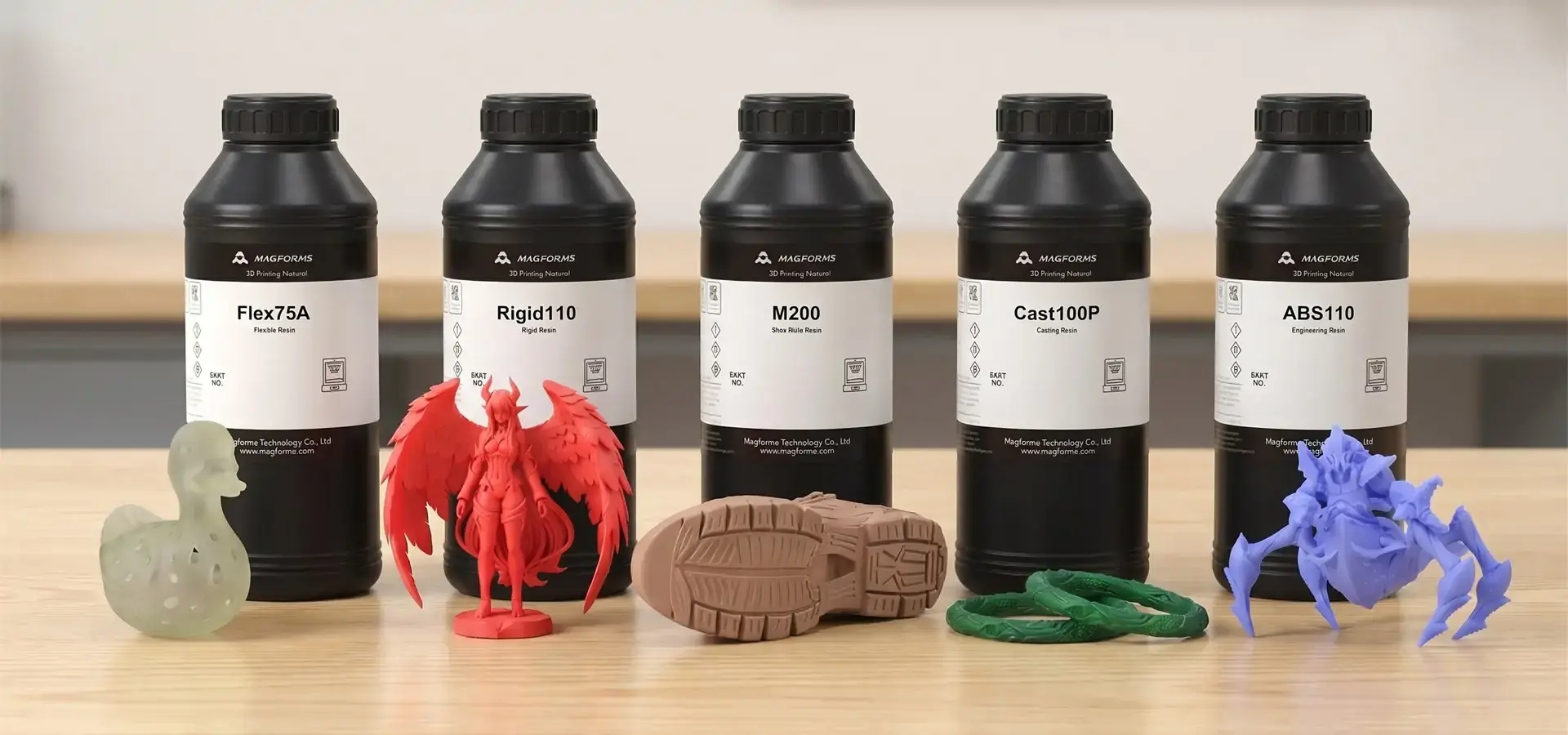
These basic materials have a lovely finish on the outside and can show small details clearly. They are also very cheap, usually between $45 and $75 per liter. Standard resins are useful for making visual mockups, building models, and design checks where strength isn't the most important thing. Because they cure evenly, they are forgiving for users who are still figuring out how to best set the print settings on new desktop SLA 3D printers. You can create various presentations using colors such as white, gray, black, and clear, eliminating the need for post-painting or finishing.
Engineering-Grade Resins
Engineering resins possess the same mechanical properties as production plastics, making them ideal for practical tests or end-use applications. Tough resins are ideal for snap-fit covers and live hinges because they are flexible and resistant to pressure, like polypropylene. Rigid resins are stiff and can withstand temperatures up to 100°C, making them good for parts and fixings under the hood of cars that are exposed to high temps. These materials usually cost between $90 and $180 per liter, but they are worth the extra money because they allow you to make useful parts directly on your desktop SLA 3D printer without having to buy expensive tools.
Castable Resins for Investment Casting
Castable photopolymers that burn smoothly without leaving ash behind are very useful for jewelry makers and dental labs. These special mixtures make it possible to carve intricate patterns with undercuts and empty places that would not be possible with regular wax cutting. A clean burnout feature, which means that the ash content is less than 0.01% during the right burnout processes, guarantees perfect metal casting results. Prices range from $120 to $200 per liter because of the strict standards for purity and the complex science used in the formulation.
Biocompatible Medical and Dental Materials
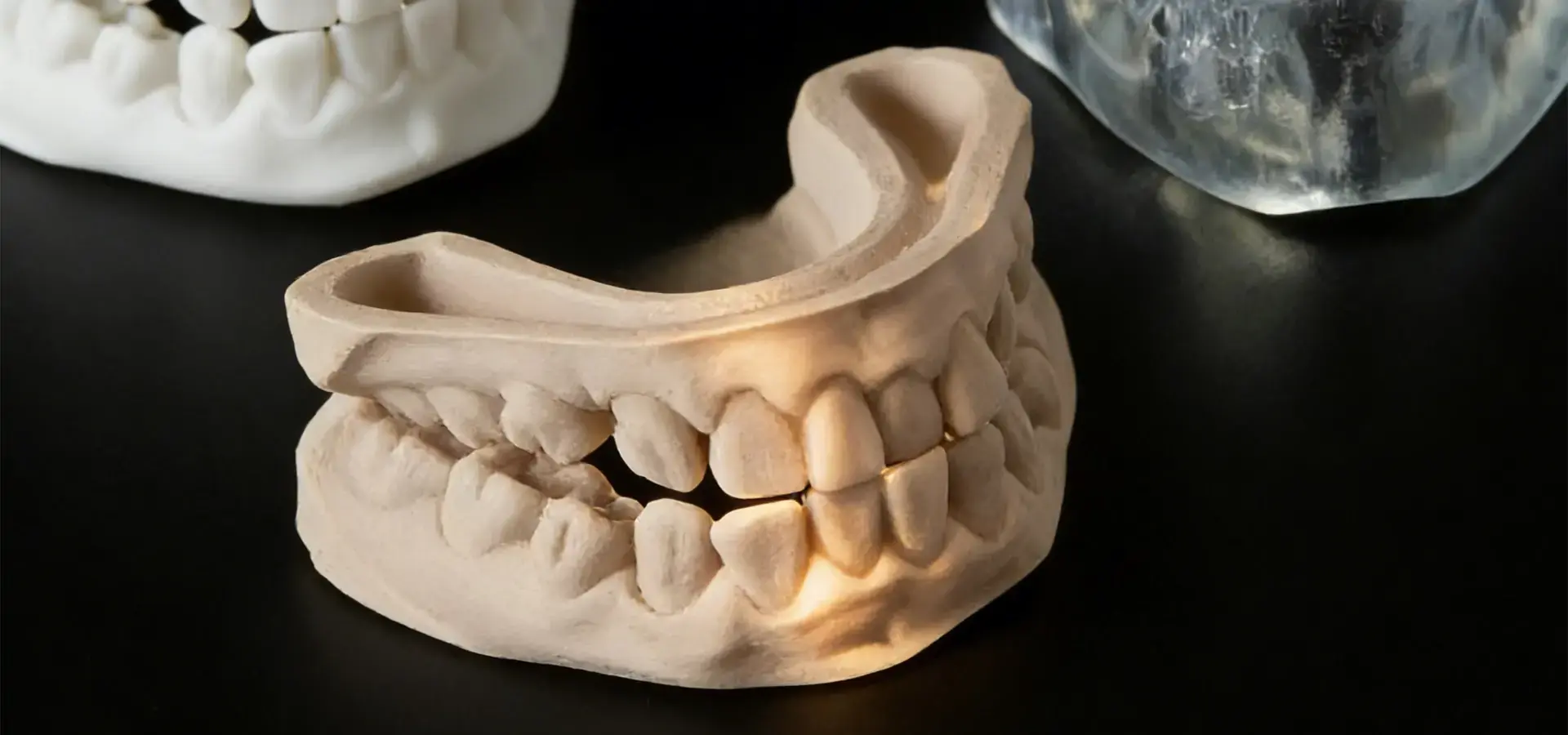
For healthcare uses, you need materials that are approved for long-term skin contact or short-term use in the mouth. Biocompatible resins in Classes IIa and I can be used to create surgery guides, orthodontic models, clear aligner bases, and personalized anatomical models for each patient. These formulas are put through many tests that meet ISO 10993 and FDA guidelines. Material costs usually go over $180 to $280 per liter, but a desktop SLA 3D printer's ability to make custom medical devices on demand changes how patients are cared for and helps dentists' offices and orthopedic surgery centers lower their inventory costs.
Specialty Application Materials
In addition to these main types, special materials solve unique problems in the industrial world. Gaskets, soft-touch grips, and worn device parts are made from flexible materials with Shore A hardness values between 40 and 90. For injection molding parts and short-run tools, high-temperature resins keep their shape above 150°C. For microfluidic systems and light-guide uses, clear, transparent materials can be used instead of acrylic. For manufacturing uses, ceramic-filled resins offer better stiffness and resistance to wear.
Each group of materials can be used in different ways and has its own specific handling and processing needs. Modern desktop SLA 3D printers can use different types of photopolymer resins without having to change the gear. This lets businesses meet the needs of a wide range of customers with just one set of tools.
How to Choose the Right SLA Resin for Your Business Needs?
The choice of material has a direct effect on how quickly and well the parts are made, as well as on how competitive you are in the market. A structured review system helps procurement teams make smart choices that meet both technology needs and price limits.
Defining Your Printing Objectives
First, write down exactly what performance standards your printed parts need to meet. Are you making visual samples for reviews of designs where looks are very important? Do your parts need to be able to handle being tested under mechanical load or temperature cycling? Will end users be handling the parts, which would require biocompatibility certification? Once you answer these questions, you'll have your basic material requirements.
The expected production number also affects the choice of material. Small-batch customization projects can handle higher material costs per part as long as the setup time is kept as short as possible. When your desktop SLA 3D printer makes hundreds of units a week, the cost of materials per cubic centimeter plays a big role in unit economy. Finding out if expensive materials are still financially possible at production scale can be done by figuring out how much resin is needed for a normal part shape.
Evaluating Core Material Metrics
Make a choice matrix that ranks key success factors by how important they are to your application. For working prototypes and final parts, mechanical longevity is the most important factor, with tensile strength, impact resistance, and fatigue life being the most important ones. Resins are chosen based on their resolution needs for uses in jewelry, dentistry, and microfluidics, where features smaller than 100 microns are widespread. Curing speed affects throughput capacity. This is especially important for service companies that are handling multiple jobs at once on their desktop SLA 3D printer fleet.
Parts that will be used in environments with poisons, UV light, or high temperatures need to be able to withstand these conditions. Standard resins can turn yellow or break after being in the sun for a long time, but UV-stabilized formulas keep their qualities. Chemical compatibility data sheets show if printed parts can handle coming into contact with solvents, oils, or cleaning products that they will actually be using.
Balancing Cost and Performance Considerations
The price of materials is only one part of the total cost of ownership. Think about the steps that need to be taken after the resin is cured. For example, some industrial resins need longer UV curing cycles or heat post-curing in special ovens, which takes more time and money to buy the right tools. The real cost of materials per successful part goes up because of waste created during support removal and failed prints. This is why more forgiving resins are cheaper per liter, even though they are more expensive overall.
A supplier's dependability and the quality of their expert help often matter more than small price differences. Resins from well-known companies come with full technical data sheets, application advice, and quick customer service for when handling problems arise. This support infrastructure is very helpful when you are trying to get the best print settings for new materials on your desktop SLA 3D printers.
Material-Application Decision Matrix
Based on how they've been used in the past, match resin categories to business areas. Engineering resins that are tough and hard and can stand up to practical testing are good for making prototypes for cars. Specialized formulas with glass transition temperatures above 150°C are needed for aerospace parts that need to be stable at high temps. Biocompatible plastics that have been tested and proven to work with intraoral tools give dental labs the best results. In the early stages of designing consumer products, standard resins are used for development. For engineering validation testing, however, engineering-grade materials are used.
This methodical review cuts down on the time and money needed to try out different materials and speeds up the process of getting production-quality results from your desktop SLA 3D printer. Writing down your selection criteria creates institutional knowledge that makes it easier to buy materials in the future as your product line grows.
Best Practices for Managing and Using Desktop SLA 3D Printer Materials
How you handle and store materials has a direct effect on how well they print, how consistent the quality of the parts is, and how much it costs to run the business as a whole. By adhering to strict material management practices, you can maximize the longevity and effectiveness of your photopolymer resins.
Storage and Handling Protocols
When UV light, heat, and air hit photopolymer plastics, they break down. Keep bottles that haven't been opened in their original, clear cases between 15°C and 25°C, away from windows and electric lights that give off UV rays. Keeping storage temperatures stable stops changes in thickness that could affect how the ink flows during printing. Once the bottles are open, keep air out as little as possible by closing them back up right away after filling. You could also move partly used containers to smaller bottles with less headspace.
Material pollution is one of the main reasons why prints don't work. To keep standard and engineering materials from getting mixed up, always use clean tools that are made just for that specific type of resin. When small amounts of bendable resin are mixed into hard mixtures, they can change their mechanical qualities. Filtering resin back into storage bottles after printing gets rid of particles that have hardened and debris that haven't hardened yet, which could mess up future prints on your desktop SLA 3D printer.
Printer Setup and Resin Preparation
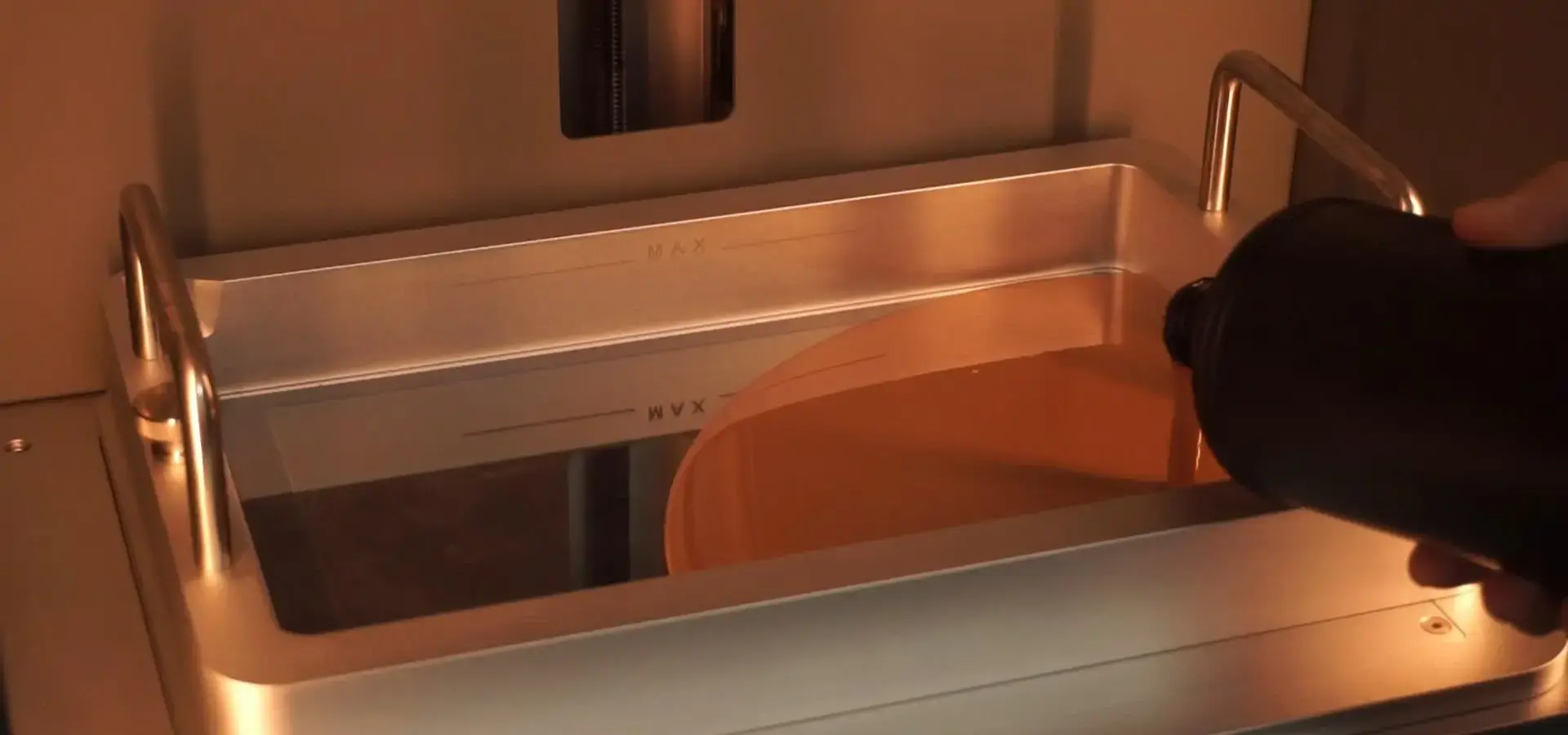
Let the resin bottles warm up to room temperature before dumping them into the vat. This is especially important if they were kept in a cooler place. Differences in temperature cause changes in stickiness that affect how well layers stick together and how evenly the mixture cures. Before using the resin, gently mix it by turning it upside down a few times to spread any colors or additives that have settled. Do not shake it too hard, as this will cause air bubbles to form.
Regularly adjust the resin tank on your desktop SLA 3D printer to keep the clear view through the bottom window at its best. UV light transmission is reduced when there are scratches, clouding, or cured residues on the vat film or tank surface. This means that the material may not fully cure, and the measurements are off. If the manufacturer says so, or if you see the tanks breaking down (usually after 50 to 100 hours of printing, depending on the material and exposure), do it.
Troubleshooting Common Material Challenges
If you're having problems with layer splitting or delamination, make sure that the exposure times are right for the plastic and that the build platform is level. Insufficient UV exposure energy weakens interlayer bonding due to undercuring. On the other hand, overexposure can cause light bleeding, leading to dimensional inaccuracies, loss of fine detail, and more difficult support removal, which could damage small details on desktop SLA 3D printer parts.
Print problems where parts come off the build platform in the middle of the print process are usually caused by not enough base layer contact or dirty platform surfaces. To make sure the base layer sticks well at first, extend the exposure time and clean the build platform with isopropyl alcohol before each print session. Some tough engineering resins work better with a lightly roughened platform surface to improve their mechanical grip.
Things in the surroundings often cause surface flaws like cloudiness or layer lines. Make sure that the temperature in your printing area stays fixed and that there are no drafts that could cause the resin to cure unevenly. If you cover the desktop SLA 3D printer while it's working, dust won't settle on the resin surface between layers as much. These seemingly small environmental controls have a big effect on the end part's look and stability in size.
Future Trends in Desktop SLA 3D Printing Materials
The photopolymer resin market keeps coming up with new ideas quickly because more applications need them, and the need to be environmentally friendly. Businesses can predict what they will be able to do in the future and plan smart equipment purchases when they understand new material technologies.
Sustainable and Bio-Based Resin Development
As businesses face governmental pressure and company sustainability promises, environmental awareness is becoming a bigger factor in the materials they choose. Bio-based photopolymer resins made from plant oils and green feedstocks are now available on the market. They have 30–50% smaller carbon footprints than options made from petroleum. Even though they are pricier and don't have as good mechanical qualities as other versions, these materials meet the growing need for environmentally friendly manufacturing methods that use Desktop SLA 3D printer technology.
Another green area is the use of plastic systems that can be recycled and reprocessed. It's challenging to get rid of traditional thermoset photopolymers because they cannot be remelted or reshaped once cured. New vitrimers and reusable chemicals make it possible to grind, reprocess, and repeat printed parts. This completely changes the lifecycle economics of stereolithography production. These innovations will most benefit businesses that produce many prototypes and service offices that handle significant material waste.
Multi-Material and Graded Property Systems
Currently, Desktop SLA 3D printers only work with one material per build, which makes it harder to combine functions. Research projects are exploring multi-material vat photopolymerization as a means to create single parts with varying colors, mechanical properties, or useful features. You could print a soft-touch grip that is directly attached to a rigid housing structure without having to put it together. You could also make structures with different densities that improve the strength-to-weight ratio of aircraft parts. There are still some technical problems to solve before it is possible to prevent materials from contaminating each other, but early business systems indicate that this is feasible for certain applications.
Photopolymers that are filled with composites like clay particles, glass fibers, or carbon nanotubes push the limits of dynamic performance. These improved formulations get stiffness and strength values that are close to metal while still letting designers use the freedom that comes with additive manufacturing. The performance gap between desktop SLA 3D printer output and traditionally made parts keeps getting smaller as material science improves. This means that more production-ready applications can be created.
Supply Chain and Procurement Evolution
Through industry consortia, efforts to standardize materials aim to set performance goals and compatibility standards that lower worries about being locked into one provider. Open-material systems that let Desktop SLA 3D printers use resin from other companies give buying teams more power in negotiations and more options in the supply chain. This move toward interoperability is good for buyers because it makes prices more reasonable and provides them with access to specialized materials from niche sources that work with certain industry verticals.
Regional material production is growing beyond traditional manufacturing hubs. This lowers shipping costs and wait times while making the supply chain more resilient. Local resin mixing facilities let customers create unique formulations that meet their exact needs. This gives businesses that use Desktop SLA 3D printers to target specific application niches a competitive edge.
Conclusion
To choose the right materials for your desktop SLA 3D printer, you need to balance technical performance needs with cost concerns and the dependability of your provider. Businesses in all kinds of fields can use stereolithography technology for a wide range of tasks, from quick prototypes to small-scale production, thanks to the large range of photopolymer resins that are available. These range from inexpensive standard formulations to specialized engineering-grade and safe materials. As material science improves to create more eco-friendly, high-quality, and specific materials, desktop SLA 3D printers will become even more important in manufacturing processes. These printers give companies a competitive edge by allowing for flexible design, quick iteration, and supply chain agility.
FAQ
Can I Use Multiple Resin Types on the Same Desktop SLA 3D Printer?
Yes, most desktop SLA 3D printers can use different kinds of resin without having to change the tools. To avoid cross-contamination, it is important to clean well between material changes. Empty the vat of all the old resin, clean it with lint-free cloths and isopropyl alcohol, and then filter the new resin back into its original bottle. Keeping separate glue tanks for commonly used materials can make changeovers faster and help avoid accidental mixing, which could damage part features.
What Safety Precautions Should I Take When Handling Photopolymer Resins?
Uncured photopolymer resins contain chemicals that could be annoying and need to be handled in a certain way. When working with liquid resin, you should always wear nitrile gloves because long-term skin exposure can cause sensitivity responses. Some recipes produce volatile organic molecules during printing, so work in a room with adequate air flow. Rinse any skin touched with water and soap right away. Local hazardous waste rules say how to get rid of dirty cleaning supplies and failed prints. Residues of uncured resin are still chemically active.
How Does Resin Choice Affect Post-Processing Requirements?
Post-processing methods need to be different for each object. Standard resins only need to be washed with isopropyl alcohol and then cured in the UV light for 10 to 15 minutes. For engineering-grade recipes to reach their full mechanical qualities, they often need long thermal post-curing processes at 60–80°C for 30–120 minutes. To keep them from breaking or not burning all the way, castable resins must be burned according to exact plans. Always follow the instructions that came with your Desktop SLA 3D printer resin to make sure that the end part works perfectly.
Partner with Magforms for Your Desktop SLA 3D Printer Material Needs
Magforms provides comprehensive stereolithography solutions, including precise hardware and tested photopolymer resin portfolios. As a Desktop SLA 3D printer supplier with 22 patents and over 300 businesses around the world as customers, we know how important it is for materials and tools to work together so that output stays consistent and downtime is kept to a minimum. Our engineering team gives you personalized advice on how to find the best resin formulations for your unique needs. They do this with the help of quick technical support and a reliable collection.
Magforms' approach of using both materials and equipment eliminates compatibility issues while offering fast print speeds, precise accuracy, and dependable performance, whether you're starting new prototyping projects or boosting production. Contact our experts at info@magforms.com right away to discuss your material needs and to request performance proof samples. Explore our extensive range of Desktop SLA 3D printer materials, specifically designed for demanding industrial applications.
References
1. Gibson, I., Rosen, D., & Stucker, B. (2021). Additive Manufacturing Technologies: 3D Printing, Rapid Prototyping, and Direct Digital Manufacturing (3rd ed.). Springer.
2. Ligon, S. C., Liska, R., Stampfl, J., Gurr, M., & Mülhaupt, R. (2017). Polymers for 3D Printing and Customized Additive Manufacturing. Chemical Reviews, 117(15), 10212-10290.
3. Stansbury, J. W., & Idacavage, M. J. (2016). 3D Printing with Polymers: Challenges among Expanding Options and Opportunities. Dental Materials, 32(1), 54-64.
4. Melchels, F. P., Feijen, J., & Grijpma, D. W. (2010). A Review on Stereolithography and Its Applications in Biomedical Engineering. Biomaterials, 31(24), 6121-6130.
5. Quan, H., Zhang, T., Xu, H., Luo, S., Nie, J., & Zhu, X. (2020). Photo-Curing 3D Printing Technique and Its Challenges. Bioactive Materials, 5(1), 110-115.
6. Bagheri, A., & Jin, J. (2019). Photopolymerization in 3D Printing. ACS Applied Polymer Materials, 1(4), 593-611.

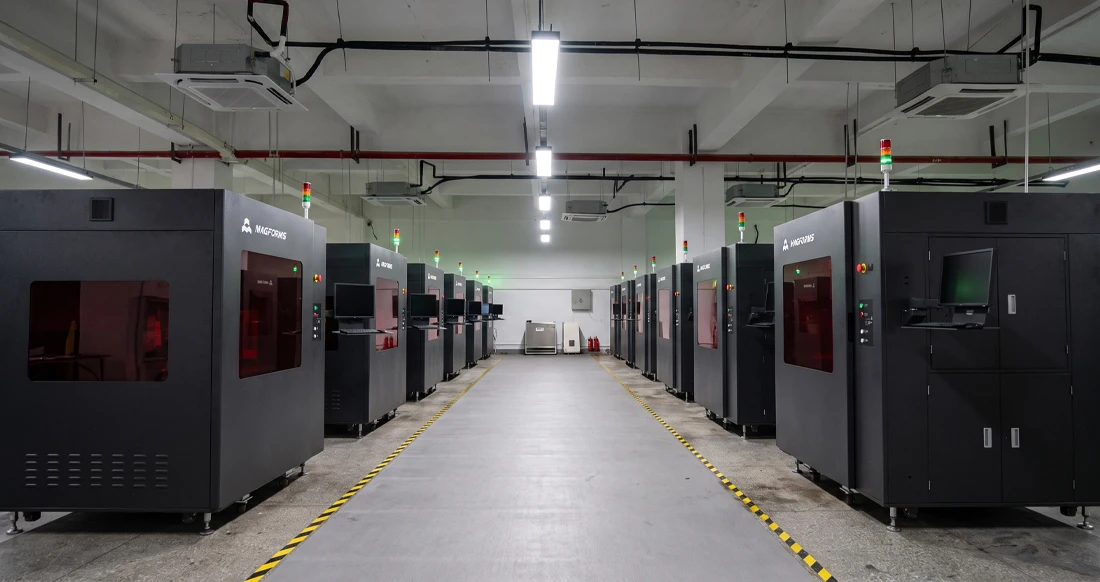
Magforms makes design and manufacture easier.
Popular Blogs
-
 Industry InsightsManufacturing Industry
FDM vs. SLA Printer: Which Technology Is Right for Your Project?
-
 Industry InsightsManufacturing Industry
Top 5 Applications of Industrial 3D Printers in Manufacturing Today
-
 Industry InsightsManufacturing Industry
Why Stereolithography 3D Printers Are Unmatched for Microfluidic Device Prototyping?