P10 Pro Resin Printer: Faster Curing, Smoother Surface Finish
When we discuss production-grade resin 3D printing, speed and surface quality define success. The P10 Pro represents a new generation of industrial resin printer systems that solves two persistent challenges: extended curing times and rough post-processed finishes. With advanced imaging technology and robust hardware architecture, this printer achieves what many manufacturers have been seeking—consistent, high-quality output at speeds that respect tight production schedules without sacrificing detail or dimensional accuracy.
Understanding the Key Advantages of the P10 Pro Resin Printer
In industrial settings, you need equipment that is stable and works well under pressure. Magforms' advanced LCD-based resin printer (mSLA) technology solves major problems that arise in fields like car prototyping, dental manufacturing, aircraft component validation, and the development of consumer electronics.
Larger Build Volume for Greater Production Flexibility
When compared to other 10-inch printers, this one's build size makes it stand out. The build space of the P10 Pro is 228 × 128 × 250 mm, and the printing height can go up to 250 mm. With this extra space, makers can make bigger pieces or groups of smaller parts in a single print session. A 250 mm-tall model can be made in about 2 hours and 52 minutes using a 0.2 mm layer height, which is a giant improvement over standard ways for getting prototypes made.
This feature changes how process planning is done. Engineers don't have to split up big plans into multiple print jobs or give up on part orientation. Instead, they can make the best use of built layouts for speed. Service centers that take on various client orders can mix different projects into one build, which makes the best use of tools and increases the return on investment.
Ultra-High Resolution Delivers Smooth Surfaces Without Post-Processing
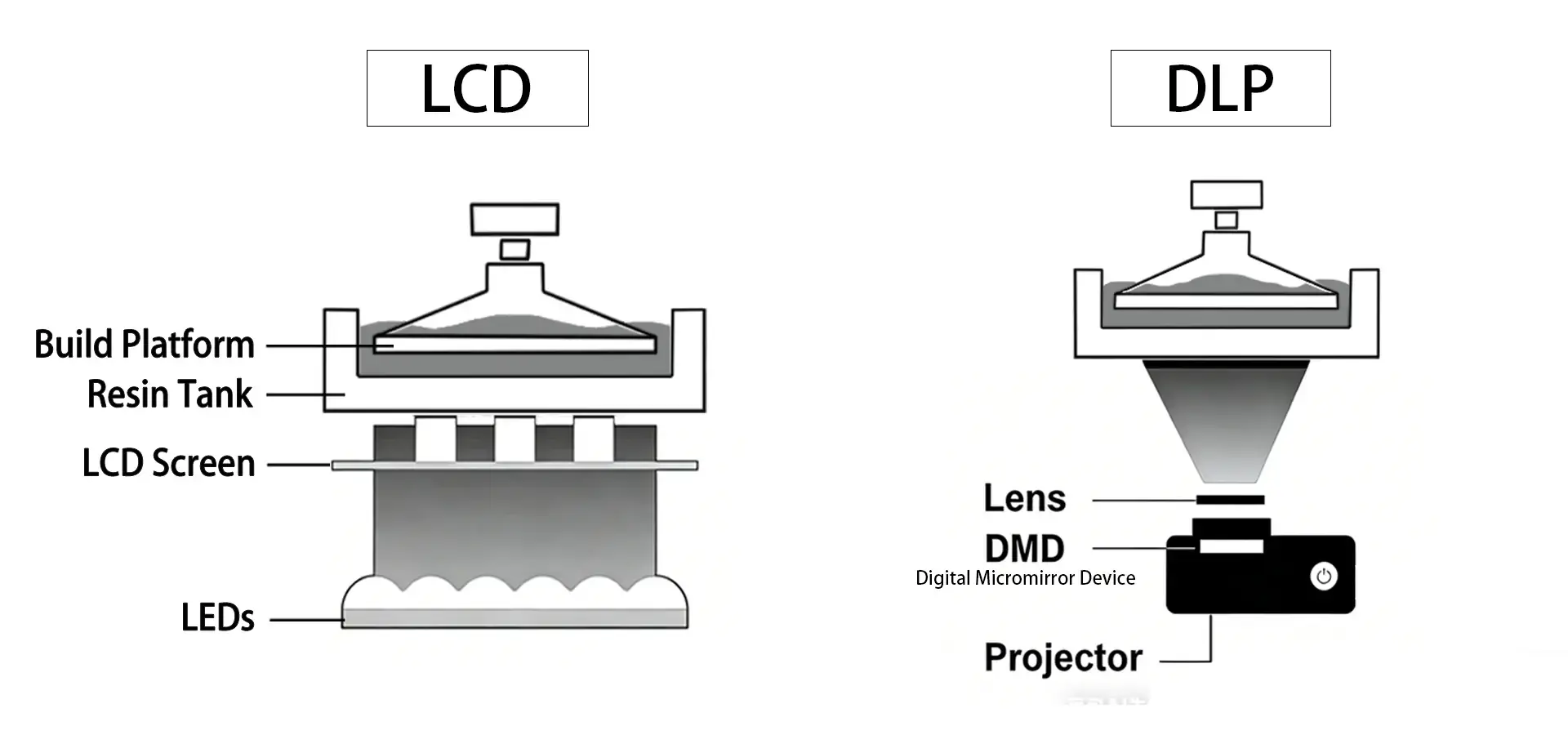
Surface quality is what sets finished parts apart from working samples. The P10 Pro's LCD imaging system, utilizing advanced grayscale management and XY pixel control, achieves an XY precision of 14.85 μm. This level of accuracy gets rid of pixel lines that can be seen and makes objects smooth enough for use.
The dimensional accuracy of printing stays within ±0.05 mm, which is comparable to industrial-grade DLP systems under optimized conditions, but in an easier-to-use platform. A low light divergence angle improves exposure uniformity and ensures precise layer curing across the build platform and that layer lines are kept to a minimum. The 29.7 μm pixel size catches fine textures that are needed for character models, jewelry molds, gemstone details, and microtext reproduction.
With industrial-grade light source technology, the whole build plate is more evenly lit. This means that the surface finishes will be uniform, which is vital for batches that must meet the same quality standards. The ability to change the layer thickness from 0.01 mm to 0.2 mm provides workers full control over the quality-speed mix that works best for each job.
There are several pressure-release holes in the build base that lower the resin's pulling forces during the lifting process. This new design improves the smoothness of the print, lowers the mechanical stress on the motor system, and increases the equipment's useful life. These factors are crucial when using the equipment for extended work shifts.
Exceptional Print Success Rate Reduces Material Waste
Downtime for equipment and failed prints has a direct effect on profits. The P10 Pro has a recorded success rate of up to 99%, which has been proven by thousands of hours of use in a wide range of industrial settings. This dependability comes from several choices made during the planning process.
During the printing process, the temperature is actively controlled within an enclosed, air-heated build chamber to stabilize resin performance. Environmental fluctuations are a key factor affecting resin printer stability, particularly for temperature-sensitive photopolymers, but active temperature control gets rid of this problem. The system supports a wide range of photopolymer resins, including standard, engineering-grade, and application-specific materials, from normal resins to engineering-grade mixtures that are needed for functional tests and final use.
Stability of the structure is also crucial. With a machine weight of 25 kg, the strong frame keeps the machine from shaking while it's working, which stops ripple effects that affect the accuracy of measurements. Industrial-grade dual linear guides ensure motion alignment accuracy within 5 μm. This makes sure that motion control is smooth, which directly affects the quality of the part.
An industrial-grade lead screw drives the Z-axis, ensuring stable layer positioning and consistent vertical accuracy, which is important for fine surface detail. Optimized printing settings for different resin formulas ensure excellent interaction between hardware and material, which greatly reduces failures caused by incorrect exposure or adhesion problems.
A copper-assisted active cooling system improves heat dissipation efficiency compared to conventional passive heat sink designs. This makes both the light source and LCD screen last longer. Maintaining the flatness of the build platform at ±0.02 mm is directly related to the success of the first layer of bonding, which is what all prints depend on.
User Experience Designed for Production Environments
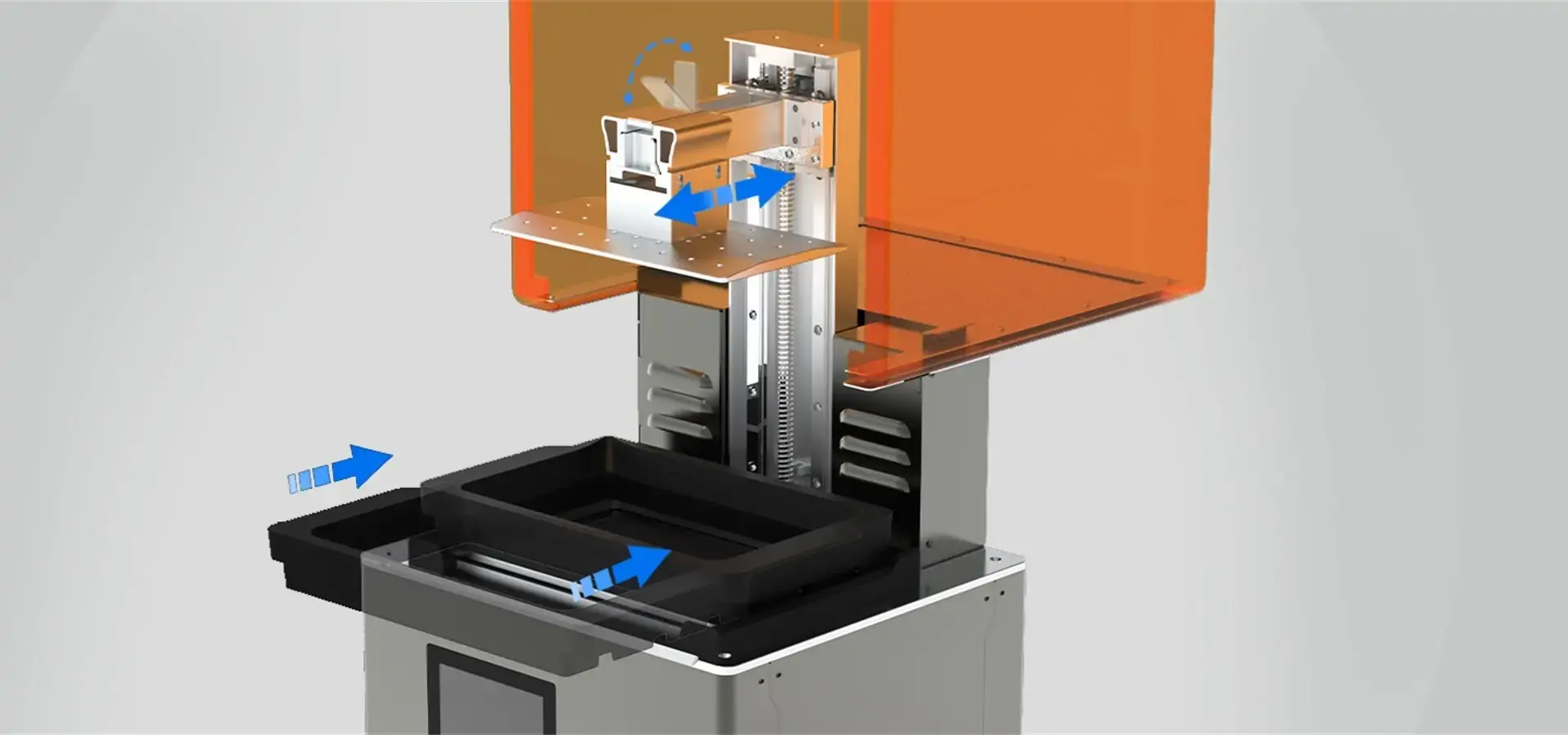
Operational efficiency includes more than just print speed. It also includes setup, upkeep, and moving materials. The resin vat has a push-and-pull design that doesn't require any tools. This makes it easy to put it in and take it out without having to mess with pins. A press-lock mechanism on the build platform saves important minutes during changeover processes.
A combined constant-temperature heating system gets rid of the need to heat resin separately, which is very helpful in cooler production facilities where workers would normally need water baths or other heating equipment. There is an air filtration system in the build room that removes and absorbs resin smells, keeping the work area more comfortable during long production runs.
The vertical moving door design makes it easy to use with little effort, which is good for your body when you do it every day. This combined method ensures smoother operations compared to separate light shields that require storage and occupy space. The resin vat has handles, a filling spout, marks for the maximum capacity, and placement pins that make it simple to load, unload, and set up the material.
Useful details are important in busy work settings. The deep resin vat can hold up to 1.1 kg at a time, so you can print without stopping to refill it. The LCD screen replacement process is simplified, allowing fast maintenance without complex disassembly procedures, which techs can do quickly without any special tools. The 5.0-inch color tablet makes it easy to see and change settings, including changing the brightness in real time while a print is running.
Each compatible resin includes validated exposure parameters that can be imported with one click, reducing setup variability. This makes it easier to set up when moving between resin types. The machine has 4 GB of built-in storage, so you can print multiple stored files even when you're not connected to a USB drive. These features, which may not seem important at first, add up to big-time savings over the course of a week's worth of work.
P10 Pro Resin Printer vs. Industry Alternatives – A Rational Choice Approach
When choosing equipment, it's important to carefully compare the specs to the real production needs. Compared to other resin printer systems of similar size, the performance advantages can be quantitatively evaluated rather than assumed.
Technical Specifications That Matter for B2B Applications
The build volume directly affects production capacity. While many 10-inch printers don't have a lot of height clearance, the P10 Pro's 250 mm Z-axis movement lets it fit bigger parts without having to change the design or cut them up into smaller pieces. This standard is especially useful for dental work that needs full-arch models or car work that needs vertical component assemblies.
Resolution specifications provide only a partial understanding of the overall picture. Print quality depends on the light source's evenness, the machinery's precision, and the materials' compatibility. The recently created industrial-grade array light source lowers divergence while increasing both strength and regularity. This helps explain why success rates are so much higher in production settings.
Controlling the temperature is another thing that makes them different. Printers without active heating systems struggle to adapt to environmental temperature fluctuations. This is especially true when working with industrial resins that need specific temperatures to cure properly. The P10 Pro's sealed, heated room keeps the conditions the same even if the facility's climate control changes.
Addressing Common Production Bottlenecks
Three areas where traditional resin printing systems often run into problems are the speed at which the resin cures, the amount of post-processing that needs to be done, and the number of failed prints. Each one is a cost source that affects the total economy of ownership.
Throughput ability is based on the speed of curing. The improved exposure strategy reduces layer curing time while maintaining consistent crosslinking quality without lowering the quality of crosslinking, which makes it possible to finish tall prints more quickly. Post-processing tasks take time and skill because they require a smoother surface finish. These tasks include grinding, filling, and secondary finishing, which take more time and skill.
Print failure rates cause uncertain waste of materials and delays in schedules. When you combine mechanical precision, thermal stability, and settings that are best for the material, you can make printing go from being a risky process that needs to be watched all the time to a stable production process that can be run overnight or on the weekend.
Total Cost of Ownership Considerations
The purchase price only covers the starting cost of the item. Costs of operations include things like materials used, repairs needed, and costs for downtime. Using production-grade parts in equipment designs lowers the number of fixes needed and increases the time between replacements for worn-out parts.
The copper-tube cooling system is a good example of this. When the materials cost more, expensive parts like LCD screens and light sources last longer. Longevity of the build platform and the resin vat both have an effect on the long-term economy. When comparing different choices, procurement workers should look at the base equipment price as well as the costs of new parts and how often they are usually serviced.
As file formats change and slicing techniques get better, software update rules affect how long equipment lasts. Ongoing firmware support makes sure that the bought equipment stays suitable with new workflow tools and doesn't become useless as software environments change.
Optimizing Your Workflow with the P10 Pro Resin Printer
To successfully integrate new tools, you need to know how it fits in with current processes and the skills of your staff.
Practical Adaptation for Manufacturing Teams
Anytime you add new production tools, you have to train your workers and change the way you do things. The P10 Pro's user-friendly interface and flexible parameter settings make it easier to learn than systems that need specialized software knowledge. Engineers who are already familiar with standard slicing tools can use their skills right away, and the one-click material profile loading makes switching between resin types easier.
The ability to cure things faster and have higher success rates helps with production schedules. When finishing times are more stable, printing, post-processing, and later manufacturing steps can work together better. The higher build volume lets you strategically group together similar parts or mixed-order pairs that make the best use of the tools across shifts.
Reducing Post-Processing Labor and Costs
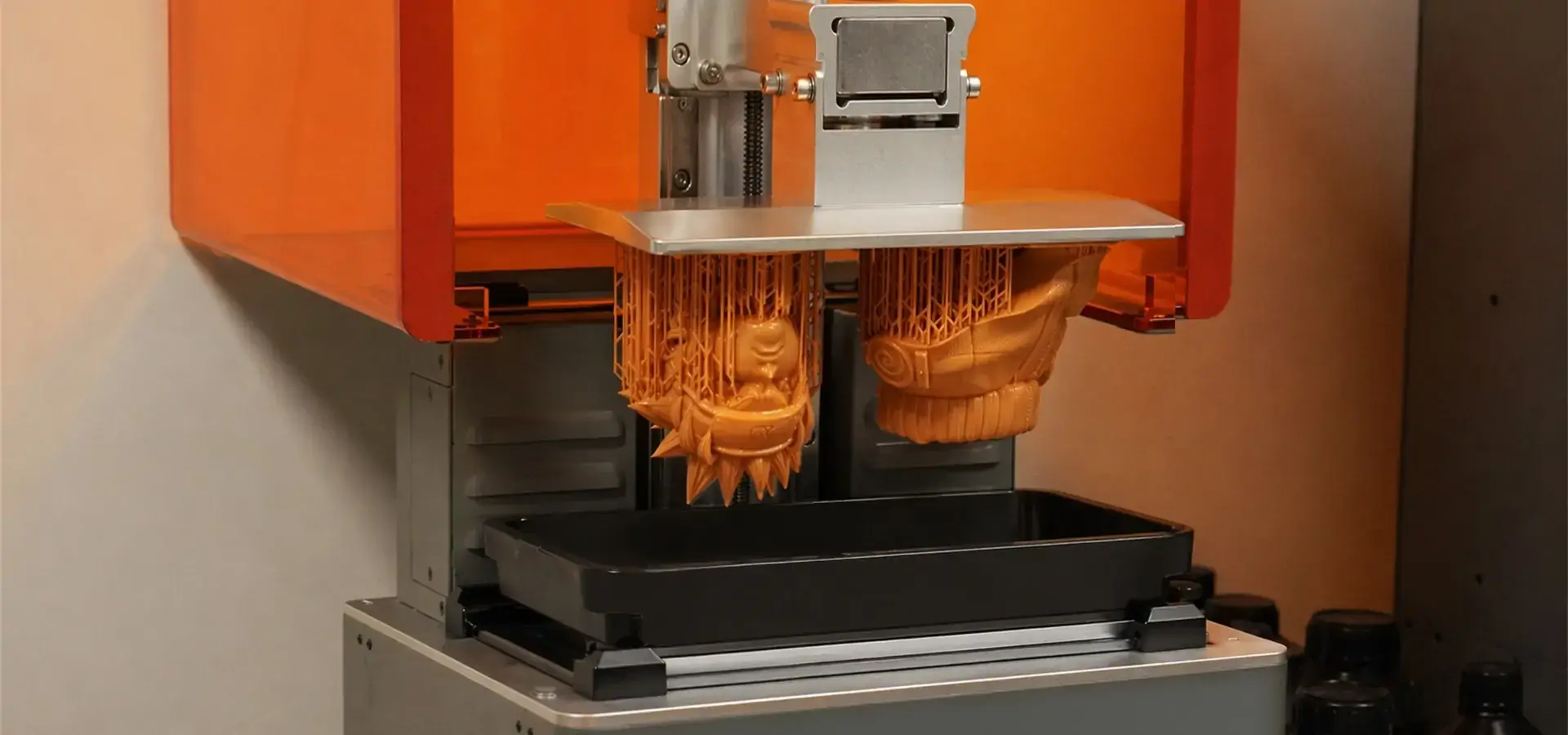
The quality of the surface directly influences post-processing needs. With the improved imaging system, you can get smooth finishes that cut down on or get rid of the need for human finishing steps in many situations. Besides removing the support and cleaning, dental models, show samples, and pattern masters usually don't need any other surface treatment.
When more work needs to be done, starting from a better base area cuts down on the amount of material that needs to be removed and the time that it takes to do it. This benefit grows as more units are made—savings that seem small for each part add up to big savings when hundreds or thousands of units are made every year.
Maintenance Best Practices for Sustained Performance
Part of an item's dependability comes from how well it was designed and how well it is maintained. The tool-free tray and platform designs make cleaning easier and encourage regular maintenance that stops resin buildup and contamination problems. The one-click vat cleaning feature eliminates the mess and time associated with manual cleaning.
For LCD-based resin printers, replacing the screen is the most important consumable upkeep item. The simple replacement process means that this service can be done by in-house techs without having to have a provider come to the site, which cuts down on downtime and service costs. Regular software changes, accessible via the touchscreen, ensure optimal system performance by adjusting the process parameters.
Procurement and Transaction Insights for the P10 Pro Resin Printer
When making a purchase choice, you have to sort through your options, figure out the total value, and make sure that the supply line is reliable.
Navigating Purchase Options and Commercial Terms
Magforms only sells the P10 Pro through official outlets that offer original products with full warranty support. Procurement managers should check with dealers to ensure they are authorized, which will help them get the right expert assistance and original replacement parts. Buying accessories in groups is often a better deal than buying them separately. This is especially true for new businesses that are setting up full workflow systems with resin tanks, build platforms, and starter amounts of materials.
Companies that want to deploy multiple units across locations or grow their service bureaus need to think about volume prices. By contacting the maker directly at info@magforms.com, you can get customized prices that take into account your exact configuration needs and shipping dates.
International Logistics and Payment Security
When you buy tools across borders, you need to think about shipping, government paperwork, and the safety of your payment. Magforms has created shipping routes that serve markets in North America, Europe, and Asia, as well as global distribution partnerships that make foreign business easier. Estimated arrival times take into account the steps that are needed to clear customs in each area.
Wire transfers, letters of credit, and known trade banking plans are all acceptable ways to pay for business-to-business purchases. Secure payment handling keeps everyone safe and allows deals that follow company rules for buying things and meeting accounting needs.
Maximizing Value Through Accessory Selection
The best performance from equipment relies on extras that work well with it and are made for the job. With more resin vats, materials can be switched over quickly and without having to wait for cleaning time between types of resin. Spare build platforms let the machine keep running by getting ready for the next job while the current print finishes post-processing steps.
Starter packs of materials let you try out different resin formulas for specific uses before committing to buying bigger amounts. Magforms' method of integrating materials and tools means that performance has already been proven through compatibility testing. This cuts down on the trial-and-error that is usually needed when getting materials from outside sources.
Brand and Support – Why Trust Magforms P10 Pro Resin Printer Solutions
Investing in equipment has effects that last for years after it is installed, so the name of the manufacturer and the support system are very important when deciding what to buy.
Authorized Network and Service Availability
Magforms has a network of approved dealers and service centers that work together to provide consistent help in all of the major markets. Geographic service availability is especially important for businesses in North America, where machine downtime has a direct effect on meeting production goals. Local service choices cut down on reaction times and get rid of the delays that come with shipping replacement parts across foreign borders.
Concerns about the authenticity of products come up in markets for competition tools. When you buy through approved outlets, you can be sure that you are getting real units that meet the stated specs and come with a valid warranty. Gray-market or counterfeit goods may look like real ones, but they don't have the technical validation or support system that real ones do.
Ongoing Software and Firmware Support
Even after you buy tools, technology keeps getting better. Magforms regularly releases new versions of its software and hardware that improve the interface, add material profiles, and fine-tune print settings. This ongoing development makes equipment last longer and keeps it compatible with workflow software environments that are always changing.
Technical literature, troubleshooting tips, and application notes can help people solve problems in-house so they don't have to call outside service for small problems. Operators can get the most out of their tools while reducing downtime by using comprehensive user resources.
Warranty Coverage for Industrial Users
When warranty terms are made for industrial uses, they take into account the continuous-duty work patterns that are common in production settings. Coverage that goes beyond consumer-grade warranties shows that the maker trusts the reliability of the parts and the strength of the design. Clear guarantee terms that spell out the scope of coverage, how to file a claim, and when the service will be provided reduce the risk of purchase.
Magforms has 22 patents and 30 filed trademarks, which show that it has put a lot of money into intellectual property to support ongoing growth. This technical base is what sets purpose-designed industrial solutions apart from common tools. Serving more than 300 businesses in more than 30 countries gives real-world proof that goes beyond test requirements.
Conclusion
Industrial resin 3D printing requires high-performance resin printer systems that can print quickly and well without sacrificing either. Magforms' P10 Pro meets this need with a bigger build volume, images with ultra-high resolution, high print success rates, and a well-thought-out operating design. Technical standards lead to real production benefits, such as shorter lead times, less post-processing work, and reliable output that can be used in demanding applications in the medical, aerospace, automobile, and consumer electronics industries. It is important for organizations that need reliable production-grade resin printing to weigh the initial investment against the long-term operational costs and capability needs. This platform's strong hardware, compatibility with a wide range of materials, and full support make it a good choice.
FAQ
What resolution can the P10 Pro achieve?
The LCD imaging system achieves an XY precision of 14.85 μm thanks to its advanced grayscale management and XY pixel processing. With this level of detail, surfaces are made without pixel lines that can be seen, and the printing is managed to within ±0.05 mm. The 29.7 μm pixel size is great for showing small features like textures, text, and complex shapes. The layer thickness can be changed from 0.01 mm to 0.2 mm, which lets workers find the best quality-speed balance for each application. Industrial-grade light source consistency makes sure that the whole build platform gets the same results.
How does heating improve print reliability?
The enclosed, air-heated build room maintains a stable temperature environment during printing. Changes in the environment are the main reason why resin prints don't work, especially with engineering-grade materials that need certain temperature conditions. Active temperature control gets rid of changes in the environment, which makes materials behave consistently and lowers the number of failures. This design gets rid of the need for separate tools to heat up the resin, and it also makes it possible to use materials other than standard resins, like specialized formulas.
What makes the build volume significant?
The P10 Pro can handle parts that are 228 mm wide, 128 mm tall, and 250 mm tall, so it can be used with 10-inch printers to make big parts or lots of smaller parts at once. This feature makes it easier to print tall patterns without having to split them up into multiple jobs or change the direction of the parts. Service bureaus are able to combine different jobs into a single build, which makes better use of tools and lowers running costs.
Get Started with the P10 Pro Resin Printer Manufacturer
Magforms delivers integrated 3D printing solutions combining proprietary materials with precision-engineered hardware. As an established P10 Pro manufacturer, we understand that equipment represents only part of successful implementation—comprehensive support makes the difference. Our technical team provides application consultation, material selection guidance, and workflow optimization assistance, ensuring your investment delivers expected returns. Contact info@magforms.com to discuss your specific requirements, request sample prints demonstrating capability for your applications, or arrange equipment demonstrations. With 22 patents supporting continuous innovation and proven service to 300+ enterprises worldwide, Magforms stands ready to support your production objectives with reliable resin printing technology.
References
1. "Advanced Light Curing Technologies in Industrial Additive Manufacturing," Journal of Manufacturing Science and Engineering, 2023.
2. "Material Compatibility and Process Optimization in Resin 3D Printing Systems," Additive Manufacturing Research Quarterly, 2024.
3. "Dimensional Accuracy Assessment of LCD-Based Stereolithography Printers," International Journal of Advanced Manufacturing Technology, 2023.
4. "Post-Processing Requirements and Surface Quality in Resin Additive Manufacturing," Rapid Prototyping Journal, 2024.
5. "Total Cost of Ownership Analysis for Industrial 3D Printing Equipment," Industrial Engineering Management Review, 2023.
6. "Thermal Management Systems in Precision Additive Manufacturing Platforms," Manufacturing Technology Today, 2024.

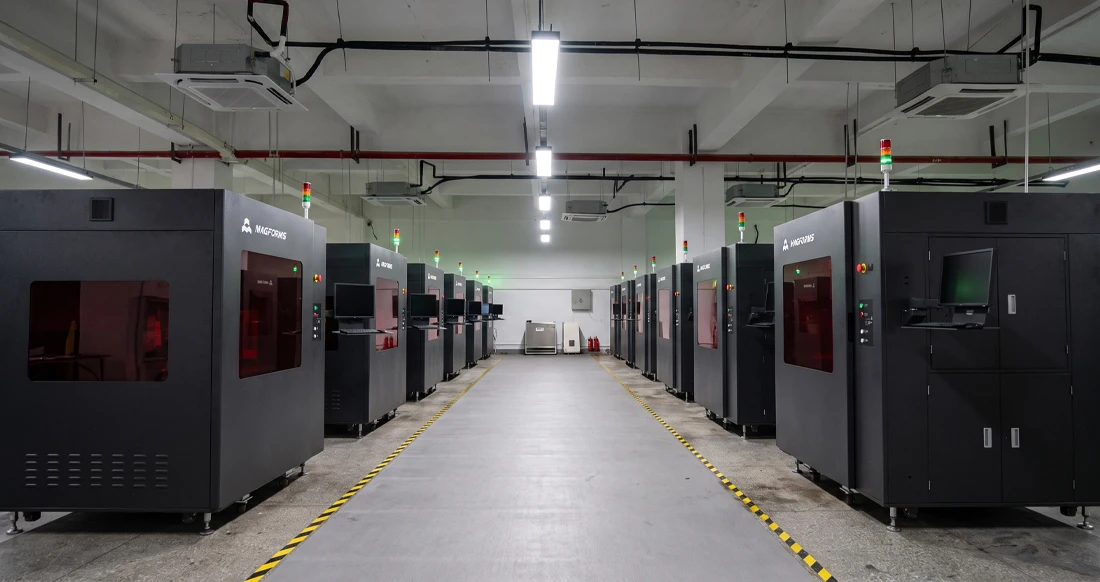
Magforms makes design and manufacture easier.
Popular Blogs
-
 Industry InsightsManufacturing Industry
FDM vs. SLA Printer: Which Technology Is Right for Your Project?
-
 Industry InsightsManufacturing Industry
Top 5 Applications of Industrial 3D Printers in Manufacturing Today
-
 Industry InsightsManufacturing Industry
Why Stereolithography 3D Printers Are Unmatched for Microfluidic Device Prototyping?