Exploring the Benefits of Using a 3D Shoe Printing Machine
Using additive manufacturing technology, the Shoe 3D printer changes the way shoes are made by replacing old ways of making them. With this specialized equipment, makers can make personalized shoe parts with a level of accuracy that significantly exceeds traditional manufacturing methods. They can do this without having to buy expensive tools and with much shorter lead times. More and more industrial buyers are realizing that buying a Shoe 3D printer is a good investment because it gives them more design options, more environmentally friendly production methods, and the ability to meet changing customer demands for personalized shoes.
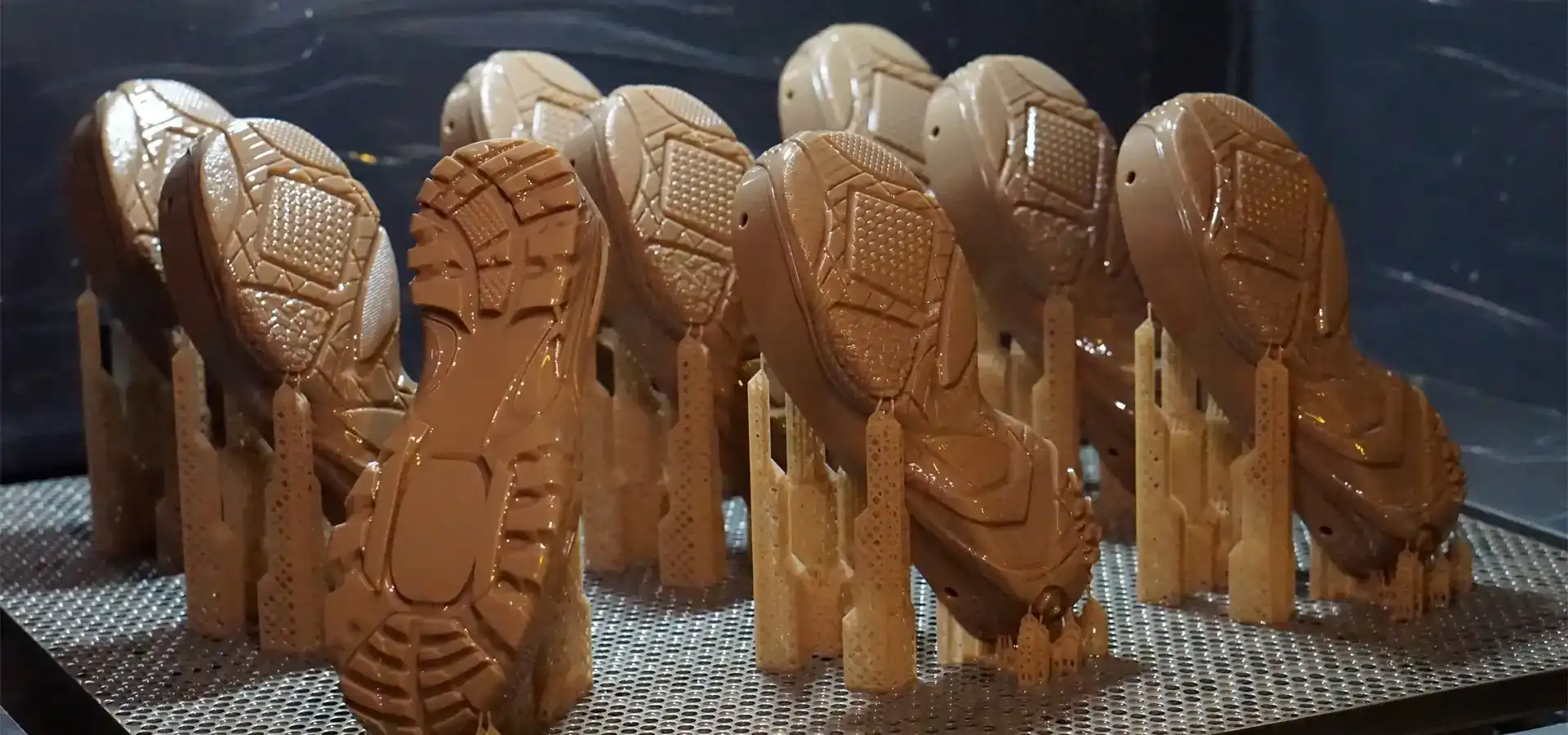
Understanding Shoe 3D Printing Technology
Compared to traditional methods like injection molding and compression molding, additive production for shoes is a big change. The technology changes standard 3D printing methods to work with flexible materials that have the same mechanical qualities as regular shoe parts.
Core Technologies and Manufacturing Processes
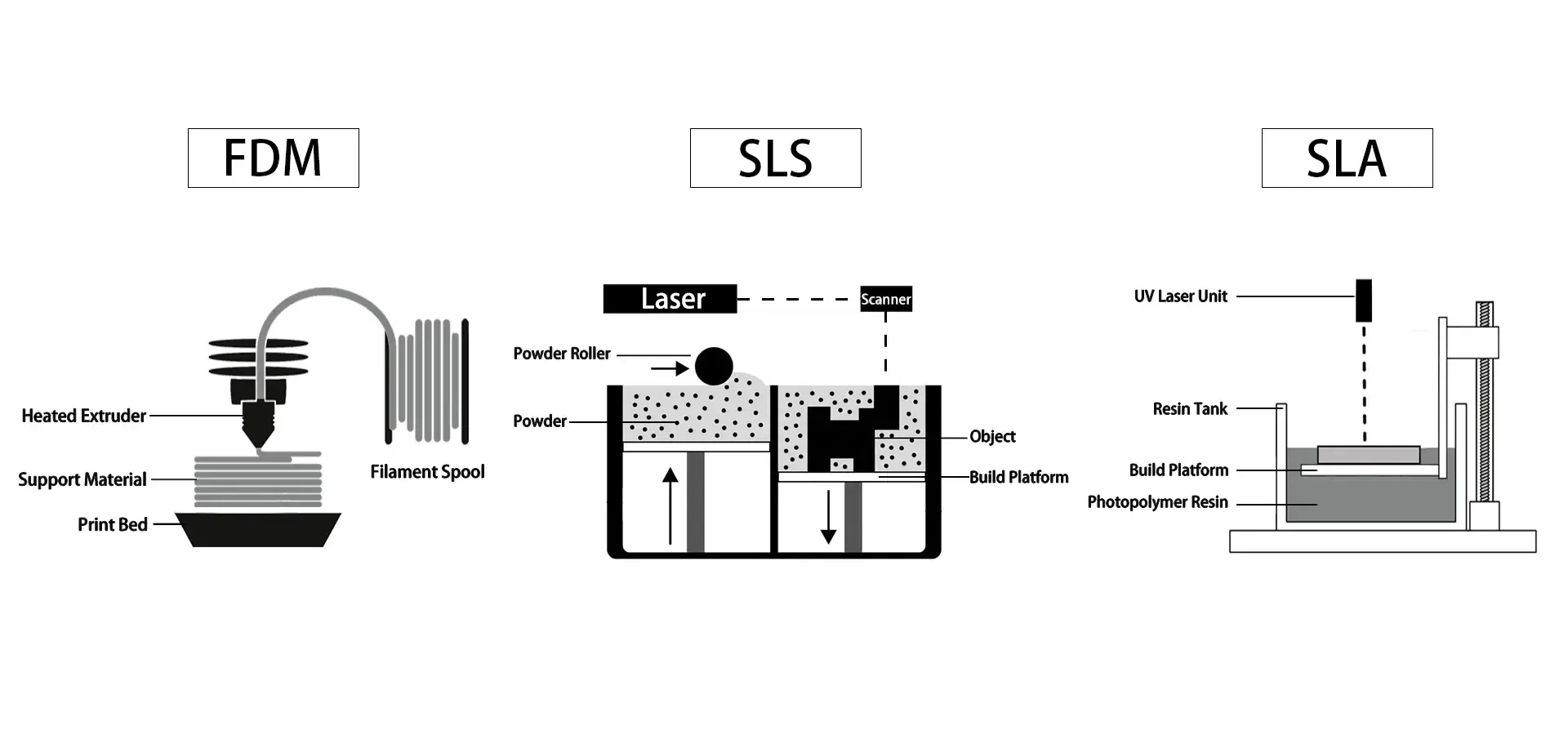
Modern industrial Shoe 3D printer systems are primarily based on industrial-grade Stereolithography (SLA) technology, which remains the leading solution for high-precision footwear applications. SLA systems utilize laser-based photopolymerization to achieve exceptional surface quality, fine feature resolution, and consistent dimensional accuracy.
Compared to other additive technologies:
Selective Laser Sintering (SLS) is suitable for powder-based production and complex geometries without supports, but typically lacks the surface smoothness required for high-end footwear components.
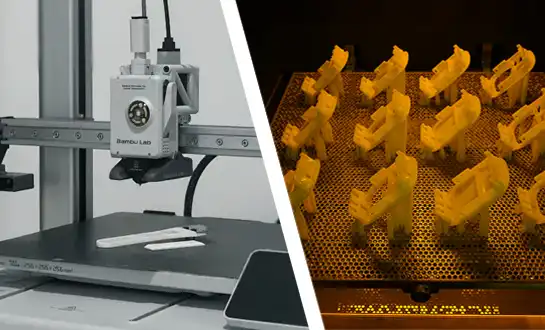
Fused Deposition Modeling (FDM) is mainly used for prototyping due to its lower resolution and limited capability in producing fine lattice structures.
Industrial SLA systems are particularly well-suited for footwear applications involving lattice midsoles, precision molds, master patterns, and high-detail functional prototypes, where surface finish and accuracy are critical.
These systems process advanced photopolymer materials, including elastomer-like photopolymer resins engineered to replicate key rubber-like mechanical properties. Material properties such as Shore hardness (typically ranging from 40A to 90A equivalent) directly influence cushioning performance, flexibility, and structural support.
Desktop versus Industrial System Capabilities
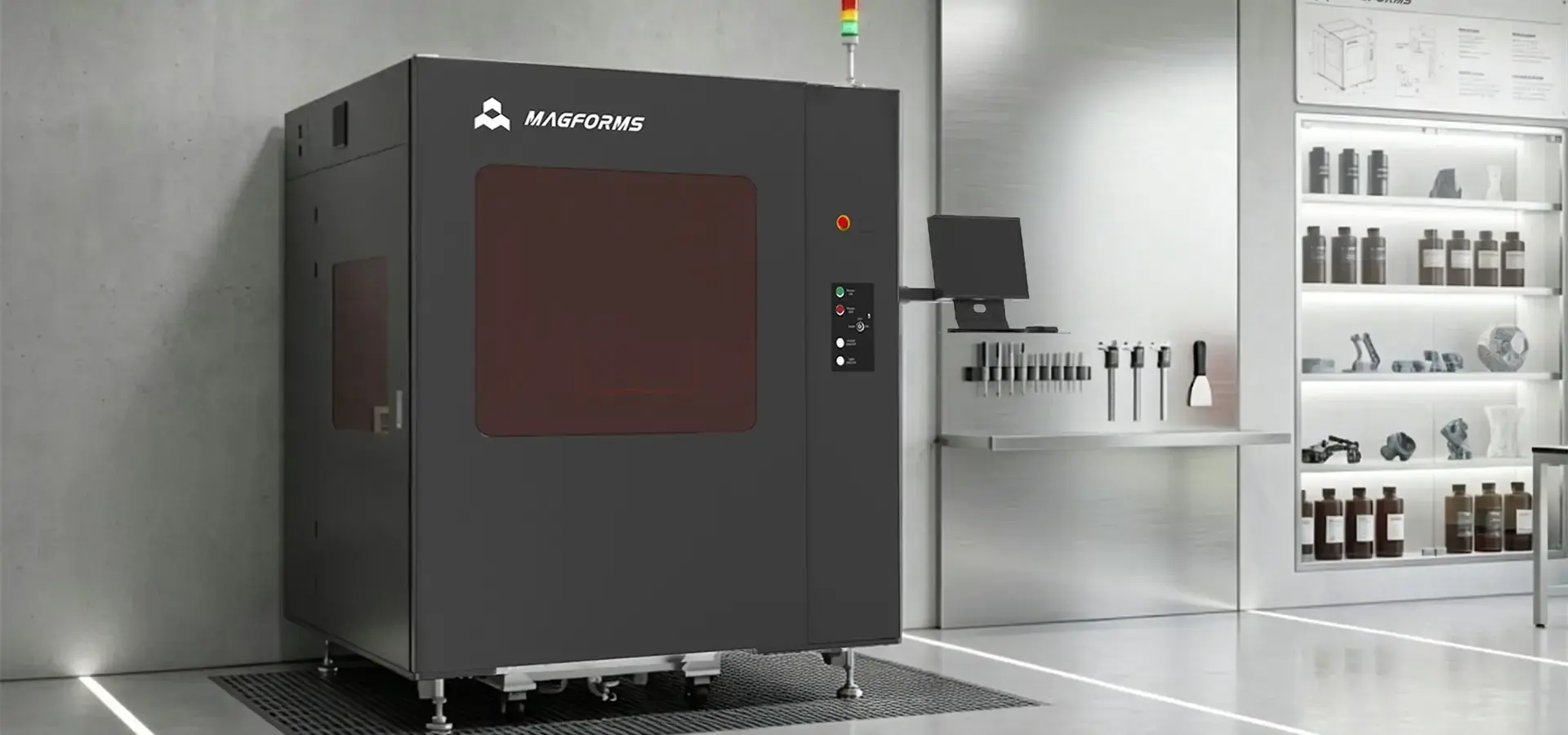
Desktop models are suitable for prototyping and small-batch customization, typically offering build volumes below 200 × 200 × 200 mm. Industrial systems, by contrast, feature large-format build chambers exceeding 600 × 600 × 400 mm, enabling batch production of multiple shoe components or full-scale parts within a single build cycle. This enables simultaneous production of multiple components or large-format parts, which would be inefficient or impractical using traditional tooling-based methods in low-volume scenarios. Computer-Aided Design (CAD) modeling is the first step in the manufacturing process. This is where engineers make complex grid structures and variable-density shapes. Advanced slicing software makes the best use of print lines and materials. After printing, parts are cleaned, cured, and given a smooth finish so they are ready for production.
Key Benefits of Using 3D Shoe Printing Machines in B2B Procurement
Shoe 3D printer technology adoption solves important problems in the industry, Shoe 3D printer and gives companies real competitive benefits in many operational areas.
Elimination of Tooling Costs and Design Freedom
Making shoes the old-fashioned way needs expensive metal molds that take weeks to make and cost thousands of dollars. A Shoe 3D printer gets rid of all of these problems, so midsoles, outsoles, and unique insoles can be made right away without having to spend money on making infrastructure. This mold-free method opens up design options that were previously limited by the limits of injection casting. Engineers can make complicated gyroid structures, variable-density lattices, and built-in padding systems that get the most energy back while also being lighter. It is still not possible to make these shapes using subtractive methods or standard casting techniques.
Mass Customization and Rapid Market Response
More and more, modern customers want goods that are customized to their specific biomechanics and aesthetic tastes. 3D printing lets custom insoles be made for each patient using data from foot scans without raising the cost of making each one. Manufacturers of athletic shoes can make performance-optimized cleats that are tailored to different playing conditions and the needs of each player. The technology changes the way inventory is managed by allowing "make-to-order" production models that cut down on storage costs and the risk of having too much old stock. Companies can quickly adapt to changes in the market and seasonal needs without having to commit to big production runs or keep a lot of spare parts on hand.
Enhanced Sustainability and Material Efficiency
Environmental factors are becoming more and more important in all types of businesses when it comes to buying things. 3D printing produces a lot less waste of materials than traditional production, which involves a lot of waste when cutting and shaping. With many methods, significant waste reductions are achievable, particularly for complex geometries, depending on design and process optimization because additive manufacturing only uses the material needed for the end parts. Bio-based and reusable photopolymer resins are now available, which supports the ideas of the cycle economy. When production happens locally, there is no need for movement like there is in global supply lines, so energy use per unit goes down a lot.

Comparing 3D Shoe Printers: Choosing the Best Fit for Your Business
To choose the right tools, you need to carefully look at the technical specs, the working needs, and the long-term business goals.
Technical Parameter Analysis
Print sharpness is one of the most important factors that affects both the quality of the surface and the accuracy of the measurements. Industrial systems usually get an XY precision of 50 to 75 microns, which makes sure that surfaces are smooth, which is important for uses like cosmetic outsoles. Z-axis layer height optimization helps minimize anisotropy effects and improve interlayer bonding consistency, resulting in more uniform mechanical performance compared to many other additive manufacturing technologies. The speed of printing has a direct effect on the cost of production and how quickly the market responds. Modern systems that use changeable spot-size laser technology can achieve optimized build speeds through advanced laser scanning strategies; however, these systems are primarily designed for high-precision, low- to mid-volume production rather than replacing injection molding in high-volume manufacturing. Multi-material functionality is typically achieved through sequential processing or assembly of components with different material properties, rather than simultaneous multi-material printing within a single build, which makes it possible to make shoes with different performance zones.
Material Compatibility and System Integration
There are big benefits to open material platform designs, such as the Shoe 3D printer, compared to private systems that limit the materials that can be used. Procurement teams can save money by choosing photopolymer resins based on performance needs instead of seller rules when materials are flexible and compatible. Leading makers offer options that combine the best tools and materials in one package. A lot of tests are done to make sure that these systems are compatible with each other, so that the dimensions are correct and there are no print failures due to materials not working with the equipment. This kind of merging gives uniform results and makes it easier to train operators and check the quality of the work.
Investment Analysis and Operational Scaling
Professional desktop and entry-level industrial systems typically range from $10,000 to $100,000. Industrial systems that can make things on a large scale, on the other hand, cost between $200,000 and $500,000. The total cost of ownership includes the cost of materials, upkeep contracts, and programs to teach operators. Scalability factors affect the choice of long-term tools. With modular systems, you can expand production capacity through additional systems or larger build platforms or bigger build chambers to increase output without having to replace whole setups. Cloud-based software platforms let people in different places watch and schedule output from afar.
Practical Considerations for Procuring a 3D Shoe Printing Machine
To buy tools successfully, you need to carefully consider your technical needs, the vendor's skills, and the infrastructure for practical support.
Supplier Evaluation and Due Diligence
Established makers show their trustworthiness by having a lot of patents, selling their products in many countries, and having recorded success stories from happy customers. Companies that own a lot of intellectual property usually put a lot of money into research and development to make sure they keep coming up with new ideas and improving their products. Being present in a global market shows that your production is stable and that you can provide local support. Suppliers that work with a wide range of foreign markets know the different rules and quality standards that apply in each area. Customer reviews and case studies are great ways to learn about how well equipment works and how responsive a seller is.
After-Sales Support and Service Infrastructure
The ability to provide technical help has a big effect on how well operations run and how often equipment is available. Professional service companies promise quick responses. The best ones offer 24/7 remote advice and response times of less than four hours for important problems. Training programs that cover a lot of ground make sure that workers learn how to use tools, move materials, and do basic upkeep. Customers can get the most out of their tools and keep up with changes in the industry by getting regular software updates and advice on how to optimize their processes.
Quality Assurance and Compliance Standards
ISO 20344 for personal safety equipment and ASTM D412 for rubber materials are just two of the stringent testing standards that industrial Shoe 3D printer systems are commonly used to evaluate the performance of 3D printed footwear components. These rules make sure that the tensile strength, elongation, and wear resistance meet or go beyond normal production standards. As part of quality control, measurements should be checked, material properties should be tested, and long-term durability should be confirmed. Quality management systems that are written down show that a provider is dedicated to regular performance and following the rules.
The Future of Shoe 3D Printing: Innovations and Industry Impact
As technology keeps getting better, it changes how shoes are made by giving them more uses and better powers.
Emerging Technology Integration
AI and machine learning programs find the best print paths and ways to use materials, which speeds up output and makes it more consistent. Advanced systems look at old print data to guess what might go wrong and then change settings automatically to keep quality standards. Multi-material integration lets different elastomers with different mechanical traits be integrated through multi-step workflows or assembly processes. This feature lets full shoes with hard support parts, flexible cushioning zones, and nice-looking surface treatments be made in a single build.
Supply Chain Transformation
Localized output made possible by 3D printing technology Shoe 3D printer makes markets more responsive while reducing reliance on global supply lines. Regional production centers can serve local markets more cheaply and more quickly because they don't have to travel as far. Traditional "make-to-stock" methods are changed into flexible "make-to-order" systems by digital inventory management. Cloud-based design libraries give you fast access to approved shoe models and protect your intellectual property through safe distribution networks.
Market Evolution and Competitive Dynamics
People who use Shoe 3D printer technology early on have a big edge over their competitors because they can customize their products better and get new products to market faster. As the price of technology goes down and its powers grow, it will be used more and more in all types of markets, from high-end tailoring to everyday uses. As traditional makers get better at 3D printing or team up with tech companies, the industry may become more consolidated. Companies that do well will combine additive manufacturing with their current production methods to get the best quality and speed in production as a whole.
Conclusion
The Shoe 3D printer is a game-changing piece of technology that solves some of the biggest problems in the shoe industry while also making customization and sustainability possible on a scale never before seen. When companies invest in this technology, they gain a competitive edge because they don't have to pay for expensive tools and can use fast development and responsive production systems. As technology keeps getting better and more materials become available, 3D printing will become an even more important part of making shoes. To make adoption work, you need to carefully choose your vendors, make sure they offer thorough training programs, and make sure they can work with your current operating systems. Manufacturers who use this new, cutting-edge technology while still focusing on quality, customer happiness, and business excellence will be successful in the future.
FAQ
1. What materials work best with industrial shoe 3D printing systems?
High-performance elastomeric materials, including TPU (Thermoplastic Polyurethane), EPU (Elastomeric Polyurethane), and specialized block copolymers, deliver optimal results for footwear applications. These materials provide Shore Hardness ranges from 40A to 95A, enabling the production of components with varying flexibility and support characteristics. Advanced photopolymer resins offer excellent fatigue resistance, typically withstanding over one million compression cycles without significant degradation. Material selection should consider end-use requirements, processing temperature limitations, and post-processing compatibility.
2. How does the durability of 3D printed shoes compare to traditional manufacturing?
3D printed footwear components demonstrate excellent durability when manufactured using appropriate materials and processes. Tensile strength often exceeds 350% elongation at break, while energy return characteristics can reach 70-80% in optimized lattice structures. Advanced printing technologies produce parts with highly uniform mechanical performance, although some degree of anisotropy may still exist depending on build orientation and process parameters common in layer-based manufacturing. Rigorous testing protocols, including ISO 20344 and ASTM D412 standards, ensure printed components meet or exceed traditional manufacturing benchmarks for commercial applications.
3. What are the environmental benefits of 3D shoe printing versus conventional methods?
When compared to standard cutting and shaping methods, additive manufacturing substantially lowers material waste by using only the material needed for final components. This results in a significant reductions in material waste. Localized production cuts down on energy use because it gets rid of the need for movement that comes with global supply lines. A lot of new photopolymer resins now have bio-based ingredients and reusable formulas that support the ideas of the cycle economy. Digital inventory management cuts down on overproduction and old stock, and it also lets manufacturers make products that are sensitive to changes in demand.
Ready to Transform Your Footwear Manufacturing with Magforms
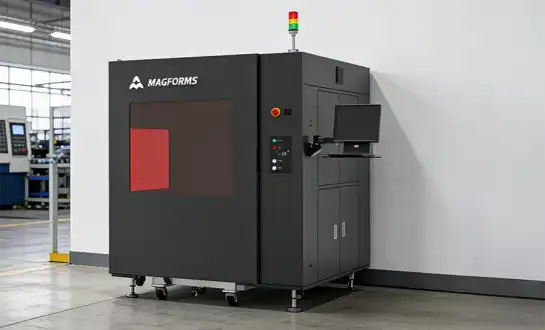
Magforms offers state-of-the-art Shoe 3D printer options that are designed for tough industrial uses and work best for B2B purchasing needs. Our high-tech SLA systems have German Scanlab galvanometers, AOC lasers, and variable spot-size technology that makes improving production efficiency by 30–50% in optimized workflows while maintaining micron-level precision and repeatability. We offer bundled equipment and material solutions that remove compatibility problems and guarantee consistent results. These solutions have been tested and proven to work in more than 300 businesses around the world. Get in touch with our knowledgeable staff at info@magforms.com to find out how our Shoe 3D printer maker services can change the way you make things and give you a clear edge over your competitors.
References
1. Gibson, I., Rosen, D., & Stucker, B. "Additive Manufacturing Technologies: 3D Printing, Rapid Prototyping, and Direct Digital Manufacturing." Springer Science & Business Media, 2021.
2. Thompson, M.K., et al. "Design for Additive Manufacturing: Trends, Opportunities, Considerations, and Constraints." CIRP Annals - Manufacturing Technology, Vol. 65, 2020.
3. Petrick, I.J. & Simpson, T.W. "3D Printing Disrupts Manufacturing: How Economies of One Create New Rules of Competition." Research-Technology Management Journal, Vol. 56, 2019.
4. Wohlers, T. & Gornet, T. "History of Additive Manufacturing: Wohlers Report 2024 - 3D Printing and Additive Manufacturing Global State of the Industry." Wohlers Associates, 2024.
5. Ford, S. & Despeisse, M. "Additive Manufacturing and Sustainability: An Exploratory Study of the Advantages and Challenges." Journal of Cleaner Production, Vol. 137, 2021.
6. Huang, R., Riddle, M., Graziano, D., et al. "Energy and Emissions Saving Potential of Additive Manufacturing: The Case of Lightweight Aircraft Components." Journal of Industrial Ecology, Vol. 20, 2022.

Magforms makes design and manufacture easier.
Popular Blogs
-
 Industry InsightsManufacturing Industry
FDM vs. SLA Printer: Which Technology Is Right for Your Project?
-
 Industry InsightsManufacturing Industry
Top 5 Applications of Industrial 3D Printers in Manufacturing Today
-
 Industry InsightsManufacturing Industry
Why Stereolithography 3D Printers Are Unmatched for Microfluidic Device Prototyping?