Fast Resin 3D Printer for Dental and Medical Applications
Fast resin 3D printer technology represents an advanced iteration of vat photopolymerization systems engineered specifically for high-throughput medical and dental manufacturing. Unlike traditional laser-scanning SLA systems, modern printers based on LCD (mSLA) or DLP projection use parallel light exposure along with special release films and precise motion control to print faster than 100mm per hour. This breakthrough addresses the critical bottleneck of prototyping latency in clinical settings, enabling dental laboratories and medical device manufacturers to produce biocompatible parts—such as orthodontic models, surgical guides, and implant prototypes—within minutes rather than hours, fundamentally transforming patient care timelines and production economics.
Introduction
Healthcare manufacturers are under more pressure than ever to make personalized medical items rapidly without losing accuracy or following all the standards. The best solution is a fast resin 3D printer that revolutionizes dentistry and medical product production with micron-level accuracy and reliability. Procurement workers in B2B healthcare must know about these technical benefits to improve production lines and achieve tighter clinical deadlines.
Fast-paced progress through 2026 will allow leading manufacturers to deliver new printer models that fulfill medical precision and tight compliance norms. Technical directors and procurement managers must understand how fast resin 3D printer systems differ from regular systems and which performance measures affect clinical results. This guide provides a comprehensive overview of fast resin 3D printer technology, including how buyers may objectively evaluate technologies, optimize buying processes, and identify trusted production partners to boost business productivity and lower total cost of ownership.
Understanding Fast Resin 3D Printing Technology in Dental and Medical Applications
Core Technology Architecture
Fast resin 3D printer systems use LCD and DLP technologies to cure liquid photopolymer resins at unprecedented rates without compromising dimensional accuracy or surface finish quality. The technical construction uses high-transmittance monochrome LCD displays and COB light sources delivering stable irradiance levels (typically >6 mW/cm²) for consistent curing performance. This facilitates sub-second layer cures. These devices use tension-tuned release films like ACF (Advanced Composite Film) with less surface energy. This technique reduces peel force by 50% compared to standard FEP films.
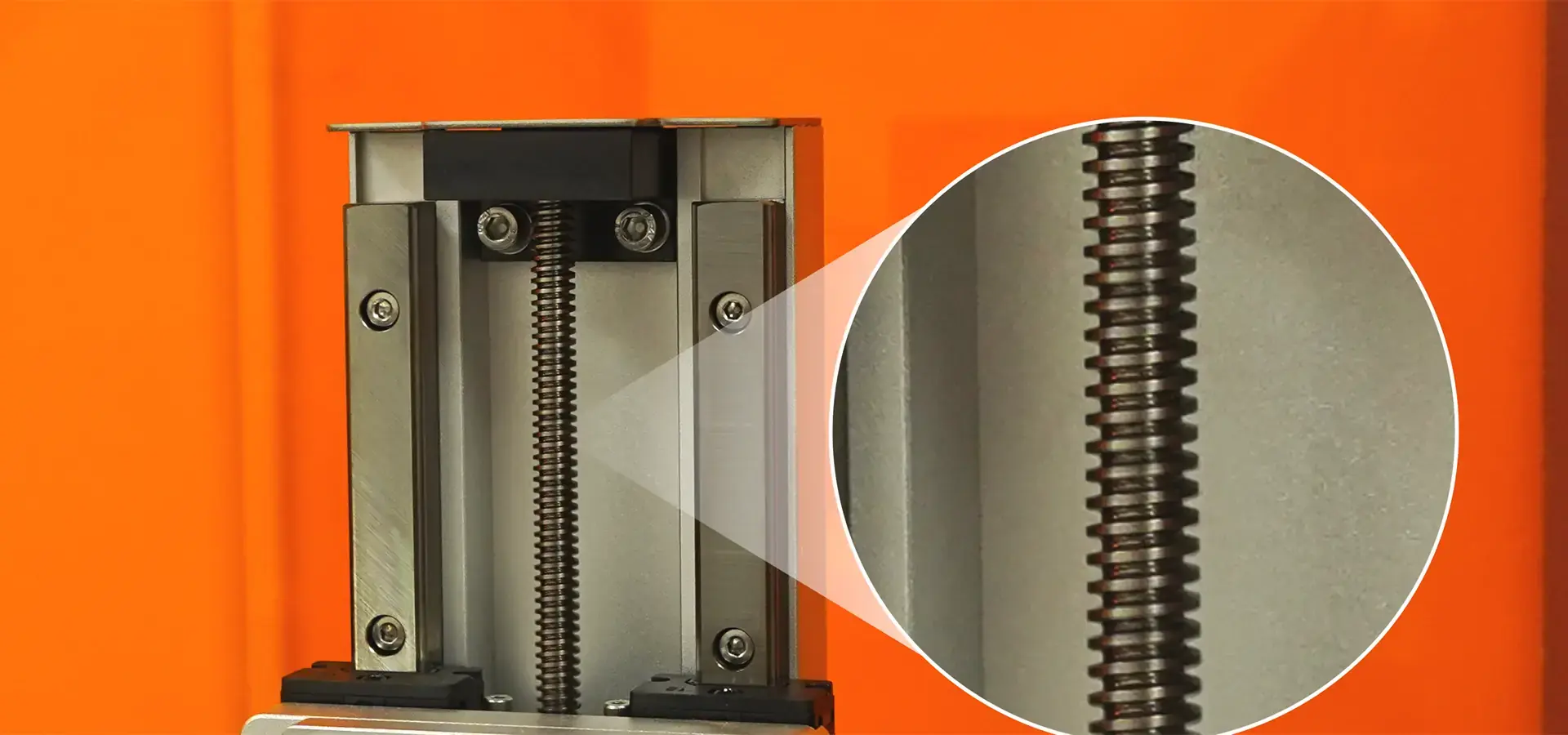
The mechanical system adopts an industrial-grade high-precision lead screw for stable Z-axis motion, ensuring consistent layer stacking and finer surface texture. Additionally, the printer is equipped with dual industrial-grade linear guide rails with parallelism accuracy up to 7 μm, significantly improving motion stability and reducing print failure rates. Even at high lift speeds (typically up to hundreds of mm/min depending on process settings), the system maintains high Z-axis positioning repeatability and motion stability during high-speed lifting. Combined with high-precision kinematics, real-time data processing mainboards can handle dense voxel data without buffer underruns without buffer underruns allow the machine to maintain an XY resolution of 20 to 50 microns when printing faster. With these pieces, modern systems can complete in minutes what previously required hours on conventional equipment.
Medical Application Domains
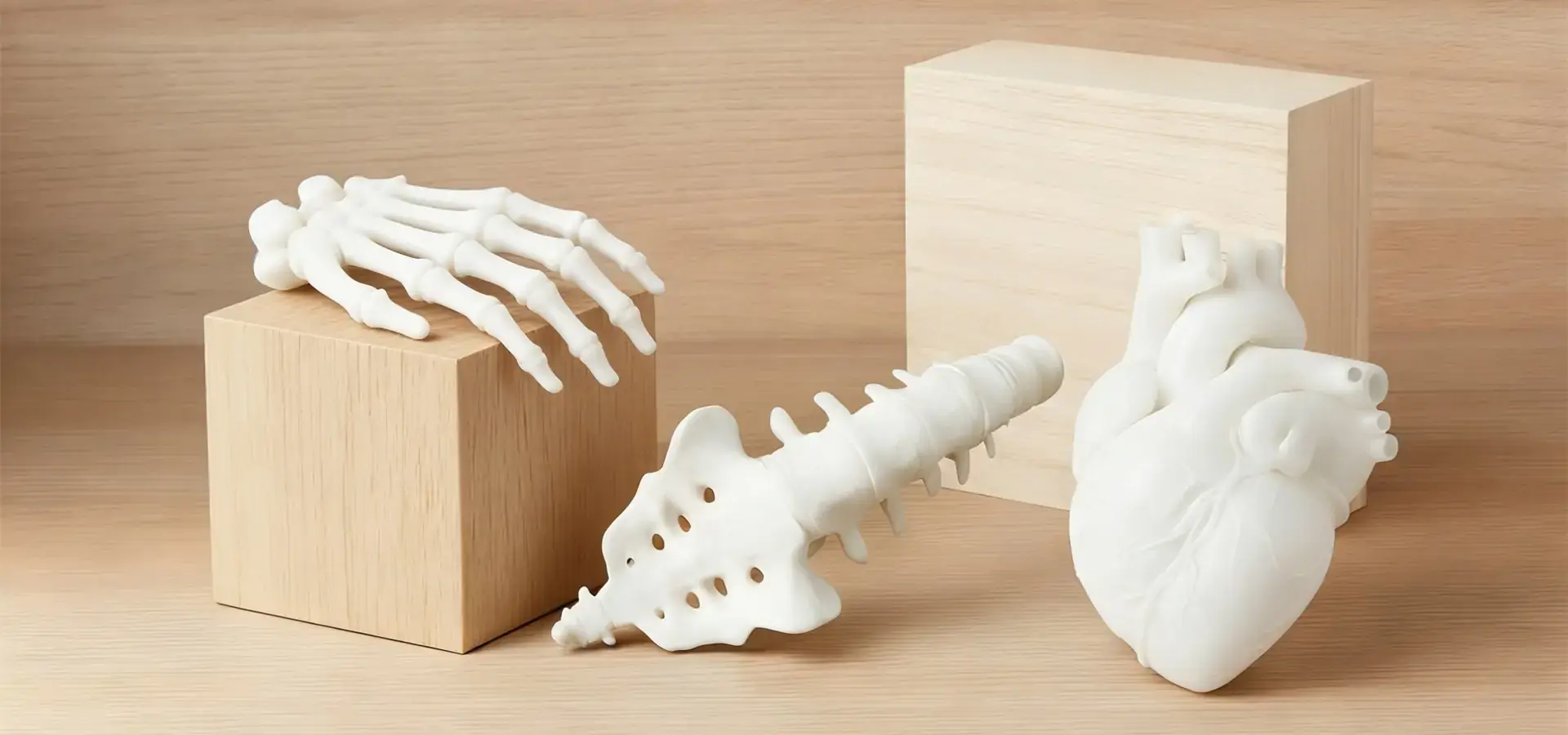
These technologies are crucial in medical settings because they make safe, long-lasting parts like dental arch models, orthodontic aligner bases, surgical drilling guides, and custom samples for orthopedic implants. The process converts medical imaging data (typically DICOM converted into STL files) into precise physical parts with high reliability and repeatability. This cuts patient wait times from weeks to same-day delivery, which is a huge improvement. Dental labs use these systems to make whole batches of aligner models in less than 40 minutes. This lets patients get their aligners right away and gets rid of the extra work that comes with making models over several days.
Companies that make medical devices use fast resin 3D printer technology to quickly create prototypes of surgical tools and anatomical models of specific patients for pre-surgery planning. Design teams can check tight specs (±0.05 mm) and assembly mechanics in just one work shift because they can print engineering-grade tough plastics quickly. This speeds up the entire product development process, allowing for faster regulatory submissions and faster time-to-market benefits in the market.
Key Performance Benefits
Print speeds are over 30% faster than average in the business, which is the main benefit. Production efficiency also increases. This speed is critical for clinical processes, where same-day turnaround has a direct effect on how happy patients are and how much money the office makes. Modern systems can create layers that are 25 to 50 microns thick and utilize high-resolution 8K-class LCD panels for fine feature reproduction, ensuring that the details of the anatomy are very accurate. Surface finish quality can eliminate many post-processing steps, which saves time, money, and materials.
Small-batch customization, which is a part of personalized care, makes cost-effective on-demand production a viable fit. Instead of keeping expensive stocks of pre-made sizes, healthcare workers can make custom devices for each patient as needed. This frees up capital that would have been used to hold on to unwanted stock and improves clinical results. Resin-based systems are more cost-effective than powder bed technologies because they use less material and don't need as much support structure. This makes them even better for high-mix, low-volume medical production settings.
Comparing Fast Resin 3D Printers with Other 3D Printing Technologies
Performance Advantages Over Traditional SLA and DLP Systems
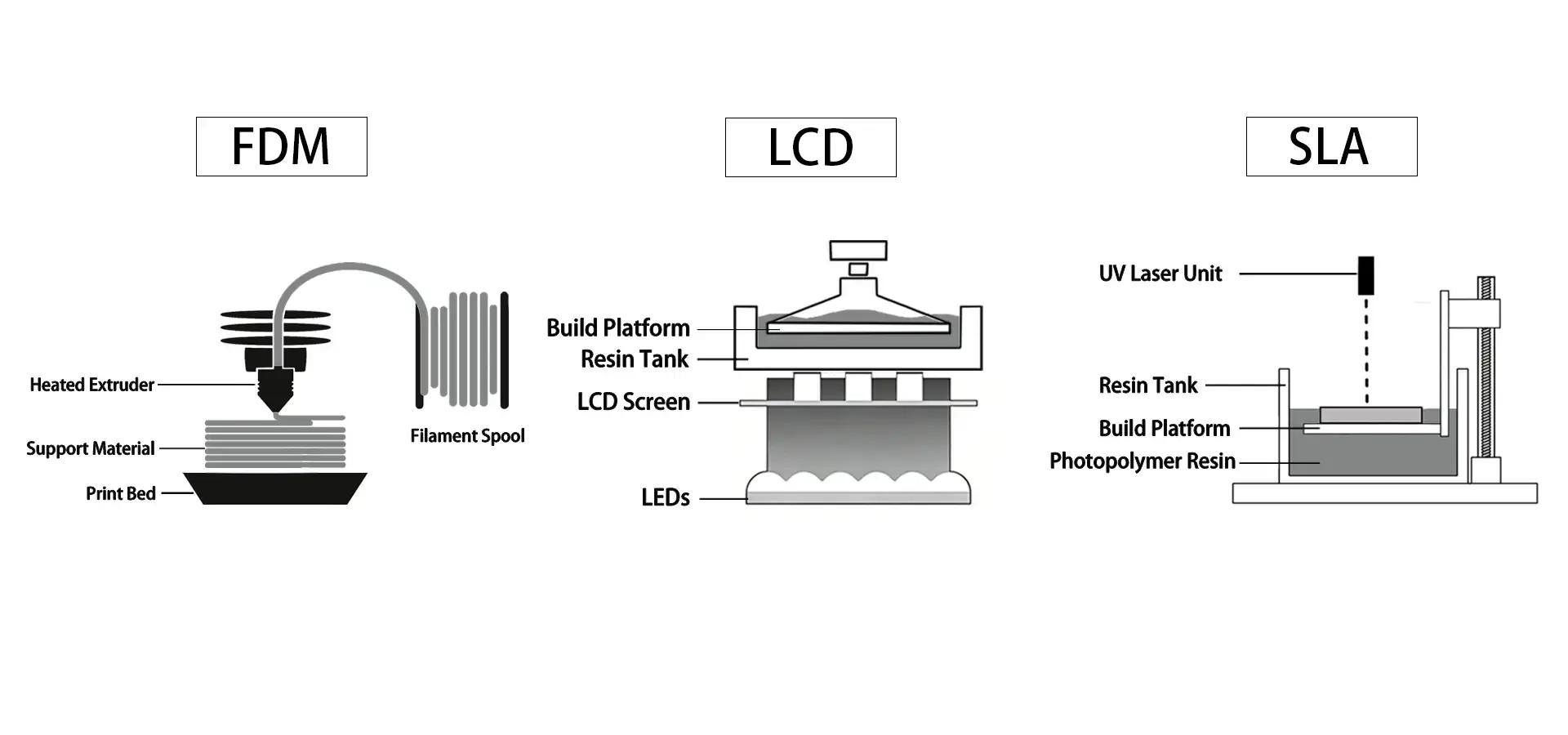
Fast resin 3D printer units can print more quickly than traditional SLA and DLP printers because they use better curing systems and parallel layered exposure methods. They also keep the fine detail needed for medical devices like dental crowns, bridge frameworks, and surgical guide bushings. Point-by-point laser scanning SLA systems naturally have a low output because the laser has to follow the shape of each layer one at a time. Masked stereolithography and DLP technologies, on the other hand, fix whole layers at the same time, which cuts the exposure time per layer from minutes to seconds.
What sets them apart is their advanced release mechanisms and high-speed Z-axis motion systems. To keep parts from coming apart or the support structure from failing, traditional equipment usually needs slow lift speeds and long settling times. Modern systems that use fast resin have varying lift speeds and smart acceleration rates. They lift strongly during non-critical phases and move slowly near the build platform interface during critical phases. This dynamic motion optimization, along with low-adhesion release sheets, makes it possible to print continuously without any quality loss.
Superiority Over Filament-Based FDM Technologies
Resin-based technologies offer much better surface smoothness and measurement accuracy than filament-based FDM (Fused Deposition Modeling) printers, which are important for meeting healthcare standards. When you use FDM, the layer lines are always obvious. To get medical-grade surface finishes, you have to do a lot of work afterward, like sanding, vapor smoothing, or chemical treatment. The layer-by-layer deposition of molten thermoplastic filament also adds mechanical qualities that are not uniform. For example, parts have much lower strength along the Z-axis because the layers can't stick together as well.
Resin photopolymerization can achieve near-isotropic mechanical properties under optimized curing conditions, meaning that the strength vectors stay the same no matter how the build is oriented. When the polymer matrix hardens, it makes continuous molecular links across layer interfaces. This gets rid of the structural weakness lines that are common in extruded thermoplastics. Surface roughness measures for resin-printed parts usually show Ra values below 2 microns as-printed, which is suitable for many medical applications when combined with validated post-processing workflows.
Market-Leading Models for Healthcare Applications
In recent years, the market has introduced several outstanding dental and medical production tools. Gingival borders and occlusal surface roughness can be printed fast on 8K or 12K monochrome LCD panels with pixel sizes of around 30 microns. Material tracking systems, process validation documents, and closed-loop environmental monitoring follow the quality management standards of ISO 13485 and FDA 21 CFR Part 820.
Leading manufacturers also differentiate themselves through comprehensive support systems. Complete slicing software with safe resin print settings is available from top manufacturers. This saves engineers weeks of trial-and-error parameter development. Remote tracking with real-time notifications lets service centers and large hospital networks operate multiple printers from one location. Private closed systems limit cost management and supply chain freedom, but third-party materials and high-quality printing provide buying managers with additional control.
Optimizing Fast Resin 3D Printer Performance for Medical Applications
Material Selection and Print Parameter Optimization
Before using your fast resin 3D printer, choose the best photopolymer resins for your clinical needs. Shore A hardness levels between 50 and 80 are ideal for flexible tooth- biting splints and orthodontic models. Surgical guides that need to keep their shape after being sterilized and during surgery should be made from strong industrial polymers that have a flexural modulus greater than 2000 MPa. Biocompatible solutions that pass ISO 10993 cytotoxicity and sensitization tests ensure patient safety for devices that touch tissue or stay in the body briefly.
Print parameter optimization balances exposure time, layer thickness, and lift speed to achieve mechanical properties and throughput. Without enough exposure, layers don't stick together, and features aren't defined. However, overexposure causes light bleed and excessive polymerization. Modern slicing software provides exposure validation capabilities for rapid calibration with typical test shapes. This reduces setup time from hours to minutes.
Preventive Maintenance Protocols
To keep devices functioning optimally, implement systematic regular maintenance plans that involve replacing worn-out parts and checking the calibration. Depending on the resin chemistry and the complexity of the part shape, release films usually need to be replaced every 50 to 100 print hours. When films become old, they have more peel force, which can cause prints to fail, layers to shift, and FEP punctures that can contaminate the resin vat. LCD screens have limited useful lives, measured in thousands of hours. Over time, the irradiance decreases, which changes the corrective depth and could weaken the mechanical qualities if not noticed.
As part of regular maintenance, optical surfaces are cleaned with isopropanol, linear motion parts are checked for debris buildup, and precision dial signs are used to ensure that the build platform is level. Cleaning the resin vat between changing materials stops cross-contamination that could hurt biocompatibility or change how well the material works mechanically. Monitoring the environment makes sure that the temperature stays within the range recommended by the maker, which is usually between 20°C and 25°C. This requirement is because polymerization rates are temperature sensitive, which can change the accuracy of measurements and the quality of the finish on the surface.
Quality Assurance and Regulatory Compliance
DPI (dots per inch), layer thickness uniformity, and dimensional precision are crucial to meeting medical device quality assurance and legal regulations. According to the FDA Quality System Regulations, paperwork must prove the process is genuine, and parts are regularly made to standard. This requires statistical process control systems to monitor critical performance indicators such as dimensional deviation from CAD standards, surface roughness readings, and destructive witness sample checks to verify mechanical qualities.
Dimensional inspection techniques compare part geometry to digital design files using coordinate measuring devices or optical scanning technologies. Typically, ±0.1mm for non-critical features and ±0.05mm for functional interfaces like surgical guide sleeves are acceptable limits. Material lot tracking links final items to resin batch and printer serial numbers. This allows immediate quality response and root cause analysis. These practices allow procurement managers to help manufacturing teams put up tools to speed up production and ensure compliance.
Making Informed Procurement Decisions for Fast Resin 3D Printers
Supplier Evaluation Criteria
Effective buying extends beyond the prices of fast resin 3D printers. It also considers supplier reliability, certification compliance, and customer support. These things are crucial for minimizing downtime in fast-paced medical production. Potential sources should have ISO 9001 and ISO 13485 quality management systems if they create medical equipment. Suppliers with these licenses follow coordinated design control, process validation, and corrective action processes that affect equipment reliability and consistency.
Technical support response time is another rating factor. Medical production has tight timetables, so equipment failures interfere with doctors' meetings and cost money. Suppliers who provide phone, email, online diagnostic access, and written response time assurances reduce operational interruptions. Instead of sending broken equipment to faraway service centers, local service professionals can solve major component failures much faster.
Warranty and Service Agreement Analysis
Standard one-year warranties aren't enough for long-term capital tools, so choose wisely. Pay-per-incident repair models have a higher total cost of ownership than extended warranty plans or yearly maintenance contracts that provide priority access to parts, frequent maintenance visits, and part replacements. Because of volume discounts on equipment, materials, and spare parts, a corporation with numerous printers can save money. This maintains supply chain efficiency.
Service level agreements should include guaranteed response times, the longest repair time, and loaner tools during protracted outages. Missed service promise penalties provide financial protection against seller performance failures. Operators and maintenance staff should be well-trained on how to use equipment, address problems, and perform routine maintenance to enhance operational uptime and prevent user failures that could invalidate the guarantee.
Total Cost of Ownership Calculations
A complete price structure analysis helps purchasers calculate the total cost of ownership by including the original capital cost and consumables, including resins, release films, build platforms, and replacement LCD panels. Private formulae and third-party resins vary greatly in price. Some manufacturers use RFID-chipped cartridges or software lockouts to create false product restrictions. Using open material systems equipment lets buyers bid on resin sellers and prevents single-source supply chain issues.
Making spare parts easy to identify and prices explicit would help avoid unexpected costs. After several years, power supplies, cooling fans, and linear motion systems must be changed. Full spare component listings with established prices show that providers care about their customers long-term, not simply for planned obsolescence. People rarely consider energy consumption standards when making a choice, yet they affect operating costs for places that run equipment continually for many shifts. Good heating systems and LED light sources consume less electricity than earlier technologies.
Application-Specific Configuration Guidance
Customized medical and dental views enable decision-makers to match printer characteristics to practical uses. When orthodontic model manufacturing is a priority for dental labs, large-format build sizes allow printing numerous patient cases at once, increasing productivity per print cycle. Medical device makers might choose smaller printers with high-quality optical components and sturdy frames instead of larger ones to achieve better XY resolution and mechanical accuracy when making surgical guides.
Biocompatible resins have varying viscosities, cure durations, and post-processing requirements, so material compatibility is crucial. Certified printers for multiple resin makers give businesses more options and reduce the chance of running out of supplies. These tool purchases decide whether organizations can reach their goals by balancing production efficiency, quality of clinical results, cost-effectiveness, and consistent service.
Future Trends and Innovations in Fast Resin 3D Printing for Healthcare
Sustainable Material Development
Fast resin 3D printer technology in medical production will focus on biocompatibility and eco-friendly material development. Traditional photopolymer resins made from petroleum feedstocks may harm the environment and workers; therefore, regulators are paying more attention to them. Next-generation formulas using bio-based monomers from corn starch or soybean oil reduce their carbon footprint while maintaining medical-grade mechanical performance and biocompatibility.
Surgery guidelines and anatomical models are made from biodegradable resins. They solve the problems of discarding thermoset polymers, which end up in landfills forever. These materials degrade into harmless byproducts through chemical or hydrolytic reactions after use. Fully circular material systems that chemically depolymerize spent parts and make fresh plastic are the most environmentally friendly approach to running additive manufacturing supply chains.
Artificial Intelligence Integration
AI-enabled digital processes improve printing accuracy and speed. Old print data shows minor correlations between setup settings, surroundings, and output quality when machine learning algorithms analyze it. The algorithms automatically discover the appropriate exposure times, lift speeds, and support generation strategies for new part forms using these links. Predictive maintenance systems can identify new failure modes before production stops using motion controller, temperature probe, and visual sensor data. They achieve these goals by replacing parts during planned breaks, not emergencies.
Computer vision systems with in-process tracking cameras can detect print defects in real time, halting operations and alerting operators to layer shifts, support structure failures, and resin shortages. Real-time input eliminates the waste of material and machine time in repairing faulty prints, and built-up picture data enables neural networks to recognize less evident defect patterns. Resin printing-specific generative design algorithms automatically create lattice structures, hollow sections, and support shapes that utilize the least material and require the least work while maintaining structural integrity.
Personalized Healthcare Enablement
These new technologies enable rapid prototypes and flexible manufacturing models in corporations, speeding up tailored healthcare. These changes greatly affect medical OEM and healthcare delivery company supply chains. Point-of-care manufacturing, in which hospitals and operating centers use printers to produce personalized equipment for each patient on demand, eliminates supply costs and delays and allows for unprecedented personalization. Surgeons can customize equipment to each patient's anatomy and operation plan hours before the procedure.
Chairside manufacturing allows dentists to scan patients' teeth, use computers to create restorations or orthodontic devices, and deliver the finished products in one visit. This vertical integration shifts value from several supply chain participants. It also reduces treatment times, making patients happy. Distributed manufacturing reduces transportation pollution, eliminates minimum order quantities that cause overproduction, and allows the production of rare or orphan medical devices that serve a small number of patients, which boosts the economy.
Strategic Procurement Considerations
Strategic procurement professionals should expect these technical improvements and invest in platforms that offer software updates, flexible designs for third-party innovations, and compatibility with new sustainable materials. Supplier agreements that emphasize innovation rather than fixed products maintain long-term value as technologies change. Being part of industry working groups and organizations that produce standards ensures that the tools you buy will comply with new requirements on additive manufacturing quality management and internet-connected medical device safety.
Over the next decade, fast resin 3D printer systems will be the major way to make personalized medical devices due to quicker printing rates, better materials, and smarter technologies. Companies that build strong skills in additive manufacturing now, supported by the right tools and smart partnerships with suppliers, will be better positioned when healthcare moves towards personalized care and local production.
Conclusion
Fast resin 3D printing has revolutionized dental and medical device manufacturing with unprecedented speed, accuracy, and reliability. Modern healthcare production requires these. Procurement professionals now test these high-tech systems, compare their performance to application needs, and choose providers who provide full support after the initial equipment sale.
Understanding vat photopolymerization, calculating the total cost of ownership, and predicting future innovations helps decision-makers make smart investments that will pay off in faster production cycles, better clinical outcomes, and more operational flexibility that supports personalized medicine initiatives.
FAQ
What resin types work best for dental applications?
Specialized photopolymer formulations are needed for dental purposes because they need to be biocompatible, stable in size, and have the right mechanical qualities for the job. Class I biocompatible resins that meet ISO 10993-5 and ISO 10993-10 standards can be used for surgery guides and orthodontic models that will only quickly touch mouth tissues. Class IIa materials that have been through more cytotoxicity tests can support temporary intraoral devices like bite braces and provisional crowns staying in place for a long time. Castable resins made for lost-wax processes make it possible to make investment designs for crown and bridge frames that look like jewelry.
How does printing speed affect clinical throughput?
Printing speed directly affects clinical throughput by cutting fabrication cycle times from hours to minutes. This makes it possible to send devices the same day and see more than one patient in a single operating day. If a practice uses regular methods to make orthodontic aligner models, each batch takes four hours. High-speed tools can complete the same work in forty minutes, six times faster. This speed changes the way businesses work, letting dentistry labs take rush orders and charge more, while also making patients happier by shortening treatment times.
What maintenance practices ensure consistent performance?
For a printer to work consistently, it needs routine preventative maintenance that includes replacing consumables, making sure the settings are correct, and following cleaning procedures. Changing the release film every 50 to 100 hours keeps the peel force from rising and causing failures. Precision markers are used to check the level of the build platform once a month to maintain the first layer's stickiness. Clean the glass surface once a week with isopropanol to maintain irradiance consistency. Every year, factory testing services check the accuracy of the motion system and the performance of the light engine against the original specs. This demonstrates that we continue to meet quality management requirements.
Partner with Magforms for Superior Fast Resin 3D Printer Solutions
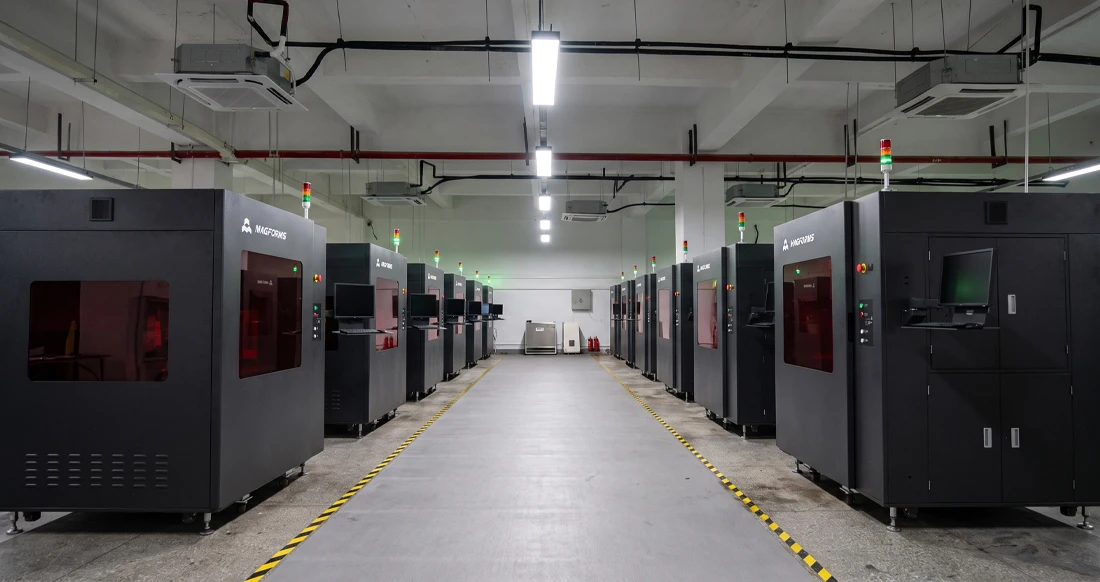
Magforms is a reliable company that makes quick solutions for resin 3D printers and offers combined materials and equipment solutions designed to work in demanding dental and medical production environments. Our unique systems use self-made safe photopolymer resins and high-precision hardware. This approach gets rid of the compatibility problems that come up with mixed-vendor setups and guarantees proven performance from the time of setup to years of continuous use.
Through thousands of working hours and extensive real-world proof, we have honed our deep industry knowledge. We have 22 patents and work with over 300 businesses in dozens of countries. Our machines can print at 30% faster than the average in the industry because they use a high-resolution monochrome LCD imaging system combined with optimized exposure algorithms. They can also keep the micron-level accuracy needed for surgery guides and orthodontic appliances. Magforms offers complete solutions for all aspects of medical device additive manufacturing. Their failure rates are much lower than the industry average, and they offer full technical help, such as remote diagnosis, on-site training, and priority access to parts.
Email our applications engineering team at info@magforms.com to discuss your unique production needs and get thorough equipment suggestions that are tailored to your clinical workflows. Magforms has custom solutions to help you meet your quality, throughput, and regulatory compliance goals, whether you're a growing dental lab looking for fast resin 3D printer suppliers that offer a range of material options or a well-known medical device company that needs validated large-format systems.
References
1. ASTM International. "ASTM F2792-12a: Standard Terminology for Additive Manufacturing Technologies. " ASTM Standards & Publications, 2024.
2. Gibson, Ian, David Rosen, and Brent Stucker. Additive Manufacturing Technologies: 3D Printing, Rapid Prototyping, and Direct Digital Manufacturing. Springer Science, 2023.
3. International Organization for Standardization. "ISO 13485:2016 Medical Devices - Quality Management Systems - Requirements for Regulatory Purposes." ISO Standards Catalogue, 2024.
4. U.S. Food and Drug Administration. "Technical Considerations for Additive Manufactured Medical Devices: Guidance for Industry and FDA Staff. " FDA Medical Device Guidance Documents, 2024.
5. van Noort, Richard. The Future of Dental Devices: Additive Manufacturing and Digital Dentistry. Quintessence Publishing, 2023.
6. Wendel, Bernhard, and Klaus-Peter Wilhelm. "Biocompatibility and Material Properties of Photopolymer Resins for Medical Applications." Journal of Medical Device Manufacturing, Volume 18, Issue 4, 2024.

Magforms makes design and manufacture easier.
Popular Blogs
-
 Industry InsightsManufacturing Industry
FDM vs. SLA Printer: Which Technology Is Right for Your Project?
-
 Industry InsightsManufacturing Industry
Top 5 Applications of Industrial 3D Printers in Manufacturing Today
-
 Industry InsightsManufacturing Industry
Why Stereolithography 3D Printers Are Unmatched for Microfluidic Device Prototyping?