From Prototype to Production: How an Industrial SLA 3D Printer Transforms Workflows
From initial concept designs to production-ready parts, manufacturers across industries face challenges in reducing development cycles, controlling costs, and maintaining high product quality. This product development journey can be significantly improved by an Industrial SLA 3D Printer, which offers high dimensional accuracy, efficient production speed, and broad material versatility. Businesses can quickly test designs, make changes without having to wait for expensive tooling delays, and move smoothly into small-batch production with this advanced stereolithography technology. It achieves excellent surface quality and dimensional accuracy suitable for demanding applications such as functional prototypes, master patterns, and low-volume production parts.
Understanding Industrial SLA 3D Printing Technology
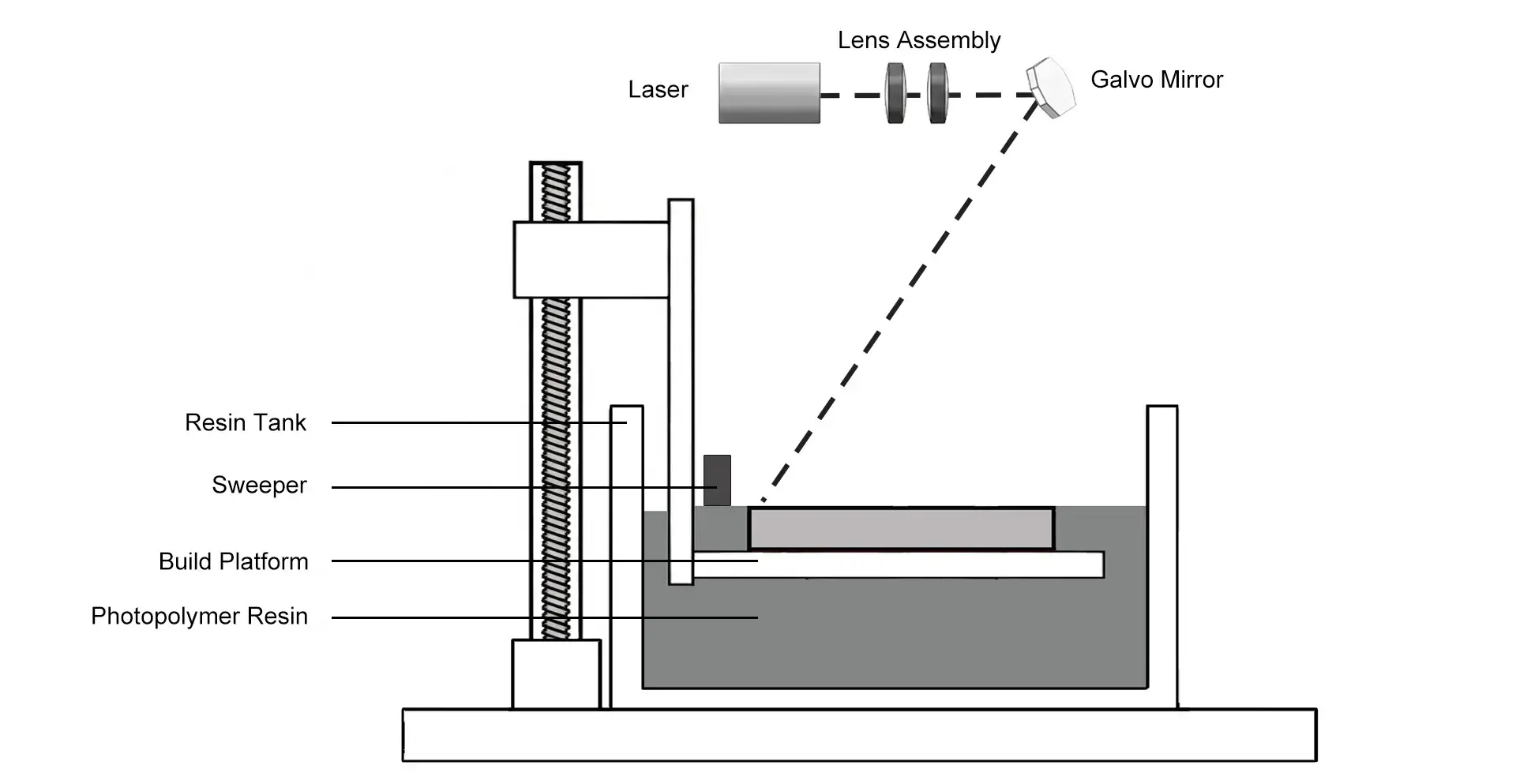
One of the most established and widely adopted additive manufacturing technologies available today is stereolithography. Unlike most desktop resin printers that use LCD masking technology with 405nm light sources, an Industrial SLA 3D Printer uses a precision laser scanning system, typically based on 355nm laser technology, to cure liquid photopolymer resin layer by layer. This lets it build things from the bottom up with great detail. Precision galvanometer scanning systems, temperature-controlled resin vats, and strong motion platforms made for continuous use are the main parts that work together.
How Industrial-Grade Systems Differ from Desktop Models
There are many more differences between consumer-grade and industrial stereolithography equipment besides the build volume. Industrial systems use parts made by well-known companies around the world. For example, AOC lasers provide stable output that can be used in production cycles that run 24 hours a day, seven days a week, and German Scanlab galvanometers make sure that scanning accuracy is maintained over thousands of print jobs. Many industrial systems incorporate enclosed build chambers and environmental control features to reduce temperature fluctuations that may affect resin behavior and dimensional stability.
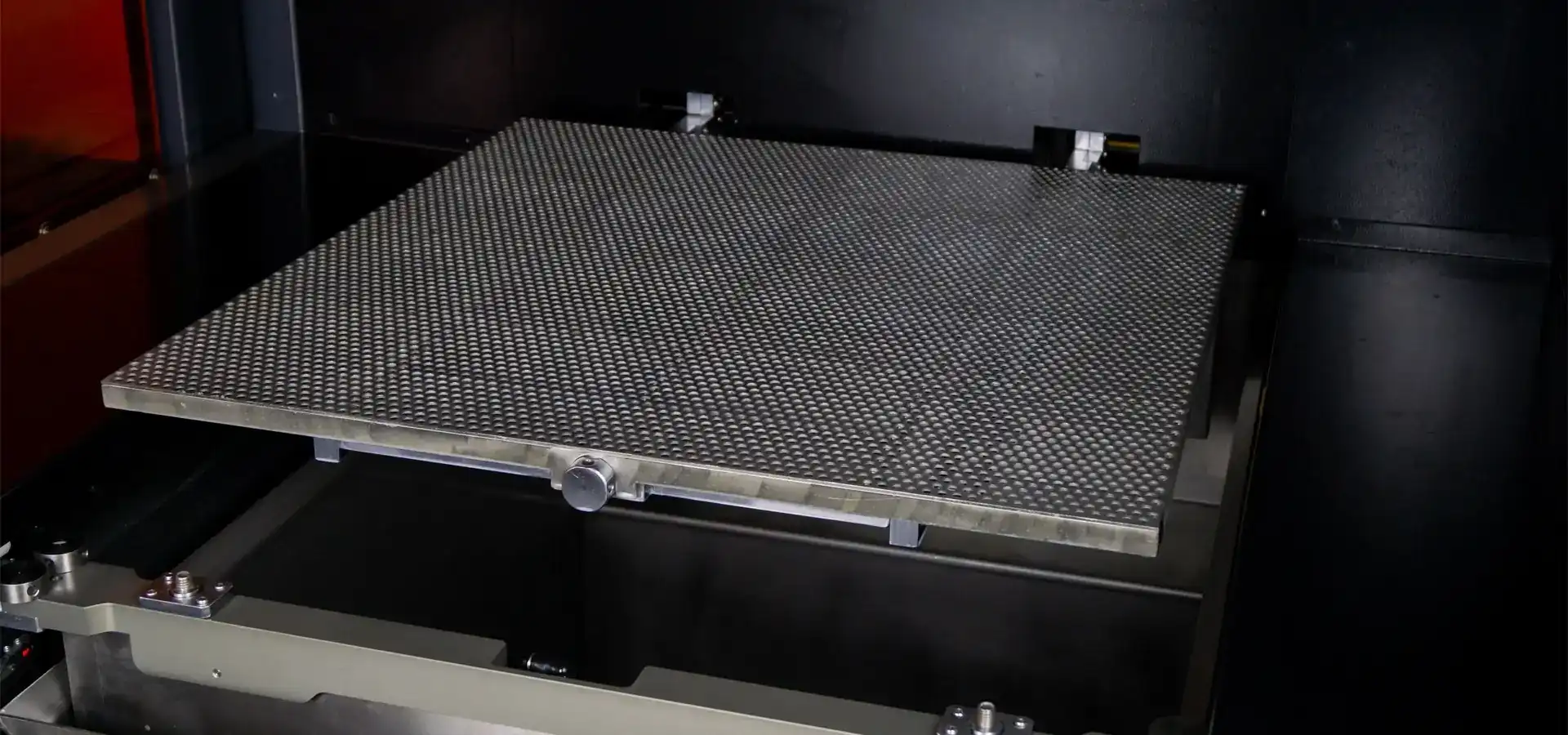
The design of the structure is very important. Many modern stereolithography platforms, including Magforms systems, use rigid metal structures and low-expansion granite or marble platforms to improve mechanical stability during long-term operation. This mix keeps the geometry stable over long print runs, which stops the tiny vibrations that happen with less durable equipment. The positioning accuracy of key mechanical components can reach micron-level precision, while the granite build platform provides high structural stability and maintains flatness during long-term operation. These are important limits that directly affect the quality of the finished part.
Key Components Driving Performance
The optical path, motion control, and material handling are the three most important parts of a stereolithography printer that determine how well it works. The laser section needs to make sure that the energy level is the same across the whole build area. When combined with accurate galvanometers, the method creates laser spots that are very close to having a perfect circle shape. This helps reduce optical distortion and maintain consistent exposure quality across different areas of the build platform. This helps maintain consistent curing performance whether the laser scans areas near the center or edges of the build platform.
Motion control tells the difference between systems that work and ones that don't. The Z-axis platform, recoater blade, and liquid level control are all powered by Panasonic servo motors. These motors make positioning repeatable, which is important for registering layers. Standards in high-quality systems are HIWIN linear guides and lead screws, which increase the life of the system and stop the wear and tear that causes dimensions to shift over time.
👉 Industrial SLA 3D Printer types and solutions
Comparing Industrial SLA with Other 3D Printing Technologies: Making Informed Choices
There are a lot of different additive technologies available, and each has its own benefits for manufacturing decision-makers. Figuring out what stereolithography does best helps match the powers of tools with the needs of production.
Resolution and Surface Finish Advantages
When it comes to surface quality and fine feature reproduction, an Industrial SLA 3D Printer generally provides smoother surfaces and finer details than most FDM systems. With variable spot technology, the laser spot size can be adjusted during printing, allowing Industrial SLA systems to balance fine feature reproduction and scanning efficiency more effectively than traditional fixed-parameter approaches. Magforms systems can adjust laser spot sizes according to different printing requirements, using smaller spots for detailed features and larger spots for efficient scanning in larger areas. Under suitable printing conditions, variable spot technology can improve scanning efficiency compared with fixed-spot approaches while maintaining detailed feature reproduction.
Selective Laser Sintering (SLS) can make functional nylon parts with good mechanical properties, but resin photopolymerization can give you a better surface finish. Parts produced by industrial stereolithography systems typically achieve excellent surface smoothness directly after printing, reducing the need for extensive finishing in many prototype and master pattern applications. After appropriate cleaning and post-curing processes, these parts can be used for applications such as assembly verification, wind tunnel testing, and master pattern production.
Speed and Throughput Considerations
Advanced industrial stereolithography systems equipped with high-performance galvanometer scanners can achieve scanning speeds in the multi-meter-per-second range, depending on the machine configuration and printing strategy. Advanced systems such as Magforms integrate intelligent process optimization technologies to improve scanning strategies and production efficiency. The system can support optimized printing strategies and workflow management, helping improve production efficiency and reduce unnecessary preparation time.
Advanced exposure control and optimized scanning algorithms help reduce visible layer stepping and improve surface quality without requiring extremely thin layers. This makes curved surfaces smoother without making the layers thinner. This enables faster production cycles while maintaining the appearance and functional requirements needed for applications such as consumer electronics prototyping and medical device development.
Total Cost of Ownership Analysis
When judging stereolithography tools, you need to look at more than just the price you paid for it. An industrial SLA 3D printer with an open material system provides greater material flexibility and can help manufacturers optimize material costs according to application requirements. Users can evaluate a wide range of 355nm photopolymer resins from different suppliers, reducing dependence on a single material source. This reduces dependence on a single supplier and allows manufacturers to evaluate materials based on performance and cost requirements.
The cost of maintenance is directly related to the quality of the parts. Much lower failure rates are seen in systems that use widely recognised names for important parts. Schneider electrical components, Philips UV lamps, and sealed optical chambers help protect critical systems from contamination, reducing risks related to optical degradation and unexpected maintenance. Magforms' equipment is put through thousands of hours of continuous operation testing. This way, claims of reliability are backed up by real-world performance data instead of theoretical specs.
Optimizing Workflow Transformation with Industrial SLA 3D Printers
The transition from rapid prototype iteration to low-volume production represents one of the key benefits that stereolithography technology delivers to modern enterprises.
Accelerating Design Validation Cycles
Traditional product development follows a linear path: CAD design, tooling fabrication, sample production, testing, and revision. Each iteration consumes weeks and thousands of dollars in hard tooling costs. An Industrial SLA 3D Printer collapses these timelines dramatically. Design engineers can produce prototype parts shortly after completing CAD design, enabling faster fit, form, and functional evaluations and allowing design improvements to be implemented more efficiently.
This rapid iteration capability is particularly valuable in automotive interior component development, where ergonomic evaluation, visual inspection, and assembly verification are critical. A dashboard prototype printed in transparent resin allows engineers to evaluate internal routing, component clearances, and external styling earlier in the development process, reducing dependence on multiple prototype iterations.
Integration with Digital Manufacturing Workflows
Modern stereolithography systems can integrate into digital manufacturing workflows through network connectivity, monitoring tools, and production management software. The Magforms iBuild 2.0 software interface supports digital workflow management, helping users prepare, monitor, and manage printing tasks more efficiently. The platform provides a more efficient workflow management experience, allowing operators to better track printing tasks and production status.
CAD-to-print workflows commonly use industry-standard file formats such as STL, OBJ, and AMF for model preparation and printing. Automated support generation algorithms can help reduce material usage while improving print reliability when combined with proper process settings, though experienced operators can override defaults when application-specific knowledge suggests alternative approaches. This balance between automation and control accommodates both high-mix production environments and specialized low-volume manufacturing.
Maintenance Practices for Sustained Performance
Consistent output quality from an Industrial SLA 3D Printer depends on systematic maintenance protocols. Resin vat management tops the priority list—liquid photopolymer should be filtered regularly to remove partially cured particles that cause print defects. Vat and release film inspection helps identify damage before it affects resin quality, printing consistency, or optical exposure performance.
Optical path calibration maintains the geometric accuracy that defines stereolithography's value proposition. Laser power verification using energy meters helps maintain consistent curing characteristics as the laser source ages. Galvanometer scanning pattern tests detect mechanical wear before it manifests as dimensional inaccuracy in finished parts. Magforms provides maintenance training and technical support to help customers maintain stable production and resolve operational challenges.
Built-in temperature control systems help maintain stable resin viscosity and printing conditions under changing ambient environments. This feature proves especially valuable in facilities without climate control, preventing the print failures and dimensional variations that occur when resin becomes too viscous during cold weather.
Real-World Implementation Results
Aerospace component manufacturers have documented lead time reductions exceeding 60% after implementing stereolithography for validation prototypes. Complex bracket prototypes that previously required extended machining lead times can often be produced much faster using stereolithography, accelerating design verification and reducing development cycles. Industrial SLA systems can achieve engineering-level dimensional accuracy, with Magforms systems reaching approximately ±0.15mm for parts under 100mm and ±0.15% × L for larger components under specified conditions. This level of accuracy is suitable for many fit-check and prototype validation applications.
Medical device companies leverage the technology for surgical guide production and anatomical modeling. Dental laboratories use stereolithography to produce accurate dental models and orthodontic tooling that support efficient clear aligner manufacturing workflows. The combination of production efficiency, accuracy, and availability of certified biocompatible materials makes Industrial SLA 3D Printers valuable tools for personalized healthcare applications.
👉 Explore Industrial SLA 3D Printing applications
Future Trends and Technological Advances in Industrial SLA 3D Printing
The stereolithography sector continues evolving rapidly, with innovations addressing current limitations while expanding application possibilities.
Material Science Breakthroughs
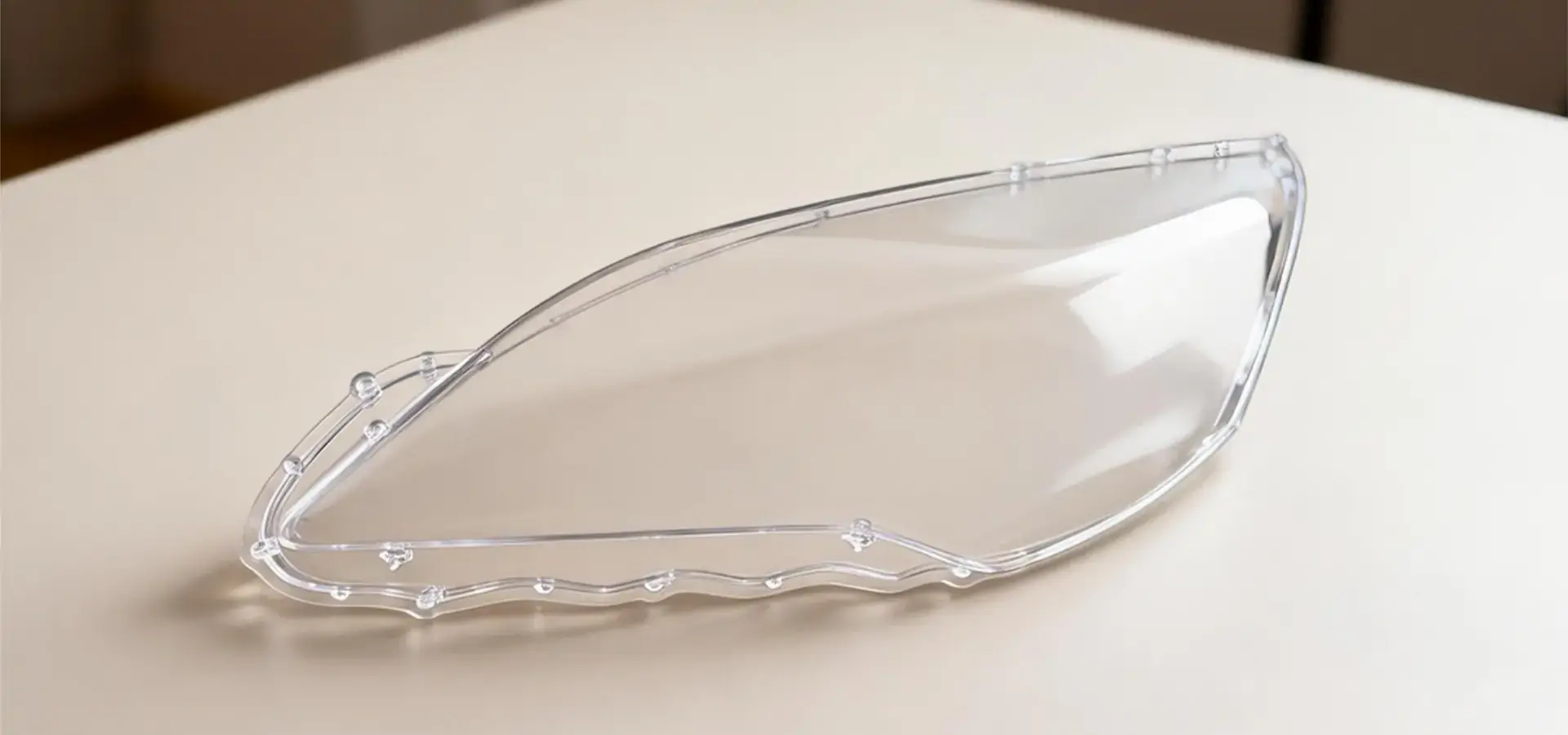
The main goal of developing resin chemistry is to increase the range of mechanical properties and weather longevity. High-temperature photopolymer resins with heat resistance above 100°C enable more demanding functional testing under thermal conditions. Flexible photopolymers with shore hardness values that are similar to elastomeric materials can be used for gasket prototyping and making consumer products that are soft to the touch. Advances in transparent resin formulations continue to improve optical clarity, making SLA-produced transparent parts suitable for applications such as fluid visualization, lighting prototypes, and appearance models. Magforms systems are optimized for transparent resin applications, helping users achieve clear visual appearance and consistent surface quality when proper printing and post-processing parameters are applied.
Environmental concerns are driving research into bio-based photopolymer formulations and more sustainable resin development approaches. Research into more sustainable photopolymer materials is exploring bio-based formulations and improved recycling approaches to reduce environmental impact. Energy-efficient sealing methods lower the amount of energy used per part, which makes stereolithography production better for the environment.
Industry 4.0 Integration and Smart Manufacturing
Industrial SLA 3D Printers are used in connected manufacturing ecosystems as part of larger automation frameworks. IoT-enabled manufacturing systems can provide real-time visibility into equipment status, material usage, and production workflows. Predictive analytics algorithms look for patterns in performance degradation and schedule preventative maintenance before problems happen, so you don't have to deal with unplanned downtime.
Another new area of research is automated post-processing merging. Robotic part removal, support structure separation, washing, and UV post-curing can all be done with little help from a person. This automation cuts down on labour costs and makes the process more consistent, which is very important for companies that make medical devices and have to follow FDA quality system rules.
Artificial Intelligence in Process Optimization
When machine learning methods are used for slicing and support generation, print success rates and material efficiency keep going up. Intelligent scanning optimization technologies demonstrate how data-driven approaches can improve printing efficiency and process consistency. Data collected from previous printing operations can be analyzed to improve future process optimization and workflow efficiency.
In-process monitoring data is looked at by AI-powered defect detection to predict print failures before they happen. Advanced monitoring systems using optical sensors and data analysis methods are being developed to identify potential issues such as incomplete curing, layer separation, or recoating abnormalities. Early action keeps production plans on track and stops loss of materials and damage to machines.
Procuring Industrial SLA 3D Printers: A Strategic Guide for B2B Buyers
Selecting stereolithography equipment requires balancing technical specifications against the total cost of ownership and supplier support capabilities.
Matching Equipment Capabilities to Production Requirements
When deciding how much to build, you need to think about both your current needs and how much you think your business will grow. Magforms offers industrial SLA systems such as the SL800 Industrial SLA 3D Printer, designed for large-format prototyping and production applications. Different platforms are engineered to maintain structural stability and consistent printing performance across various build volumes. Attempting to produce large automotive prototypes on undersized machines may reduce efficiency because multiple prints, assembly steps, and additional post-processing may be required.
Application flexibility depends largely on compatibility between the printing system and a wide range of photopolymer materials. The open-material architecture supports compatibility with a wide range of 355nm photopolymer resins, giving users greater flexibility when selecting materials for different applications. Compared with closed material ecosystems, open-material systems provide greater flexibility for users who need to evaluate different resin options and optimize production costs.
Evaluating Supplier Credibility and Support Infrastructure
Where a component came from has a direct effect on its durability. Integrating industrial-grade components such as AOC lasers, Scanlab galvanometers, Panasonic servo motors, and Schneider electrical components helps improve system stability, precision, and long-term reliability. Instead of trusting general performance promises, buyers should ask for information about the brands of the parts they are buying and compare the specs to the datasheets provided by the manufacturers.
Support after the sale is what sets useful sellers apart from real manufacturing partners. Magforms provides technical support and application guidance to help customers maintain stable production and resolve operational challenges. This keeps production from stopping when equipment problems aren't fixed. Magforms' experience in both 3D printing equipment and materials enables engineers to provide application-focused support across different printing workflows.
Financial Structuring Options for Capital Equipment
Purchase models should match the length of time needed for financial planning and the need for operating freedom. Outright buying works best for well-known companies that can predict their production numbers and have cash on hand. Leasing arrangements lower the initial cost and provide ways to upgrade as technology changes. With equipment-as-a-service models, suppliers take care of maintenance, which is appealing to businesses that value stable monthly costs over owning assets.
Long-term equipment reliability is supported by access to compatible OEM components, proper maintenance procedures, and professional technical support. Reliable suppliers should provide access to commonly required replacement components, such as resin tanks, optical windows, and wiper blades, to reduce potential production interruptions. Third-party parts may reduce short-term costs, but compatibility issues can affect equipment performance or reliability.
Conclusion
From the first idea to a product that is ready for the market, you need tools that speed up iteration while keeping quality standards high. This is possible with an Industrial SLA 3D Printer through precise laser systems, advanced photopolymer materials, and optimized printing workflows. Manufacturers gain faster design validation, accurate prototype production, and the flexibility to support applications such as prototypes, master patterns, and selected low-volume production parts. As material science progresses and Industry 4.0 is fully integrated, stereolithography technology will continue to grow in its importance in competitive manufacturing around the world.
FAQ
1. What makes industrial stereolithography different from desktop resin printing?
Industrial systems employ higher-power lasers, precision galvanometer scanning, and robust mechanical platforms designed for continuous operation. An Industrial SLA 3D Printer integrates premium components—like German Scanlab galvanometers and Panasonic servo motors—delivering higher levels of positioning accuracy and build repeatability compared with most consumer-grade equipment. Environmental controls maintain stable printing conditions, while larger build volumes accommodate production-scale parts.
2. How does print speed compare across different industrial stereolithography systems?
Variable spot technology significantly impacts throughput. Systems that dynamically adjust laser spot size can balance fine-detail reproduction and scanning efficiency, potentially improving throughput compared with fixed-spot approaches under suitable conditions. Advanced toolpath optimization algorithms can provide additional efficiency improvements by improving scanning strategies and reducing unnecessary movements.
3. Can stereolithography parts withstand functional testing conditions?
Material selection determines mechanical and thermal performance. Certain engineering resins formulated for stereolithography can offer tensile strengths exceeding 50 MPa and heat deflection temperatures above 100°C, depending on material formulation. Proper UV post-curing maximizes cross-linking density, ensuring parts achieve full material specifications. An Industrial SLA 3D Printer paired with appropriate resins produces components suitable for assembly testing, wind tunnel evaluation, and limited functional trials under realistic operating conditions.
Partner with Magforms for Reliable Industrial SLA 3D Printer Solutions
Magforms is an Industrial SLA 3D Printer manufacturer specializing in stereolithography equipment and photopolymer materials. The company's integrated approach—developing both photopolymer resins and printing hardware—ensures optimal compatibility and eliminates the material-machine mismatches causing failures in mixed-vendor environments. With 22 patents and 30 registered trademarks supporting continuous innovation, Magforms equipment serves over 300 enterprises across dozens of countries, validated through rigorous field testing and customer success stories spanning automotive, aerospace, medical, and consumer electronics sectors.
Choosing Magforms means accessing equipment built around internationally recognized components: AOC lasers for stable 24/7 operation, German Scanlab galvanometers ensuring precision, and Panasonic servo systems delivering micron-level positioning accuracy. The open material architecture supports most 355nm resins, preventing vendor lock-in while enabling cost optimization. Comprehensive after-sales support—including 24-hour response times, technical training, and readily available OEM parts—keeps production lines running smoothly.
Procurement managers and technical directors seeking an Industrial SLA 3D Printer supplier that balances performance, reliability, and total cost of ownership will find Magforms' value proposition compelling. Contact the team at info@magforms.com to discuss specific application requirements, request sample parts demonstrating print quality, or arrange equipment demonstrations showing the iBuild 2.0 software workflow. Magforms' engineering staff can provide application guidance matching printer capabilities to production demands, ensuring your investment delivers measurable ROI through faster development cycles and superior part quality.
References
1. Gibson, I., Rosen, D., & Stucker, B. (2021). Additive Manufacturing Technologies: 3D Printing, Rapid Prototyping, and Direct Digital Manufacturing (3rd ed.). Springer.
2. Jacobs, P. F. (2019). Stereolithography and Other RP&M Technologies: From Rapid Prototyping to Rapid Tooling. Society of Manufacturing Engineers.
3. Schmid, M., & Levy, G. (2022). "Quality Management in Industrial Additive Manufacturing: Dimensional Accuracy and Surface Finish in SLA Systems." Journal of Manufacturing Processes, 78, 245-261.
4. Bourell, D. L., Leu, M. C., & Rosen, D. W. (2020). Roadmap for Additive Manufacturing: Identifying the Future of Freeform Processing. University of Texas at Austin Laboratory for Freeform Fabrication.
5. Chua, C. K., & Leong, K. F. (2023). 3D Printing and Additive Manufacturing: Principles and Applications (6th ed.). World Scientific Publishing.
6. Ngo, T. D., Kashani, A., Imbalzano, G., Nguyen, K. T., & Hui, D. (2021). "Additive Manufacturing for Precision Medicine Applications: A Comprehensive Review of Photopolymer Resin Systems." Composites Part B: Engineering, 171, 28-44.

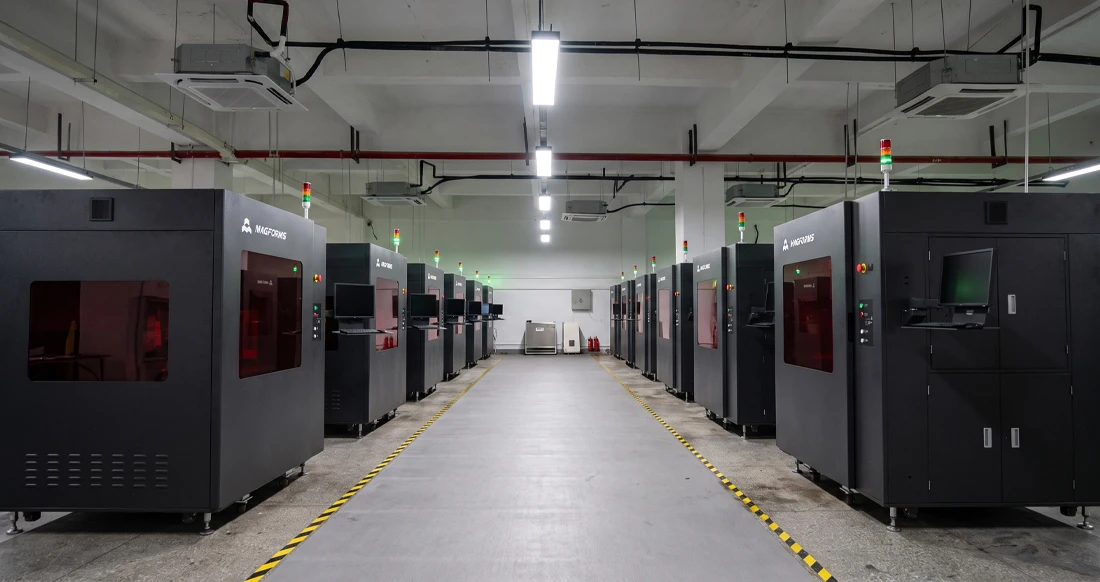
Magforms makes design and manufacture easier.
Popular Blogs
-
 Industry InsightsManufacturing Industry
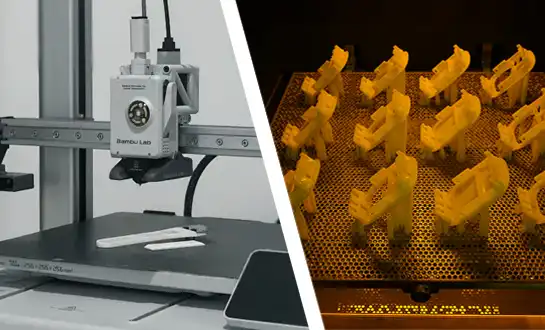
FDM vs. SLA Printer: Which Technology Is Right for Your Project?
-
 Industry InsightsManufacturing Industry
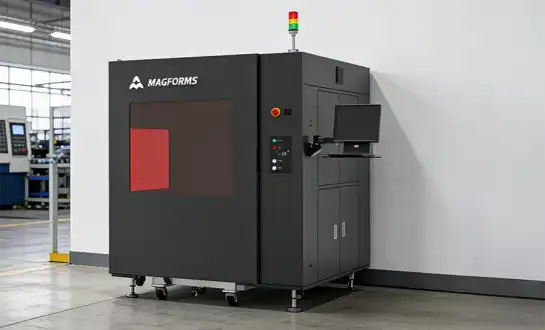
Top 5 Applications of Industrial 3D Printers in Manufacturing Today
-
 Industry InsightsManufacturing Industry
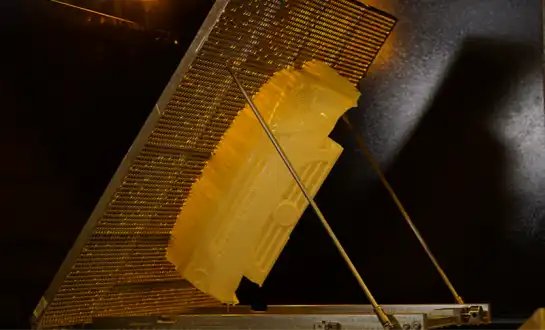
Why Stereolithography 3D Printers Are Unmatched for Microfluidic Device Prototyping?