Industrial SLA 3D Printer vs. DLP: Key Differences Every Buyer Should Know
When procurement professionals compare resin-based additive manufacturing technologies, they need to know the main differences between an Industrial SLA 3D printer and a DLP system. Precision laser scanning is used in stereolithography to cure liquid photopolymer resin layer by layer, enabling excellent dimensional accuracy and smooth surface finishes. Digital Light Processing uses digital micromirror arrays to cast whole layers at once, with different speed-to-resolution trade-offs. Both technologies are important for prototyping cars, making medical devices, and testing aerospace parts. However, their operational characteristics, material compatibility, and total cost of ownership are very different. This means that choosing the right technology is essential for manufacturing success.
Understanding Industrial SLA and DLP 3D Printing Technologies
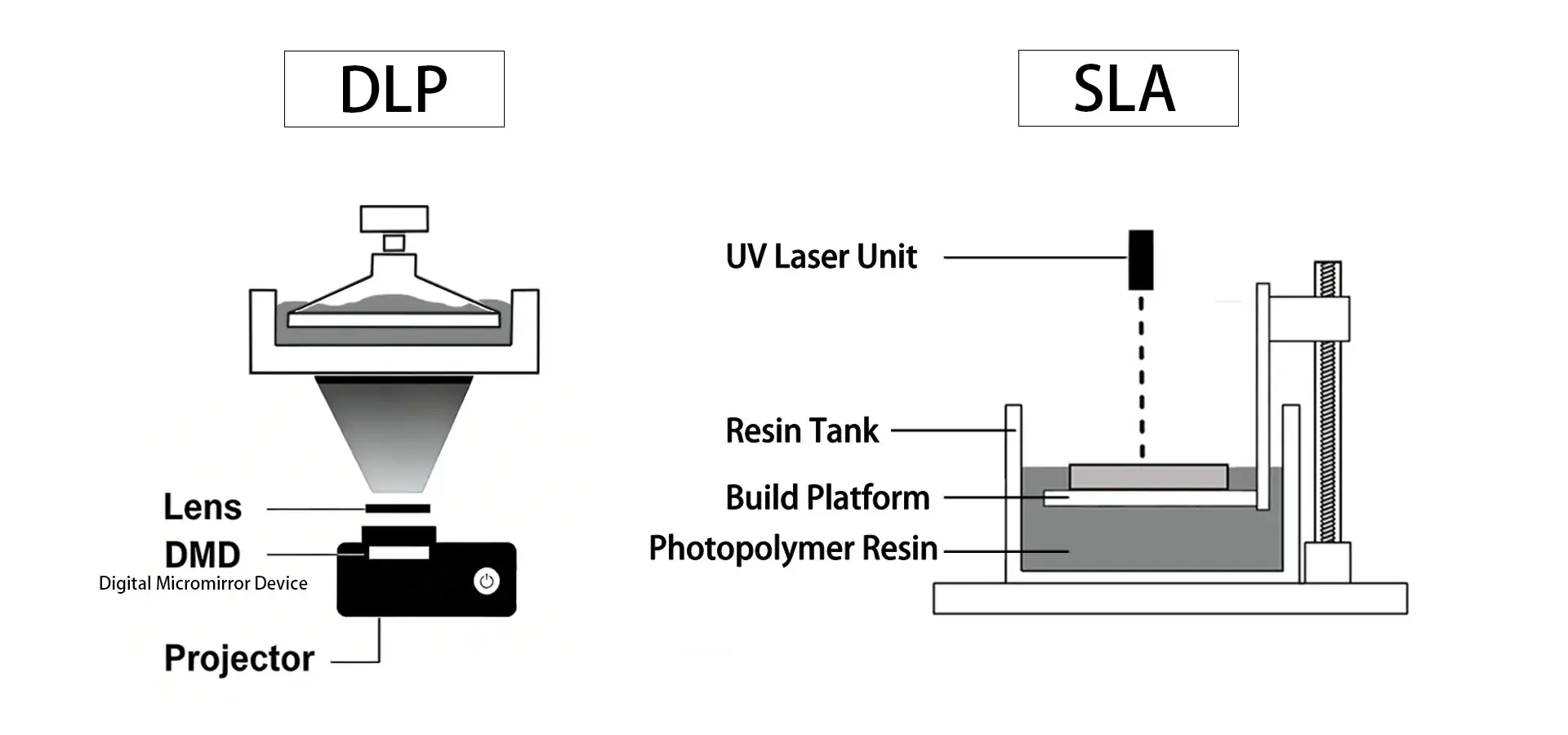
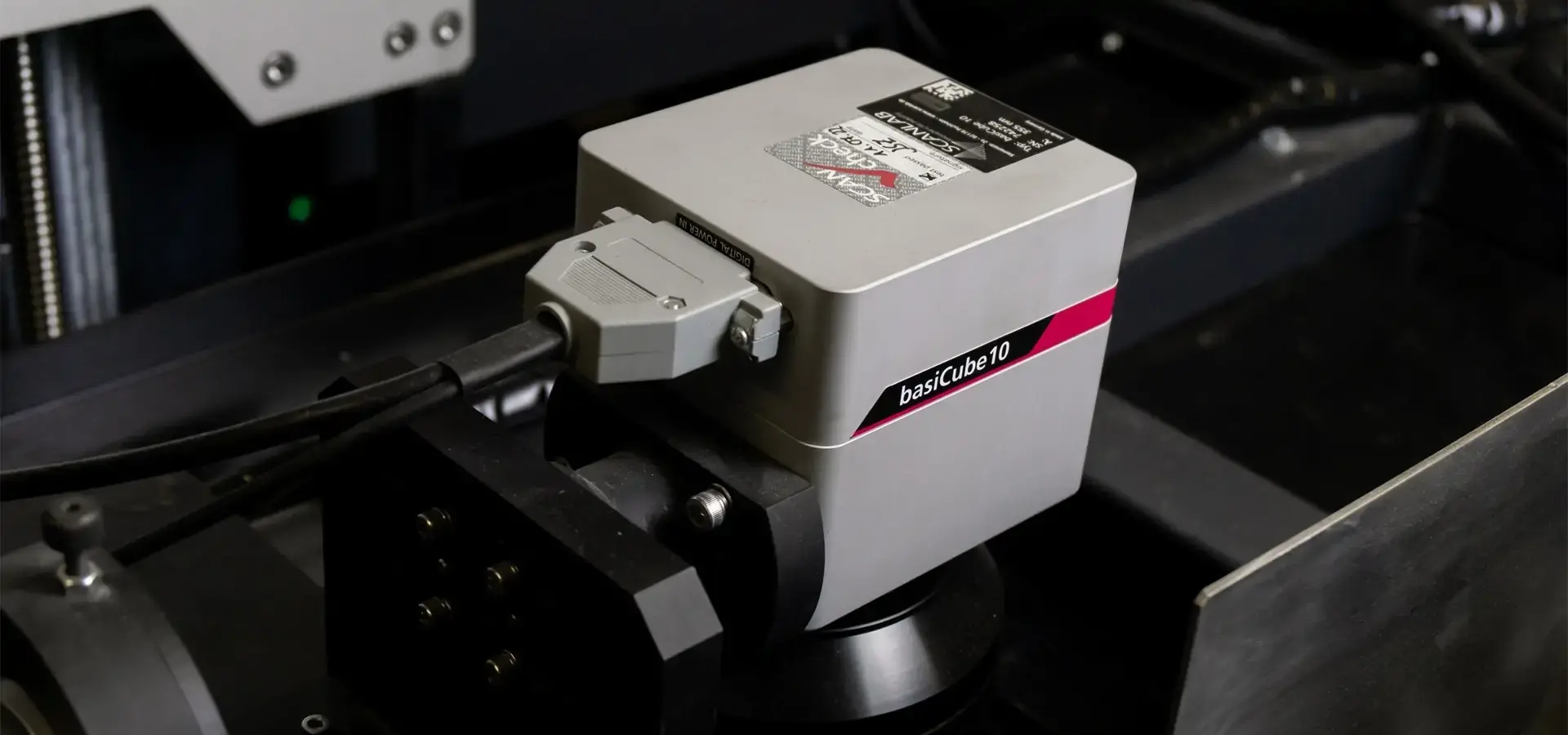
Both stereolithography and digital light processing are based on the idea of photopolymerization, but they are carried out in very different ways. An Industrial SLA 3D printer typically uses a UV laser system, commonly operating at a wavelength of 355 nm, together with a galvanometer scanning system to precisely guide the laser beam across the resin surface. The laser follows the cross-sectional shape of each layer, curing liquid photopolymer resin into solid structures with adjustable layer thicknesses typically ranging from tens to hundreds of microns depending on the application and material requirements.
On the other hand, DLP systems use a digital micromirror device projector to flash-cure all of the build levels at the same time. This method gets rid of the sequential scanning process that comes with laser-based systems, which could shorten the time it takes to expose each layer. Because DLP systems rely on a fixed pixel projection system, their XY resolution is influenced by projector resolution and build size, which may affect the reproduction of very fine details on larger platforms. Laser-based curing can provide excellent contour accuracy, especially for complex geometries, depending on laser spot size, layer thickness, and process parameters.
Another important difference is material suitability. Because the laser power and scanning settings can be changed, an industrial SLA 3D printer can support a broad range of photopolymer resins, with flexibility depending on the machine architecture, laser parameters, and material ecosystem. Advanced systems can process engineering resins designed to provide mechanical properties similar to ABS, polypropylene-like flexibility, transparent optical performance, and high-temperature resistance. The open material architecture, which avoids mandatory proprietary resin restrictions, allows manufacturers to evaluate and validate third-party materials for specific applications. This lowers the cost of consumables and increases the number of uses.
👉 What is SLA 3D printing technology
Core Component Quality and System Architecture
High-end stereolithography equipment relies on carefully selected industrial-grade components that directly influence long-term stability and printing consistency. Precision servo-driven motion systems, combined with high-quality linear guides and mechanical structures, enable accurate platform positioning for stable layer formation. These engineering considerations help maintain consistent layer formation and minimize dimensional variation during long print jobs. The low temperature expansion of the marble platform base and the 2 mm-thick metal container panels give the structure stiffness that keeps the calibration stable during 24/7 industrial production cycles.
The optical route protection has a front door made of glass and a special cover that keeps dust out of the galvanometer and laser assembly. Protective enclosures, safety interlocks, and optical filters help prevent direct exposure to UV laser radiation during operation. Taiwan HIWIN linear guides and precision lead screws have a long service life and little wear, which lets you print at a stable high-Z level without damaging parts, even when you're making tall geometries.
Variable Laser Spot Technology and Adaptive Scanning
Some advanced stereolithography systems feature variable laser spot technology, allowing the beam diameter to be adjusted according to different printing requirements. Larger laser spots can improve scanning efficiency in large solid areas, while smaller spots can be used for regions requiring finer details. For support structures and fine surface details, the system changes to micro-spots, about 0.15 mm to 0.2 mm. When compared to traditional fixed-spot SLA configurations, this adaptive approach speeds up printing by 30% to 50%. This cuts down on production lead times for prototyping projects that need to be done quickly.
Advanced scanning algorithms optimize laser paths and exposure strategies to improve printing efficiency while maintaining dimensional accuracy. The system improves its movement patterns with each build, making it up to 20% faster than rival equipment while keeping accuracy within ±0.1 mm for features under 100 mm and ±0.1% for larger dimensions. Operating scanning speeds range from 6 m/s to 10 m/s, and the Scanlab galvanometer can handle speeds of up to 12 m/s. This means that pressing industrial needs can be met quickly.
Key Technical Differences Between Industrial SLA and DLP Printers
When compared to projector-based DLP systems, the laser scanning mechanism in an Industrial SLA 3D printer makes parts with very different properties. Laser-cured parts can achieve relatively consistent mechanical properties across different directions when optimized with appropriate materials and curing parameters. The AOC laser source and Scanlab galvanometer system work together to provide stable laser delivery and precise scanning control. This makes curved surfaces that are very smooth and don't have the stair-stepping effects that are common with layer-based manufacturing.
Because DLP systems project images through a fixed digital micromirror array, their resolution depends on the projected pixel size and build area. Even though multiple layers are exposed simultaneously, the sharpness is still limited by the projector's original pixel count and the size of the build platform. The same pixel array fills more surface area when the build volume is bigger, so the XY resolution needs to be lower. This makes part size and feature resolution a straight trade-off.
Layer Resolution and Accuracy Considerations
Accuracy and resolution performance vary between these systems depending on machine architecture, optical design, and process parameters. Industrial SLA 3D printers can achieve high dimensional accuracy through precise motion systems, calibrated optics, and optimized printing parameters. A precision marble platform provides mechanical stability and helps maintain calibration accuracy across large build areas. These mechanical limits directly affect the quality of the finished part, which means that assembly checks and mould design checks can be done without any extra cutting.
Advanced stereolithography control software can optimize laser exposure strategies and scanning paths to reduce visible layer transitions and improve surface quality. This method of computing makes the changes between layers smooth, so parts with standard 0.1 mm layer heights have few visible layer lines. Fine details like sharp edges, small holes, and delicate surface textures can be accurately reproduced from digital CAD models thanks to software optimisation and mechanical precision.
Post-Processing Workflow Implications
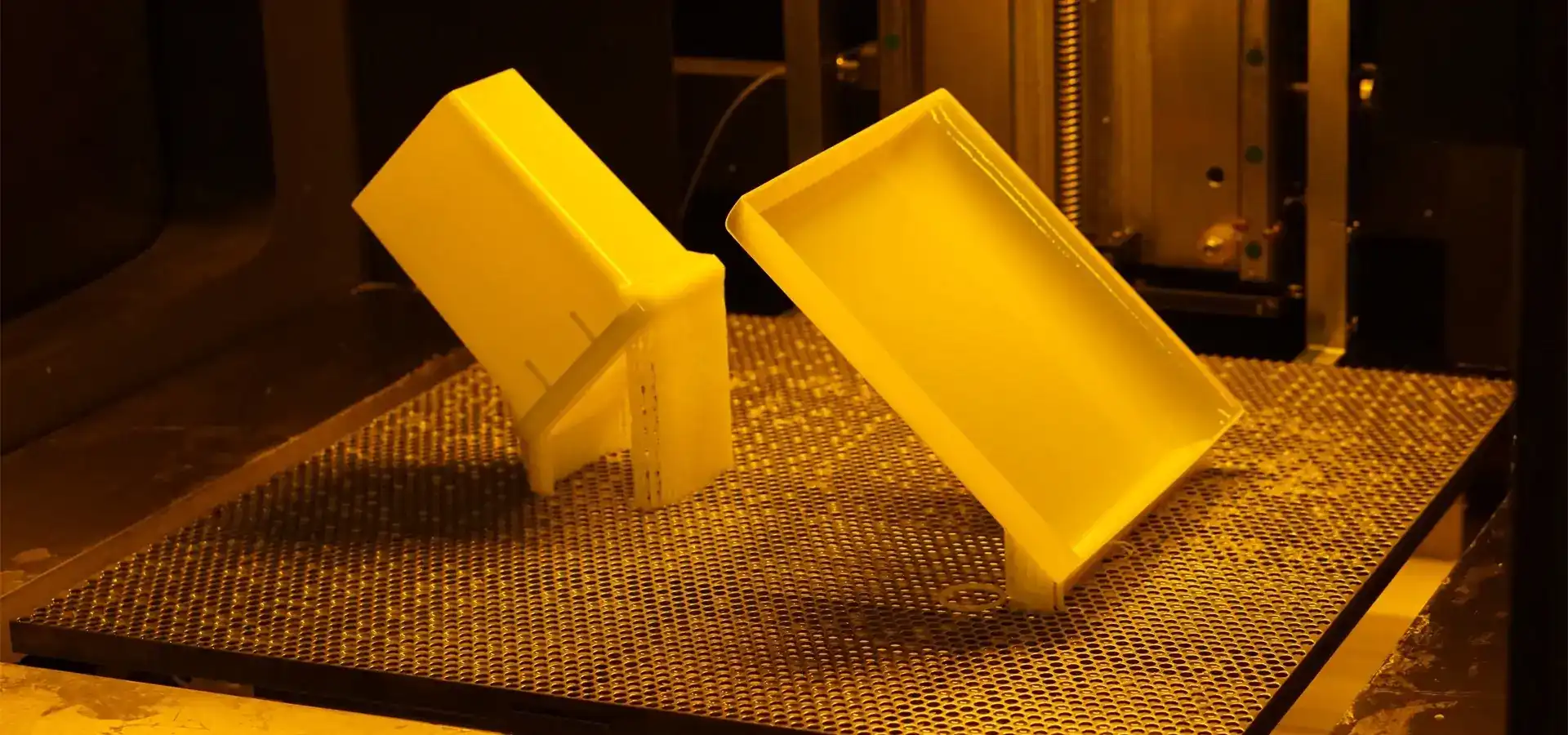
The two systems have different ways of taking parts apart and cleaning them. An Industrial SLA 3D printer usually has an easy-to-use platform design with support pieces that raise the build plate at an angle when the printing is done. This turning system makes it easy for uncured resin to drain back into the vat, which cuts down on waste and speeds up the cleaning process. Some designs allow the whole platform to be turned upside down, which speeds up the removal of residual resin and makes post-processing easier.
Built-in temperature control systems maintain consistent resin viscosity during operation. This thermal management keeps the resin from getting too thick when it's working in cold weather, so the flow properties and layer adhesion stay the same. Temperature-stabilized printing lowers the number of failures and raises the quality of the surface, especially when working with clear resins that are sensitive to changes in temperature.
Evaluating Industrial SLA vs. DLP for B2B Procurement Needs
Cost analysis looks at more than just the initial capital investment. It also looks at things like maintenance needs, replacement parts, and how well the equipment works over its entire life. Due to precise laser systems and advanced galvanometer parts, an industrial SLA 3D printer that commands a top place usually has higher initial costs. The open material design, on the other hand, stops vendors from being locked into private resins. This means that buying teams may have more flexibility to evaluate compatible 355 nm photopolymer materials from different suppliers. When working at an industrial scale, this material freedom cuts per-part costs by a large amount, which speeds up the time it takes to get a return on investment.
DLP systems usually have lower starting costs, but the materials you can use may only be those that the maker approves. Usually, the projection lamp assembly needs to be replaced every 2,000 to 5,000 hours of use. This is a consumable cost that isn't present in solid-state laser systems. Industrial laser systems are generally designed for long operational lifetimes, with laser sources often rated for thousands of operating hours depending on the manufacturer and usage conditions.
Throughput and Production Scalability
Strategies for planning output are directly affected by the ability to build large amounts. Large-format Industrial SLA 3D printer models, such as the SL800 and other large-volume SLA systems, can print large parts or multiple smaller components within a single build cycle, increasing production efficiency and reducing overall lead times. High-speed scanning at 6 m/s to 10 m/s and large platform dimensions make it possible for service bureaus and internal manufacturing departments to work on many projects at once.
For large-format systems, the platform flatness requirements become more and more important. High-quality machines maintain strict platform flatness requirements across different build sizes to ensure consistent printing performance over large areas. This geometric accuracy over large build areas keeps large parts from warping and makes sure that small features across the whole platform width are all the same thickness.
After-Sales Support and Service Responsiveness
When equipment breaks down, it directly affects production schedules and what customers get. Manufacturers who offer skilled after-sales teams that promise to respond within 24 hours reduce the risk of downtime. Total cost of ownership estimates are greatly affected by the availability of remote diagnosis, thorough technical training programs, and easy access to new parts. Companies with established technical support systems and experienced service teams can help customers reduce operational risks.
Modern control software that is optimised for mobile devices lets operators and technicians check on the progress of prints from afar and figure out problems without being there in person. With its smooth movement and no lag, the iBuild 2.0 interface is a great example of user-friendly design. It makes operations more efficient and cuts down on the time new workers need to learn how to use it.
Making an Informed Buying Decision: SLA or DLP?
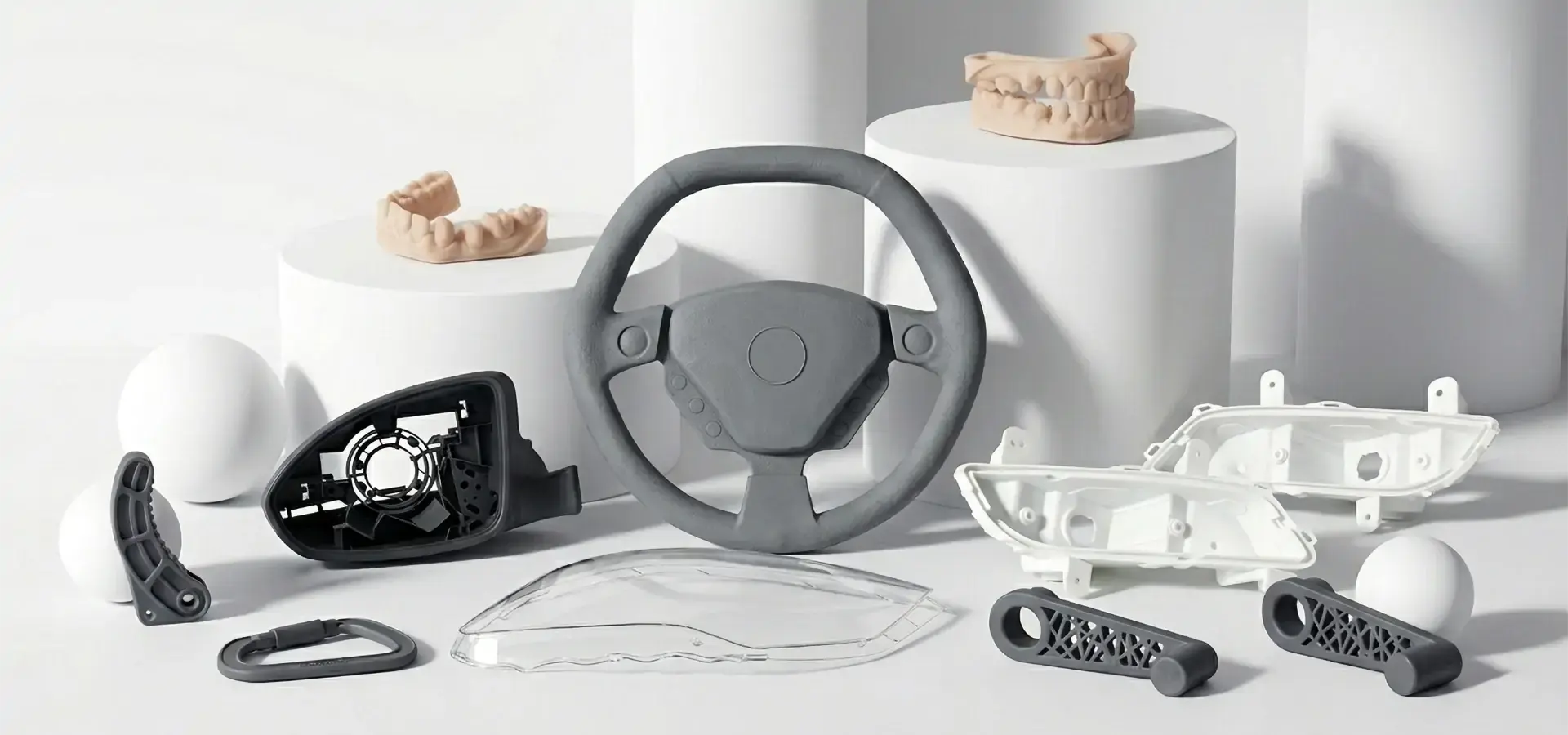
Procurement decision-makers must align technology selection with specific application requirements and organizational capabilities. An Industrial SLA 3D printer excels in scenarios demanding exceptional surface finish, tight dimensional tolerances, and material versatility. Automotive interior component prototyping benefits from the smooth sidewall quality and material options matching final production plastics. Aerospace applications requiring small-batch production of complex geometries leverage the high accuracy and mechanical property consistency inherent to laser-cured parts.
Medical and dental applications represent another optimal use case. Custom orthodontic models, surgical guides, and implant prototypes require biocompatible materials and dimensional precision, directly affecting patient outcomes. The ability to process certified medical-grade resins through an open material system provides flexibility while maintaining regulatory compliance. Transparent resin capabilities are valuable for applications such as dental models, visualization prototypes, and optical component development.
👉 Explore how Industrial SLA technology is applied in real production environments through our Industrial SLA 3D printing application cases.
Supplier Evaluation Criteria
When assessing Industrial SLA 3D printer suppliers, verify intellectual property foundations through patent portfolios and trademark registrations. Companies holding substantial patent counts—such as 22 patents combined with 30 registered trademarks—demonstrate ongoing R&D investment and technical innovation capabilities. International market presence, evidenced by exports to dozens of countries and participation in major industry exhibitions across Europe, Asia, and the Americas, indicates established quality standards and customer satisfaction.
The integration of materials expertise with equipment manufacturing creates compelling value propositions. Suppliers originating as 3D printing materials specialists bring a deep understanding of photopolymer chemistry and laser-material interactions. This knowledge translates to optimized machine parameters that minimize internal stresses during curing, reducing part warpage and dimensional deviation. Equipment engineered by teams with extensive commissioning experience across multiple printer platforms incorporates best practices from diverse systems while avoiding common pitfalls.
Procurement Strategies and Vendor Partnerships
Strategic purchasing approaches extend beyond individual machine acquisitions to encompass long-term supplier relationships. Bulk purchasing agreements for multiple units unlock volume discounts while standardizing equipment across production facilities, simplifying operator training and spare parts inventory management. Leasing arrangements provide capital expenditure flexibility, particularly beneficial for companies testing additive manufacturing applications before committing to full-scale implementation.
Partnering with authorized dealers offering comprehensive support packages—including installation, calibration, materials testing, and ongoing technical consultation—mitigates adoption risks. The availability of sample part printing services before purchase enables procurement teams to validate equipment performance against actual production requirements, reducing specification mismatches and ensuring technology suitability.
Future Trends and Innovations in Industrial SLA and DLP Printing
Resin chemistry keeps getting better, with new formulations that have better biocompatibility, better mechanical properties, and long-lasting compositions that are better for the environment. High-temperature photopolymer resins with improved thermal resistance can expand applications in industrial tooling and automotive component prototyping. Flexible materials that look like thermoplastic elastomers can be used to make gasket prototypes and soft-touch consumer goods.
Automation integration is a major development trend for Industrial SLA 3D printer technology. Robotic part removal systems, automated post-curing stations, and quality inspection through 3D scanning all work together to speed up production and cut down on the need for workers. Combining additive and subtractive processes in hybrid manufacturing cells makes it possible to make parts with complex shapes and smooth, precisely machined surfaces. This closes the gap between making prototypes and making parts that are ready for mass production.
As rules change to allow additively made parts, more and more industries, like aircraft, automobiles, and healthcare, are adopting them. The technology continues to advance toward broader adoption in regulated industries, where qualified materials, testing procedures, and application-specific certifications support the use of additive manufacturing. Material certifications that are specific to an industry and standard testing protocols that are in line with ISO/ASTM additive manufacturing standards and industry-specific testing protocols help establish quality requirements for industrial applications.
Analysts predict that industrial resin-based 3D printing areas will grow at rates higher than 20% per year until 2028. Manufacturers are responding to customer needs by investing in bigger build numbers, faster working speeds, and the ability to work with more than one material. In the next three to five years, there will be even more efficiency gains thanks to the coming together of artificial intelligence for automated support generation, build orientation optimisation, and predictive maintenance algorithms.
Conclusion
If you want to choose between an Industrial SLA 3D printer and DLP technology, you need to think about how precise you need it to be, how much you need to make, how much material you need, and how much it will cost to run in the long run. Stereolithography's laser-scanning approach delivers superior surface quality, dimensional accuracy, and material compatibility suited to demanding applications across aerospace, medical, automotive, and consumer electronics sectors. When you combine high-quality parts, variable spot technology, and open material architectures, you get cost-effectiveness and operational flexibility. Strategic partnerships with experienced suppliers that offer strong after-sales support make sure that investments in technology deliver long-term value throughout the lifecycles of equipment, giving companies a competitive edge in manufacturing landscapes that are changing quickly.
FAQ
1. Which technology offers better dimensional accuracy for precision components?
An Industrial SLA 3D printer typically achieves tighter tolerances through precision laser scanning and high-accuracy servo motor positioning systems. Equipment featuring precision motion systems, calibrated optics, and optimized process parameters can achieve dimensional accuracy suitable for functional prototype validation. DLP systems provide adequate accuracy for many applications, but may exhibit resolution limitations on large build platforms where pixel size increases proportionally.
2. What are typical maintenance requirements and associated costs?
Stereolithography systems using solid-state lasers require minimal consumable replacement beyond resin and occasional recoater blade changes. Laser sources operate for 10,000 to 20,000 hours before servicing. Depending on the light engine design, DLP systems may require periodic maintenance or replacement of optical components such as projection modules or light sources.
3. Can these printers handle transparent resin materials effectively?
Advanced Industrial SLA 3D printer models excel with transparent resin formulations through optimized laser parameters and temperature control systems. Built-in thermal management maintains consistent resin viscosity, preventing print failures common with temperature-sensitive transparent materials. The resulting parts exhibit excellent optical clarity suitable for lens prototypes, light pipes, and transparent resin prototypes used for optical testing, visualization models, and design verification.
Partner with Magforms for Your Industrial SLA 3D Printer Needs
Magforms stands as a proven Industrial SLA 3D printer manufacturer, bringing extensive materials science expertise and precision engineering experience to B2B manufacturing applications. Our integrated approach combines proprietary resin formulations with optimized equipment design, improving compatibility between materials and equipment compared with mixed-vendor configurations. With 22 patents, 30 trademarks, and supporting customers across multiple industries worldwide, we deliver proven reliability for aerospace prototyping, medical device development, and automotive component validation.
Our technical team responds within 24 hours to support inquiries, backed by comprehensive training programs and remote diagnostic capabilities through the iBuild 2.0 platform. Whether your operation requires entry-level units for startup service bureaus or large-format SL800 systems for production-scale manufacturing, Magforms provides tailored solutions with flexible procurement options. Contact our specialists at info@magforms.com to discuss your specific requirements, arrange sample part testing, or explore volume purchasing programs that optimize your additive manufacturing investment. Experience the Magforms difference—where material science meets manufacturing excellence.
References
1. Gibson, I., Rosen, D., Stucker, B., & Khorasani, M. (2021). Additive Manufacturing Technologies. Springer International Publishing, 3rd Edition.
2. ASTM International. (2022). ASTM F2792-12a: Standard Terminology for Additive Manufacturing Technologies. ASTM Volume 10.04 Standards.
3. Jacobs, P. F. (1992). Rapid Prototyping & Manufacturing: Fundamentals of Stereolithography. Society of Manufacturing Engineers, Dearborn, Michigan.
4. Chua, C. K., & Leong, K. F. (2017). 3D Printing and Additive Manufacturing: Principles and Applications. World Scientific Publishing, 5th Edition.
5. Ligon, S. C., Liska, R., Stampfl, J., Gurr, M., & Mülhaupt, R. (2017). Polymers for 3D Printing and Customized Additive Manufacturing. Chemical Reviews, 117(15), 10212-10290.
6. Stansbury, J. W., & Idacavage, M. J. (2016). 3D Printing with Polymers: Challenges among Expanding Options and Opportunities. Dental Materials, 32(1), 54-64.

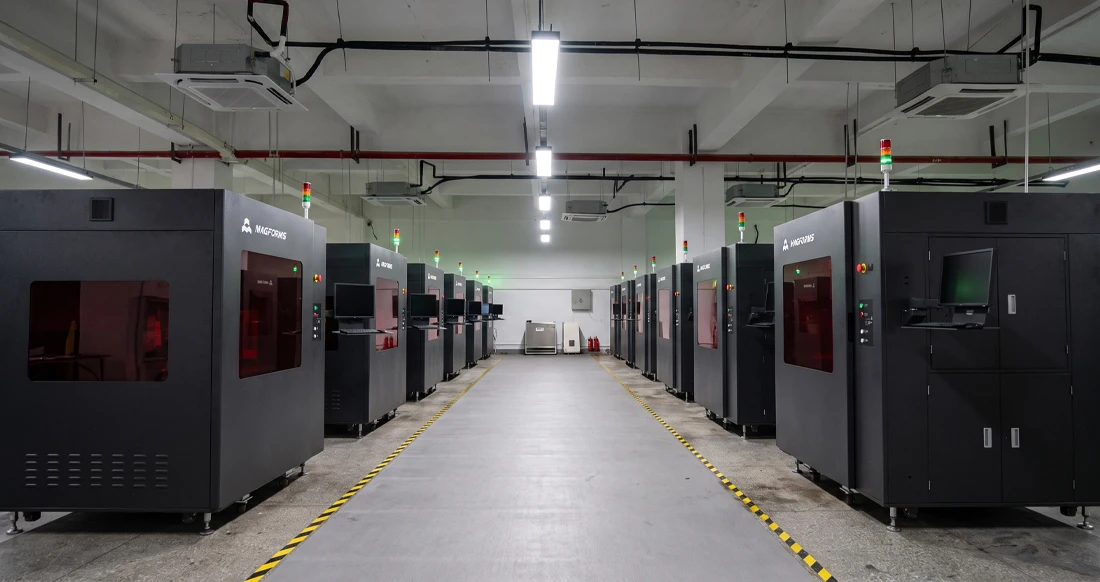
Magforms makes design and manufacture easier.
Popular Blogs
-
 Industry InsightsManufacturing Industry
FDM vs. SLA Printer: Which Technology Is Right for Your Project?
-
 Industry InsightsManufacturing Industry
Top 5 Applications of Industrial 3D Printers in Manufacturing Today
-
 Industry InsightsManufacturing Industry
Why Stereolithography 3D Printers Are Unmatched for Microfluidic Device Prototyping?